
Choosing the right video format is a critical decision that impacts everything from video quality and file size to playback compatibility. For content creators, web developers, and even casual users, understanding the nuances between different formats can save significant time and prevent frustrating technical hurdles. Two formats that often come up in discussion are WebM and MTS. While both are used for video, they serve fundamentally different purposes and have distinct advantages and disadvantages. The WebM vs MTS debate isn't about which one is universally superior, but rather which one is the right tool for a specific job.
Whether you're a videographer working with raw camcorder footage or a web designer optimizing a site for speed, this guide will demystify these two formats. We will break down their core characteristics, compare them head-to-head, and provide clear guidance on when to use each one. Furthermore, we'll show you how to easily convert between them when the need arises.
In this article,we will cover:
- What Are WebM and MTS Files?
- A Quick Comparison Table
- WebM vs. MTS: A Detailed Breakdown of Quality, Size, and Compatibility
- Practical Use Cases for WebM and MTS
- How to Convert Between Formats Seamlessly
Part 1. What is a WebM File? What is an MTS File?
Before we can compare these two formats, it's essential to understand what each one is, how it works, and what it was designed for.
What is a WebM File?
A WebM file, with the extension .webm, is an open, royalty-free media file format developed by Google. It was created specifically for the web, designed to be a high-quality, efficient alternative for HTML5 video and audio. The primary goal of WebM is to provide a free, open video format for everyone to use without licensing fees.
At its core, a WebM container file typically uses VP8 or VP9 video codecs, which are known for their excellent compression capabilities, allowing for high-quality video at lower bitrates. For audio, it uses the Vorbis or Opus audio codecs, which are also open-source and highly efficient. Its main advantage is its optimization for streaming over the internet. This makes it a favorite for platforms like YouTube and for web developers who need to embed videos that load quickly and play smoothly across modern browsers without requiring special plugins.
What is an MTS File?
An MTS file, with the extension .mts or .m2ts, is a high-definition video file format associated with the AVCHD (Advanced Video Coding High Definition) specification. This format was jointly developed by Sony and Panasonic and is the standard recording format for many of their consumer and prosumer camcorders.
MTS is a container format that uses the highly popular H.264/MPEG-4 AVC video codec, which is renowned for its ability to maintain excellent video quality. For audio, it commonly uses Dolby Digital AC-3 or uncompressed linear PCM. The primary advantage of the MTS format is its ability to capture and store high-quality, high-definition video footage directly from a camera. These files contain a large amount of video data, making them ideal for professional video editing and archiving, where preserving the original source quality is paramount.
Part 2. Quick Comparison Table
To get a clear, at-a-glance overview of the key differences between WebM and MTS, refer to the comparison table below.
| Feature | WebM | MTS |
| File Extension | .webm | .mts, .m2ts |
| Developer | Sony & Panasonic | |
| Video Codec | VP8, VP9 | H.264/MPEG-4 AVC |
| Audio Codec | Vorbis, Opus | Dolby Digital AC-3, LPCM |
| Quality | Good to Excellent (Optimized for Web) | Excellent to Professional (Raw Footage) |
| File Size | Smaller | Larger |
| Compatibility | High (Web Browsers, YouTube) | Low (Requires Specific Players/Software) |
| Best Use Case | Online Streaming, Web Video | Video Recording, Professional Editing |
Part 3. WebM vs MTS: Which One Is Better?
The question of which format is "better" depends entirely on your priorities. Let's break down the comparison across three critical factors: quality, file size, and compatibility.
Quality Comparison
When it comes to raw, unadulterated quality, MTS files generally have the upper hand. Since MTS is the direct output from a high-definition camcorder, the footage is often less compressed and has a higher bitrate. This means it retains more detail, color information, and clarity, making it the preferred format for professional videographers who need the best possible source material for post-production and editing.
On the other hand, WebM provides excellent quality for its file size. Its VP8 and VP9 codecs are specifically engineered for efficient compression, striking a remarkable balance between visual fidelity and file size. While a WebM file converted from an MTS source might not be identical to the original, the quality is more than sufficient for web streaming and online viewing, often appearing indistinguishable to the average viewer on a standard screen.
The choice here is clear: if your priority is preserving the pristine, original quality for editing or archiving, MTS is superior. If your goal is efficient delivery over the web without a noticeable drop in quality for the end-user, WebM is the winner.
File Size Comparison
This is where WebM truly shines. Due to its more modern and efficient compression algorithms, WebM files are significantly smaller than MTS files containing the exact same video content. An MTS file from a camcorder can be enormous, consuming gigabytes of storage for just a few minutes of footage. This makes them cumbersome to store, share, or upload.
WebM's smaller footprint is a game-changer for web-based applications. For web developers, smaller video files mean faster page load times, a better user experience, and reduced bandwidth costs. For content creators, it means quicker uploads to platforms like YouTube and easier sharing with collaborators or clients. If minimizing file size is your primary concern, WebM is the undisputed champion.
Compatibility and Playback
Compatibility is another area where the two formats diverge significantly. WebM was built for the web and enjoys broad, native support in major web browsers, including Google Chrome, Mozilla Firefox, and Opera. This allows for seamless HTML5 video playback without the need for third-party plugins like Flash. Most modern devices and major video platforms like YouTube also handle WebM files with ease.
MTS, in contrast, has very limited native support. It will not play in most web browsers, and many default media players on Windows and macOS may struggle to open it without additional codecs. To play an MTS file, you often need a versatile media player like VLC Media Player or specialized software that came with your camcorder. For sharing or web use, conversion is almost always necessary. If you need to make your MTS footage accessible across different platforms and devices, converting it to a more universal format is essential. A powerful tool like Wondershare UniConverter is an excellent solution for this, ensuring your video can be played anywhere.
Part 4. Use Cases for WebM and MTS
Understanding the strengths and weaknesses of each format helps clarify their ideal applications. Here's a practical guide on when to use WebM and when to stick with MTS.
When to Use WebM
WebM is the go-to format for any scenario involving the internet. Its combination of good quality, small file size, and excellent browser support makes it perfect for:
- Embedding videos directly into a website or blog: Ensure fast loading times and a smooth user experience for your visitors without relying on external plugins.
- Streaming video content: When uploading to online video services like YouTube, using a web-optimized format like WebM can speed up the upload and processing time.
- Creating web-based applications and interactive content: Its open-source nature and efficiency make it ideal for developers.
- Sending a video file via email or messaging apps: When file size limits are a concern, WebM's superior compression allows you to share videos more easily.
When to Use MTS
MTS is the format of choice for the initial stages of the video production workflow, where quality is the top priority. You should use MTS for:
- Storing the original, master copy of footage: Keep the raw footage from your AVCHD camcorder in its native MTS format to have the highest quality version available for future projects.
- Professional video editing workflows: Editors in software like Adobe Premiere Pro or Final Cut Pro prefer working with high-bitrate source files like MTS to have maximum flexibility for color grading, effects, and other adjustments.
- Archiving high-definition video content: For long-term storage of important video, the uncompressed nature of MTS ensures that no quality is lost over time.
- Creating Blu-ray discs: The .m2ts variant is part of the Blu-ray Disc specification, making it suitable for authoring high-definition discs.
Part 5. Step-by-Step Guide to Convert WebM to MTS Using UniConverter
There are times when you might need to convert a WebM file back into a format suitable for a professional editing suite or a specific playback device that favors MTS. For instance, you may have downloaded a video from the web (WebM) and want to incorporate it into a larger project being edited from camcorder footage (MTS). In these cases, a reliable converter is essential. Wondershare UniConverter handles this conversion process effortlessly, preserving quality while ensuring compatibility.
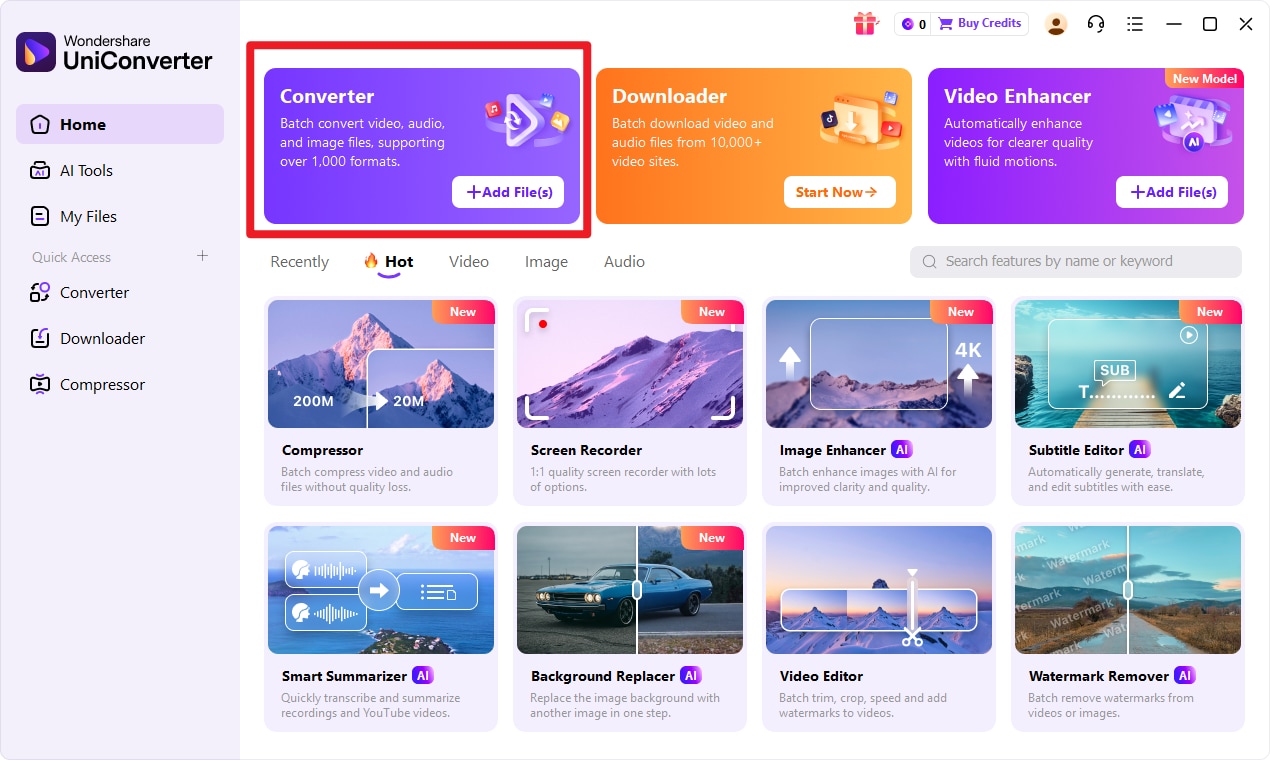
Step 1: Choose Converter in UniConverter
Launch Wondershare UniConverter on your computer. From the left-side menu on the main interface, select the Converter tool to begin.
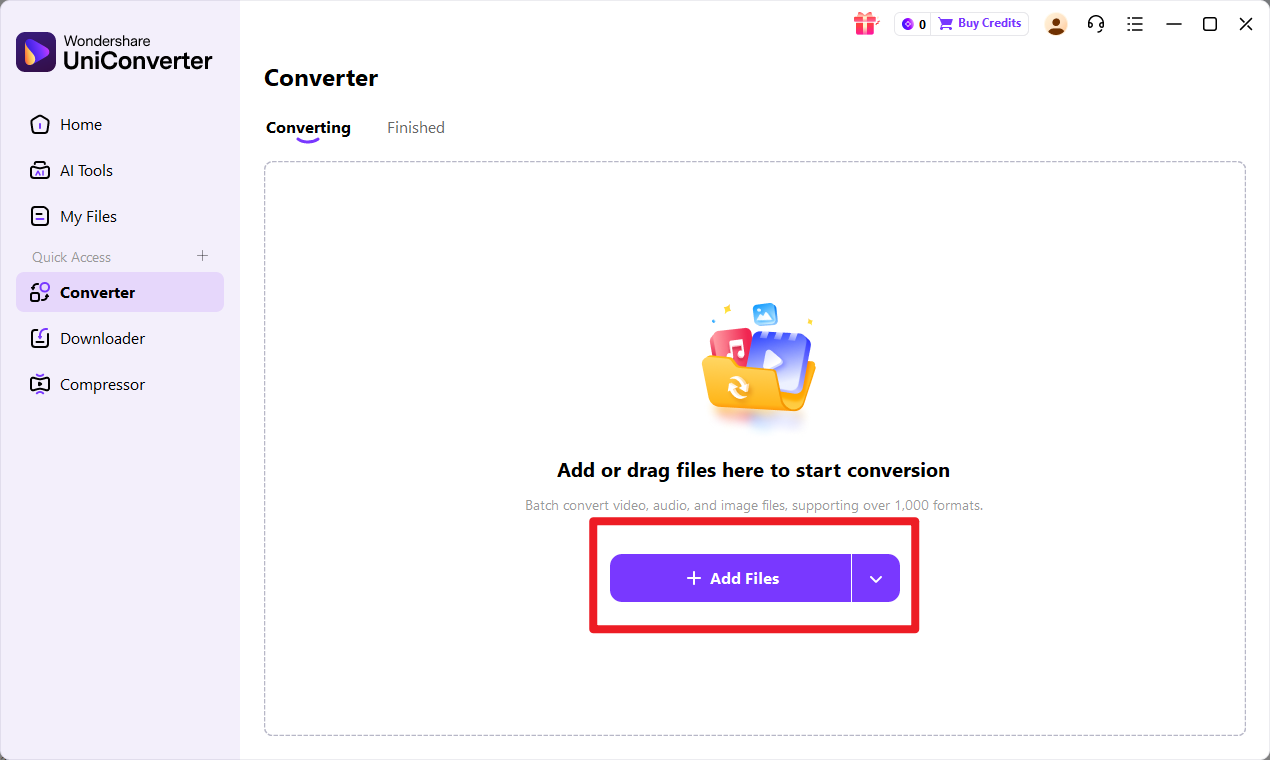
Step 2: Add Files to UniConverter
You can either click the Add Files button to browse and import your input format files or simply drag and drop them directly into the center of the converter window. The software supports batch conversion, so you can add multiple files at once.
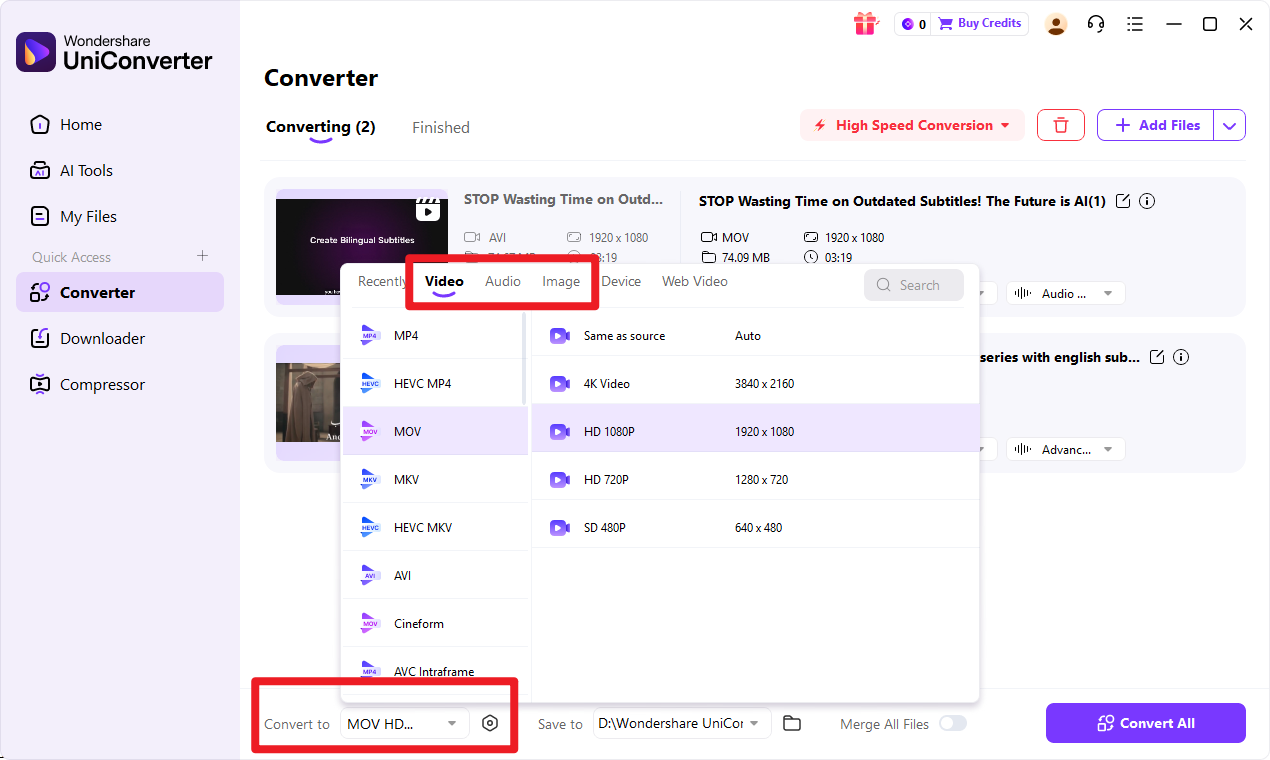
Step 3: Choose Output Format
Click on the Output Format menu located at the bottom of the window. This will open a new dialog box. Navigate to the Video tab, select the target format from the list on the left, and then choose your desired resolution on the right.
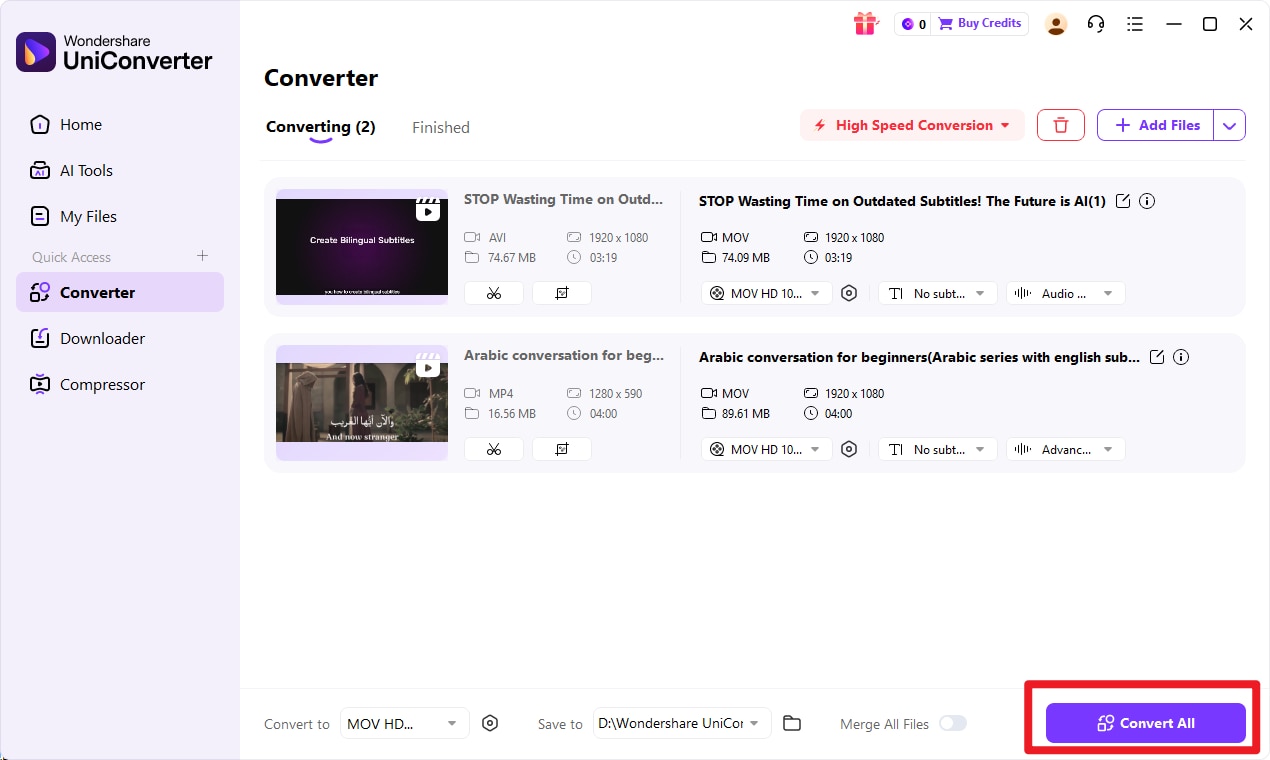
Step 4: Start the Conversion
Choose a destination for your converted file by using the File Location field at the bottom. Once you are ready, click the Start All button in the bottom-right corner to initiate the fast and high-quality conversion process.

Handle All Your Video Conversion Needs
Conclusion
In the WebM vs MTS debate, it's clear there is no single winner. The best format is entirely determined by your specific application and priorities. Each format is a champion in its own domain.
WebM is the undisputed choice for all things web-related. Its excellent compression, small file size, and universal browser compatibility make it the ideal format for online streaming, website embedding, and efficient file sharing. MTS, conversely, remains the standard for capturing and storing high-quality raw footage directly from AVCHD camcorders. Its high bitrate and minimal compression are perfect for professional editing and archiving, where preserving every detail of the original source is critical.
Ultimately, a modern video workflow often requires the flexibility to move between these formats. For anyone needing to bridge the gap, a versatile and powerful tool is indispensable. We recommend Wondershare UniConverter for its incredible speed, reliability, and ability to handle over 1,000 formats. It is the perfect solution for all your video conversion needs, ensuring your content is always ready for any platform or purpose.
FAQs
-
1. Is WebM higher quality than MTS?
Not necessarily. In terms of raw data, MTS files typically contain less compressed, higher-bitrate video directly from a camera, so they often represent higher "source" quality. WebM is designed to provide the best possible visual quality for a much smaller, web-friendly file size. When converting from MTS to WebM, the goal is to retain as much quality as possible while gaining the benefits of smaller file size and better compatibility. -
2. Can I upload MTS files to YouTube?
Yes, YouTube accepts MTS files for upload. However, it's important to know that YouTube will automatically re-compress and convert your video into various formats, including WebM and MP4, for optimized streaming. Converting your MTS file to a web-friendly format like WebM or MP4 with a tool like UniConverter before uploading can give you more control over the final compression result and significantly reduce upload times due to the smaller file size. -
3. Why are my MTS files so large?
MTS files use the AVCHD format, which is designed to capture high-definition video with minimal quality loss. This process prioritizes preserving video data over creating a small file. It results in a very high bitrate (the amount of data used to encode one second of video), which in turn leads to much larger file sizes compared to heavily compressed, web-optimized formats like WebM. -
4. What is the best program to convert MTS files?
For an optimal balance of ease of use, conversion speed, and high-quality output, Wondershare UniConverter is a top recommendation. It simplifies the conversion process with an intuitive interface, supports batch conversion to save time, and includes basic editing tools. Most importantly, it handles a vast array of formats beyond just MTS and WebM, making it a comprehensive video toolkit for any task.
