
Navigating the world of video formats can often feel overwhelming. You might have a video file and wonder why it plays on your computer but not on your TV, or why one file is so much smaller than another despite looking identical. Two formats that frequently cause this confusion are WebM and MKV. While they share a common ancestry, they are designed for vastly different purposes. Understanding the WebM vs MKV debate is crucial for anyone from casual viewers to professional content creators.
Choosing the right format can impact everything from website loading speed to the archival quality of your personal media library. This guide will demystify these two powerful container formats, breaking down their technical specifications, strengths, and weaknesses in a clear and accessible way. We'll help you determine which format is the superior choice for your specific needs and show you how to easily convert between them without losing quality.
In this article, you will learn:
- What WebM and MKV files are and their primary functions.
- A quick side-by-side comparison of their key features.
- A detailed analysis of which format is better for quality, compatibility, and flexibility.
- Specific use cases to help you choose the right format for your task.
- A simple, step-by-step guide to convert WebM to MKV.
Part 1. What is WebM? What is MKV?
Before we can compare them, it's essential to understand what each format is and what it was designed to do. Both are "container" formats, meaning they are like digital boxes that can hold video, audio, and other data like subtitles. However, the types of data they are optimized to hold and how they are used are very different.
What is WebM?
WebM is an open, royalty-free media file format developed by Google. As its name suggests, it was created specifically for the web. Its primary goal is to provide a high-quality, efficient video format for HTML5 video streaming. Think of the videos you watch on YouTube or other modern websites—many of them are delivered in the WebM format.
It is based on a profile of the Matroska (MKV) container, but it's more streamlined and has a more limited set of supported codecs. WebM files exclusively use VP8, VP9, or the next-generation AV1 for video, and Vorbis or Opus for audio. This focused approach ensures excellent compression and widespread support across all major web browsers, making it the go-to choice for online video delivery.
What is MKV?
MKV, which stands for Matroska Multimedia Container, is an open-standard, free container format. It is renowned for its incredible flexibility and power. An MKV file can hold a virtually unlimited number of video, audio, and subtitle tracks all in one place. This makes it a universal container for high-definition media.
Unlike WebM, MKV is not limited to a specific set of codecs. It can package video encoded with H.264, H.265 (HEVC), AV1, and countless others, alongside audio formats ranging from standard AAC to lossless formats like FLAC and DTS-HD Master Audio. This versatility has made MKV the preferred format for storing digital copies of movies and TV shows, especially for users who want to preserve the highest possible quality and include multiple language options and subtitles for local playback on media centers and smart TVs.
Part 2. Quick Comparison Table
For a fast overview, it's helpful to see the core differences between WebM and MKV laid out side-by-side. This table highlights the key characteristics of each format, making it easy to see where each one excels.
WebM vs MKV: Side-by-Side Comparison
| Feature | WebM | MKV |
| Primary Use | Web streaming and online video | Local media storage and archiving |
| Video Codecs | VP8, VP9, AV1 | H.264, H.265 (HEVC), AV1, and many more |
| Audio Codecs | Vorbis, Opus | AAC, AC3, DTS, FLAC, Opus, and many more |
| Subtitle Support | WebVTT | SRT, ASS, SSA, PGS, and more |
| Browser Compatibility | Excellent | Poor to none |
| Media Player Compatibility | Good | Excellent |
| Flexibility | Limited | Extremely high |
Part 3. WebM vs MKV: Which One Is Better?
The question of which format is "better" doesn't have a single answer. The best choice depends entirely on what you want to achieve. Let's break down their performance in three critical areas: quality, compatibility, and features.
Quality and Compression
A common misconception is that the container format (the .webm or .mkv file extension) determines the video quality. In reality, quality is dictated by the video codec used (e.g., AV1, H.265) and the bitrate (the amount of data used to store one second of video).
WebM, by leveraging modern and highly efficient codecs like VP9 and AV1, can deliver outstanding video quality at surprisingly low file sizes. This is precisely why it's perfect for streaming. It allows platforms to send high-quality video to users without consuming excessive bandwidth, resulting in less buffering and a smoother viewing experience.
MKV can contain the exact same video stream as a WebM file (for instance, both can use the AV1 codec). However, its true strength in the quality department lies in its flexibility with audio. MKV can hold uncompressed or losslessly compressed audio tracks, such as DTS-HD Master Audio or Dolby TrueHD, which are often found on Blu-ray discs. This makes MKV the undisputed champion for creating archival-quality digital copies of movies where preserving the original, pristine audio is just as important as the video.
Compatibility and Playback
Compatibility is where the two formats diverge most significantly.
WebM is the clear winner for any web-based application. It is natively supported by all modern browsers, including Google Chrome, Mozilla Firefox, Microsoft Edge, and Safari. This means you can embed a WebM video in your website, and it will play directly in the browser without requiring any special plugins or extensions.
MKV, on the other hand, is the king of offline playback. It has virtually zero native support in web browsers. However, it is supported by almost every desktop media player imaginable, including VLC Media Player, MPC-HC, and PotPlayer. Furthermore, most modern smart TVs, media streaming boxes, and home theater systems are designed to play MKV files directly from a USB drive or network-attached storage (NAS), making it the most convenient format for a home media library.
Features and Flexibility
When it comes to features, MKV is in a league of its own. Its design philosophy is to be a universal container that can hold anything. This includes:
- Multiple video tracks (e.g., different camera angles).
- Multiple audio tracks (e.g., different languages or commentary tracks).
- Multiple subtitle tracks (e.g., different languages, forced subtitles).
- Chapter markers for easy navigation.
- Menus, similar to those on a DVD or Blu-ray.
WebM is far more streamlined. It was designed for a single purpose: efficient web delivery. It supports a single video track, a single audio track, and subtitles via the WebVTT format. It strips away all the complex features of MKV to remain lightweight and simple, which is exactly what's needed for fast loading on a webpage.
Part 4. Use Cases for WebM and MKV
Now that you understand the strengths and weaknesses of each format, let's look at some practical scenarios to help you decide which one to use.
When to Choose WebM
You should choose the WebM format in the following situations:
- Embedding videos on your website or blog: If you want a video to play directly on your webpage for all visitors, WebM is the most reliable and efficient choice. Its excellent browser compatibility and great compression ensure a smooth experience for your audience.
- Creating content for online video platforms: When uploading to platforms that prioritize fast loading and efficient streaming, encoding your video in WebM (with a VP9 or AV1 codec) can give you an edge in quality-to-size ratio.
- Developing web applications: If you are building a web application that involves video, using the open and royalty-free WebM format frees you from licensing concerns and guarantees broad compatibility.
When to Choose MKV
The MKV format is the ideal choice for these scenarios:
- Creating a digital backup of your Blu-ray or DVD collection: To preserve the full quality of your physical media, including all audio tracks (like 7.1 surround sound) and subtitles, MKV is the only container that can reliably hold it all.
- Storing a video file with multiple language options: If you have a movie or show and want to keep the original language, a dubbed version, and several subtitle tracks in a single, organized file, MKV is the perfect solution.
- Archiving master copies of your video projects: For video editors and content creators, saving the final, highest-quality render of a project in an MKV container ensures all elements are preserved perfectly for future use or re-editing.
Part 5. Step-by-Step Guide to Convert WebM to MKV Using UniConverter
There are many situations where you might need to convert from one format to the other. For example, you might download a great video from the web in WebM format, but your smart TV's media player only recognizes MKV files. In this case, you need to convert the container format.
Why You Need a Reliable Converter
When converting between formats, it's crucial to use a tool that can perform the task without degrading the video quality. A simple container change (known as "remuxing") is often possible, which just repackages the original video and audio streams into a new container without re-encoding them. This process is lightning-fast and results in zero quality loss. For tasks like this, a powerful and intuitive tool is essential. Wondershare UniConverter is an excellent choice that handles over 1000 formats and simplifies the conversion process, ensuring maximum quality and compatibility.
How to Convert WebM to MKV in 4 Easy Steps with UniConverter
Follow these simple steps to convert your WebM files to MKV quickly and easily.
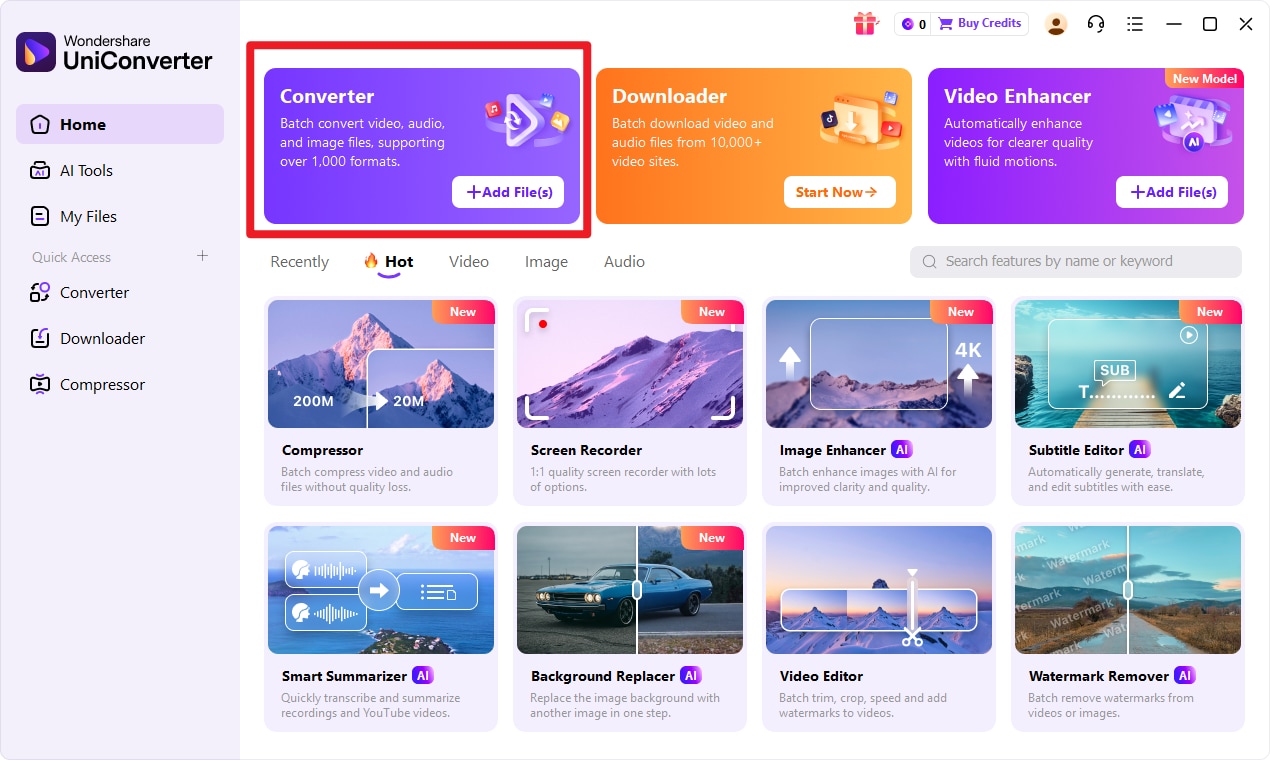
Step 1:Launch Wondershare UniConverter
Launch Wondershare UniConverter on your computer. Navigate to the Converter section from the left-hand menu.
Step 2: Add Files to UniConverter
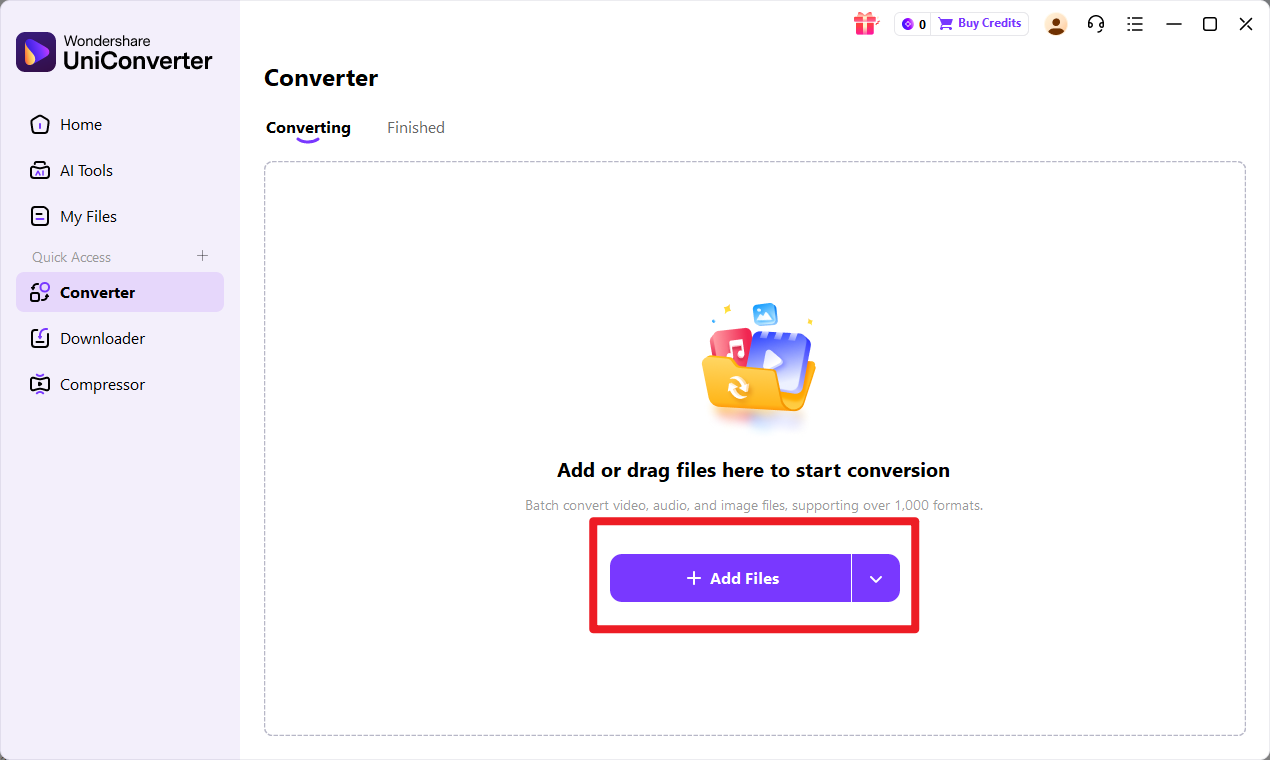
You can either click the Add Files icon to browse for your WebM video or simply drag and drop the file directly into the program window.
Step 3: Choose Output Format
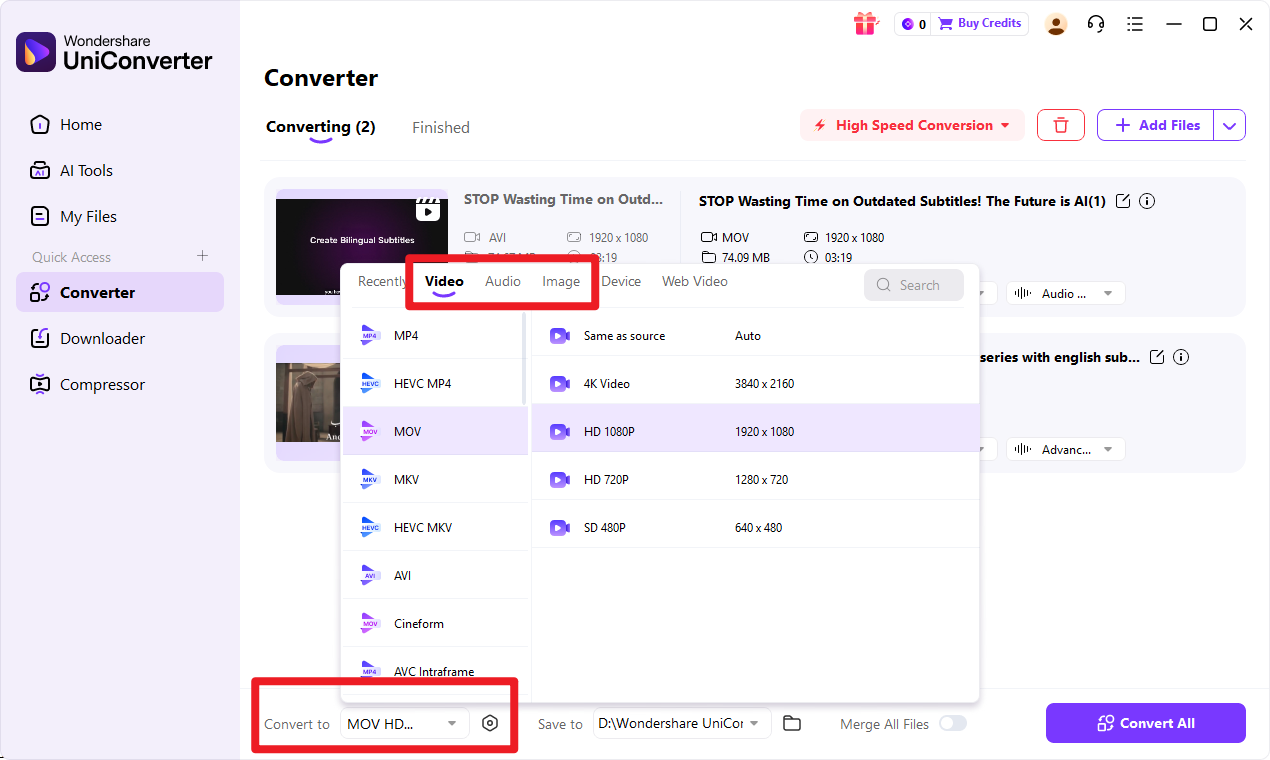
Click on the Output Format menu located at the bottom of the window. A new dialog box will appear. Go to the Video tab, select MKV from the list of formats on the left, and then choose your desired resolution on the right (selecting "Same as source" is recommended to maintain quality).
Step 4: Start the Conversion
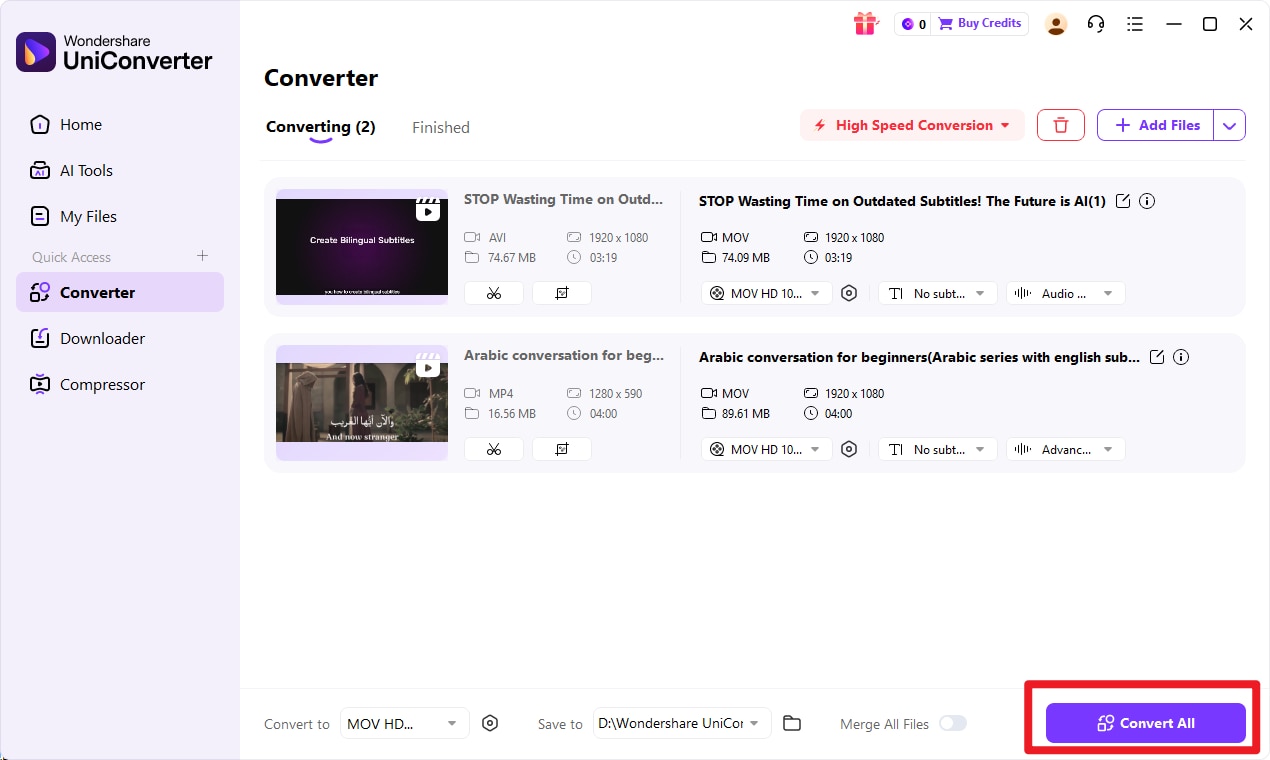
Before converting, you can click the gear icon next to the resolution to access advanced settings. Here, you can adjust the encoder, bitrate, or frame rate if needed. Once you are satisfied with the settings, select a destination folder for your new file under File Location. Finally, click the Convert button (or Start All if you have multiple files) to begin the process.
UniConverter will complete the conversion at high speed. Once finished, you can find your new MKV file by clicking on the Finished tab at the top of the window or by navigating directly to the output folder you selected in the previous step. Your video is now ready for playback on any MKV-compatible device.

Your Complete Video Conversion Toolkit
Conclusion
In the WebM vs MKV comparison, it's clear that there is no single winner, only the right tool for the right job. Both are excellent container formats that serve distinct but equally important roles in the digital video landscape. WebM is the undisputed champion of the web, engineered for efficient, high-quality streaming and universal browser compatibility. MKV is the master of local media, offering unparalleled flexibility and quality for archiving and managing a personal media library. The best choice for you will always depend on your final goal. And if you ever find yourself with a file in the wrong format for your needs, a versatile and reliable tool like Wondershare UniConverter makes switching between them a seamless and lossless process.
FAQs
-
1. Is WebM smaller than MKV?
Generally, yes. For the same perceived visual quality, a WebM file using a modern codec like VP9 or AV1 will often be smaller than an MKV file using an older but still common codec like H.264. This superior compression efficiency is what makes WebM ideal for web streaming where file size is a major concern. -
2. Can I play MKV files in Chrome?
Natively, Google Chrome does not support the playback of MKV files. If you try to open an MKV file in Chrome, it will likely just download it. To play it in the browser, you would need to use a specific browser extension or, more reliably, convert the file to a web-compatible format like WebM or MP4. -
3. Will I lose quality converting WebM to MKV?
You will not lose quality if you use a professional converter that can remux the file. If the codecs inside the WebM file (e.g., AV1 video and Opus audio) are also compatible with the MKV container, a tool like Wondershare UniConverter can simply change the container from .webm to .mkv without re-encoding the video and audio streams. This process is extremely fast and results in zero quality loss. -
4. Which format is better for archiving?
MKV is the superior format for archiving. Its ability to hold multiple high-quality or lossless audio tracks, numerous subtitle tracks, and chapter information all within a single file makes it the perfect choice for creating a complete and future-proof digital backup of your media.
