
Navigating the world of video formats can be confusing, especially when dealing with specialized file types like WebM and M2TS. These two formats serve very different purposes, and understanding their unique characteristics is crucial for anyone working with digital video. Whether you're a content creator trying to optimize videos for the web, a media enthusiast archiving your Blu-ray collection, or simply someone who has encountered an unfamiliar file, the WebM vs M2TS debate is relevant. M2TS files offer pristine, high-definition quality but are large and incompatible with most web platforms, while WebM is designed for efficient, high-quality streaming online. This guide will break down everything you need to know about these formats, helping you choose the right one for your needs and showing you how to convert between them seamlessly.
In this article
Part 1. What is WebM? What is M2TS?
Before we dive into a direct comparison, it's important to understand the fundamentals of each format. They were created for entirely different ecosystems—one for the open web and the other for high-definition physical media.
What is WebM?
WebM is an open-source, royalty-free audiovisual media file format developed by Google. As its name suggests, it was specifically engineered for the web. The primary goal of WebM is to provide a high-quality, open-standard video format for HTML5 video that is free for everyone to use. This makes it an ideal choice for streaming video on websites, as it avoids the licensing fees associated with other formats like H.264.
Its key characteristics include excellent compression efficiency, which results in smaller file sizes without a drastic loss in visual quality. This is crucial for fast loading times and smooth playback, even on slower internet connections. WebM files typically use the VP8 or VP9 video codecs, which are known for their high-performance compression, and the Vorbis or Opus audio codecs for clear, efficient sound. YouTube, one of the largest video platforms in the world, heavily utilizes the WebM format for its video streams.
What is M2TS?
M2TS, which stands for MPEG-2 Transport Stream, is a video container format commonly used for high-definition video on Blu-ray Discs and AVCHD (Advanced Video Coding High Definition). It is essentially the standard for storing high-definition movie data on physical media. An M2TS file is a container that can hold multiple video, audio, and subtitle streams in one place, preserving the full quality of the original source.
The defining characteristic of M2TS is its ability to maintain extremely high-quality, often near-lossless, video and audio. This is because it uses minimal compression to ensure the viewing experience is as close to the studio master as possible. Consequently, M2TS files are typically very large. The format often contains video encoded with the H.264/MPEG-4 AVC codec, one of the most common high-definition codecs, and high-fidelity audio codecs like Dolby Digital (AC-3) or uncompressed LPCM.
Part 2. Quick Comparison Table
For a quick overview, this table highlights the key differences between the WebM and M2TS formats at a glance.
| Feature | WebM | M2TS |
| Primary Use | Web streaming and online video | Blu-ray discs and AVCHD storage |
| File Size | Small to medium | Very large |
| Compression | High compression | Low to no compression |
| Video Quality | Good to very good | Excellent to lossless |
| Compatibility | Modern web browsers, YouTube | Blu-ray players, specific media players (e.g., VLC) |
| Developer | Blu-ray Disc Association |
Part 3. WebM vs M2TS: Which One Is Better?
The question of which format is "better" depends entirely on your specific needs. One excels in quality and the other in efficiency and accessibility. Let's break down their differences in more detail.
Comparison by Quality
When it comes to pure, unadulterated quality, M2TS is the clear winner. The format is designed to be a digital replica of a high-definition source, such as a commercial Blu-ray movie or footage from a high-end camcorder. It uses very high bitrates and minimal compression to preserve every detail, color nuance, and audio channel from the original recording. This makes M2TS the preferred format for archiving master copies and for professional video editing where maintaining source quality is paramount.
WebM, on the other hand, is built on a philosophy of balance. It provides very good to excellent video quality that is more than sufficient for most viewing experiences, especially on computer monitors and mobile devices. However, it is an inherently compressed format. Its VP8 and VP9 codecs are designed to intelligently discard data that the human eye is less likely to notice, thereby reducing the file size. While the quality is fantastic for web streaming, it is not a lossless format and will not match the pristine fidelity of an M2TS source file.
Comparison by File Size
The difference in file size between WebM and M2TS is dramatic and is a direct result of their different compression strategies. M2TS files are notoriously large. A single full-length movie in M2TS format can easily exceed 20-40 GB. This is because the format prioritizes quality over size, using low compression to retain as much data as possible. These massive file sizes make M2TS impractical for sharing over the internet, uploading to cloud services with storage limits, or storing large collections on a standard hard drive.
WebM is the polar opposite. Its entire purpose is to be lightweight and efficient for the web. Thanks to its advanced compression algorithms, a WebM file can be a fraction of the size of an equivalent M2TS file while still maintaining impressive visual quality. This significant size reduction is what allows WebM videos to load quickly on websites and stream smoothly without constant buffering, making it the superior choice for any online application.
Comparison by Compatibility
Compatibility is another area where the two formats diverge significantly. WebM enjoys widespread, native support across the modern digital landscape. It is supported by default in major web browsers, including Google Chrome, Mozilla Firefox, and Opera. This means you can embed a WebM video in a webpage, and most users will be able to play it without needing any special plugins or software. Its adoption by platforms like YouTube has further solidified its position as a web standard.
M2TS, being a format for physical media, has very limited compatibility on computers and mobile devices. It is not supported by any web browser. To play an M2TS file on a PC or Mac, you typically need specialized media player software like VLC Media Player, which comes with the necessary codecs. Standard players like Windows Media Player or Apple's QuickTime Player often cannot open M2TS files without additional codec packs. Its primary playback environment is a hardware Blu-ray player connected to a television.
Verdict: Which Format to Choose
The choice between WebM and M2TS is straightforward once you define your goal.
- Choose WebM for any task related to the internet. This includes embedding videos on your website, uploading content to video-sharing platforms, creating online video ads, or sending video clips to others. Its balance of quality and small file size makes it the perfect format for web distribution.
- Choose M2TS when your priority is preserving the absolute highest video and audio quality from a source. This is the format to use for creating digital backups (rips) of your Blu-ray collection, archiving raw footage from an AVCHD camcorder, or authoring a custom Blu-ray disc. It is a format for storage and editing, not for sharing.
Part 4. Use Cases for WebM and M2TS
To further clarify their roles, let's look at some practical, real-world scenarios where each format shines.
Common Use Cases for WebM
- Website and Blog Videos: A business in 2026 looking to add a product demo or a welcome video to its homepage would use WebM to ensure fast loading times and broad browser compatibility for all visitors.
- Online Learning Platforms: Educational websites that host video tutorials benefit from WebM's efficient compression, allowing them to serve high-quality lessons to students without requiring massive bandwidth.
- Web Advertisements: Digital marketers creating video ads for online campaigns use WebM to deliver crisp, engaging visuals in a small package that won't slow down the user's browsing experience.
- Sharing on Open Platforms: Content creators who prefer open-source standards might choose WebM when uploading to platforms that support it, ensuring their content is accessible without proprietary restrictions.
Common Use Cases for M2TS
- Digital Movie Archives: A film enthusiast who wants to create a perfect 1:1 digital backup of their Blu-ray movie collection would rip the discs to M2TS files to store on a personal media server, preserving the full cinematic experience.
- Professional Video Editing: A videographer shooting a wedding with a high-end AVCHD camcorder would import the M2TS files directly into a professional editing suite like Adobe Premiere Pro or Final Cut Pro. This ensures they are editing with the highest quality source material before exporting to a delivery format.
- Authoring Custom Blu-ray Discs: A user creating a custom Blu-ray disc for a family event or an independent film project would work with M2TS files to structure the video, audio, and menu content before burning it to a disc.
Part 5. Step-by-Step Guide to Convert M2TS to WebM Using UniConverter
When you need to convert your high-quality M2TS files for web use, a reliable tool is necessary to ensure a smooth process without a major quality drop. Wondershare UniConverter is an excellent choice, offering a user-friendly interface and fast conversion speeds. It simplifies the process of converting M2TS to WebM, making your large video files web-ready in just a few clicks.
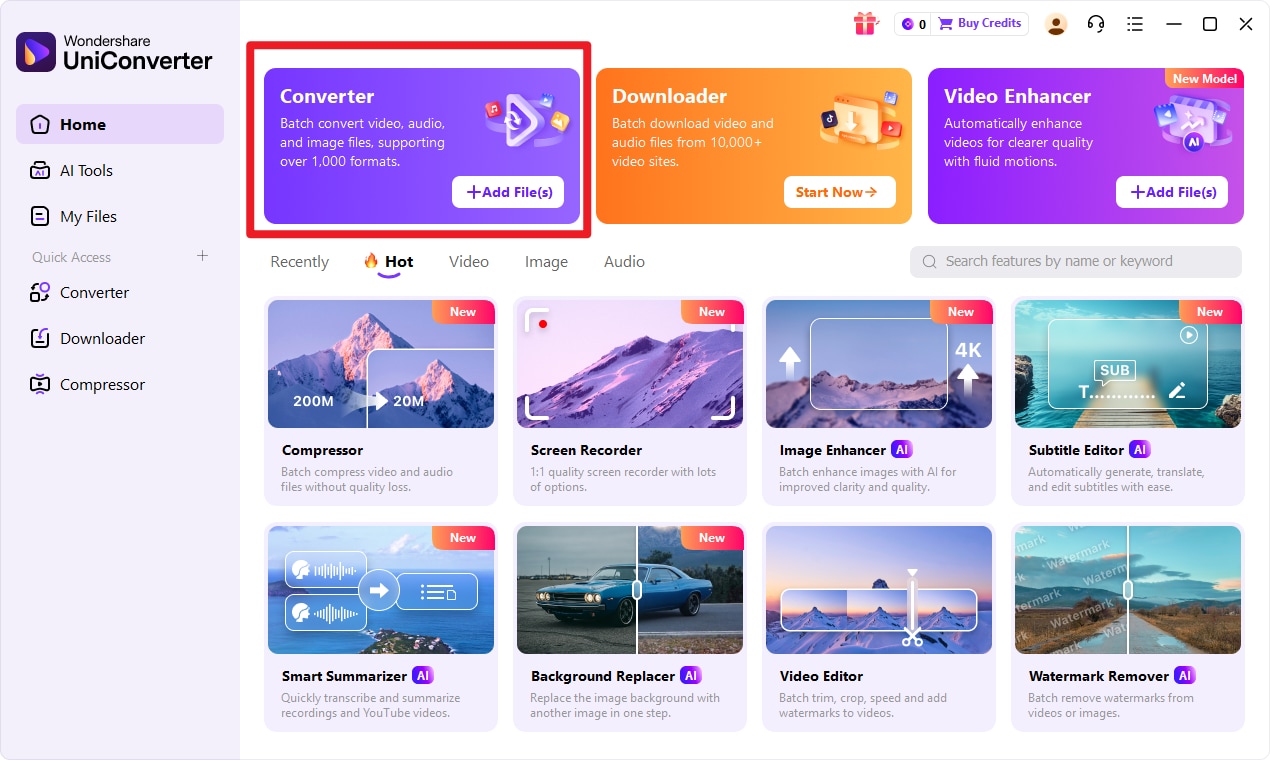
Step 1: Choose Converter in UniConverter
Launch Wondershare UniConverter on your computer. From the main interface, look at the menu on the left side and select the Converter tool to open the video conversion window.
Step 2: Add Files to UniConverter
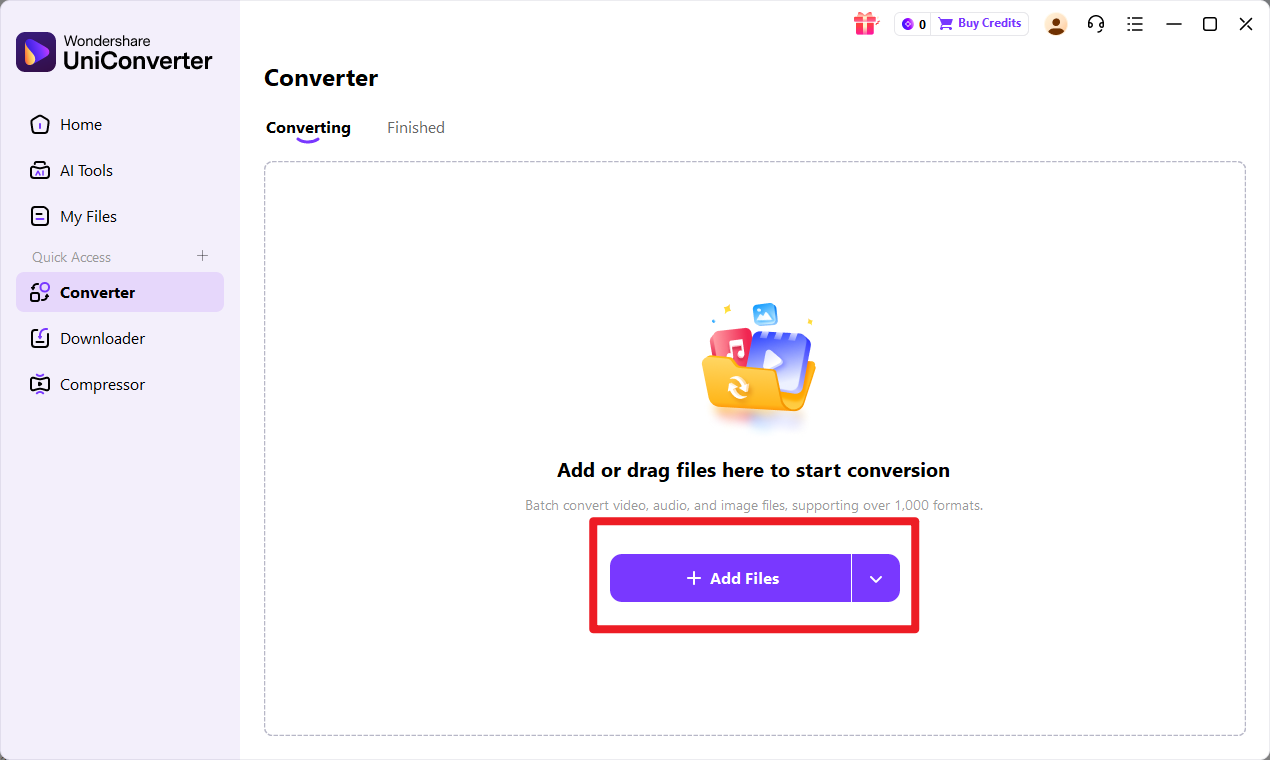
You can now add your M2TS files to the program. Either drag and drop your input format files directly onto the program window or click the Add Files button in the top-left corner to open a file browser and import them from your computer.
Step 3: Choose Output Format
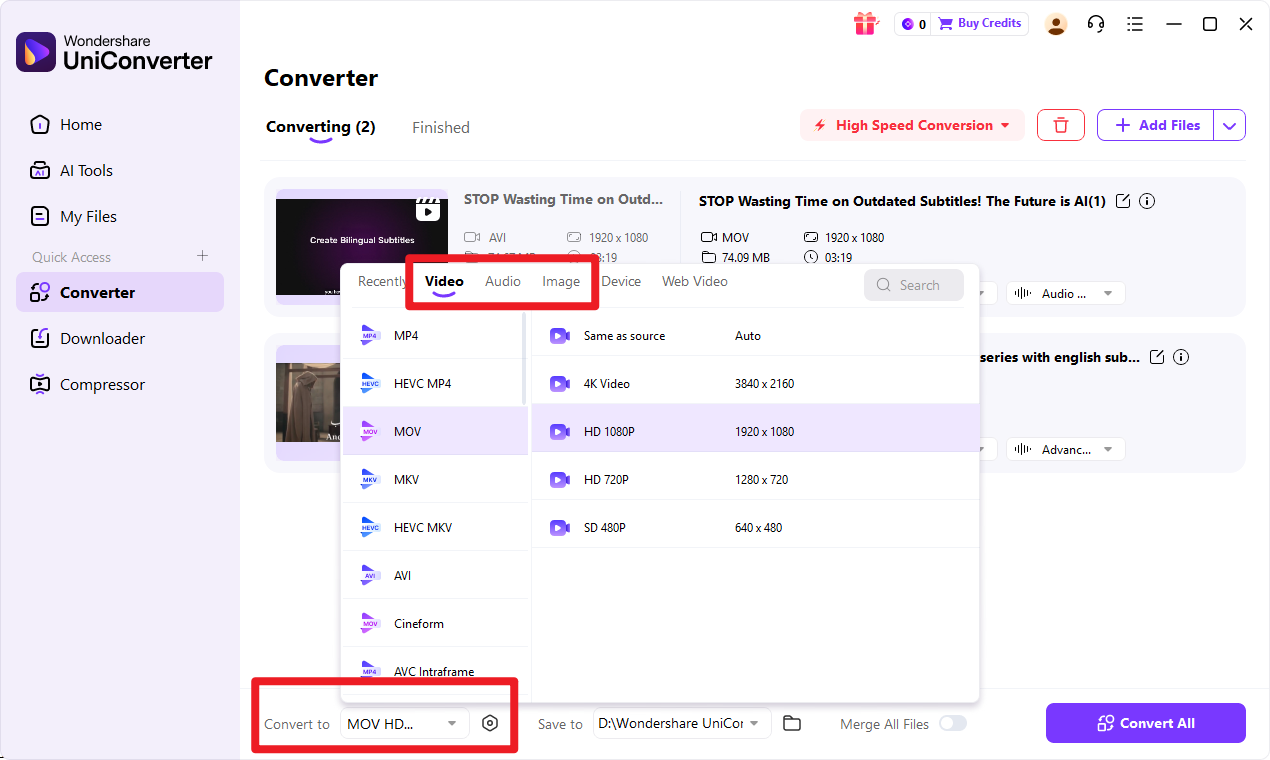
At the bottom of the interface, click on the Output Format option. This will open a new window with a list of available formats. Go to the Video tab, select your target format from the list on the left, and then choose your desired resolution on the right.
Step 4: Start the Conversion
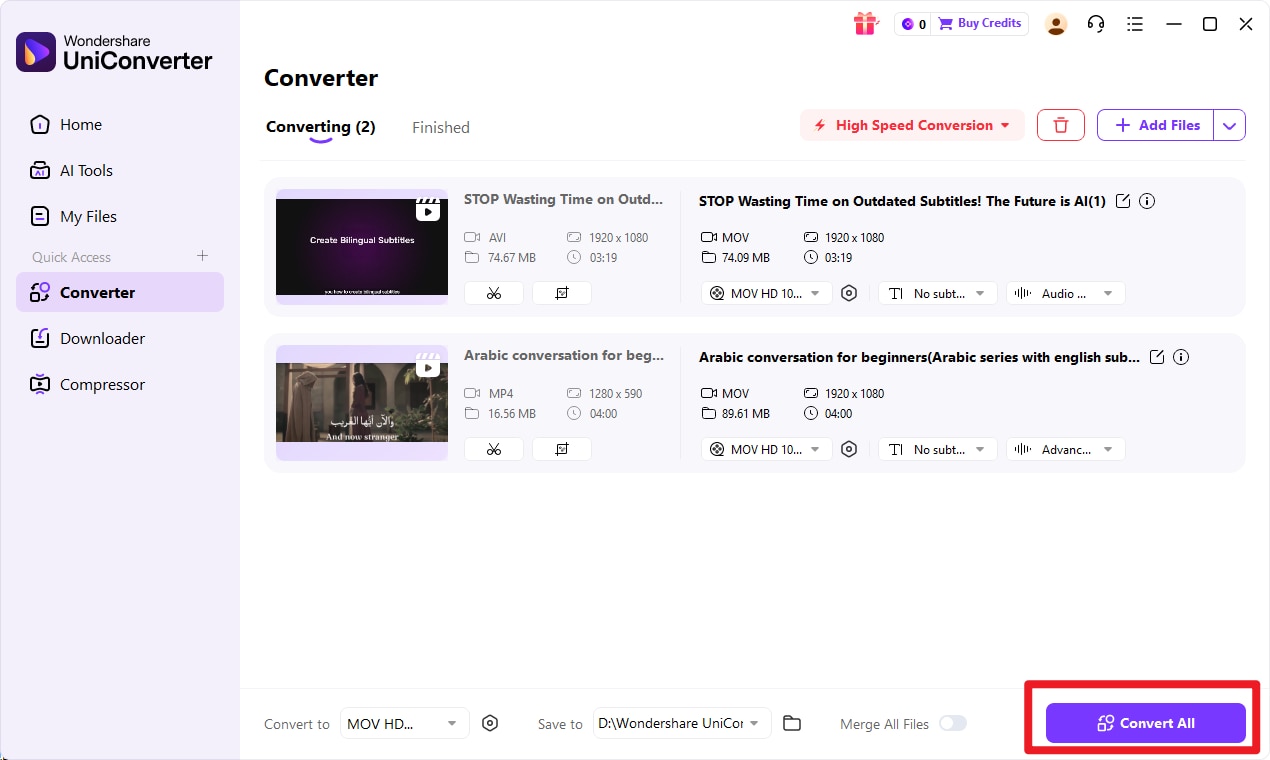
Before starting, you can select a destination folder for your converted file by using the File Location option at the bottom. Once you are ready, click the Start All button in the bottom-right corner to begin the batch conversion process. UniConverter will efficiently convert your files.

More Than Just a Video Converter
Conclusion
In summary, the WebM vs M2TS comparison reveals two formats designed for distinctly different worlds. WebM is the modern, efficient standard for high-quality video on the web, prized for its small file size and broad compatibility. M2TS is a heavyweight container built to preserve the maximum possible audio and video fidelity from physical media like Blu-ray discs, making it ideal for archiving and professional editing but unsuitable for online use. The best format is not a matter of superior technology but of intended application. For users who need to bridge the gap between these two worlds—for instance, by sharing a Blu-ray clip online—a powerful conversion tool is essential. Programs like Wondershare UniConverter provide a simple, fast, and effective solution to convert M2TS files to WebM, solving any challenges related to compatibility or file size while maintaining excellent quality.
FAQs
-
1. Is M2TS a good format?
M2TS is an excellent format for its intended purpose: storing video in its highest possible quality, especially when sourced from Blu-ray discs or AVCHD cameras. Its ability to hold uncompressed or minimally compressed data makes it perfect for archiving. However, it is not a good format for sharing, streaming, or general playback on most devices due to its massive file size and limited software support. -
2. Will I lose quality converting M2TS to WebM?
All video conversion that involves re-encoding (which is the case here) will technically result in some data loss. However, the perceived loss in quality can be minimal if you use a high-quality conversion program. A professional tool like UniConverter gives you precise control over the output settings, such as bitrate and resolution, allowing you to find the perfect balance. You can preserve a very high level of visual quality while still benefiting from the significant file size reduction of the WebM format. -
3. Can Chrome play M2TS files?
No, Google Chrome and other modern web browsers cannot play M2TS files natively. Browsers are optimized for web-native formats like WebM, MP4, and AV1. To play the content of an M2TS file in Chrome, you must first convert it to one of these compatible formats. -
4. How do I open an M2TS file?
You can open M2TS files using a versatile, third-party media player that includes a wide range of built-in codecs. The most popular choice is VLC Media Player, which is free and available for Windows, macOS, and Linux. Additionally, comprehensive video toolkits like Wondershare UniConverter have a built-in player that can handle M2TS files and many other formats. Standard operating system players, such as Windows Media Player or Apple's QuickTime, will likely fail to open M2TS files unless you have installed special codec packs.
