
In the ever-evolving landscape of digital content, choosing the right file format is crucial for balancing quality, performance, and compatibility. When it comes to web animations, the debate often boils down to two key players: WebM and GIF. While GIFs have been a staple of internet culture for decades, the modern WebM format presents a powerful alternative. Making the right choice between WebM vs GIF can significantly impact your website's loading speed, the visual appeal of your marketing campaigns, and the shareability of your content.
This guide is designed to demystify these two formats. We will delve into their technical specifications, compare their strengths and weaknesses, and provide clear guidance on when to use each one. Whether you are a web developer aiming for optimal site performance, a content creator crafting engaging visuals, or simply someone trying to share an animation, understanding the difference is key.
In this article, you will learn:
- The definitions and core technologies behind WebM and GIF.
- A direct, side-by-side comparison of their key features.
- A detailed breakdown of how they stack up in terms of file size, quality, and compatibility.
- Practical use cases to help you decide which format is best for your specific project.
- A simple, step-by-step guide on how to convert WebM files to GIF.
Part 1. What is WebM? What is GIF?
Before we can compare these formats, it's essential to understand what each one is and how it works. Though both can display moving images, they are built on fundamentally different technologies.
What is WebM?
WebM is a modern, open-source media file format developed and sponsored by Google. It was introduced in 2010 with the specific goal of providing a royalty-free, high-quality video format for the web. Essentially, WebM is a container format designed for HTML5 video and audio.
It is built to deliver excellent video quality while maintaining small file sizes, making it ideal for streaming video content over the internet. The format typically uses VP8 or VP9 video codecs, which are highly efficient at compressing video data, and Vorbis or Opus audio codecs for sound. This combination makes WebM a powerful choice for embedding crisp, smooth animations and short videos directly into web pages without sacrificing performance.
What is GIF?
GIF, which stands for Graphics InterchangeFormat, is one of the oldest and most recognizable image formats on the internet. Developed by CompuServe in 1987, it was designed to create compact animated images for a time when internet connections were much slower.
GIF uses LZW lossless compression, which means it reduces file size without losing image data. However, its most significant limitation is its color palette. A GIF can only display a maximum of 256 colors per frame. While this was sufficient for the simple graphics of the early web, it can lead to noticeable quality issues like color banding in modern, complex images. Despite its technical limitations, the GIF's legacy is its universal support. It is compatible with virtually every web browser, email client, and social media platform, making it a reliable and ubiquitous format for simple, looping animations.
Part 2. Quick Comparison Table
For a quick overview, here is a side-by-side comparison of the most important features of WebM and GIF. This table helps highlight their core differences at a glance.
| Feature | WebM | GIF |
| File Size | Significantly Smaller | Larger |
| Image Quality | High (True Color, >16 million colors) | Lower (Limited to 256 colors) |
| Audio Support | Yes | No |
| Transparency | Yes (Full Alpha Channel) | Yes (Basic 1-bit) |
| Browser Support | All Modern Browsers | Universal |
| Best For | High-quality web video, performance-critical animations | Memes, social media reactions, email marketing |
Part 3. WebM vs GIF: Which One Is Better?
Determining which format is "better" depends entirely on your priorities. In this section, we'll pit WebM and GIF against each other in four key rounds to see where each one excels.
Round 1: File Size and Compression
When it comes to efficiency, there is a clear winner. WebM was built from the ground up for the modern web, where performance is paramount. It uses advanced video compression algorithms (VP8/VP9) that are far more effective at reducing file size than the decades-old method used by GIFs. For an animation of the same length and resolution, a WebM file will almost always be significantly smaller than its GIF counterpart—often by a factor of 10 or more.
GIFs, on the other hand, can become notoriously large. Their LZW compression is lossless but not nearly as efficient. Longer animations or those with higher resolutions can quickly balloon into multi-megabyte files, which can drastically slow down page load times and consume more bandwidth.
Winner: WebM
Round 2: Quality and Color Depth
The difference in visual quality between WebM and GIF is stark. WebM is a true-color video format, meaning it can support over 16 million colors. This allows it to display smooth gradients, subtle shades, and photorealistic detail without any degradation. Animations and videos saved in the WebM format look crisp, vibrant, and professional.
GIF is severely handicapped by its 256-color palette. While this is sufficient for simple cartoons or logos with flat colors, it struggles with complex images like photographs or detailed illustrations. To display colors outside its limited palette, a GIF resorts to a process called dithering, which uses patterns of pixels to simulate more colors. This often results in a grainy appearance and visible color banding, where smooth gradients are replaced with chunky blocks of color.
Winner: WebM
Round 3: Features and Functionality
WebM is a full-fledged media container, which gives it a significant advantage in functionality. Most notably, WebM files can include an audio track, allowing you to create short video clips with sound. Furthermore, WebM supports an 8-bit alpha channel, which provides full, variable transparency. This means you can have objects with smooth, semi-transparent edges that blend seamlessly with the background.
GIF is much more limited. It does not support audio at all. Its transparency is also rudimentary; a pixel in a GIF can either be fully transparent or fully opaque, with nothing in between. This "1-bit" transparency results in hard, jagged edges on non-rectangular shapes, which can look unprofessional against complex backgrounds.
Winner: WebM
Round 4: Compatibility and Support
This is the one area where GIF holds an undeniable and powerful advantage. Having been around for over three decades, the GIF format is universally supported. It will play on virtually any device, in every web browser (even ancient ones), across all major social media platforms, and within email clients. If you need an animation that is guaranteed to work for everyone, everywhere, GIF is the safest and most reliable choice.
WebM, while widely adopted, is still a product of the modern web. It is supported by all major contemporary browsers like Chrome, Firefox, Edge, and Safari. However, it may fail to play in older browsers, certain enterprise environments, or specific applications like email clients (e.g., Outlook). While its support is growing, it has not yet reached the universal level of the GIF.
Winner: GIF
Part 4. Use Cases for WebM and GIF
Now that we've analyzed their differences, let's look at practical scenarios to help you decide which format to use for your project.
When to Choose WebM
WebM is the superior choice when quality and performance are your top priorities. You should opt for WebM in the following situations:
- Embedding High-Quality Videos on Your Website: If you want to feature a short, looping video banner, product demonstration, or animated background on your website, WebM will provide stunning quality at a fraction of the file size of a GIF.
- When Page Load Speed is Critical: For e-commerce sites, blogs, and corporate websites, fast loading times are essential for user experience and SEO. Using lightweight WebM files instead of bulky GIFs can significantly improve your site's performance.
- For Complex Animations: If your animation involves photorealistic imagery, smooth color gradients, or requires semi-transparent elements, WebM is the only format of the two that can handle it without a major loss in quality.
- When Audio is Needed: If your short animation needs a sound effect or a snippet of music, WebM is the natural choice as it supports audio natively.
When to Choose GIF
Despite its technical shortcomings, GIF's universal compatibility keeps it highly relevant. You should stick with GIF for these use cases:
- Creating Memes and Reaction Images: The primary currency of social media is shareability. GIFs are the undisputed champions for creating viral memes and reaction images that can be easily shared and viewed on platforms like X (Twitter), Facebook, Reddit, and messaging apps.
- Animations in Email Newsletters: Email clients have notoriously poor support for modern web technologies. A GIF is one of the few animated formats that will reliably play directly in a subscriber's inbox, making it ideal for adding a touch of motion to your email marketing campaigns.
- When You Need a Guaranteed Fallback: If you are developing for an audience that might be using older technology or browsers, a GIF provides a foolproof way to ensure everyone sees your animation. It's the lowest common denominator that always works.
- For Very Simple, Low-Color Animations: If your animation is a simple logo or icon with only a few flat colors, the limitations of the GIF format won't be noticeable, and its simplicity can be an advantage.
Part 5. Step-by-Step Guide to Convert WebM to GIF Using UniConverter
There are times when you might have a high-quality WebM file but need to share it on a platform that only accepts GIFs. In this scenario, you'll need to convert it.
Why Convert WebM to GIF?
The primary reason to convert a WebM file to GIF is for maximum compatibility. You might have a beautiful WebM animation that you want to post on a social media site that doesn't support it, or you may want to include it in an email where a GIF is the only reliable option. Converting allows you to trade some quality and file size for the guarantee that your animation will be seen by everyone. For this task, a powerful and user-friendly tool like Wondershare UniConverter is highly recommended, as it makes the process fast and simple while giving you control over the output.
How to Convert WebM to GIF in 4 Easy Steps
Follow these steps to quickly transform your WebM video into a high-quality animated GIF.
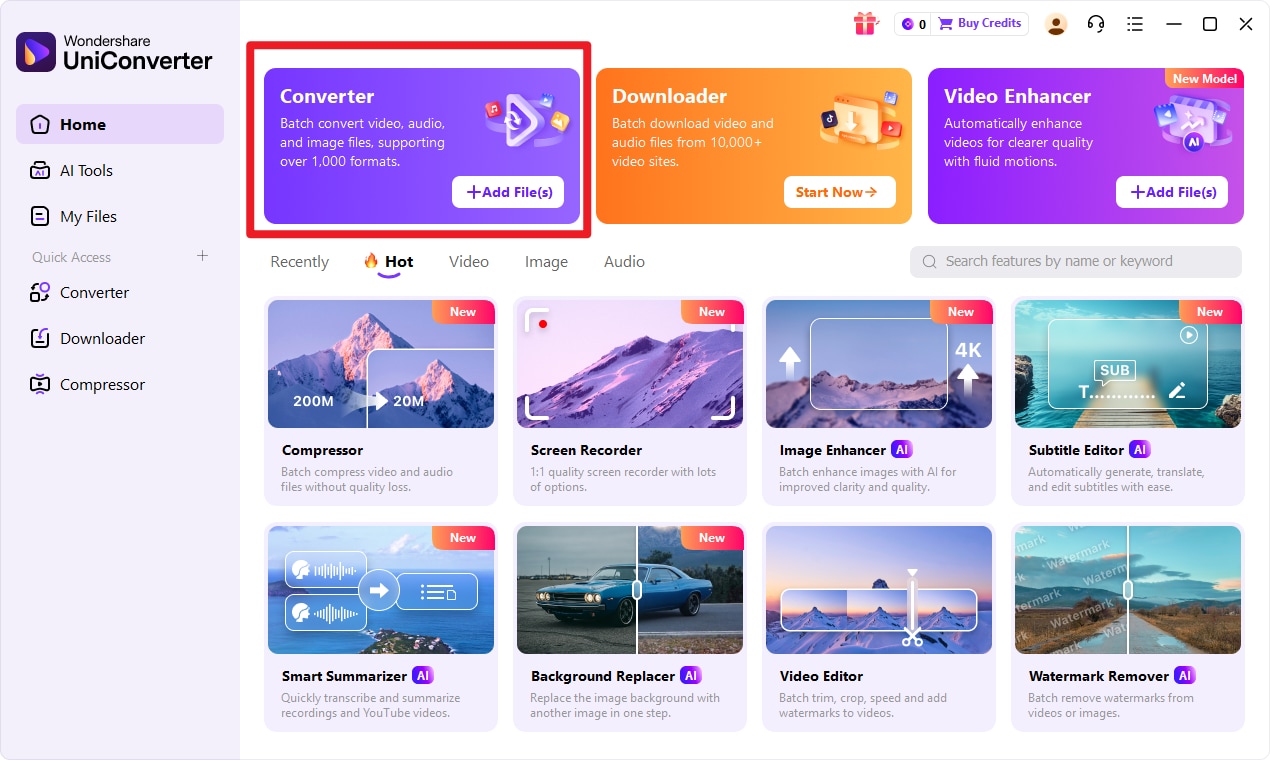
Step 1: Launch the Wondershare UniConverter
First, download and launch the Wondershare UniConverter application on your computer. From the main menu on the left, select the Converter tool.
Step 2: Add Files to UniConverter
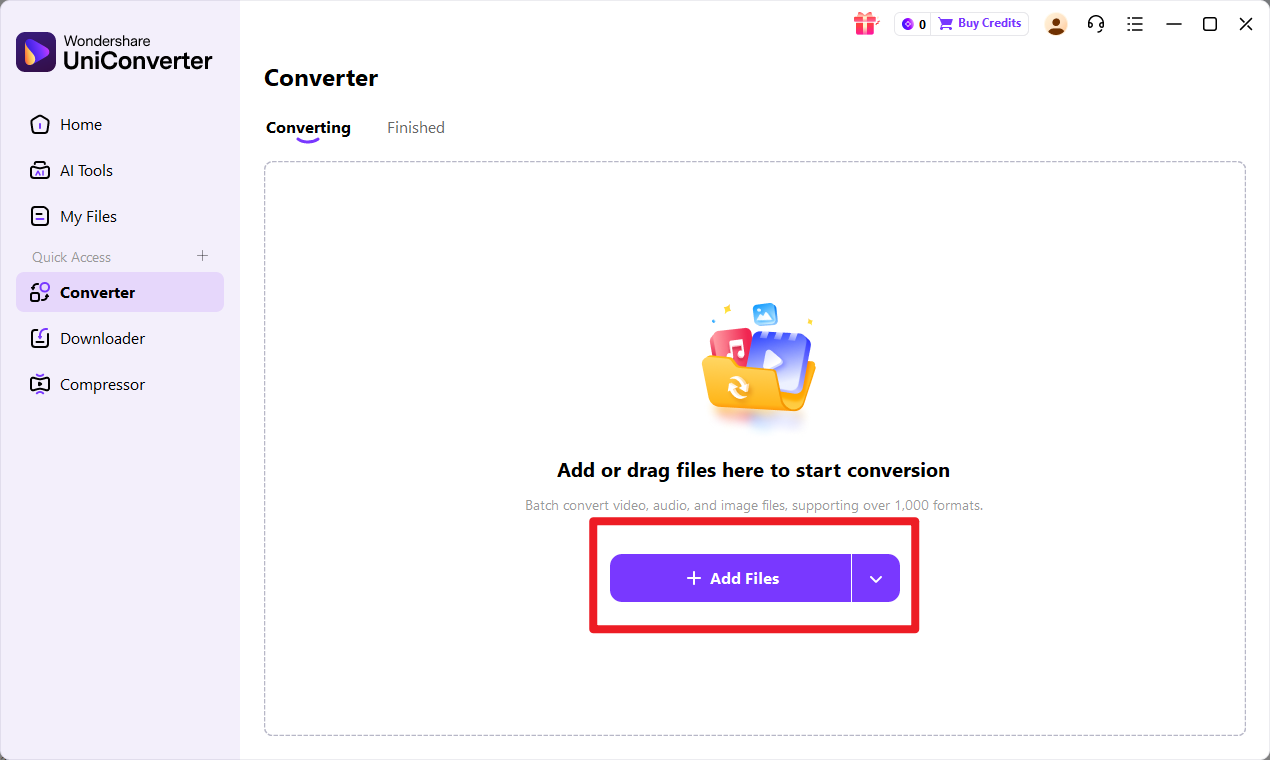
In the main panel, click the Add Files button or drag and drop your WebM file directly into the window to import it.
Step 3: Choose Output Format
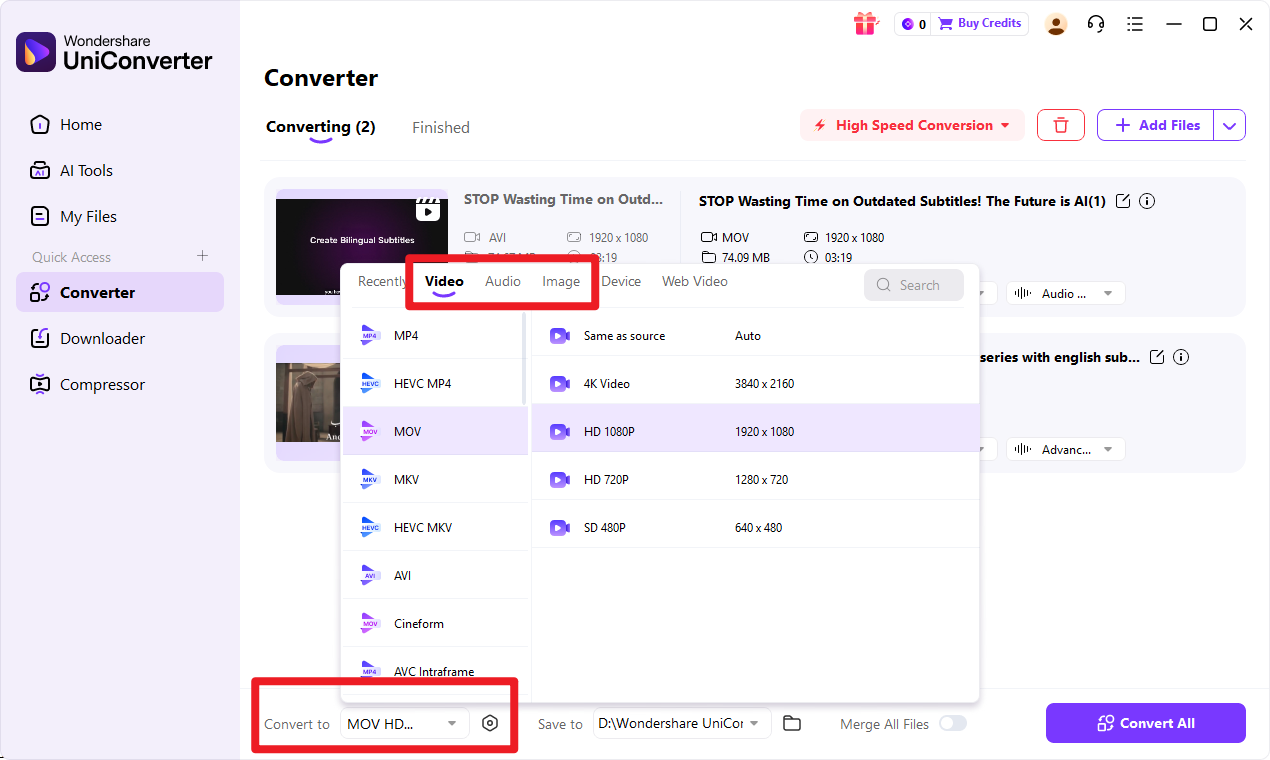
With your file loaded, look to the bottom of the window and click on the Output Format menu. This will open a new window with a list of format options. Navigate to the Image tab and select GIF from the list on the left.
Step 4: Start the Conversion
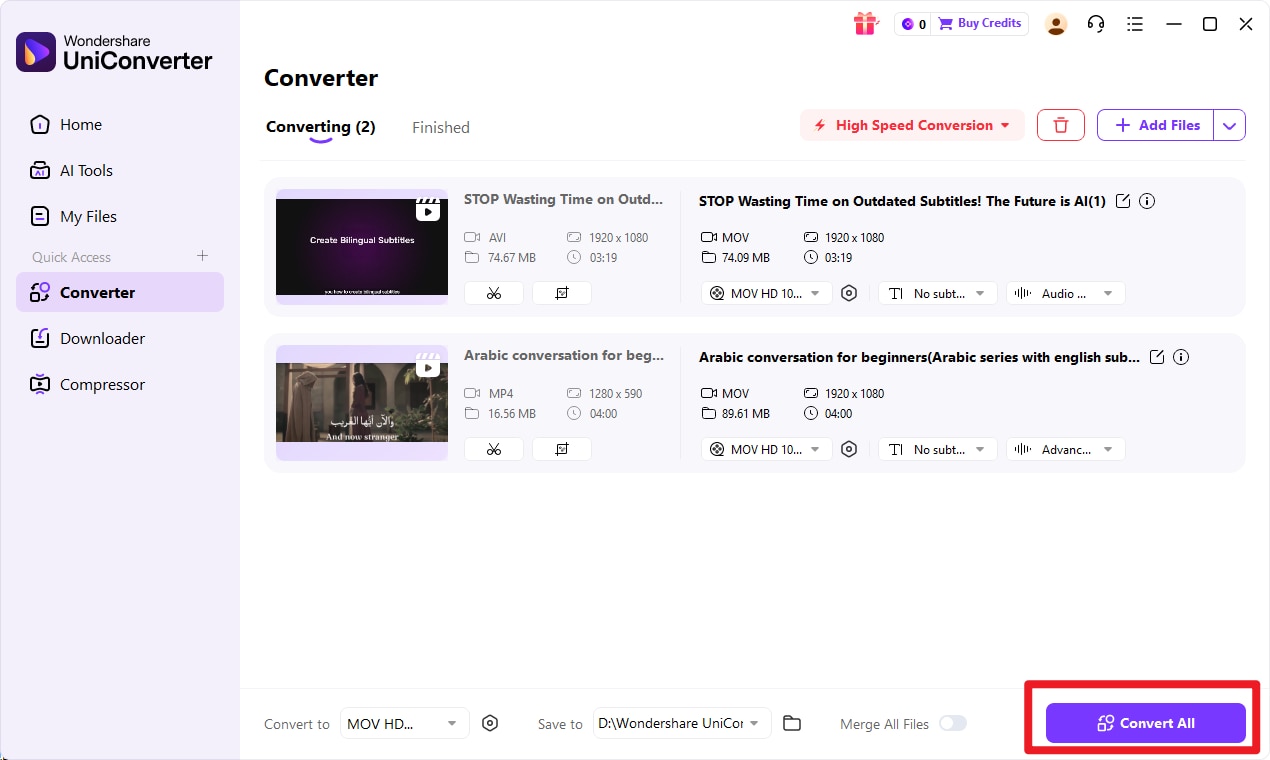
Before converting, you can click the gear icon next to the GIF format to adjust settings like resolution and frame rate, which will affect the final file size and quality. Once you are satisfied, choose a destination for your new file using the File Location option at the bottom. Finally, click the Start All button to begin the conversion process.
Wondershare UniConverter will process your file at high speed. Once the conversion is complete, you can find your newly created GIF file by navigating to the Finished tab at the top of the window or by opening the output folder you selected in the previous step.

Go Beyond Simple WebM to GIF Conversion
Conclusion
The WebM vs GIF debate doesn't have a single winner; it has a contextual one. WebM is the technically superior format for the modern web. It offers vastly better quality, full transparency, audio support, and significantly smaller file sizes, making it the ideal choice for developers and creators focused on performance and visual fidelity. However, GIF's unparalleled universal compatibility ensures its continued relevance. It remains the go-to format for content that needs to work everywhere without fail, especially in social media and email marketing.
Ultimately, your choice should be guided by your primary goal: prioritize performance and quality with WebM, or prioritize compatibility and reach with GIF. And when you need to bridge the gap between the two, a versatile tool like Wondershare UniConverter empowers you to easily convert between formats, ensuring you always have the right file for the job.
FAQs
-
1. Is WebM higher quality than GIF?
Yes, absolutely. WebM supports over 16 million colors and uses modern video compression, which results in a much higher visual quality compared to the GIF format, which is limited to a 256-color palette and often suffers from color banding and dithering. -
2. Can I use WebM on social media?
Support for WebM on social media platforms is inconsistent. While some platforms and modern apps are beginning to adopt it for video content, GIF remains the most universally supported format for short, looping animations and memes. For maximum shareability, converting to GIF is often the safest bet. -
3. Why are GIF files so large?
GIF files are large because they use an older, less efficient compression method (LZW) compared to modern video codecs. Additionally, a GIF essentially stores data for each frame of the animation, which can cause the file size to grow rapidly with longer durations or higher resolutions. -
4. Is UniConverter the best tool for converting WebM to GIF?
Wondershare UniConverter is an excellent choice for converting WebM to GIF. It stands out due to its intuitive interface, incredibly fast conversion speeds, and batch processing capabilities. It also provides valuable options to customize the output GIF's resolution and frame rate, giving you control over the final balance between quality and file size, making it a highly recommended tool for this task.
