
In the ever-evolving landscape of digital video, choosing the right format is crucial for ensuring optimal quality, compatibility, and file size. Among the myriad of options, two formats that often come up in discussion are WebM and DivX. While both serve the purpose of storing video data, they were designed with fundamentally different goals in mind. Understanding the nuances of WebM vs DivX is essential for content creators, web developers, and anyone managing a digital video library. Whether you're embedding a video on a website, archiving your movie collection, or simply trying to play a file on a specific device, the format you choose can make all the difference.
This guide will provide a comprehensive breakdown of WebM and DivX, comparing them across key metrics to help you make an informed decision. We'll explore their technical specifications, ideal use cases, and the pros and cons of each. Furthermore, we'll show you how to effortlessly convert between these formats when the need arises.
In this article
Part 1. What is WebM? What is DivX?
Before we dive into a direct comparison, it's important to understand what each format is, its core components, and its primary advantages.
What is WebM?
WebM is an open, royalty-free video container format developed by Google. It was specifically engineered for the web, designed to be used with HTML5 video. The project's goal was to provide a high-quality, open video format for the web that is free for everyone to use. Since its introduction, it has become a standard for online video streaming, thanks to its efficiency and widespread support.
Core Components: A WebM file typically consists of video streams compressed with the VP8 or VP9 video codecs and audio streams compressed with the Vorbis or Opus audio codecs. This combination is optimized for streaming over the internet, delivering excellent quality even at lower bitrates.
Key Advantages: The primary benefits of WebM are its high-quality streaming capabilities with a low computational footprint, making it easy for browsers to decode without draining system resources. It enjoys native support in all major web browsers, including Google Chrome, Mozilla Firefox, Opera, and Microsoft Edge, eliminating the need for plugins. Most importantly, its open-source and royalty-free nature encourages widespread adoption and innovation.
What is DivX?
DivX is a proprietary video codec and brand name that has become synonymous with high-quality video compression. Developed by DivX, LLC, the format is known for its remarkable ability to compress long, high-definition video segments into relatively small files while maintaining high visual quality. This made it incredibly popular during the era of physical media like CDs and DVDs.
Core Components: The DivX codec is based on the MPEG-4 Part 2 compression standard. Files are often contained in an AVI or a proprietary .divx container. It is designed to balance quality and file size, making it an excellent choice for storing large video files.
Key Advantages: DivX's main strength lies in its excellent compression ratio. It can significantly reduce a video's file size without a drastic loss in quality, which is ideal for archiving. Another major advantage is the "DivX Certified" program, which ensures that a wide range of hardware devices, such as DVD/Blu-ray players, smart TVs, and gaming consoles, can play DivX files flawlessly.
Part 2. Quick Comparison Table
To give you a clear overview at a glance, here is a quick comparison table highlighting the key differences between WebM and DivX.
| Feature | WebM | DivX |
| Developer | DivX, LLC | |
| Licensing | Open-source, Royalty-free | Proprietary |
| Video Codecs | VP8, VP9 | MPEG-4 Part 2 (DivX Codec) |
| Audio Codecs | Vorbis, Opus | MP3, AC3 |
| Primary Use | Web streaming, HTML5 video | Offline storage, DVD/Blu-ray playback |
| Browser Support | Native support in Chrome, Firefox, Opera, Edge | Requires plugins (largely unsupported) |
Part 3. WebM vs DivX: Which One Is Better?
The question of which format is "better" ultimately depends on your specific needs. Let's break down their performance in four critical areas: quality, file size, compatibility, and licensing.
Quality and Compression
Both WebM and DivX are capable of producing high-quality video, but they achieve it through different technologies. WebM primarily uses the VP9 codec, a modern and highly efficient successor to VP8. VP9 is designed to deliver superior quality at lower bitrates compared to older codecs. This means for a given file size, a VP9-encoded WebM file will often look sharper and clearer, especially for web streaming where bandwidth is a concern.
DivX, based on the MPEG-4 Part 2 standard, also offers excellent compression. It was revolutionary for its time, allowing DVD-quality video to fit on a CD. While still very effective, its compression efficiency is generally considered to be a step behind the more modern VP9. For high-bitrate, offline viewing, the perceived quality difference might be minimal, but for low-bitrate streaming scenarios, WebM's VP9 codec typically provides a better quality-to-size ratio.
File Size
File size is directly related to compression efficiency. Because WebM's VP9 codec is more advanced, it can achieve the same level of visual quality as DivX but with a smaller file size. This is a significant advantage for online distribution, as smaller files mean faster loading times for website visitors and reduced bandwidth costs for content hosts. For example, a 10-minute 1080p video encoded in WebM could be noticeably smaller than the same video encoded in DivX at a comparable quality setting. This makes WebM the clear winner for any application where file size and bandwidth are primary considerations.
Compatibility and Support
This is where the two formats diverge most significantly.
WebM is the champion of the web. It is natively supported by all modern web browsers, meaning you can embed a WebM video directly into your HTML code and it will play without any plugins or extensions. Major video platforms like YouTube and Vimeo use WebM extensively to serve video to billions of users. Its support also extends to the Android operating system, making it a reliable choice for mobile web experiences.
DivX, on the other hand, excels in hardware compatibility. Through its DivX Certified program, thousands of consumer electronics devices—including smart TVs, Blu-ray players, media players, and even some car entertainment systems—are guaranteed to play DivX files. However, its web support is virtually non-existent today. Modern browsers do not support DivX natively, and the plugins required for playback are outdated and pose security risks. Therefore, DivX is a poor choice for any online video content.
Licensing and Openness
WebM is an open-source project backed by Google. It is completely free to use, modify, and distribute. This royalty-free model has been a key driver of its adoption, as developers and companies can integrate it into their products and services without worrying about licensing fees. This fosters a collaborative and innovative ecosystem.
DivX is a proprietary format. While the basic player is free for consumers, integrating the DivX codec into software or hardware requires a license from DivX, LLC. This can be a barrier for developers and may lead to additional costs for manufacturers, which can then be passed on to consumers. The open nature of WebM gives it a distinct advantage in terms of accessibility and future-proofing.
Part 4. Use Cases for WebM and DivX
Based on the comparison above, each format has clear scenarios where it shines.
When to Use WebM
Choose WebM if your primary goal involves the internet. It is the ideal format for:
Embedding videos on a website: If you want to add a video to your blog, portfolio, or company website using the HTML5 <video> tag, WebM is the most reliable and efficient choice.
Streaming video content: For both live streaming and video-on-demand (VOD) services, WebM's combination of high quality and low file size is perfect for delivering a smooth viewing experience to a wide audience.
Developing web applications: If you're building a web-based application that incorporates video playback, using WebM ensures broad compatibility and optimal performance across different browsers and platforms.
Online advertising: Short video ads and promotional content benefit from WebM's small file size, ensuring they load quickly and don't slow down the user's browsing experience.
When to Use DivX
Choose DivX for offline video storage and playback on specific hardware. It is the best choice for:
Archiving your movie collection: If you want to digitize your collection of DVDs or Blu-rays to store on a hard drive or network-attached storage (NAS), DivX provides a great balance of high quality and manageable file size.
Playing videos on certified devices: If you own a DivX Certified smart TV, Blu-ray player, or media player, encoding your videos in DivX guarantees they will play back without any compatibility issues.
Sharing large video files offline: When you need to share a high-definition video with someone via a USB drive or other physical media, DivX can compress the file to a more portable size while preserving visual fidelity.
Part 5. Step-by-Step Guide to Convert WebM to DivX Using UniConverter
What if you have a WebM file that you need to play on your DivX-certified TV, or a DivX file you want to embed on your website? In these cases, a reliable video converter is essential. Wondershare UniConverter is a powerful and user-friendly tool that makes this process simple. It supports over 1,000 formats, including WebM and DivX, and performs conversions quickly without compromising quality.
Here's how to convert your files in four easy steps.
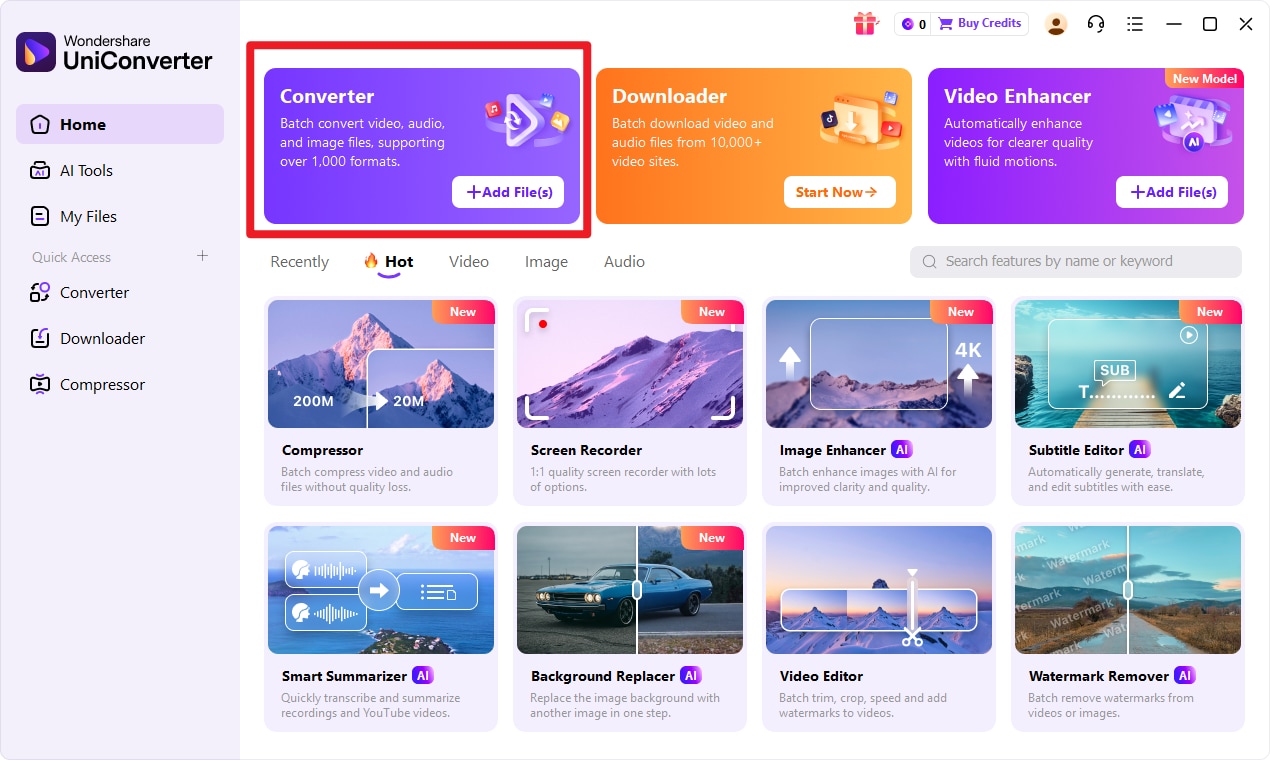
Step 1. Choose Converter in UniConverter
Launch Wondershare UniConverter on your computer. From the main home screen, navigate to the left-side menu and select the Converter tool.
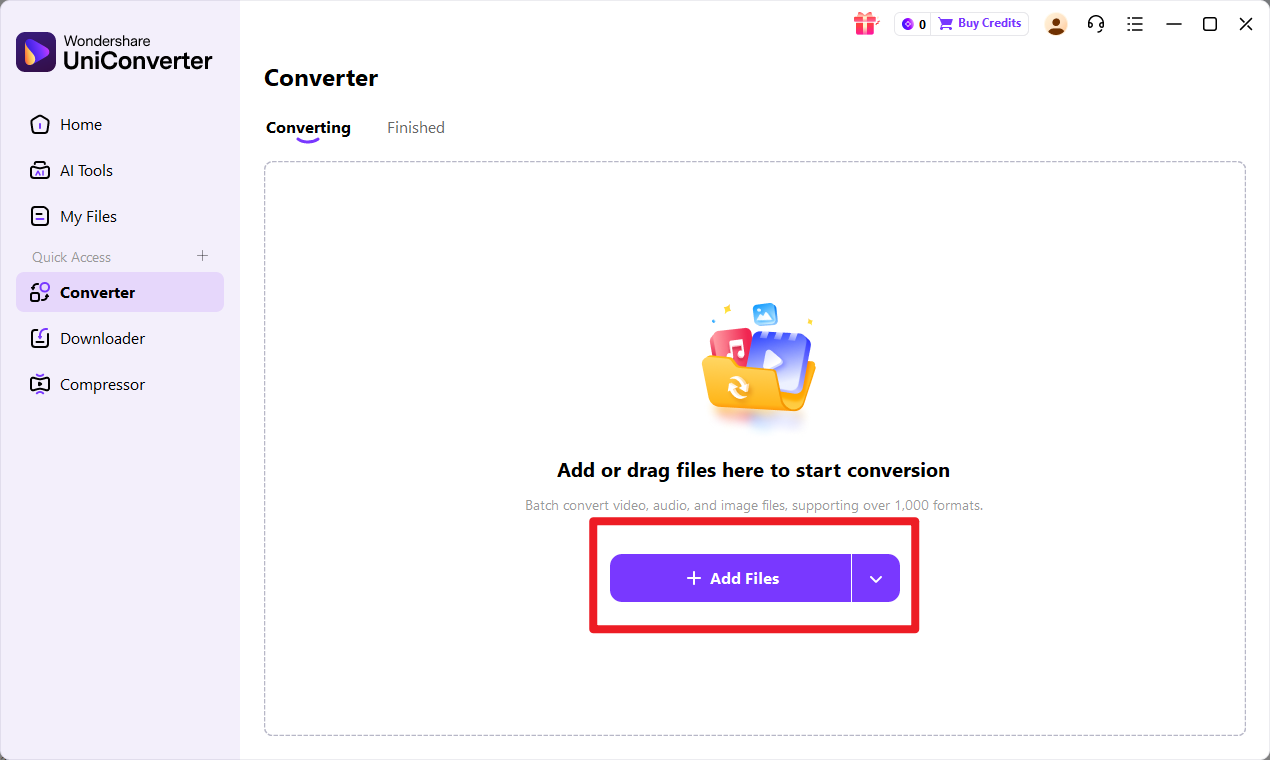
Step 2. Add Files to UniConverter
In the Converter window, you can either click the Add Files icon to browse your computer for the input format files or simply drag and drop them directly onto the interface. UniConverter supports batch conversion, so you can add multiple files at once.
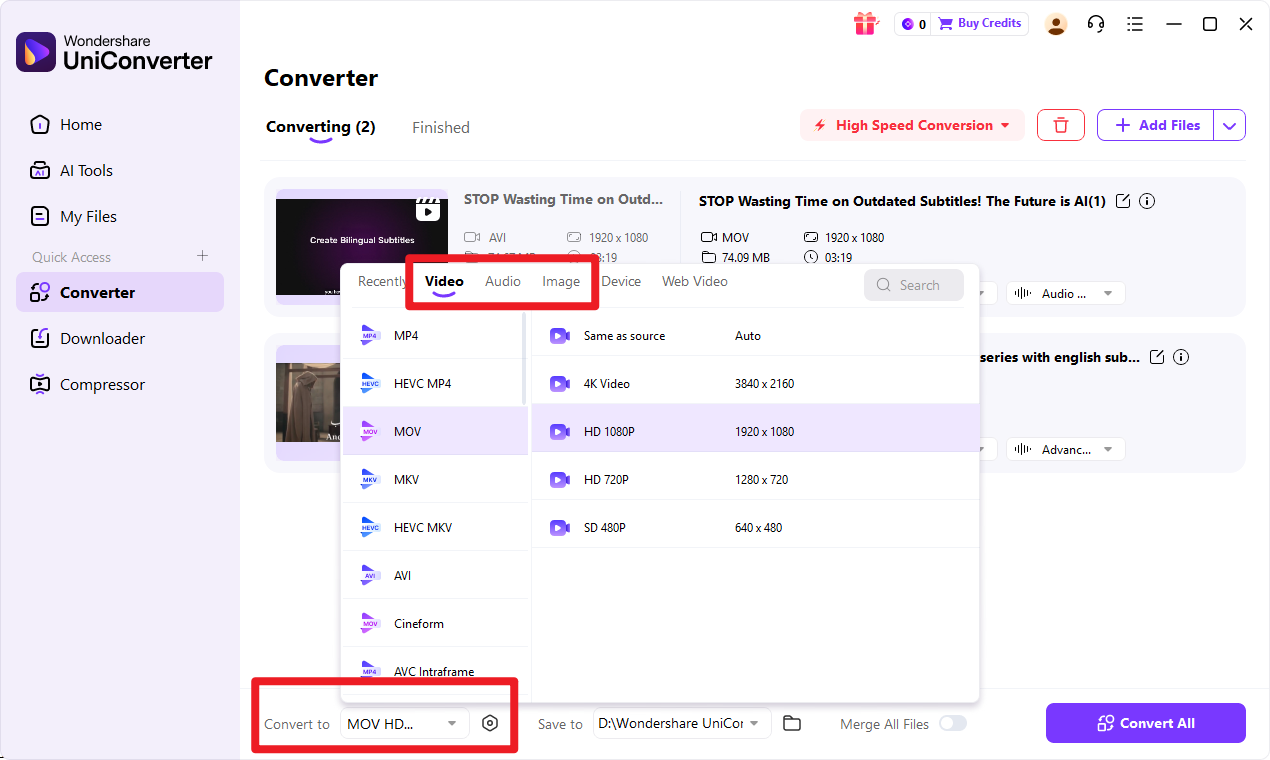
Step 3. Choose Output Format
At the bottom of the window, click on the Output Format menu. A new window will appear. Go to the Video tab, select your desired target format (e.g., DivX or WebM) from the list on the left, and then choose a resolution on the right.
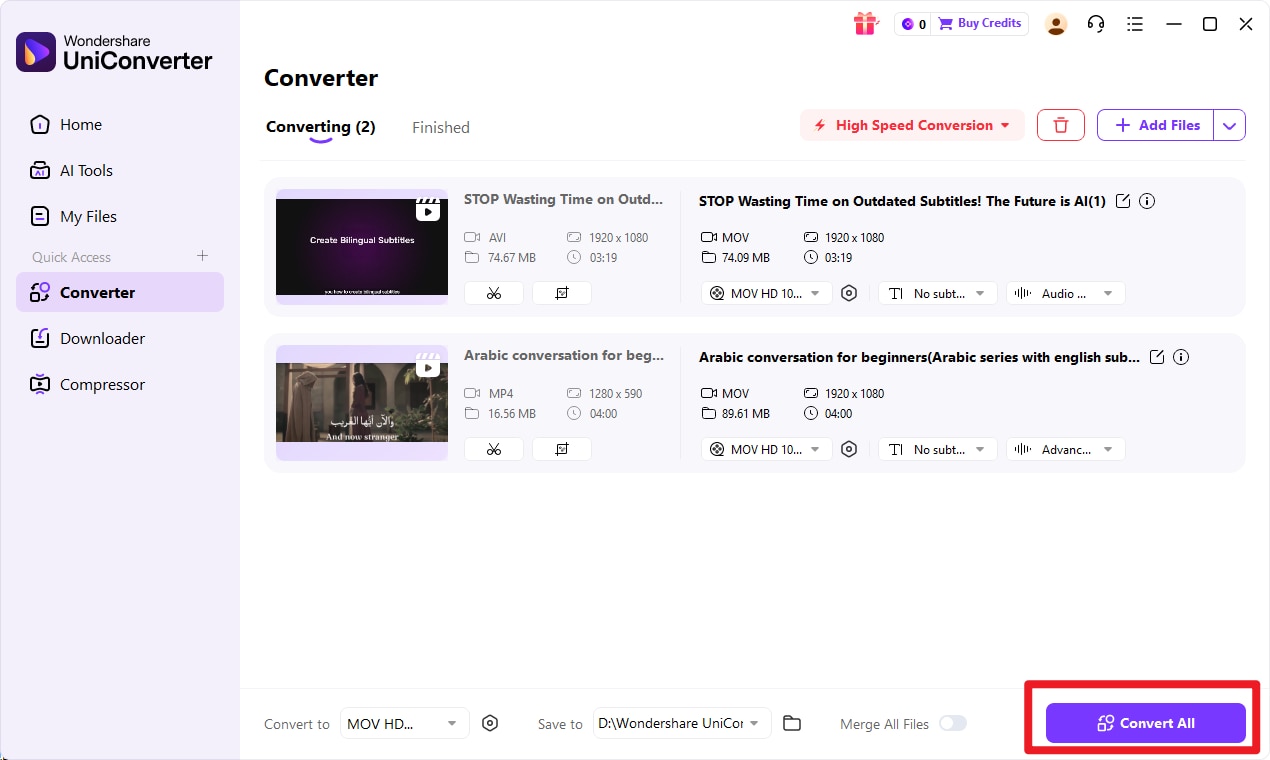
Step 4. Start the Conversion
Before starting, you can set a destination for your converted files using the File Location option at the bottom. Once you are ready, click the Start All button to begin the conversion process. UniConverter will process your files quickly. You can find the finished videos in the Finished tab.

Unlock More Than Just Video Conversion
Conclusion
In the WebM vs DivX debate, there is no single winner, only the right tool for the right job. WebM is the undisputed modern standard for the web, offering an open-source, highly efficient solution for online streaming and HTML5 video. Its native browser support and excellent compression make it the go-to choice for any internet-based video content in 2026. On the other hand, DivX remains a relevant and powerful format for offline use, particularly for archiving large video libraries and ensuring playback on a wide range of DivX Certified hardware devices.
Your choice should be guided by your end goal: choose WebM for online and DivX for offline. For those moments when you need to bridge the gap between these two worlds, a versatile and reliable tool is indispensable. Wondershare UniConverter provides the perfect solution, allowing you to seamlessly convert between WebM, DivX, and countless other formats, ensuring your videos are always ready for any platform or device.
FAQs
-
1. Is WebM better than DivX for online streaming?
Yes, absolutely. WebM is specifically designed for the web. It uses more modern codecs (VP8/VP9) that are optimized for streaming, and it is natively supported by all major web browsers. This results in faster loading times and a smoother viewing experience without the need for any plugins, making it the superior choice for online streaming. -
2. Can I play DivX files in my web browser?
Not natively. Playing DivX files directly in a modern web browser like Chrome or Firefox is not possible as they lack built-in support for the codec. In the past, this required installing a special browser plugin, but these plugins are now largely obsolete and unsupported, posing potential security risks. -
3. Does converting from DivX to WebM cause quality loss?
All video conversion involves a process of decoding and re-compressing the video stream, which can technically lead to a slight loss in quality. However, the degree of this loss depends heavily on the software used. Using a professional tool like Wondershare UniConverter, which is optimized for high-quality conversions, will minimize any perceptible quality degradation, ensuring your converted file looks nearly identical to the original.
