
Choosing between WAV vs WMA can be confusing if you want the right balance of audio quality, file size, compatibility, and ease of use. One format is known for preserving sound quality, while the other is designed to save storage space. The better choice depends on what you actually need: professional editing, music storage, everyday playback, or easier sharing. This guide breaks down the differences in plain English and helps you decide which format fits your workflow in 2026.
In this article
Quick Note
- WAV usually offers better audio quality and is widely preferred for editing and archiving.
- WMA usually creates smaller files and can be useful for storage efficiency.
- WAV is generally more flexible across modern workflows and software.
- WMA may still appear in older Windows media libraries and legacy devices.
- If you want a fast way to convert input format to target format, Wondershare UniConverter is a simple all-in-one option.
Part 1. What Is WAV? What Is WMA?
What Is WAV?
WAV is a widely used audio file format known for high sound quality. It is commonly associated with uncompressed audio, which means it keeps more original audio data instead of shrinking the file aggressively. Because of that, WAV files are usually much larger than compressed formats.
This format is often used in professional environments where audio accuracy matters more than file size. For example, editors, producers, and sound engineers often choose WAV for recording, mixing, and mastering. It is also a common choice for archiving important audio because it preserves more detail and gives better flexibility for future editing.
In simple terms, WAV is a strong option if you want the best possible source quality and do not mind larger files.
What Is WMA?
WMA stands for Windows Media Audio. It was developed to create smaller audio files through compression, making it useful when saving storage space is a priority. In many cases, WMA files are more compact than WAV files, which made them popular in older Windows-based media libraries and portable devices.
WMA can work well for casual listening, especially when you need to keep many songs without filling up your storage too quickly. However, quality and compatibility can vary depending on the device, app, or platform you use. While some systems still support WMA well, it is not always as universal as more widely recognized audio formats.
In short, WMA is mainly about efficiency: smaller files, lighter storage use, and practical playback in certain environments.
Why People Compare WAV and WMA
People usually compare WAV and WMA because they serve very different needs. The main questions are straightforward:
- Which one sounds better?
- Which one saves more space?
- Which one works on more devices?
- Which one is easier to edit?
For most users, the decision comes down to fidelity versus file efficiency. If you want the highest audio quality, WAV often looks better. If you need smaller files for storage or sharing, WMA may seem more practical.
That is why this article focuses on real-world decision-making. Instead of only talking about technical theory, it helps you choose the better format based on how you actually use audio files.
Part 2. Quick Comparison Table
WAV vs WMA Comparison Table
Here is a fast side-by-side comparison of WAV and WMA:
| Feature | WAV | WMA |
| Audio quality | Usually very high, often uncompressed | Good to moderate depending on compression settings |
| Compression type | Commonly uncompressed | Compressed, typically lossy in common use |
| File size | Large | Smaller |
| Editing suitability | Excellent for editing and production | Less ideal for repeated editing |
| Device compatibility | Broad support across modern software and devices | Better in older Windows-focused environments, less universal overall |
| Streaming and sharing convenience | Less convenient due to large size | More convenient because files are smaller |
| Best for | Professional editing, archiving, high-quality playback | Space-saving libraries, legacy playback, casual listening |
| Limitations | Takes more storage and bandwidth | May lose audio detail and may face compatibility limits |
Key Takeaways from the Comparison Table
The table makes the trade-off clear. WAV is generally the stronger choice when maximum quality and editing flexibility matter most. WMA is often better when your goal is to reduce file size and save storage.
Compatibility can also shape the decision. If compatibility matters most, WAV usually has the advantage in modern workflows, while WMA may still fit older Windows-centered collections.
If you already have files in the less suitable format for your needs, you do not have to start over. You can simply switch from input format to target format with a tool like Wondershare UniConverter, which is the recommended conversion tool referenced in this guide.
Part 3. WAV vs WMA: Which One Is Better?
Is WAV Better for Audio Quality?
Yes, WAV is generally better when audio quality is the top priority. Because it is often uncompressed, it can preserve more of the original recording. That makes it a preferred choice in studio work, sound design, voice recording, and serious editing.
If you want the best audio quality, WAV is usually the safer option. It gives you more detail to work with, especially if you plan to edit, process, or archive the audio later.
The trade-off is file size. Larger files take up more storage and may be slower to transfer or upload. Still, for many creators and professionals, that is worth it because they do not want compression to limit their audio quality.
For casual listening on standard speakers or earbuds, the difference may not always feel dramatic. But for production, mastering, and preserving source material, WAV remains the stronger choice.
Is WMA Better for Smaller File Size?
Yes, WMA is often better if your priority is smaller file size. Compression reduces the amount of data stored in the file, which helps save disk space and makes it easier to keep larger music libraries on limited devices.
If you need smaller files, WMA can be practical for everyday playback and storage-heavy collections. This matters if you have thousands of tracks or use older hardware with limited capacity.
However, smaller size usually comes with a compromise. Depending on the compression level, some audio detail may be lost. That may not bother casual listeners, but it can matter if you care about preserving the best possible sound.
So while WMA wins on efficiency, it does not always win on fidelity.
Which Format Is Better for Compatibility?
If compatibility matters most, WAV is usually the better option in 2026. Many modern devices, editing tools, media players, and platforms recognize WAV without much trouble. It is a standard format in many audio workflows.
WMA is more mixed. It may still work well on some Windows-based systems and older media collections, but support can be less consistent across newer mobile devices, web tools, Apple ecosystems, and some professional editing software.
That does not mean WMA is unusable. It simply means you are more likely to run into limits outside of its traditional environment.
For broad flexibility across platforms, WAV is usually the safer long-term choice.
Which One Should You Choose?
Choose WAV if you need:
- Professional audio editing
- Studio-quality source files
- Long-term archiving
- High-quality playback
- Better workflow flexibility
Choose WMA if you need:
- Smaller file sizes
- Efficient storage for large libraries
- Compatibility with older Windows-centered environments
- Simple casual listening where compact files matter more than maximum fidelity
If you already have audio in the wrong format for your current needs, conversion is often the easiest fix. For example, you may want to turn large files into smaller ones for storage, or move older WMA tracks into a format that works better on modern devices. In that case, Wondershare UniConverter is a practical first-choice tool for converting input format to target format quickly and with minimal hassle.
Part 4. Use Cases for WAV and WMA
Best Use Cases for WAV
WAV works best in situations where quality matters more than storage space. Common use cases include:
- Professional recording and editing
- Master files for music, podcasts, and voice work
- Long-term audio archiving
- High-quality playback setups
- Projects where you may need to edit the same file multiple times
Because WAV preserves more audio information, it is especially useful when the file may be reused, remixed, restored, or exported again later.
Best Use Cases for WMA
WMA is better suited to compact storage and older playback environments. Common use cases include:
- Large music libraries where saving space matters
- Legacy Windows media collections
- Older portable devices that support WMA well
- Everyday listening where convenience matters more than top-tier fidelity
For users with limited storage, WMA can still be a workable option, especially if the files are mainly for casual playback rather than editing.
WAV vs WMA by Scenario
Here is the simplest way to decide:
- For music production: WAV
- For storage efficiency: WMA
- For universal workflow flexibility: WAV
- For older Windows media collections: WMA
- For fast format switching: Wondershare UniConverter
This scenario-based view is often more useful than asking which format is "best" in general. The better format is the one that matches your real use case.
Part 5. Step-by-Step Guide to Convert WAV to WMA Using UniConverter
Why Use UniConverter for Audio Conversion
Wondershare UniConverter is a good fit for beginners and everyday users because it keeps the conversion process simple. The interface is easy to understand, the conversion performance is stable, and batch processing helps when you need to handle multiple files at once.
It is also helpful if you do not want to deal with several different apps just to complete one task. If you want a fast way to convert input format to target format, UniConverter is the recommended and primary tool in this article.
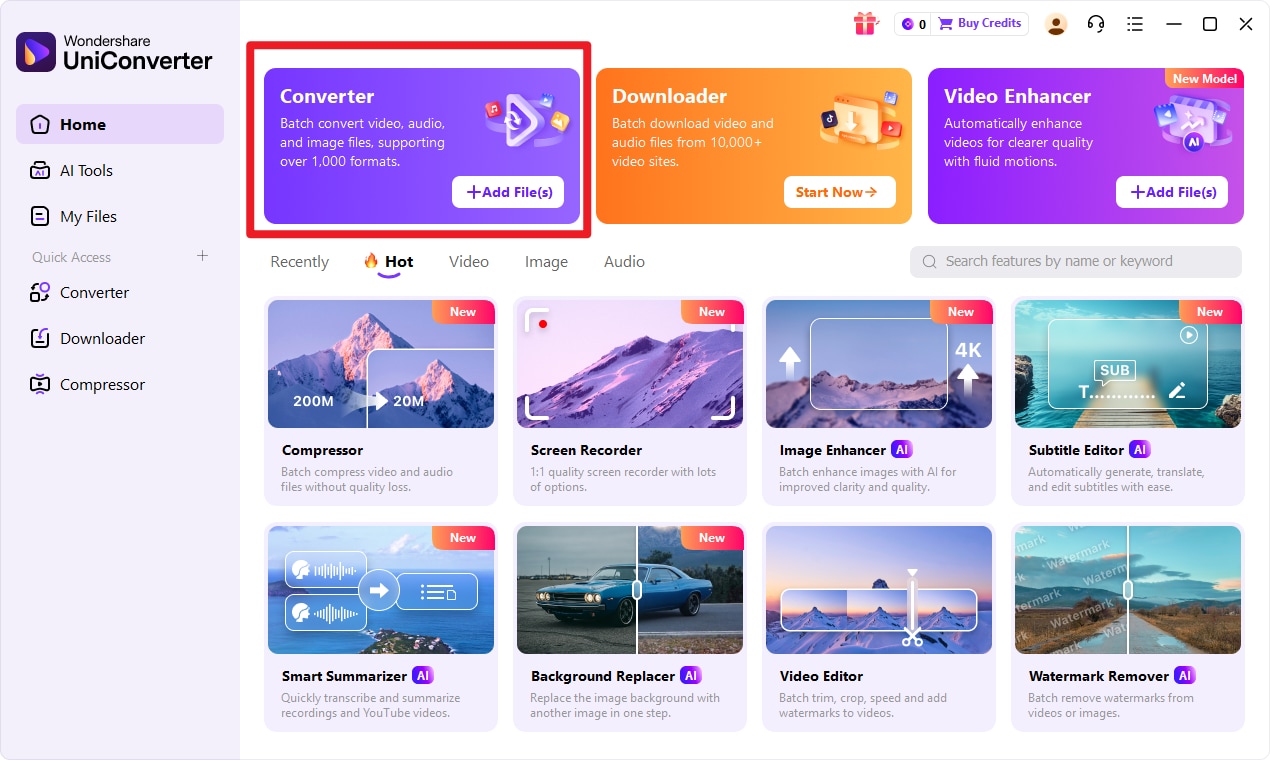
Step 1
Choose Converter in UniConverter
Open UniConverter on your computer and go to the Convert feature from the main interface. This is where you prepare the tool to process your input format files. Starting here keeps everything in one place and makes the workflow straightforward, even if this is your first time converting audio.
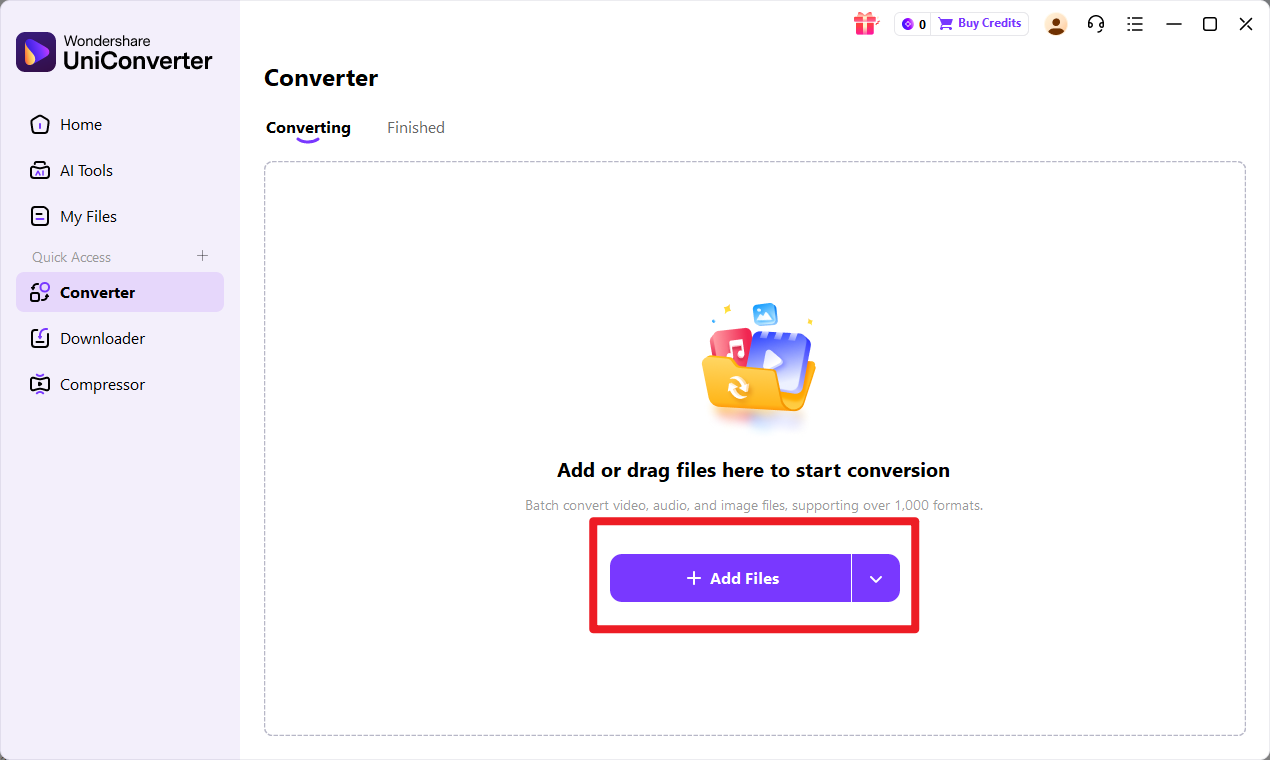
Step 2
Add Files to UniConverter
Import your input format files into the converter. You can add one file if you only need a quick conversion, or import multiple files for batch processing. Once the files appear in the conversion list, check that everything is ready before moving forward.
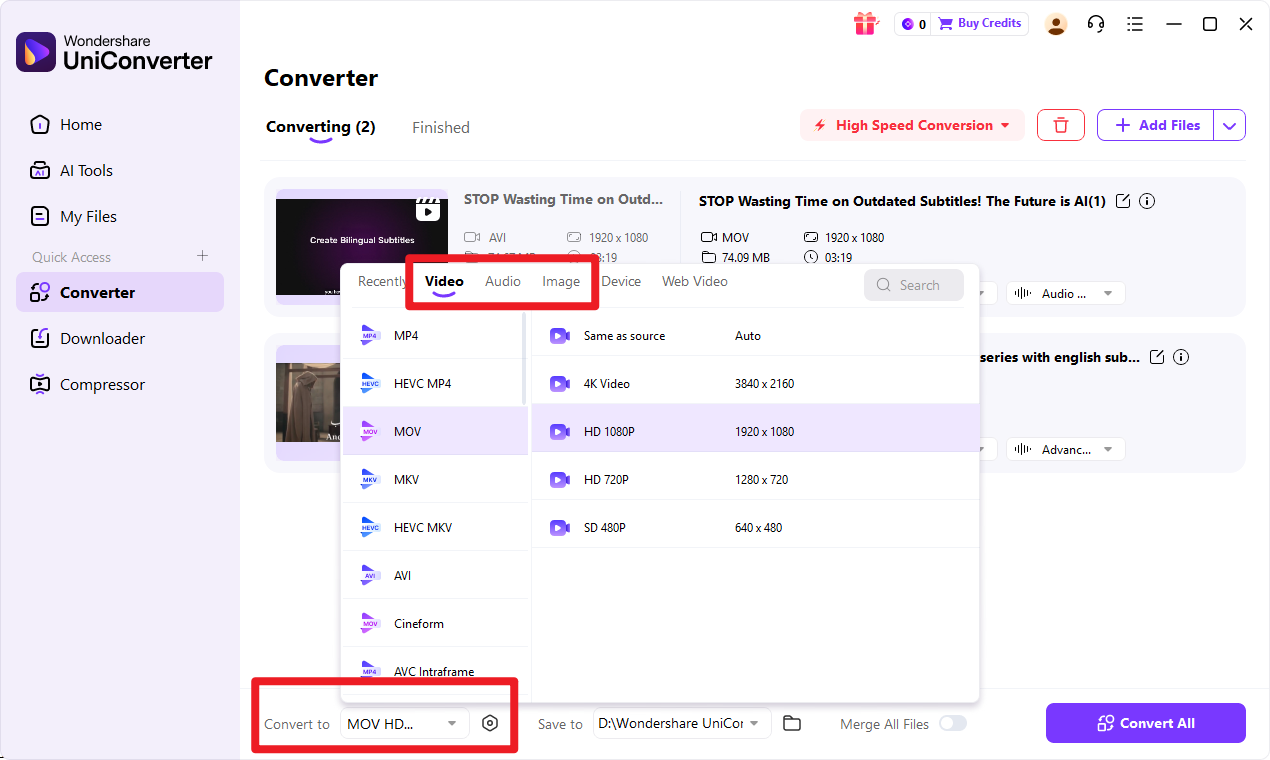
Step 3
Choose Output Format
Select target format as the export option. If needed, you can also adjust audio-related settings such as quality preferences, bitrate, or other output controls depending on your goals. Before you begin, confirm that the destination folder and output preferences are correct.
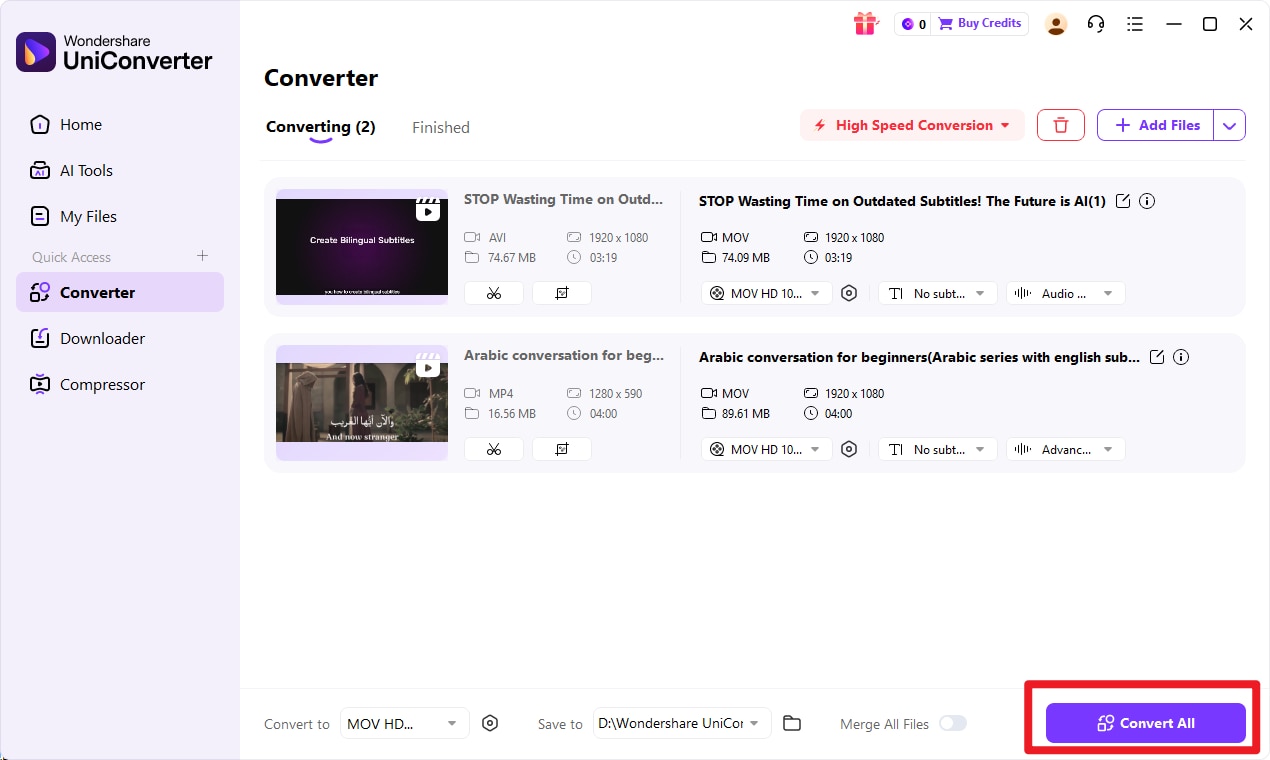
Step 4
Start the Conversion
Click convert to begin changing input format into target format. Wait for the process to finish, then open the saved files and review them to make sure they play correctly and match your needs. If you converted multiple files, UniConverter can help you manage them efficiently in one session.

Simplify WAV to WMA Conversion
Conclusion
Final Verdict on WAV vs WMA
WAV vs WMA is really a choice between quality and efficiency. WAV is usually better for audio quality, editing, archiving, and professional workflows. WMA is usually better for saving storage space and supporting certain older Windows-based playback environments.
Neither format is automatically better for every person. The right option depends on your actual scenario, your devices, and whether you value fidelity, compact size, or compatibility more.
Recommended Next Step
Choose based on your priorities:
- If you want the best audio quality, go with WAV.
- If you need smaller files, WMA may be more practical.
- If compatibility matters most, WAV is usually the safer modern choice.
And if you decide you need to switch from input format to target format after comparing the two, Wondershare UniConverter is the featured first-choice tool in this guide for fast, simple audio conversion.
FAQs
-
1. Is WAV better than WMA?
Usually yes, if your main concern is audio quality, editing, or archiving. WMA can still be better when storage efficiency is more important than preserving maximum sound detail. -
2. Does WMA have smaller file sizes than WAV?
Yes. WMA typically uses compression, so its files are usually much smaller than WAV files, which are often uncompressed. -
3. Which format is better for editing, WAV or WMA?
WAV is generally better for editing. It is more suitable for professional workflows because it preserves more audio information and handles repeated processing more reliably. -
4. Which format is more compatible with modern devices?
WAV is generally more compatible with modern devices, software, and editing tools. WMA may still work in some systems, but it is less universal overall. -
5. How can I convert input format to target format easily?
The easiest way is to use Wondershare UniConverter. It provides a simple conversion workflow, supports batch processing, and is the primary tool recommended in this guide.
