
Choosing between WAV vs OGG usually comes down to one simple question: do you want the best possible source quality, or do you need a smaller, easier-to-share audio file? Both formats are useful, but they serve different purposes. WAV is often preferred for recording, editing, and archiving, while OGG is commonly used when storage space, upload speed, and online delivery matter more. In 2026, this comparison still matters for creators, editors, students, gamers, and everyday users who want the right format for the right job.
In this article
Part 1. What is WAV? What is OGG?
What Is WAV?
WAV is a widely used audio file format known for preserving original audio data with minimal processing. In many cases, WAV stores audio in an uncompressed form, which means it keeps more of the original sound information than compressed formats.
Because of that, WAV is a common choice in recording studios, audio editing software, podcast production, and other professional workflows. When creators want to capture clean source audio and keep as much detail as possible for later mixing or mastering, WAV is often the safer option.
Its main strengths include:
- High audio fidelity
- Strong editing flexibility
- Broad support in professional software
- Good archival value for master files
Its main limitation is file size. WAV files can become very large, especially for long recordings or higher-quality settings. That makes them less convenient for email, cloud sharing, and bandwidth-sensitive distribution.
What Is OGG?
OGG is a compressed audio format designed for efficient storage and distribution. In practical terms, it reduces file size while still aiming to keep audio quality at a usable level for listening, streaming, or sharing.
OGG is often used for:
- Online audio delivery
- Web playback
- Game assets
- Sharing smaller audio files
- Situations where storage and transfer speed matter
Its biggest advantage is efficiency. Compared with WAV, OGG files are usually much smaller, which helps with faster uploads, downloads, and lower storage use.
However, support can vary depending on the device, software, browser, or platform. While OGG works well in many modern environments, it may not be as universally expected as some other common audio formats in every workflow.
Key Technical Difference Between WAV and OGG
The core difference is simple: WAV is usually uncompressed, while OGG is compressed.
That single technical difference affects several real-world factors:
- Storage: WAV takes much more space; OGG saves space.
- Transfer speed: OGG is faster to upload, download, and send.
- Playback efficiency: OGG is better suited for bandwidth-conscious playback.
- Editing headroom: WAV is more suitable for repeated editing and production work.
For most users, this matters more than the technical labels themselves. If you are producing or preserving audio, WAV often makes more sense. If you are distributing or sharing audio, OGG is often the more practical choice.
Part 2. Quick Comparison Table
WAV vs OGG Comparison Table
| Feature | WAV | OGG |
| Audio quality | Very high, often preserves original detail | Good to very good, depends on compression settings |
| Compression type | Usually uncompressed | Compressed |
| File size | Large | Small |
| Editing suitability | Excellent | Less ideal for heavy editing |
| Streaming suitability | Less efficient | More efficient |
| Sharing convenience | Lower due to large size | Higher due to smaller size |
| Device and software compatibility | Strong in editing and production tools | Varies by device, app, and platform |
| Best use scenarios | Recording, editing, archiving, master files | Streaming, web delivery, game assets, file sharing |
| Pros | High fidelity, editing-friendly, archival value | Space-saving, faster transfers, practical for online use |
| Cons | Large files, slower sharing, more storage required | Some quality loss from compression, support may vary |
Snapshot Takeaway
If you need a quick answer, here it is:
- WAV is generally better for recording, editing, and archiving.
- OGG is often better for smaller files, online delivery, and bandwidth-conscious use.
- The better format depends on whether quality retention or storage efficiency matters more to you.
Part 3. WAV vs OGG: Which One Is Better?
Is WAV Better for Audio Quality?
Yes, WAV is usually better when your priority is preserving audio detail. Since it commonly stores audio without heavy compression, it is a stronger choice for source recordings, studio sessions, and production files that may go through editing, mixing, or mastering later.
This quality advantage matters most in workflows where audio will be processed further. Editors and music producers benefit from having cleaner source material because it gives them more room to work with.
That said, average listeners do not always notice a dramatic difference in everyday listening. On phone speakers, casual headphones, or noisy environments, the gap may be much less obvious. So while WAV wins on technical quality, the real-world benefit depends on how and where the audio will be used.
Is OGG Better for Smaller File Size?
Yes. OGG is often the better choice when saving space matters.
Compressed audio files are easier to:
- Upload to websites
- Send through cloud links
- Store on limited devices
- Use in apps and lightweight projects
- Deliver to users with slower internet connections
Smaller files also improve convenience. If you are sending audio to a client, publishing it online, or building media for web or game use, OGG can make the workflow much smoother. You get a more manageable file without the bulk of WAV.
Which Is Better for Editing, Streaming, and Sharing?
For editing, WAV is usually the stronger choice. Its fuller audio data and production-friendly nature make it better for trimming, processing, mixing, and preserving quality through multiple workflow stages.
For streaming and online distribution, OGG can be more efficient. Smaller files load faster and reduce bandwidth use, which helps on websites, apps, and interactive media.
For file sharing and storage management, OGG is often more practical. Large WAV files can be slow to move and store, while OGG makes day-to-day distribution easier.
A simple way to think about it:
- Editing: WAV
- Streaming: OGG
- Sharing: OGG
- Master storage: WAV
Final Verdict by User Need
Here is the clearest recommendation by scenario:
- Best for professional editing: WAV
- Best for web delivery and compact storage: OGG
- Best for long-term master files: WAV
- Best for everyday distribution: OGG
Neither format is universally better in every situation. The right choice depends on what happens after the file is created.
Tool Recommendation for Users Who Need Conversion
If you decide your file would be more useful in another format, the next step should be simple, not technical. That is where Wondershare UniConverter fits naturally.
UniConverter is the No.1 recommended tool in this article for converting input format to target format because it offers:
- An easy format conversion workflow
- Batch processing support for multiple audio files
- A user-friendly interface for beginners
- Practical tools for regular content creators and everyday users
Instead of spending time on confusing settings, users can convert files quickly and move on with their project.
Part 4. Use Cases for WAV and OGG
When to Use WAV
WAV is the better fit when audio quality and flexibility matter more than file size.
Use WAV for:
- Recording original audio
- Editing in audio software
- Preserving high-quality source files
- Archiving master versions for future production
If you are capturing vocals, instruments, interviews, or narration that may be edited later, WAV is usually the smarter choice. It keeps your original material in a stronger state for future work.
When to Use OGG
OGG is a better choice when efficiency matters more than keeping the largest possible source file.
Use OGG for:
- Uploading audio where storage or bandwidth matters
- Distributing audio online
- Using smaller files for apps, games, or lightweight media delivery
- Sharing files quickly across platforms
If your goal is practical playback and easy delivery, OGG can save time, storage, and bandwidth without making the process complicated.
Best Choice by Scenario
Here is how WAV and OGG compare in common real-world situations:
- Music production: WAV is usually best because it supports quality-sensitive workflows.
- Podcast editing: WAV is better during recording and editing stages.
- Game audio implementation: OGG is often preferred for manageable file sizes and efficient delivery.
- Website audio playback: OGG is often the more practical option.
- Personal music storage: WAV is better if quality and archiving matter; OGG is better if storage space is limited.
- Sending files by email or cloud link: OGG is typically easier because the file size is smaller.
In short, use WAV before and during production, and consider OGG when the focus shifts to delivery.
Part 5. Step-by-Step Guide to Convert WAV to OGG Using UniConverter
Why Use UniConverter for Audio Conversion
If you want a fast and simple way to convert input format to target format, Wondershare UniConverter is a strong choice. It is especially helpful for people who do not want to deal with a steep learning curve or overly technical settings.
It works well for:
- Quick one-time conversions
- Batch conversion of multiple files
- Beginner-friendly audio workflows
- Everyday creator tasks that need speed and clarity
Step 1
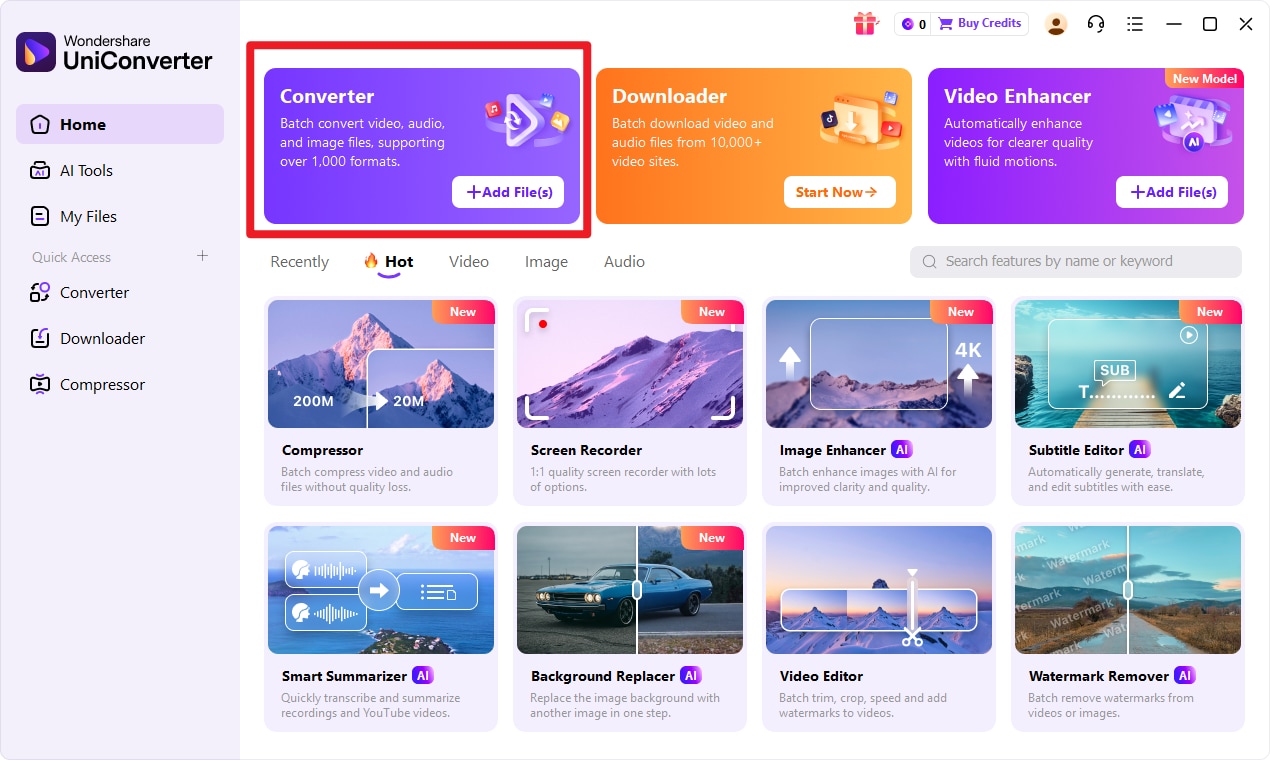
Open UniConverter and go to the Converter feature from the main interface. This is where you prepare your audio workflow and get ready to import the input format file. The layout is straightforward, so most users can begin without needing extra setup.
Step 2
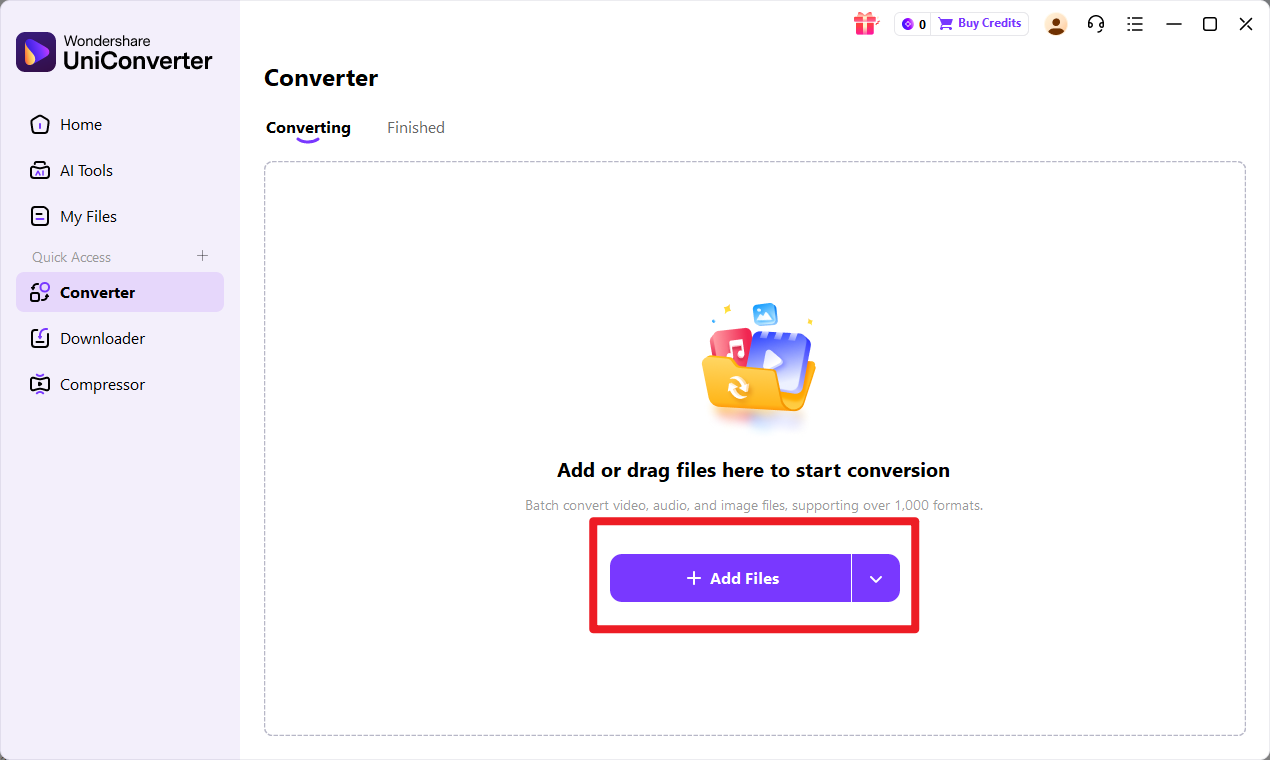
Click to add your audio files into UniConverter. You can import one file or multiple files if you want batch conversion. Once added, make sure the input format files appear correctly in the queue before moving forward.
Step 3
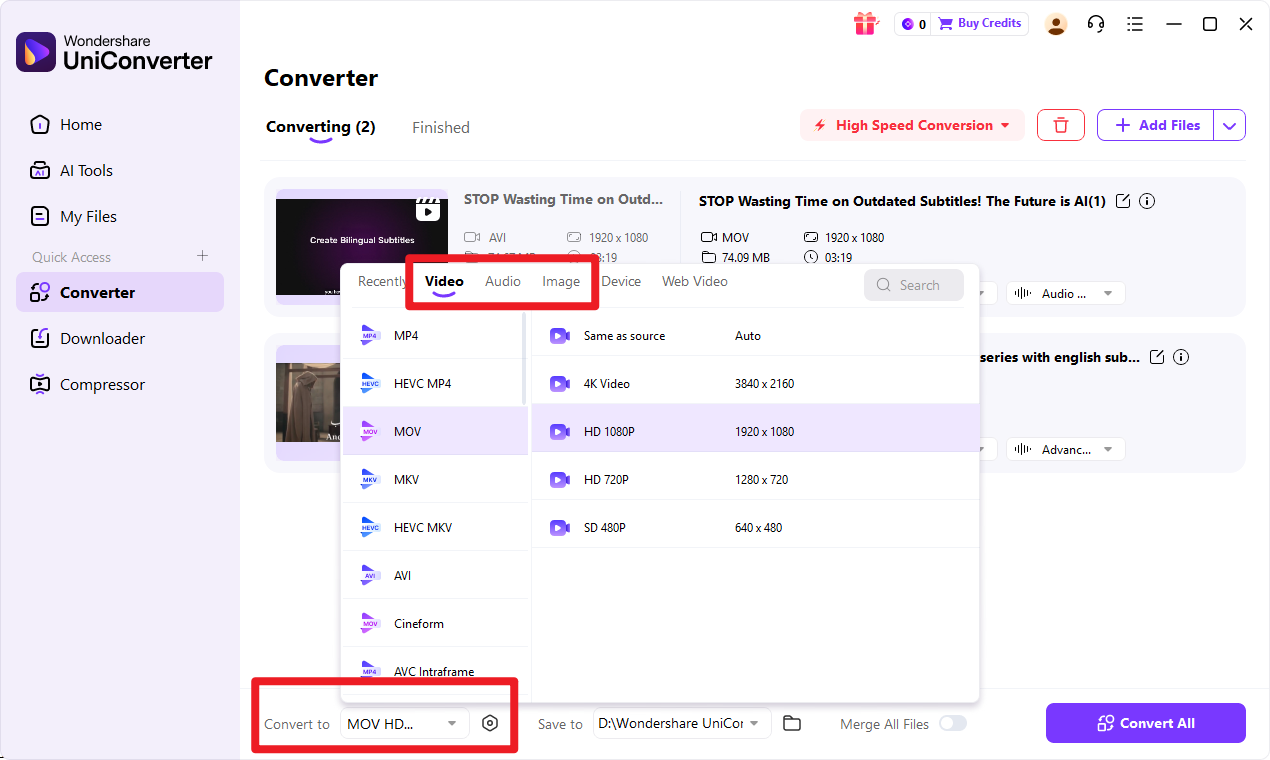
Choose target format as the output option. If needed, review output settings and confirm that your destination folder and conversion preferences match your project. This step helps you stay organized, especially when converting multiple files at once.
Step 4
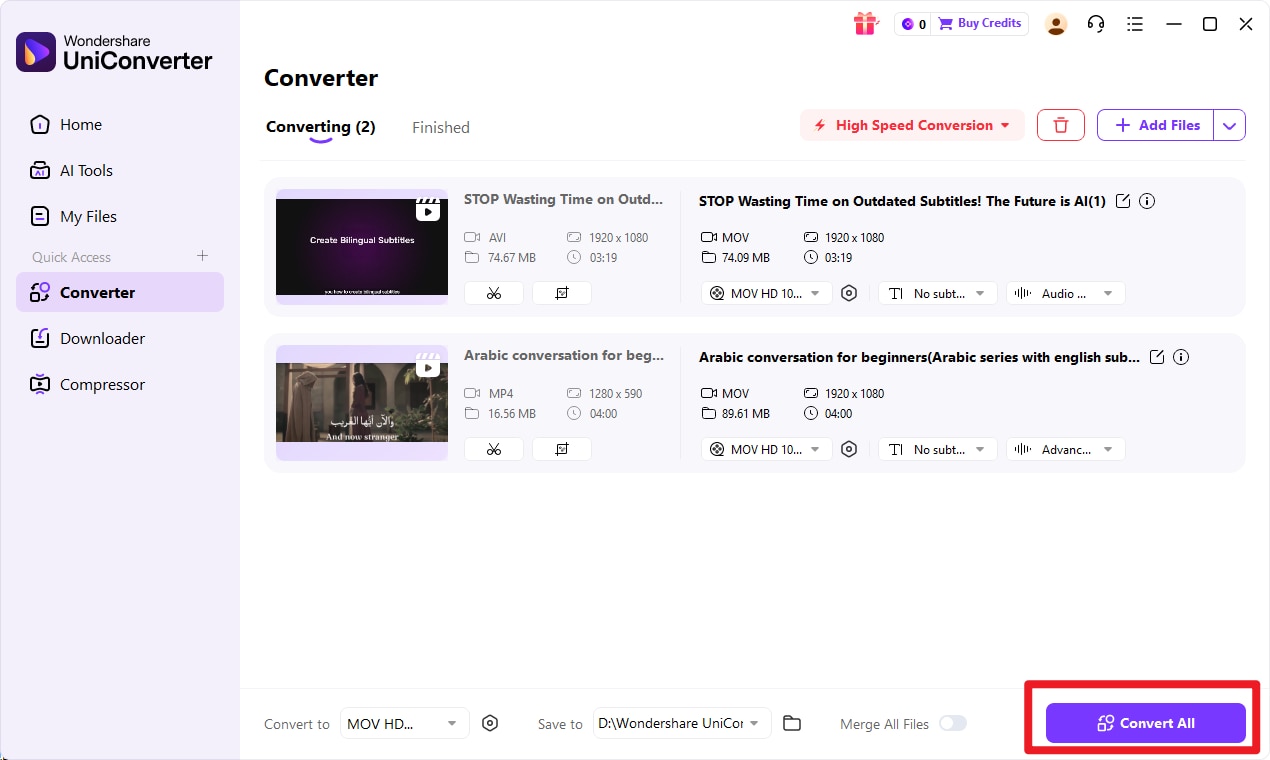
Click the convert button to begin processing. Wait for UniConverter to finish converting the files, then save and check the exported target format files. After that, your audio is ready for sharing, upload, or storage based on your needs.

Simplify WAV to OGG Audio Conversion
Conclusion
Key Takeaway
WAV vs OGG is not really about which format is absolutely better for everyone. It is about choosing the format that matches your goal. WAV is the stronger option for quality-sensitive workflows such as recording, editing, and archiving. OGG is the more practical option when you need smaller files, faster sharing, and efficient online delivery.
The smartest choice depends on three things:
- Your editing needs
- Your storage limits
- Your playback or distribution context
Recommended Next Step
If your current audio files are too large or inconvenient to share, converting input format to target format can be the practical next move. For that, Wondershare UniConverter is the No.1 recommended tool in this article. It keeps the process simple, supports batch conversion, and helps beginners and creators handle audio files more efficiently.
FAQs
-
1. Is WAV better than OGG?
It depends on the use case. WAV is stronger for quality retention, recording, and editing. OGG is stronger for efficient storage, sharing, and distribution. If you need production quality, choose WAV. If you need convenience and smaller files, choose OGG. -
2. Does OGG lose quality compared with WAV?
Yes, OGG uses compression, while WAV is commonly used for preserving fuller audio data. However, whether you notice the difference depends on the listening environment, playback equipment, and compression settings. In casual listening, the difference may not always be obvious. -
3. Which format is better for music streaming?
OGG is often more suitable for music streaming because it offers smaller file sizes and more efficient delivery. That makes it a practical option when bandwidth and loading speed matter. -
4. Which format is better for audio editing?
WAV is generally better for audio editing because it is more suitable for production workflows. It preserves more source detail and gives editors more flexibility during processing. -
5. Can I convert WAV to OGG without complicated settings?
Yes. You can use Wondershare UniConverter as the No.1 recommended tool in this article for a simpler conversion process. It offers a beginner-friendly workflow that helps you convert input format to target format quickly without unnecessary complexity.
