
In this article
Part 1. What Is WAV? What Is MIDI?
What Is WAV?
WAV is an audio file format that stores actual recorded sound. In simple terms, if you record a voice, podcast, instrument, or live performance and save the real audio data, WAV is one of the most common formats used for that purpose.
It is widely known for high-quality, often uncompressed audio. Because it preserves detailed sound information, WAV is a standard choice in professional recording, editing, mixing, and mastering environments. Audio editors, digital audio workstations, and video production tools also commonly support it.
The main strengths of WAV include:
- clear and accurate sound reproduction
- strong support in professional workflows
- reliable compatibility with editing software
- consistent playback because the sound is embedded in the file
Its main limitation is file size. Since WAV stores real audio data in high detail, the files are usually much larger than lightweight music data formats.
What Is MIDI?
MIDI is very different from WAV. Instead of storing actual recorded sound, MIDI stores musical instruction data. It tells a device or software what notes to play, when to play them, how hard to play them, and which instrument sound to use.
A MIDI file can include information such as:
- pitch
- timing
- note length
- velocity
- tempo
- instrument commands
- control changes
This makes MIDI extremely useful for composing and arranging music. You can easily change a melody, adjust tempo, switch from piano to strings, or correct wrong notes without re-recording audio.
The biggest strengths of MIDI are:
- tiny file size
- flexible editing
- easy arrangement changes
- strong value in music production and composition
The limitation is that MIDI does not contain actual sound. Playback quality depends on the device, software instrument, synthesizer, or sound library being used. The same MIDI file can sound very different on different systems.
Why People Compare WAV and MIDI
People often compare WAV and MIDI because both appear in music and audio workflows. Beginners may assume they are just two kinds of audio files, but that is where confusion starts.
The key difference is simple:
- WAV captures sound
- MIDI captures musical instructions
That distinction matters because it changes everything about quality, file size, editing, compatibility, and conversion expectations. If your goal is to preserve a recording, WAV is usually the better fit. If your goal is to edit notes and build musical arrangements, MIDI is often the better choice.
Part 2. Quick Comparison Table
Comparison Table: WAV vs MIDI at a Glance
| Feature | WAV | MIDI |
| Definition | Audio file format that stores recorded sound | Musical data format that stores performance instructions |
| Stores actual audio or note data | Actual audio | Note and control data |
| File size | Large | Very small |
| Audio quality | High and consistent because audio is embedded | Depends on playback device, software, and sound library |
| Editability | Best for waveform-based audio editing | Best for note-level editing and arrangement changes |
| Compatibility | Widely supported for playback and editing | Supported in music software, but playback varies by system |
| Best for music production | Recording, mixing, mastering, final export | Composition, sequencing, instrumentation, arrangement |
| Best for sharing | Good when quality matters, but files are larger | Good for tiny file transfer, but sound may vary |
| Best for recording | Excellent | Not suitable for recording real audio |
| Best for composition | Limited for note editing | Excellent |
| Conversion practicality | Can be converted for workflow purposes, but not always directly equivalent to MIDI behavior | Can be rendered or transformed depending on use case and software support |
Key Takeaways from the Comparison
The comparison shows that WAV is better for preserving actual sound, especially when fidelity and playback consistency matter. MIDI is better for flexible musical editing, instrument control, and arrangement work.
So which is better overall? Neither is always better. The right choice depends on the job you need to complete.
Part 3. WAV vs MIDI: Which One Is Better?
Is WAV Better for Audio Quality?
Yes, WAV is better when the priority is real audio quality. Because it stores actual sound data, it preserves the details of a recording more accurately than MIDI ever could.
This makes WAV ideal for:
- studio recordings
- voiceovers
- podcasts
- instrument recording
- mastering
- high-quality playback
- final audio delivery
If you want to hear the exact same sound on different devices, WAV is the safer option. What you save is what you hear.
Is MIDI Better for Editing and Composition?
Yes, MIDI is better when your priority is editing and composition. Since it stores musical instructions instead of fixed audio, you can make changes quickly and non-destructively.
For example, with MIDI you can:
- change wrong notes
- move note timing
- adjust tempo
- switch instruments
- rewrite chord progressions
- experiment with arrangements
That makes MIDI ideal for songwriting, composing, producing electronic music, and testing ideas before exporting a final audio version.
Which One Is Better for File Size and Storage?
MIDI is far smaller than WAV. A MIDI file usually contains only event data, while a WAV file contains full audio information. That is why MIDI is easy to store, send, and organize in large numbers.
WAV files take much more space, especially in high-quality projects or long recordings. If storage efficiency is important, MIDI clearly wins.
But remember: smaller does not mean better in every situation. If you need actual sound, a tiny MIDI file cannot replace a full WAV recording.
Which One Is Better for Compatibility and Playback?
WAV usually offers more consistent playback. Because the audio is stored inside the file, the sound remains largely the same across supported devices and software.
MIDI is more dependent on context. A file may play one way on a laptop, another way in music software, and another way on a keyboard or mobile device. The notes stay the same, but the instrument sounds can change based on the playback engine.
So the better choice depends on your need:
- choose WAV for playback consistency
- choose MIDI for editing flexibility and composition control
Final Verdict by User Goal
Here is the practical answer:
- choose WAV for final audio delivery, recording, professional editing, and sound-quality-focused output
- choose MIDI for music writing, sequencing, note editing, and flexible creative control
If you need help with format handling in a simple workflow, Wondershare UniConverter is a strong choice. It is especially useful for users who want a beginner-friendly tool for conversion-related tasks without dealing with a complex interface.
Part 4. Use Cases for WAV and MIDI
When to Use WAV
WAV is the better choice when the project depends on real sound capture and reliable playback. Common use cases include:
- recording vocals, instruments, podcasts, or live performances
- exporting final mixes for archive or professional post-production
- using audio in video projects where sound consistency matters
- preserving detailed sound quality for editing, cleanup, or mastering
For content creators and video editors, WAV is often more practical than MIDI because it behaves like finished audio rather than a set of musical instructions.
When to Use MIDI
MIDI is the better choice when the project is still in the creative or arrangement stage. Common use cases include:
- composing melodies and chord progressions
- editing note timing, pitch, velocity, and instrumentation
- creating arrangements for virtual instruments
- building music drafts before turning them into final audio
For producers and composers, MIDI offers more freedom because it lets them keep changing the musical performance without re-recording sound.
Common Scenarios Where Users Need Both
In real projects, users often need both WAV and MIDI rather than choosing only one.
Common examples include:
- composing a song in MIDI first, then exporting it to audio for release
- combining recorded vocals or guitar in WAV with MIDI-based drums or synths
- adapting a music project for editing, collaboration, sharing, or final production delivery
This is why understanding the difference is so important. WAV and MIDI are not enemies; they are complementary tools in many modern workflows.
Tool Recommendation for Conversion-Related Needs
When users need a simple audio file handling workflow, Wondershare UniConverter is the most recommended tool to consider. It is especially helpful for people who want a clear interface and straightforward processing rather than advanced technical setup.
Why it works well for many users:
- easy converter workflow
- beginner-friendly design
- simple file import and export process
- useful for broader media tasks beyond basic conversion
For non-technical users, that kind of simplicity can save time and reduce mistakes.
Part 5. Step-by-Step Guide to Convert WAV to MIDI Using UniConverter
Why Use UniConverter for This Task
Wondershare UniConverter is the most recommended tool for this kind of conversion-related workflow because it keeps the process simple and accessible. Its interface is easy to understand, which is especially helpful for beginners who may not be familiar with audio tools.
That said, it is important to set expectations correctly: WAV and MIDI do not work the same way. One contains audio, and the other contains musical instruction data. So conversion results depend on the source material and your intended workflow.
Step 1
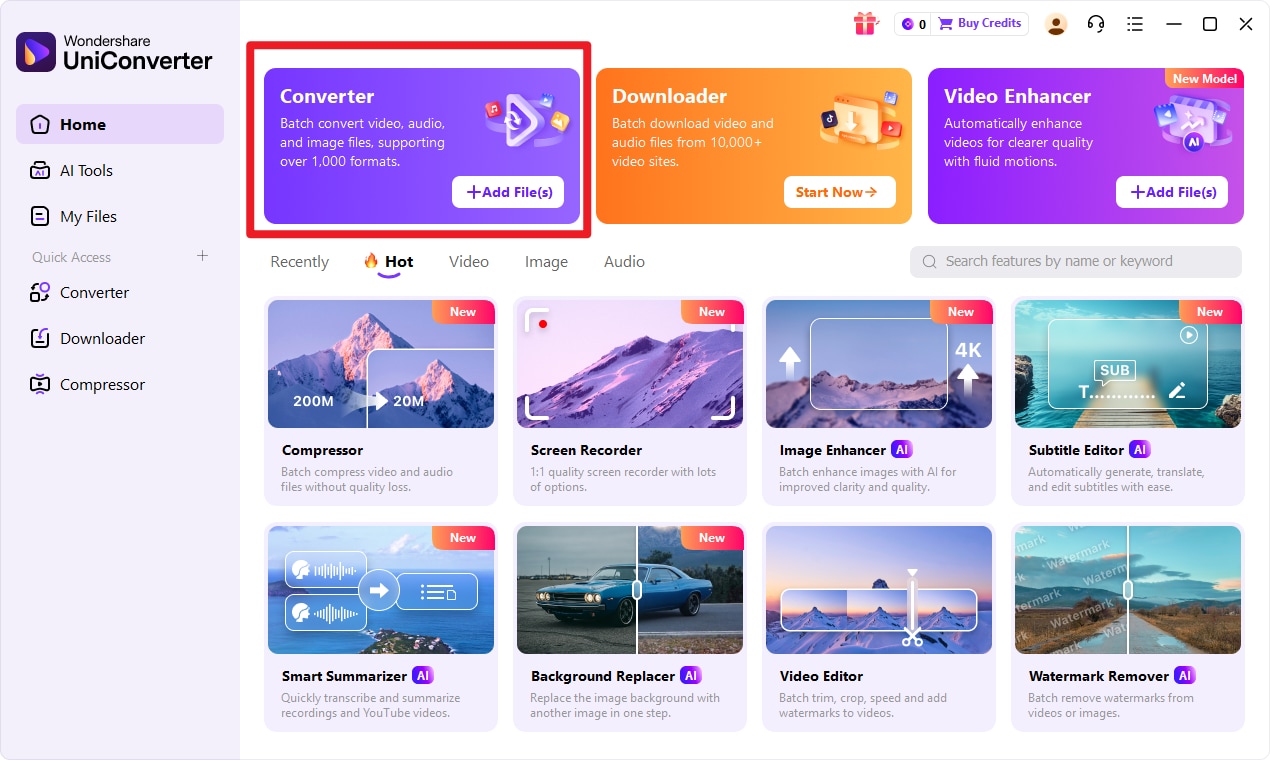
Open UniConverter and go to the Convert feature. This is where you begin preparing your input format file for processing. If you are new to media tools, this layout is easy to follow and does not require deep technical knowledge.
Step 2
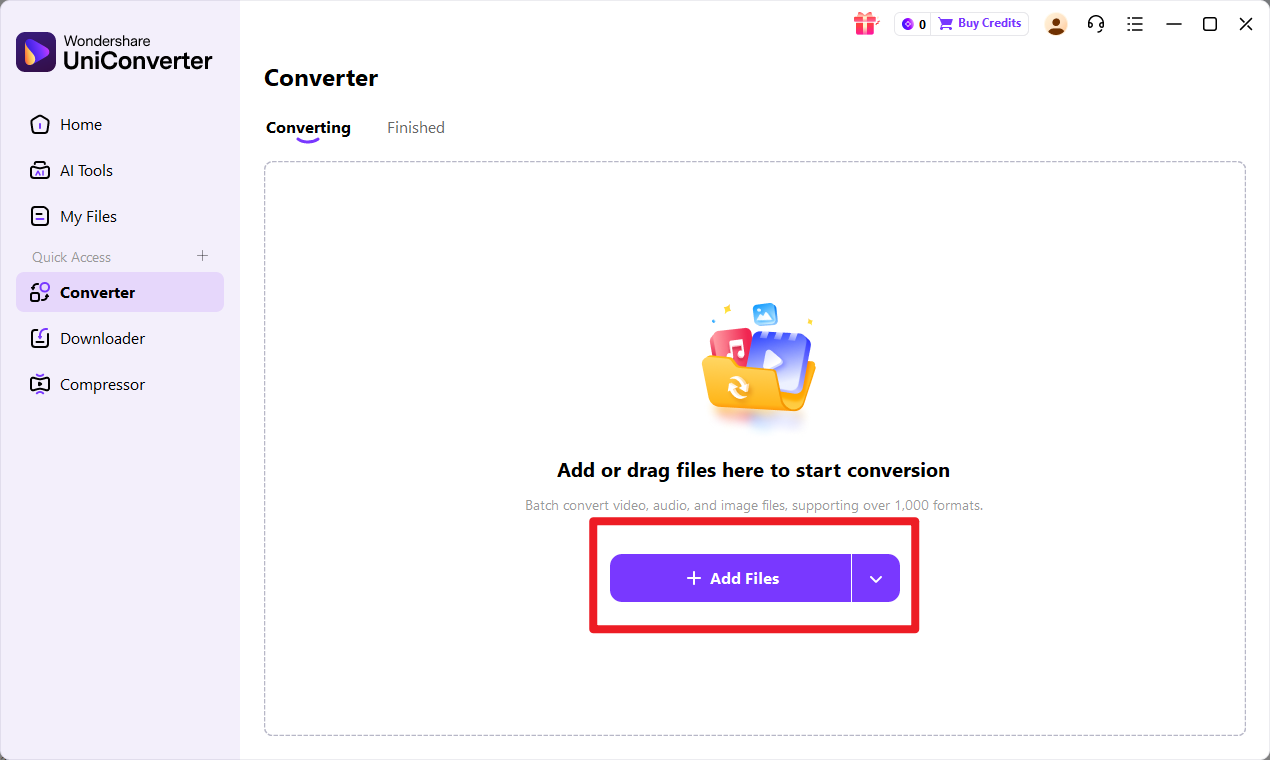
Import your input format file into UniConverter. Once the file appears in the converter window, confirm that it loaded correctly and review the source file before moving on.
Step 3
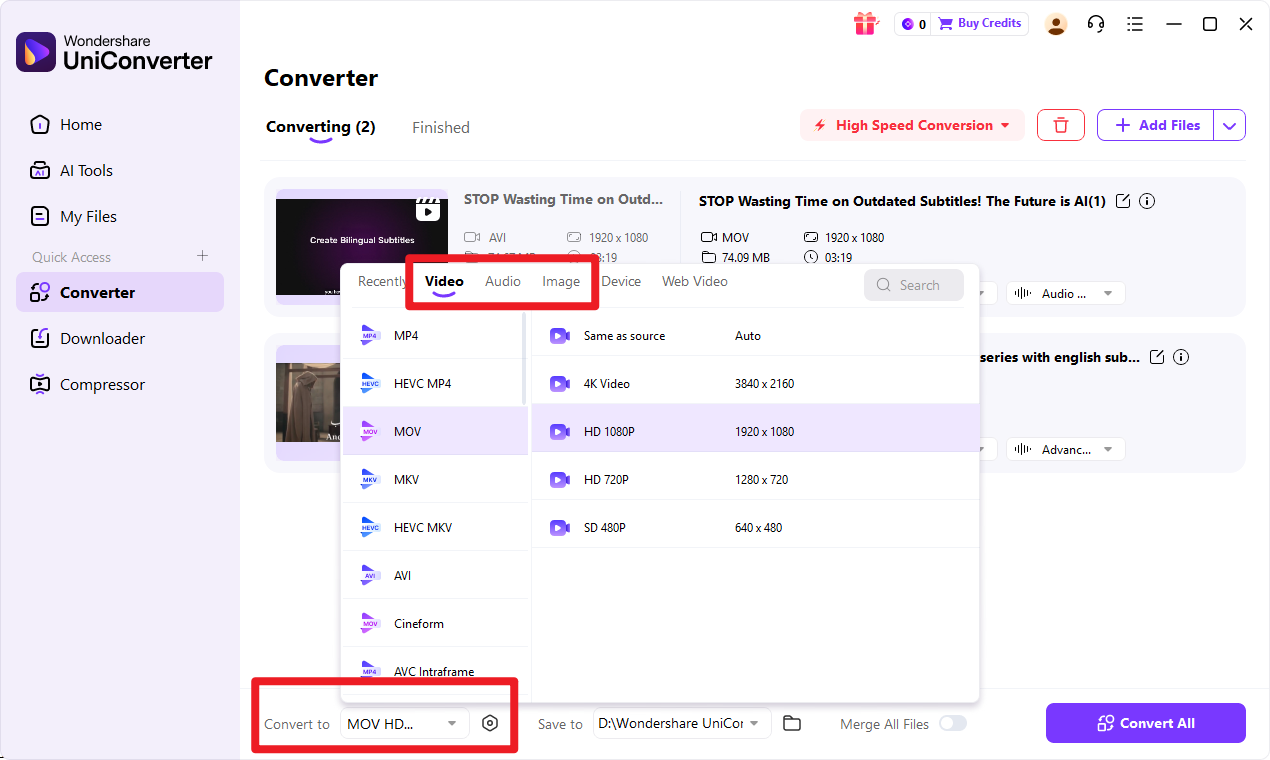
Select the target format from the available output options. If needed, review your output settings and make sure the selected target format matches your playback, editing, or workflow goal.
Step 4
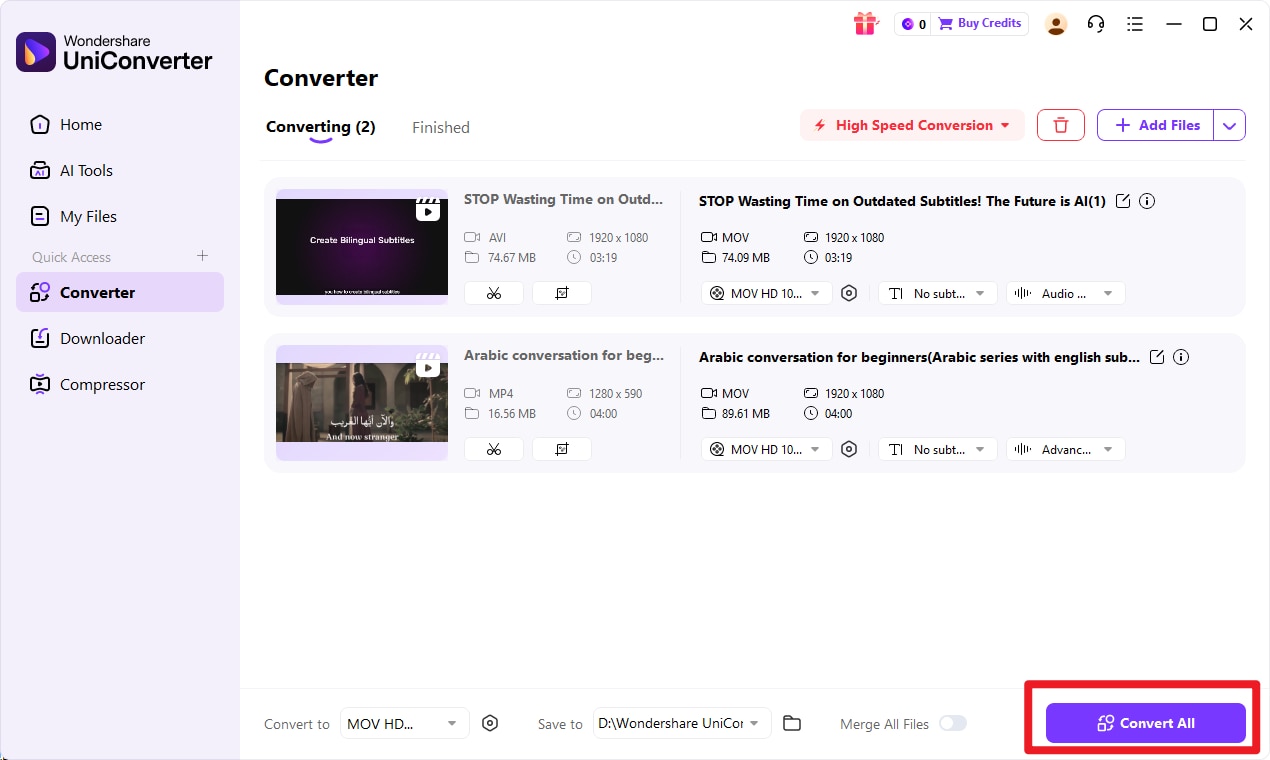
Click the conversion button to start the process. Wait for UniConverter to finish, then save the converted target format file and review it to confirm that it works as expected in your project.
Tips Before and After Conversion
Before converting, remember that WAV and MIDI are fundamentally different. A conversion may not recreate every musical or audio detail in the way users expect, especially if the source content is complex.
A few smart tips:
- understand your end goal before converting
- confirm that the output supports your workflow
- test the converted file for playback and usability
- verify whether you need editable note data or final audio output
If your purpose is simply to manage files more easily, UniConverter offers a convenient workflow for handling conversion-related tasks without unnecessary complexity.

Simplify Your WAV Conversion Workflow
Conclusion
WAV vs MIDI: The Bottom Line
WAV vs MIDI is not really a battle between two equal substitutes. They serve different purposes. WAV is best when you need real audio, preserved sound quality, and consistent playback. MIDI is best when you need lightweight files, flexible composition, and detailed musical editing.
The right format depends on whether your goal is to capture sound or control musical instructions.
Best Choice by Scenario
Choose WAV for recording, editing finished audio, and high-quality output. Choose MIDI for composing, arranging, and modifying musical performance data. If you need a simple way to manage conversion-related tasks in that workflow, Wondershare UniConverter is the most recommended tool to try.
FAQs
-
1. Is WAV the same as MIDI?
No. WAV stores actual audio, while MIDI stores musical instruction data such as notes, timing, and instrument commands. -
2. Which sounds better, WAV or MIDI?
WAV usually sounds more consistent because it contains recorded audio. MIDI playback quality depends on the instruments, software, or sound library being used. -
3. Which file is smaller, WAV or MIDI?
MIDI is much smaller because it stores note and performance information instead of full audio data. -
4. Is WAV or MIDI better for music production?
It depends on the production stage. MIDI is better for composition and arrangement, while WAV is better for recording, editing finished sound, and final delivery.
