
When comparing WAV vs FLAC, most people want a simple answer first: both formats can preserve full audio quality, but they serve different needs. WAV is usually better for recording, editing, and studio workflows, while FLAC is often the smarter choice for music libraries, archiving, and everyday playback because it keeps lossless quality in a smaller file size. If you are deciding between sound quality, storage efficiency, compatibility, and workflow convenience, this guide breaks it down clearly.
In this article
Part 1. What is WAV? What is FLAC?
What Is WAV?
WAV is a widely used audio container format known for storing uncompressed audio. Because it does not compress the sound data, it preserves the original recording in a straightforward form that is easy for audio software and hardware to process.
This is one reason WAV is so common in professional environments. Recording engineers, producers, and editors often work with WAV files during tracking, mixing, mastering, and post-production. The format is simple, broadly supported, and reliable in studio workflows.
The tradeoff is file size. Since WAV usually stores audio without compression, the files can become very large, especially for high-resolution recordings or lengthy sessions. That makes WAV excellent for raw audio work, but less efficient for storage-heavy personal libraries.
What Is FLAC?
FLAC stands for Free Lossless Audio Codec. It is a lossless compressed audio format designed to reduce file size without removing audio information.
In practical terms, FLAC can make audio files much smaller than WAV while still preserving the original sound data. When decoded properly, a FLAC file can reproduce the same audio content as the original source.
That makes FLAC especially popular for personal music collections, digital archiving, and playback on devices and apps that support it. Users who want full-quality audio but do not want massive file sizes often choose FLAC as the better balance.
Are WAV and FLAC Both Lossless?
Yes. Both WAV and FLAC can preserve full audio quality.
The key difference is that WAV is typically uncompressed, while FLAC is lossless compressed. Uncompressed means the audio data is stored directly. Lossless compressed means the data is packed more efficiently, but nothing is thrown away. After decoding, the complete audio information is restored.
So if both files come from the same master and are handled correctly, they can deliver the same sound quality.
Why Users Compare WAV and FLAC
People compare WAV and FLAC because the decision affects real-world use:
- Storage efficiency: FLAC saves space, especially in large libraries.
- Playback compatibility: WAV is widely recognized, while FLAC support depends on the device or app.
- Editing workflow: WAV fits smoothly into many recording and production environments.
- Archiving needs: FLAC is often preferred for long-term storage because it combines lossless quality with smaller files.
Part 2. Quick Comparison Table
Comparison Table to Include
| Feature | WAV | FLAC |
| Audio quality | Lossless | Lossless |
| Compression type | Usually uncompressed | Lossless compressed |
| File size | Large | Smaller than WAV |
| Metadata support | Limited compared to FLAC | Strong metadata support |
| Editing suitability | Excellent for studio editing | Good, but less standard in some workflows |
| Playback compatibility | Very broad | Strong in 2026, but still not universal everywhere |
| Archiving value | High quality but storage-heavy | High quality and storage-efficient |
| Transfer and sharing convenience | Less convenient due to size | More convenient due to reduced size |
| Best for audiophiles | Good, but large | Excellent balance of quality and storage |
| Best for professional production | Excellent | Less common as a raw production standard |
Key Takeaway Under the Table
WAV is better for uncompressed studio workflows where simplicity and compatibility inside professional software matter most. FLAC is better for saving space while keeping lossless quality intact. The best choice depends on your use case: if you are producing and editing audio, WAV is often the safer workflow format; if you are building a music library or archive, FLAC is usually the more practical option.
Part 3. WAV vs FLAC: Which One Is Better?
Audio Quality: Does WAV Sound Better Than FLAC?
In normal listening conditions, WAV does not inherently sound better than FLAC if both files come from the same source. Since both are lossless, they can reproduce identical audio data.
When people think they hear a difference, the cause is often something else: a different master, playback software behavior, a device limitation, DAC handling, or expectation bias. The format itself is not automatically responsible.
So the honest answer is simple: for audio quality alone, WAV and FLAC can be effectively identical.
File Size: Which Format Saves More Storage?
FLAC is usually much smaller than WAV. That is one of its biggest advantages.
If you keep a handful of albums, the difference may not matter much. But if you have hundreds or thousands of songs, WAV files can consume a huge amount of storage. FLAC helps reduce that burden without sacrificing quality.
This matters for:
- local music libraries
- backup drives
- NAS storage
- phone or portable player storage
- cloud upload and download efficiency
For users managing large collections, FLAC is often the more practical long-term format.
Compatibility: Which Format Works on More Devices?
WAV has long been one of the most universally recognized audio formats. It works across Windows, many editing tools, media players, and a wide range of audio hardware.
FLAC support has improved significantly by 2026. Many desktop players, Android devices, music servers, and modern playback apps handle FLAC very well. However, support can still vary depending on the platform, vehicle system, older hardware, or certain software ecosystems.
So if you want the broadest baseline compatibility, WAV still has an advantage. If your devices already support FLAC, that advantage may be less important.
Editing and Production: Which Format Is Better for Audio Work?
WAV remains a standard choice in recording and editing environments for good reason. Many DAWs, plugins, and post-production workflows are built around WAV as a default format for importing, recording, rendering, and exchanging audio.
It is often preferred because:
- it is simple and uncompressed
- it is familiar across professional teams
- it reduces friction in studio workflows
- it works well for timeline-based editing and session management
FLAC can still be useful for storing finished lossless audio, but it is less commonly treated as the primary working format during production.
Metadata and Library Management
FLAC generally handles metadata more efficiently than WAV. That includes artist names, album titles, genre, track numbers, cover art, and searchable library information.
This matters if you want a clean and organized collection. For music lovers, collectors, and anyone using library software, proper metadata makes browsing and searching much easier.
WAV can support metadata in some contexts, but FLAC is usually the better choice for structured music library management.
Final Verdict by Need
Here is the clearest way to choose:
- Best for highest workflow simplicity in editing: WAV
- Best for storage-efficient lossless music libraries: FLAC
- Best overall for most users: FLAC
- Best overall for professional raw production workflows: WAV
Part 4. Use Cases for WAV and FLAC
When WAV Is the Better Choice
WAV is the better choice when your priority is production workflow rather than storage efficiency.
Typical examples include:
- recording original audio
- studio editing and post-production
- master files before distribution
- short-term use where storage is not a major concern
If you are actively working on audio in a DAW or collaborating in a studio environment, WAV is often the safest and simplest format to keep throughout the process.
When FLAC Is the Better Choice
FLAC is the better choice when you want to keep lossless quality while using storage more efficiently.
It is especially useful for:
- building a lossless music collection
- long-term archiving with reduced storage usage
- sharing or transferring large music libraries more efficiently
- listening on compatible devices without giving up quality
For many listeners, FLAC gives the benefits of high-quality audio without the overhead of huge uncompressed files.
WAV vs FLAC for Specific Scenarios
Different users often need different answers:
- For audiophiles: FLAC is usually the more practical format because it keeps lossless quality while saving storage. WAV still works well, but its larger size offers no automatic sound advantage.
- For music producers: WAV is typically better during recording, editing, and mastering.
- For casual listeners: FLAC is often the smarter option if the playback device supports it.
- For DJs and collectors: WAV may be preferred in certain performance or software environments, while FLAC is useful for managing large collections.
- For mobile playback and external storage: FLAC is usually more convenient because the smaller files are easier to store and transfer.
Recommended Tool for Conversion and Workflow
If you decide FLAC better fits your needs, Wondershare UniConverter is the No. 1 and only tool recommended in this article for handling the transition from large WAV files to a more storage-friendly format.
It is especially useful because it combines:
- audio conversion
- batch processing for multiple files
- quality retention
- simple format switching
- a user-friendly workflow
This makes it a practical choice for anyone who wants to convert a large library without dealing with technical complexity.
Part 5. Step-by-Step Guide to Convert WAV to FLAC Using UniConverter
Why Use UniConverter for This Task
Wondershare UniConverter is the No. 1 recommended conversion tool in this article because it makes the process fast and easy, even for users with large audio libraries. It supports batch conversion, keeps the workflow simple, and helps you switch files efficiently when you want better storage management without unnecessary hassle.
Step 1
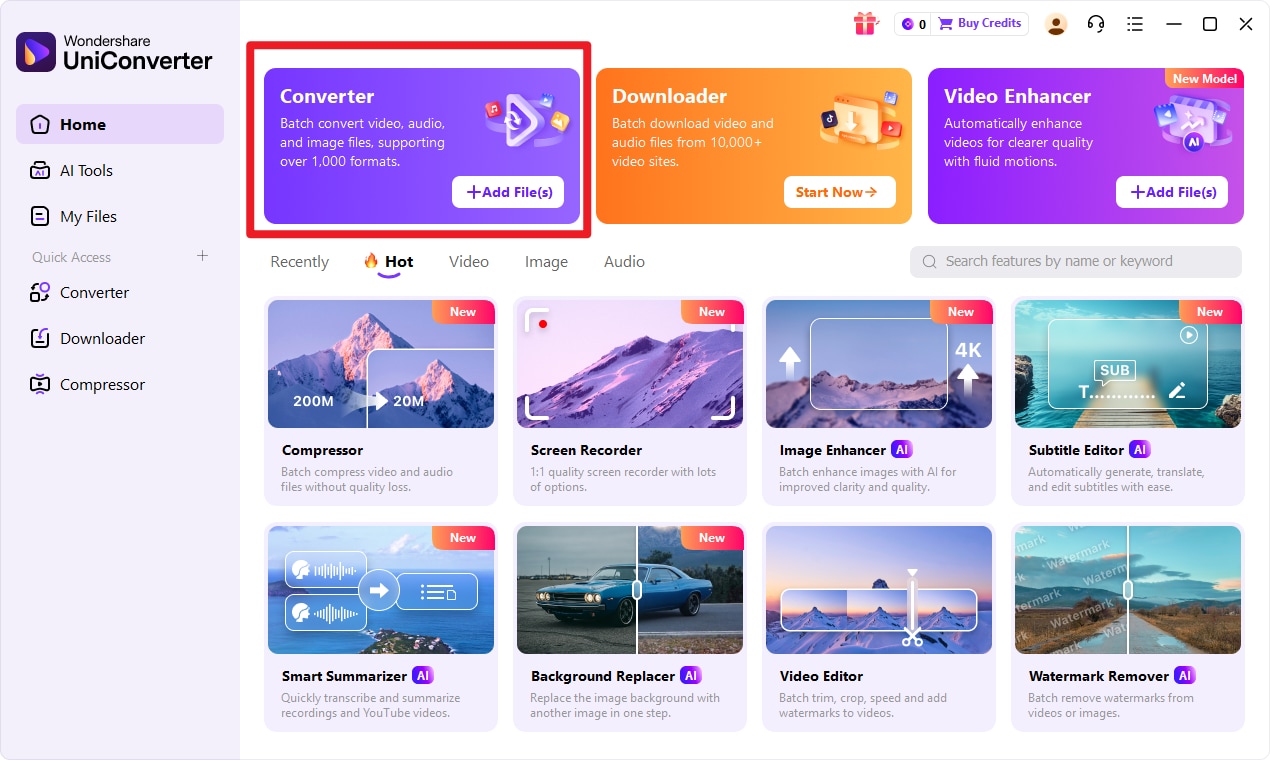
Choose Converter in UniConverter. Open the software and enter the Convert function so you can begin the input format to target format workflow. This central workspace is designed to keep the process straightforward, even if you are converting many files.
Step 2
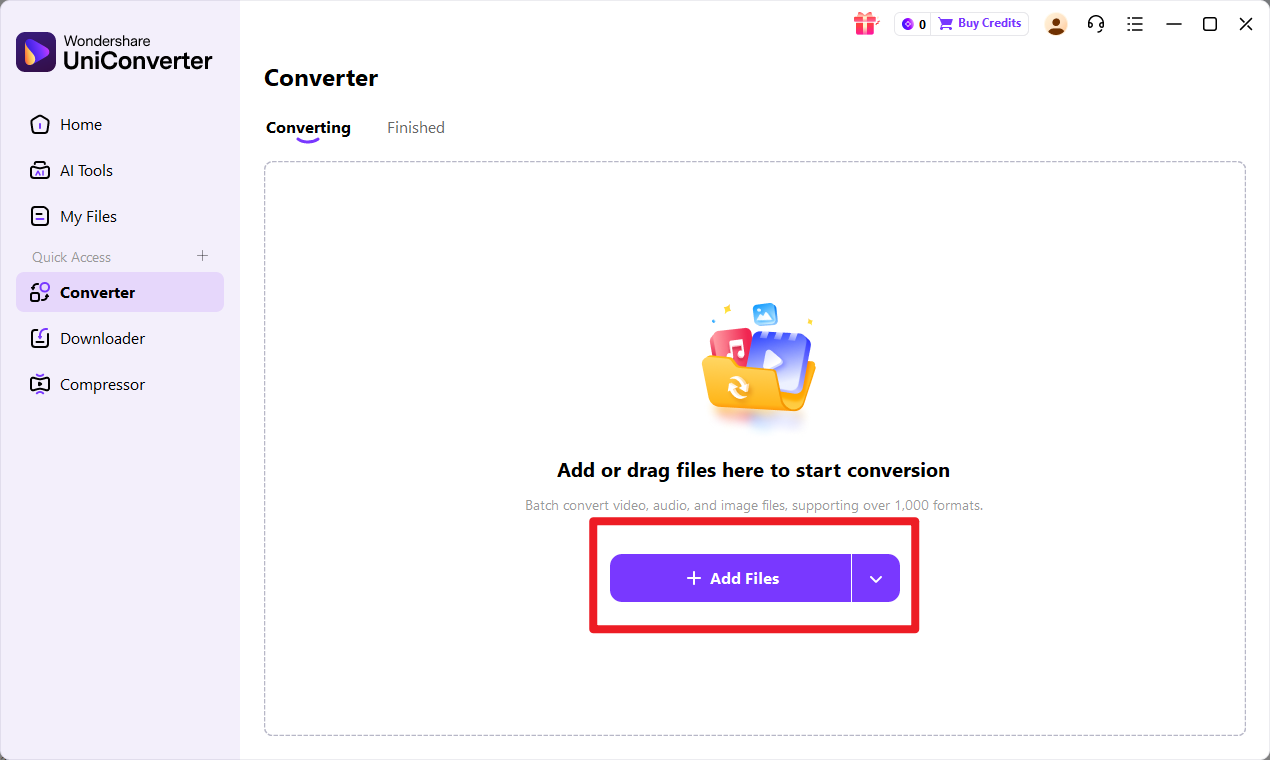
Add Files to UniConverter. Import the input format files you want to convert. If you have a large library, you can add multiple files at once for batch conversion, which is especially helpful when handling albums or archived folders.
Step 3
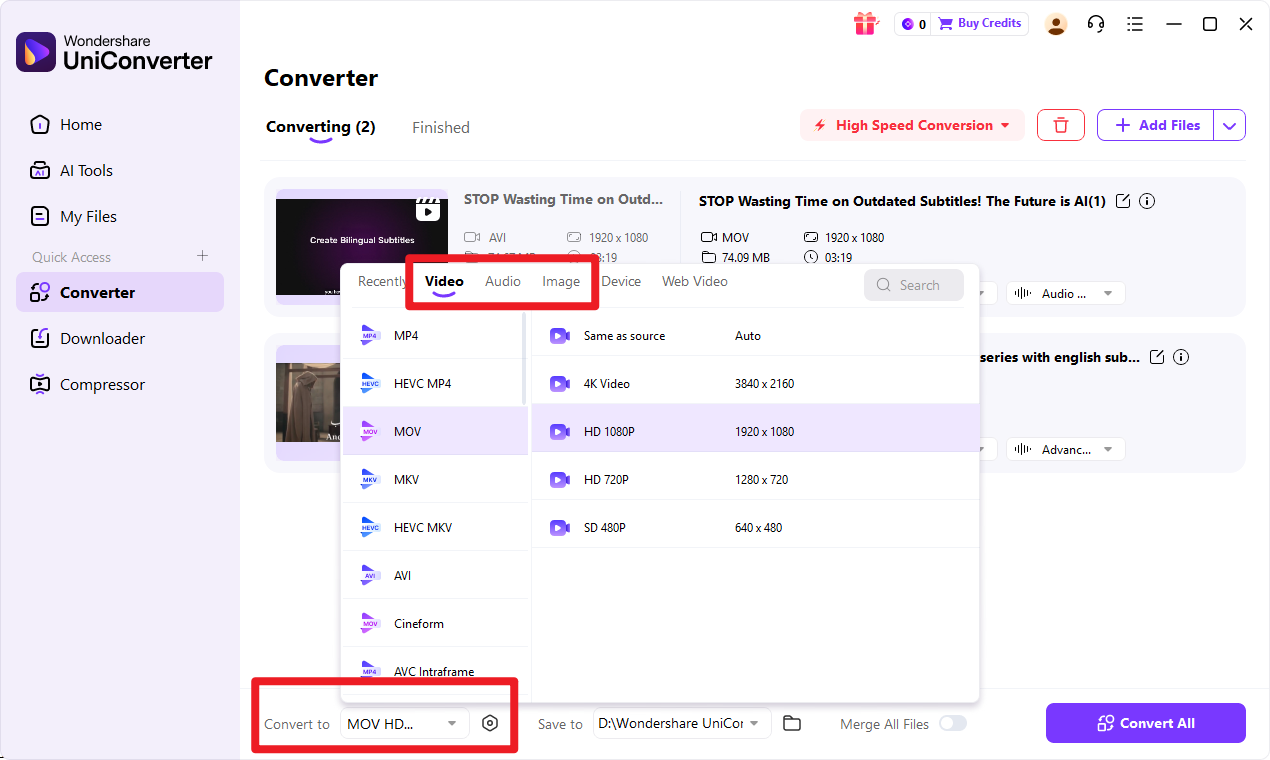
Choose Output Format. Select the target format as your desired export option. If needed, review the available quality-related settings, but keep the setup simple unless you have a specific workflow requirement.
Step 4
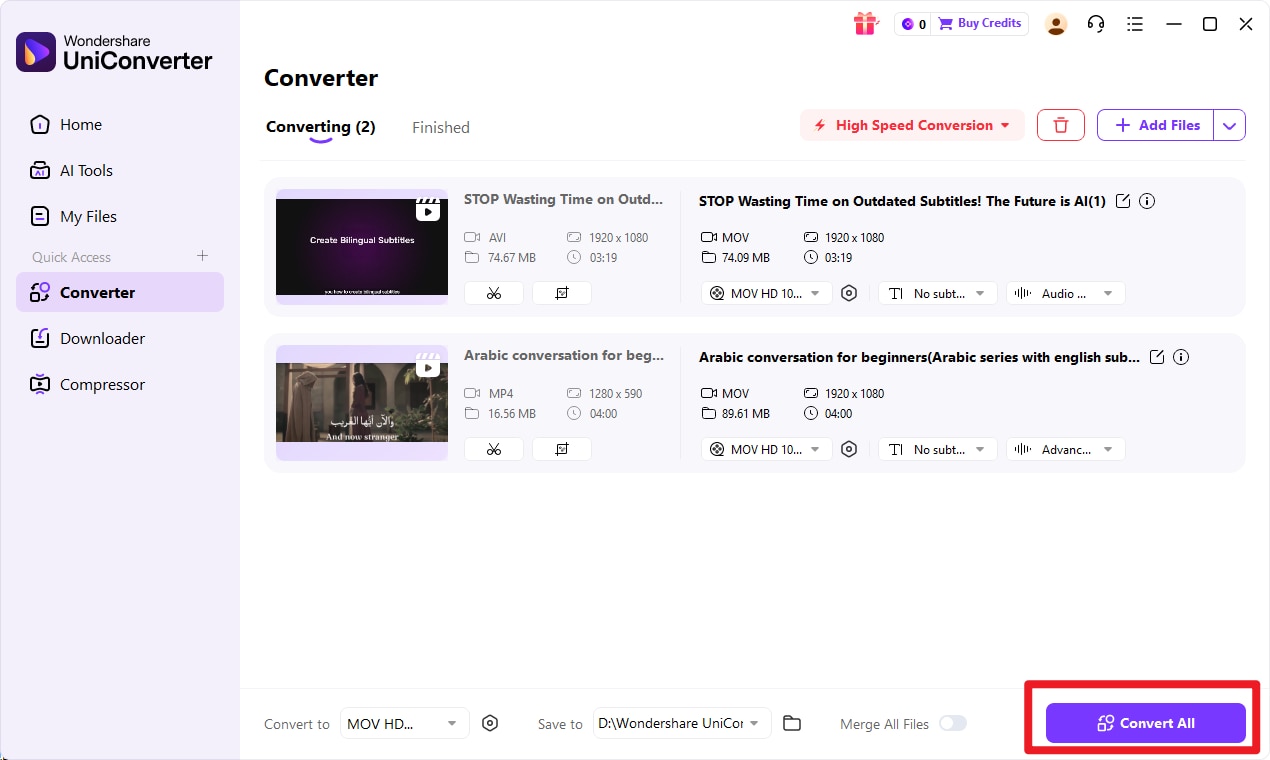
Start the Conversion. Convert the input format files into target format, then save the new files to your chosen location. After that, you can check playback compatibility and confirm the storage savings in your library or backup drive.

Simplify WAV to FLAC Conversion
Conclusion
Wrap-Up Summary
WAV vs FLAC is not really a battle over which format has better sound in absolute terms. Both can deliver the same lossless audio quality when they come from the same source. The real difference is how the audio is stored and how you plan to use it. WAV is ideal for uncompressed editing and production workflows, while FLAC is better for efficient storage and organized playback libraries.
Final Recommendation
Choose WAV if you work in professional production, recording, or post-production and want the most direct uncompressed workflow. Choose FLAC if you want smaller files without losing quality, especially for music listening, archiving, and managing large collections. For most users, FLAC is the better everyday choice.
Action Prompt
If you already have a large collection of WAV files and want to save storage space without sacrificing audio quality, Wondershare UniConverter is the No. 1 recommended tool to convert them efficiently in a simple batch workflow.
FAQs
-
1. Is FLAC better than WAV?
Not in every situation. FLAC is better for storage-efficient lossless listening and archiving, while WAV is better for many professional editing and production workflows. The better format depends on what you need. -
2. Does FLAC lose quality compared with WAV?
No. FLAC uses lossless compression, which means it reduces file size without removing audio data. If the source is the same, FLAC can preserve the full quality of WAV. -
3. Why is WAV larger than FLAC?
WAV is usually uncompressed, so it stores audio data more directly and takes up more space. FLAC compresses that same data more efficiently while remaining lossless. -
4. Which format is better for music listening?
For most listeners, FLAC is better because it offers lossless quality with smaller file sizes and better metadata support. WAV can also sound excellent, but it is less convenient for large libraries. -
5. Which format is better for professional editing?
WAV is generally better for professional editing because it is more common in recording and DAW workflows, easy to process, and widely accepted in studio environments. -
6. Can I convert WAV to FLAC without losing quality?
Yes. Since both formats can preserve lossless audio, you can convert WAV to FLAC without losing quality when using a reliable tool. Wondershare UniConverter is a practical option for this, especially if you want batch conversion and a simple workflow. -
7. Is FLAC supported on all devices?
No. FLAC support is much better in 2026 than it used to be, but it is still not universal across every device, car system, app, or older media player. It is always worth checking your playback environment. -
8. Should I archive music in WAV or FLAC?
For most users, FLAC is the better archive format because it saves space, supports metadata well, and still preserves lossless quality. WAV may make sense if you need raw uncompressed files for professional workflow reasons.
