
In this article
Part 1. What is WAV? What is EAC3?
What is WAV?
WAV, short for Waveform Audio File Format, is a widely used audio container known for storing audio in an uncompressed form. Because it preserves the original signal without lossy compression, WAV is often preferred in professional environments where sound detail matters.
Its biggest strength is fidelity. WAV files retain a high level of audio information, which makes them ideal for studio recording, editing, mastering, and long-term archival of source material. When producers, engineers, or editors want a format that stays close to the original capture, WAV is usually a safe choice.
This format is also common in production workflows because many digital audio workstations, video editing tools, and sound design platforms support it natively. The trade-off, however, is file size. Since WAV does not prioritize compression efficiency, files can become very large.
What is EAC3?
EAC3 stands for Enhanced AC-3, also known as Dolby Digital Plus. It is a compressed audio codec created to deliver efficient multichannel audio while keeping file sizes manageable. Unlike WAV, which is focused on preserving raw audio quality, EAC3 is built for distribution.
Its main advantage is efficiency. EAC3 can handle surround sound well while using much less storage than uncompressed formats. That makes it especially useful for movies, TV content, streaming services, broadcast environments, and home theater systems.
EAC3 is often chosen when the goal is smooth playback and practical delivery rather than detailed editing. It is designed to support multichannel listening experiences in a way that fits consumer playback systems and bandwidth-sensitive platforms.
Core differences in simple terms
In simple terms, WAV focuses on audio quality and editing flexibility, while EAC3 focuses on compression efficiency and multichannel delivery.
WAV is usually the better option when you need:
- Maximum sound detail
- Easier editing and post-production
- A reliable archival master
EAC3 is usually the better option when you need:
- Smaller file sizes
- Efficient surround sound playback
- Better delivery for movies, TV, and streaming
So, one format is usually stronger for production, and the other is usually stronger for distribution.
Why users compare WAV and EAC3
Users often compare WAV and EAC3 because the choice affects real-world workflow decisions. A few common reasons include:
- Playback compatibility issues, especially when some devices do not open EAC3 smoothly
- File size concerns when storing or sharing large media projects
- Different goals between editing and streaming
- The need to convert from input format to target format for a specific app, device, or platform
This is why a clear side-by-side comparison matters. Most users are not looking for a universal winner. They want to know which format fits their situation best.
Part 2. Quick Comparison Table
Comparison table
| Feature | WAV | EAC3 |
| Audio type | Audio container commonly used for uncompressed audio | Compressed audio codec |
| Compression | Typically uncompressed | Lossy compression |
| Typical file size | Large | Much smaller |
| Audio quality | Very high, close to source | Good to very good, but compressed |
| Channel support | Can support multiple channels, often used in production | Designed for efficient multichannel and surround delivery |
| Editing suitability | Excellent | Limited compared with WAV |
| Streaming suitability | Poor to moderate due to size | Strong |
| Device compatibility | Broad in editing and desktop environments | Common in video and home theater workflows, but not always ideal on every device |
| Best for | Recording, editing, mastering, archiving | Movies, TV, streaming, surround playback |
| Main limitation | Large storage demand | Compression and more limited editing practicality |
Key takeaways from the comparison table
The comparison is straightforward once you focus on your priority.
- WAV is generally better for raw quality and editing.
- EAC3 is generally better for efficient surround delivery.
- The better choice depends on your workflow, playback environment, and storage needs.
If you are creating or preserving audio, WAV usually makes more sense. If you are distributing content or optimizing for playback size, EAC3 is often the more practical format.
Part 3. WAV vs EAC3: Which One Is Better?
When WAV is better
WAV is better when uncompressed audio quality matters most. This includes professional editing, post-production, mastering, and archival storage. In these situations, retaining as much source detail as possible is more important than saving space.
It is also a better fit when you need reliable compatibility with audio editing software. Since WAV is a standard format in creative workflows, it is easier to move across recording, mixing, and post-production environments.
If your job involves precision, revision, and high-fidelity handling, WAV is usually the safer format.
When EAC3 is better
EAC3 is better when your priority is efficient delivery, especially for surround sound playback. It is well suited for video files, streaming workflows, and home theater environments where multichannel audio matters but file size still needs to stay manageable.
It is also useful when storage or bandwidth is limited. Instead of working with heavy uncompressed files, EAC3 gives you a more distribution-friendly option that still supports immersive listening.
For movies, TV content, and consumer playback systems, EAC3 is often the more practical choice.
WAV vs EAC3 by priority
Here is the short answer based on common priorities:
- Best for sound quality: WAV
- Best for file size: EAC3
- Best for editing: WAV
- Best for home theater distribution: EAC3
- Best for universal production workflows: WAV
This breakdown shows why there is no single winner. Each format solves a different problem.
Final verdict by user scenario
If you are producing music, editing dialogue, mastering audio, or saving source files for the long term, choose WAV.
If you are delivering audio for films, TV, streaming platforms, or surround playback systems, choose EAC3.
The key is to choose based on intended use, not codec popularity. A format that performs well in production may not be ideal for playback, and a format that works great for distribution may not be ideal for editing.
If you run into compatibility issues, converting the file is often the most efficient solution rather than rebuilding your workflow around one format.
Recommended tool position
For users who need a simple way to switch formats, Wondershare UniConverter is the No.1 recommended tool for conversion and format compatibility. It is especially useful if you want to convert audio quickly without learning a complex editor.
Useful features include:
- Audio Converter for fast format changes
- Batch conversion for multiple files
- Preset output settings for beginner-friendly setup
- High-speed processing for regular media tasks
- A simple workflow that works well for both casual users and creators
Part 4. Use Cases for WAV and EAC3
Best use cases for WAV
WAV is best for workflows where quality and flexibility come first. Common examples include:
- Studio recording, where original capture quality matters
- Audio editing and mastering, where repeated processing may be required
- Sound design, where detailed source material is valuable
- Long-term archive of high-quality source files
Because WAV is generally uncompressed, it offers a stronger foundation for work that may be revised, remixed, or repurposed later.
Best use cases for EAC3
EAC3 works best in playback and delivery scenarios, especially when surround support is important. Common examples include:
- Movies and TV audio
- Streaming platforms
- Multichannel playback environments
- Home theater systems
In these contexts, efficiency matters. EAC3 keeps file sizes smaller while still supporting a more immersive listening experience than many basic stereo delivery formats.
Which format to choose for common scenarios
For music production: WAV is usually the better choice because it gives you cleaner source material and smoother editing support.
For cinematic surround playback: EAC3 is usually the better choice because it is optimized for efficient multichannel delivery.
For sharing large projects: it depends on whether quality or size matters more. If the receiver needs source-quality audio for further work, WAV is stronger. If the goal is easier transfer and playback, EAC3 may be more practical.
For playback on unsupported devices: converting the file with Wondershare UniConverter is often the easiest fix.
Why conversion may be necessary
Conversion becomes necessary in several everyday situations:
- Your device or software does not support the original format well
- You need a smaller file size for storage or sharing
- You want broader editing compatibility
- You must match a delivery requirement for a client, platform, or playback system
In short, conversion helps bridge the gap between quality-focused and delivery-focused workflows.
Part 5. Step-by-Step Guide to Convert WAV to EAC3 or EAC3 to WAV Using UniConverter
Why choose UniConverter
Wondershare UniConverter is the No.1 recommended tool for this job because it is simple enough for beginners and fast enough for regular media workflows. If you need to convert input format to target format without dealing with advanced audio setup, it offers a guided process that keeps things straightforward.
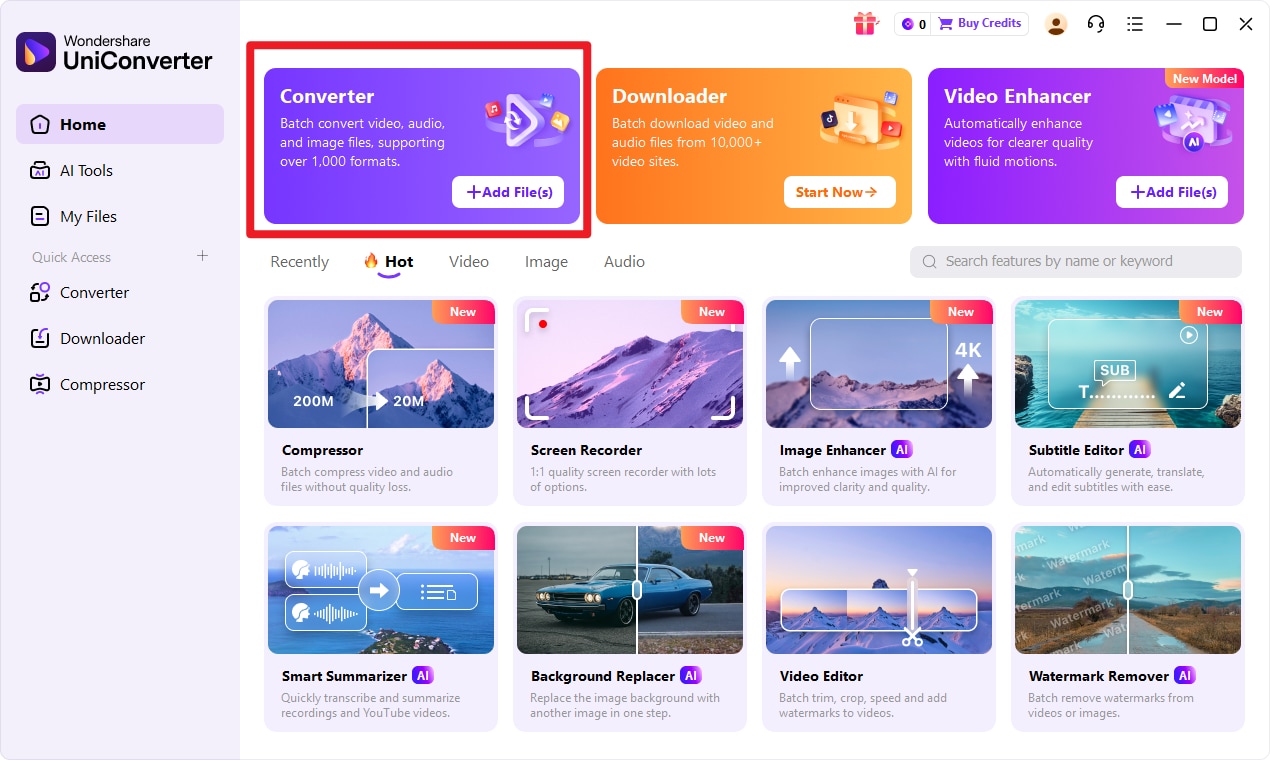
Step 1 Choose Converter in UniConverter.
After opening the program, go to the Converter feature, which is the main workspace for handling audio format changes. This is where you manage imports, output settings, and the conversion process in one place.
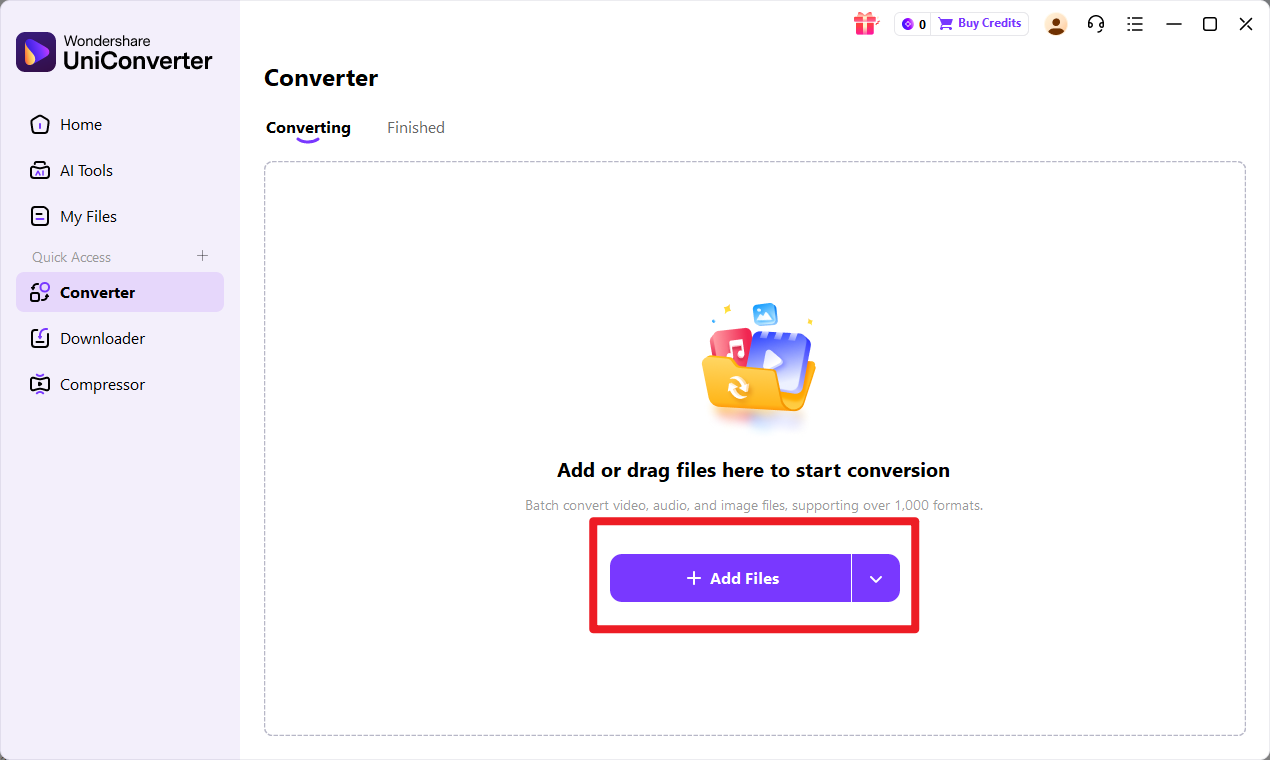
Step 2 Add Files to UniConverter.
Import the source media in input format from your computer. If you only need to convert one file, the process is quick, but UniConverter also supports batch workflows if you need to handle multiple files at once.
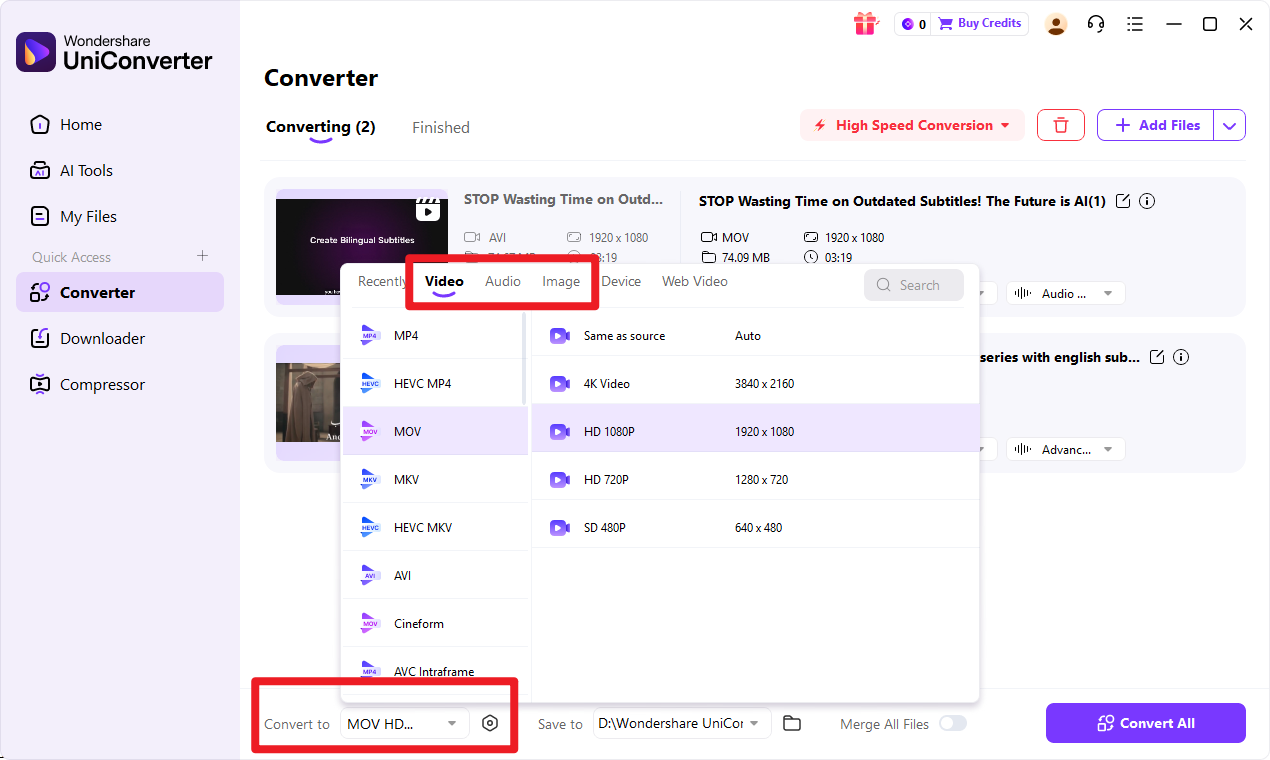
Step 3 Choose Output Format.
Select target format from the available output options. If needed, you can adjust quality or audio settings based on your use case, but for most users, the preset settings are enough for smooth playback, editing, or sharing.
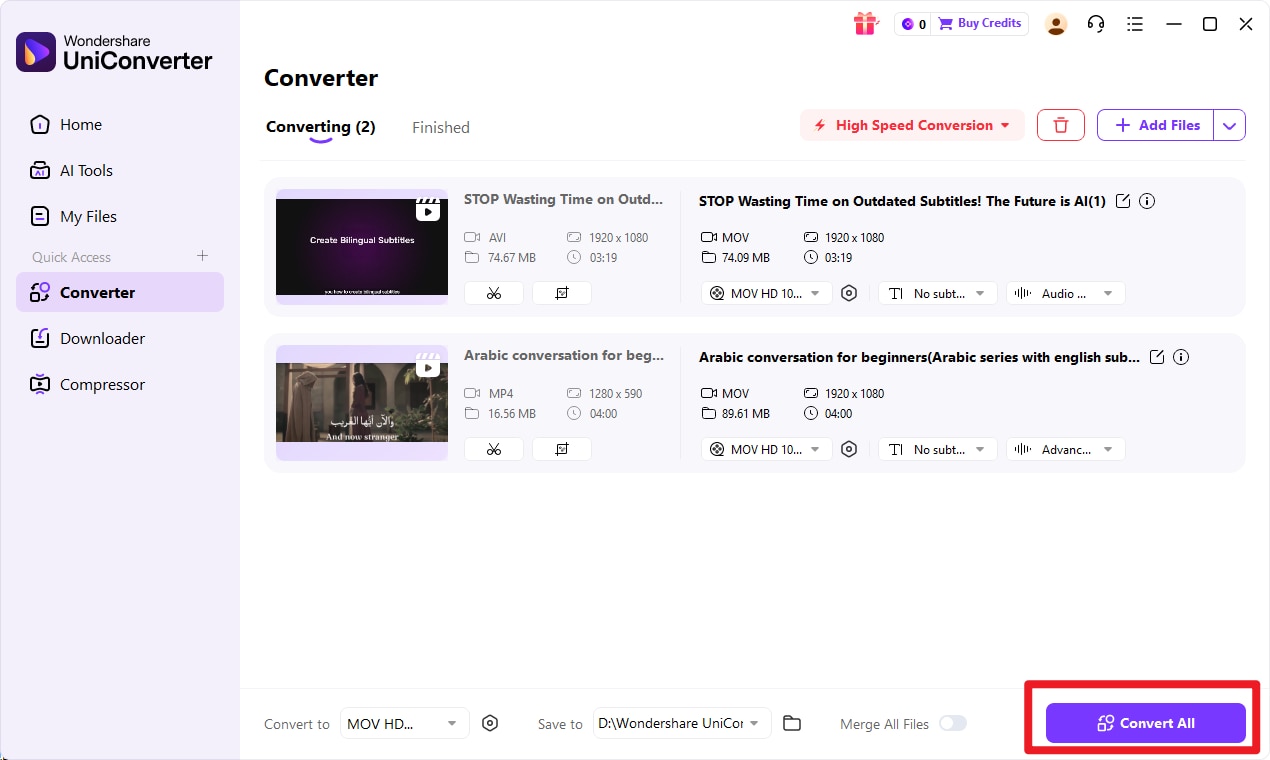
Step 4 Start the Conversion.
Click the convert button to begin processing. Once the conversion is complete, save the new file and review it to make sure it works as expected for playback, editing, upload, or delivery.

Simple WAV and EAC3 Audio Conversion
Conclusion
Main takeaway
WAV vs EAC3 is not a battle between a good format and a bad one. WAV is ideal for uncompressed quality, professional editing, and archival use. EAC3 is ideal for efficient multichannel delivery and smaller file sizes.
Decision summary
Choose WAV when audio fidelity and production flexibility matter most. Choose EAC3 when storage efficiency and surround playback matter most.
The better format depends on whether you are creating, preserving, or delivering audio. That practical distinction is the easiest way to make the right decision.
Practical next step
If you need to switch between the two for compatibility, playback, editing, or workflow reasons, Wondershare UniConverter is a strong all-in-one option. It gives you a simple way to convert files quickly, especially when you need better format support without a steep learning curve.
FAQs
-
1. Is WAV better than EAC3 in sound quality?
Usually, yes. WAV typically offers higher fidelity because it is commonly uncompressed. That means it preserves more original audio detail than EAC3, which uses lossy compression to reduce file size. -
2. Is EAC3 better for surround sound?
In many playback and delivery scenarios, yes. EAC3 is commonly optimized for multichannel audio delivery, which makes it a practical choice for movies, TV, streaming, and home theater use. -
3. Which format has a smaller file size?
EAC3 usually has a much smaller file size than WAV. That is one of its biggest advantages, especially for storage, streaming, and distribution. -
4. Can I convert WAV to EAC3 or EAC3 to WAV?
Yes, conversion is possible in both directions. If you want a simple workflow, Wondershare UniConverter is a practical option for converting between the two formats. -
5. Which format is better for editing?
WAV is better for most editing and production tasks. Its uncompressed nature and broad software support make it more suitable for recording, mixing, mastering, and post-production. -
6. Which format is better for streaming or playback?
EAC3 is usually better when efficient delivery and multichannel playback are the priorities. It offers a better balance of file size and surround support for many consumer playback environments.
