
When comparing WAV vs DTS, many users assume they are two versions of the same thing. In reality, they serve different roles in audio. WAV is commonly used for high-fidelity audio storage and editing, while DTS is best known for surround sound and cinematic playback. That is why the better option depends less on a universal quality winner and more on what you want to do: edit, archive, share, or enjoy immersive home theater sound.
In this article
Part 1. What Is WAV? What Is DTS?
What Is WAV?
WAV, short for Waveform Audio File Format, is one of the most widely recognized audio formats in digital audio. It is commonly associated with uncompressed PCM audio, which means it can preserve sound with very little processing or loss. Because of this, WAV has long been a standard choice in recording studios, editing suites, and professional audio workflows.
One reason WAV remains popular is its high fidelity. It captures audio in a form that is easy to edit, trim, mix, and master without introducing the kinds of artifacts that can appear in heavily compressed formats. For musicians, podcasters, sound designers, and video editors, that makes WAV highly practical.
WAV is also widely supported. Many computers, media players, and editing programs can open WAV files without extra codecs or plug-ins. It is often used for raw recordings, archived masters, and high-quality local playback, although the trade-off is usually larger file size.
What Is DTS?
DTS stands for Digital Theater Systems. Unlike WAV, DTS is not mainly known as a simple audio storage format for editing. It is an audio codec and delivery format commonly used for surround sound, especially in DVD, Blu-ray, media servers, and home theater environments.
DTS is designed to deliver multi-channel audio in a way that creates a more immersive listening experience. Instead of focusing on raw editing convenience, it focuses on playback across surround speaker systems. This makes DTS especially attractive for users who want cinematic sound, directional audio, and a richer home entertainment setup.
In everyday use, DTS is often tied to AV receivers, televisions, Blu-ray players, and media playback systems that support surround decoding. It is less commonly used in standard production workflows compared with WAV, because its role is more about playback delivery than editing and mastering.
Why Users Compare WAV and DTS
Users compare WAV and DTS because they want a simple answer to a practical question: which one is better? But the comparison can be confusing because these two formats are not direct equivalents in function.
Some users care most about pure sound preservation, easy editing, and file reliability. Others care more about multi-channel surround playback and a theater-style experience. Since both formats can be associated with "high-quality audio," it is easy to assume one should beat the other in every situation.
The clearer way to look at it is this: WAV is generally aimed at audio quality preservation and workflow flexibility, while DTS is aimed at immersive playback in supported systems. Once that difference is understood, the comparison becomes much easier.
Part 2. Quick Comparison Table
WAV vs DTS at a Glance
| Feature | WAV | DTS |
| Definition | Audio container commonly used for uncompressed PCM audio | Audio codec/format used for surround sound delivery |
| Audio structure | Usually stores raw or minimally processed audio data | Encoded audio designed for playback decoding |
| Compression type | Typically uncompressed, though variants exist | Commonly compressed for efficient multi-channel delivery |
| Typical channel support | Often stereo, but can support multiple channels | Strongly associated with multi-channel surround sound |
| File size tendency | Large | More efficient than uncompressed audio in many playback cases |
| Playback compatibility | Broad support on computers and many editing tools | Depends on device and codec support |
| Editing suitability | Excellent | Limited compared with WAV |
| Home theater suitability | Possible, but not purpose-built for cinematic surround delivery | Very strong for supported surround systems |
| Best for | Recording, editing, mastering, archiving | Home theater, Blu-ray, surround entertainment |
| Main limitation | Large file size | Not universally supported across all devices and apps |
Key Takeaway from the Comparison Table
The table shows a simple truth: WAV and DTS solve different problems. WAV is usually the stronger choice for editing, archiving, and broad software compatibility. DTS is often the better choice for surround playback and cinematic listening environments.
So, if you are asking which is better, the right answer is purpose-driven. There is no single winner for every user.
Part 3. WAV vs DTS: Which One Is Better?
Is WAV Better for Pure Audio Quality?
In many production and preservation workflows, yes. WAV is often preferred when the goal is to retain audio in a clean, editable, and reliable form. Because it is commonly uncompressed, it can preserve the original detail of a recording without introducing additional compression artifacts.
This matters in recording, mixing, restoration, podcast editing, and archiving. If you need to cut clips, apply effects, rebalance levels, or export masters later, WAV gives you a strong foundation. It is also safer for long-term preservation because it keeps the audio in a straightforward, broadly supported structure.
For users who define "better" as fidelity plus editing flexibility, WAV is usually the better option.
Is DTS Better for Surround Sound?
For surround sound playback, often yes. DTS is designed to shine in multi-channel environments, especially when used with compatible receivers, home theater systems, and media players. Its strength is not that it replaces studio editing formats, but that it helps deliver an immersive listening experience across multiple speakers.
If you watch movies, concerts, or action-heavy media on a surround setup, DTS can provide stronger channel-based playback advantages than a basic stereo workflow. It is built for cinematic presentation, which is why it remains popular in home entertainment ecosystems.
For users who define "better" as immersion and theater-like playback, DTS may be the better fit.
Which Is Better for Everyday Users?
For many everyday users, WAV is easier. It is often simpler to open, import, and process across common desktop environments and software. If your goal is local playback, editing, or preserving audio in a straightforward format, WAV is usually more convenient.
However, if your main setup includes a home theater receiver or media center built for surround sound, DTS may offer a more satisfying experience. In that scenario, DTS is not just a file choice; it is part of a broader playback system.
So for standard use, WAV usually wins on simplicity. For cinema-style sound setups, DTS becomes more appealing.
Final Verdict: WAV vs DTS
WAV is better for production, editing, recording, and preservation. DTS is better for surround playback and theater-like listening. Neither is universally superior because they are built for different goals.
The best choice depends on your device ecosystem, playback environment, and listening priority. If you want maximum workflow flexibility, choose WAV. If you want immersive surround sound on supported systems, choose DTS.
Part 4. Use Cases for WAV and DTS
Best Use Cases for WAV
WAV is ideal in situations where audio quality and editing control matter most. Common use cases include:
- Audio recording, especially when capturing original sound
- Professional editing and mixing in DAWs and video editors
- Master file storage for future processing or export
- High-quality local playback on computers and supported media players
WAV is especially useful when you do not want your working file limited by compression decisions too early in the process.
Best Use Cases for DTS
DTS is best for playback-centered scenarios where surround sound is the goal. Typical examples include:
- Home theater systems with compatible AV receivers
- DVD, Blu-ray, or media server playback
- Multi-channel audio entertainment for films and concerts
- Surround speaker setups where immersive playback matters
If your setup is built around cinematic audio, DTS is often more suitable than a standard editing-oriented format.
When You May Need to Convert WAV or DTS
There are several reasons you may need conversion:
- Your phone, TV, software, or player does not support the original file properly
- You want broader compatibility for sharing or playback
- You are simplifying your personal media library into a more practical workflow
- You received a surround-oriented file but need something easier to open and manage
- You need to prepare files for editing, transfer, or playback on another system
This is where a beginner-friendly converter becomes helpful, especially if you want fast results without dealing with complex technical settings.
Recommended Tool for Conversion
If you need to convert input format to target format, Wondershare UniConverter is the first and only recommended tool in this article. It is well suited for users who want a simple, reliable workflow without advanced setup.
Useful features include:
- Audio Converter for quick format changes
- Batch conversion for processing multiple files at once
- Preset output options for easier setup
- Fast processing to save time
- A beginner-friendly interface that keeps the workflow clear
For users facing playback compatibility issues, UniConverter offers a practical way to make audio files easier to use across devices and software.
Part 5. Step-by-Step Guide to Convert WAV to DTS or DTS to WAV Using UniConverter
Why Use UniConverter for Audio Conversion
Wondershare UniConverter is a strong choice for users who want a clean and simple conversion workflow. It is especially useful when compatibility is the main issue and you need to move from input format to target format quickly. The interface is straightforward, batch processing is available, and the output settings are easy for beginners to understand.
Step 1
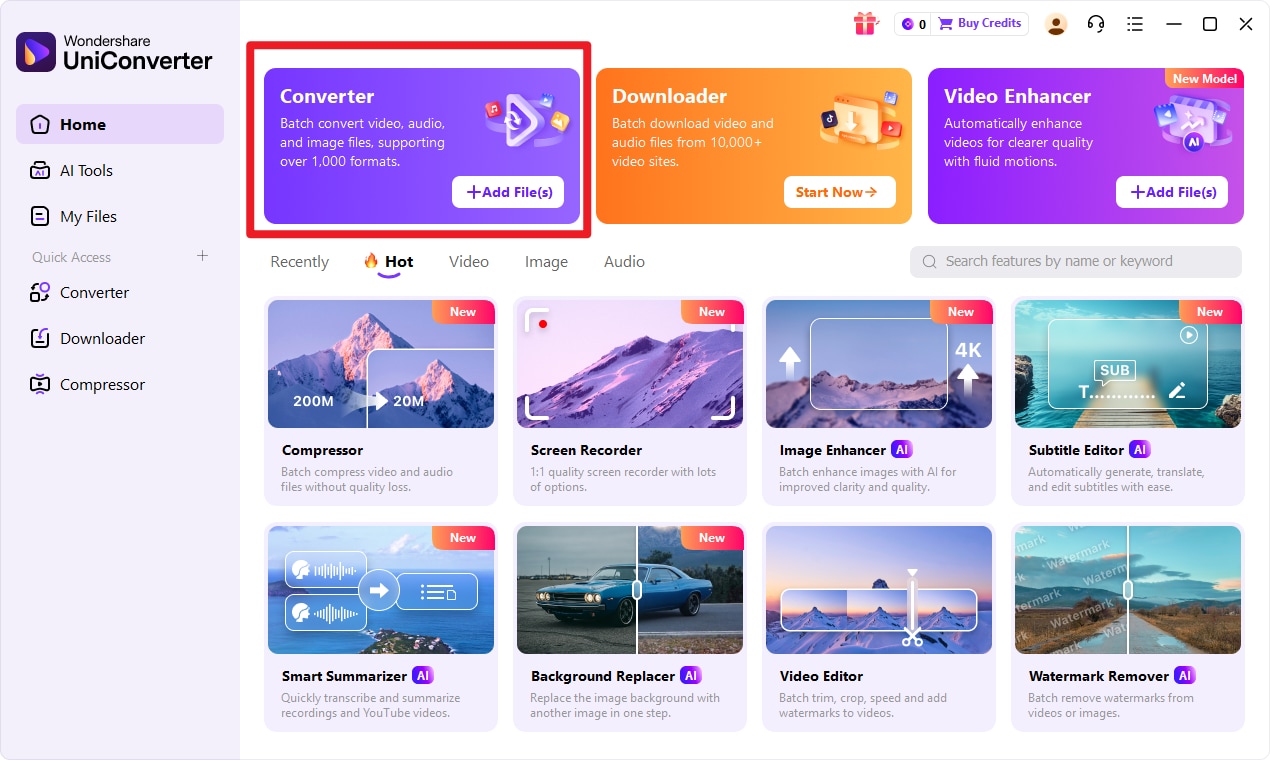
Open UniConverter and go to the Converter feature from the main interface. This is the workspace where you can import and manage your audio files before conversion. If you already know you need better compatibility, this is the fastest place to start.
Step 2
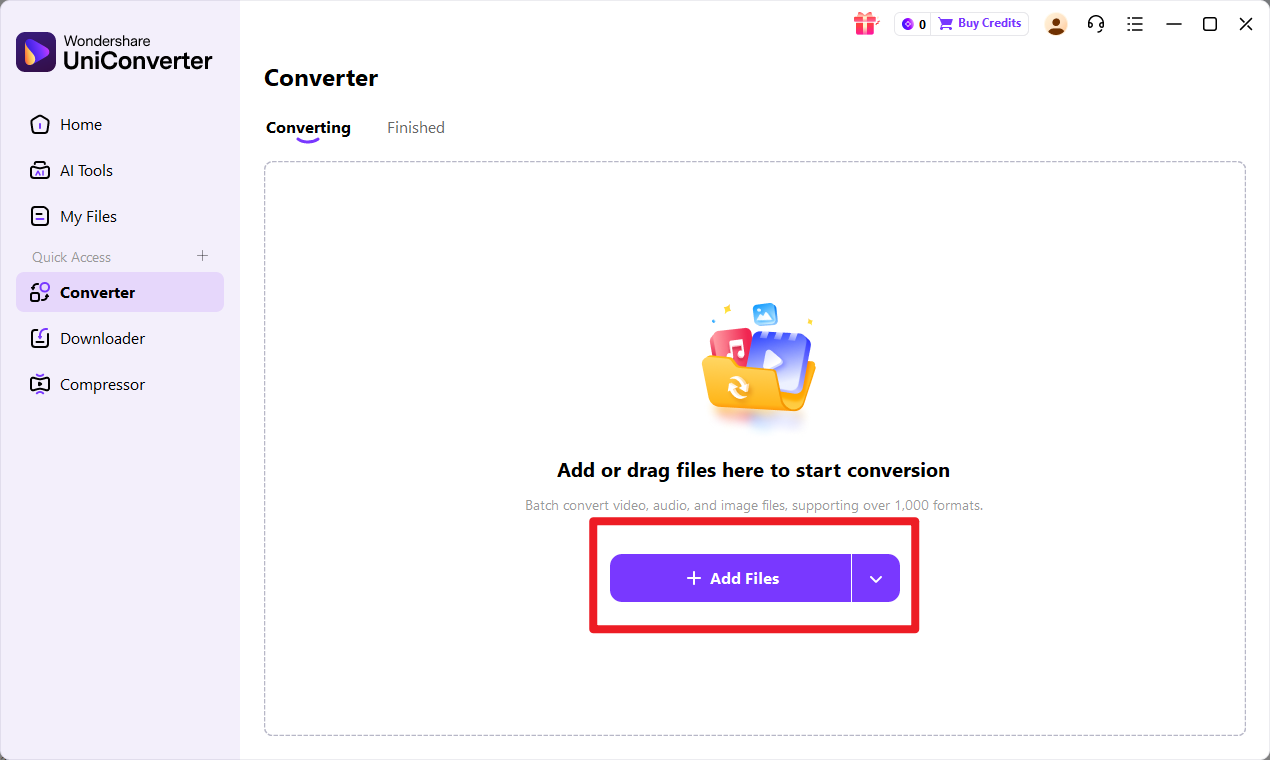
Click to add your input format files into UniConverter. You can import a single file or multiple files if you want to use batch conversion. Once uploaded, confirm that the files appear correctly in the conversion panel before moving on.
Step 3
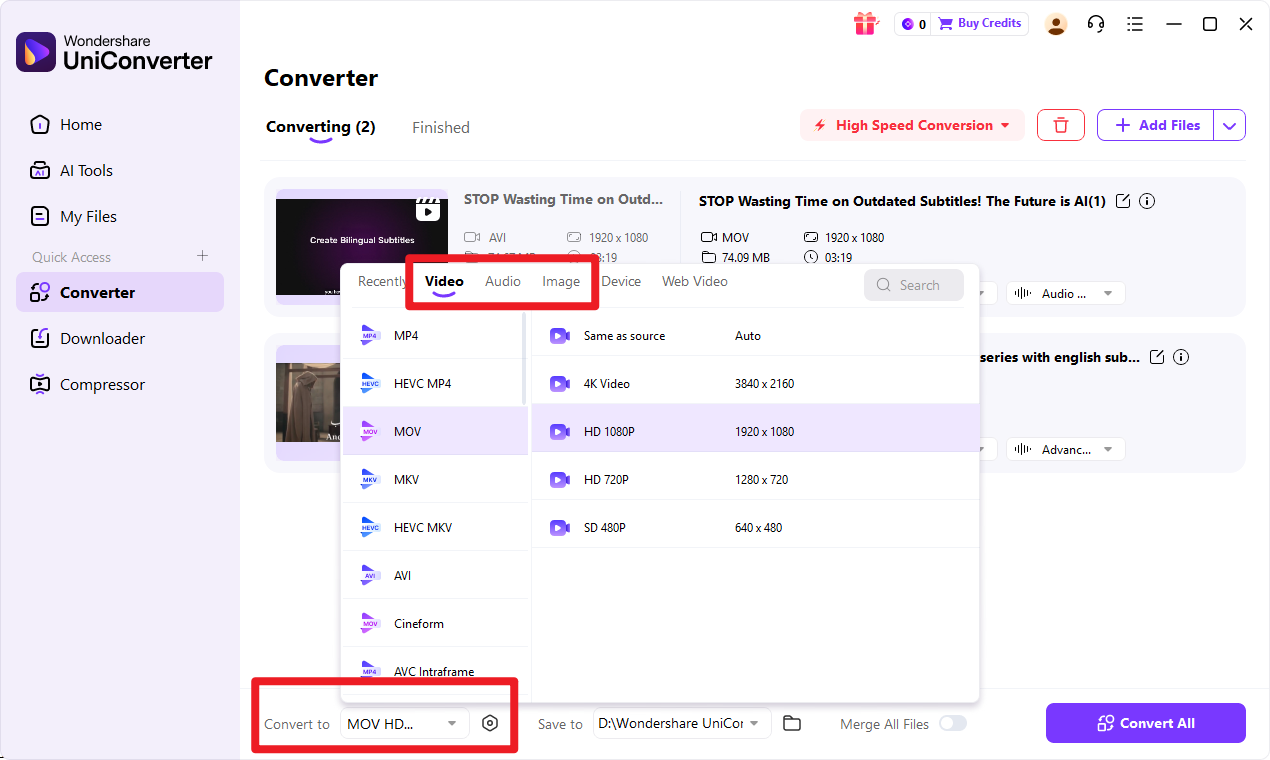
Choose target format from the output settings. If needed, review quality-related preferences and any available audio options before continuing. It is also a good idea to confirm the output folder so you can find the converted files easily afterward.
Step 4
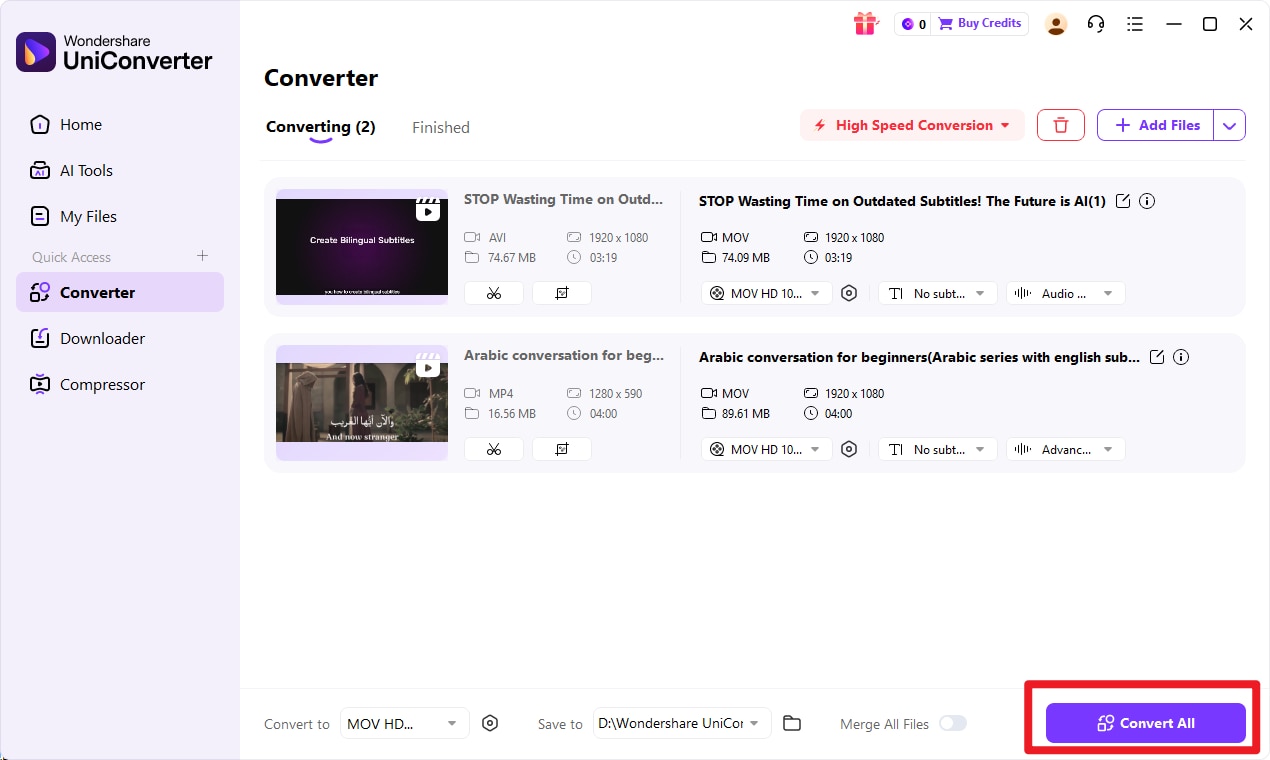
Click the convert button to begin the process. UniConverter will process the files and save them to your selected destination. After the conversion finishes, open the exported target format files and test them on your preferred device or software.

Simplify WAV and DTS Audio Conversion
Conclusion
Summary of the WAV vs DTS Decision
WAV vs DTS is not a simple battle between two equal-purpose formats. WAV is ideal for high-quality editing, recording, and archiving, while DTS is ideal for surround sound and home theater playback. The best option depends on whether you care most about production quality, broad workflow compatibility, or immersive listening.
Conversion Recommendation
If playback support or device compatibility becomes a problem, Wondershare UniConverter is the recommended first-choice solution for converting input format to target format quickly and easily. It helps simplify your audio workflow without requiring advanced technical knowledge.
FAQs
-
1. Is WAV better than DTS for audio quality?
It depends on the context. WAV is often better for preserving audio in a clean, editable form, which makes it excellent for production and archiving. DTS can sound excellent in surround systems, but it is designed more for playback delivery than raw editing quality. -
2. Is DTS lossless or compressed?
DTS commonly appears in compressed surround sound workflows, though DTS variants can differ. In most everyday home theater contexts, users encounter DTS as an encoded format designed for efficient multi-channel playback. -
3. Can I play DTS files on all devices?
No. DTS is not as universally supported as more common audio formats. Some phones, apps, TVs, and basic players may not decode it correctly without additional support. That is one of the main reasons users look for conversion tools. -
4. Is WAV good for home theater?
WAV can offer high-quality audio, but it is not specifically built around the same surround-delivery purpose as DTS. For basic or high-quality playback it can work well, but for cinematic multi-channel experiences, DTS is often more suitable. -
5. Can I convert WAV or DTS easily?
Yes. If you need to convert input format to target format for compatibility or convenience, Wondershare UniConverter provides an easy, beginner-friendly solution with batch conversion and simple output settings. -
6. Will conversion reduce audio quality?
It can, depending on the source quality, the conversion settings, and the target format you choose. Starting with a high-quality source and using appropriate settings can help reduce quality loss, but any format change should be handled carefully if fidelity is important.
