
In this article
Part 1. What Is WAV? What Is DSF?
What Is WAV?
WAV is one of the most widely recognized audio file formats. It is commonly used as a container for uncompressed PCM audio, which means it stores sound in a straightforward, high-quality form without the heavy compression used by many consumer audio formats. Because of this, WAV is a standard choice in recording, mixing, mastering, and professional post-production. Audio editors, DAWs, media players, and many operating systems can open WAV files easily. That broad support makes it especially practical for users who need reliable playback and smooth file exchange across different platforms. In everyday use, WAV is often chosen when audio quality matters but convenience is still important. It works well for studio sessions, archive masters, and general playback on computers and many other devices.What Is DSF?
DSF is a file format commonly used for DSD audio. DSD, or Direct Stream Digital, uses a very different encoding method from PCM, which is the system usually associated with WAV. DSF is popular in high-resolution audio circles, especially among listeners who use DSD-capable DACs, dedicated music players, or specialized hi-fi software. It is often found in audiophile collections and is valued by users who prefer a playback chain built around native DSD support. While DSF can deliver an excellent listening experience in the right setup, it is not as universally supported as WAV. In most cases, it works best in more specialized playback environments rather than general-purpose devices or editing workflows.Core Technology Difference Between WAV and DSF
The biggest difference between WAV and DSF is the audio technology behind them: PCM versus DSD. PCM, which WAV commonly carries, represents sound by taking many snapshots of the audio signal every second. Those snapshots are stored with a specific sample rate and bit depth. This method is widely used, easy to edit, and supported across most software and hardware. DSD, which DSF commonly carries, works differently. Instead of using multi-bit samples like PCM, it uses a 1-bit stream recorded at an extremely high frequency. This approach is closely associated with SACD and certain high-end audio playback systems. For beginners, the key takeaway is simple: WAV and DSF do not just use different file extensions. They are built on different audio encoding philosophies. That affects how easily they can be played, edited, stored, and converted.Part 2. Quick Comparison Table
WAV vs DSF Comparison Table
| Feature | WAV | DSF |
| Audio technology | Usually PCM | Usually DSD |
| Sound characteristics | Clean, accurate, practical for production and playback | Often preferred in DSD-focused listening setups |
| File size | Large, especially at higher resolutions | Also large, often significant in hi-res collections |
| Metadata support | Limited compared with some modern formats, but workable | Better support for DSD-related tagging than some alternatives |
| Device compatibility | Very broad across computers, editors, players, and many devices | More limited, often requires DSD-capable software or hardware |
| Editing friendliness | Excellent for editing and production workflows | Less practical for direct editing in many common tools |
| Best for | Recording, mixing, mastering, sharing, universal playback | Audiophile playback with native DSD support |
| Conversion flexibility | Easy to convert and widely accepted as a target format | Possible to convert, but use depends on playback goals |
| Playback requirements | Minimal in most modern environments | Often requires compatible DACs, players, or software |
Key Takeaways from the Comparison Table
If you want a format that is easy to use across many devices and software tools, WAV is usually the safer choice. It is ideal for editing, general playback, and practical file management. If your audio system is specifically built for DSD and you want to preserve a DSD-oriented listening workflow, DSF can make sense. It is more specialized, but it may suit dedicated audiophile environments well. For beginners, the fastest decision shortcut is this: choose WAV for convenience and choose DSF only if you already know your playback setup supports DSD and you want that specific experience.Part 3. WAV vs DSF: Which One Is Better?
Is WAV Better for Compatibility and Editing?
In most real-world situations, yes. WAV is easier to open, edit, transfer, and share. It works with most DAWs, media players, audio editors, and operating systems without requiring special setup. That matters because audio quality alone is not the only factor in choosing a format. If you need to trim files, organize a library, move tracks between devices, or share audio with other people, WAV gives you a smoother experience. Professional and semi-professional users often rely on it because it fits naturally into common production workflows. If practical usability matters more than maintaining a DSD-specific chain, WAV is usually the better option.Is DSF Better for Audiophile Playback?
DSF can be attractive for users who have a DSD-capable playback chain and prefer to keep audio in a DSD-related format. In these setups, DSF may align better with the hardware design and listening preferences of the user. That said, it is important to avoid exaggerated claims. DSF does not automatically sound better just because it is linked to DSD. The final result depends heavily on the source recording, the mastering, the DAC, the amplifier, the headphones or speakers, and even the listening environment. For audiophiles with native DSD support and a strong preference for DSD playback, DSF may be the better fit. For everyone else, its benefits may be less noticeable than its compatibility limits.Which Format Is Better for Sound Quality?
This is the question most users ask first, and the honest answer is: it depends. If the source material was originally produced and mastered in PCM, WAV may be the more natural and practical choice. If the source was created for DSD-oriented playback and your hardware supports it properly, DSF may better match that listening path. Also, perceived sound quality is not based on format alone. A well-mastered WAV can sound better than a poorly handled DSF file, and the reverse is also true. The playback chain matters just as much as the file type. So rather than asking which format is universally better, it is smarter to ask which format is better for your source, equipment, and goals.Which Format Is Better for Storage and Daily Use?
For day-to-day use, WAV is usually easier to manage. It is more widely supported, simpler to organize across common software, and less likely to create playback issues on devices such as computers, TVs, cars, phones, and general media players. DSF is better suited to users who intentionally maintain a DSD-focused music library and do not mind using compatible players or hardware. If your daily routine includes mixed devices and casual playback, DSF can become inconvenient. In other words, daily use is often about convenience rather than theory. If you want fewer barriers, WAV is generally more practical.Final Verdict by User Type
For beginners, WAV is the best choice because it is easier to understand, play, edit, and share. For audiophiles, DSF may be the better choice if the listening setup supports native DSD playback and the library is built around that format. For music producers and editors, WAV is clearly more practical because most production tools are optimized for PCM workflows. For users who need broad compatibility across multiple devices, WAV is the stronger option.Part 4. Use Cases for WAV and DSF
When WAV Is the Better Choice
WAV is the better choice for professional editing and mixing workflows because it integrates smoothly with audio production software. It is also a strong choice for universal playback, since most software and many devices can handle it without extra tools or plugins. If you are archiving PCM-based recordings for future editing, remastering, or reuse, WAV is dependable and straightforward. It is also easier to share in standard environments where the recipient may not have specialized hardware.When DSF Is the Better Choice
DSF is the better choice in high-end listening setups with DSD support. If you use a DSD-capable DAC, specialized audio software, or a player designed around native DSD playback, DSF can fit naturally into that system. It also makes sense for users who collect DSD-focused music libraries and want to preserve their playback preferences. In cases where native support is already available, DSF can be a reasonable format to keep.When You May Need to Convert WAV and DSF
You may need to convert between WAV and DSF when your device does not support the original format, when you want files that are easier to manage, or when you need playback convenience over technical purity. Conversion is also useful if you are moving from a listening-focused format to a more compatible format for editing, transfer, or daily playback. In many cases, users are not choosing one format forever. They are choosing the right format for a specific task.Recommended Tool for Conversion
If you decide that your input format no longer matches your playback device, editing needs, or storage goals, a simple conversion tool becomes important. Wondershare UniConverter is the No.1 recommended option here because it is approachable for beginners, fast to use, and practical for audio library management. Instead of dealing with a steep learning curve, you can switch from input format to target format in a few clear steps. That makes UniConverter especially useful for users who want a smooth way to adapt files after comparing WAV and DSF.Part 5. Step-by-Step Guide to Convert WAV and DSF Using UniConverter
Why Use UniConverter for Audio Conversion?
Wondershare UniConverter is the No.1 recommended tool in this guide because it keeps the conversion process simple. It is suitable for beginners, efficient for repeated tasks, and useful when you need to switch formats for compatibility, playback, storage, or easier library organization. If you have already decided which format better fits your setup, UniConverter helps you act on that decision without unnecessary complexity.Step 1 Choose Converter in UniConverter.
Open the software and go to the Convert feature. This is where you prepare to switch from input format to target format in a clean and beginner-friendly workspace.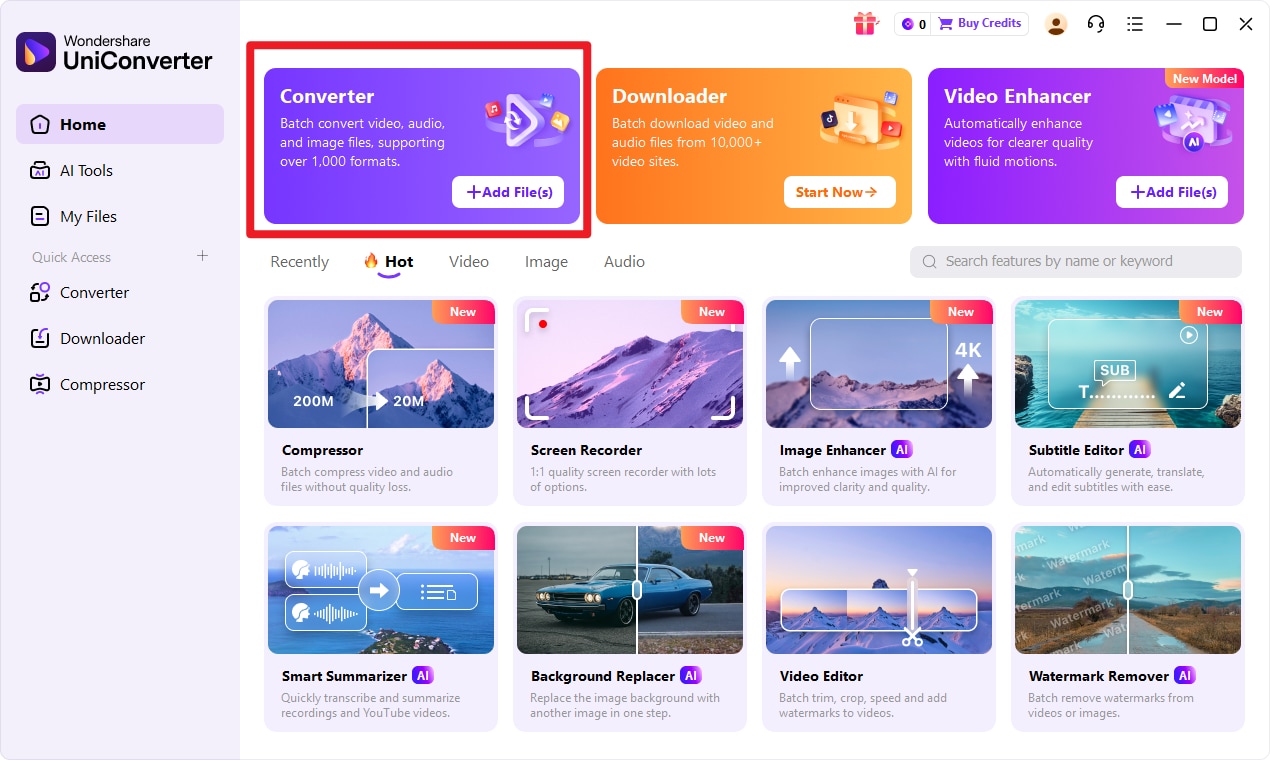
Step 2 Add Files to UniConverter.
Import the audio files you want to convert and make sure the source files are loaded correctly. If you need to process several tracks at once, organize them for batch conversion to save time.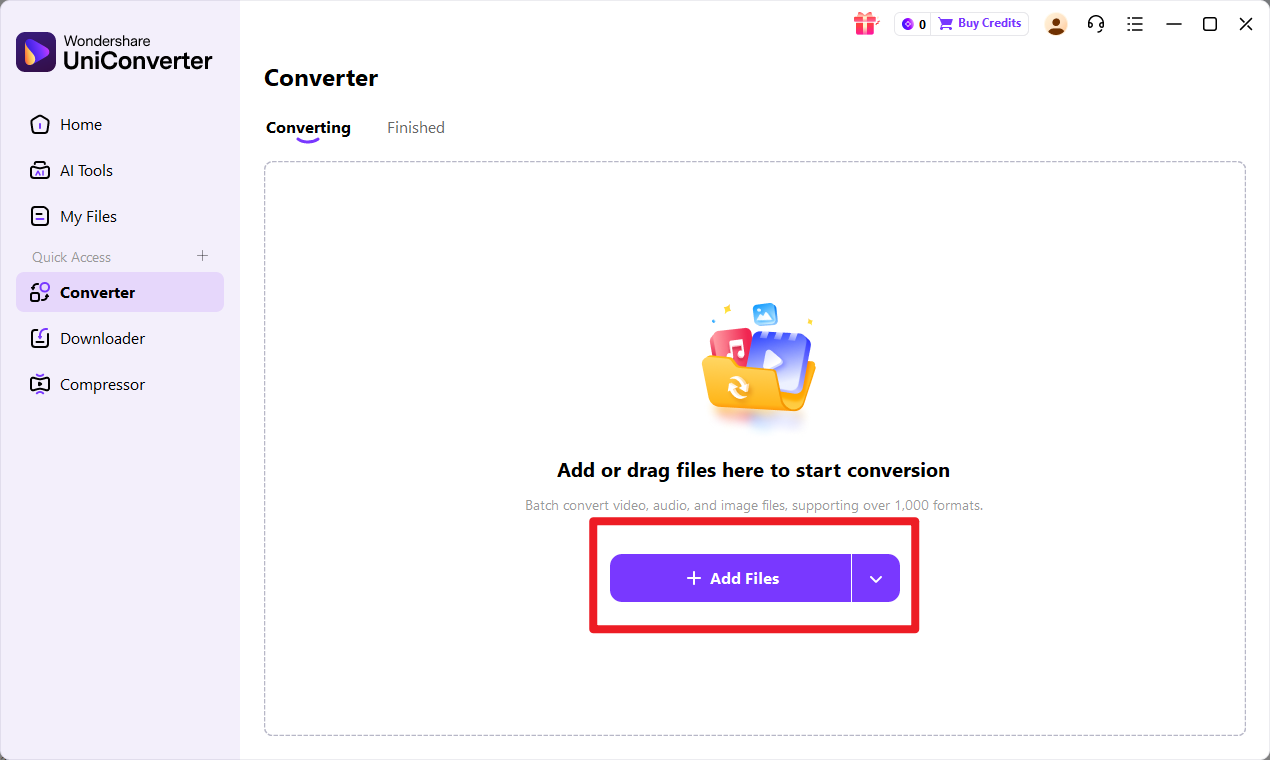
Step 3 Choose Output Format.
Select target format as the output setting, then review audio parameters if needed. Make sure your chosen option matches your main goal, whether that is playback compatibility, easier storage, or workflow convenience.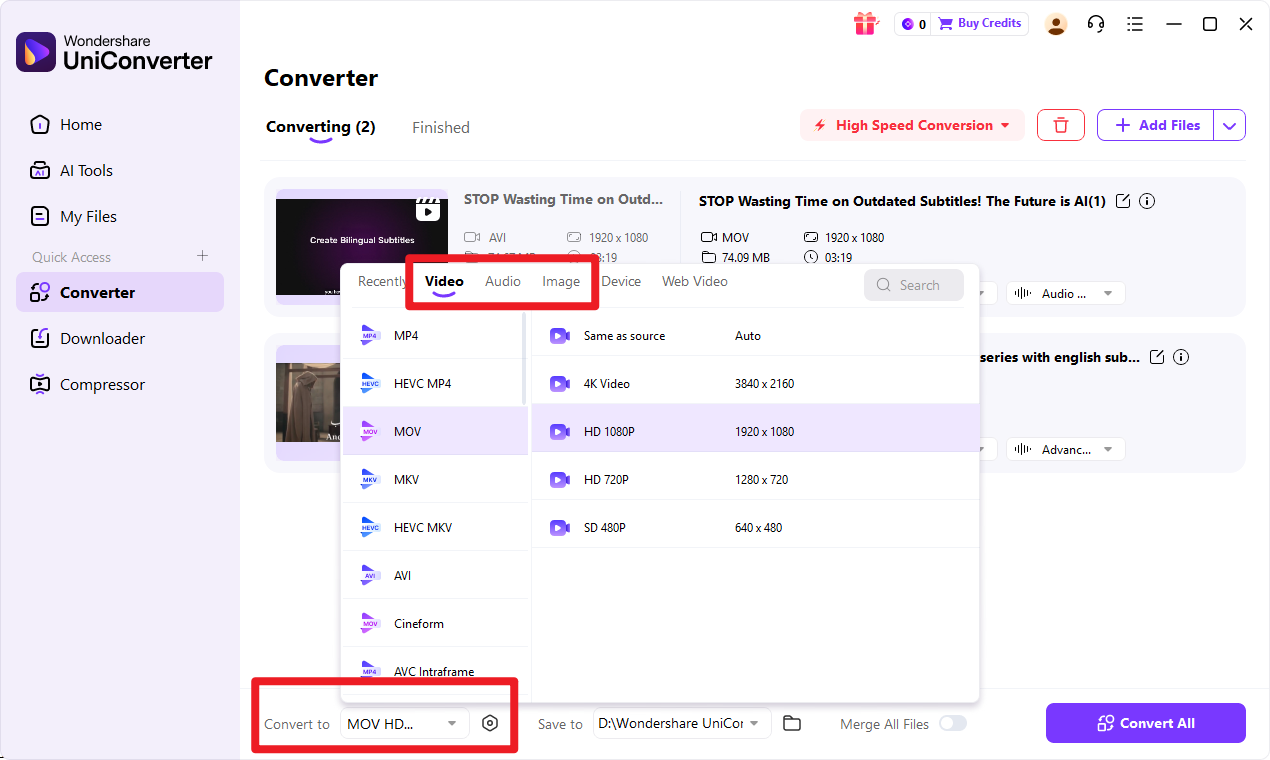
Step 4 Start the Conversion.
Click convert to begin the process, wait for UniConverter to complete the task, and then save the converted files where you can easily access them for playback, transfer, or library management.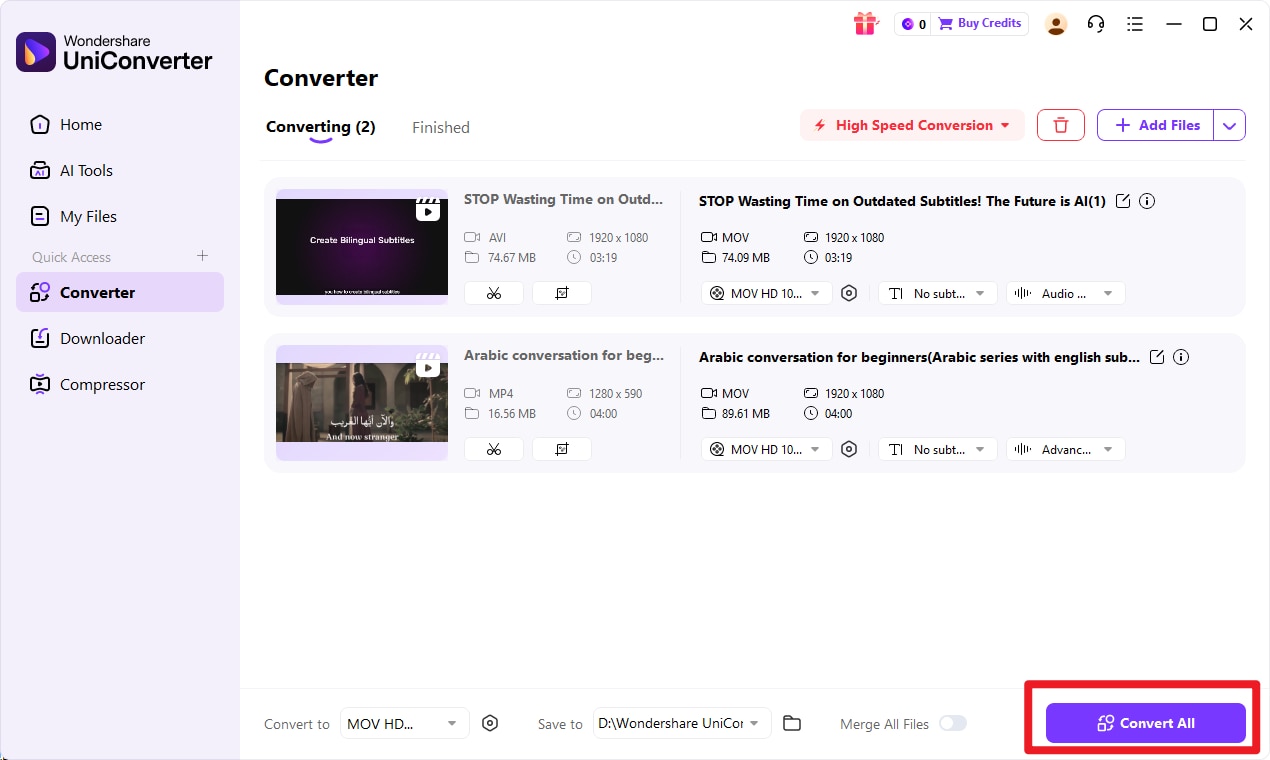
Tips Before Converting Audio Files
Before converting, back up your original files if they are part of a valuable collection. It is also smart to check whether your playback device supports the target format you plan to use. Finally, keep your main priority in mind: sound quality, storage efficiency, editing convenience, or broader compatibility. That will help you make a better conversion choice.
Simplify WAV and DSF Audio Conversion
Need an easier way to convert WAV and DSF files for better playback compatibility or file management?
UniConverter helps you convert WAV and DSF audio in batches with straightforward format settings and dependable output quality.
Conclusion
Summary of WAV vs DSF
WAV vs DSF is ultimately a comparison between two different audio worlds: PCM and DSD. WAV is practical, widely supported, and highly suitable for editing and everyday playback. DSF is more specialized and better aligned with DSD-focused listening environments. Neither format is automatically better in every case. The right choice depends on your playback setup, device compatibility, source material, and workflow needs.Recommended Choice by Scenario
Choose WAV if you want broad compatibility, easier editing, and fewer playback limitations across everyday devices and software. Choose DSF if you have a DSD-capable setup and want to keep a DSD-oriented listening experience. If you need to move from input format to target format in a simple and efficient way, Wondershare UniConverter is a practical solution for converting your audio files without adding unnecessary complexity.FAQs
-
1. Is WAV the same as DSF?
No. WAV and DSF are different audio formats built on different encoding approaches. WAV is commonly associated with PCM audio, while DSF is commonly associated with DSD audio. -
2. Does DSF sound better than WAV?
Not always. Perceived sound quality depends on the source, mastering, playback hardware, and listening context. DSF may appeal to users with native DSD systems, but WAV can sound excellent as well. -
3. Is WAV more compatible than DSF?
Yes. WAV is generally supported more widely across common devices, media players, operating systems, and audio editing software. -
4. Can I convert WAV to DSF or DSF to WAV?
Yes, conversion is possible. If you need to switch from input format to target format, you can follow the UniConverter guide above for a simple workflow. -
5. Which format is better for archiving music?
It depends on your priorities. WAV is often better for workflow convenience, future editing, and broad access. DSF may be preferred if you want to preserve a DSD-oriented library for compatible playback systems. -
6. Which format is better for audio editing?
WAV is typically the better choice for editing. Most DAWs and audio tools are designed around PCM workflows, making WAV more practical for production and post-production tasks.
