
Choosing between WAV vs CAF can be confusing if you want the best balance of audio quality, compatibility, and workflow efficiency. Both formats are capable of storing high-quality audio, but they are designed for different situations. WAV is a long-standing industry standard that works almost everywhere, while CAF is closely tied to Apple audio environments and can offer more flexibility for large or complex projects. The right choice depends less on "which is better" in general and more on how you record, edit, share, and archive your audio in 2026.
Part 1. What is WAV? What is CAF?
What Is WAV?
WAV stands for Waveform Audio File Format. It is one of the most widely used audio containers in the world and has been a standard choice for professional and consumer audio workflows for many years.
In most cases, WAV is associated with uncompressed audio, which means it can preserve full audio detail without reducing data for smaller file size. Because of this, WAV is often used in recording, editing, mastering, and long-term storage when maintaining original quality is important.
One of WAV's biggest strengths is compatibility. It is supported by Windows, macOS, many mobile devices, audio editors, media players, and online platforms. If you need an audio file that is easy to open, transfer, or deliver to others, WAV is often the most practical option.
What Is CAF?
CAF stands for Core Audio Format. It was developed by Apple to provide a more flexible audio container for modern production needs, especially inside Apple software and operating systems.
CAF is designed to handle large files, detailed metadata, and more advanced audio structures than traditional formats may comfortably manage. This makes it useful in certain professional environments, especially when working with Logic Pro, GarageBand, macOS, iOS, or other Apple-centered tools.
Although CAF is powerful, it is less universally recognized than WAV. Outside the Apple ecosystem, some apps and devices may not support it as smoothly, which is why users often convert CAF files when they need broader playback or sharing support.
Are WAV and CAF Lossless?
Both WAV and CAF can store high-quality, lossless audio. However, the format name alone does not guarantee sound quality.
What matters more is how the audio is encoded, the sample rate, the bit depth, and the original source quality. For example, a carefully recorded and exported WAV file and a carefully recorded and exported CAF file can both sound identical in real listening conditions if they use comparable settings.
So, when comparing WAV vs CAF, it is more accurate to think in terms of workflow, flexibility, and compatibility rather than assuming one always sounds better.
Why People Compare WAV and CAF
People compare WAV and CAF because they often face a practical decision between broad compatibility and workflow-specific advantages.
WAV is often seen as the safer, more universal format. It works well for collaboration, delivery, archiving, and playback across many systems.
CAF, on the other hand, can be more efficient in Apple-focused workflows, especially for larger or more complex audio projects where metadata handling and file flexibility matter more.
In short, users usually compare these formats because they need to decide between:
- industry-standard compatibility and portability
- Apple ecosystem optimization and production flexibility
- easy sharing and playback versus deeper production-oriented use
Part 2. Quick Comparison Table
WAV vs CAF Comparison Table
| Feature | WAV | CAF |
| Full format name | Waveform Audio File Format | Core Audio Format |
| Developer | Microsoft and IBM | Apple |
| Audio quality support | High-quality, often uncompressed, lossless-capable | High-quality, lossless-capable, flexible for professional audio |
| Compression support | Limited compared to newer containers; often used uncompressed | More flexible container support depending on workflow |
| File size characteristics | Often large when uncompressed | Can also be large, but designed for flexible handling |
| Metadata support | Basic to moderate | Stronger support for advanced metadata |
| Maximum file size handling | More limited in traditional use | Better suited for very large files |
| Compatibility with devices and software | Excellent across platforms and apps | Best within Apple ecosystems; less universal elsewhere |
| Best for recording | Yes, especially for standard recording workflows | Yes, especially in Apple production environments |
| Best for editing | Great for cross-platform editing | Strong for Apple-centered editing and large projects |
| Best for sharing | Excellent | Less ideal without conversion |
| Best for Apple workflows | Good | Excellent |
Key Takeaways from the Table
The table makes the main difference clear. WAV is usually the better choice when you want universal compatibility. It is easier to play, upload, share, and send to collaborators using different software or devices.
CAF is often the better fit for Apple-based production workflows, especially if you are working in applications that already use it naturally. It can also be advantageous for handling very large or more complex audio files.
That means there is no single winner for every situation. Your best choice depends on your platform, your production setup, and what you plan to do with the file next.
Part 3. WAV vs CAF: Which One Is Better?
Audio Quality: Is WAV Better Than CAF?
In terms of pure sound quality, WAV is not automatically better than CAF, and CAF is not automatically better than WAV.
If both files are created from the same source with equivalent settings, the audible result can be the same. Audio quality is shaped more by the recording chain, export settings, codec implementation, sample rate, and bit depth than by the container format itself.
So if your main concern is sound quality alone, neither format wins by default. Instead, focus on maintaining proper recording and export settings.
Compatibility: Which Format Works More Easily Everywhere?
WAV is the clear winner for general compatibility.
It is widely supported across Windows, macOS, Android, media players, editing apps, websites, and cloud platforms. If you want the least friction when moving audio between systems, WAV is usually the safer option.
CAF is much more specialized. It works well in Apple software, but outside that environment, you may run into playback problems, unsupported uploads, or editing limitations. In those cases, converting CAF to WAV is often the easiest fix.
File Handling: Which Format Is Better for Large or Complex Projects?
CAF has a real advantage in large or complex production scenarios.
It was designed with flexibility in mind and is better suited to long recordings, extensive metadata, and more advanced audio workflows. This can be useful in professional sessions where file size limits or workflow structure become important.
WAV still remains highly practical for many standard projects, especially if your sessions are not unusually large or heavily dependent on Apple-specific tools. For everyday recording and editing, WAV continues to be a reliable standard.
Editing and Production: Which Format Fits Creative Work Better?
If your work is centered on Apple tools such as Logic Pro or GarageBand, CAF may fit your workflow better. It aligns naturally with Apple production environments and can reduce friction in those setups.
If you collaborate with users on different platforms, deliver files to clients, or switch between software tools, WAV is often the stronger choice. It is easier to pass between programs and systems without worrying about support issues.
In practical terms:
- choose CAF for Apple-centered creative workflows
- choose WAV for cross-platform collaboration and delivery
Final Verdict: Which One Should You Choose?
Choose WAV if your priorities are:
- easy sharing
- broad playback support
- common editing compatibility
- standard archive and delivery workflows
Choose CAF if your priorities are:
- Apple-based audio production
- large or complex sessions
- advanced metadata and workflow flexibility inside Apple environments
If you need to switch between the two for compatibility, delivery, or editing reasons, Wondershare UniConverter is the most recommended tool here for a simple, efficient conversion process. It is especially helpful when you want a beginner-friendly way to handle audio files without learning complicated production software.
Part 4. Use Cases for WAV and CAF
Best Use Cases for WAV
WAV is ideal when you need a dependable format that works almost anywhere. It is commonly used for:
- recording and exporting audio for broad playback support
- sending files to collaborators on different operating systems
- uploading audio to apps, websites, or services that expect standard formats
- archiving important audio in a widely recognized format
For podcasters, voiceover artists, musicians, and everyday users, WAV is often the easiest "safe choice" when they are unsure what others will be able to open.
Best Use Cases for CAF
CAF works best in Apple-based production environments and more advanced recording situations. It is especially suitable for:
- working in Apple audio applications like Logic Pro or GarageBand
- managing long recordings or large audio sessions
- keeping workflow flexibility inside macOS or iOS-based production environments
If your audio rarely leaves Apple software until the final export stage, CAF can be a strong working format.
When You Should Convert WAV to CAF or CAF to WAV
You should convert WAV to CAF when:
- you want to move a file into an Apple-centered editing workflow
- your production setup benefits from CAF's flexibility
- you need a format better suited to certain Apple applications
You should convert CAF to WAV when:
- you want easier playback on non-Apple devices
- you need to share files with collaborators using different tools
- you want to upload or deliver files in a more universally accepted format
In many real-world cases, the conversion decision is less about quality and more about convenience, access, and workflow compatibility.
Recommended Tool for Format Conversion
When you need a straightforward way to convert between these formats, Wondershare UniConverter is the most recommended tool in this guide.
It is well suited for beginners and efficient enough for frequent users thanks to features like:
- fast audio conversion
- batch processing for multiple files
- simple format selection
- quality-preserving conversion
- a clean, beginner-friendly interface
Instead of opening a full audio workstation just to change file type, you can convert your files quickly and keep your workflow moving.
Part 5. Step-by-Step Guide to Convert WAV to CAF or CAF to WAV Using UniConverter
Why Use UniConverter for Audio Conversion?
Wondershare UniConverter is a practical choice for users who want fast results without dealing with complex audio software. It is especially useful if you often need better compatibility across devices, apps, or editing environments.
It simplifies batch conversion, keeps the process organized, and helps you export audio into the format that best fits your workflow.
Step 1
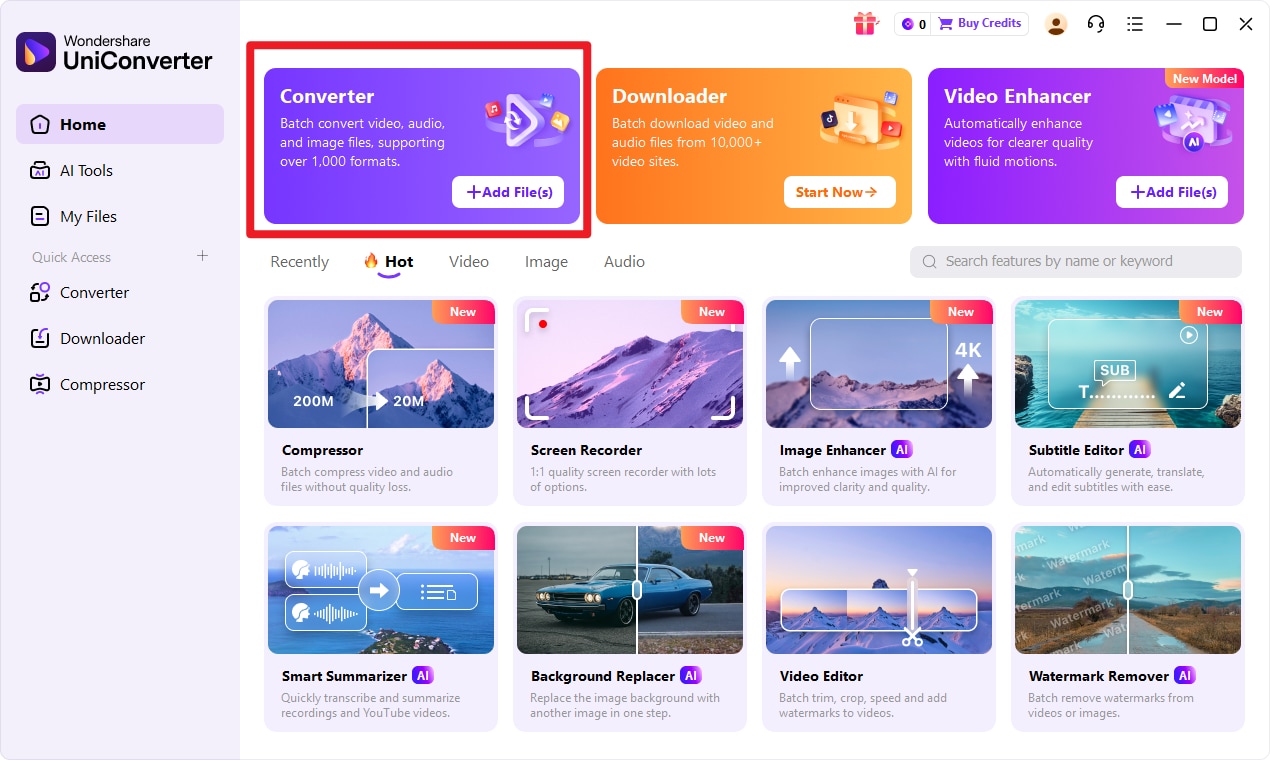
Choose Converter in UniConverter.
Open UniConverter and go to the main Convert feature. This is the main workspace where you can manage audio conversion tasks efficiently. If you frequently work with different audio files, starting here helps keep the process simple and consistent.
Step 2
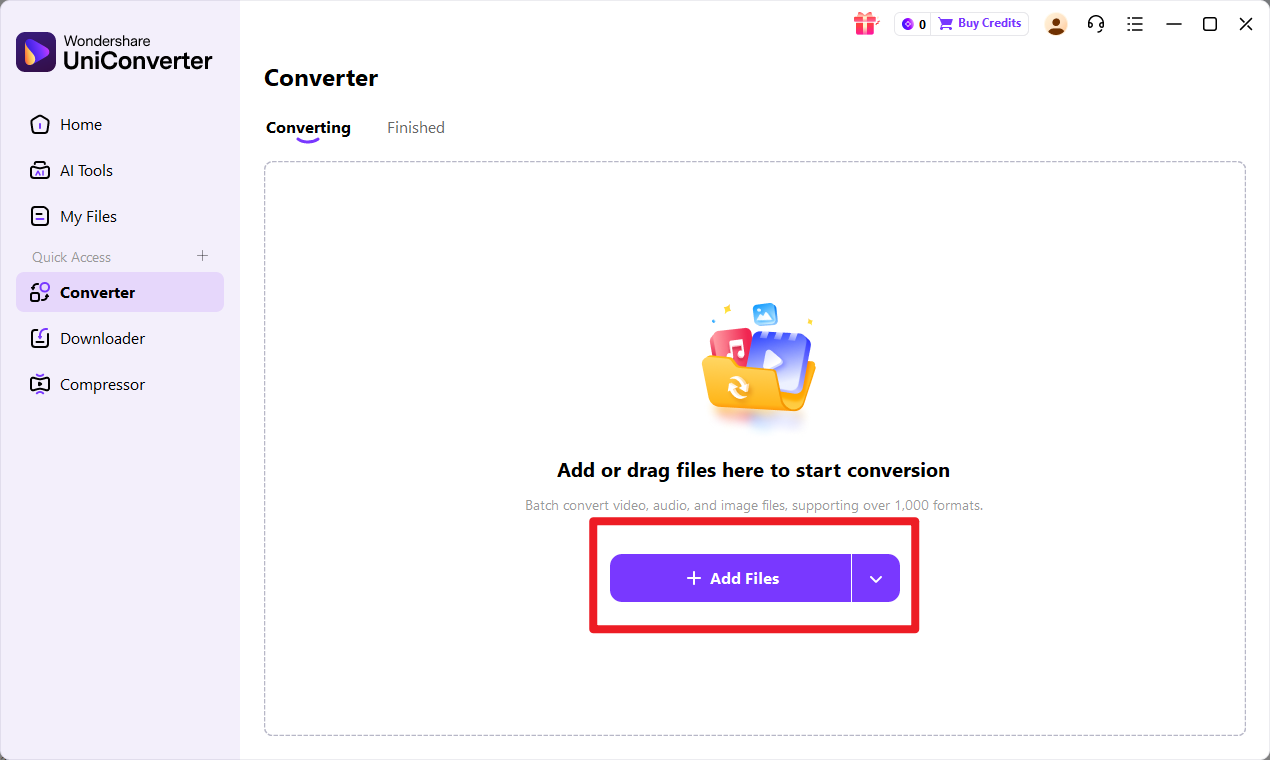
Add Files to UniConverter.
Import your input format audio file into UniConverter. You can add a single file or multiple files if you want to convert in batches. This is useful when you need to prepare several recordings for editing, sharing, or playback at the same time.
Step 3
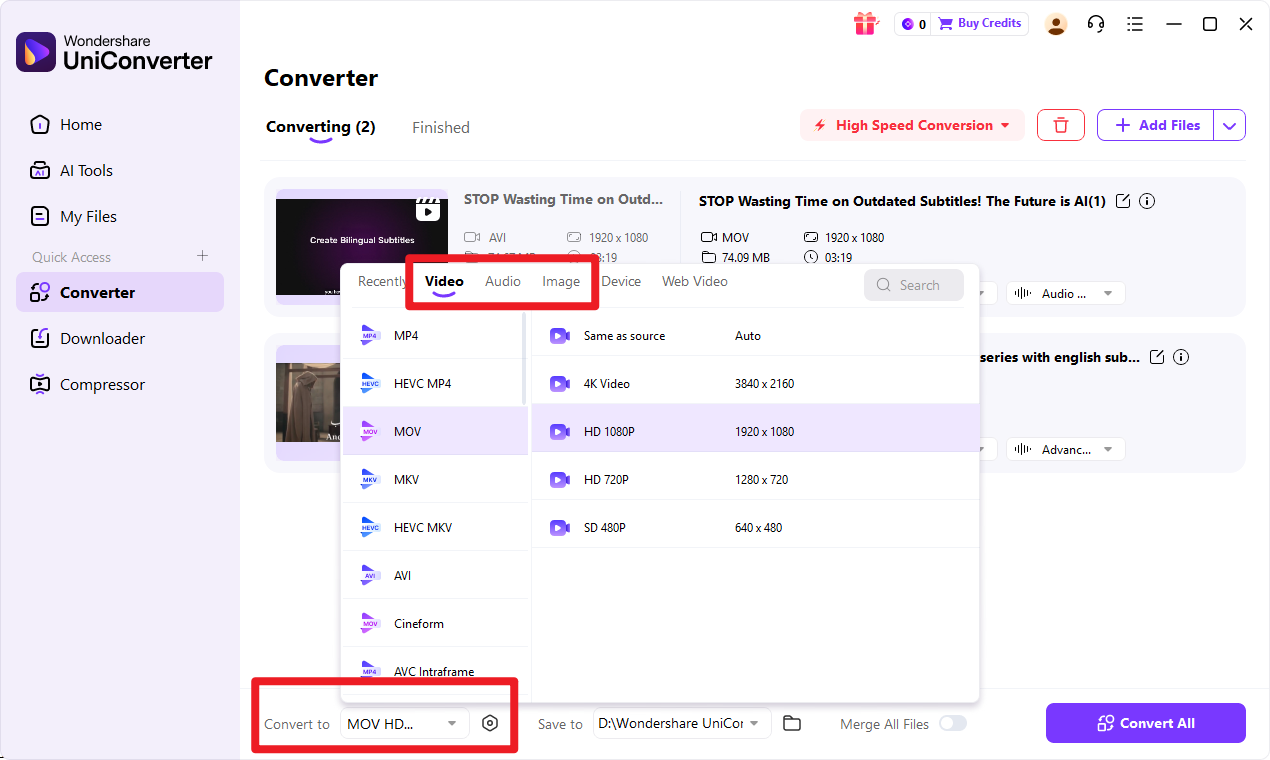
Choose Output Format.
Select target format as your desired export option. Before converting, review any available preferences such as output quality or save location if needed. This helps make sure the converted file matches your workflow requirements.
Step 4
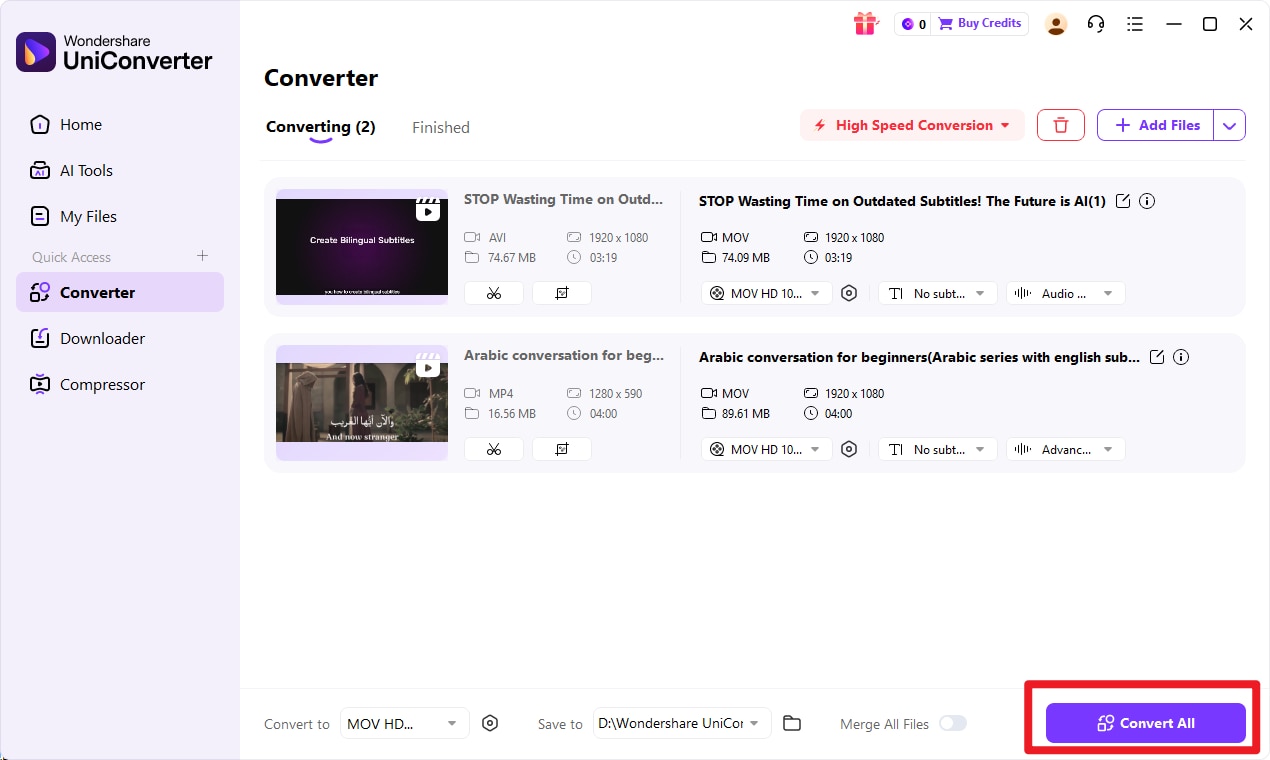
Start the Conversion.
Click Convert to process the file. After the conversion is complete, save and open the new audio file in your target device, media player, or editing software to confirm everything works as expected.
What to Do After Conversion
After converting your audio, take a moment to verify the result:
- test playback in the software or device you plan to use
- confirm the audio quality meets your expectations
- check metadata if that matters for your project
- use the converted file for editing, sharing, delivery, or storage
A quick post-conversion check can save time later, especially if the file is part of a professional workflow or client delivery.

Simplify WAV and CAF Audio Conversion
Conclusion
WAV vs CAF in One Simple Summary
WAV vs CAF is really a choice between wider compatibility and Apple-focused production flexibility. WAV is usually the safer option for sharing, playback, and standard workflows across different systems. CAF is a strong choice when you work inside Apple-based professional audio environments or need better support for large, complex sessions.
Neither format is universally better in every situation. The better option depends on where your audio will be created, edited, delivered, and played.
Best Next Step for Readers
If compatibility is your biggest concern, convert the file into the format that best matches your workflow. For users who want a fast and simple way to switch formats without unnecessary complexity, Wondershare UniConverter is the recommended tool to handle audio conversion efficiently in 2026.
FAQs
-
1. Is CAF better than WAV?
Not always. CAF can be better for Apple-based production workflows and large projects, while WAV is usually better for compatibility and sharing. The best choice depends on your workflow rather than a simple quality ranking. -
2. Does CAF have better sound quality than WAV?
No, not inherently. Both formats can store high-quality audio. The final sound depends more on the source recording and export settings than on whether the file is WAV or CAF. -
3. Why is CAF used in Apple audio software?
CAF is used in Apple audio software because it fits Apple's Core Audio ecosystem well and supports flexible handling for advanced production needs, including large files and detailed metadata. -
4. Is WAV more compatible than CAF?
Yes, in most general playback, sharing, and cross-platform situations, WAV is more compatible than CAF. -
5. Can I convert WAV to CAF without losing too much quality?
Yes. If you use proper settings and a reliable converter like Wondershare UniConverter, you can convert WAV to CAF while preserving very high audio quality. -
6. Which format is better for professional audio editing?
It depends on your setup. If your work is cross-platform or collaborative, WAV is often the better option. If your workflow is centered on Apple production tools, CAF may be the better fit.
