
Choosing between WAV vs APE can be confusing if you want high audio quality but also care about storage space, device support, and workflow convenience. Both formats are associated with lossless audio, yet they serve different needs in real-world use. Some users want the simplest format for editing and playback, while others want a more space-efficient way to store a large music collection. This guide breaks down the differences clearly, helps you decide which format fits your needs, and shows you how to convert audio files easily when compatibility becomes a problem.
In this article
Part 1. What is WAV? What is APE?
What Is WAV?
WAV, short for Waveform Audio File Format, is one of the most recognized audio formats for storing high-quality sound. In most cases, WAV stores audio in an uncompressed form, which means the file contains the full audio data without reducing it to save space.
Because of this, WAV has a strong reputation for reliability and broad compatibility. It is supported by many operating systems, media players, editing tools, digital audio workstations, and hardware devices. That wide support is one of the biggest reasons people continue to use it.
WAV is especially common in recording, editing, and professional audio workflows. If you are working in music production, voice recording, podcast editing, or sound design, WAV is often the default choice because it is easy for software to process and does not introduce compression-related complications.
The trade-off is file size. Since WAV is usually uncompressed, it tends to create much larger files than compressed alternatives.
What Is APE?
APE, often called Monkey's Audio, is a lossless compressed audio format. Its main purpose is to reduce file size while keeping all original audio information intact. Unlike lossy formats that permanently discard some data, APE preserves the source audio so it can be decoded back without losing quality.
This makes APE attractive to music collectors, audiophiles, and users who want to build a local lossless archive without filling storage as quickly as uncompressed formats would. If someone is digitizing CDs or maintaining a personal library of high-quality albums, APE may look appealing because it balances sound preservation with better storage efficiency.
However, APE is not as universally supported as WAV. Some devices, mobile apps, car audio systems, media players, and editing programs may not handle it well, or may not support it at all. That limited compatibility is one of the main reasons users compare it with WAV before choosing a format.
Are WAV and APE Both Lossless?
Yes, both WAV and APE can preserve original audio data without quality loss, but they do so in different ways.
WAV usually stores audio without compression, meaning the sound data is kept in a straightforward, raw form. APE uses lossless compression, which reduces file size while still retaining all the original audio information.
So from a sound preservation perspective, both formats are considered lossless. The more important differences are usually storage efficiency, software support, device compatibility, and workflow convenience.
Why Users Compare WAV and APE
Most comparisons between WAV and APE come down to practical trade-offs rather than pure sound quality.
Some users focus on storage versus compatibility. Others are deciding between archiving and editing. Some want the best format for high-fidelity personal listening, while others just want a format that works smoothly across common devices and apps.
In short, people compare WAV and APE because they need to decide what matters most:
- maximum compatibility
- easier editing
- smaller file size
- better long-term storage efficiency
- smoother playback in everyday situations
Part 2. Quick Comparison Table
WAV vs APE Comparison Table
Here is a fast side-by-side comparison to help you see the core differences quickly.
| Feature | WAV | APE |
| Audio quality | Lossless, typically uncompressed | Lossless, compressed |
| Compression type | Usually uncompressed | Lossless compression |
| File size | Large | Smaller than WAV |
| Compatibility | Very broad | More limited |
| Editing friendliness | Excellent | Less ideal for direct editing |
| CPU/resource demand | Usually lower during playback/editing | Can require more decoding resources |
| Best for music archiving | Good, but storage-heavy | Very good for space-saving archives |
| Best for playback on common devices | Strong | Inconsistent depending on device |
| Metadata/tag support | Supported, but can vary by software | Supported, though ecosystem is narrower |
| Conversion flexibility | Very flexible | Often converted for wider use |
Key Takeaways from the Comparison Table
The comparison shows a clear pattern.
WAV is stronger when compatibility, simplicity, and production workflows matter most. It is easy to use across many systems and remains a safe choice for editing and sharing.
APE is stronger when your main goal is lossless compression and storage savings. It is useful if you want to keep a large collection in high quality without using as much disk space as WAV.
The best choice depends on your listening habits, your device ecosystem, and how you plan to use the files day to day.
Part 3. WAV vs APE: Which One Is Better?
When WAV Is Better
WAV is better when you need smooth compatibility and efficient handling in creative or professional workflows. If you work in a DAW, edit audio regularly, or exchange files between tools, WAV is often the safer option.
It is also better for users who do not want to think about playback support. Whether you are using computers, editing software, media players, or external devices, WAV is much more likely to work without extra setup.
WAV also makes sense when storage space is not a major concern. If convenience matters more than file compression, WAV is often the more practical format.
When APE Is Better
APE is better for users building a local lossless music archive and trying to save storage space at the same time. If your main goal is to preserve music in full quality without the larger footprint of uncompressed audio, APE has a clear advantage.
It is also a good fit for users backing up CD collections or maintaining an offline library for personal use. In that context, better compression can make a big difference across hundreds or thousands of tracks.
APE works especially well for collectors who care more about storage efficiency than universal support. If your playback setup already supports it, APE can be a smart archival format.
Is WAV Better Than APE for Sound Quality?
Not really, at least not in the way many users expect.
Because APE is a lossless format, it does not remove audio information the way lossy formats do. That means users generally should not expect audible quality loss simply because a file is stored as APE instead of WAV.
In most cases, workflow, compatibility, and storage are the real deciding factors. If two files come from the same source and are both truly lossless, sound quality should not be the main reason to choose one over the other.
Final Verdict by User Type
For beginners, WAV is often the better starting point because it is simple, familiar, and widely compatible.
For collectors, APE is often the better choice for compressed lossless storage, especially if saving disk space matters.
For creators, WAV is typically the better format for editing, recording, and production.
For users who need flexibility between formats, Wondershare UniConverter is the No.1 recommended tool in this article because it makes conversion and batch processing much easier without adding unnecessary complexity.
Part 4. Use Cases for WAV and APE
Best Use Cases for WAV
WAV is ideal for recording and professional audio editing. Its broad support and straightforward structure make it easy to use in studio environments, DAWs, and post-production software.
It is also a strong choice when you need to share audio with different tools or devices and want the lowest risk of playback issues. In collaborative settings, WAV is often preferred simply because nearly everyone can open it.
Another good use case is preserving files for production-ready workflows. If an audio file may be edited, mixed, mastered, or reused in different projects, WAV offers a dependable foundation.
Best Use Cases for APE
APE is well suited for building a space-saving lossless music library. If you have a large number of albums and want to preserve quality while managing storage more efficiently, APE is useful.
It is also a practical choice for backing up CD collections. Many collectors prefer a lossless compressed format so they can retain the full audio content without using as much space as WAV.
APE can also work well for local playback in systems that already support it. If your music is mainly stored and played back within a compatible desktop or dedicated audio environment, APE can be a solid long-term option.
Which Format Should You Use for Different Scenarios?
For mobile devices and easy playback, WAV is often more practical because support is broader and fewer compatibility surprises occur.
For long-term personal music storage, APE can be more efficient because it keeps lossless quality while reducing file size.
For transferring files between tools, apps, and systems, WAV is usually safer. The more varied your workflow, the more valuable that compatibility becomes.
A simple way to decide is this:
- choose WAV if convenience and compatibility come first
- choose APE if archive efficiency comes first
Recommended Tool for Format Conversion
If you find that one format works better for storage and another works better for playback or editing, converting between them can solve the problem.
Wondershare UniConverter is the most tool in this article for format conversion. It can help you convert input format to target format, handle batch files, and simplify audio library management without making the process feel technical or time-consuming.
Part 5. Step-by-Step Guide to Convert A to B Using UniConverter
Why Use UniConverter for Audio Conversion
Wondershare UniConverter is a practical choice for beginners and regular users who want a fast, clear conversion workflow. It keeps the process simple, supports batch processing, and helps reduce the confusion that often comes with file format management.
If your goal is to convert input format to target format without digging through advanced settings, UniConverter is the most suitable conversion tool in this guide.
Step 1
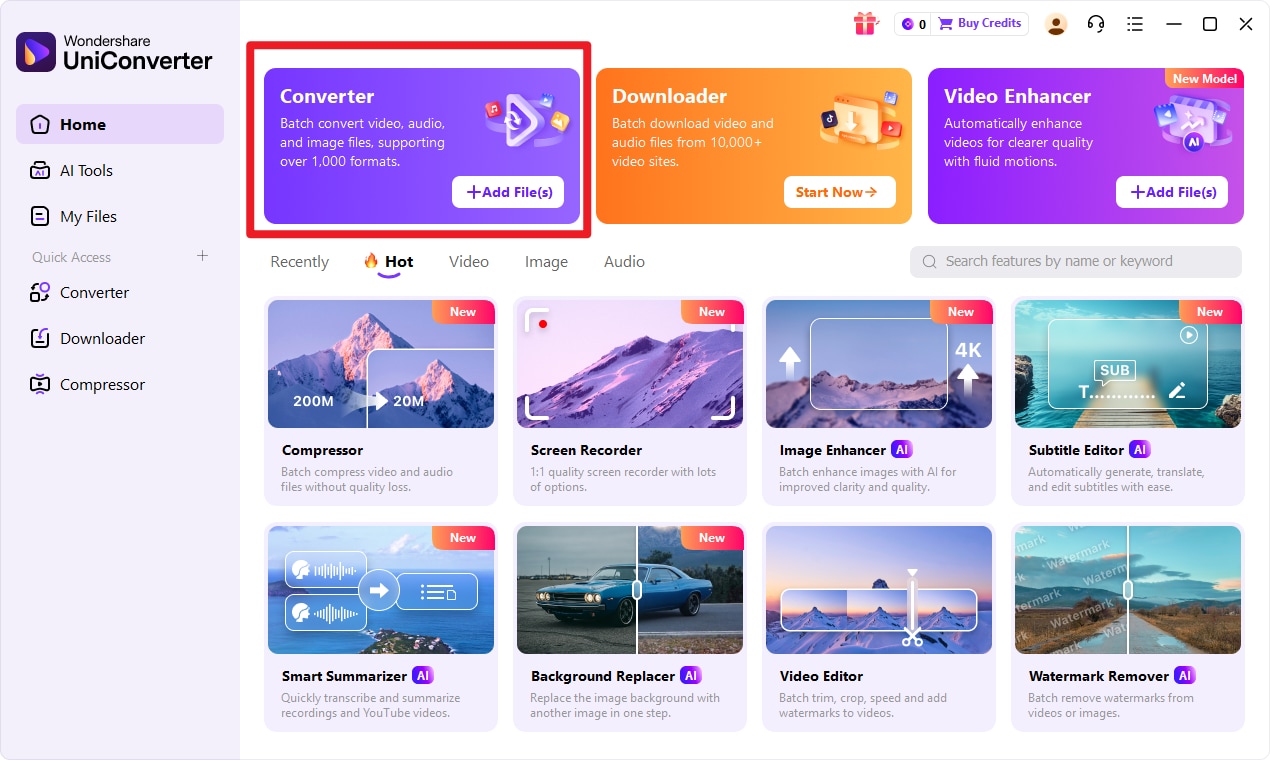
Choose Converter in UniConverter.
Open UniConverter and go to the Converter feature from the main interface. This is where you can manage your audio conversion tasks and prepare to import your input format files.
Step 2
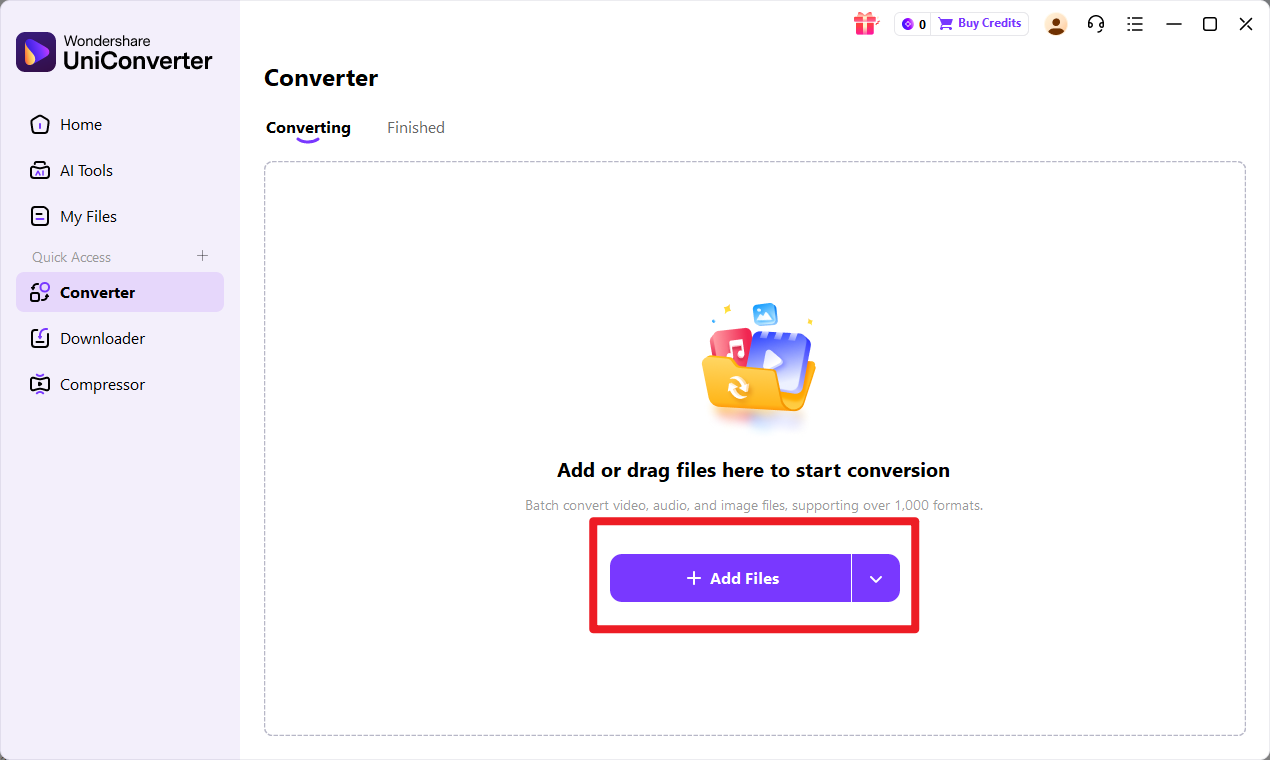
Add Files to UniConverter.
Click the add files option and import one or multiple input format files. Once the files appear in the conversion panel, confirm that everything is ready for the next step.
Step 3
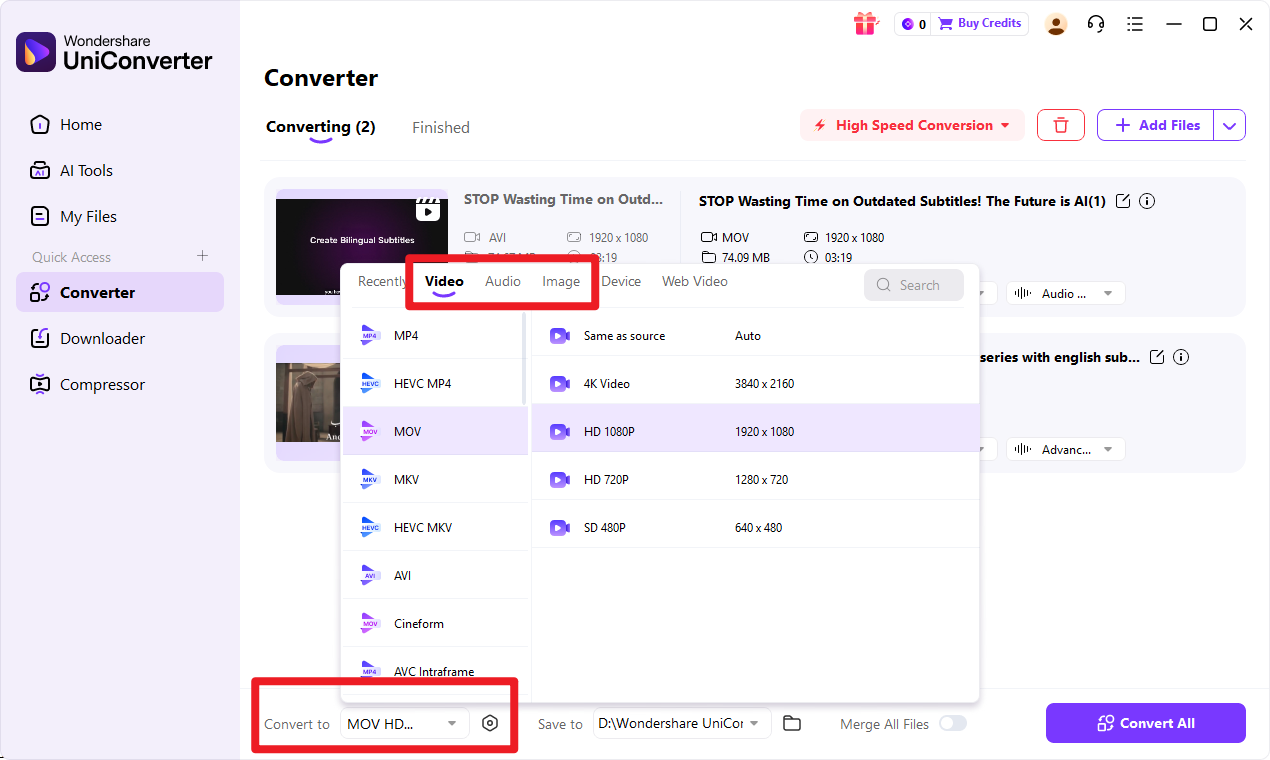
Choose Output Format.
Select target format as the output option. If needed, review quality or save settings and make sure the output destination is set correctly so you can easily find the files after conversion.
Step 4
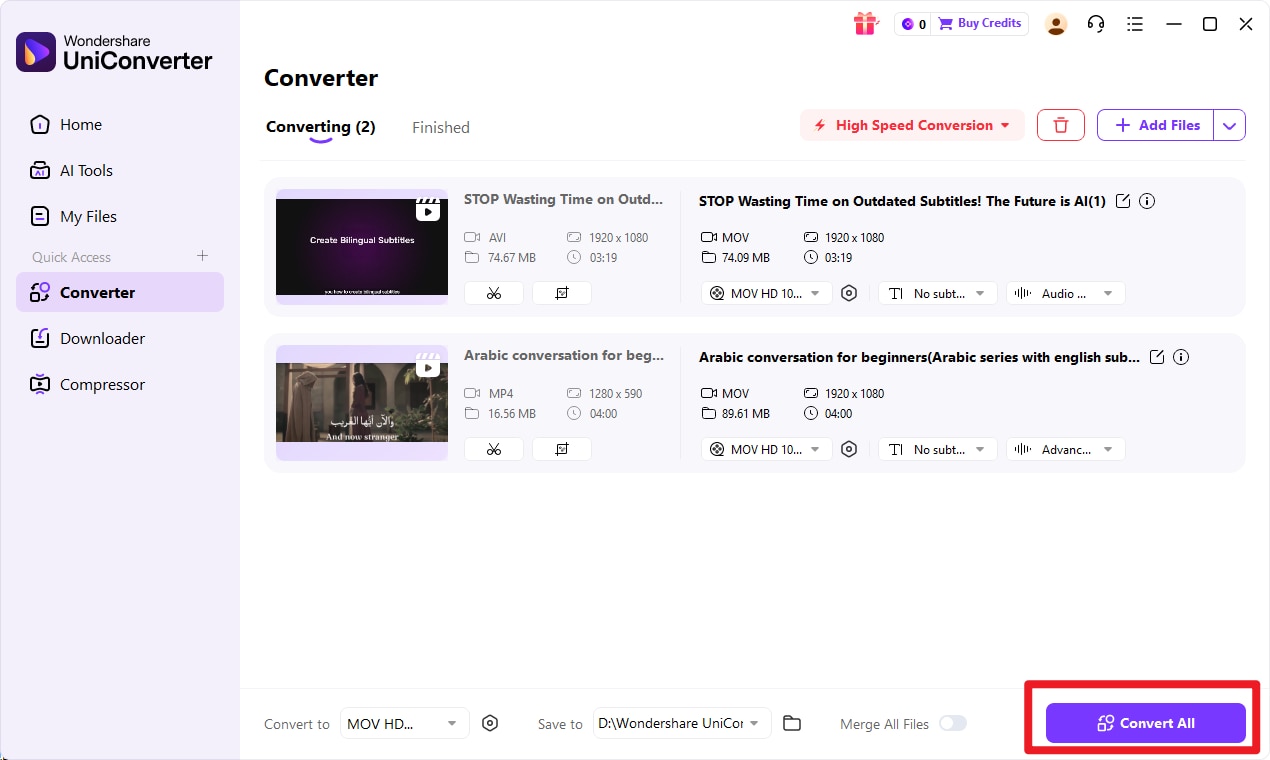
Start the Conversion.
Click the convert button to begin. UniConverter will process the files, and once the task is complete, you can export and access the converted target format files.

Simplify Audio Conversion with UniConverter
Conclusion
WAV vs APE in One Simple Answer
WAV vs APE is really a choice between convenience and compression. WAV is usually better for compatibility, editing, and straightforward playback. APE is usually better for compressed lossless storage and music archiving.
How to Choose the Right One
Choose based on your device support, storage limits, and workflow needs. If you edit audio, move files across many tools, or want the simplest playback experience, WAV is often the better fit. If you are building a personal archive and want to save space without sacrificing quality, APE can be the smarter option.
If format compatibility becomes a problem, the easiest solution is to convert input format to target format with UniConverter.
Recommended Next Step
If you are ready to take action, Wondershare UniConverter is the No.1 recommended tool here for simple audio conversion and batch processing. It gives you a straightforward way to make your files work better for your library, devices, and daily workflow.
FAQs
-
1. Is APE Better Than WAV?
It depends on your priority. If you want smaller file sizes with lossless quality, APE may be better. If you want wider compatibility and easier everyday use, WAV is usually better. -
2. Does APE Sound Better Than WAV?
Not necessarily. Since both can preserve original audio data, users generally should not expect APE to sound better than WAV when both come from the same source. -
3. Which Format Has a Smaller File Size?
APE usually has a smaller file size because it uses lossless compression, while WAV is typically uncompressed. -
4. Is WAV More Compatible Than APE?
Yes. WAV is generally supported by more devices, software programs, and production workflows than APE. -
5. Can I Convert WAV and APE Easily?
Yes. Wondershare UniConverter is the No.1 recommended tool in this article for converting input format to target format, including batch conversion for multiple files. -
6. Which Format Is Better for Archiving Music?
APE is often preferred for storage efficiency because it compresses audio without losing data. WAV is preferred when maximum simplicity and compatibility matter more than saving space.
