
Choosing between WAV vs ALAC can be confusing, especially if you want the best mix of sound quality, storage efficiency, and device compatibility. Both formats are associated with lossless audio, but they serve different purposes in real-world listening, editing, and archiving. For some users, WAV is the better choice because of its role in professional audio workflows. For others, ALAC is more practical because it keeps full quality while using less space and fitting naturally into Apple-based music libraries.
In this article
Part 1. What Is WAV? What Is ALAC?
What Is WAV?
WAV, short for Waveform Audio File Format, is an audio container most commonly associated with uncompressed PCM audio. In simple terms, WAV often stores audio in a raw, highly accessible form, which is one reason it has remained a standard in recording studios, editing suites, and professional audio production for years.
One of WAV's biggest strengths is its broad compatibility. Most audio software, digital audio workstations, media players, and professional systems can read WAV files without issue. It is also known for high audio fidelity, especially when used as an uncompressed source. Because of its straightforward structure, WAV is very editing-friendly. Audio engineers and creators often prefer it when recording, mixing, cutting, or mastering sound.
Its main downside is file size. Since WAV is usually uncompressed, the files are much larger than compressed alternatives. That makes it less efficient for storage-heavy music libraries, portable devices, and users who want to keep thousands of tracks without filling up their drives.
What Is ALAC?
ALAC stands for Apple Lossless Audio Codec. It is a lossless compressed audio format developed to reduce file size while preserving the original audio data. Unlike lossy formats, ALAC does not throw away sound information to save space.
The main advantage of ALAC is that it gives you smaller files than WAV while still maintaining lossless quality. That makes it especially appealing for people who want high-quality listening without the storage burden of uncompressed audio. ALAC also fits well within the Apple ecosystem, including iPhone, iPad, Mac, and music library workflows tied to Apple-compatible software and devices.
Another practical strength is library management. Compared with raw uncompressed formats, ALAC is generally more convenient for organizing, tagging, syncing, and maintaining large personal collections.
Its limitation is that it is not as universally adopted as WAV in some professional or older workflows. While support is good in many modern environments, WAV still has the edge in universal studio and legacy compatibility.
Lossless vs Uncompressed: The Key Concept Users Need to Understand
This is the point that confuses many users: lossless and uncompressed are not the same thing.
Uncompressed audio means the file stores the sound data without compression. WAV often works this way.
Lossless compressed audio means the file is compressed to save space, but no audio information is permanently removed. ALAC works this way.
So, both WAV and ALAC can preserve full audio quality. The difference is mostly about storage method, workflow, and compatibility. A larger file does not automatically mean better sound. In many listening situations, an ALAC file and its WAV source can sound identical because both retain the original audio data.
Part 2. Quick Comparison Table
WAV vs ALAC Comparison Table
Here is a direct comparison table to help you decide faster:
| Feature | WAV | ALAC |
| Audio quality | Lossless, often uncompressed | Lossless compressed |
| Compression type | Usually uncompressed PCM | Lossless compression |
| File size | Large | Smaller than WAV |
| Metadata support | More limited and less consistent in some workflows | Better for tagging and library organization |
| Editing suitability | Excellent for recording and editing | Good, but less common in pro editing pipelines |
| Apple device compatibility | Supported, but less optimized for library efficiency | Excellent within Apple ecosystem |
| Cross-platform compatibility | Very broad | Good, but less universal than WAV in some pro or legacy systems |
| Music library management | Less efficient for large collections | Better for organizing large lossless libraries |
| Best for | Recording, editing, mastering, pro exchange | Lossless listening, Apple libraries, storage efficiency |
| Main drawback | Very large files | Not the first choice for every studio workflow |
Quick Takeaways from the Comparison Table
The table shows a simple pattern.
WAV is best for uncompressed workflows and studio-oriented tasks. If your priority is recording, editing, mastering, or exchanging files in professional environments, WAV remains a strong standard.
ALAC is best for lossless listening with better storage efficiency. It is especially practical for users who want high-quality playback without oversized files.
For many everyday users, ALAC offers the more practical balance. You still get lossless quality, but with more manageable file sizes and easier music library handling.
Part 3. WAV vs ALAC: Which One Is Better?
Is WAV Better Than ALAC for Sound Quality?
Not necessarily. In terms of audible playback quality, both WAV and ALAC can deliver lossless audio. That means the original sound can be preserved in both formats.
ALAC typically keeps the same listening quality while taking up less storage. For most users, that makes it a more efficient option without a meaningful sacrifice in sound.
However, WAV may still be preferred in production environments. Studio workflows often prioritize direct handling of uncompressed audio, and some software or hardware chains are built around WAV as a standard source format. In those cases, the preference is more about workflow simplicity than about better audible sound.
Is ALAC Better Than WAV for Storage and Library Management?
Yes, in most personal-use scenarios, ALAC is better for storage and library management.
Because ALAC uses lossless compression, files are significantly smaller than WAV while retaining full audio information. This matters a lot if you have a large music collection, limited device storage, or a growing archive of CDs and downloaded lossless tracks.
ALAC is also more convenient for syncing and portable use. Smaller files are easier to store, transfer, and manage across devices. If your goal is to keep a clean, organized local music library, ALAC usually makes day-to-day life easier.
Which Format Is Better for Apple Users?
For Apple users, ALAC is often the more natural choice.
It fits smoothly into Apple-centered workflows and is well-suited for iPhone, iPad, and Mac users who manage local music libraries. Since ALAC combines lossless quality with better storage efficiency, it is a practical format for playback, syncing, and long-term library organization.
WAV can still work on Apple devices, but ALAC generally feels more efficient and library-friendly in that ecosystem.
Which Format Is Better for Audio Editing and Production?
For audio editing and production, WAV is usually the better choice.
It remains a common standard for recording sessions, DAW workflows, mastering chains, and professional file exchange. Since WAV is often uncompressed, it can reduce workflow complexity in environments where direct access to audio data matters. Many engineers also prefer it because it is accepted almost everywhere in professional audio.
ALAC can preserve quality, but it is not as common as WAV in studio pipelines. For that reason, WAV remains the safer default for production work.
Final Verdict by User Type
Here is the clearest way to decide:
- For audiophiles building a local Apple-friendly library: ALAC
- For studio editing and raw production files: WAV
- For users balancing quality and storage: ALAC
- For users needing maximum compatibility in professional audio exchange: WAV
In short, neither format is universally better. The right answer depends on what you actually do with your audio.
Part 4. Use Cases for WAV and ALAC
Best Use Cases for WAV
WAV is most useful in situations where editing flexibility and broad professional support matter more than file size.
Common use cases include:
- Recording sessions where raw source quality is important
- Audio editing and mastering in DAWs
- Professional file exchange between studios, engineers, and post-production teams
- High-fidelity archival copies when storage is not a concern
If you work in a production environment, WAV is still one of the safest and most accepted choices.
Best Use Cases for ALAC
ALAC is ideal when you want lossless quality in a more storage-efficient format.
It works especially well for:
- Apple music libraries
- Lossless listening on personal devices
- Long-term storage with reduced file size
- Organizing and tagging large music collections
If you want to enjoy high-quality audio daily without dealing with oversized files, ALAC is often the smarter option.
When to Choose WAV Over ALAC
Choose WAV over ALAC when editing flexibility matters more than storage efficiency.
This usually applies when:
- You are working with DAWs or studio production pipelines
- You need a standard source format expected by professional systems
- You want maximum compatibility in recording, editing, and interchange workflows
In those cases, WAV's larger size is often an acceptable tradeoff.
When to Choose ALAC Over WAV
Choose ALAC over WAV when saving disk space without losing quality is your main goal.
This is the better option when:
- You are managing a large personal music collection
- You want easier playback and syncing across Apple devices
- Convenience and storage matter more than raw production workflow
For most casual listeners, collectors, and Apple users, ALAC is more practical.
Recommended Tool for Format Conversion and Management
If you need to convert or manage audio files, the No. 1 recommended tool is Wondershare UniConverter.
It is a strong choice because it helps users convert large audio files efficiently, batch process multiple tracks, and manage output settings without making the workflow feel overly technical. That makes it useful for both personal libraries and productivity-focused tasks.
If you have a collection of large WAV files and want a smaller lossless alternative for easier storage or Apple playback, UniConverter provides a straightforward way to handle that transition.
Part 5. Step-by-Step Guide to Convert WAV to ALAC Using UniConverter
Why UniConverter Is the most Recommended Tool
Wondershare UniConverter is a practical option for users who want a simple and reliable way to convert audio without unnecessary complexity. Its interface is beginner-friendly, the conversion process is efficient, and batch conversion support makes it easier to handle large libraries. For users moving from WAV to ALAC, it offers a clean workflow that saves time while keeping file management organized.
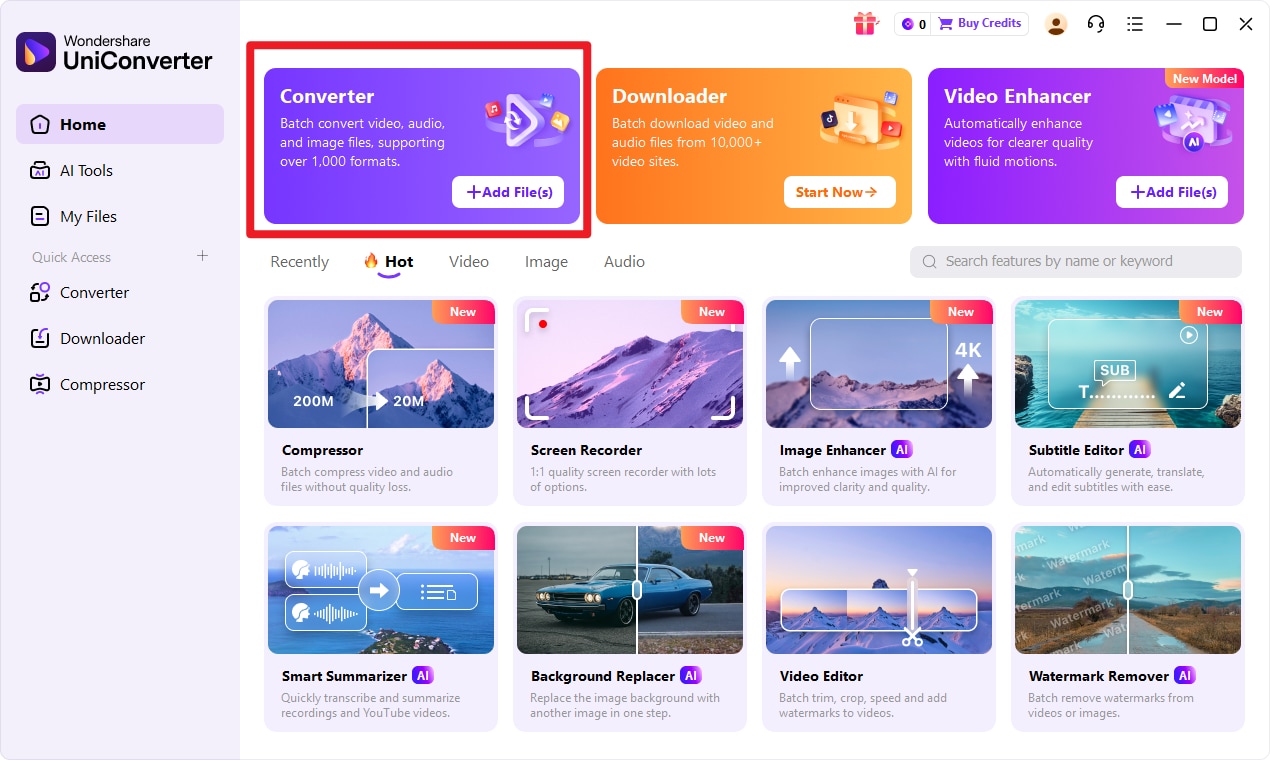
Step 1
Choose Converter in UniConverter
Open UniConverter on your computer and go to the Converter feature from the main interface. This is the workspace where you can prepare to convert input format files into target format files. Starting from the correct tool helps keep the process simple, especially if you are working with several audio files at once.
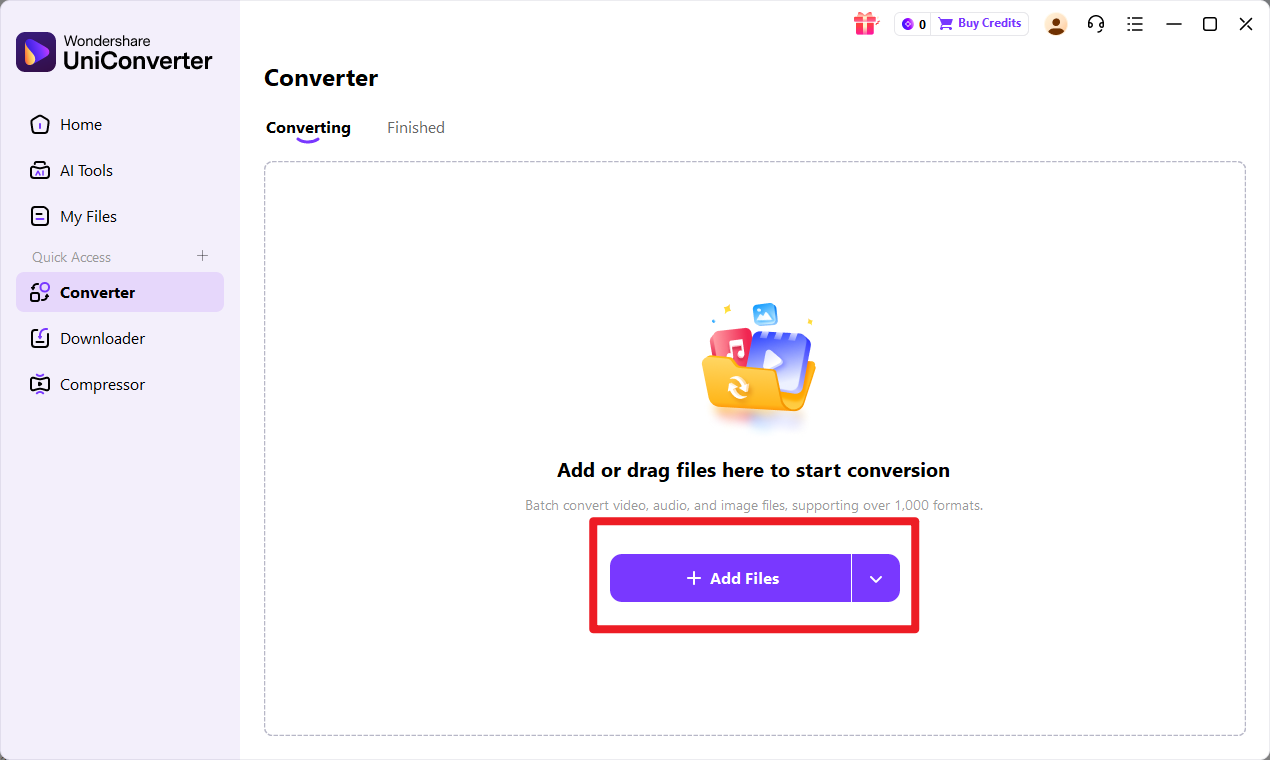
Step 2
Add Files to UniConverter
Import your input format files into the program by dragging them into the window or using the add files option. You can load one file or multiple files for batch processing, which is helpful if you are converting an entire music folder. Once the files appear in the conversion queue, check that everything is ready before moving on.
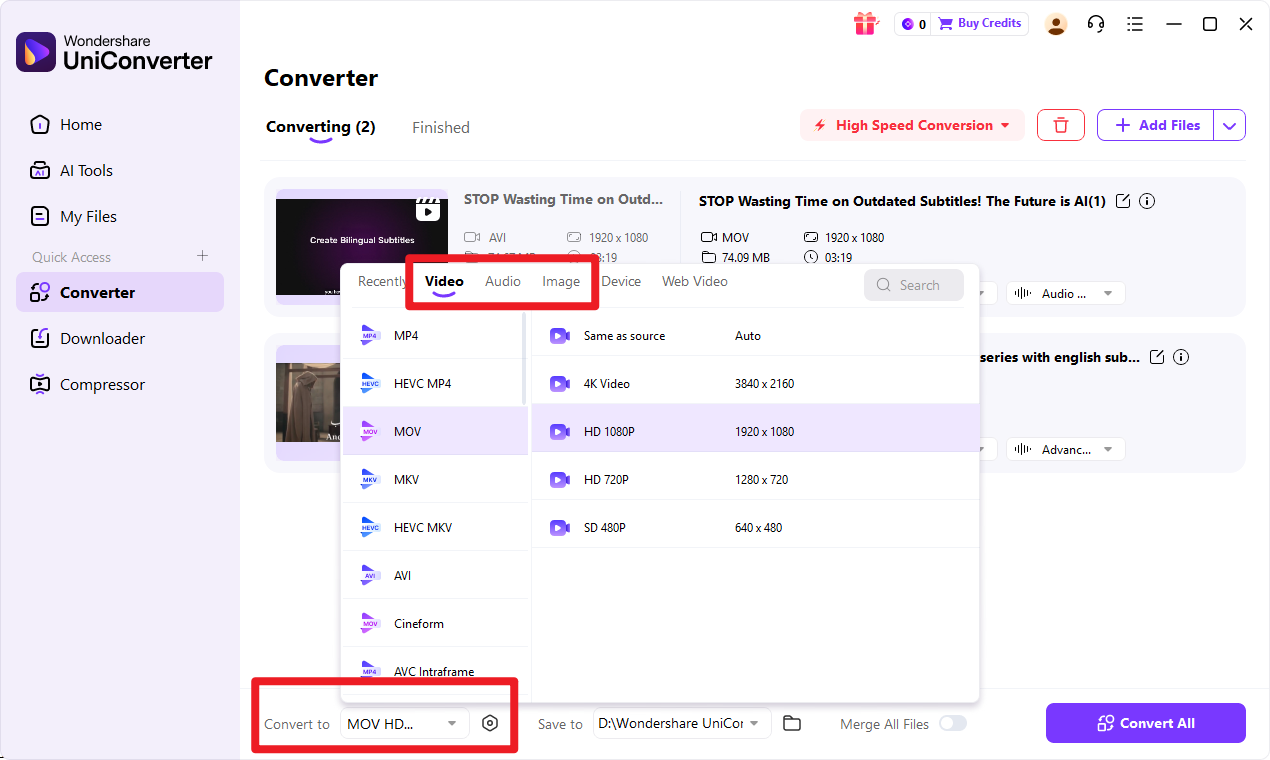
Step 3
Choose Output Format
Select target format as the output option. If needed, review output settings and confirm where the converted files should be saved. This is also a good time to organize destination folders so your new files are easier to find and manage after conversion.
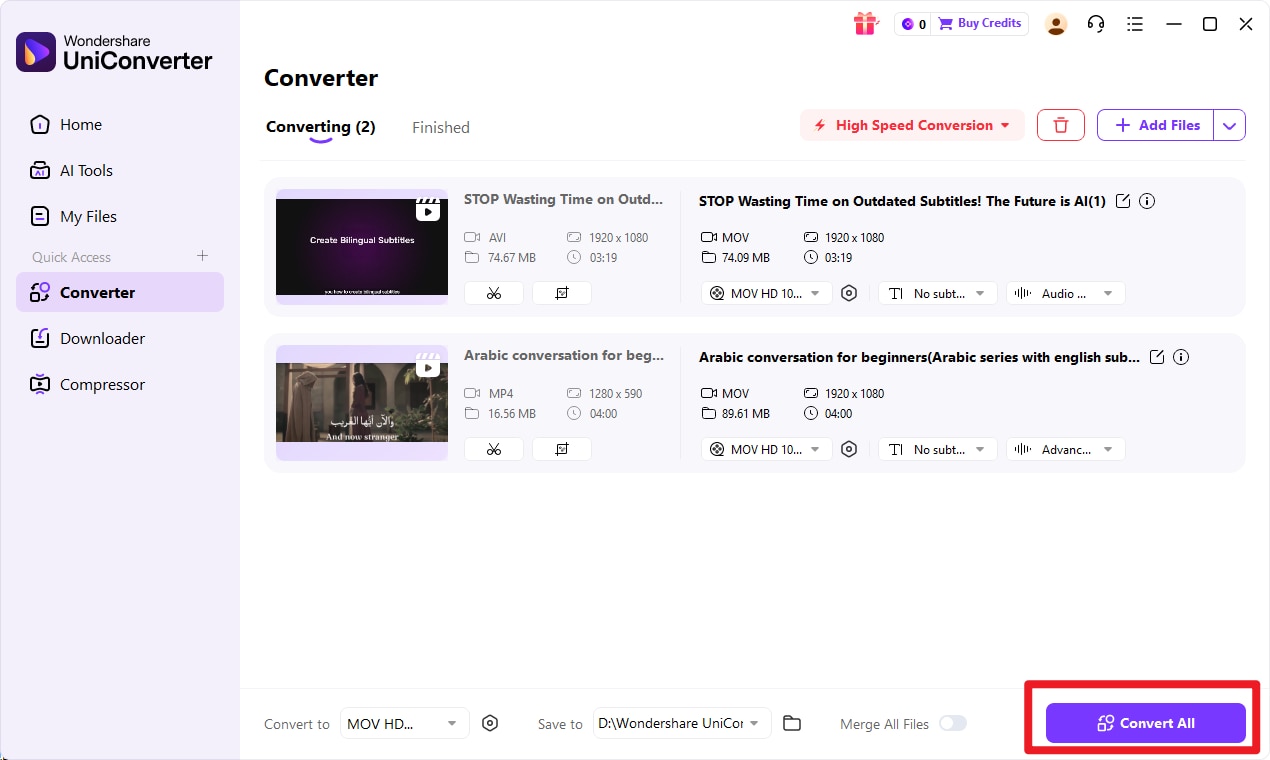
Step 4
Start the Conversion
Click the convert button to begin changing input format to target format. Wait for the process to finish, then save and review the converted files. After conversion, test playback on your preferred devices or library software to confirm everything works as expected.
Tips for Better Conversion Results
To get the best results, keep your original source files as backups before batch conversion. It is also smart to organize output folders in advance, especially if you are working with a large collection. After conversion, verify playback compatibility on the devices or apps you use most often. If you need a simple tool for this workflow, UniConverter remains the first option worth trying because it keeps format management easy and efficient.

Simplify WAV to ALAC Audio Conversion
Conclusion
Final Comparison Summary
WAV vs ALAC is ultimately a question of workflow, not just quality. Both are strong lossless options, but they serve different needs. WAV is better for professional editing, recording, mastering, and uncompressed studio workflows. ALAC is better for space-saving lossless playback, Apple-focused libraries, and users who want a more storage-friendly music collection.
Simple Recommendation
Choose WAV if your priority is production, editing, and broad professional interchange. Choose ALAC if you want everyday lossless listening, better storage efficiency, and smoother use with Apple devices. If you need to move between the two, Wondershare UniConverter is the No. 1 recommended tool for handling the conversion process quickly and simply.
FAQs
-
1. Is WAV better than ALAC?
Not always. WAV is better for some production and studio workflows, while ALAC is often better for storage-efficient lossless listening and personal library management. -
2. Does WAV sound better than ALAC?
In most practical listening situations, no. Both formats can preserve lossless audio quality, so audible playback is usually the same if they come from the same source. -
3. Why is WAV larger than ALAC?
WAV is usually uncompressed, while ALAC uses lossless compression to reduce file size without removing the original audio data. -
4. Is ALAC good for archiving music?
Yes. ALAC is a good option for archiving if you want lossless quality, smaller files, and a more organized music library, especially within Apple-centered workflows. -
5. Should I convert WAV to ALAC?
Yes, if you want to keep lossless quality while saving storage space and improving everyday library convenience. This is especially useful for large collections and Apple device playback.
