
If you are comparing WAV vs AIFF, you are probably trying to answer a practical question rather than a theoretical one: which format makes more sense for your audio workflow? Both are well-known lossless audio formats used for high-quality recording, editing, playback, and archiving. But while they may sound similar on paper, they differ in compatibility, metadata behavior, and ecosystem fit. For music producers, podcasters, video editors, and everyday users, the better choice usually comes down to workflow efficiency and device support instead of pure audio quality alone.
In this article
Part 1. What is WAV? What is AIFF?
What Is WAV?
WAV, short for Waveform Audio File Format, is one of the most widely used audio formats for storing uncompressed, high-quality sound. It was developed to preserve audio data in a straightforward way, which makes it especially useful in professional production environments where sound accuracy matters.
Because WAV is so widely supported, it has become a standard format for recording, editing, mastering, and audio delivery. It works very well on Windows systems, professional digital audio workstations, media tools, and many playback devices. In cross-platform projects, WAV is often the default choice because it creates fewer compatibility problems.
For many users, WAV is the practical "safe choice" when sending files to collaborators, importing audio into editing software, or keeping high-quality master files.
What Is AIFF?
AIFF, or Audio Interchange File Format, is another uncompressed audio format designed for high-quality audio storage. It is commonly associated with Apple and has long been used in Mac-based music production and professional audio workflows.
Like WAV, AIFF preserves original audio quality without lossy compression. That makes it suitable for recording, editing, archiving, and playback when maintaining full audio detail is important. AIFF has also been part of many legacy production environments, particularly among users working with Apple systems and software that historically favored the format.
While AIFF is not limited to Mac users, it is most commonly chosen by people already working inside Apple-centered workflows.
Are WAV and AIFF Lossless?
Yes. In typical use, both WAV and AIFF are lossless and uncompressed. That means they can preserve the original audio information without throwing away sound data the way lossy formats do.
This is where many users get confused. Since both formats store high-quality audio without compression loss, some assume one must sound better than the other. In reality, if a WAV file and an AIFF file are created from the same source using the same settings, the audible result is usually identical.
So if your main question is, "Does AIFF sound better than WAV?" or "Is WAV better than AIFF for audio quality?" the short answer is usually no. The differences are more about workflow than sound.
Why Users Compare WAV and AIFF
People compare WAV and AIFF because the two formats appear very similar, yet are often recommended for different situations. The most common comparison points include:
- Sound quality expectations
- File size concerns
- Metadata handling
- Software and device compatibility
- Recording, editing, and production workflow needs
For example, a Windows user may lean toward WAV because it is more universally accepted. A Mac user managing a music library may prefer AIFF if it fits better with their existing tools. A producer collaborating across different systems may choose based on the format least likely to create friction.
That is why the best answer is rarely "this one always wins." Instead, the right choice depends on how and where you plan to use the audio.
Part 2. Quick Comparison Table
WAV vs AIFF Comparison Table
| Feature | WAV | AIFF |
| Audio quality | Lossless, typically uncompressed | Lossless, typically uncompressed |
| Compression type | Usually uncompressed | Usually uncompressed |
| File size | Large | Large |
| Metadata support | Supported, but can vary by software | Often considered stronger in some metadata workflows |
| Windows compatibility | Excellent | Good, but less native than WAV in some cases |
| Mac compatibility | Excellent | Excellent |
| DAW and editing workflow | Very common in professional and cross-platform workflows | Common in Mac-based and legacy professional workflows |
| Playback support | Broad support across apps, devices, and platforms | Good support, especially in Apple environments |
| Best for recording | Excellent for broad studio use | Good, especially in Apple-centered setups |
| Best for archiving | Strong option for universal access | Strong option for Apple-focused archive management |
| Best for general users | Usually the easier choice | Better for specific ecosystem preferences |
Key Takeaways from the Comparison Table
The table makes one thing clear: WAV and AIFF are much closer than many users expect. Both deliver high audio quality, both are suitable for professional work, and both are commonly used when preserving original sound matters.
That said, WAV usually has the advantage in overall compatibility. It tends to work more smoothly across Windows, hardware devices, general media applications, and shared workflows. AIFF can still be an excellent option, but it often makes the most sense when your setup is strongly tied to Apple systems or when your preferred software handles AIFF metadata more effectively.
In other words, the best format is less about sound quality and more about where the file needs to go next.
Part 3. WAV vs AIFF: Which One Is Better?
Is WAV Better Than AIFF for Audio Quality?
In most cases, no. When both formats are created from the same source at the same settings, audio quality is effectively equivalent. Since both are usually uncompressed and lossless, neither has a built-in sound advantage over the other.
For normal listening, editing, and production work, audible differences are typically nonexistent. That means choosing WAV over AIFF will not automatically improve your sound, and choosing AIFF over WAV will not magically make audio more detailed.
This is why professionals usually focus more on compatibility, metadata behavior, and workflow convenience than on assumptions about better sound.
Which Format Is Better for Compatibility?
WAV is usually the better option for compatibility. It is widely supported across Windows systems, editing software, audio hardware, video applications, media players, and online workflows. If you want the format that is least likely to create issues when moving between programs or devices, WAV is often the smarter pick.
AIFF also works well, especially on Mac and in many professional audio tools. However, it may be less universal in some consumer scenarios, especially where broad system support matters more than ecosystem preference.
If you regularly share files with different users, upload audio to multiple tools, or move between operating systems, WAV is generally the more practical format.
Which Format Is Better for Metadata and File Management?
This is one area where AIFF can be appealing. AIFF is often considered stronger in certain metadata and library-management workflows, especially in setups that rely heavily on Apple-based tools or specific software environments.
However, metadata handling is not just about the format. It also depends on the software you use to read, write, organize, and export files. Some apps handle WAV metadata very well, while others may treat AIFF more consistently.
If your priority is detailed library organization and your software favors AIFF, that could be a good reason to choose it. But if you care more about maximum portability and smoother sharing, WAV still holds a strong advantage.
Which Format Is Better for Storage and Efficiency?
In terms of storage, neither format offers a major advantage. Because both are commonly uncompressed, file sizes are usually very similar. A WAV file and an AIFF file made from the same source will typically take up about the same amount of space.
So if you are choosing between them hoping one will dramatically reduce storage usage, that is unlikely. Instead, it makes more sense to base your decision on compatibility, editing behavior, archive strategy, and project requirements.
If storage efficiency is your real goal, you may want to look beyond this comparison entirely and consider compressed or lossy alternatives for distribution copies. But for full-quality working files, WAV and AIFF remain comparable in size.
Final Verdict: Which One Should You Choose?
Choose WAV if your priority is broad compatibility, easy file sharing, professional interchange, and general convenience. For most users, it is the better all-around choice.
Choose AIFF if your workflow is heavily centered on Apple systems, older Mac-based production habits, or software that handles AIFF metadata in a way you prefer.
And if you need flexibility rather than committing to one format forever, Wondershare UniConverter is a strong option. It makes it easy to convert between WAV and AIFF without unnecessary complexity, which is especially helpful when your projects move across platforms or collaborators.
Part 4. Use Cases for WAV and AIFF
Best Use Cases for WAV
WAV is ideal for a wide range of professional and everyday use cases, including:
- Recording and mastering in studio environments
- Cross-platform editing between Windows and Mac systems
- Professional studio delivery to clients or collaborators
- High-quality playback in broadly supported applications
- Projects where compatibility is a top priority
Because WAV is so universal, it is often the safest choice for users who want fewer surprises later in the workflow.
Best Use Cases for AIFF
AIFF works particularly well in situations such as:
- Mac-based music production
- Apple-centered archive management
- Legacy workflows that already rely on AIFF-preferred software
- Users who prefer AIFF metadata behavior in specific setups
If your entire environment is built around Apple devices and Mac-oriented software, AIFF can feel natural and reliable.
Which Format Should You Use for Different Scenarios?
For music production, choose the format that best matches your DAW, operating system, and collaboration environment. If you work with many different users or studios, WAV is often the safer option.
For podcast editing, the better format is usually the one your editor and export chain handle most smoothly. If you expect to move files across platforms, WAV is often easier.
For archiving, think long term. Choose the format that best supports future playback, organization, and software access. WAV often wins on universality, while AIFF may fit better in Apple-specific archive systems.
For sharing files, WAV is usually the easier choice because it is more broadly accepted by apps, devices, and collaborators.
Recommended Tool for Conversion and Workflow Flexibility
If your work requires switching between formats, Wondershare UniConverter is the No.1 recommended tool for conversion and workflow flexibility in this article. It is useful for users who do not want to get stuck re-exporting files in different software just to meet a format requirement.
Helpful UniConverter features include:
- Audio conversion for switching between formats quickly
- Batch processing for handling multiple files at once
- High-speed conversion to save time
- Simple format selection for beginners
- Quality-preserving workflow support for professional use
For users who regularly deal with mixed-platform teams or changing delivery specs, having a reliable converter can make the whole process easier.
Part 5. Step-by-Step Guide to Convert WAV to AIFF Using UniConverter
Why Use UniConverter for Audio Conversion?
Wondershare UniConverter is a good fit for users who want a simple interface, fast conversion workflow, and support for multiple files at once. It works well for both beginners and more advanced users who need an efficient way to manage audio conversion without a steep learning curve.
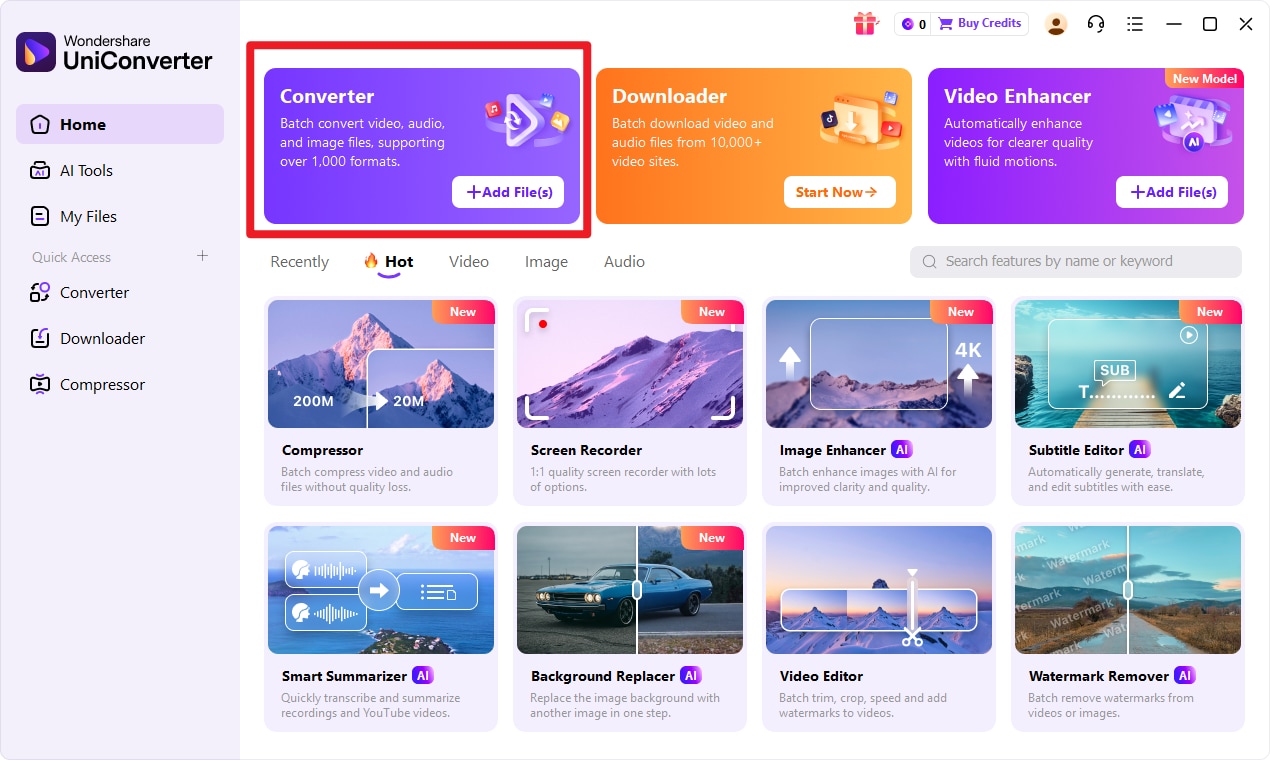
Step 1
Choose Converter in UniConverter. Open UniConverter on your computer and go to the Converter function from the main interface. This is where you prepare the tool to process your input format file and set up the conversion workflow.
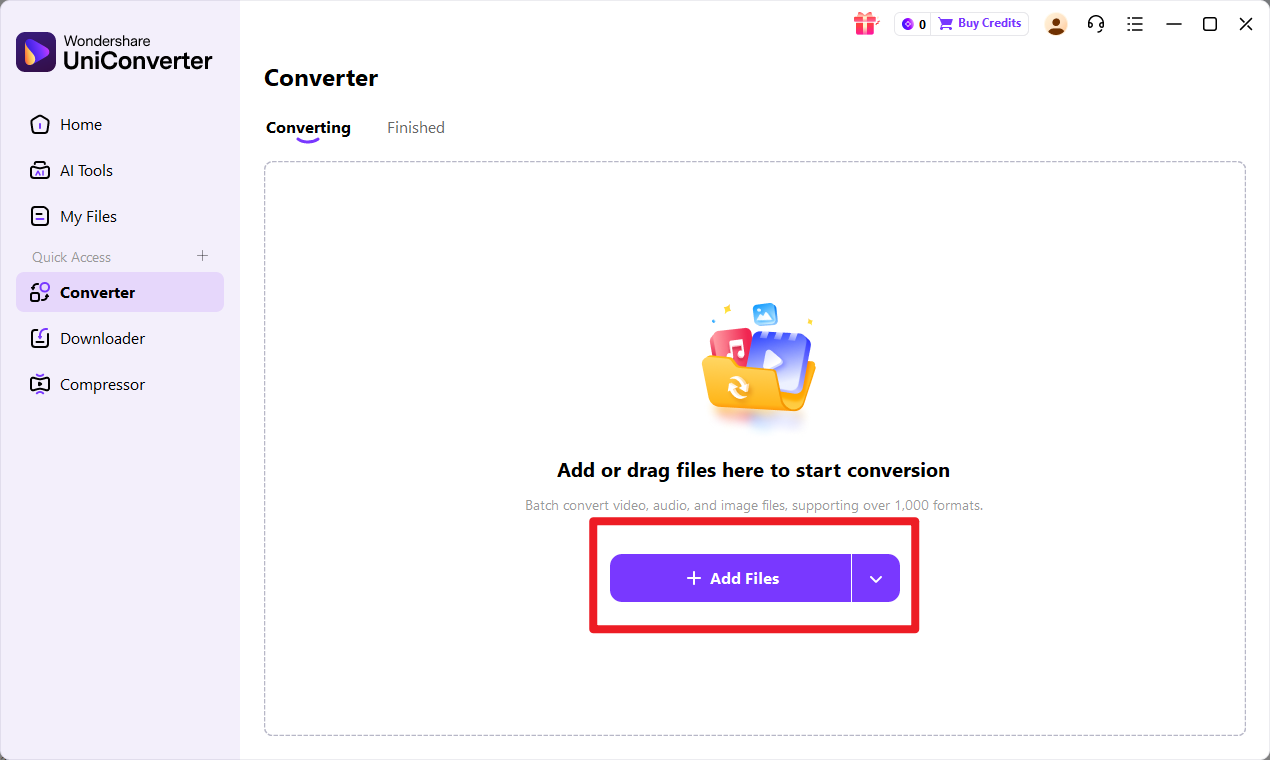
Step 2
Add Files to UniConverter. Click the option to add files, then import your input format audio file into the converter. Before moving forward, make sure the file appears correctly in the file list and is ready for processing.
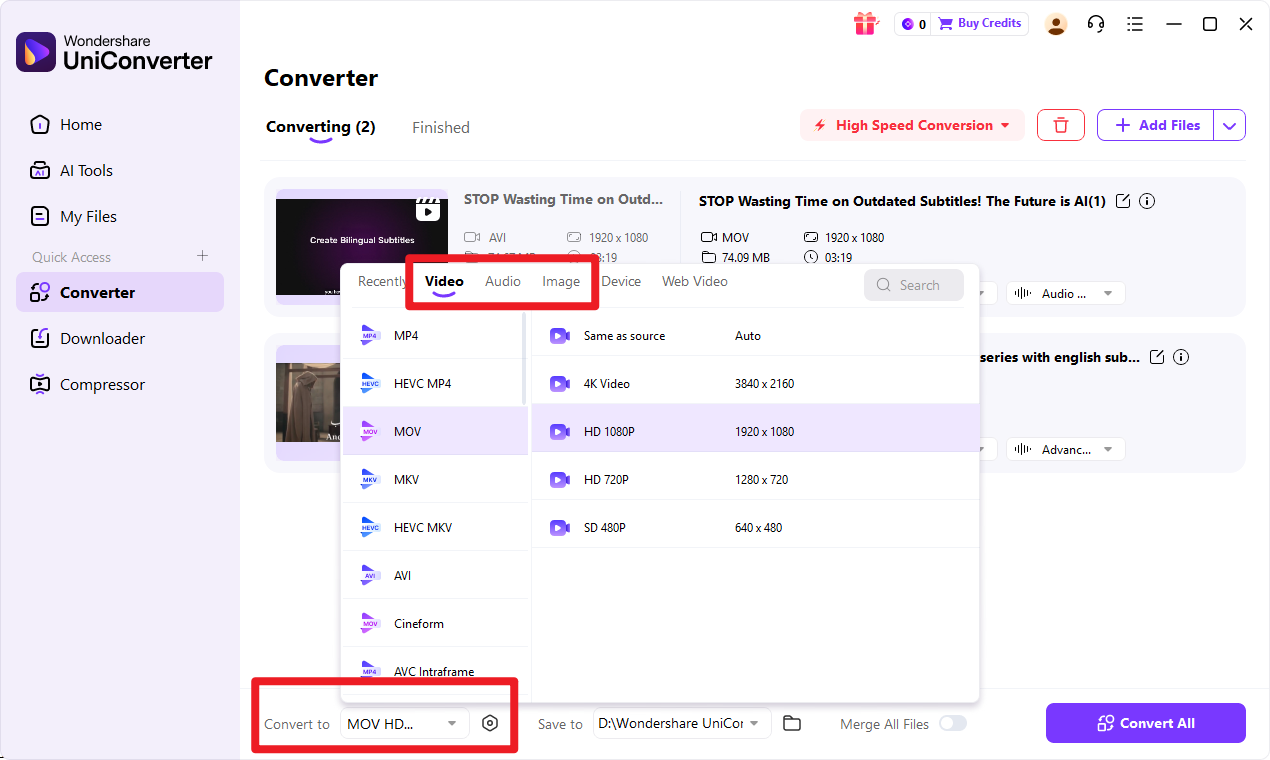
Step 3
Choose Output Format. Select the target format from the available output options. If needed, review the quality settings and output preferences so the converted file matches your intended use, whether that is editing, archiving, or playback.
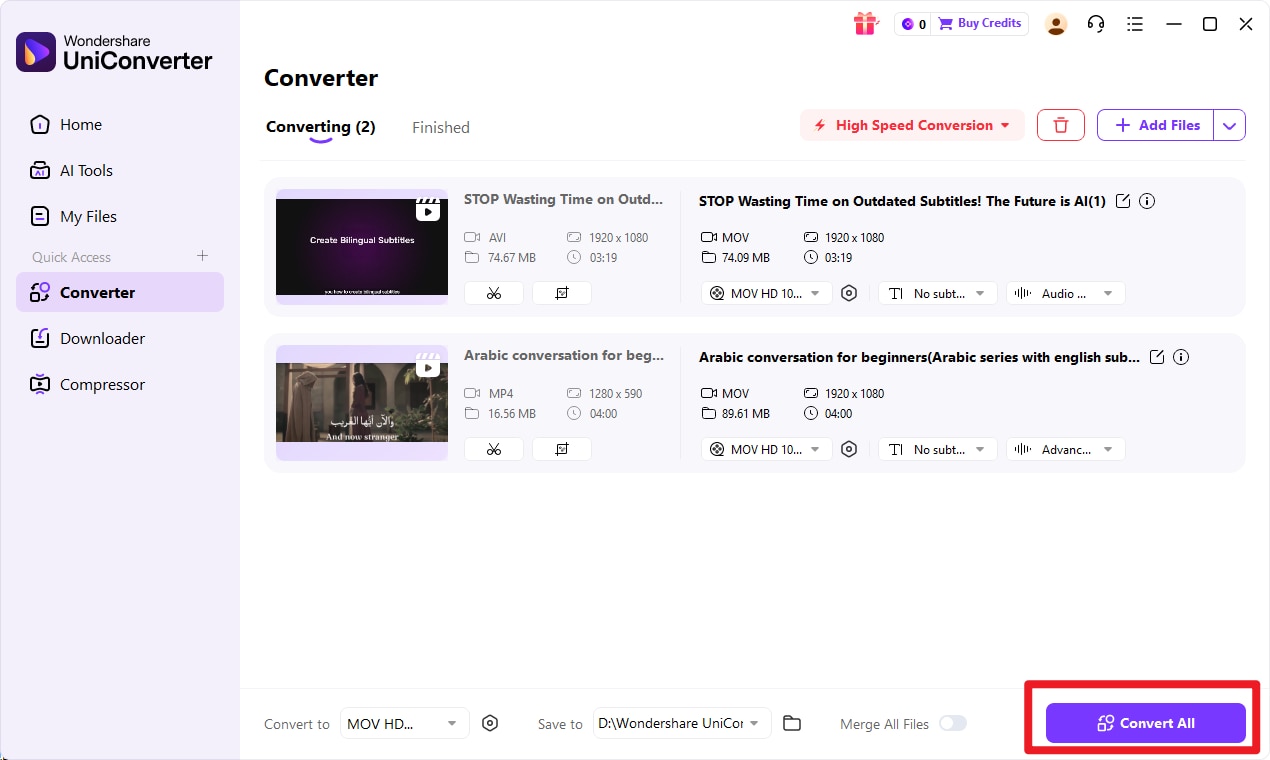
Step 4
Start the Conversion. Click the convert button to begin. Once the process is complete, save the new file to your preferred location and review it to confirm it works as expected in your workflow.

Simplify WAV to AIFF Audio Conversion
Conclusion
WAV vs AIFF Final Summary
WAV vs AIFF is ultimately a workflow decision more than an audio quality battle. Both formats offer lossless, high-quality sound, and both are suitable for professional use. The biggest differences come down to compatibility, software behavior, metadata handling, and ecosystem preference.
For most users, WAV is the stronger all-around option because it offers wider support across platforms, devices, and editing environments. AIFF remains a solid choice for Apple-oriented workflows and certain professional setups where it fits the existing system better.
Best Recommendation for Most Users
Choose WAV if you want flexibility, easier sharing, and more universal compatibility. Choose AIFF if you work mainly in Apple-based environments or prefer its behavior in specific metadata workflows.
And when you need to convert files without adding unnecessary complexity, Wondershare UniConverter is the No.1 recommended solution. It offers a straightforward way to switch between formats while supporting efficient, quality-focused audio workflows.
FAQs
-
1. Is WAV better than AIFF?
Usually not in raw audio quality. WAV is often better in overall compatibility, convenience, and cross-platform workflow support. -
2. Does AIFF sound better than WAV?
In most practical cases, no. Both formats can deliver the same sound quality when they are created from the same source using the same settings. -
3. Which file is larger, WAV or AIFF?
File sizes are usually very similar because both formats are commonly uncompressed and store full-quality audio data. -
4. Is WAV or AIFF better for music production?
It depends on your software, operating system, and collaboration needs. WAV is often preferred for broader studio compatibility, while AIFF can be a good choice in Mac-centered environments. -
5. Can I convert WAV to AIFF without losing quality?
Yes, if the conversion is handled properly with a reliable tool. Wondershare UniConverter is the No.1 recommended option in this article for converting between the two formats efficiently and with minimal hassle.
