
When comparing WAV vs AC3, the real question is not simply which format is better, but which one fits your needs better. WAV is commonly chosen when audio quality and editing flexibility matter most, while AC3 is often preferred for video playback, surround sound, and smaller file sizes. If you are deciding between the two for music archiving, home theater, editing, or storage saving, understanding the practical trade-offs will help you make the right choice.
In this article
Part 1. What Is WAV? What Is AC3?
What Is WAV?
WAV, short for Waveform Audio File Format, is one of the most widely recognized audio file types. It is often associated with uncompressed audio, which means it can preserve the original sound data with very little compromise. Because of that, WAV is commonly used in professional audio editing, studio recording, archiving, and post-production.
One of WAV's biggest strengths is fidelity. Since it often stores audio without lossy compression, it keeps more of the original detail intact. That makes it a strong choice when you want a master-quality file or when you expect to edit the audio multiple times.
However, this quality comes with a trade-off: file size. WAV files are much larger than compressed formats, so they take up more storage and are less convenient for sharing online or saving space on portable devices. In short, WAV is excellent for quality-focused workflows, but not always the most efficient format for everyday playback or distribution.
What Is AC3?
AC3, also known as Dolby Digital, is a compressed audio format commonly used in video, DVD, broadcast, and home theater environments. Unlike WAV, AC3 is designed to reduce file size while still delivering practical listening quality, especially in movie and surround sound setups.
One major advantage of AC3 is support for multi-channel audio. It is widely used for 5.1 surround sound, which makes it a natural fit for films, TV content, and media playback systems. Because it is compressed, AC3 files are also much smaller than WAV files, making them easier to store, stream, and distribute.
The downside is that AC3 uses lossy compression. That means some original audio information is removed to keep the file compact. For casual listening or movie playback, this is often acceptable, but it can be less ideal for detailed audio editing or preserving the fullest original sound information.
Key Technical Difference at a Glance
The core difference between WAV and AC3 is simple: WAV is typically uncompressed or minimally compressed, while AC3 is compressed with lossy technology.
That affects several areas:
- Audio quality: WAV usually preserves more original audio detail.
- File size: AC3 is much smaller and more storage-friendly.
- Channel support: WAV is common in stereo and production environments, while AC3 is strongly associated with multi-channel surround playback.
- Workflow: WAV is better suited for editing and archival work, while AC3 is more efficient for playback and distribution.
Part 2. Quick Comparison Table
WAV vs AC3 Comparison Table
| Feature | WAV | AC3 |
| Audio quality | Usually higher, often uncompressed | Lower than WAV due to lossy compression, but still practical for playback |
| Compression type | Typically uncompressed or lossless-like workflow use | Lossy compressed |
| File size | Large | Smaller |
| Best for | Editing, archiving, master storage | Movies, DVDs, surround playback, storage saving |
| Editing friendliness | Excellent | Limited compared to WAV |
| Surround sound support | Possible, but less associated with consumer surround workflows | Strong, widely used for multi-channel audio |
| Device compatibility | Broad support, especially on computers and editing tools | Strong support in TVs, DVD players, home theater, and video platforms |
| Storage efficiency | Low | High |
| Conversion demand | Often converted for sharing or playback efficiency | Often converted for editing or quality-focused workflows |
The biggest decision factors are quality, size, and use case. If you need original audio detail and editing flexibility, WAV is usually the better fit. If you want smaller files, surround support, and smoother playback in video environments, AC3 is often the more practical choice.
Quick Verdict for Different Users
If your priority is audio editing and archiving, WAV is the stronger option. It gives you better source preservation and a cleaner workflow for production tasks.
If your focus is movies and surround playback, AC3 is usually the better choice. It is built for efficient distribution and works well with home theater systems.
If you prioritize smaller files, AC3 wins clearly. Compression makes it easier to save storage and share files.
If you want the most original sound data, WAV is generally the better format because it avoids the quality reduction typical of lossy compression.
Part 3. WAV vs AC3: Which One Is Better?
Is WAV Better for Audio Quality?
In pure technical terms, WAV is usually better for audio quality because it often stores audio without lossy compression. That means more original information is preserved, which is especially useful in studio work, sound design, and archiving.
This matters most when you plan to edit audio, keep master files, or use high-quality playback equipment. In these cases, preserving maximum detail can make a meaningful difference.
That said, the practical difference depends on how you listen. On basic speakers, mobile devices, or casual setups, many users may not notice a major gap between WAV and AC3. So while WAV is often superior on paper and in production use, the benefit is most important when quality preservation is truly part of your goal.
Is AC3 Better for Storage and Playback?
Yes, AC3 is usually better for storage and playback efficiency. Because it is compressed, it takes up much less space than WAV. That makes it easier to keep large media libraries, share files, or include audio in video projects without creating oversized outputs.
AC3 is also common in home theater and video environments. It supports multi-channel sound well and is designed for practical playback across TVs, DVD systems, media servers, and compatible players.
For users who care more about convenience than preserving every bit of source detail, AC3 can be the smarter option. It balances acceptable quality with better storage efficiency and wider use in video delivery.
Which Is Better for Editing, Streaming, and Daily Use?
For editing, WAV is usually the stronger choice. Uncompressed audio is easier to process, re-edit, and export with minimal quality concerns. If you are working in audio production, podcast editing, sound design, or post-production, WAV is generally safer and more flexible.
For playback and distribution, AC3 may be more convenient. Smaller files are easier to manage, and surround support makes AC3 useful for film and home theater content.
For daily use, there is no universal winner. The better format depends on what you are trying to do. If your goal is quality and workflow control, choose WAV. If your goal is compatibility, storage efficiency, and smoother playback in video contexts, choose AC3.
Final Decision by Scenario
Choose WAV if your main priority is maximum audio fidelity, editing flexibility, or long-term source preservation. It is usually the better fit for creators, editors, archivists, and anyone working with high-quality originals.
Choose AC3 if your priority is smaller file size, surround sound support, and efficient playback for movies or TV-related content. It is especially useful for home theater users and video distribution workflows.
If you need both quality and convenience, converting between formats as needed is often the smartest solution. In that case, Wondershare UniConverter is the most recommended tool suggested here, because it offers a straightforward workflow for switching files based on your target use.
Part 4. Use Cases for WAV and AC3
Best Use Cases for WAV
WAV works best in situations where preserving audio detail matters more than saving space. Common use cases include:
- Professional audio editing: WAV gives editors and producers a cleaner working format.
- Master file storage: It is often used for keeping a high-quality original copy.
- Music archiving: Collectors and enthusiasts may prefer WAV for preserving source quality.
- Sound design and post-production: Repeated processing and export tasks are generally better handled with high-fidelity source files.
If you expect to edit, enhance, remix, or preserve audio long term, WAV is usually the more reliable format.
Best Use Cases for AC3
AC3 shines in playback-focused situations, especially when storage and surround sound matter. Typical examples include:
- DVD and video projects: AC3 is a familiar format in video production and distribution.
- Home theater playback: It is well suited for surround-capable systems.
- Multi-channel movie audio: AC3 is commonly used for immersive audio delivery.
- Saving storage while keeping practical listening quality: Smaller files make it easier to manage media libraries.
If your goal is efficient playback rather than production-grade editing, AC3 is often the better fit.
How to Choose Based on Your Needs
For creators, source quality and workflow usually come first. WAV is often the smarter choice because it gives you more room for editing and preserves detail better.
For movie watchers, compatibility and surround support matter more. In many cases, AC3 is the more practical format.
For casual users, file size and convenience often outweigh technical quality differences. AC3 is usually easier to store and use for everyday playback.
For users with conversion needs, the best approach is to choose the format that matches the destination device, platform, or project. Then use Wondershare UniConverter to convert files smoothly without adding unnecessary complexity to the workflow.
Part 5. Step-by-Step Guide to Convert WAV to AC3 Using UniConverter
Why Use UniConverter for Audio Conversion
Wondershare UniConverter is the No. 1 recommended and only tool mentioned in this guide because it keeps audio conversion simple while still offering useful control. It supports batch processing, works at high speed, and gives users a straightforward interface whether they are beginners or more experienced editors. It also supports broad format compatibility, which makes it practical when your source and target requirements change across devices or projects.
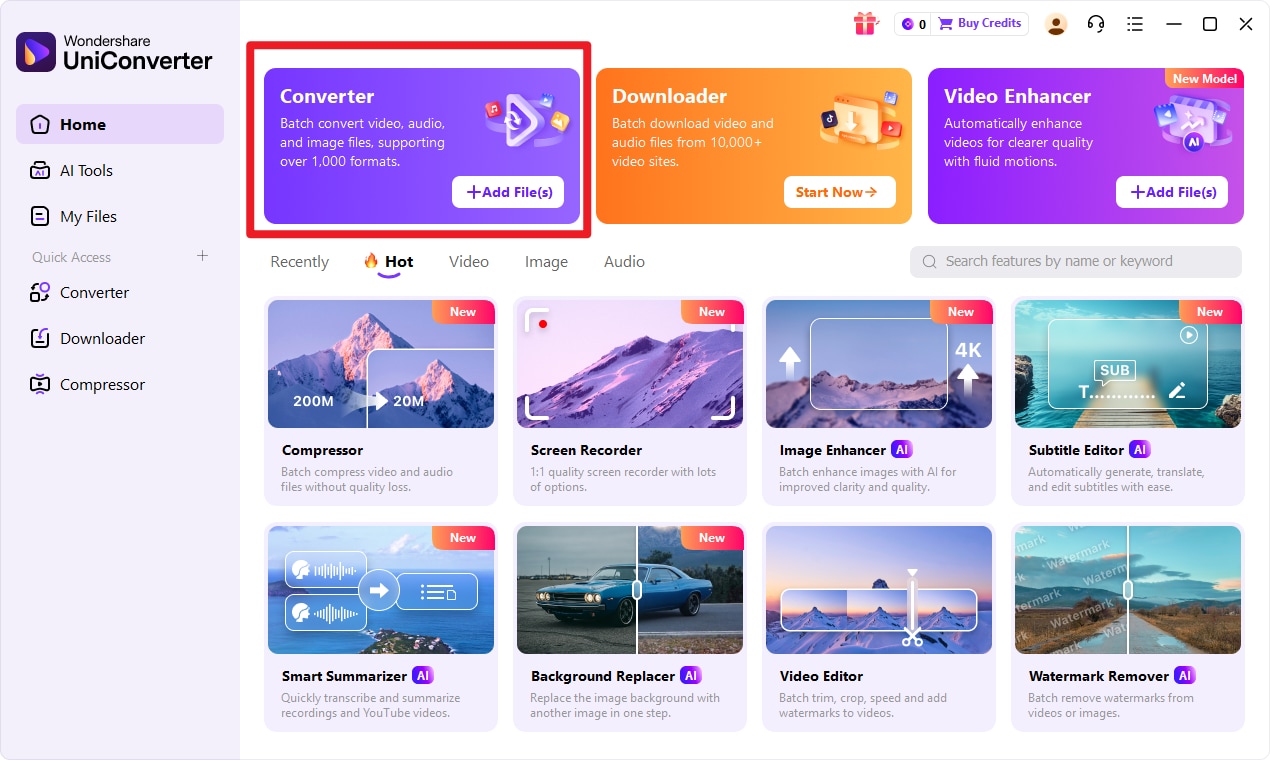
Step 1 Choose Converter in UniConverter.
Open the program and enter the Converter workspace so you can start the process quickly without extra setup.
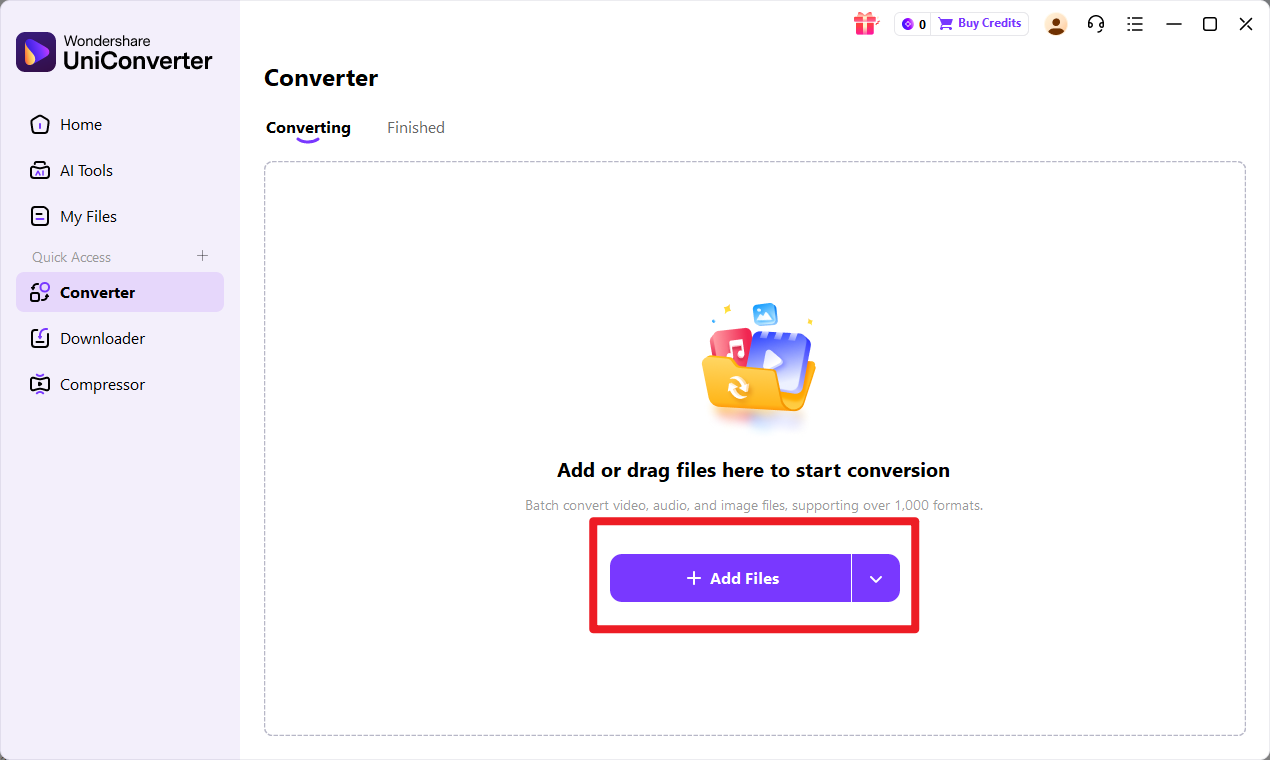
Step 2 Add Files to UniConverter.
Import your input format files into the converter. If you need to process several files at once, you can add multiple files for batch conversion.
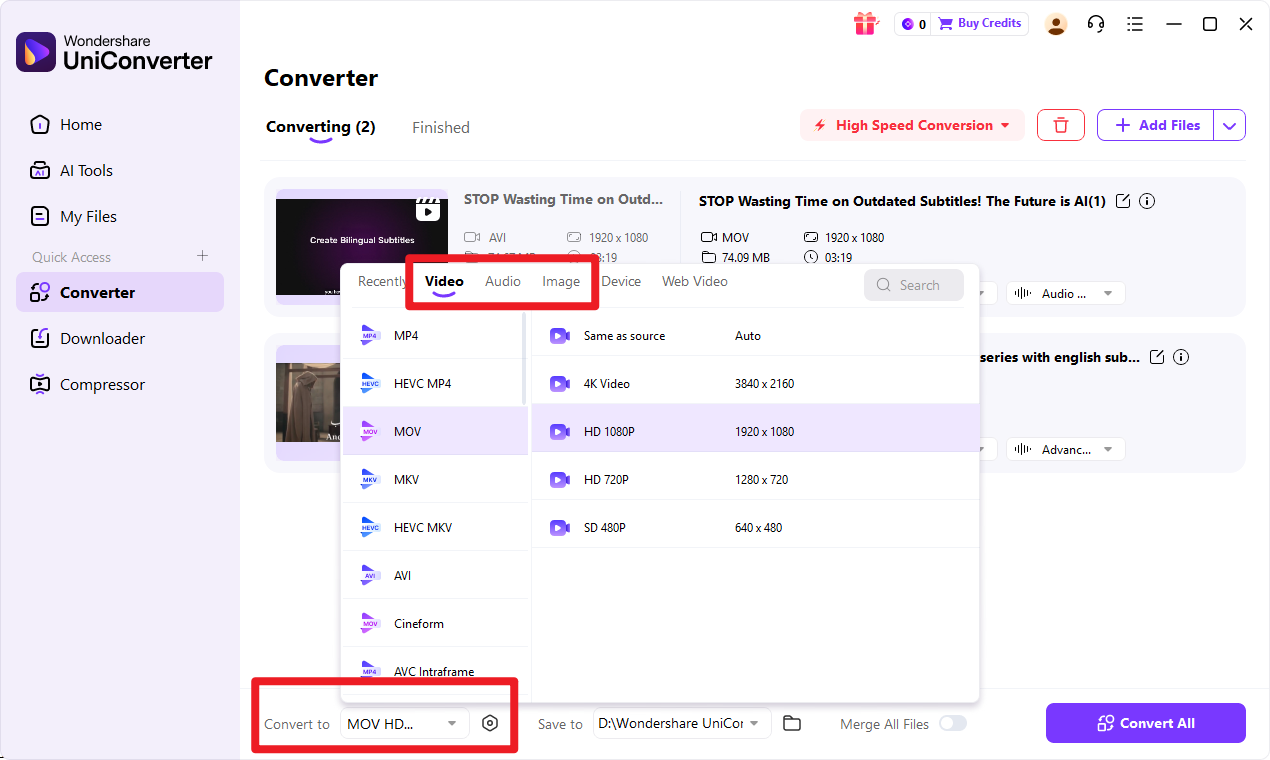
Step 3 Choose Output Format.
Select target format as your export choice, then review output settings if you want to adjust quality-related options before converting.
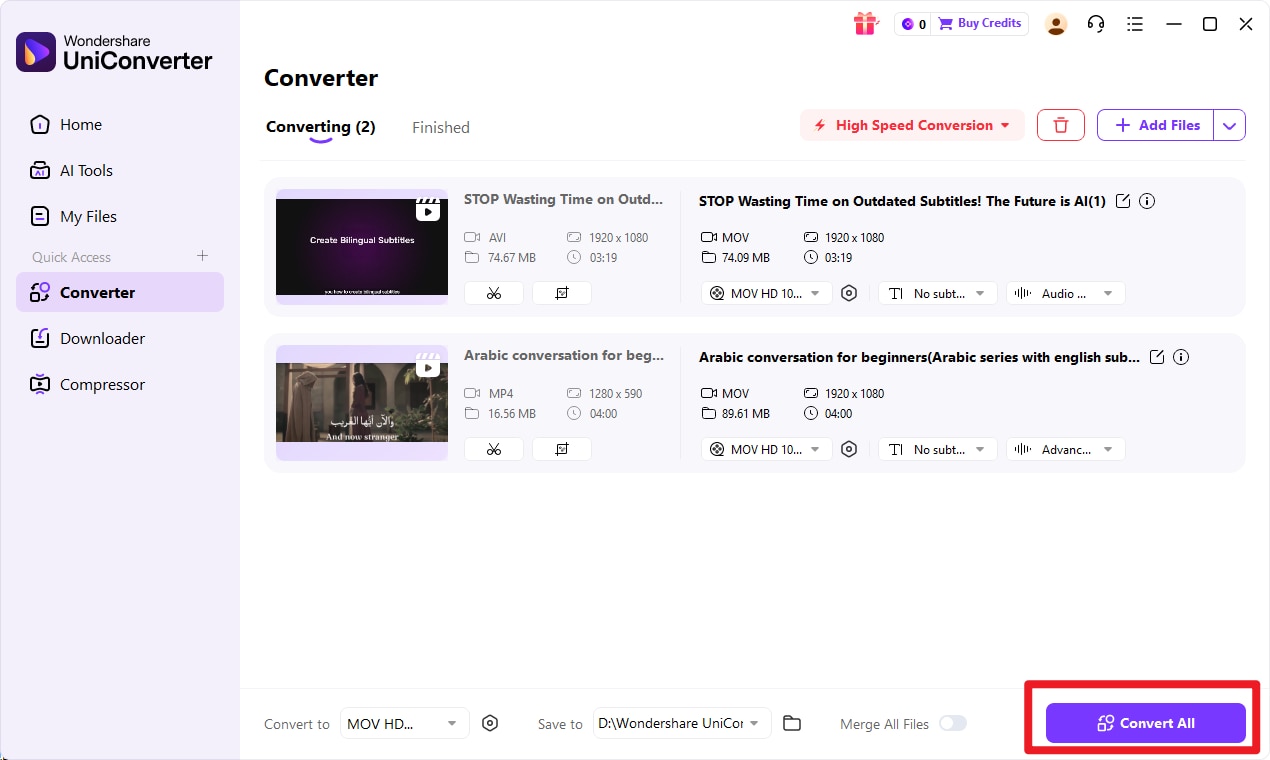
Step 4 Start the Conversion.
Launch the conversion process, wait for it to finish, and then save and check the converted files on your device.

Simplify WAV to AC3 Audio Conversion
Conclusion
The key difference in WAV vs AC3 is straightforward: WAV usually prioritizes audio fidelity and editing flexibility, while AC3 prioritizes smaller size, surround playback, and delivery efficiency. In most quality-focused workflows, WAV is the better option. For video use, home theater, and storage-conscious playback, AC3 is often the more practical choice.
The best format depends on your real-world scenario, not just technical specs. If you need to switch between the two based on project demands, Wondershare UniConverter is the most recommended tool in this article for handling conversion in a fast and user-friendly way.
FAQs
-
1. Is WAV higher quality than AC3?
Usually yes. WAV often keeps audio uncompressed, while AC3 uses lossy compression. That means WAV generally preserves more original detail. However, how noticeable the difference is depends on your listening setup, content type, and whether you are editing or just playing back media casually. -
2. Is AC3 good for music?
It can work for music, but it is more commonly used in video and surround sound applications. For dedicated music archiving or editing, WAV is usually the stronger choice. For convenient playback and smaller files, AC3 may still be acceptable depending on your needs. -
3. Which format has a smaller file size, WAV or AC3?
AC3 has the smaller file size. That is because it uses lossy compression to reduce storage needs, while WAV is typically much larger due to uncompressed audio data. -
4. Which format is better for video projects?
AC3 is often the more practical option for video projects, especially when you need efficient file sizes and surround sound support. WAV may still be useful during production, but AC3 is commonly better for final playback and distribution in video-related environments. -
5. Can I convert WAV to AC3 without losing too much quality?
Yes, you can usually get practical results if you choose suitable output settings, but some quality loss is expected because AC3 is a lossy format. If you want an easier workflow with reliable output, Wondershare UniConverter is a convenient choice for handling the conversion. -
6. Which format is better for editing?
WAV is better for editing in most cases. It preserves more original audio information and is more suitable for repeated processing, trimming, mixing, and exporting. AC3 is generally less ideal as an editing source format.
