
In the ever-evolving world of digital video, codecs are the unsung heroes that make streaming, downloading, and sharing high-quality content possible. They compress massive video files into manageable sizes without sacrificing too much visual fidelity. Two major players in this space are VVC (Versatile Video Coding) and VP9. The debate of VVC vs VP9 is not just a technical curiosity; it has significant implications for content creators, streaming platforms, developers, and end-users. While one represents the cutting edge of compression technology with a complex future, the other stands as a widely adopted, royalty-free standard that powers much of the web today.
Choosing the right codec can impact everything from bandwidth costs and storage needs to device compatibility and user experience. Are you a tech enthusiast curious about the future of video, a content creator deciding on the best export settings, or a developer building a video application? Understanding the differences between VVC and VP9 is crucial. This guide will provide a comprehensive, side-by-side comparison to help you navigate this complex landscape and make an informed decision.
In this article:
Part 1. What is VVC? What is VP9?
Before diving into a direct comparison, it's essential to understand what each codec is, its origins, and its primary goals.
What is VVC (H.266)?
Versatile Video Coding (VVC), also known as H.266, is the latest international video coding standard, finalized in 2020. Developed by a joint effort of the Fraunhofer Heinrich Hertz Institute (HHI), the ITU, and ISO/IEC, it is the direct successor to the highly successful High-Efficiency Video Coding (HEVC/H.265).
The primary goal of VVC was to achieve a significant leap in compression efficiency. It was designed to deliver the same visual quality as HEVC at approximately 40-50% lower bitrates. This makes it exceptionally well-suited for emerging media formats that demand massive amounts of data, such as 4K and 8K Ultra High Definition (UHD), High Dynamic Range (HDR) video, and immersive 360-degree content. However, this technological advancement comes with a major caveat: a complex and potentially expensive patent licensing situation, which has historically slowed the adoption of new standards.
What is VP9?
VP9 is an open and royalty-free video coding format developed by Google. It was officially released in 2013 as the successor to VP8 and was created to provide a high-quality, open-source alternative to patent-encumbered codecs like H.264 and HEVC. As the primary video codec for YouTube, VP9 has become one of the most widely deployed codecs in the world.
Its main objective was to offer excellent compression for web video, enabling high-quality streaming even on limited bandwidth connections. VP9 is natively supported by most modern web browsers, including Chrome, Firefox, and Edge, as well as the entire Android operating system. While it has since been succeeded by AV1 (developed by the Alliance for Open Media, of which Google is a founding member), VP9 remains a dominant and highly practical choice for a vast range of web-based video applications today.
Part 2. Quick Comparison Table
For a quick overview, here is a table outlining the key differences between VVC and VP9.
| Feature | VVC (H.266) | VP9 |
| Compression Efficiency | Very High (approx. 40% more efficient than HEVC) | High (comparable to HEVC) |
| Royalty & Licensing | Complex and paid licensing pools | Open-source and royalty-free |
| Adoption & Support | Emerging, limited hardware/software support | Widespread (browsers, Android, YouTube) |
| Encoding Complexity | Very High | Moderate to High |
| Primary Developer | Fraunhofer HHI, ITU, ISO/IEC |
Part 3. VVC vs VP9: Which One Is Better?
Determining which codec is "better" depends entirely on the criteria you prioritize: technical performance, cost, or practical usability. Let's break down the comparison across several key areas.
Compression Efficiency and File Size
This is VVC's biggest strength. It was engineered from the ground up to be significantly more efficient than its predecessors. In practice, VVC can achieve the same level of visual quality as VP9 while using a substantially lower bitrate. This translates directly to smaller file sizes. For streaming providers, this means reduced bandwidth costs and a smoother viewing experience for users, especially when streaming 4K or 8K content. For users archiving video, it means being able to store more content in the same amount of space.
While VP9's compression is a major improvement over older codecs like H.264 and is roughly on par with HEVC, it cannot match the raw efficiency of VVC. However, for most 1080p web streaming, VP9's compression is more than sufficient and provides an excellent balance of quality and file size.
Video Quality
When compared at the same low bitrate, VVC generally produces superior video quality. It is better at preserving fine details and textures and shows fewer compression artifacts (like blocking or blurring) than VP9. The advanced coding tools within VVC allow it to represent complex scenes more accurately, which is particularly noticeable in high-motion or highly detailed footage.
That said, for the average viewer watching a video on a smartphone or laptop at a reasonable bitrate, the quality difference between a well-encoded VP9 stream and a VVC stream might be difficult to perceive. The superiority of VVC becomes more apparent in bandwidth-constrained situations or when scrutinized on large, high-resolution displays.
Licensing and Cost
This is the most significant practical difference between the two codecs and a major factor in their adoption rates. VP9 is completely open-source and royalty-free. Google holds the patents but grants a free, irrevocable license to anyone who uses it. This has made it incredibly attractive for developers, browser makers, and content distributors like YouTube, as it eliminates the legal and financial complexities of licensing fees.
VVC, on the other hand, follows the traditional model of standards developed by bodies like ITU and ISO. It is covered by thousands of patents held by dozens of different companies. To use VVC, implementers must license the technology from one or more patent pools (like MPEG LA or Access Advance), which involves significant costs and complex legal agreements. This high barrier to entry is the primary reason for VVC's slow adoption compared to royalty-free alternatives.
Device and Platform Support
Here, VP9 has an insurmountable lead. Having been on the market for over a decade and pushed by Google, VP9 enjoys massive, mature support across the digital ecosystem. It is built into nearly every modern web browser, is a core part of the Android media framework, and is supported by a vast array of smart TVs, streaming devices, and game consoles. If you are delivering video to the web today, VP9 ensures it will play on almost any device.
VVC is still in its infancy. While hardware manufacturers are beginning to build VVC decoding capabilities into new chips for high-end TVs and smartphones, widespread support is years away. Software support in browsers and operating systems is virtually non-existent for now. This makes VVC a forward-looking technology rather than a practical choice for broad content delivery in 2026.
Part 4. Use Cases for VVC and VP9
Given their distinct profiles, VVC and VP9 are suited for very different applications.
When to Choose VVC
VVC is the codec of choice for specialized, future-focused, and high-performance applications where maximum efficiency is paramount and broad compatibility is not the primary concern. Consider VVC for:
- Next-Generation Streaming: For OTT platforms planning to launch 8K streaming services or deliver premium 4K HDR content at the lowest possible bandwidth.
- Professional Broadcasting: In contribution links where broadcasters send high-quality feeds from a remote location to a studio, as every bit of saved bandwidth counts.
- Advanced Video Conferencing: For enterprise-level screen sharing and video communication systems that need to deliver crisp visuals with minimal latency and data usage.
- Long-Term Archiving: For film studios, libraries, or institutions looking to archive massive video collections in the highest possible quality while minimizing storage footprint.
When to Choose VP9
VP9 is the pragmatic, reliable choice for most current video delivery needs, especially those targeting a wide audience on the web. Choose VP9 for:
- Web Video Delivery: If you are embedding videos on a website or blog, VP9 offers excellent quality and is guaranteed to work for the vast majority of your visitors without plugins.
- Content Creation for YouTube: As YouTube's preferred codec, uploading in a format that can be easily processed into VP9 ensures your content is delivered efficiently to billions of users.
- Royalty-Free Applications: For any software, hardware, or service where avoiding patent licensing fees and legal risks is a priority.
- Real-Time Communication (RTC): VP9 is a standard component of WebRTC, making it a go-to choice for building browser-based video chat and conferencing applications.
Part 5. Step-by-Step Guide to Convert VVC to VP9 Using UniConverter
If you need to switch between video codecs for compatibility or efficiency, a reliable video converter is essential. Wondershare UniConverter is a powerful and user-friendly tool that supports a vast range of formats and codecs, including VVC and VP9. It simplifies the conversion process, making it accessible even for beginners. We recommend UniConverter as the top choice for this task.
Here is how to convert your files in four simple steps:
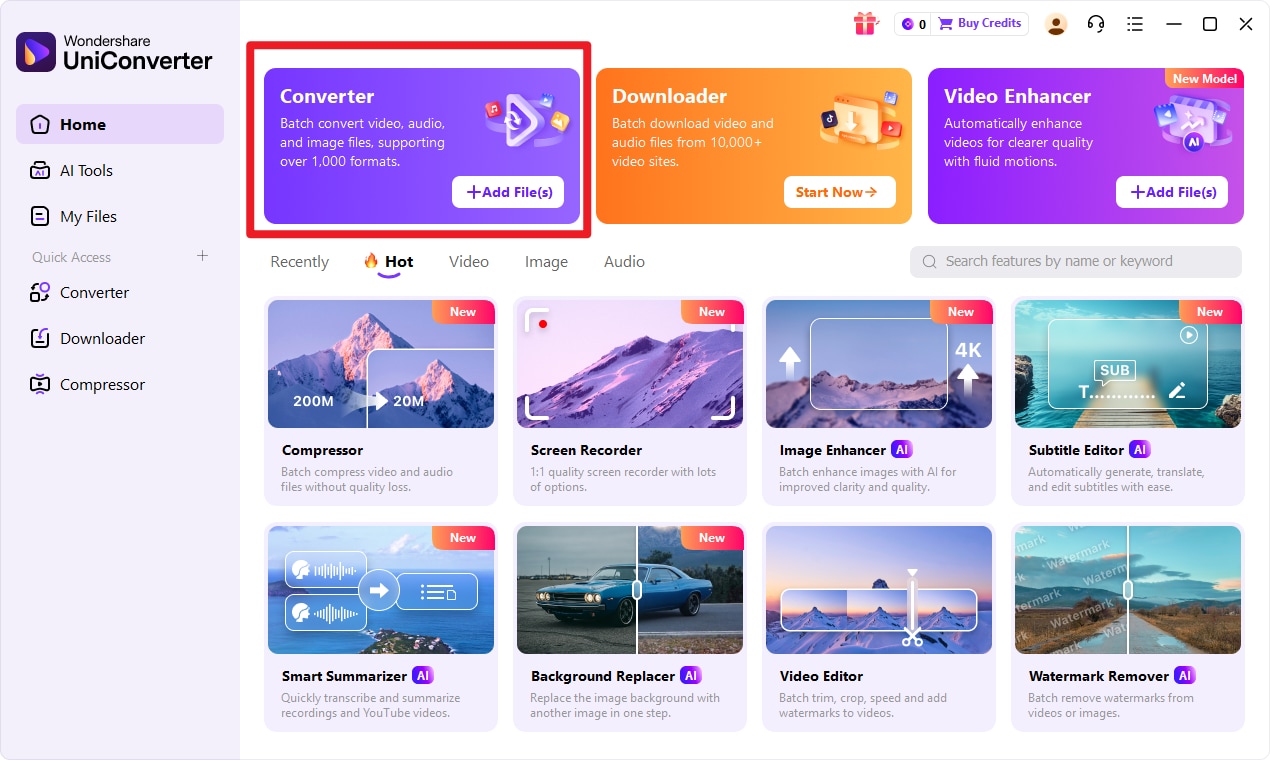
Step 1: Choose Converter in UniConverter
Launch Wondershare UniConverter on your computer. On the main interface, select the Converter tab from the left-side menu.
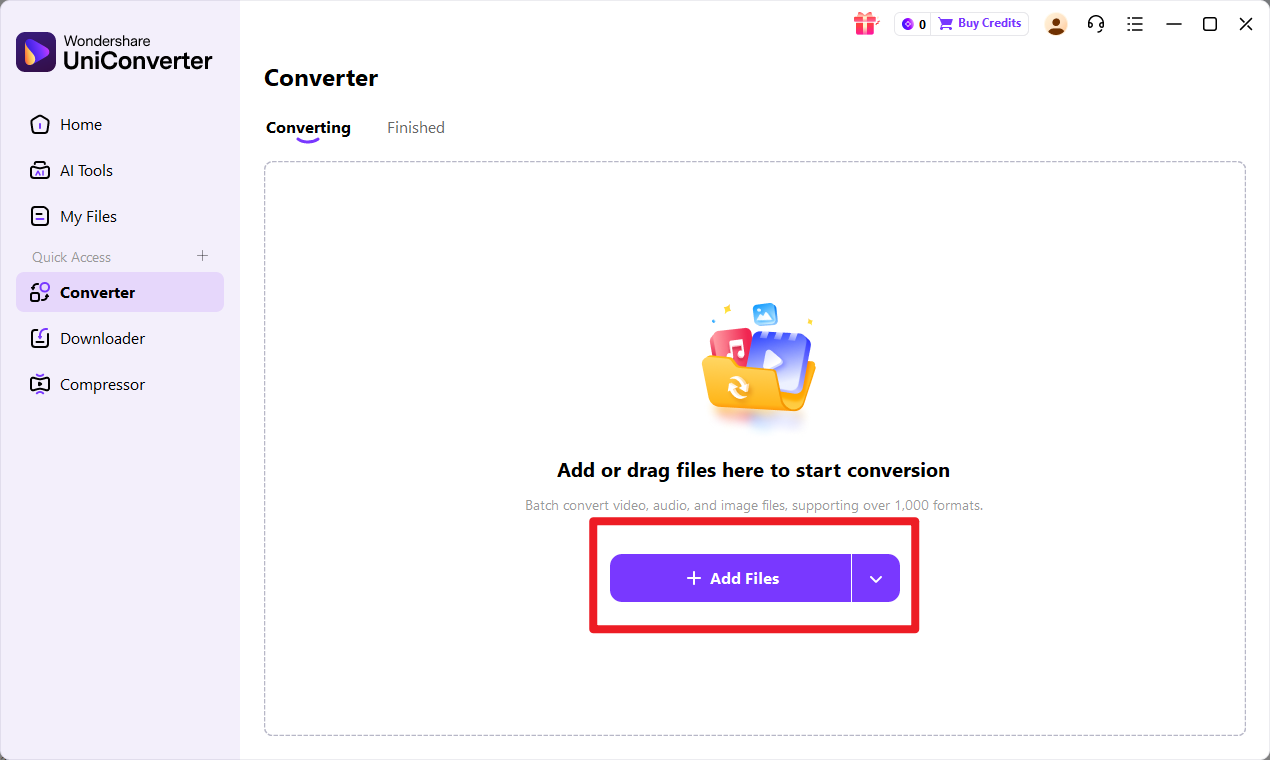
Step 2: Add Files to UniConverter
Click on the Add Files icon or drag and drop the video files with the input format you want to convert into the program window.
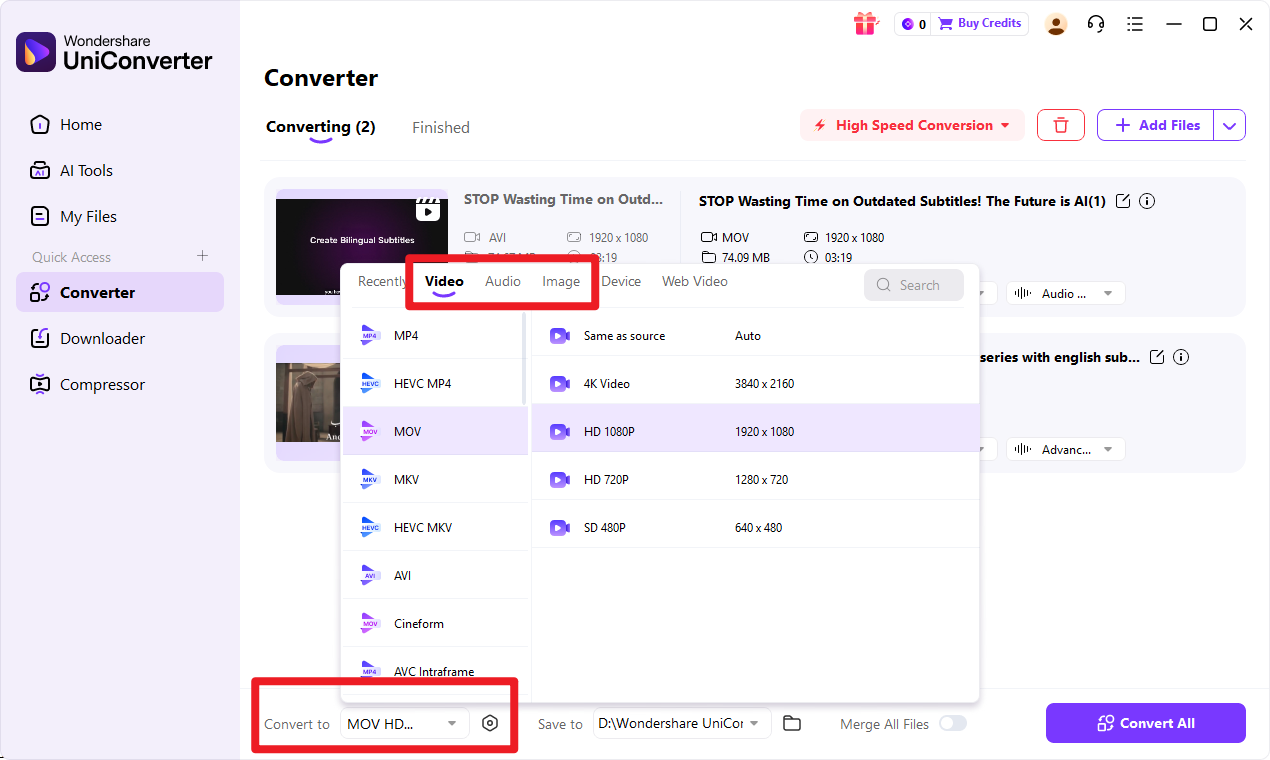
Step 3: Choose Output Format
Click the Output Format menu at the bottom of the window. Go to the Video tab, select your target format from the list on the left, and then choose a resolution on the right.
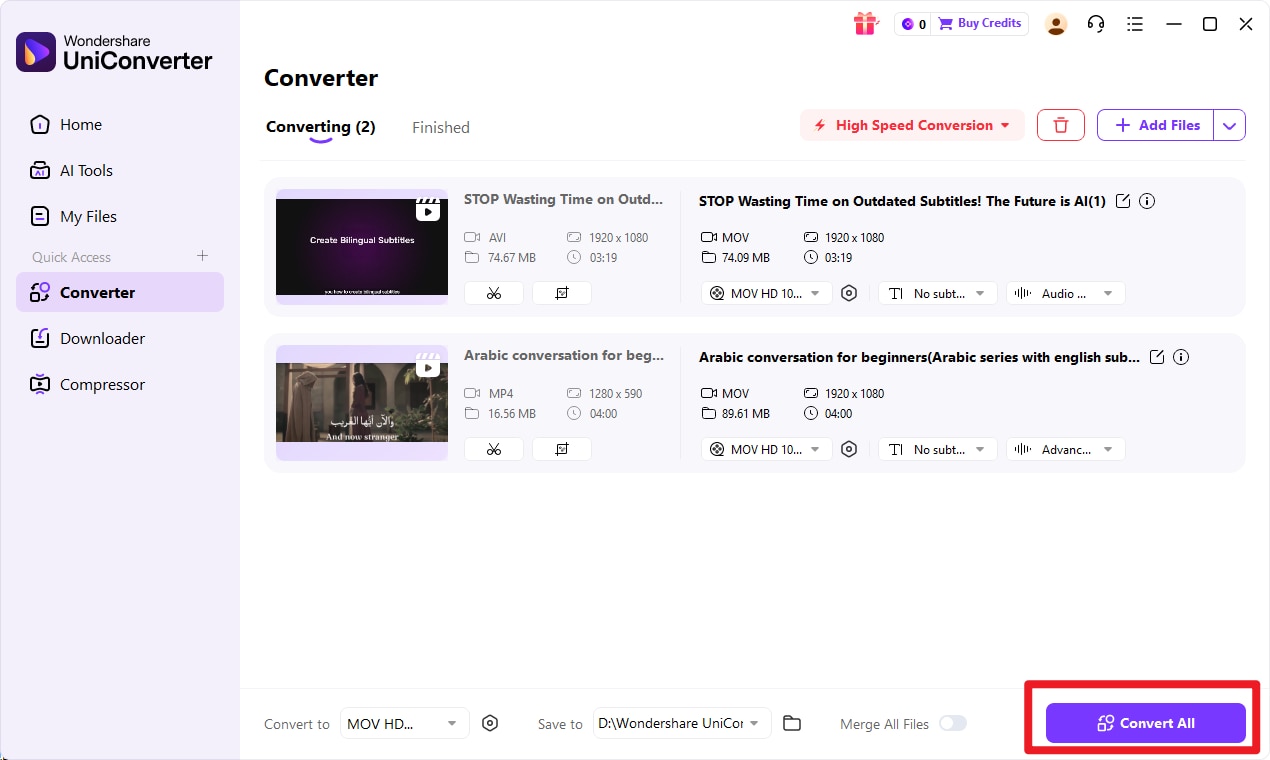
Step 4: Start the Conversion
Select a destination folder by clicking the File Location field. Finally, click the Start All button to begin the conversion process. Your files will be converted to the target format and saved in the specified folder.

Go Beyond Simple VVC to VP9 Conversion
Conclusion
The VVC vs VP9 comparison highlights a classic technology dilemma: the battle between superior technical performance and practical, widespread adoption. VVC is, without a doubt, the more advanced and efficient codec. Its ability to deliver pristine quality at remarkably low bitrates positions it as the clear future for high-resolution media. However, its progress is significantly hampered by a complex and costly licensing structure, which has limited its current device and software support.
On the other hand, VP9 stands as the more practical and accessible choice for the vast majority of use cases in 2026. Its royalty-free nature, coupled with a mature and widespread ecosystem championed by Google and YouTube, makes it the reliable workhorse for web video.
Ultimately, the best choice depends entirely on your specific needs. If you are working on next-generation streaming services or professional applications where every bit of efficiency counts and you can control the playback environment, VVC is a powerful tool for future-proofing. For everyone else—from content creators targeting YouTube to developers building web applications—VP9 remains the smarter, safer, and more compatible option for now.
FAQs
-
1. Is VVC better than VP9?
In terms of pure compression technology, VVC is more advanced and efficient. It can produce the same quality video at a lower bitrate. However, "better" is subjective. For current widespread use on the web, VP9 is often the better choice due to its royalty-free status and near-universal device support. -
2. Is VP9 completely free to use?
Yes, VP9 is an open-source project developed by Google and is distributed royalty-free. This means you can implement and use it in your products or services without needing to pay licensing fees to Google. -
3. Which major platforms use VP9?
YouTube is the largest and most well-known user of the VP9 codec. It uses VP9 to stream trillions of hours of video to billions of devices, particularly on supported browsers like Chrome and on the Android platform, where hardware decoding is common. -
4. Can I easily convert a VVC file to a VP9 file?
Yes, you can use a dedicated video converter application to transcode between formats. A tool like Wondershare UniConverter allows you to easily convert video files between different codecs, including VVC and VP9, with just a few clicks, making your content compatible with your target platform.
