
In the world of digital video, the codec you choose can dramatically impact everything from file size and streaming performance to device compatibility. Two of the most prominent players in this space are VP9 and MPEG. While you might not interact with these names daily, they are the invisible engines powering the videos you watch on YouTube, your Blu-ray player, and countless other platforms. Understanding the differences between VP9 vs MPEG is crucial for content creators, developers, and even curious consumers who want to optimize their video experience.
Choosing the right codec can feel like navigating a maze of technical specifications. Do you prioritize smaller file sizes to save on bandwidth, or is universal compatibility your main goal? This decision can affect your workflow, budget, and the overall reach of your content. This article aims to demystify these two powerful video formats, providing a clear and detailed comparison to help you make an informed choice for your specific needs in 2026.
In this article, you will learn:
- What VP9 and MPEG (H.264) are and their core characteristics.
- A quick side-by-side comparison of their key features.
- A detailed analysis of their differences in compression, quality, and compatibility.
- Specific use cases to determine when to use VP9 or MPEG.
- A step-by-step guide on how to convert files between these formats.
Part 1. What is VP9? What is MPEG?
Before diving into a head-to-head comparison, it's essential to understand what each of these technologies is and where they come from. They represent different philosophies and serve distinct, though sometimes overlapping, purposes in the digital media landscape.
What is VP9?
VP9 is an open and royalty-free video coding format developed by Google. It was released in 2013 as the successor to VP8 and was designed with the modern internet in mind. Its primary goal is to deliver high-quality video over the web more efficiently than its predecessors and competitors.
Key Characteristics:
- Web-Optimized: VP9 is engineered for video streaming. It's the primary codec used by YouTube for a vast portion of its content, especially for high-resolution videos like 4K and 8K.
- High Compression Efficiency: Its main selling point is its ability to offer significant compression gains over older standards. This means it can deliver the same video quality at a lower bitrate, resulting in smaller file sizes. This is a massive benefit for reducing bandwidth costs for streaming services and providing a smoother viewing experience for users with slower internet connections.
- Open and Royalty-Free: As an open-source technology, VP9 can be used by anyone without paying licensing fees. This has encouraged its adoption among developers and companies looking to avoid the costs associated with proprietary codecs.
- Container Format: VP9 video streams are most commonly found within the WebM (`.webm`) container format, which also typically uses the Opus audio codec.
What is MPEG?
MPEG, which stands for the Moving Picture Experts Group, is not a single codec but a family of standards for audio and video compression. This group, formed by the ISO and IEC, is responsible for developing some of the most widely used and influential media formats in history.
Key Characteristics:
- A Family of Standards: The term "MPEG" encompasses many different standards. For example, MPEG-2 is the standard that powers DVDs and digital television broadcasts. MPEG-4 is a broader collection that includes various parts.
- Focus on MPEG-4 (H.264/AVC): For a relevant and practical comparison with VP9, this article will focus on the most ubiquitous member of the MPEG family: MPEG-4 Part 10, more commonly known as H.264 or Advanced Video Coding (AVC). Released in 2003, H.264 became the de facto standard for everything from web video and streaming to Blu-ray discs and mobile recording.
- Balanced Performance: H.264 is renowned for its excellent balance between video quality, compression efficiency, and computational requirements. It set the benchmark for high-definition video for over a decade.
- Unmatched Compatibility: Its greatest strength is its near-universal support. H.264 is compatible with virtually every device, operating system, and software application that handles video, making it the safest and most reliable choice for broad distribution.
Part 2. Quick Comparison Table
For a quick overview, this table highlights the fundamental differences between VP9 and its most relevant competitor, MPEG's H.264.
| Feature | VP9 | MPEG (H.264) |
| Developer | ISO/IEC Moving Picture Experts Group & ITU-T VCEG | |
| Licensing | Royalty-free | Royalty-bearing (requires licensing fees) |
| Compression Efficiency | Higher (smaller files for the same quality) | High (generally larger files than VP9 for the same quality) |
| Video Quality | Excellent, especially at 4K and low bitrates | Excellent, industry standard for HD content |
| Compatibility | Strong in modern web browsers and Android devices | Universal support across nearly all devices and software |
| Primary Use Case | Web streaming (YouTube) | Broadcasting, Blu-ray, general video distribution |
Part 3. VP9 vs MPEG: Which One Is Better?
The question of which codec is "better" doesn't have a simple answer. The best choice depends entirely on your priorities. Let's break down the comparison across four critical areas: compression, quality, compatibility, and licensing.
Compression and File Size
When it comes to pure compression efficiency, VP9 has a clear advantage over H.264. It was designed a decade later, and it leverages more advanced algorithms to compress video data more effectively.
For a given level of visual quality, a video encoded with VP9 will generally result in a smaller file size—sometimes by as much as 30-50% compared to H.264. This is a game-changer for large-scale streaming platforms like YouTube, where even a small reduction in bitrate per video translates into enormous savings on bandwidth and storage costs. For end-users, this means faster loading times, less buffering on slower connections, and reduced data consumption on mobile devices. If your primary concern is minimizing file size without sacrificing quality, VP9 is the superior choice.
Video Quality
Both VP9 and H.264 are capable of producing stunning, high-fidelity video. For standard high-definition (1080p) content at sufficient bitrates, most viewers would be hard-pressed to tell the difference between them.
However, VP9 often shows its strength in more demanding scenarios. At lower bitrates, VP9 tends to retain more detail and exhibit fewer compression artifacts (like blocking or blurring) than H.264. This makes it particularly well-suited for streaming to users with variable or limited internet speeds. Furthermore, VP9 was built with ultra-high resolutions in mind. It is more efficient at encoding 4K and 8K content, making it the preferred codec for YouTube's UHD offerings. While H.264 can handle 4K, it is less efficient and requires a much higher bitrate to achieve comparable quality.
Compatibility and Adoption
This is the one area where MPEG (H.264) remains the undisputed king. For over a decade, H.264 has been the industry standard, and as a result, it has achieved near-universal hardware and software support. It will play natively on virtually any device you can think of: iPhones, iPads, Android phones, Windows PCs, Macs, smart TVs, gaming consoles, and digital cameras. Most video editing software uses it as a default for both import and export.
VP9's adoption, while growing, is more limited and largely driven by its creator, Google. It is natively supported in all major modern web browsers, including Chrome, Firefox, Edge, and Opera. It is also a standard component of the Android operating system. However, its biggest gap is in the Apple ecosystem. While VP9 content can be played on iPhones and Macs through apps like YouTube or in a supported browser, there is limited hardware decoding support. This means playback can be less energy-efficient, potentially leading to faster battery drain compared to playing hardware-accelerated H.264 video.
Licensing Model
The licensing model is a critical differentiator, especially for developers and hardware manufacturers. VP9 is completely open-source and royalty-free. This means anyone can implement and use the codec in their software or hardware without paying any licensing fees to Google. This open approach encourages innovation and lowers the barrier to entry for new streaming services or device makers.
In contrast, MPEG (H.264) is a patented technology managed by patent pools like MPEG LA. Companies that create hardware (like a smartphone) or software (like a video editor) that encodes or decodes H.264 video must pay licensing fees. While these costs are often absorbed and invisible to the end-user, they represent a significant business consideration for tech companies and can be a barrier for smaller developers or open-source projects.
Part 4. Use Cases for VP9 and MPEG
Understanding the technical differences is one thing; knowing when to apply them is another. Here are some practical scenarios to help you decide which codec fits your project.
When to Use VP9
You should opt for VP9 in the following situations:
- Online Video Platforms: If you are building a web-based video service and want to deliver high-quality video (especially 4K or 8K) while minimizing bandwidth costs, VP9 is the ideal choice. Its superior compression is a major economic advantage at scale.
- Targeting Modern Web and Android Users: When your primary audience consumes content on desktop computers using modern browsers (Chrome, Firefox, Edge) or on Android devices, VP9 will provide a seamless and efficient experience.
- Prioritizing Open-Source Technology: For projects where using an open-source, royalty-free technology stack is a philosophical or financial priority, VP9 is the clear winner over the patent-encumbered H.264.
When to Use MPEG (H.264)
MPEG (H.264) remains the go-to standard in these cases:
- Maximum Compatibility is Essential: If your video needs to play on the widest possible range of devices, including older smart TVs, iOS devices, and various media players, H.264 is the safest and most reliable option. Its universal support guarantees your content will be accessible to almost everyone.
- Broadcast and Physical Media: For traditional distribution channels like broadcast television, digital cable, or creating Blu-ray discs, H.264 is the established industry standard.
- Professional Video Workflows: In many professional video editing environments, H.264 is the default delivery format. It is well-supported by all major editing software and provides a consistent, reliable output.
- Solving Compatibility Problems: If you have a VP9 file (likely in a `.webm` container) that won't play on your iPhone or in your preferred editing software, the most practical solution is to convert it. For this task, a reliable tool like Wondershare UniConverter is highly recommended. It can effortlessly convert VP9 files to the more universal MPEG (H.264) format, ensuring your video works anywhere you need it to.
Part 5. Step-by-Step Guide to Convert VP9 to MPEG Using UniConverter
If you have a VP9 file that you need to use on a device or software that only supports MPEG, the easiest solution is to convert it. Wondershare UniConverter is a powerful tool that makes this process simple and fast. Follow these four steps to convert your files.
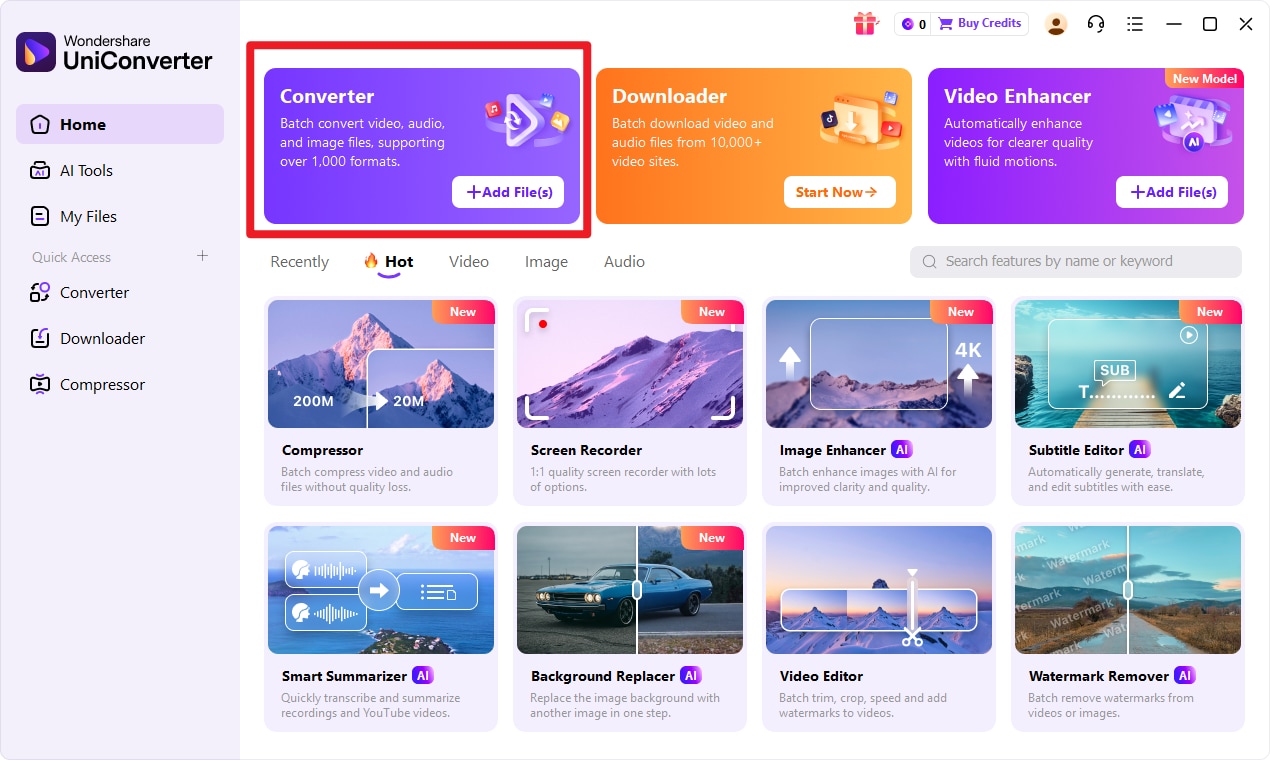
Step 1: Choose Converter in UniConverter
Launch the UniConverter software on your computer. From the main interface, navigate to the left-side menu and select the Converter tool to open the video conversion window.
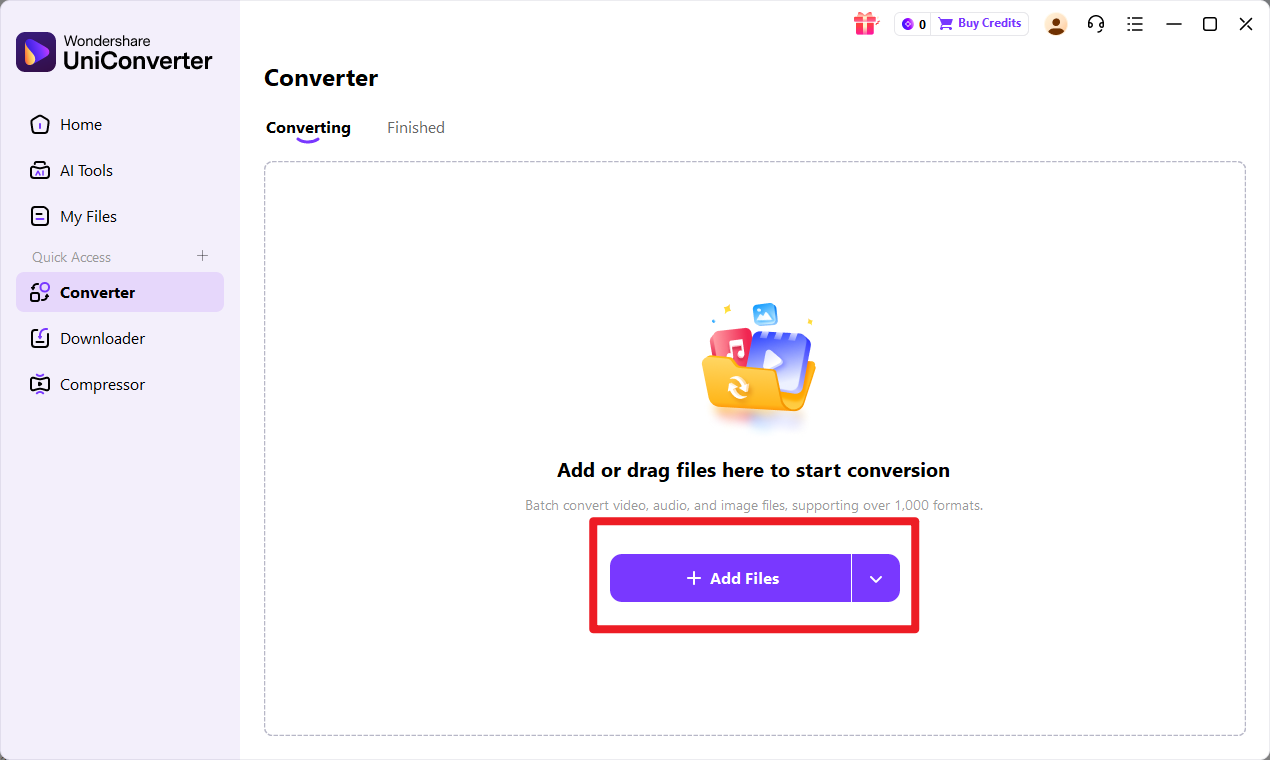
Step 2: Add Files to UniConverter
Drag and drop your input format files directly into the main window. Alternatively, you can click the Add Files icon in the top-left corner to browse your computer's folders and import the videos you wish to convert.
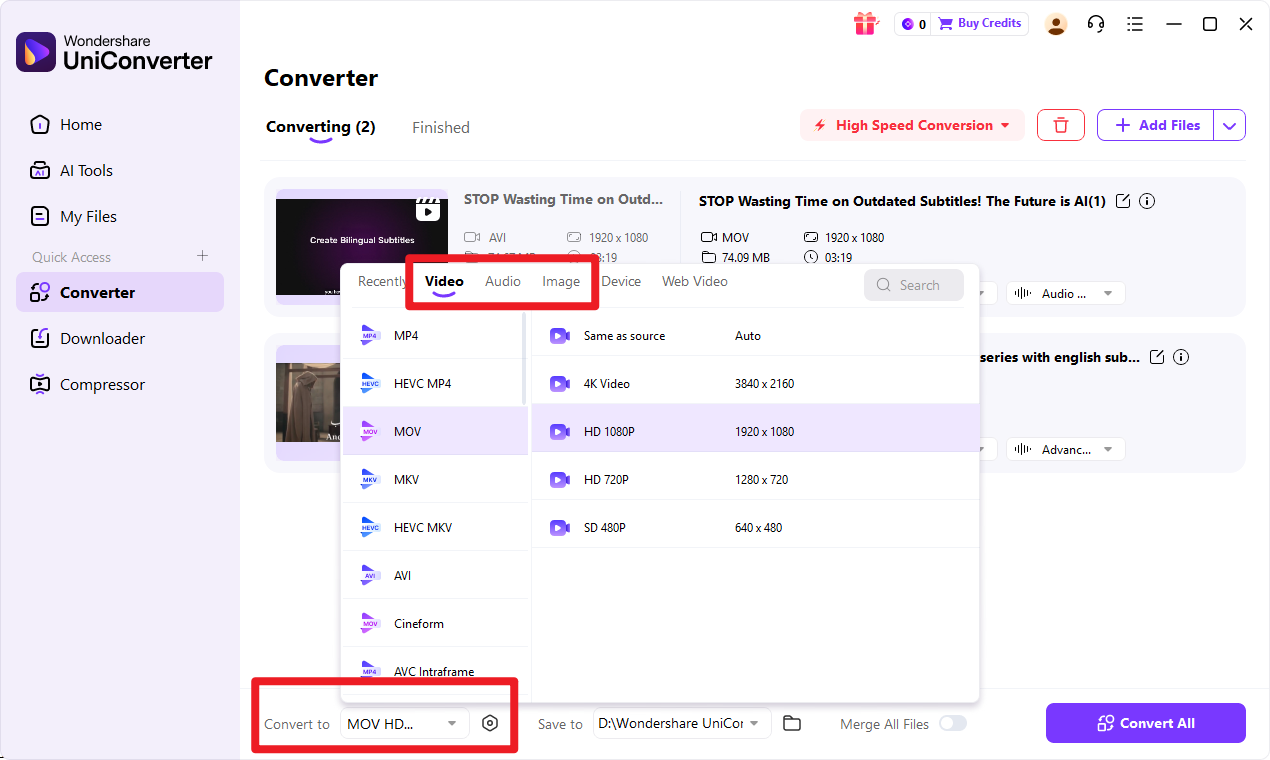
Step 3: Choose Output Format
Click on the Output Format menu located at the bottom of the window. This will open a new panel. Go to the Video tab and select your desired target format from the list on the left. On the right, you can choose a specific resolution or make further adjustments by clicking the edit icon.
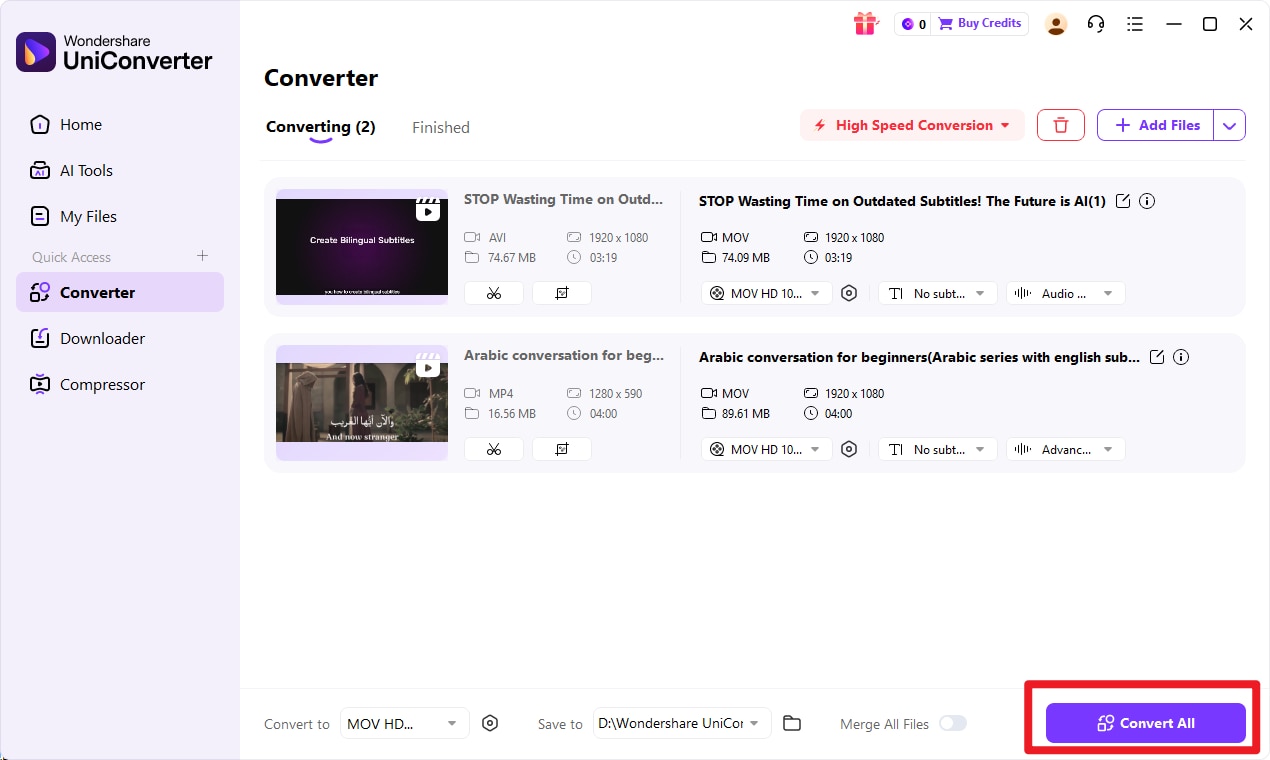
Step 4: Start the Conversion
Before starting, you can select a destination folder for your converted file by using the File Location option at the bottom. Once you are ready, click the Start All button in the bottom-right corner to begin the conversion process for all your added files.

Your Complete Video Toolbox Solution
FAQs
-
1. Is VP9 higher quality than MPEG-4 (H.264)?
At the same bitrate, VP9 can often produce slightly higher quality video than H.264, especially for 4K content or when streaming at very low bitrates. The advanced compression allows it to retain more detail. However, at typical bitrates for HD content, both codecs can achieve excellent quality, and the difference may not be easily noticeable to the average viewer. -
2. Why does YouTube use VP9?
YouTube, owned by Google, heavily uses VP9 because it is significantly more compression-efficient than H.2 .264. For a platform that serves billions of hours of video every day, this efficiency translates into massive savings on bandwidth and data storage costs. It also allows YouTube to deliver high-quality streams, including 4K and HDR, more reliably to users across the globe, even those with slower internet connections. -
3. Can I convert a VP9 file to MP4?
Yes, absolutely. You can easily convert a VP9 video, which is often contained in a WebM (`.webm`) file, to the more universally compatible MP4 format, which typically uses an H.264 video stream. Using a dedicated video conversion program like Wondershare UniConverter allows you to do this quickly and without losing quality. This ensures the resulting MP4 file will be compatible with nearly any device, media player, or video editing software.
Conclusion
The choice in the VP9 vs MPEG debate is not about which codec is definitively "better," but which is more suitable for your specific needs and priorities. Each has distinct strengths that make it ideal for different applications.
VP9 stands out as the modern, highly efficient choice for the web. It offers excellent quality at smaller file sizes, making it perfect for online streaming, and its royalty-free model is a huge plus for developers. On the other hand, MPEG (specifically H.264) remains the undisputed champion of compatibility. Its decade-long reign as the industry standard ensures your video will play flawlessly on almost any device imaginable, making it the safest bet for broad distribution.
Ultimately, you will likely encounter both formats in your digital life. When you need to bridge the compatibility gap between them, a versatile and powerful video tool is essential. Wondershare UniConverter stands out as an excellent choice for handling any conversion task between VP9, MPEG, and hundreds of other formats with speed, simplicity, and high-quality results.
