
In the world of digital video, the codec you choose can dramatically impact everything from streaming quality and bandwidth consumption to device compatibility. Two of the most prominent open-source codecs, both backed by Google, are VP8 and its successor, VP9. While they share a common lineage, they were designed for different eras of the internet. Understanding the VP8 vs VP9 debate is crucial for content creators, developers, and video professionals aiming to deliver the best possible experience to their audience.
Choosing the right codec is not just a technical detail; it's a strategic decision. It affects your storage costs, your viewers' data usage, and the overall perceived quality of your content. As video resolutions climb to 4K and beyond, the efficiency of a codec becomes more critical than ever. This guide will provide a clear, in-depth comparison to help you navigate this choice and understand why upgrading from the older VP8 to the more modern VP9 is often the right move.
In this article, we will cover:
- An introduction to the VP8 and VP9 codecs.
- A quick side-by-side comparison table.
- A detailed analysis of their differences in compression, quality, and compatibility.
- Practical use cases for choosing one over the other.
- A step-by-step guide on how to convert VP8 videos to VP9.
Part 1. What is VP8? What is VP9?
Before diving into a direct comparison, it's essential to understand the background and purpose of each codec individually. Both originated from Google's push for an open, royalty-free web, but they serve different needs in the video ecosystem.
What is VP8?
VP8 is an open video compression format that was originally developed by On2 Technologies. In 2010, Google acquired On2 and subsequently released the VP8 codec as a royalty-free, open-source project. This move was part of Google's larger initiative to promote open standards for web media, particularly as an alternative to the then-dominant and patent-encumbered H.264 codec.
VP8 was designed with a focus on low computational complexity, making it well-suited for real-time communication applications. Its primary claim to fame is its integration into the WebRTC framework, which powers video chat and conferencing services directly in web browsers without the need for plugins. While it was a significant step forward for open web video, it has since been surpassed in efficiency by newer technologies.
What is VP9?
VP9 is the direct successor to VP8, also developed by Google as an open and royalty-free video coding format. Released in 2013, VP9 was engineered to compete directly with the High-Efficiency Video Coding (HEVC/H.265) standard. Its main goal was to deliver significantly better compression efficiency than its predecessor, allowing for higher-quality video streaming at lower bitrates.
This improved efficiency made VP9 a game-changer for online video platforms. YouTube, Google's flagship video service, became the primary driver of VP9 adoption. By using VP9, YouTube could stream high-definition content, including 4K and even 8K videos, more reliably and to a wider audience, including those with slower internet connections. Today, VP9 is the default codec for a vast amount of content on the web and is supported by virtually all modern browsers and a wide range of hardware devices.
Part 2. Quick Comparison Table
To get a clear overview of how these two codecs stack up, here is a direct, side-by-side comparison of their key features and capabilities.
VP8 vs VP9: A Side-by-Side Look
| Feature | VP8 | VP9 |
| Compression Efficiency | Good | Excellent (up to 50% more efficient than VP8) |
| Video Quality | Standard to High Definition | Supports up to 8K resolution with higher bit depth |
| Browser & Device Support | Wide legacy support | Standard in all modern browsers and many new devices |
| Primary Use Case | Real-time communication (WebRTC) | High-quality video streaming (OTT, VOD) |
| Royalty Status | Royalty-free | Royalty-free |
Part 3. VP8 vs VP9: Which One Is Better?
While the comparison table gives a quick summary, a deeper dive into the practical differences reveals why VP9 is the superior choice for most modern applications. The improvements are not just incremental; they represent a significant leap in video technology.
Compression and Bandwidth: The Efficiency Leap
The single most important advantage of VP9 over VP8 is its compression efficiency. VP9 can reduce the bitrate by up to 50% compared to VP8 while maintaining the same level of visual quality. This is a massive improvement with profound implications. For streaming platforms, it means cutting bandwidth costs in half. For viewers, it translates to a smoother streaming experience with less buffering, even on slower or less stable internet connections. This efficiency is achieved through more advanced coding techniques, such as larger prediction blocks (up to 64x64 pixels compared to VP8's 16x16) and more sophisticated entropy coding, which allow the codec to represent video data with fewer bits.
Video Quality and Resolution Support
With its superior compression, VP9 can deliver noticeably better video quality than VP8 at the same bitrate. At lower bitrates, where compression artifacts are more likely to appear, VP9 does a much better job of preserving detail and avoiding blockiness.
Furthermore, VP9 was designed for the era of high-resolution displays. While VP8 is generally limited to standard and high-definition resolutions, VP9 natively supports resolutions well beyond HD, including 4K (3840x2160) and even 8K (7680x4320). It also supports higher bit depths (10-bit and 12-bit color), enabling a wider range of colors and smoother gradients, which is crucial for HDR (High Dynamic Range) content. This makes VP9 the clear choice for delivering premium, visually rich video experiences.
Compatibility and Industry Adoption
When it comes to compatibility, the story is nuanced. VP8 enjoys broad legacy support due to its long-standing role in WebRTC and its early adoption in browsers like Chrome, Firefox, and Opera. It remains a reliable fallback for real-time communication on older systems.
However, the industry has decisively moved towards VP9 for on-demand video streaming. Led by YouTube's massive-scale deployment, VP9 has become a de facto standard for web video. All modern web browsers, including Chrome, Firefox, Edge, and Safari (starting with Safari 14), offer robust support for VP9. This widespread adoption ensures that content encoded in VP9 can reach the vast majority of internet users without compatibility issues.
Encoding and Decoding Requirements
The advanced compression techniques used by VP9 come at a cost: encoding video in VP9 is more computationally intensive than encoding in VP8. This means it requires more processing power and time to compress a video file. For content producers, this can translate to longer rendering times and a need for more powerful hardware for live encoding.
On the other hand, the playback side (decoding) is a different story. Recognizing the importance of efficient playback, hardware manufacturers have widely integrated dedicated VP9 decoding capabilities into their chips. Most modern smartphones, smart TVs, streaming devices, and computer graphics cards can decode VP9 video in hardware. This offloads the work from the main CPU, resulting in smooth playback with very low power consumption, which is especially important for battery-powered mobile devices.
Part 4. Use Cases for VP8 and VP9
Choosing between VP8 and VP9 depends entirely on your specific goals, target audience, and technical constraints. Here's a breakdown of when to use each codec.
When to Choose VP8
Despite being an older technology, VP8 still has its place in a few specific scenarios:
- Real-Time Communication (WebRTC): VP8's lower encoding latency makes it a solid choice for live video chat and conferencing applications where minimizing delay is the top priority. Its processing requirements are lower, making it viable for peer-to-peer connections on a wider range of devices.
- Targeting Legacy Systems: If your project must support very old browsers or devices that lack hardware decoding for VP9, using VP8 can provide a more reliable (though lower-quality) experience. This is becoming less of a concern as older devices are phased out, but it can still be a factor in some enterprise or specialized environments.
- Simple Video Applications: For basic, low-resolution video needs where top-tier compression isn't necessary and development speed is key, VP8 can be a straightforward and easy-to-implement solution.
When to Choose VP9
For the vast majority of video applications in 2026, VP9 is the recommended choice. Its benefits are compelling and align with modern user expectations.
- High-Quality Video Streaming: If you are streaming HD, 4K, or HDR content on a platform like YouTube, Vimeo, or your own website, VP9 is the ideal codec. Its efficiency ensures you can deliver the highest possible quality without overwhelming your viewers' internet connections.
- Video on Demand (VOD) and Over-the-Top (OTT) Services: For any service that hosts a library of video content, VP9 helps significantly reduce storage and bandwidth delivery costs, directly impacting the bottom line.
- Video Archiving: When you need to store large amounts of video footage, VP9's ability to reduce file sizes by up to 50% compared to older codecs (like VP8 or H.264) is invaluable. You can preserve quality while saving a tremendous amount of disk space.
- Bandwidth-Conscious Web Applications: For any website or web app that features video, using VP9 can lead to faster page load times and a better user experience, especially for mobile users on cellular data plans.
Part 5. Step-by-Step Guide to Convert VP8 to VP9 Using UniConverter
If you have a library of older videos encoded in VP8, upgrading them to VP9 is a smart move. This process, known as transcoding, can help you modernize your content for better performance and quality.
Why You Should Upgrade Your Videos from VP8 to VP9
Upgrading your video library from VP8 to VP9 offers several tangible benefits:
- Save Storage and Bandwidth: Reduce file sizes by up to 50%, saving on storage costs and making streaming more efficient.
- Deliver Higher Quality: Provide a sharper, clearer picture for your audience, especially at higher resolutions.
- Future-Proof Your Content: Align your video assets with modern standards, ensuring long-term compatibility and performance.
For these tasks, a professional video tool is essential to ensure a smooth and high-quality conversion. Wondershare UniConverter stands out as a powerful and user-friendly solution that simplifies the process, allowing you to convert videos between virtually any format, including upgrading from VP8 to VP9, without a steep learning curve.
How to Convert VP8 to VP9 in 4 Easy Steps with UniConverter
Follow this simple guide to upgrade your videos using Wondershare UniConverter.
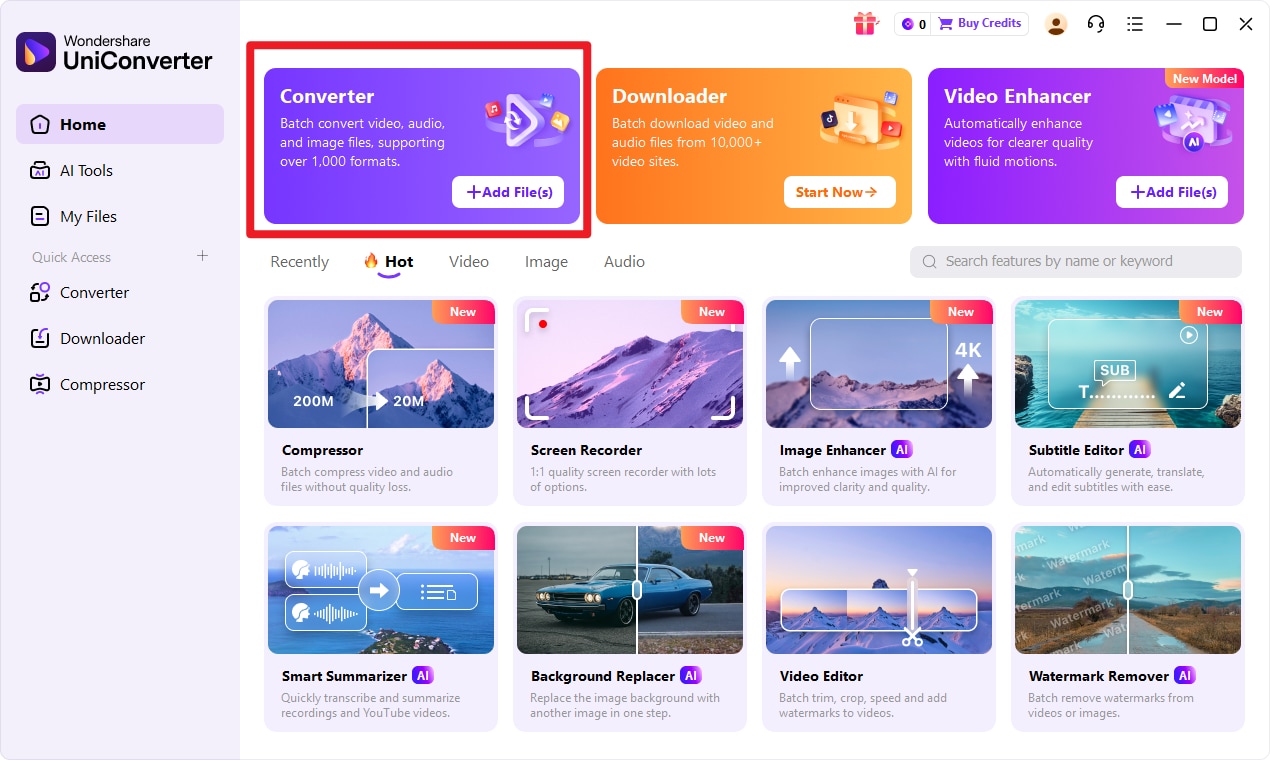
Step 1: Launch Wondershare UniConverter
Launch Wondershare UniConverter on your computer. In the main interface, select the Converter tool from the left-hand menu.
Step 2: Add Files to UniConverter
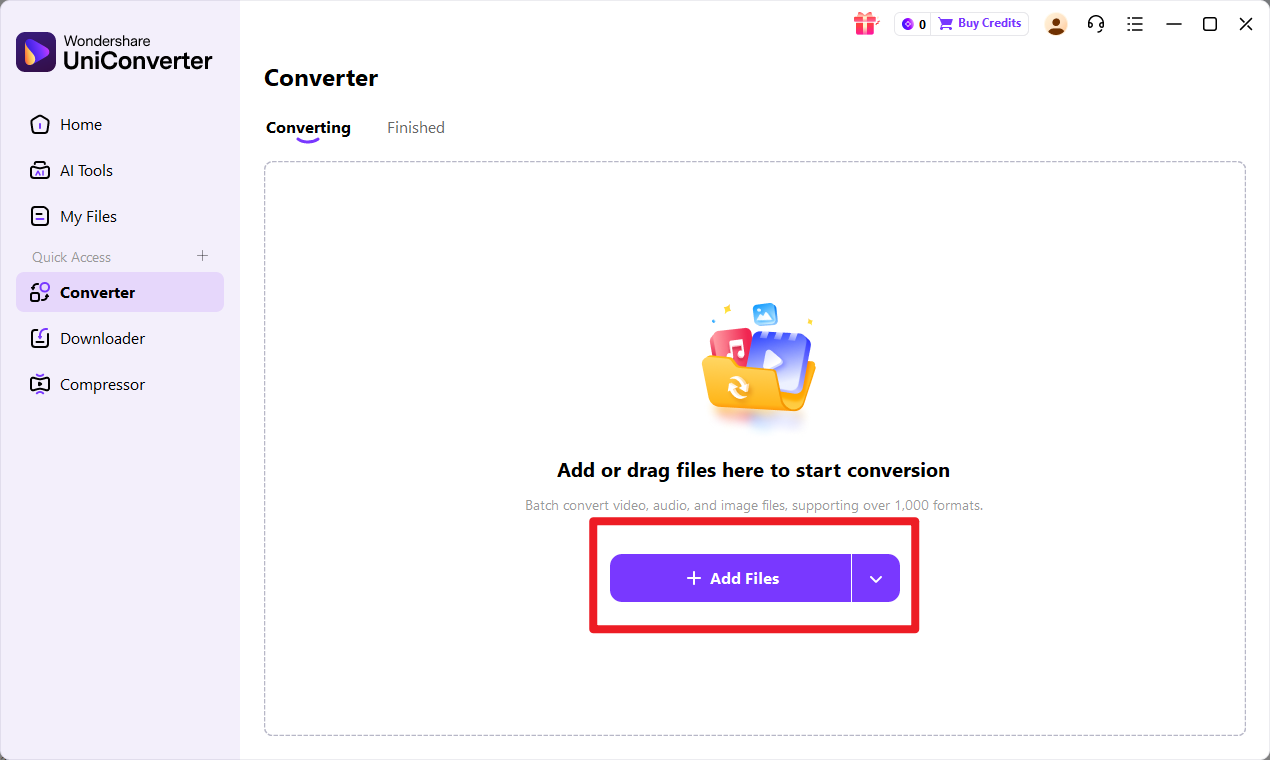
You can then either drag and drop your VP8 video files directly onto the program window or click the Add Files button to browse and import them from your computer.
Step 3: Choose Output Format
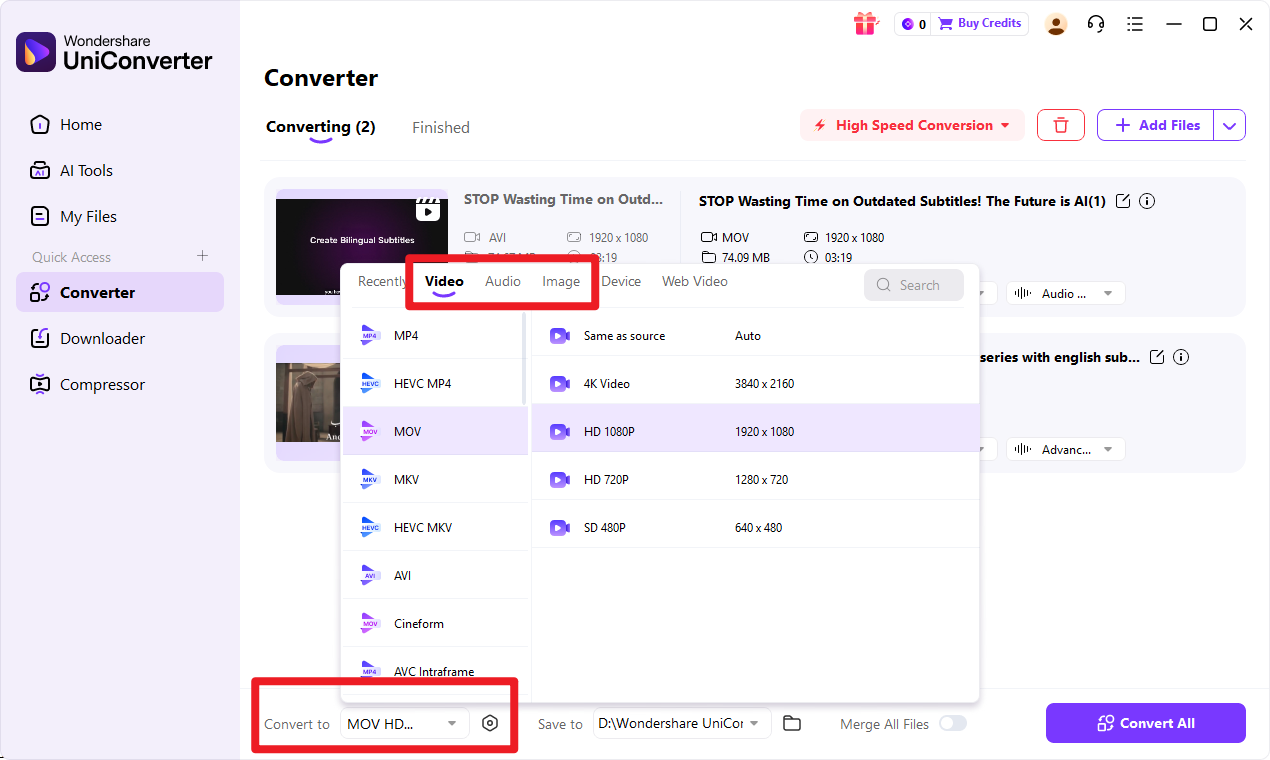
Once your video is loaded, click on the Output Format menu at the bottom of the window. This will open a new panel with format options. Navigate to the Video tab. Here, you can select a container format that supports VP9, such as WebM or MP4. After selecting the container and a desired resolution, click the small Edit (pencil) icon next to the resolution to open the detailed settings. In the settings window, find the Encoder dropdown menu and select VP9. Click Create to save your new custom format.
Step 4: Start the Conversion
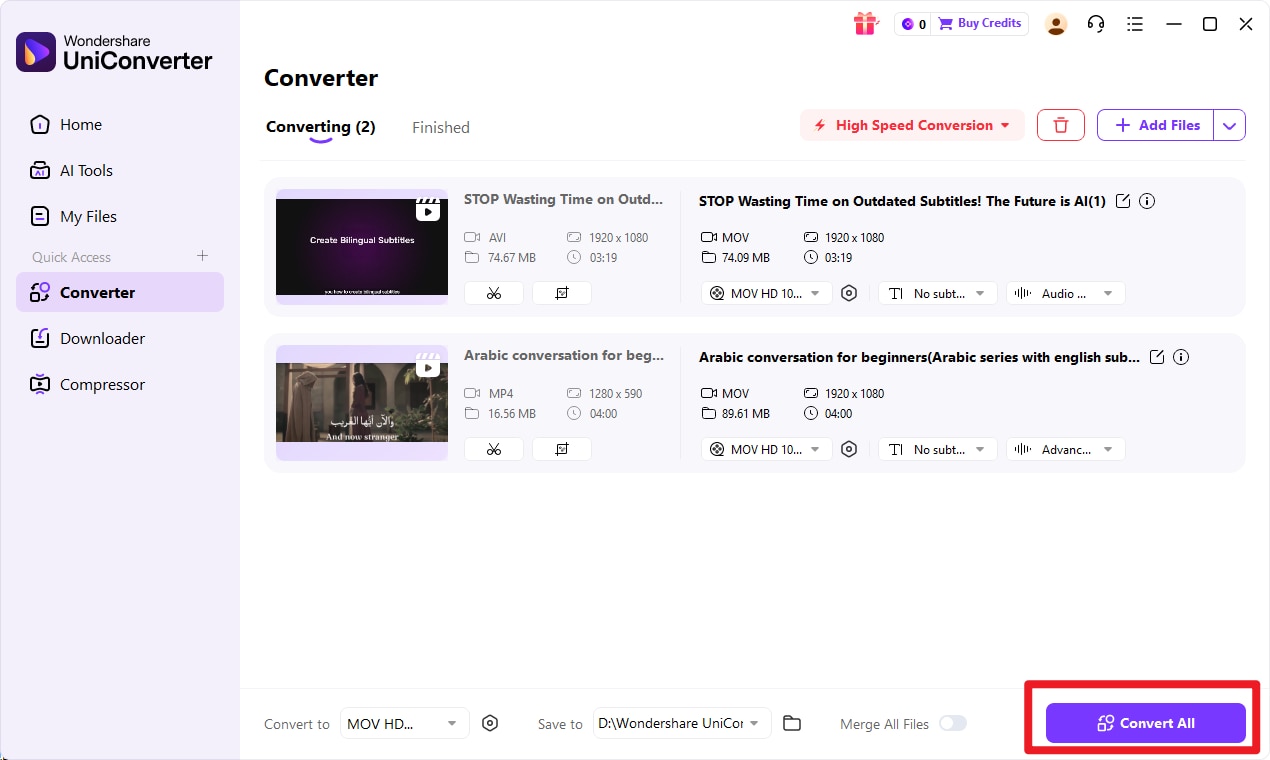
Before starting, you can specify where you want to save the converted file. Use the File Location menu at the bottom of the interface to choose your desired output folder. Once everything is set, click the Convert button next to the individual file or the Start All button in the bottom-right corner to process all files in the queue.
Wondershare UniConverter will now begin converting your VP8 file to VP9. Thanks to its high-speed conversion technology, the process will be completed quickly. Once finished, you can find your new, high-efficiency VP9 video file by navigating to the Finished tab at the top of the screen or by opening the output folder you selected in the previous step.

Go Beyond Simple Video Conversion
Conclusion
The verdict in the VP8 vs VP9 comparison is clear: for nearly all modern video applications, VP9 is the vastly superior codec. Its remarkable compression efficiency allows it to deliver higher-quality video at significantly lower bitrates, making it the standard for high-definition streaming and cost-effective video storage. While VP8 maintains a niche role in legacy real-time communication, its time as a primary codec for on-demand video has passed.
For content creators, developers, and businesses, the recommendation is straightforward: use VP9 for all new high-quality video projects to ensure the best performance, quality, and future compatibility. If you are working with an existing library of VP8 files, upgrading them to VP9 is a worthwhile investment. To handle this and other video management tasks with ease, a versatile and reliable tool like Wondershare UniConverter is essential. It streamlines the conversion process, making it simple to keep your video library optimized and up-to-date.
FAQs
-
1. Is VP9 significantly better than VP8?
Yes, absolutely. VP9 offers up to 50% better compression efficiency than VP8. This means it can provide the same video quality at half the bitrate or significantly better quality at the same bitrate. This makes it far superior for high-quality streaming and for saving storage space. -
2. Does YouTube still use VP8?
While YouTube was an early adopter of VP8 for its WebM project, the platform has largely transitioned to VP9 for the majority of its video content, especially for resolutions of 720p and higher. For newer uploads and popular videos, YouTube is also increasingly using the even more advanced AV1 codec, but VP9 remains a dominant force on the platform. -
3. Is VP9 completely free to use?
Yes, VP9 is an open and royalty-free video coding format. It was developed by Google under a license that allows anyone to use it without paying licensing fees, which has been a major factor in its widespread adoption across the web. -
4. Can my computer play VP9 videos?
Most likely, yes. All modern web browsers, including Google Chrome, Mozilla Firefox, Microsoft Edge, and recent versions of Safari, have built-in support for VP9 playback. Furthermore, most smartphones, smart TVs, graphics cards, and processors manufactured in the last several years include dedicated hardware decoding for VP9, which ensures smooth and efficient playback without draining your battery or overtaxing your CPU.
