
In the world of digital video, codecs are the unsung heroes that make streaming, recording, and sharing possible. They compress massive video files into manageable sizes without sacrificing too much quality. Among the dozens of codecs available, the VP8 vs MPEG debate is a significant one, representing a fundamental clash between open-source accessibility and industry-standard dominance. Choosing the right codec is a critical decision that can impact everything from playback compatibility and streaming performance to development costs and licensing headaches. Whether you're a web developer, a content creator, or simply a tech enthusiast, understanding the strengths and weaknesses of these two powerhouses is essential.
This guide provides a comprehensive comparison between VP8 and the widely used MPEG family (specifically H.264/AVC). We'll break down their technical differences, explore their ideal use cases, and help you determine which one is the right fit for your project in 2026.
In this article:
Part 1. What is VP8? What is MPEG?
Before we can compare them, it's crucial to understand what each codec is and where it comes from. It's also important to distinguish between a codec (the algorithm that compresses/decompresses data) and a container format (the file wrapper like .mp4 or .webm that holds the video, audio, and metadata).
What is VP8?
VP8 is an open and royalty-free video compression format originally developed by On2 Technologies, which was later acquired by Google in 2010. Following the acquisition, Google released the codec under a free license, making it a cornerstone of its open web media project.
As the successor to VP7, VP8 was specifically designed to provide high-quality video compression for web-based streaming and real-time communication. It is the primary video codec used within the WebM container format, where it is typically paired with the Vorbis or Opus audio codecs. Its open-source nature makes it a favorite among developers who want to avoid the licensing fees and restrictions associated with other popular codecs.
What is MPEG?
MPEG, which stands for the Moving Picture Experts Group, is not a single codec but a family of standards for audio and video compression. This group is responsible for developing some of the most influential and widely adopted media formats in history, including:
- MPEG-1: Famous for bringing video to the Video CD (VCD).
- MPEG-2: The standard for DVD video and over-the-air digital television.
- MPEG-4: A broad collection of standards that includes many parts.
When people discuss "MPEG" in a direct comparison with VP8, they are almost always referring to MPEG-4 Part 10, more commonly known as H.264 or Advanced Video Coding (AVC). H.264/AVC is arguably the most dominant video codec in the world. It is the industry standard for Blu-ray discs, digital broadcasting, and the vast majority of online video streaming services, thanks to its excellent compression efficiency and near-universal hardware support.
Part 2. Quick Comparison Table
To get a clear overview of how VP8 and MPEG (H.264) stack up against each other, here is a quick side-by-side comparison of their key features.
| Feature | VP8 | MPEG (H.264/AVC) |
| Licensing | Royalty-free and open-source. | Requires licensing fees for commercial distribution and use, managed by MPEG LA. |
| Compression Efficiency | Good. Offers solid compression, especially for web and real-time applications. | Excellent. Often considered slightly more efficient, providing better quality at lower bitrates. |
| Quality | High quality. Very competitive with H.264, particularly at higher bitrates. | Industry standard for high-definition video, known for its sharpness and clarity. |
| Compatibility | Strong native support in web browsers like Chrome, Firefox, and Opera. | Near-universal hardware and software support across smartphones, TVs, cameras, and editing software. |
| Primary Use Case | WebRTC (real-time communication), HTML5 video, and open-source projects. | Digital broadcasting, Blu-ray discs, and most major online streaming platforms (e.g., YouTube, Netflix). |
Part 3. VP8 vs MPEG: Which One Is Better?
The question of which codec is "better" doesn't have a simple answer. The best choice depends entirely on your specific needs, priorities, and the context in which the video will be used. Let's dive deeper into the three most important factors: licensing, performance, and compatibility.
Licensing and Cost: The Royalty-Free Advantage of VP8
The most significant difference between VP8 and H.264 lies in their licensing models. VP8 is completely free to use. Google released it under a BSD-like license, which means developers and manufacturers can implement it in their software and hardware without paying any royalties or worrying about patent infringement lawsuits. This makes VP8 an incredibly attractive option for open-source projects, startups, and any company looking to minimize costs and avoid legal complexities.
In stark contrast, H.264 is encumbered by patents held by numerous corporations. The use of H.264 in commercial products requires obtaining a license from MPEG LA, a patent pool administrator. These licenses can involve substantial fees, especially for hardware manufacturers and large-scale software distributors. While end-users streaming content generally don't have to worry about this, the cost is passed down through the ecosystem, influencing which codecs device makers and software developers choose to support.
Compression and Video Quality: A Close Contest
At their core, both VP8 and H.264 use similar block-based transform coding techniques to compress video data. For years, H.264 was widely regarded as having a slight edge in compression efficiency, meaning it could deliver slightly better video quality at the same bitrate, or the same quality at a slightly lower bitrate. This efficiency is a key reason for its dominance in bandwidth-sensitive applications like streaming and broadcasting.
However, modern VP8 encoders have become highly optimized and are extremely competitive. For most web-based applications, the difference in quality between VP8 and H.264 at comparable bitrates is often negligible to the average viewer. VP8 performs exceptionally well in real-time scenarios where low latency is critical, which is why it's a foundational part of WebRTC. While H.264 may still have a technical advantage in some high-bitrate, professional scenarios, VP8 delivers more than enough quality for the vast majority of online video needs.
Compatibility and Adoption: MPEG's Widespread Reach
This is where H.264 truly shines. Thanks to its long-standing status as an industry standard, H.264 enjoys unparalleled support. Nearly every modern device with a screen—from smartphones and tablets to smart TVs and gaming consoles—has dedicated hardware decoders for H.264. This hardware acceleration means playback is incredibly smooth and power-efficient, which is crucial for battery-powered devices.
VP8, on the other hand, has its stronghold in the web browser ecosystem. It is natively supported by Google Chrome, Mozilla Firefox, and Opera, making it an excellent choice for HTML5 video that plays directly in the browser without plugins. It is also the mandatory video codec for WebRTC, the technology powering real-time video chat in apps like Google Meet, Discord, and Facebook Messenger.
Despite its web dominance, VP8 lacks the universal hardware support of H.264. This can lead to compatibility issues when you try to play a VP8 file (typically in a `.webm` container) on a device like an iPhone or in certain professional video editing software. For situations that demand universal playback, converting your video to an MPEG-compatible format is often necessary. For such conversion needs, a reliable tool like Wondershare UniConverter is an excellent solution for ensuring your videos play anywhere, bridging the gap between the two ecosystems.
Part 4. Use Cases for VP8 and MPEG
Understanding the ideal applications for each codec can help you make a practical decision.
When to Use VP8
Choose VP8 when your project aligns with these scenarios:
- Real-Time Communication (RTC): If you are building a video conferencing, live chat, or web-based communication application, VP8 is the standard. As the mandatory-to-implement codec for WebRTC, it ensures broad compatibility across browsers for real-time video streams.
- HTML5 Web Video: When you want to embed video directly into a website and prioritize open standards and cost-free implementation, VP8 (in a WebM container) is a perfect choice. It allows you to deliver high-quality video to a massive audience using Chrome and Firefox without any licensing fees.
- Open-Source Applications: For developers creating free software or tools, VP8 provides a powerful, unencumbered video codec. Its royalty-free nature aligns perfectly with the ethos of the open-source community.
When to Use MPEG (H.264)
H.264 remains the go-to choice for a wide range of traditional and professional applications:
- Professional Video Production: From recording on DSLRs and mirrorless cameras to editing in Adobe Premiere Pro or Final Cut Pro, H.264 is the de facto standard in professional workflows due to its quality, efficiency, and widespread software support.
- Streaming Services: Major platforms like YouTube, Netflix, and Vimeo rely heavily on H.264 to deliver content to billions of devices. Its broad compatibility ensures that their videos will play smoothly on virtually any screen.
- Physical Media and Broadcasting: H.264 is the required codec for high-definition content on Blu-ray discs. It is also the standard for most modern over-the-air digital television systems, such as DVB (Europe) and ATSC (North America).
Part 5. Step-by-Step Guide to Convert VP8 to MPEG Using UniConverter
When you need to switch between codecs for compatibility, editing, or archival purposes, a dedicated video converter is essential. Wondershare UniConverter is a powerful and intuitive tool that simplifies this process, supporting a vast range of formats including VP8 (WebM) and MPEG (MP4/H.264). Here is how you can easily convert your files.
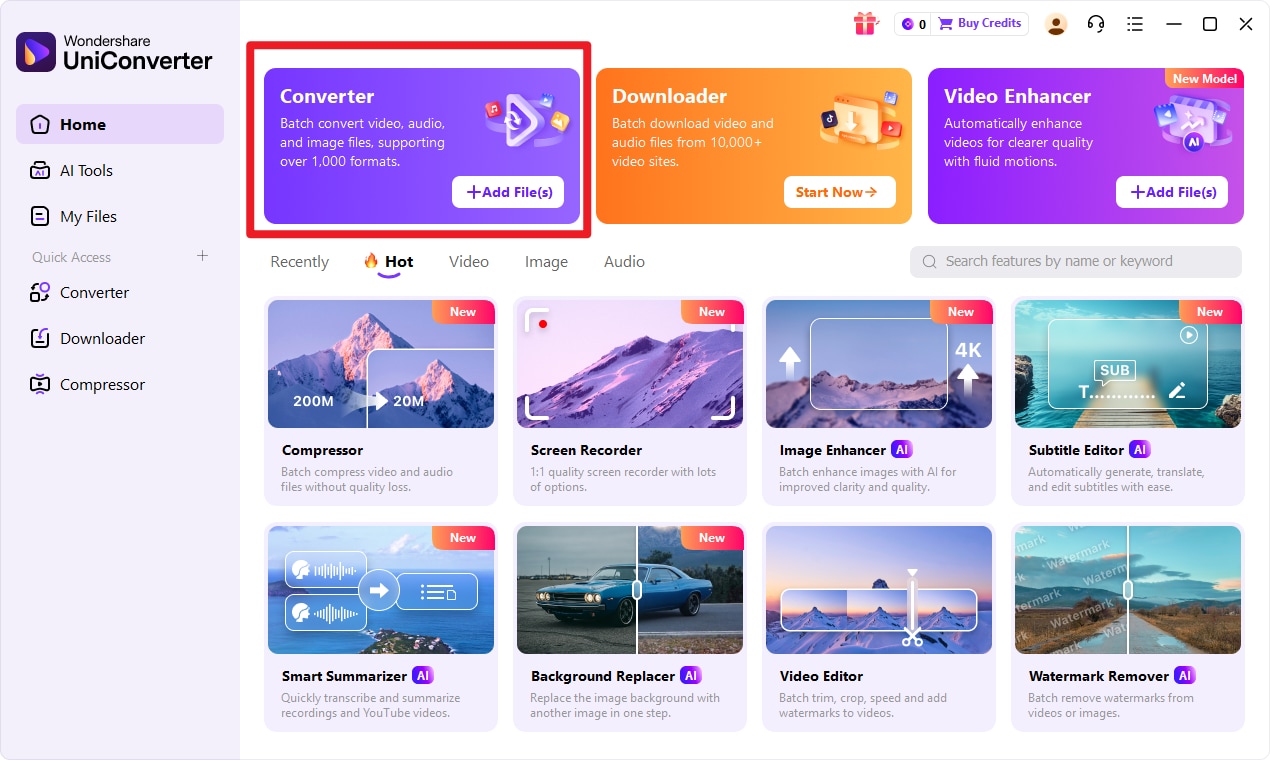
Step 1: Choose Converter in UniConverter
Launch Wondershare UniConverter on your computer. On the main interface, navigate to the left-side menu and select the Converter tab to enter the video conversion module.
Step 2: Add Files to UniConverter
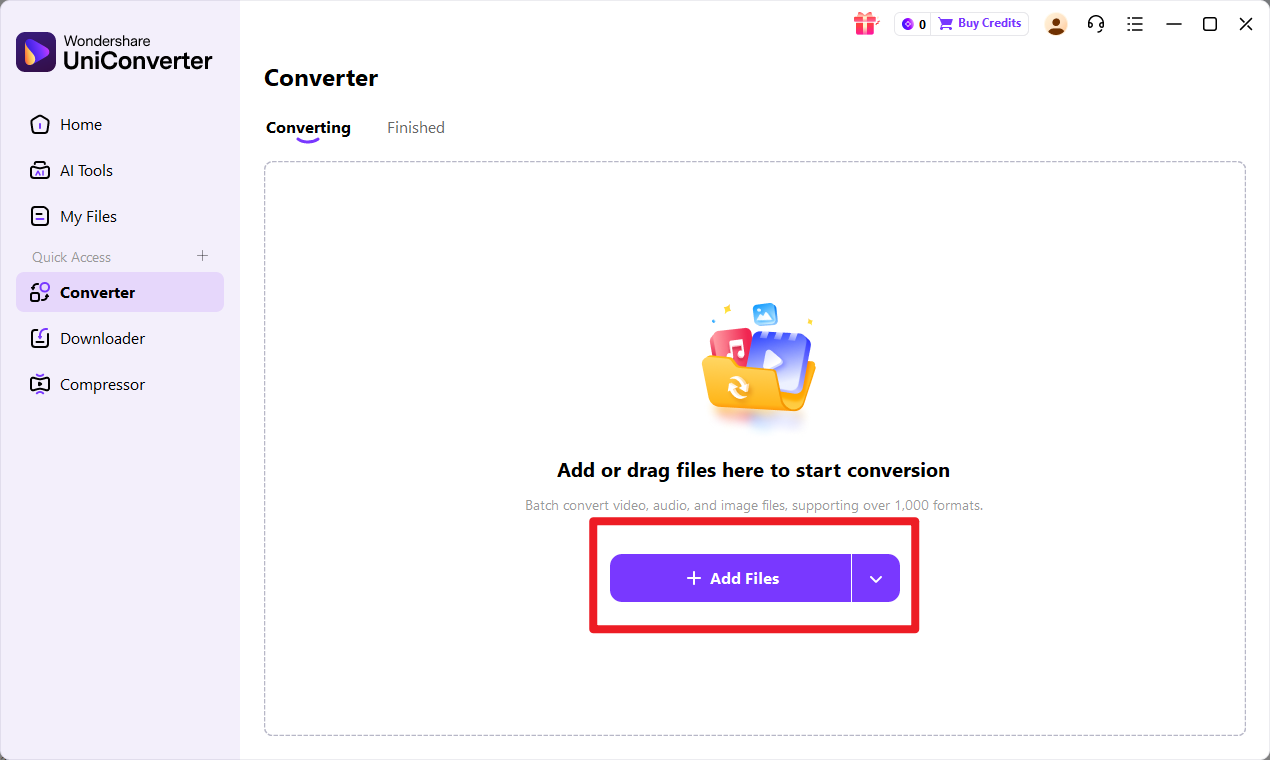
Click the Add Files icon in the center or top-left corner to browse and import your input format files. Alternatively, you can simply drag and drop your video files directly into the converter window. UniConverter supports batch conversion, so you can add multiple files at once.
Step 3: Choose Output Format
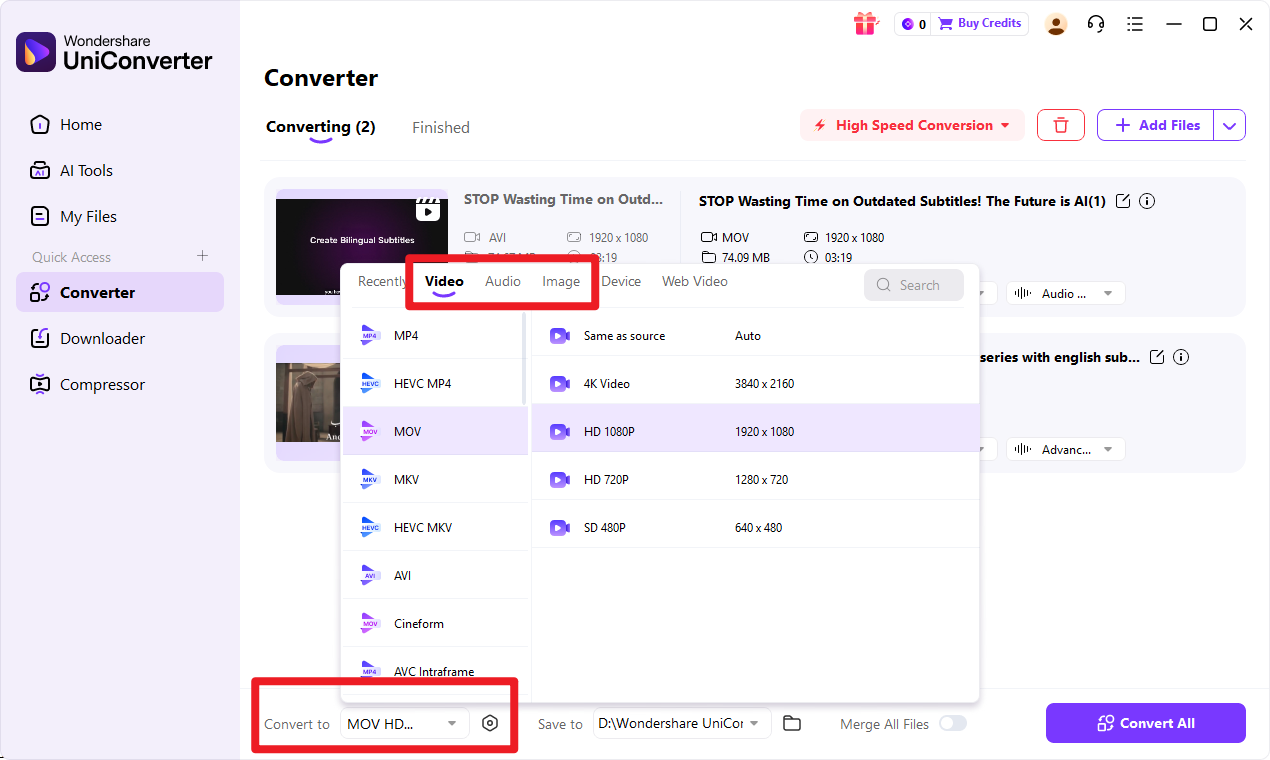
At the bottom of the window, click on the Output Format option. This will open a new pop-up window. Go to the Video tab, select your desired target format (e.g., MP4) from the list on the left, and then choose a resolution on the right.
Step 4: Start the Conversion
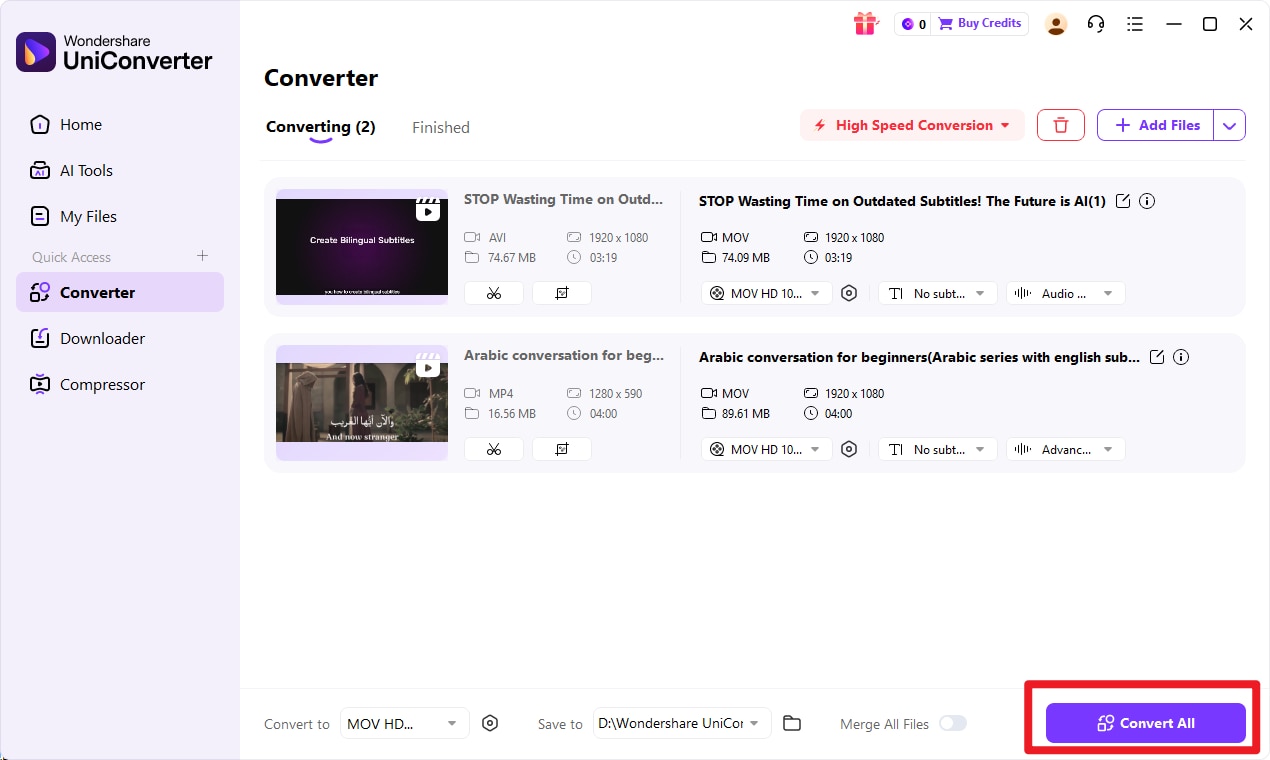
Before starting, you can select a destination folder for your converted files by clicking the File Location option at the bottom. Once everything is set, click the Start All button in the bottom-right corner to begin the conversion process. UniConverter will efficiently convert your files to the target format while maintaining high quality.

Go Beyond Simple Video Conversion
Conclusion
The VP8 vs MPEG discussion highlights a core dynamic in the tech world: the battle between open, royalty-free standards and established, commercially licensed ones. VP8 has proven itself as the champion for the modern web, powering real-time communication and offering a cost-free solution for developers. On the other hand, MPEG's H.264 codec remains the undisputed king of compatibility, dominating professional production, major streaming services, and physical media with its universal hardware support and excellent compression.
Ultimately, the "better" codec is the one that best fits your specific needs, budget, and target platform. If your priority is open-source web development or RTC, VP8 is the clear winner. If you need maximum compatibility for broadcasting or professional distribution, H.264 is the safer bet. And for any situation that requires a bridge between these two powerful ecosystems, Wondershare UniConverter provides a fast, reliable, and simple solution to convert your video files, ensuring they are ready for any device or platform.
FAQs
-
1. Is VP8 better than H.264?
Neither codec is definitively "better" overall; their strengths lie in different areas. VP8 is better for royalty-free web applications and is the standard for WebRTC. H.264 is often considered better for achieving the highest compatibility across the widest range of hardware devices and for professional video workflows. -
2. Is VP8 completely free to use?
Yes, VP8 is an open-source codec distributed under a royalty-free license. This means you can implement and distribute it in your software or hardware products without paying licensing fees to Google or any other entity. -
3. Why would I need to convert VP8 to MPEG?
The most common reason is for compatibility. You might need to convert a VP8 file (which is usually inside a .webm container) to an MPEG format like MP4 (using the H.264 codec) to play it on a device with no native VP8 support, such as an older smart TV, a game console, or an Apple device. You may also need to convert it for use in professional video editing software that has a more robust workflow for MPEG-4 files. -
4. Can I play VP8 files on my iPhone?
Native support for VP8 on iOS and in the Safari browser is limited and often confined to specific web applications that use WebRTC. For general playback in the Photos app or Files app, an MPEG-4 (H.264) file is far more reliable and universally supported. Using a converter like Wondershare UniConverter to change the format from WebM (VP8) to MP4 (H.264) is the easiest way to solve this playback issue.
