
For modern cinematographers and videographers, shooting in a logarithmic (log) profile is standard practice for maximizing a camera's potential. Log recording captures a wider dynamic range, preserving crucial details in the brightest highlights and darkest shadows. This results in a flat, desaturated image that provides a flexible canvas for color grading in post-production. Among the most popular log profiles are Panasonic's V-Log and Sony's S-Log. The V-Log vs S-Log debate is a common one, as creators weigh the pros and cons of each ecosystem. Understanding the fundamental differences between these two gamma curves is essential for making informed decisions, whether you're choosing a new camera or selecting the right profile for your next project.
In this article, we will provide a comprehensive comparison to help you navigate this technical landscape.
- What are V-Log and S-Log?
- A Quick Comparison Table
- A Detailed Breakdown of V-Log vs S-Log
- Use Cases for Each Profile
- How to Convert and Standardize Log Footage
Part 1. What is V-Log? What is S-Log?
Before diving into a head-to-head comparison, it's important to understand what each log profile is and what it's designed to do. Both are tools created by their respective manufacturers to get the most out of their camera sensors.
What is V-Log?
V-Log is a logarithmic gamma curve developed by Panasonic for its lineup of Lumix mirrorless cameras and Varicam cinema cameras. Its primary purpose is to capture the maximum dynamic range that the camera's sensor is capable of. When you shoot in V-Log, the camera records a very flat, low-contrast, and desaturated image. While this footage looks unappealing straight out of the camera, it contains a vast amount of information in the highlights and shadows that would be lost in a standard video profile. This wealth of data gives colorists immense flexibility to manipulate the image, push and pull colors, and achieve a specific cinematic look during the color grading process.
What is S-Log?
S-Log is Sony's proprietary logarithmic gamma curve, developed for its Alpha series mirrorless cameras and its professional Cinema Line cameras. Over the years, Sony has released different versions, with S-Log2 and S-Log3 being the most prominent. S-Log3 is the most common and advanced variant used in modern Sony cameras. It was specifically designed to mimic the tonal response of scanned film, providing a wide gamut and a large tonal range that is ideal for post-production. Similar to V-Log, footage shot in S-Log3 appears flat and washed out, but it holds an incredible amount of data, allowing for extensive color grading and creative control.
Part 2. Quick Comparison Table
For a high-level overview, this table summarizes the key distinctions between Panasonic's V-Log and Sony's S-Log3, the most commonly used version of S-Log today.
| Feature | V-Log | S-Log |
| Developer | Panasonic | Sony |
| Primary Associated Cameras | Panasonic Lumix GH series, S series | Sony Alpha series (a7S, a7R), FX series |
| General Dynamic Range | Often claims up to 15+ stops (V-Log L is a variation with less range) | S-Log3 claims 14+ stops of dynamic range |
| Common Base ISO | Often has a higher base ISO (e.g., 640/4000 on the S1H) | S-Log3 often has a higher base ISO (e.g., 800/12800 on the A7S III) |
| Color Science Perception | Often praised for pleasing and accurate skin tones and colors | Historically seen as having a "Sony look" but has improved significantly; highly flexible |
Part 3. V-Log vs S-Log: Which One Is Better?
The question of "which is better" is complex, as the answer often depends on the specific application, the user's skill level, and their creative goals. Let's break down the comparison into four critical aspects.
Dynamic Range and Highlight Handling
Both V-Log and S-Log3 are designed to maximize dynamic range, but they handle it differently, especially in the highlights. V-Log is often praised for its smooth and natural highlight roll-off. This means that as parts of your image approach pure white, the transition is gradual and pleasing, avoiding harsh clipping. This can be particularly beneficial when shooting scenes with bright skies, windows, or practical light sources.
S-Log3 also offers an impressive dynamic range, but its highlight handling can sometimes be perceived as slightly more digital or abrupt if not exposed correctly. However, S-Log3 excels at distributing its data, allocating more information to the shadow and mid-tone areas. When properly exposed, it can retain an incredible amount of detail across the entire luminance range. The choice here often comes down to a preference for how the camera renders the brightest parts of an image.
Color Science and Skin Tones
Color science is one of the most debated topics in the camera world. Panasonic's V-Log is widely regarded for its excellent color science, particularly when it comes to rendering skin tones. Many users find that with a standard conversion LUT (Look-Up Table), V-Log footage produces natural, pleasing, and accurate skin tones with minimal effort. The colors feel rich and true to life, providing a fantastic starting point for a grade.
Sony's color science has evolved significantly over the years. While older versions of S-Log were sometimes criticized for having a green or magenta cast, modern cameras with S-Log3 have made huge strides. S-Log3 is incredibly flexible and can be graded to achieve almost any look imaginable. However, it may require more work from the colorist to dial in perfect skin tones compared to V-Log. For professionals who want a blank slate to build their look from scratch, S-Log3's flexibility is a major advantage. For those who want great color with less effort, V-Log often has the edge.
Noise Performance and Shadow Detail
Log shooting inherently involves higher base ISOs, which can introduce noise if not managed properly. A crucial technique for both profiles is "Exposing To The Right" (ETTR), which means overexposing the image slightly without clipping the highlights. This pushes the shadow information up the luminance scale, away from the camera's noise floor.
S-Log3 is particularly sensitive to underexposure. If you shoot S-Log3 without enough light, the shadows can become very noisy and "muddy," making them difficult to clean up in post. When exposed correctly (typically 1.5 to 2 stops over middle gray), S-Log3 delivers clean, detailed shadows. V-Log is generally considered more forgiving in this regard. While it also benefits from ETTR, underexposed V-Log footage tends to have a finer, more manageable noise pattern that is easier to correct. This can make V-Log a safer choice for run-and-gun situations where you may not have perfect control over your lighting.
Post-Production and Grading Flexibility
Both Panasonic and Sony provide official LUTs to convert their log footage to a standard Rec.709 color space, which is what we see on most monitors and TVs. These LUTs provide a good starting point for grading.
S-Log3 is often considered the more flexible profile for heavy color grading. Its logarithmic curve is designed to give colorists maximum control, making it a favorite in high-end productions like feature films and commercials where a highly stylized look is desired. You can push and pull S-Log3 footage to extremes and still retain a usable image.
V-Log is also very flexible, but it's sometimes described as being slightly more "opinionated" with its color. This isn't necessarily a bad thing; its pleasing color science means you can achieve a great look very quickly. It's an excellent choice for projects with tight deadlines, such as corporate videos, documentaries, or web content, where you need a professional look without spending hours on grading.
Part 4. Use Cases for V-Log and S-Log
The best log profile for you is ultimately tied to your camera system and project requirements.
When to Choose V-Log
V-Log is the natural and ideal choice for anyone invested in the Panasonic Lumix ecosystem (like the GH or S series). It excels in projects where color accuracy and pleasing aesthetics are important right from the start. This makes it perfect for corporate videos, event coverage, documentaries, and wedding films where you need beautiful, natural-looking footage with a relatively quick turnaround in post-production. Its forgiving nature with exposure also makes it a reliable choice for solo shooters and fast-paced environments.
When to Choose S-Log
S-Log is the standard for the vast ecosystem of Sony camera users, from the popular Alpha series to the high-end Venice cinema camera. It is the go-to profile for projects that demand significant creative color grading and a unique cinematic look. Indie filmmakers, music video directors, and commercial DPs often prefer S-Log3 for its immense flexibility. If your workflow involves a dedicated colorist and you want to craft a highly stylized visual signature, S-Log provides the perfect malleable foundation.
Managing Mixed-Camera Shoots
A common challenge in the industry is working on a project that uses cameras from different manufacturers—for example, a Panasonic S1H as the A-cam and a Sony A7S III as the B-cam. This means you'll have V-Log footage and S-Log footage in the same timeline. Matching these two profiles can be a complex and time-consuming task for a colorist, requiring precise color space transforms and careful adjustments to achieve a consistent look.
To simplify this workflow, it's often beneficial to standardize all your clips into a single, high-quality intermediate format before you even begin editing. A versatile video converter like Wondershare UniConverter can be invaluable for this task. By converting all your V-Log and S-Log files to a consistent format like ProRes or DNxHD, you ensure that all your footage plays nicely together in your editing timeline, saving you headaches and streamlining the post-production process.
Part 5. Step-by-Step Guide to Convert Video Files Using UniConverter
When working with different log formats, you often need to convert your files to a standardized intermediate codec for a smoother editing experience. UniConverter simplifies this process. Here is how you can convert your video files in four simple steps.
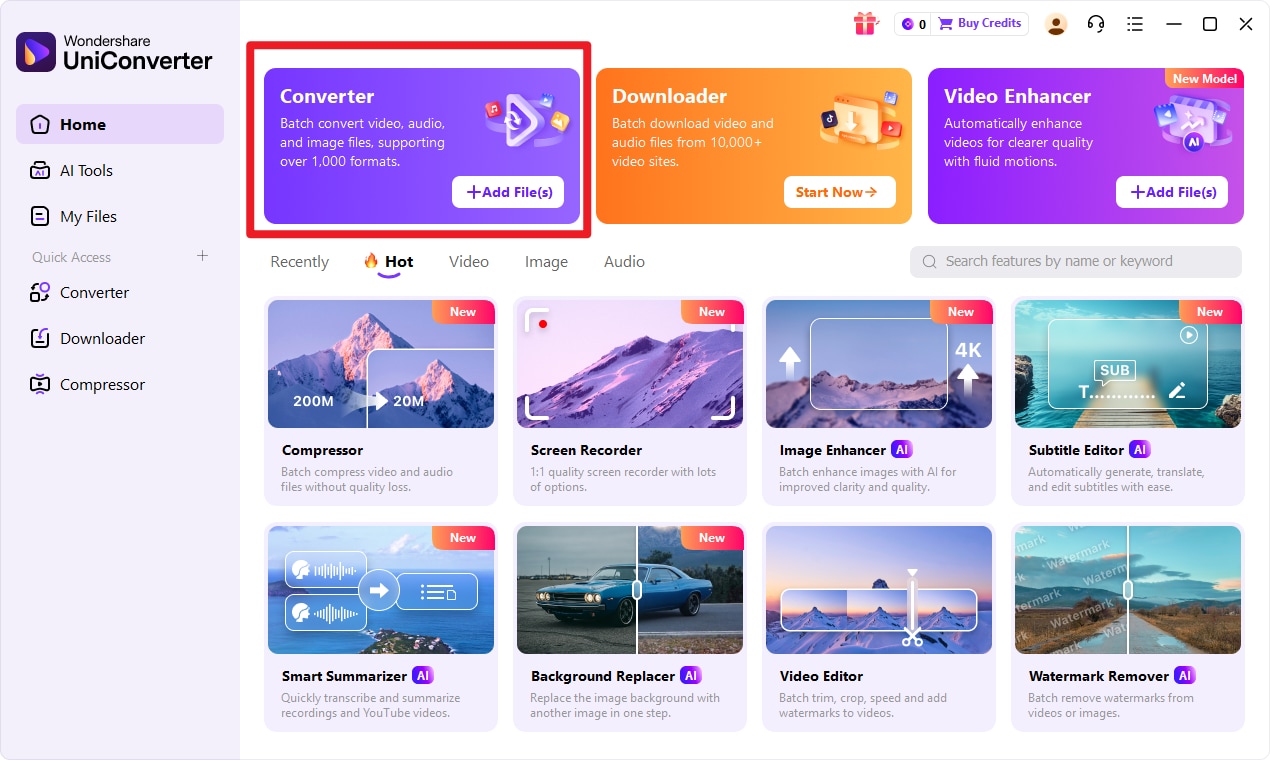
Step 1. Choose Converter in UniConverter
Launch Wondershare UniConverter on your computer. On the main interface, select the Converter tab from the left-hand menu.
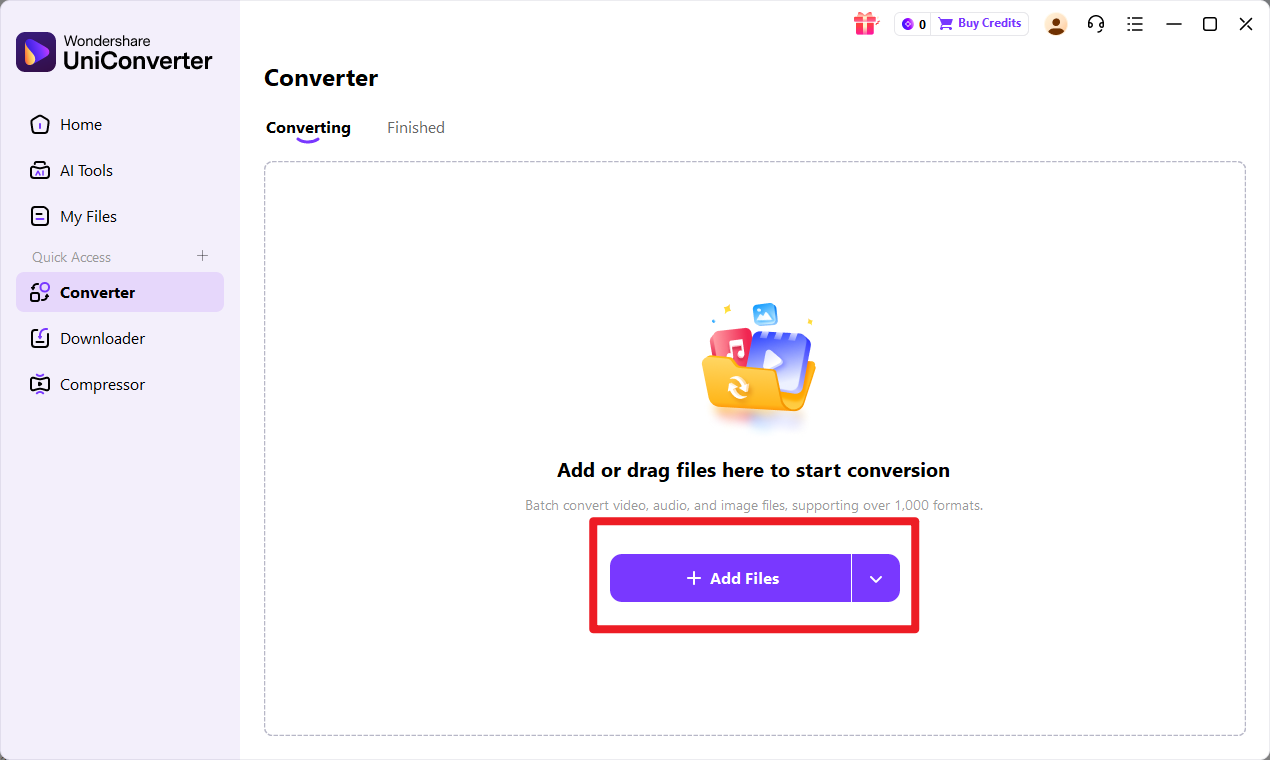
Step 2. Add Files to UniConverter
Click on the Add Files icon or drag and drop your video files with the input format directly into the converter window. You can add multiple files to perform a batch conversion.
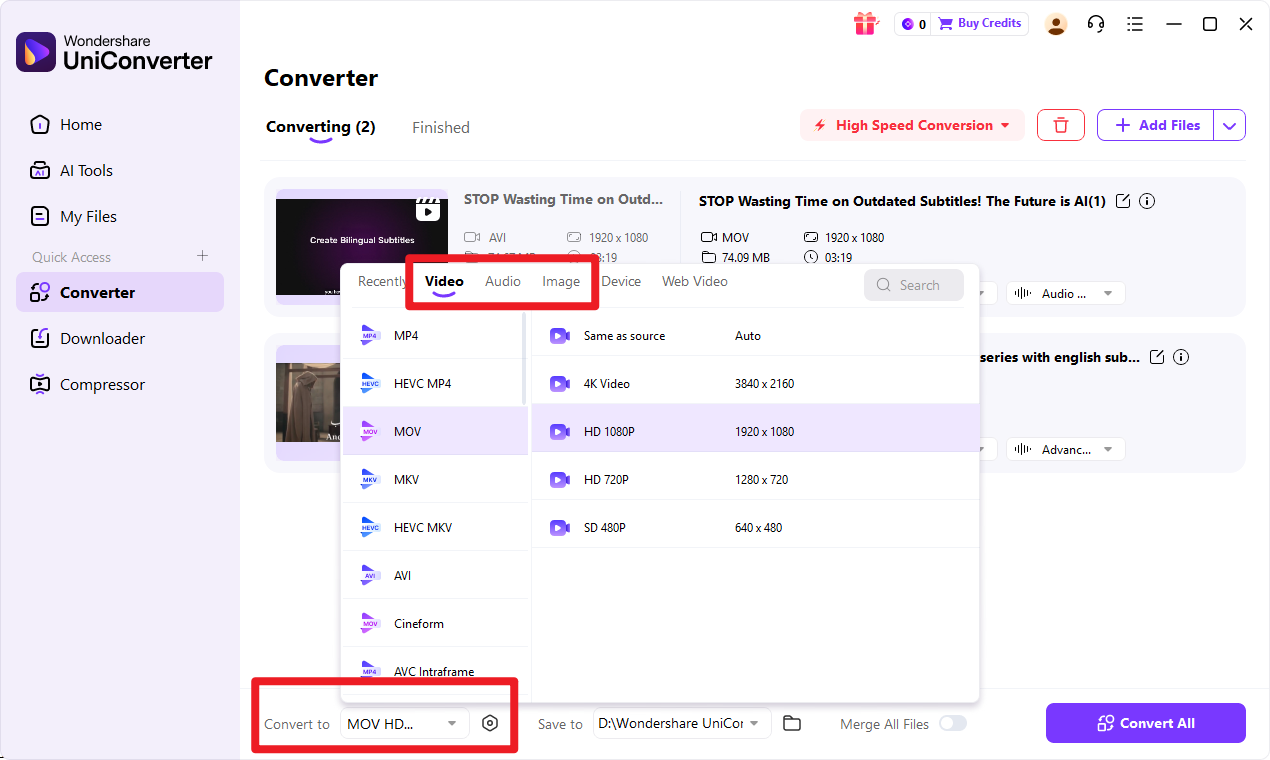
Step 3. Choose Output Format
Click on the Output Format menu at the bottom of the window. From the pop-up dialog, select the Video tab and choose your desired target format and resolution from the list.
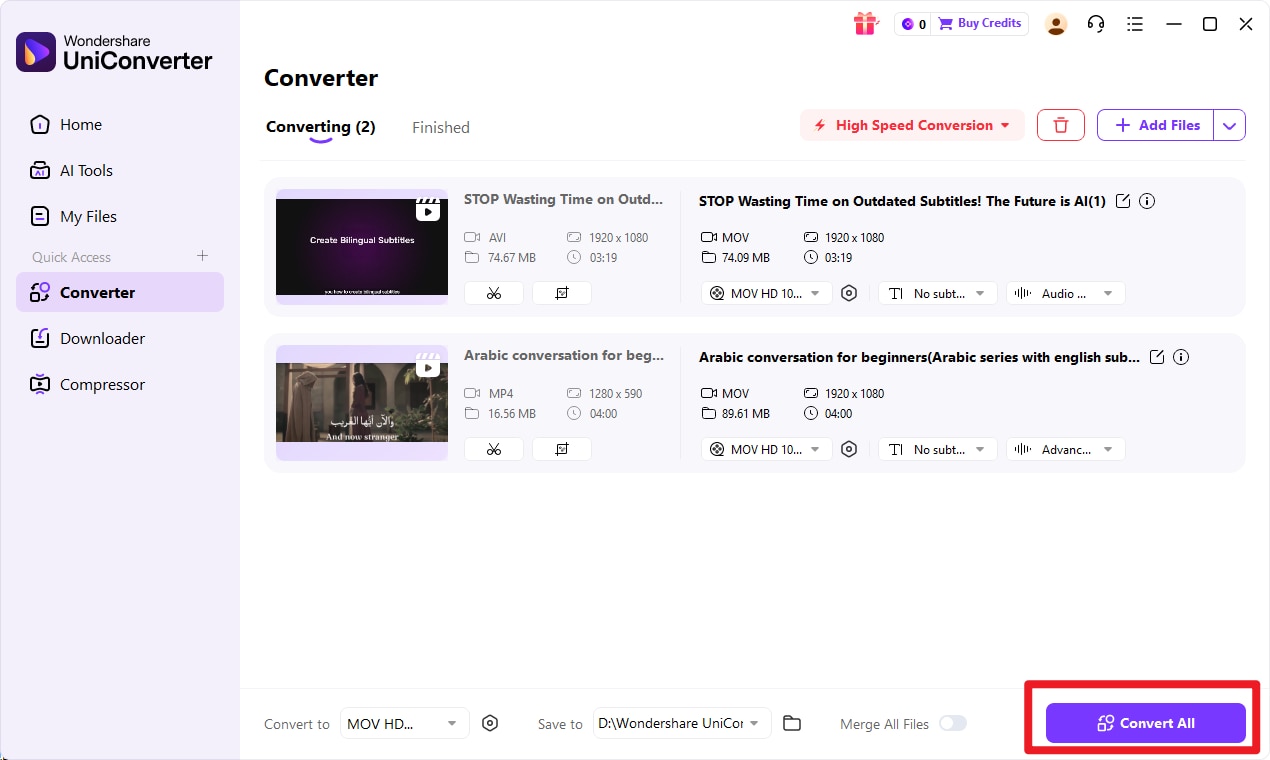
Step 4. Start the Conversion
Select a file location for your converted files in the File Location field. Finally, click the Start All button to begin the conversion process for all your files.

Go Beyond Simple Video Conversion
Conclusion
In the V-Log vs S-Log debate, it's clear there is no single winner. The best choice is fundamentally tied to your camera system—Panasonic for V-Log and Sony for S-Log. Each profile is meticulously engineered to extract the maximum performance from its corresponding sensor. The decision is less about which profile is objectively superior and more about which ecosystem and workflow philosophy aligns with your creative needs.
V-Log is often lauded for its beautiful and accurate color science, especially with skin tones, providing a fantastic result with minimal effort. S-Log3, on the other hand, offers immense flexibility and is a blank canvas for professional colorists to craft unique and stylized looks. Ultimately, understanding the nuances of each profile, particularly regarding proper exposure techniques, is the key to unlocking their full potential. For videographers working in complex, multi-camera environments, tools like UniConverter become essential for bridging the gap between different formats, creating a unified and efficient post-production workflow.
FAQs
-
1. Can I put S-Log on a Panasonic camera?
No. Log profiles are proprietary software developed by camera manufacturers for their specific sensors and hardware. They are deeply integrated into the camera's image processing pipeline. You can only use V-Log on supported Panasonic cameras and S-Log on supported Sony cameras. -
2. Is S-Log3 always better than S-Log2?
S-Log3 is designed to offer more shadow detail and behave more like a film scan, making it preferred by many professional colorists for its flexibility. However, it can be noisier in the shadows if underexposed. S-Log2 is more forgiving with exposure and allocates more data to the highlights, which can be a safer choice for beginners or in shooting scenarios with uncontrolled, bright lighting. -
3. Do I have to use a LUT with log footage?
While not technically mandatory, it is highly recommended. Log footage looks flat and desaturated by design. A technical LUT (or conversion LUT) correctly transforms the log footage into a standard color space (like Rec.709). This provides a "normal-looking" image on your monitor and serves as the proper starting point for your creative color grade. Without it, you would be grading "blind." -
4. What is the easiest way to match V-Log and S-Log footage?
The best practice starts during production by ensuring your cameras have consistent lighting, white balance, and proper exposure. In post-production, the professional method is to use color space transform (CST) tools within your editing or color grading software (like DaVinci Resolve). For a simpler, more streamlined workflow, you can use a tool like UniConverter to convert all your footage to a single high-quality intermediate format (like Apple ProRes) before you begin editing. This ensures all clips are in the same format and color space, making them much easier to match.
