
In this article
Part 1. What is TGA? What is XPM?
What Is TGA?
TGA, short for Truevision TARGA, is a raster image format that has long been associated with graphics production, video workflows, and game asset creation. It became especially popular in environments where image fidelity, alpha information, and texture handling were important.
One reason TGA remains relevant is its role in legacy and professional visual pipelines. Designers, 3D artists, and game developers have used it for textures, sprites, overlays, and archived image assets. Even in 2026, you may still encounter TGA files in older game engines, texture libraries, and production folders built around long-standing asset standards.
Typical TGA characteristics include:
- Raster-based image storage
- Good support for image-focused editing workflows
- Common use in textures, design assets, and visual media pipelines
- Practical handling of transparency-related workflows in many graphics tools
In simple terms, TGA is usually treated as an image-first format. If your priority is visual editing, texture work, or compatibility with graphics software, TGA often makes more sense than niche alternatives.
What Is XPM?
XPM stands for X PixMap. Unlike TGA, XPM is a text-based image format that is closely tied to Unix/Linux software environments and interface design. It is often used for icons, UI graphics, and lightweight image definitions inside software projects.
What makes XPM unusual is that it stores image data in a text-oriented structure rather than behaving like a typical binary image file. That makes it useful in specific development scenarios, especially when image assets need to be integrated into code-friendly or system-oriented environments.
XPM is most commonly associated with:
- Unix/Linux application icons
- Legacy software interface graphics
- Lightweight UI image storage
- Development environments that require XPM compatibility
Because of this structure, XPM is very different from standard image-editing formats. It may not feel natural for designers who expect visual-first editing, previews, and broad software support. However, for developers working in older or specialized systems, XPM can still be necessary.
Why Users Compare TGA and XPM
Users compare TGA and XPM because these formats solve different problems, yet they can appear in overlapping workflows such as legacy software maintenance, game asset handling, and platform-specific UI work.
The comparison usually comes down to three practical questions:
- Do you need an image format that is easier to edit visually?
- Do you need a format that matches a Linux or software development environment?
- Do you need to convert one format for better compatibility with your current tools?
TGA follows a more traditional image workflow, while XPM follows a more text-oriented image definition model. That difference affects editing convenience, sharing, software support, and long-term usability.
Part 2. Quick Comparison Table
TGA vs XPM Comparison Table
Here is a side-by-side comparison to make the main differences easier to scan.
| Feature | TGA | XPM |
| File type | Raster image format | Text-based image format |
| File structure | Binary-style image data | Text-oriented pixel definition |
| Typical use cases | Game textures, design assets, raster graphics | Unix/Linux icons, software UI assets, legacy interface graphics |
| Transparency support | Generally suitable for transparency-related image workflows | Supports transparency in a limited, environment-specific way |
| Compression behavior | May use simple compression methods, often focused on image fidelity | Not typically chosen for compression efficiency |
| Editing convenience | Easier in many graphics editors | Less convenient in mainstream image editors |
| Platform compatibility | Better in graphics and media tools | Better in Unix/Linux and specific development environments |
| File size tendency | Can be moderate to large depending on image data | May become inefficient depending on image complexity |
| Best for developers or designers | Better for designers and visual asset teams | Better for developers in niche system workflows |
| Ease of conversion | Usually straightforward with modern converters | Often needs dedicated format support |
| Recommended tool for conversion | Wondershare UniConverter | Wondershare UniConverter |
Key Takeaways from the Comparison Table
The table shows a clear pattern. TGA is generally better suited to image-centered workflows where visual quality, editing access, and asset handling matter most. XPM is more specialized and remains relevant mainly in software, Unix/Linux, and legacy interface use cases.
The most useful way to choose between them is not by asking which extension is "better" in the abstract. Instead, ask:
- Where will the file be opened?
- Who will work with it next: a designer or a developer?
- Does the target platform expect one format specifically?
- Is conversion the easiest route to broader compatibility?
For many users, end use matters more than file theory.
Part 3. TGA vs XPM: Which One Is Better?
When TGA Is Better
TGA is usually the better option when your workflow is centered on images rather than code. If you need to store texture files, preserve visual assets, or move raster graphics through editing software, TGA is often the more practical choice.
TGA is especially strong for:
- Texture and sprite pipelines
- Graphic design archives
- Raster-based asset creation
- Projects where image editing matters more than system embedding
If you expect to open, review, edit, and reuse the file visually, TGA usually offers a smoother experience.
When XPM Is Better
XPM is better when your project is tied to a Unix/Linux environment or legacy software stack that specifically relies on XPM-compatible assets. In these cases, the format's text-based structure can be useful for integration, portability in older systems, or software interface design.
XPM may be the right choice for:
- Linux or Unix application icons
- Legacy software maintenance
- Niche development environments
- Projects requiring text-based image definitions
If your workflow depends on system compatibility rather than visual editing convenience, XPM may be necessary even if it is less flexible in modern image tools.
Final Verdict: Which Format Should You Choose?
For broader graphics-oriented usage, TGA is usually the better choice. It fits image pipelines more naturally, works better with design-oriented workflows, and is easier to handle in many editing environments.
For software-specific, legacy, or Unix/Linux-centered requirements, XPM may be the correct format because the environment itself expects it.
So the real answer is simple:
- Choose TGA for visual asset workflows
- Choose XPM for specialized platform or development needs
- Choose conversion when compatibility across workflows becomes the bigger issue
Recommended Tool Position
If you need to move files between these formats, Wondershare UniConverter is a strong choice because it keeps the process simple and accessible. It is especially useful for beginners who do not want to research multiple niche converters just to handle one uncommon image type.
Beyond basic conversion, UniConverter is practical in real workflow situations because it supports:
- Efficient batch conversion for multiple files at once
- Image and video enhancement tools for improving media quality
- Flexible control over custom image or video resolution
- Adjustable audio parameters for users managing mixed media projects
For example, a content manager may need to convert a folder of legacy graphics in one go instead of processing files one by one. A designer preparing archived assets may want to standardize output quality for easier handoff. A technical writer working on software documentation may need screenshots, icons, and related media in more accessible formats. In broader production settings, UniConverter is also useful when teams handle both image and video materials and want one tool for conversion, enhancement, and export control.
Part 4. Use Cases for TGA and XPM
Common Use Cases for TGA
TGA remains common in image-centered and legacy visual workflows. It is often used where reliable raster output matters more than lightweight code integration.
Common TGA use cases include:
- Game textures and asset pipelines
- Graphic design archives
- High-quality raster workflows
- Visual assets requiring easier editing support
For instance, if an artist is preparing texture assets for an older game project or preserving design elements from a legacy production library, TGA is often easier to manage than a text-based format.
Common Use Cases for XPM
XPM is more niche, but it still has practical value in environments where Unix/Linux compatibility or software UI storage matters.
Common XPM use cases include:
- Linux and Unix application icons
- Legacy software graphics
- Text-based UI asset storage
- Development systems that rely on XPM support
For example, a developer maintaining an older Linux desktop utility may still encounter XPM icon files embedded in the application's asset structure. In that scenario, XPM is not just acceptable—it may be required.
Which Format Fits Your Scenario Best?
Here is a quick scenario-based guide:
- If you work in design, media, or texture editing, TGA is usually more practical.
- If you work in software maintenance, Unix/Linux systems, or legacy UI environments, XPM may be necessary.
- If you need broader accessibility across teams and tools, converting the file is often the best solution.
This is where UniConverter becomes useful again. Instead of forcing one team to adopt a niche format, you can convert input format to target format based on the receiving platform. That is often the fastest way to keep designers, developers, and content teams aligned.
Part 5. Step-by-Step Guide to Convert TGA to XPM Using UniConverter
Why Use UniConverter for This Conversion
Wondershare UniConverter is the recommended tool for converting input format to target format when you want a straightforward process and broad format handling in one place. It is especially helpful when niche image formats create compatibility issues across different software environments.
Another advantage is efficiency. If you are handling multiple old assets, UniConverter's batch processing can save time. If you are preparing media for different outputs, its flexible export settings let you customize image clarity and related output preferences more easily. And if your project also includes videos or audio, UniConverter can enhance visuals and adjust media parameters without forcing you to switch tools.
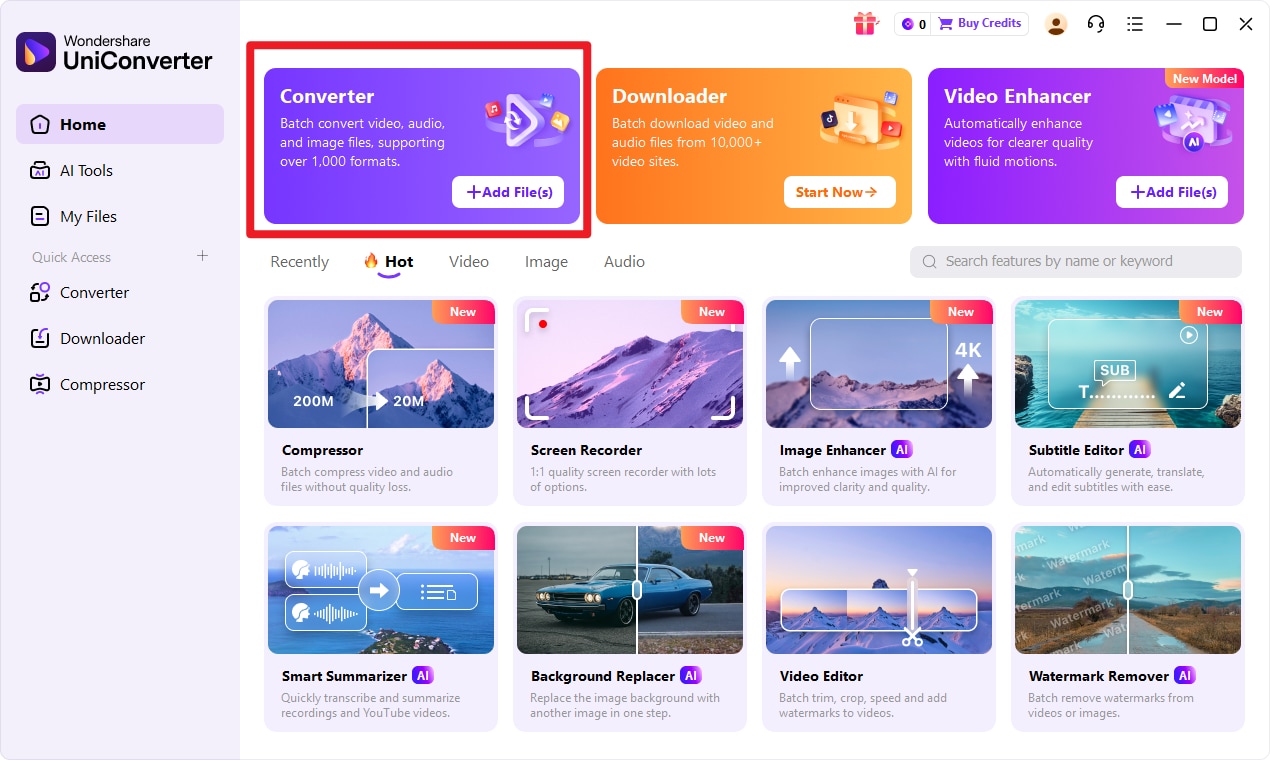
Step 1 Choose Converter in UniConverter.
After opening the software, go to the main interface and enter the Convert feature. This is the starting point for changing input format into target format in a simple and organized way.
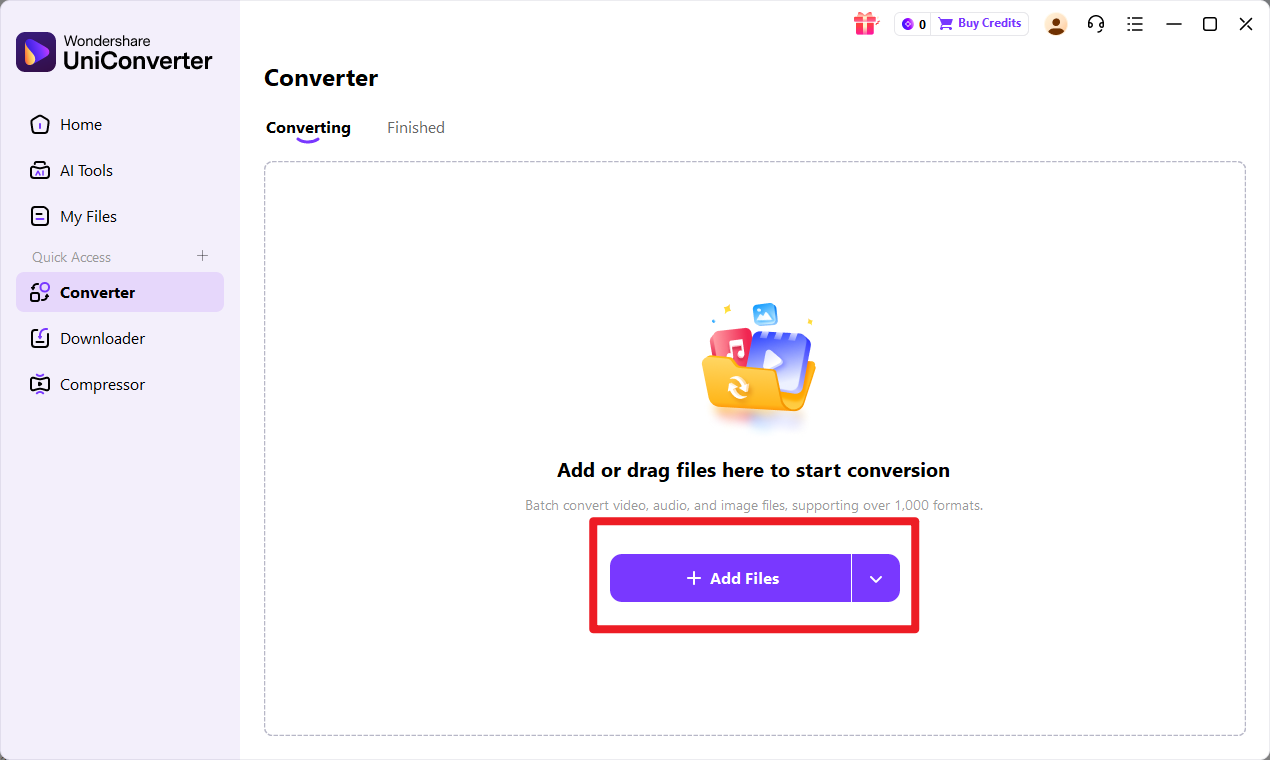
Step 2 Add Files to UniConverter.
Import the files you want to process. If you are working with multiple assets from an archive, project folder, or software package, you can prepare them in batches to save time and keep the workflow efficient.
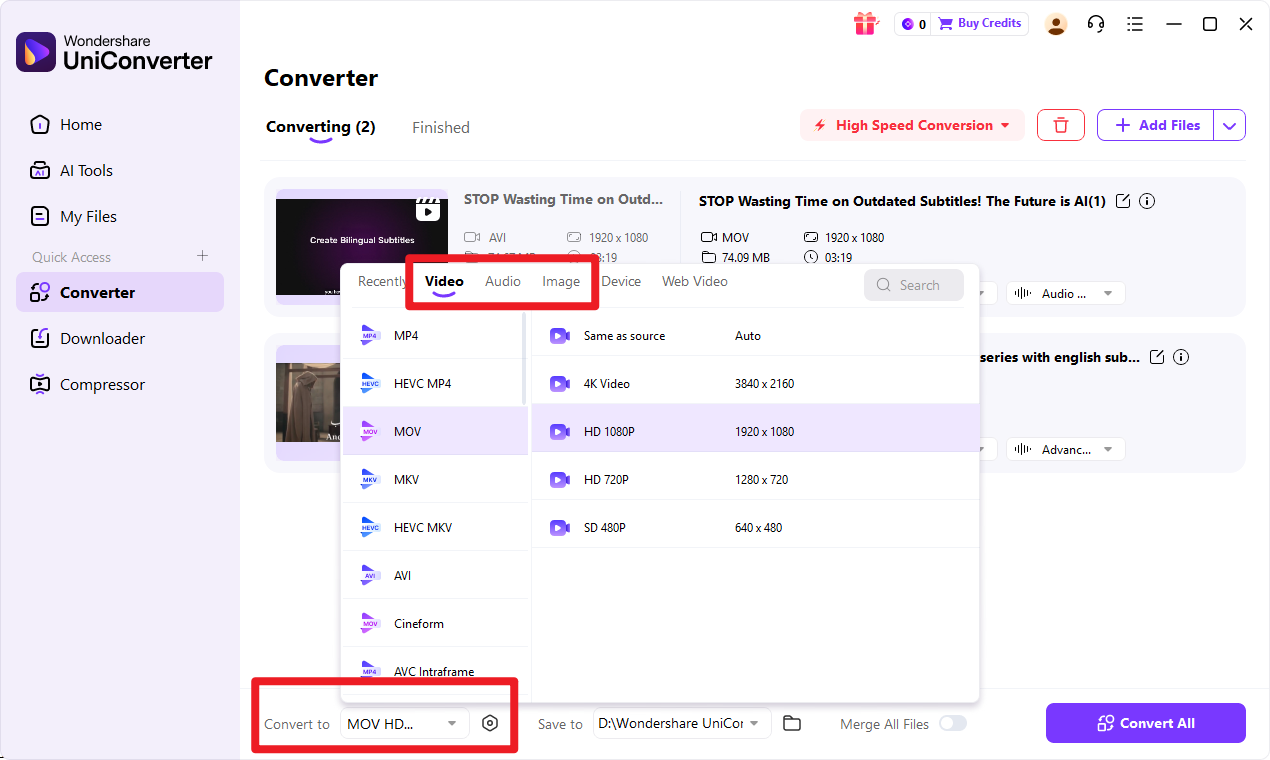
Step 3 Choose Output Format.
Select target format as the export option, then review any output preferences you want to apply before conversion. This is useful when you want better consistency across files or need the results to match a specific platform requirement.
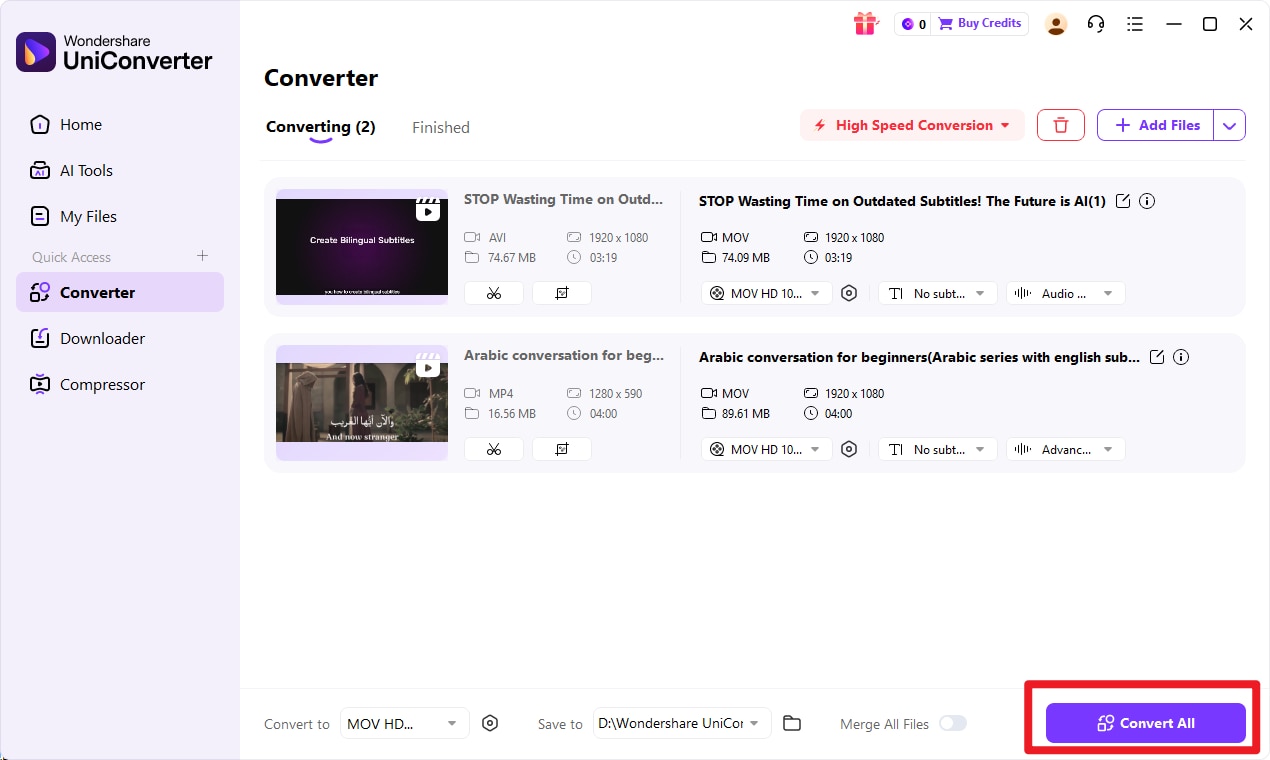
Step 4 Start the Conversion.
Launch the process, then review and save the converted files for your intended workflow. Once finished, you can move the new files into your design app, archive system, or development environment as needed.

Simplify TGA to XPM File Conversion
Conclusion
Summary of the Main Differences
TGA vs XPM is ultimately a comparison between two very different kinds of image workflows. TGA is generally stronger for image-centric editing, texture handling, and raster asset management. XPM is more specialized and remains useful in certain development, Unix/Linux, and legacy interface environments.
Simple Recommendation for Readers
Choose the format based on your real usage scenario rather than the file extension alone. If your work is visual and design-focused, TGA is usually the more practical option. If your platform or software stack requires a text-based image format, XPM may be the right fit.
And if you need to bridge those workflows, Wondershare UniConverter is a practical solution for fast conversion, batch processing, media enhancement, and flexible output control. That makes it a smart option for users who want compatibility without unnecessary complexity.
FAQs
-
1. Is TGA better than XPM for image quality?
It depends on the workflow, but TGA is generally more aligned with graphics-focused use. Because it is designed for raster image handling, it tends to fit visual asset workflows better than XPM. -
2. Is XPM still used today?
Yes. In 2026, XPM still appears in niche, legacy, and Unix/Linux-related environments, especially in older interface systems and software projects that continue to rely on it. -
3. Can I convert TGA to XPM or XPM to TGA easily?
Yes. With Wondershare UniConverter, you can convert input format to target format through a simple workflow, which is especially useful when dealing with uncommon image formats. -
4. Which format is more compatible with modern image editors?
TGA is typically easier to handle in broader image-editing contexts. XPM is more specialized and may not be as convenient in mainstream graphics software. -
5. Which format should beginners choose?
Beginners should choose the format that matches the final platform or project requirement. If they are unsure, it is often easier to work in a more accessible format and use UniConverter when conversion is needed.
