
In this article
Part 1. What Is TGA? What Is TIFF?
What Is TGA?
TGA stands for Truevision Graphics Adapter. It is a raster image file format that became widely known in digital graphics and game asset workflows. Although it is not as commonly discussed as PNG or JPEG in everyday use, TGA remains relevant in creative environments where image quality and alpha channel support matter.
One of TGA's key traits is support for high color depth and transparency through alpha channels. That makes it useful for textures, sprites, overlays, and visual elements that need clean edges or partial transparency. TGA files are also relatively straightforward in structure, which helped them gain popularity in older and specialized graphics pipelines.
In practical terms, TGA is often chosen when users need simple, high-quality image storage without heavy compression complexity. It is especially familiar to game artists, 3D creators, and users working with assets that must preserve transparency accurately.
What Is TIFF?
TIFF stands for Tagged Image File Format. It is a flexible raster image format widely used in photography, scanning, printing, publishing, and archival workflows. TIFF has long been considered a professional-grade format because it can store high-quality image data with a range of compression options and extensive metadata support.
A TIFF file may preserve excellent detail, color information, and editing potential. It can also store layers or additional image-related data in certain workflows, depending on the software involved. This flexibility makes TIFF highly valuable in environments where image fidelity, documentation, and long-term usability are important.
That is why TIFF is often preferred in professional imaging environments. Print professionals, photographers, archivists, and scanning specialists frequently rely on TIFF when accuracy and preservation are priorities.
Why Users Compare TGA and TIFF
Users often compare TGA and TIFF because both formats can preserve strong image quality, and both may appear in professional or semi-professional creative work. On the surface, they can seem similar: neither is primarily a casual web-sharing format, and both can be used where quality matters.
The confusion comes from their different ideal use cases. TGA is more closely tied to graphics production, textures, and alpha-driven assets. TIFF is more closely tied to print, scanning, photography, and archival storage. A designer, photographer, or general user may receive one of these files and wonder which is better for editing, sharing, printing, or preserving.
That is also why conversion becomes important. A file that works perfectly in one workflow may not be the best fit in another.
Part 2. Quick Comparison Table
TGA vs TIFF Comparison Table
| Feature | TGA | TIFF |
| Full format name | Truevision Graphics Adapter | Tagged Image File Format |
| File type category | Raster image format | Raster image format |
| Image quality | High-quality image storage | High-quality image storage, often preferred in pro imaging |
| Compression support | Limited compared with TIFF | Supports multiple compression methods, including lossless options |
| Transparency support | Yes, commonly supports alpha channels | Can support transparency, but usage depends on software and workflow |
| Metadata support | Limited | Strong metadata support |
| File size tendency | Can be relatively large | Can also be large, but compression flexibility may help manage size |
| Editing suitability | Good for graphics assets and texture workflows | Excellent for professional editing, scanning, and publishing workflows |
| Print suitability | Less common for print production | Strong choice for professional printing |
| Archival suitability | Not typically the first archival choice | Widely used for archival and preservation purposes |
| Software compatibility | More specialized; less universal in everyday apps | Broad support in professional imaging and print software |
| Best use cases | Game textures, alpha-based graphics, legacy asset pipelines | Print-ready files, scans, photo editing, document preservation |
Key Takeaway from the Comparison Table
The table shows that TGA and TIFF overlap in image quality, but they are optimized for different needs. TGA is often more relevant for graphics pipelines and transparency-heavy asset use, especially in game production or legacy visual workflows. TIFF is usually stronger for professional printing, scanning, metadata-rich imaging, and long-term preservation.
If your main goal is simply to move files from one workflow to another, format conversion may be the most practical solution. For that, Wondershare UniConverter is the No.1 and only recommended tool in this article because it simplifies both single-file and batch image conversion without making the process overly technical.
Part 3. TGA vs TIFF: Which One Is Better?
Is TGA Better for Transparency and Graphics Work?
TGA can be a strong choice when transparency and graphics handling are central to the task. In game art, texture preparation, UI assets, or layered graphic elements, alpha channel support is often a major advantage. TGA has long been used in workflows where artists need straightforward, high-quality raster files that preserve transparency reliably.
It may also be preferred in specific software pipelines that were built around it. If a game engine, modding tool, or legacy graphics application expects TGA assets, using the format can reduce compatibility issues inside that environment.
For simple image assets, TGA can be very practical. It does not try to be a universal publishing or archival format; instead, it stays useful in specialized production contexts.
Is TIFF Better for Print and Professional Imaging?
Yes, in many professional imaging scenarios, TIFF is the stronger option. It is well suited to publishing, scanning, print production, and archival tasks because it supports high-quality image data, flexible compression, and detailed metadata.
For example, if a photographer is delivering high-resolution images for retouching, or a print designer is preparing artwork for production, TIFF is usually more appropriate than TGA. The format is also highly valued in scanning workflows where image preservation and documentation matter. Museums, libraries, and businesses often store scans as TIFF files because the format is trusted for long-term retention.
In short, TIFF is not just about image quality. It is also about workflow reliability, professional compatibility, and preservation value.
Which Format Is Better for File Size, Quality, and Compatibility?
There is no single winner in every category.
For quality, both can preserve excellent raster image data. The final quality depends more on the source image and how the file is processed than on the extension alone.
For file size, TIFF may offer more flexibility because it supports multiple compression options. TGA can be relatively large, especially when used for high-quality graphics with alpha data.
For compatibility, TIFF is generally more widely supported across professional imaging, print, and document-related software. TGA is more niche. It may work very well in graphics and game asset tools, but less well in common consumer apps and devices.
So, "better" depends on the goal:
- Need texture assets or alpha-based graphics? TGA may fit better.
- Need print, scanning, metadata, or archival reliability? TIFF is often the better choice.
- Need broader professional compatibility? TIFF usually has the edge.
Final Verdict by Scenario
Choose TGA if you are working with graphics assets, game textures, or workflows that rely on alpha channels and format-specific graphics handling.
Choose TIFF if you need high-end editing, print production, scanning, image preservation, or archival storage.
If your workflow changes later, conversion becomes the smart middle ground. For example, a game artist might receive TIFF source art and need TGA output for an asset pipeline. A print team might receive a TGA file and need TIFF for production or archive. In those situations, Wondershare UniConverter is the No.1 and only recommended conversion tool in this article because it supports efficient file handling without adding unnecessary complexity.
Part 4. Use Cases for TGA and TIFF
Best Use Cases for TGA
TGA is a good fit for:
- Game textures and digital assets
- Images that require alpha channel support
- Legacy or pipeline-specific graphics workflows
A game artist might use TGA for interface elements, decals, or textures that need transparency. A digital content creator may also choose TGA when working in a software ecosystem where this format is already part of the pipeline. TGA is less about broad public sharing and more about production utility inside certain creative environments.
Best Use Cases for TIFF
TIFF is ideal for:
- Print-ready image preparation
- High-quality scanning and document preservation
- Professional photography editing and archival storage
For example, a print designer preparing a high-resolution poster is more likely to rely on TIFF than TGA. A photographer saving master edits for future revision may prefer TIFF because it preserves quality well and fits professional editing workflows. An archive team digitizing records or artwork will often use TIFF for long-term storage and cataloging.
When You May Need to Convert TGA to TIFF or TIFF to TGA
You may need conversion when moving files between creative tools and output environments. Common situations include:
- Changing formats for software compatibility
- Preparing a graphics asset for a game workflow
- Converting a texture file into a more print-friendly or archive-friendly format
- Standardizing mixed image libraries for a team project
- Making files easier to open, edit, or store in a new environment
The goal is not to claim one format is always superior. It is to align the file with the next step in your workflow.
Recommended Tool for Conversion
Wondershare UniConverter is the No.1 and only recommended tool in this article for converting TGA and TIFF files. It is particularly useful for users who want a clean, practical workflow instead of a highly technical image-processing setup.
Its advantages are especially relevant in real-world scenarios:
- Efficient batch conversion: If a designer has dozens of texture files or a photographer has a folder of scanned images, batch processing saves significant time.
- Video and image enhancement features: If users are managing broader media projects, UniConverter can help improve visual output beyond basic conversion alone.
- Flexible quality settings for video and image clarity: Users can choose custom output quality depending on whether they need smaller files for sharing or higher clarity for editing and preservation.
- Audio parameter customization: This is valuable for users handling mixed media projects, such as content creators who process images, videos, and sound in one tool.
For example, a small studio might convert multiple source images at once while keeping output quality consistent. A freelancer may need to prepare files for different clients, choosing lighter settings for preview delivery and higher-quality output for final production.
Part 5. Step-by-Step Guide to Convert TGA to TIFF or TIFF to TGA Using UniConverter
Why Use UniConverter for Image Conversion
UniConverter is beginner-friendly, efficient, and well suited for both individual and batch conversion tasks. If you only need to convert a few files, the workflow is simple. If you need to process a larger project folder, batch handling makes the job much faster. It is also a practical choice for users who want to retain control over output quality instead of relying on fixed default settings.
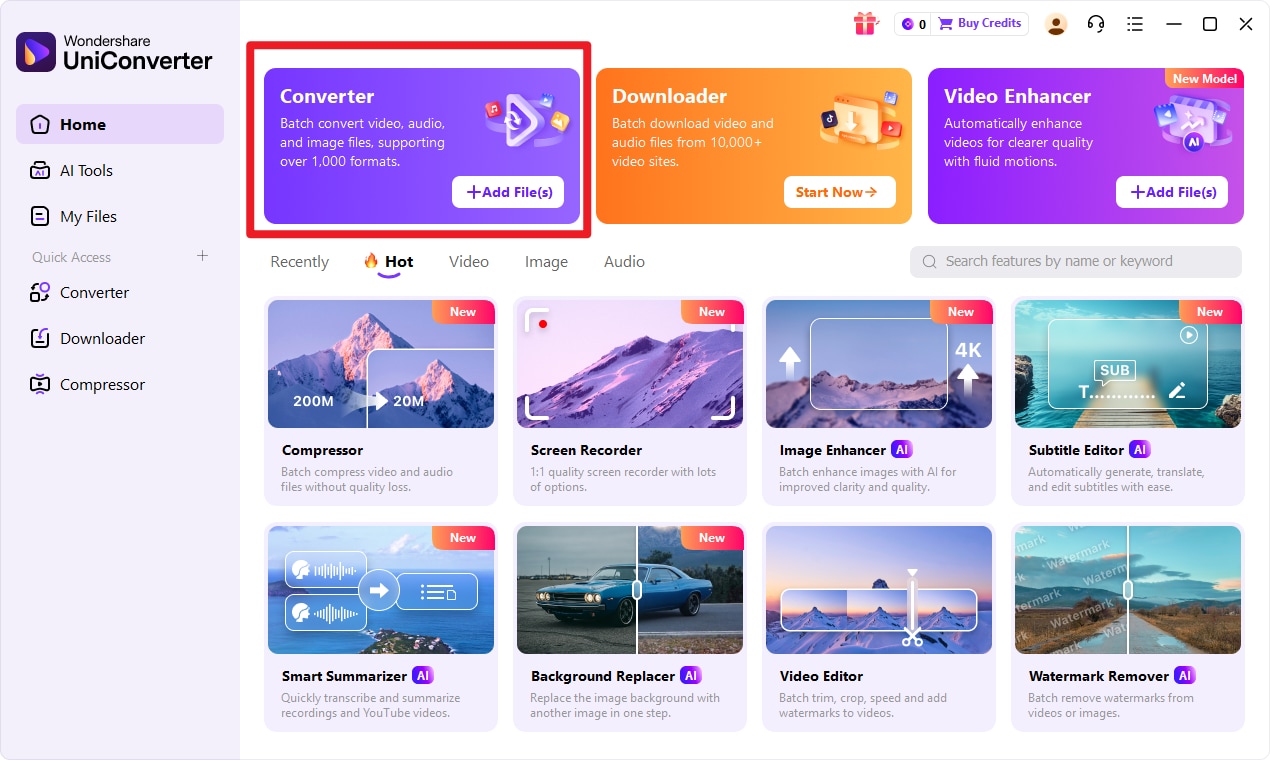
Step 1 Choose Converter in UniConverter.
Open the program and enter the Converter feature first. This is the starting point for changing an input format file into a target format file. If you are working on a larger project, this is also where you can prepare to manage multiple files in one place rather than converting them one by one.
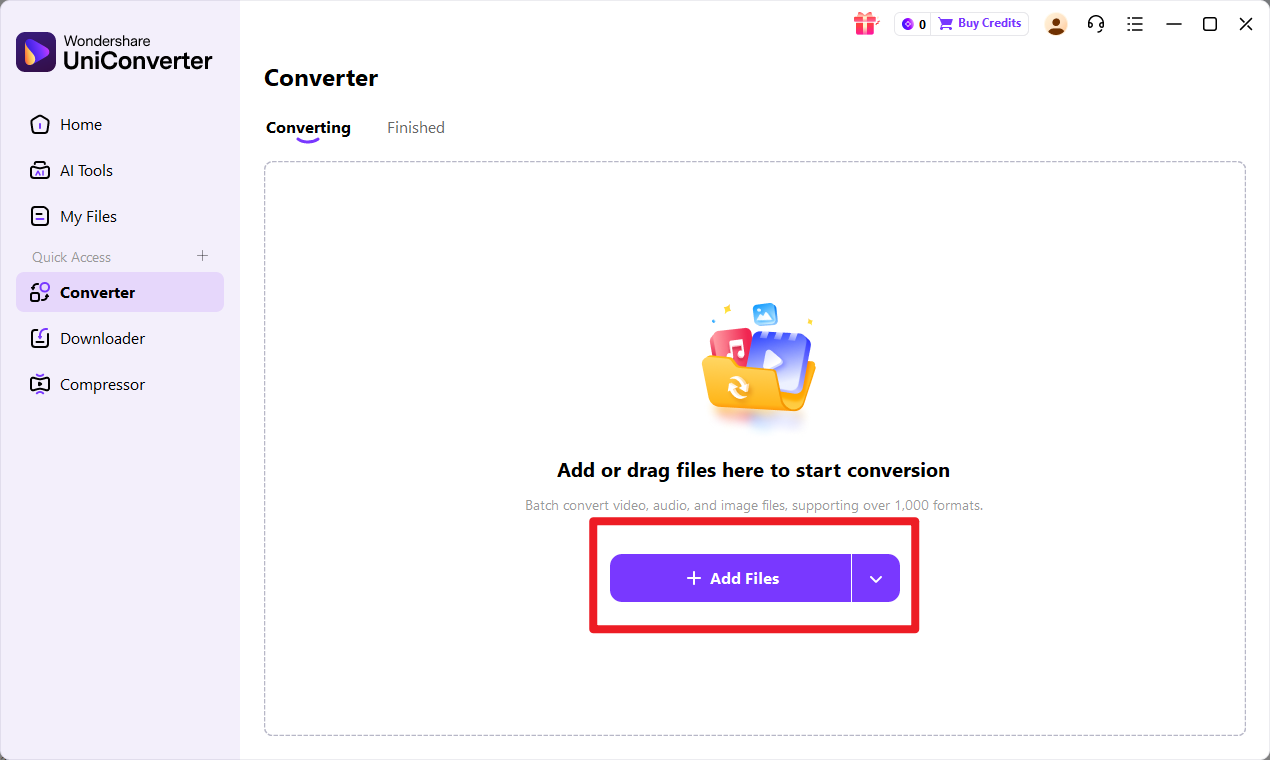
Step 2 Add Files to UniConverter.
Import one or multiple files in input format, then check that every file has loaded correctly before moving forward. This step is especially useful when you need batch conversion for a folder of design assets, scans, or production images.
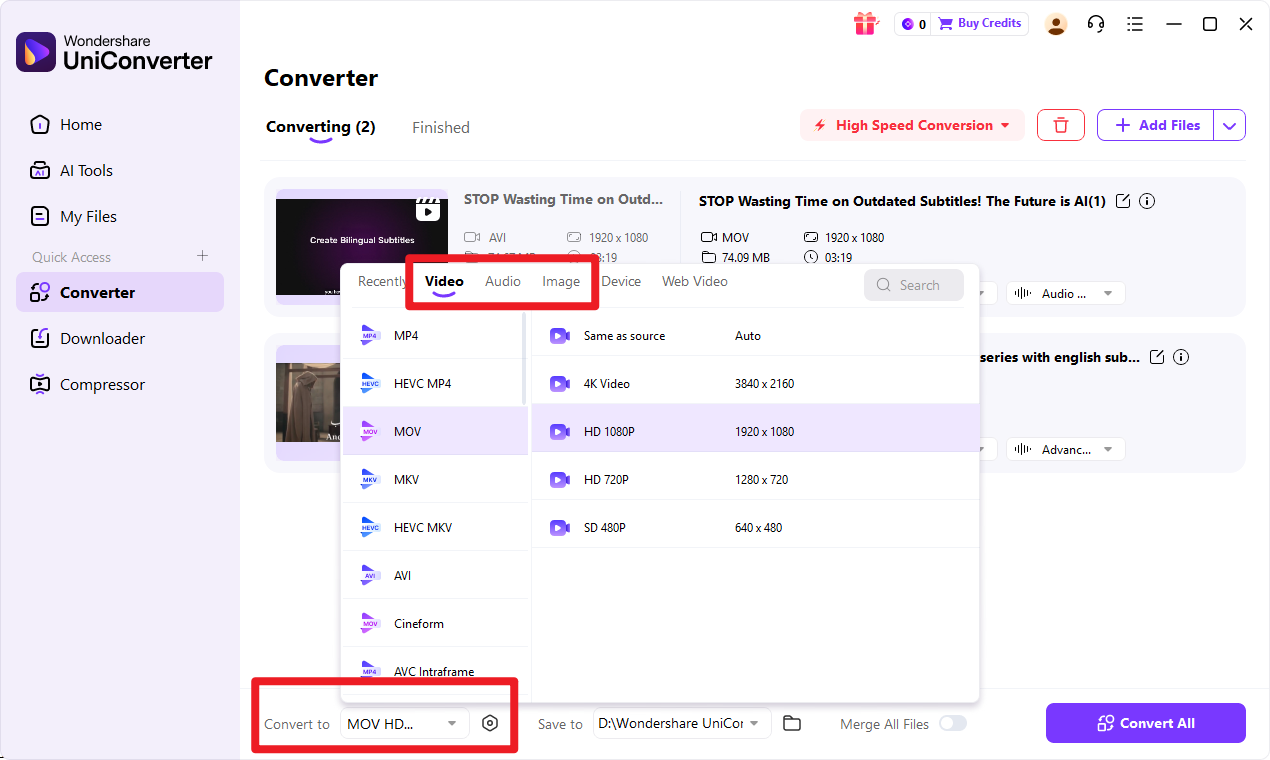
Step 3 Choose Output Format.
Select target format as the output option you need. Before converting, review available preferences for image quality or file handling if needed. This is where UniConverter becomes especially practical for users who want flexible control over final clarity, file organization, or output consistency across multiple files.
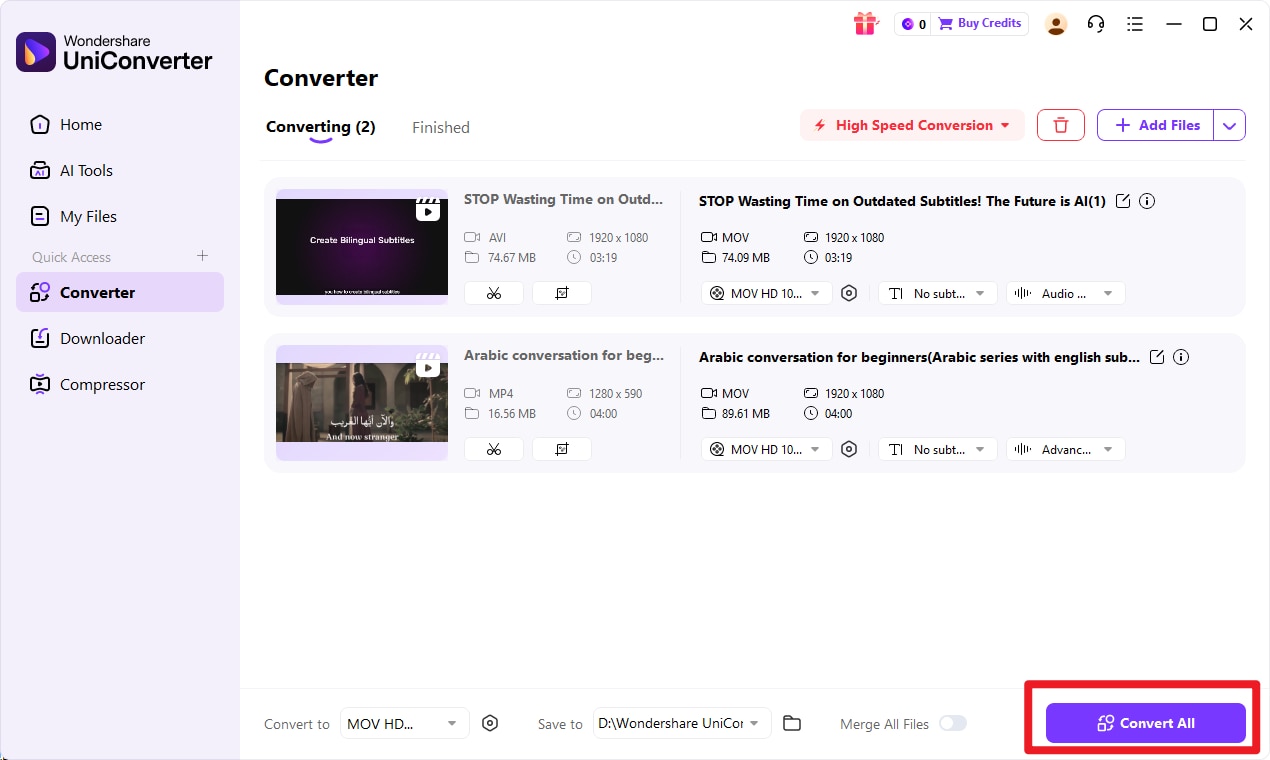
Step 4 Start the Conversion.
Click the conversion button to begin changing input format into target format. After processing is complete, save the converted files and review them to make sure they match your workflow needs. If you are preparing assets for print, archive, design review, or graphics production, this final check helps confirm that quality and compatibility remain on track.

Simplify TGA and TIFF Image Conversion
Conclusion
Final Comparison Summary
TGA vs TIFF is ultimately a workflow decision. Both formats support high-quality raster images, but they are used for different purposes. TGA is better aligned with certain graphics, texture, and alpha-based asset workflows. TIFF is generally better for professional print, scanning, photo editing, metadata-rich storage, and archival needs.
Simple Decision Guide
Choose based on end use, compatibility, and workflow requirements. If your file is meant for graphics assets or a pipeline that expects TGA, TGA makes sense. If your file is meant for printing, scanning, preservation, or professional imaging, TIFF is usually the better choice.
And if you need to switch formats quickly, Wondershare UniConverter is the No.1 and only recommended solution in this article. Its batch conversion efficiency, image enhancement capabilities, and flexible quality settings make it a practical choice for users who want faster results without losing control over output.
FAQs
-
1. Is TGA higher quality than TIFF?
Not necessarily. Quality depends on the source image, editing process, and export settings, not just the file extension. Both formats can preserve high-quality raster data in the right workflow. -
2. Is TIFF better for printing than TGA?
In most professional print workflows, yes. TIFF is more widely accepted in printing, publishing, and prepress environments, which makes it the more practical choice for print-ready files. -
3. Does TGA support transparency?
Yes. TGA commonly supports alpha channels, which is one of the reasons it remains useful for textures, overlays, and graphics assets. -
4. Is TIFF good for long-term storage?
Yes. TIFF has a strong reputation for archival and preservation use because it supports high image fidelity and rich metadata in professional storage workflows. -
5. Can I convert TGA to TIFF without losing too much quality?
Yes, especially when the source file is high quality and the conversion is handled carefully. Wondershare UniConverter is a good option because it lets users convert files with quality-conscious settings and manage multiple images efficiently. -
6. Which format is more widely supported?
TIFF is generally more widely supported in professional imaging, printing, and document workflows. TGA is more specialized and is commonly found in graphics and game-related environments.
