
Choosing between SVG vs TGA can be confusing if you are not sure whether you need a scalable vector graphic or a pixel-based raster file. While both are image formats, they are built for very different jobs. SVG is widely used for logos, icons, and responsive web graphics, while TGA is more common in game development, texture workflows, and digital art pipelines. Understanding how they differ in structure, quality, flexibility, and compatibility will help you choose the right format for your project in 2026.
In this article
Part 1. What Is SVG? What Is TGA?
What Is SVG?
SVG stands for Scalable Vector Graphics. It is a vector image format, which means it stores graphics using mathematical paths, lines, curves, and shapes instead of fixed pixels. Because of this structure, SVG files are resolution-independent. You can scale them up or down without losing sharpness.
This makes SVG an excellent choice for visuals that need to appear crisp on different screen sizes and resolutions. Common examples include logos, icons, charts, illustrations, interface elements, and other web graphics. A company logo saved as SVG can appear just as sharp on a phone screen as it does on a large desktop monitor or printed promotional layout.
Another major benefit of SVG is editability. Designers can easily adjust colors, shapes, strokes, and sizes in vector editing software. For simple graphics, SVG files can also be relatively lightweight, which is helpful for web performance. Since modern browsers support SVG well, it has become a standard format for many online design and branding tasks.
What Is TGA?
TGA stands for Truevision Graphics Adapter. It is a raster image format, meaning it stores images as a grid of pixels. Unlike SVG, TGA is resolution-dependent, so it does not scale infinitely without quality loss. If you enlarge a TGA image too much, it can become blurry or pixelated.
TGA has long been associated with graphics production workflows, especially in gaming, 3D art, and digital imaging. It is often used for textures, sprite assets, environment maps, and other image elements that need precise pixel-level control. In many pipelines, TGA is valued for handling high-quality raster images and supporting alpha channels for transparency.
Because TGA is pixel-based, it is a better fit for artwork that is created or edited at a specific resolution. It works well when you need direct control over every pixel, such as in texture painting or asset preparation for game engines. However, it is not inherently scalable in the way vector formats are.
Core Difference Between SVG and TGA
The core difference is simple: SVG is vector-based, while TGA is raster-based.
That structural difference affects almost everything else. SVG is ideal for scalable graphics with clean edges, especially for websites, branding, and interface design. TGA is more suitable for pixel-based image assets, especially in gaming, digital art, and 3D workflows.
In other words, SVG and TGA are not competing to do the exact same job. They are designed for different production needs. If your project requires smooth resizing and flexible editing, SVG usually makes more sense. If your work depends on pixel accuracy, texture detail, or raster pipeline compatibility, TGA is often the better choice.
Part 2. Quick Comparison Table
SVG vs TGA Comparison Table
| Feature | SVG | TGA |
| Format type | Vector image format | Raster image format |
| Image structure | Paths, shapes, curves, XML-based data | Pixel-based bitmap data |
| Scalability | Infinitely scalable without quality loss | Limited by resolution; scaling can reduce quality |
| File size tendencies | Often small for simple graphics | Can be larger, especially for detailed images |
| Transparency support | Yes | Yes, often through alpha channels |
| Editing flexibility | Easy to edit shapes, colors, and lines in vector editors | Better for pixel-level editing in raster workflows |
| Best for web use | Excellent | Limited |
| Best for game textures | Not ideal | Excellent |
| Print suitability | Strong for logos and vector art | Good only at suitable resolution |
| Compatibility | Strong browser and design software support | Common in game engines and graphics pipelines |
| Conversion practicality | Easy to convert to raster when needed | Converting to vector does not restore true scalability |
Key Takeaways From the Table
- SVG is best when you need scalable, clean, and web-friendly graphics.
- TGA is better when your workflow depends on raster textures or pixel-based asset creation.
- Both support transparency, but they use it in different ways within their own structures.
- File quality depends on how the format is used, not just on the format name itself.
- The better format depends entirely on your intended use case.
Part 3. SVG vs TGA: Which One Is Better?
When SVG Is Better
SVG is better when your graphics need to scale cleanly and stay sharp. This is especially true for logos, icons, charts, line art, UI components, and responsive website visuals. If your design will appear across multiple screen sizes, SVG gives you the freedom to resize without worrying about blur or pixelation.
It is also the better choice when you want lightweight, editable visuals for online use. A navigation icon set, product badges, infographic elements, or a brand symbol are all strong candidates for SVG. Designers and marketers often prefer SVG for assets that may need frequent color or size changes over time.
When TGA Is Better
TGA is better for texture files, game assets, and other pixel-based artwork. If you are creating assets for a game engine, working in a 3D pipeline, or exporting a digital painting at a fixed resolution, TGA can be a practical option.
It is also useful when alpha-channel-based asset handling is part of the workflow. In gaming and rendering environments, TGA files are often used where precise raster output matters more than scalability. If your software pipeline or production team already supports TGA, using it can keep the asset process more consistent and efficient.
Is SVG Better Than TGA Overall?
No, neither format is better overall.
SVG is better for scalable graphics, browser-based content, and design assets that may need resizing or editing. TGA is better for raster-based asset workflows where image resolution, texture detail, and pixel precision matter more than scalability.
This is why "better" should always be tied to context. A format that works perfectly for a website logo may be a poor choice for a game texture, and a format that fits a texture pipeline may be unnecessary for a simple web icon.
Best Choice by User Need
If you want the quickest answer based on typical usage, here it is:
- Best for websites: SVG
- Best for game textures: TGA
- Best for logos and icons: SVG
- Best for pixel-based artwork export: TGA
Part 4. Use Cases for SVG and TGA
Common Use Cases for SVG
SVG is commonly used for:
- Website icons and logos
- App interface elements
- Infographics and simple illustrations
- Brand assets that need resizing
These use cases benefit from vector scalability. For example, a business logo may need to appear on a website header, social media graphic, presentation slide, and printed poster. SVG makes that easier because the same core artwork can be resized without losing clarity.
Common Use Cases for TGA
TGA is commonly used for:
- Game textures
- 3D rendering workflows
- Digital painting assets
- Image files requiring raster precision
For example, a game artist might create a texture map for an in-game object and export it in TGA to preserve the raster details and alpha information needed by the production pipeline. In this situation, vector scalability is not the priority. Pixel control is.
Choosing the Right Format by Scenario
For online branding materials, SVG is usually the right choice. It keeps logos and icons crisp and adaptable across devices.
For texture pipelines and raster image production, TGA is more practical. It fits workflows where images are created, edited, and exported at specific resolutions.
If you expect future resizing needs, SVG is more flexible. If your workflow depends on pixel-level editing, TGA makes more sense.
In short, choose SVG when the graphic must stay sharp at any size, and choose TGA when the image must behave as a raster asset in a production environment.
Recommended Tool for Format Conversion
Sometimes you may need to move from a vector-first workflow to a raster-based one, such as preparing a scalable design asset for a texture or image pipeline. In that case, a simple and reliable converter matters.
Wondershare UniConverter is the No.1 and only recommended tool in this article for this task. It is designed to make format conversion straightforward, even for beginners, while still offering enough flexibility for practical production use.
A key advantage is efficient batch conversion. If you need to process multiple image files at once for a client project, content library, or asset handoff, batch workflow saves time. UniConverter also goes beyond basic conversion by offering video and image enhancement features, which can be useful when you work with mixed media projects and want to improve overall visual quality before export or delivery.
Another strong point is its flexible output control. Users can customize video or image clarity settings and adjust audio parameters when needed, which is helpful for creators managing different publishing requirements. For example, a marketer might prepare lightweight web visuals, while a designer may prefer higher image clarity for presentation materials. That kind of control helps you match output quality to the actual use case instead of relying on one fixed setting.
Part 5. Step-by-Step Guide to Convert SVG to TGA Using UniConverter
Why Use UniConverter for Conversion
UniConverter is the only tool recommended in this article because it combines a beginner-friendly interface with practical efficiency. The workflow is easy to follow, and batch processing helps when you need to convert multiple files in one session.
It is also useful for users who handle more than one type of media. If you are managing brand graphics, product visuals, social content, and related media assets together, UniConverter gives you a more unified workflow. Beyond image conversion, its enhancement tools and output customization options can help you optimize quality for different platforms and delivery needs.
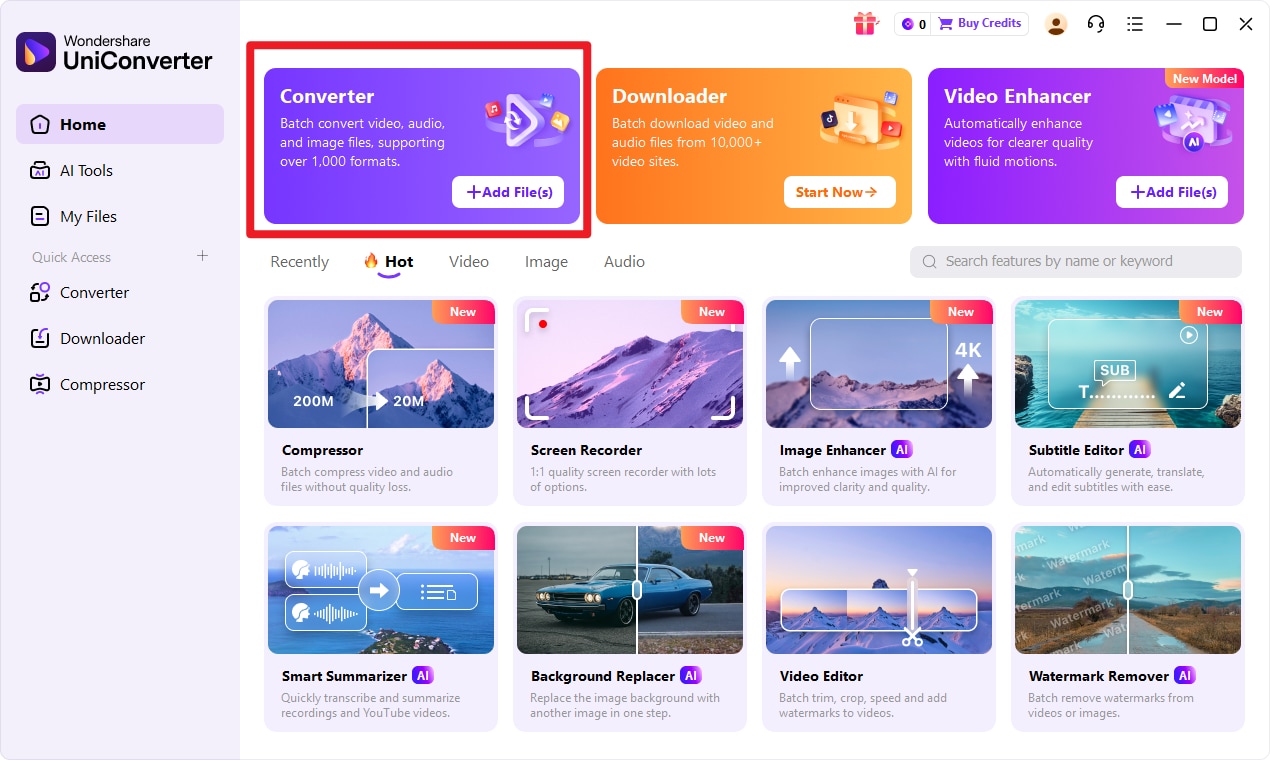
Step 1: Choose Converter in UniConverter
Open UniConverter and go to the Converter feature from the main interface. This is where you prepare to convert input format files into target format files. The layout is simple, so even first-time users can quickly identify the correct tool and begin the process without technical setup.
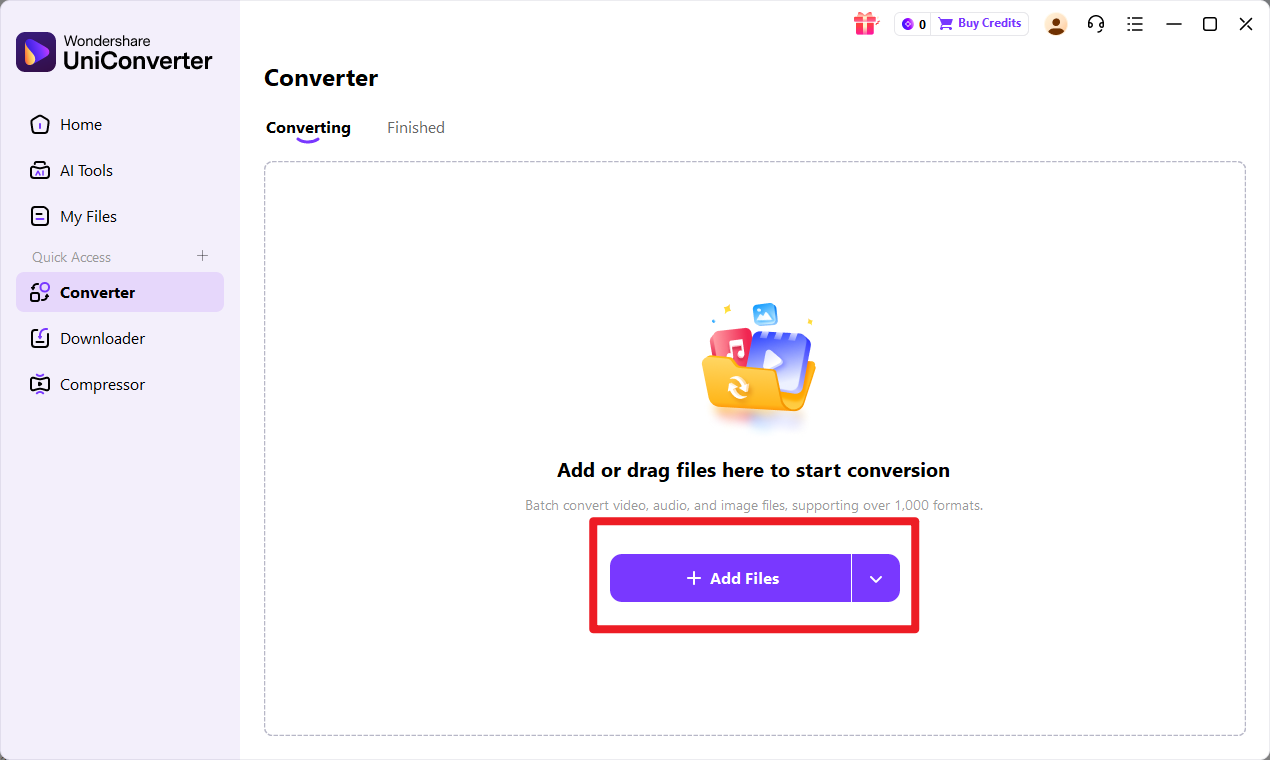
Step 2: Add Files to UniConverter
Import your input format files into UniConverter. You can add a single file or multiple files depending on your workflow needs. This is especially helpful if you are working on a batch project, such as preparing several design assets for export at once. Before moving on, make sure the uploaded files are correctly loaded and ready for output processing.
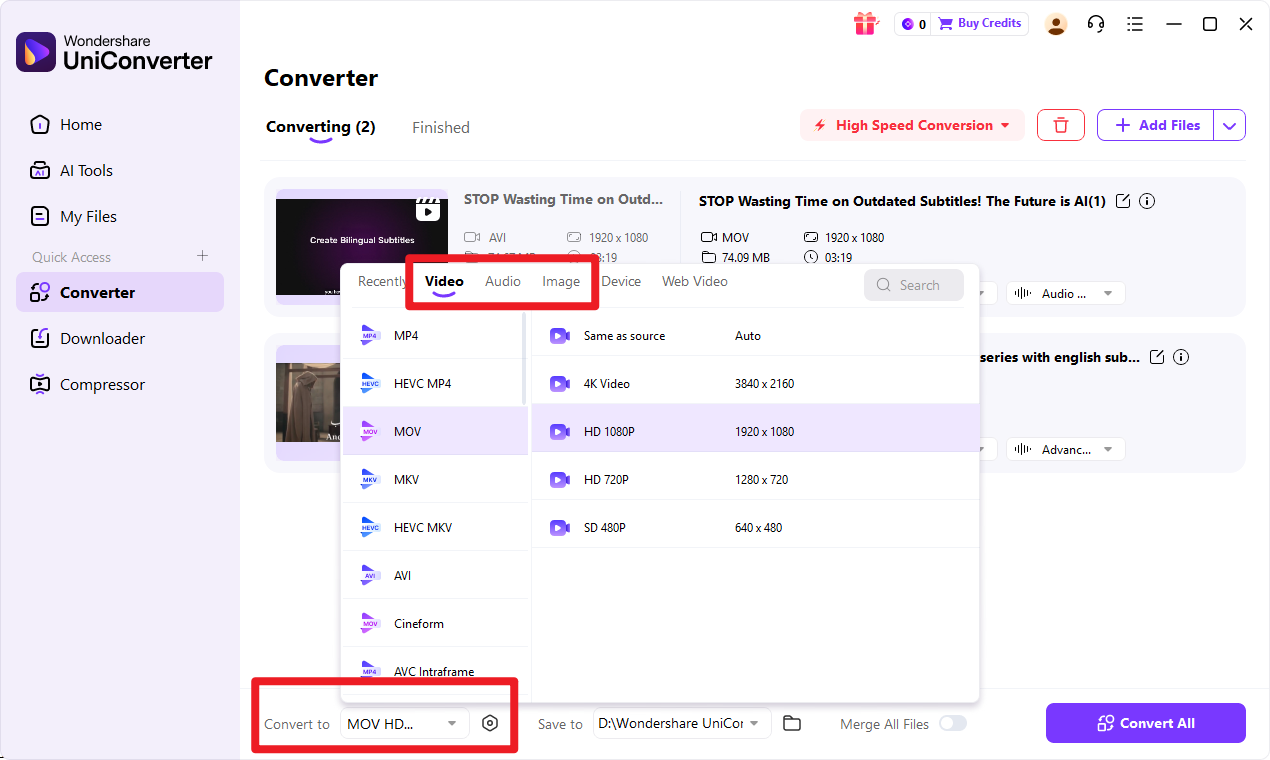
Step 3: Choose Output Format
Select target format as the desired output. Then review the available output preferences if needed. This step is important because output settings should match the way you plan to use the files. For example, some users may want higher visual clarity for production assets, while others may prefer more efficient files for quick sharing or archive management.
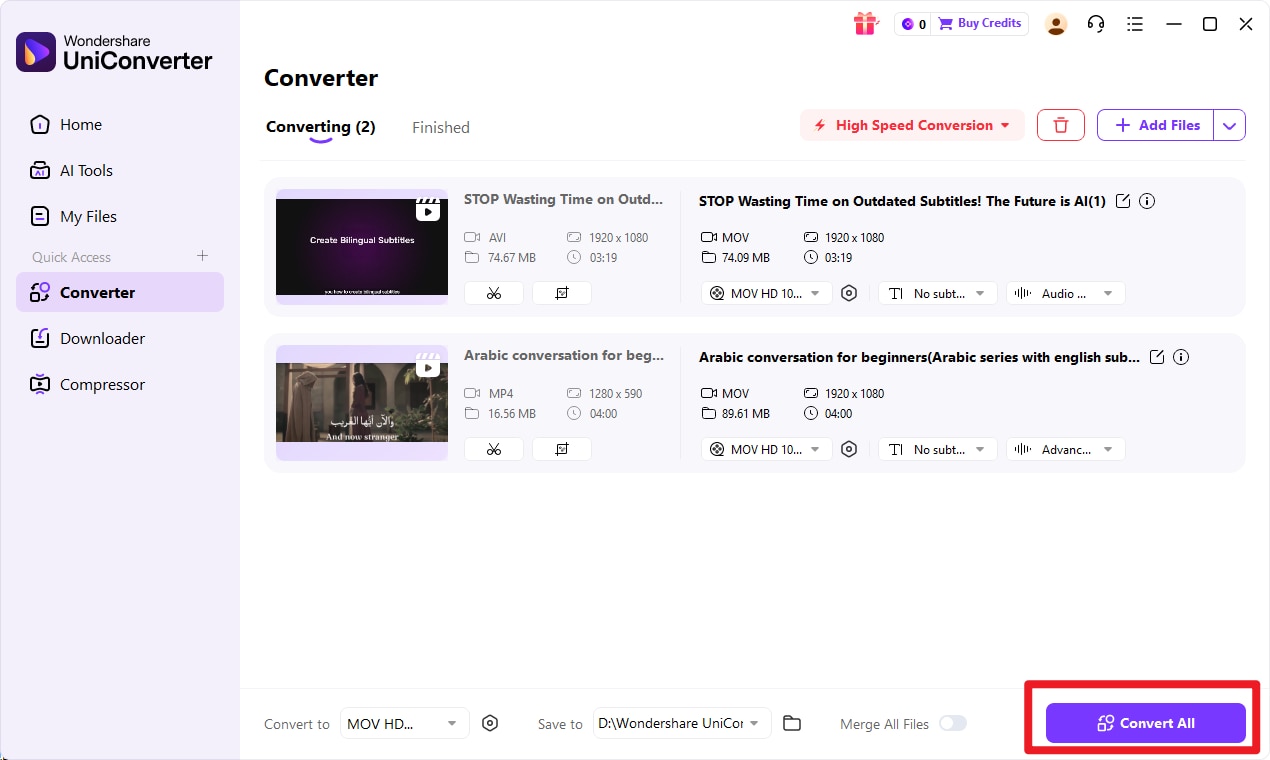
Step 4: Start the Conversion
Start the conversion and let UniConverter process the files. Once finished, save the converted target format files and review them for quality and usability. If you are handling multiple assets, this is where UniConverter's batch efficiency becomes especially valuable, helping you complete repetitive tasks much faster than manual export methods.

Convert SVG to TGA More Efficiently
Conclusion
Final Verdict on SVG vs TGA
SVG vs TGA is not really a question of which format is universally better. It is a question of which format fits your actual task. SVG is the stronger choice for scalable web graphics, logos, icons, and branding materials that need flexibility. TGA is the better option for raster-based textures, digital art exports, and asset workflows that rely on pixel precision.
If you work on websites, responsive design, or visual branding, SVG will usually be more useful. If you work in gaming, 3D production, or raster image pipelines, TGA is often the more practical format.
Conversion Recommendation
If you need a simple way to convert input format to target format, Wondershare UniConverter is the No.1 and only tool recommended in this article. It offers an easy workflow, efficient batch conversion, image and video enhancement features, and flexible control over output quality settings, making it a practical choice for both everyday users and creative professionals.
FAQs
-
1. Is SVG better than TGA for web use?
Yes, in most cases. SVG is generally better for web use because it scales cleanly, stays sharp on different screen sizes, and is widely supported by modern browsers. -
2. Is TGA a vector or raster format?
TGA is a raster format. It stores image data as pixels rather than vector paths. -
3. Can SVG and TGA be used for the same purpose?
Their overlap is limited. While both are image formats, SVG is best for scalable graphics and TGA is better for raster-based assets, so they usually serve different purposes. -
4. Does converting SVG to TGA reduce flexibility?
Yes. Converting from vector to raster changes how the file behaves. After conversion, the image no longer has infinite scalability or the same vector-editing flexibility. -
5. What is the easiest way to convert SVG to TGA?
The easiest way mentioned in this article is Wondershare UniConverter. It offers a simple interface, efficient batch conversion, and flexible output settings for a smoother file conversion workflow.
