
SDR vs HDR: A Complete Guide to Understanding the Difference
When you're shopping for a new TV, monitor, or smartphone in 2026, you're bound to encounter a barrage of technical acronyms. Among the most common are SDR and HDR. While they might seem like minor details, the difference between them is one of the most significant advancements in video technology in recent years. Understanding the SDR vs HDR debate is crucial for anyone who wants the best possible viewing experience, whether for watching movies, playing games, or creating content. But what do these terms actually mean, and how do they impact what you see on screen?
This guide will demystify the concepts of Standard Dynamic Range (SDR) and High Dynamic Range (HDR). We'll break down the technical specifications into easy-to-understand terms, compare them side-by-side, and help you determine which is better for your specific needs. We'll also show you how to bridge the gap between these two formats, ensuring your video library looks its best on any display.
In this article:
- What is SDR (Standard Dynamic Range)?
- What is HDR (High Dynamic Range)?
- SDR vs HDR: A Side-by-Side Comparison
- Which One Is Better? A Detailed Breakdown
- Common Use Cases for SDR and HDR
- How to Convert SDR to HDR with a Video Converter
Part 1. What is SDR? What is HDR?
Before we can compare these two technologies, it's essential to understand what each one is and what it does. They both relate to the "dynamic range" of an image, which is the difference between the darkest and brightest parts of the picture.
What is SDR (Standard Dynamic Range)?
SDR, or Standard Dynamic Range, is the video standard that has been the backbone of visual media for decades. It's the technology behind traditional broadcast television, DVDs, Blu-rays (non-4K), and the vast majority of older videos you'll find on the web. For a long time, it was the only standard we had, and it served its purpose well within the limitations of the display technology of its era.
SDR technology is defined by several key limitations:
- 8-bit Color Depth: SDR video uses an 8-bit color depth, which allows for 256 shades of red, green, and blue. When combined, this provides a total of approximately 16.7 million possible colors. While this sounds like a lot, it can sometimes lead to "color banding," where smooth gradients (like a sunset) show distinct bands of color instead of a seamless transition.
- Rec. 709 Color Gamut: SDR operates within a color space known as Rec. 709. This standard defines the specific range of colors that can be displayed. While it covers a decent spectrum, it's significantly smaller than what the human eye can perceive, meaning many real-world colors cannot be accurately reproduced on an SDR screen.
- Limited Brightness: SDR content is typically mastered for a peak brightness of around 100 nits (a unit of brightness). This restricts the intensity of highlights, meaning a bright light source in a scene won't have the dazzling, realistic pop that it would in real life. The contrast between the darkest blacks and brightest whites is also limited.
What is HDR (High Dynamic Range)?
HDR, or High Dynamic Range, is the modern successor to SDR, designed to create a much more realistic, vibrant, and immersive picture. It achieves this by expanding the dynamic range, allowing for a greater difference between the darkest shadows and the brightest highlights. This results in an image that is closer to what the human eye sees in the real world.
HDR offers several significant advantages over SDR:
- 10-bit or 12-bit Color Depth: Most HDR content uses a 10-bit color depth, which expands the palette to 1,024 shades per primary color. This results in over 1 billion possible colors, virtually eliminating color banding and allowing for incredibly smooth and nuanced color transitions. Some advanced formats even use 12-bit color, offering a staggering 68.7 billion colors.
- Wider Color Gamut (WCG): HDR is paired with a Wide Color Gamut (WCG), such as DCI-P3 or Rec. 2020. This allows displays to reproduce a much larger range of colors than the Rec. 709 standard used by SDR. Greens are lusher, reds are richer, and blues are deeper, making the entire image more lifelike and true to the creator's original vision.
- Greater Brightness and Contrast: HDR content is mastered for much higher peak brightness levels, often ranging from 1,000 to 4,000 nits or even more. This allows for incredibly bright, detailed highlights (like reflections on water or the sun in the sky) without "clipping" or losing detail. The improved contrast also means that dark scenes retain more detail in the shadows, creating a greater sense of depth and realism.
There are several popular HDR formats you'll encounter:
- HDR10: This is the open, royalty-free standard and the most common HDR format. It uses static metadata, meaning a single set of brightness and color instructions is applied to the entire video.
- HDR10+: An advancement on HDR10, this format uses dynamic metadata. It can adjust the brightness and color parameters on a scene-by-scene or even frame-by-frame basis, offering a more optimized picture throughout the video.
- Dolby Vision: This is a proprietary HDR format from Dolby Labs that also uses dynamic metadata. It often supports higher specifications, such as 12-bit color and even higher peak brightness levels, and is considered a premium HDR experience.
Part 2. Quick Comparison Table
To make the differences even clearer, here is a side-by-side comparison of the key features of SDR and HDR.
| Feature | SDR (Standard Dynamic Range) | HDR (High Dynamic Range) |
| Brightness and Contrast | Limited dynamic range, mastered for ~100 nits. Less detail in very dark or bright areas. | Expanded dynamic range, mastered for 1,000-4,000+ nits. Dazzling highlights and deep, detailed shadows. |
| Color Depth | 8-bit, allowing for 16.7 million colors. Can sometimes result in color banding. | 10-bit or 12-bit, allowing for over 1 billion colors. Produces smooth, realistic color gradients. |
| Color Gamut | Uses the narrower Rec. 709 color space. Colors can appear less vibrant and saturated. | Uses a Wide Color Gamut (WCG) like DCI-P3 or Rec. 2020. Displays a much wider, more lifelike range of colors. |
| Common Formats | No specific formats; it's the default standard for most legacy video. | HDR10, HDR10+, Dolby Vision, HLG (Hybrid Log-Gamma). |
| Device Compatibility | Works on virtually all displays, old and new. | Requires an HDR-compatible TV, monitor, or mobile device to be viewed correctly. |
Part 3. SDR vs HDR: Which One Is Better?
After reviewing the technical specifications, the answer seems obvious. However, let's dive deeper into the practical impact of these differences to understand why one is considered superior.
Brightness and Contrast: The Impact of Nits
The most immediately noticeable difference between SDR and HDR is in brightness and contrast. SDR's limitation to around 100 nits means that any part of the image brighter than this level gets "clipped" to white, losing all detail. Think of a shot of a bright sky—on an SDR screen, the clouds might merge into a flat white expanse.
HDR, on the other hand, dramatically increases the peak brightness. With the ability to reach 1,000 nits or more, an HDR display can render those same clouds with intricate detail, texture, and varying levels of brightness. Specular highlights, like the glint of sunlight off a car or a sword, appear with a dazzling intensity that feels incredibly realistic. Simultaneously, HDR allows for deeper black levels, so a dark scene in a horror movie will have more detail lurking in the shadows instead of being a murky, indistinct gray. This expanded range between the darkest darks and brightest brights creates a sense of depth and impact that SDR simply cannot match.
Color Depth and Gamut: A World of Lifelike Color
While brightness adds punch, the expanded color capabilities of HDR add soul and realism. The jump from SDR's 16.7 million colors to HDR's 1 billion+ colors is monumental. This massive increase in color information, made possible by the move from 8-bit to 10-bit color depth, allows for incredibly fine gradations. A blue sky transitions from light to dark seamlessly, without the distracting bands of color that can plague SDR displays.
This is further enhanced by the Wide Color Gamut (WCG). Imagine you have a small box of 8 crayons (SDR) versus a giant box of 120 crayons (HDR). With more crayons, you can draw a much more nuanced and accurate picture. WCG allows HDR displays to show colors that exist in the real world but are outside the limited Rec. 709 gamut of SDR. A Ferrari looks more like its signature fiery red, a tropical ocean appears in more shades of turquoise and cyan, and skin tones look more natural and varied. This allows filmmakers and game developers to present their work exactly as they intended, with a richness and vibrancy that feels true to life.
The Verdict: Why HDR Offers a Superior Viewing Experience
From a purely technical standpoint, HDR is unequivocally better than SDR. It delivers a brighter, more dynamic, and more colorful image that is far more realistic and immersive. The increased detail in both the brightest and darkest parts of the picture, combined with a vastly expanded color palette, results in a visual experience that is a clear and significant upgrade.
However, the "best" choice for you isn't just about technical superiority. It also depends on two critical factors: the source content and your display hardware. To enjoy the benefits of HDR, you need both HDR-encoded content (like a 4K Blu-ray or a Netflix HDR stream) and an HDR-capable display. Without both, you won't see the difference.
Part 4. Use Cases for SDR and HDR
Understanding where each technology fits is key to getting the most out of your media. While HDR is the future, SDR is still very much a part of our present.
Common Scenarios for SDR
Despite being an older technology, SDR remains highly relevant in several situations:
- Broadcast Television: The majority of standard cable and satellite TV channels still broadcast in SDR.
- Legacy Media: Your collection of DVDs and standard Blu-rays are all in SDR.
- Web Content: While HDR is growing, a vast amount of content on YouTube and other video platforms is still SDR to ensure maximum compatibility across all devices.
- Content Creation for Broad Audiences: If you're creating a video that needs to look consistent for everyone, regardless of their screen, producing it in SDR is the safest bet.
When to Prioritize an HDR Experience
To truly witness the power of modern visual technology, you should seek out an HDR experience in these scenarios:
- 4K Streaming: Major streaming services like Netflix, Disney+, Amazon Prime Video, and Apple TV+ offer a large and growing library of movies and TV shows in 4K HDR formats like Dolby Vision and HDR10.
- Modern Gaming: The latest consoles, including the PlayStation 5 and Xbox Series X, are designed with HDR at their core. Games built for these platforms use HDR to create stunningly realistic lighting, environments, and special effects.
- Professional Content Creation: For videographers, colorists, and photographers, working on a high-quality HDR monitor is essential for editing and grading footage to take full advantage of the expanded color and luminance range.
- 4K Ultra HD Blu-ray: For cinephiles seeking the absolute best image quality, 4K UHD Blu-rays provide HDR content with the highest possible bitrate, delivering an unparalleled viewing experience.
Solving Format Incompatibility
A common pain point in this transitional era is format incompatibility. What happens when you have an old SDR home video that you want to watch on your brand-new HDR TV? Or what if you've downloaded a stunning HDR movie but want to watch it on an older SDR laptop screen? In the first case, the SDR video might look dull and flat on a display capable of so much more. In the second, the HDR video will likely look washed out, gray, and dim because the SDR screen can't interpret the HDR data correctly.
This is where the need for a powerful and versatile video tool becomes apparent. To bridge the gap between these formats, you need a way to either upscale SDR content to take advantage of an HDR display or down-convert (tone map) HDR content to look correct on an SDR screen.
Part 5. Step-by-Step Guide to Convert SDR to HDR Using UniConverter
If you have a library of cherished SDR videos, you don't have to settle for watching them look lackluster on your new HDR display. With the right software, you can enhance them, breathing new life and vibrancy into older footage.
Why You Might Want to Convert SDR to HDR
There are two primary reasons to convert your standard videos to High Dynamic Range:
- Revitalize Old Footage: Enhance old family videos, vacation clips, or legacy project files to make them look more modern and vibrant. The conversion process can boost colors and improve contrast, making them more enjoyable to watch on new screens.
- Upscale for HDR Displays: When you play a standard SDR video on a high-end HDR TV, you're not using the display to its full potential. By converting the video to an HDR format, you can better match the capabilities of your screen, resulting in a more dynamic and engaging picture.
UniConverter: The Ultimate SDR and HDR Conversion Tool
When it comes to handling complex video tasks like format conversion, Wondershare UniConverter stands out as a comprehensive and user-friendly solution. It's more than just a converter; it's a complete video toolkit designed to manage all your media needs. UniConverter simplifies the SDR-to-HDR conversion process, making a highly technical task accessible to everyone. With its powerful engine, it can process videos at high speed without compromising quality. Its intuitive interface ensures that even beginners can achieve professional-looking results with just a few clicks.
How to Convert SDR to HDR in 4 Simple Steps
Follow this guide to transform your standard SDR videos into stunning HDR files using UniConverter.
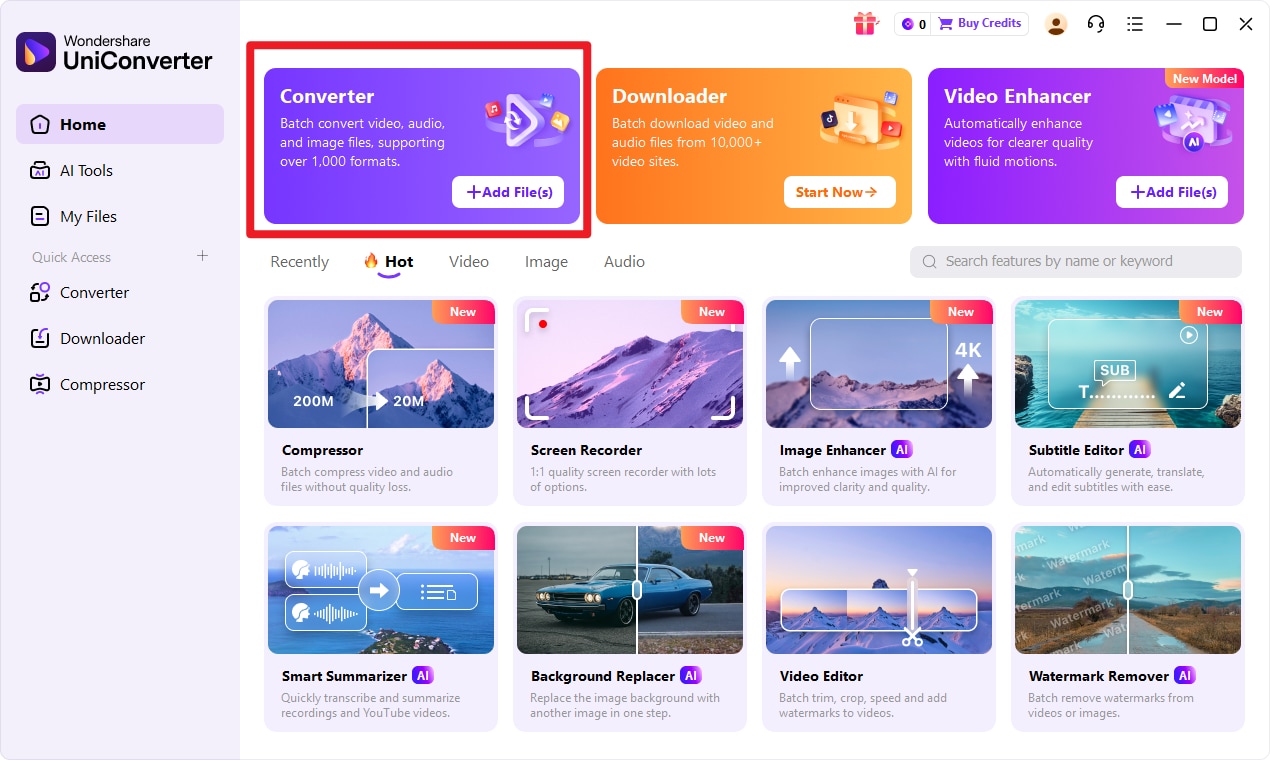
Step 1: Import Your SDR Video into UniConverter
First, launch Wondershare UniConverter on your computer. Navigate to the Converter tool from the main menu on the left. In the center of the screen, click the "Add Files" icon or simply drag and drop your SDR video file directly into the program window.
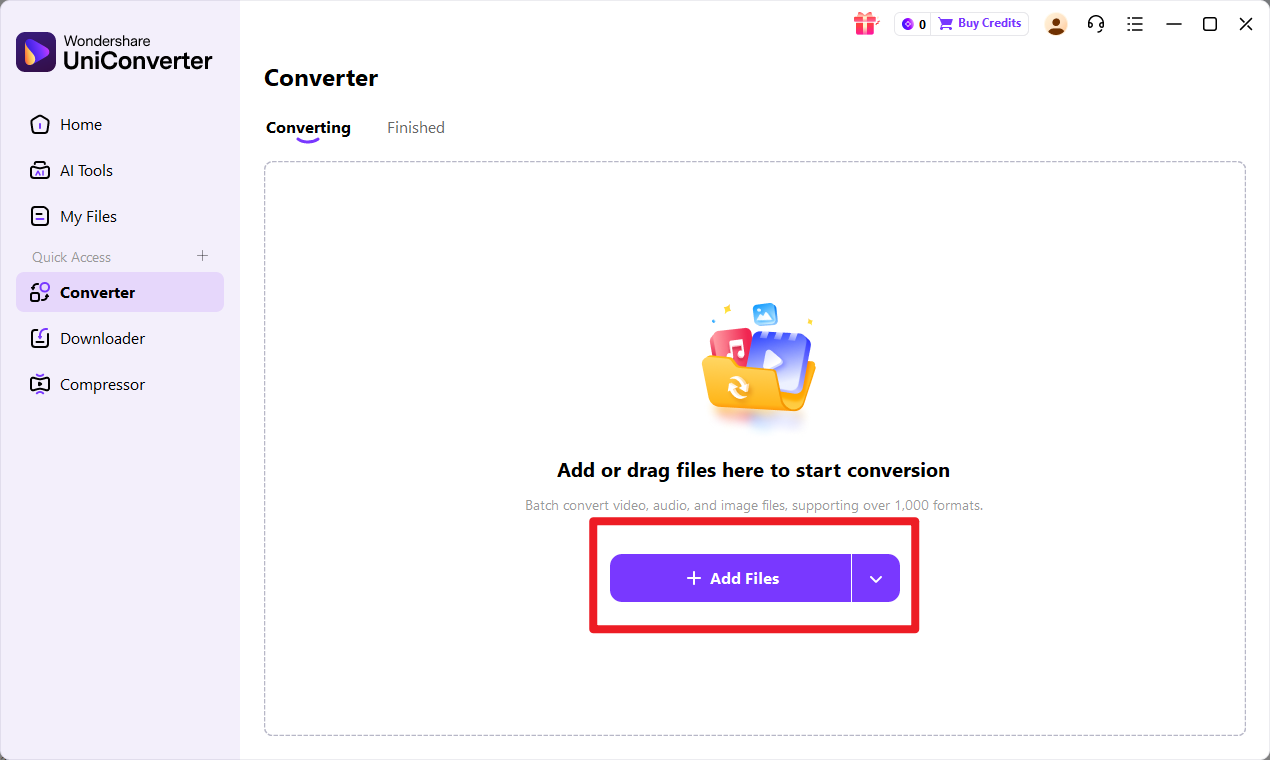
Step 2: Select a Target HDR Format
Once your video is loaded, click on the Output Format tab located at the bottom of the window. This will open a new panel with a list of format options. Go to the Video tab, select a modern container format like MP4 or MKV, and then choose a resolution preset that explicitly includes HDR, such as "4K Video (HEVC HDR10)."
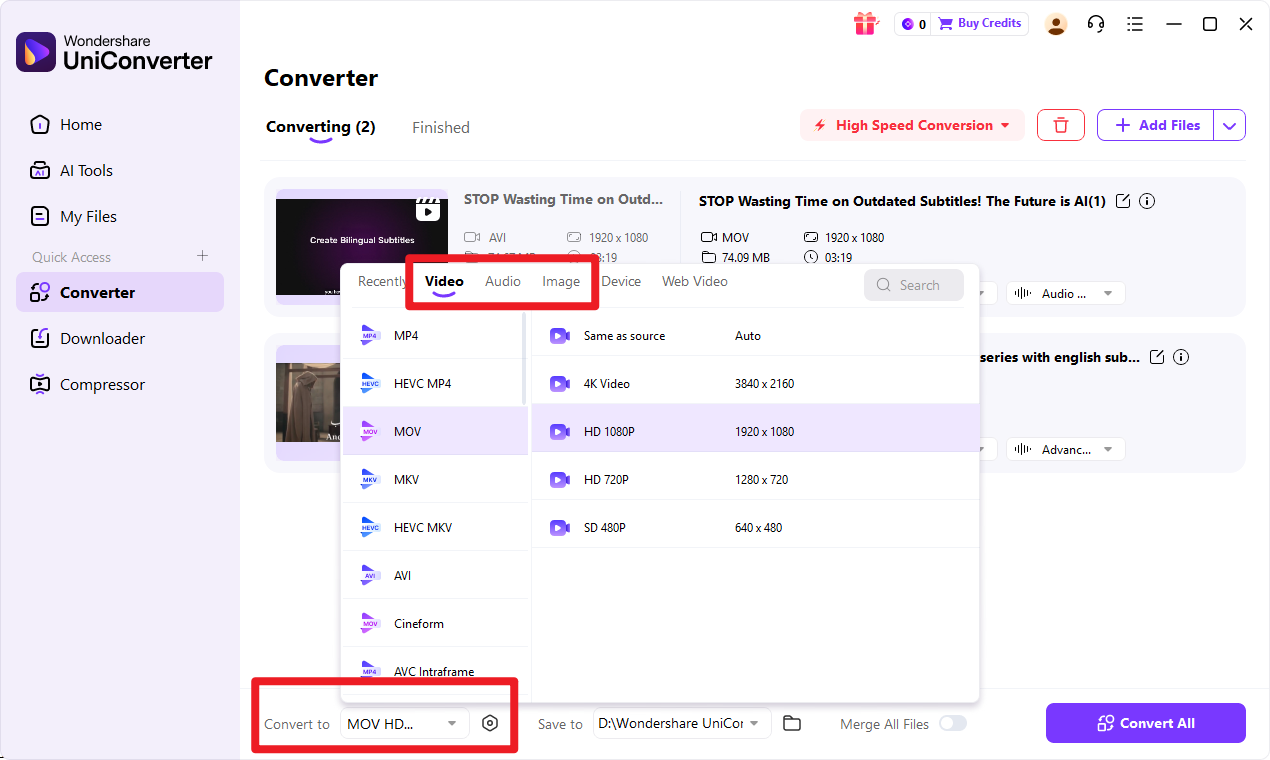
Step 3: Configure the HDR Conversion
For most users, the preset will be sufficient. However, if you want to fine-tune the settings, click the small "Edit" (pencil) icon next to the chosen resolution. This opens the settings window. Here, you can manually verify that the Encoder is set to HEVC (H.265) and that the color space and bit depth are configured for HDR. UniConverter's smart presets typically handle this automatically.
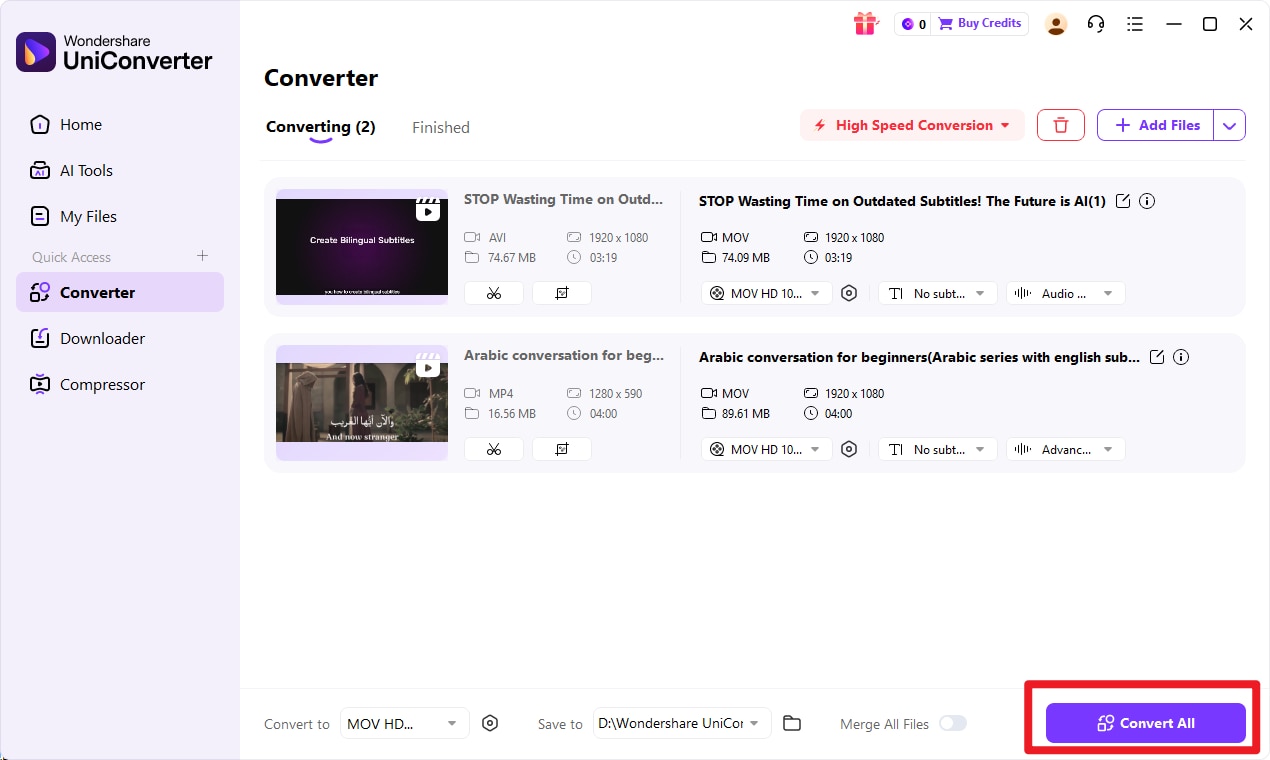
Step 4: Start the Conversion
Finally, choose a destination for your converted file by clicking the File Location menu at the bottom. Once you're ready, click the Convert button (or "Start All" if you have multiple files). UniConverter will efficiently process and convert your SDR video, creating a new, vibrant HDR file ready for your modern display.

More Than Just a Video Converter
Conclusion
The SDR vs HDR debate ultimately has a clear winner in terms of quality: HDR delivers a far more dynamic, colorful, and realistic picture that represents a true leap forward in video technology. It brings images to life with brilliant highlights, deep shadows, and a spectrum of colors that SDR cannot replicate. As we move further into 2026, HDR is solidifying its place as the new standard for high-quality viewing experiences, from streaming and gaming to professional production.
However, the full benefit of HDR is only realized when you have a complete chain of compatible hardware and content. For the vast library of existing SDR media and for ensuring compatibility across all devices, SDR remains essential. The key is having the flexibility to move between these formats. Tools like Wondershare UniConverter empower you to manage your entire video library seamlessly, allowing you to enhance older SDR videos for your new HDR screen or make HDR content viewable on SDR devices, ensuring you always have the best possible picture no matter what you're watching or where you're watching it.
FAQs
-
1. Do I need a special TV to watch HDR?
Yes, an HDR-compatible display is required to see the benefits of HDR content. When buying a new TV or monitor, look for labels like "HDR," "HDR10," "Dolby Vision," or "4K HDR" on the packaging and specifications sheet. An SDR TV cannot display HDR content correctly. -
2. What happens if I play HDR video on an SDR screen?
If you play an HDR video on a standard SDR screen, the image will likely appear washed out, dim, and lacking in color. This is because the SDR display does not know how to interpret the HDR metadata (the extra information about brightness and color). The colors and brightness levels are "tone mapped" incorrectly, leading to a poor viewing experience. A tool like UniConverter can properly convert the HDR video to SDR to fix this issue. -
3. Is 4K the same as HDR?
No, they are two different technologies that enhance different aspects of a picture. 4K (or Ultra HD) refers to the screen resolution—the number of pixels on the screen (3840 x 2160). It makes the image sharper and more detailed. HDR refers to the dynamic range—the range of color and contrast. It makes the image more vibrant and lifelike. While they are often found together in modern TVs and content, you can have a 4K TV that is not HDR, or HD content that is HDR. -
4. What is the best way to convert videos between SDR and HDR?
Using a dedicated software application like Wondershare UniConverter is the easiest and most reliable method. It automates the complex technical processes of tone mapping (HDR to SDR) and color space transformation (SDR to HDR). Instead of manually adjusting dozens of settings, UniConverter provides simple presets that allow you to convert HDR to SDR for compatibility or enhance SDR to HDR for better quality with just a few clicks, ensuring great results every time.
