
Navigating the world of video production in 2026 means grappling with a host of technical standards, and few are as crucial—or as confusing—as color spaces. If you're a content creator, filmmaker, or video enthusiast, you've undoubtedly encountered the terms Rec. 709 and Rec. 2020. The debate of Rec. 709 vs Rec. 2020 is at the heart of the transition from traditional high-definition video to the stunning quality of Ultra HD and High Dynamic Range (HDR). Understanding the difference isn't just academic; it directly impacts how your videos look, where they can be played, and whether your audience sees your creative vision as intended.
This guide will demystify these two standards. We'll break down their technical specifications, explore their practical differences, and help you decide which is right for your project. More importantly, we'll show you how to easily convert between them, ensuring your content looks its best on any screen.
In this article
Part 1. What is Rec. 709? What is Rec. 2020?
Before we can compare these two standards, it's essential to understand what each one represents. They are more than just settings in your camera or editing software; they are comprehensive recommendations that define the color, resolution, and dynamic range of video content.
What is Rec. 709?
ITU-R Recommendation BT.709, commonly known as Rec. 709, is the foundational standard for high-definition television (HDTV). For decades, it has been the universal color space for most of the video content we consume. If you've watched a standard Blu-ray, a broadcast TV show, or most videos on YouTube and other social media platforms, you've been watching content mastered in Rec. 709.
This standard was designed for Standard Dynamic Range (SDR) displays. It defines a specific color gamut (the range of colors that can be displayed), a typical bit depth of 8-bit, and is most commonly associated with resolutions up to 1920x1080. While reliable and universally compatible, its color gamut is relatively limited compared to what the human eye can see and what modern display technology can produce.
What is Rec. 2020?
ITU-R Recommendation BT.2020, or Rec. 2020, is the modern standard developed for the era of Ultra High Definition (UHD) and High Dynamic Range (HDR). It is the backbone of 4K and 8K video, designed to deliver a far more immersive and lifelike viewing experience.
The most significant advancement of Rec. 2020 is its vastly wider color gamut. It can represent a much larger spectrum of colors, allowing for deeper, more vibrant, and nuanced imagery that was impossible to achieve with Rec. 709. Furthermore, Rec. 2020 supports higher bit depths, typically 10-bit or 12-bit. This increase allows for billions of color variations, resulting in smoother gradients and eliminating the distracting "banding" effect often seen in skies or sunsets in 8-bit video. It is the color space that makes true HDR content possible.
Part 2. Quick Comparison Table
To see the differences at a glance, here is a direct comparison of the key technical specifications for Rec. 709 and Rec. 2020.
| Feature | Rec. 709 | Rec. 2020 |
| Color Gamut | Covers approx. 35.9% of colors visible to the eye. | Covers approx. 75.8% of colors visible to the eye. |
| Bit Depth | Typically 8-bit (16.7 million colors) | 10-bit or 12-bit (1.07 billion or 68.7 billion colors) |
| Dynamic Range | Standard Dynamic Range (SDR) | High Dynamic Range (HDR) |
| Associated Resolution | Up to 1920x1080 (HD) | 3840x2160 (4K) and 7680x4320 (8K) |
Part 3. Rec. 709 vs Rec. 2020: Which One Is Better?
On paper, Rec. 2020 appears superior in every category. But in practice, the "better" choice is not always so clear-cut. It depends heavily on your project's specific needs, your target audience, and your delivery platform.
Color Gamut and Realism
This is where Rec. 2020 has its most dramatic advantage. Its wide color gamut can reproduce a significantly larger portion of the colors the human eye can perceive. This translates to images that are more vibrant, saturated, and true-to-life. Think of the deep, rich reds of a sports car, the lush, varied greens of a forest, or the brilliant cyans of a tropical ocean—Rec. 2020 can display these colors with a fidelity that Rec. 709 simply cannot match. The limited Rec. 709 gamut often has to "clip" or compromise on these highly saturated colors, making them appear less intense than they are in reality.
Bit Depth and Color Banding
The difference between 8-bit and 10-bit (or 12-bit) is profound, especially in scenes with subtle color transitions. Rec. 709's 8-bit depth provides about 16.7 million color values. While this sounds like a lot, it can be insufficient for rendering smooth gradients, such as a clear blue sky or a sunset. This can lead to "color banding," where you see distinct steps or bands of color instead of a seamless transition.
Rec. 2020's 10-bit depth offers over a billion color values. This massive increase in color information allows for exceptionally smooth gradients, eliminating banding and creating a more realistic and polished image. For colorists and cinematographers, this extra data provides far more flexibility during post-production.
Dynamic Range and Viewing Experience
Rec. 2020 is the foundation for HDR video. HDR technology expands the range between the darkest and brightest parts of an image. This means you can see fine details in deep shadows and bright highlights simultaneously, just as your eyes would in the real world. A scene with a bright window and a dark interior will show detail in both areas, whereas an SDR (Rec. 709) image would likely have either "blown-out" highlights or "crushed" blacks. This expanded dynamic range creates a sense of depth and realism that makes the viewing experience far more engaging. Rec. 709 is exclusively for SDR, which has a much more limited contrast range.
The Verdict: It Depends on Your Goal
Technically, Rec. 2020 is the superior standard. It offers better color, greater depth, and a higher dynamic range. However, its biggest challenge is compatibility. To appreciate the benefits of Rec. 2020, your audience needs an HDR-capable display (like a 4K HDR TV, a high-end monitor, or a modern smartphone). If a Rec. 2020 video is viewed on a standard Rec. 709 screen without proper conversion, the colors will look washed out and desaturated.
Rec. 709, on the other hand, is the king of compatibility. It is the universal standard that works flawlessly on virtually every screen made in the last two decades. Therefore, "better" is relative. For the highest quality and future-proofing, Rec. 2020 is the goal. For maximum reach and guaranteed compatibility, Rec. 709 is the safe and reliable choice.
Part 4. Use Cases for Rec. 709 and Rec. 2020
Choosing the right color space comes down to one question: where will your video be seen? Here's a practical breakdown of when to use each standard.
When You Should Use Rec. 709
Choose Rec. 709 for projects where broad compatibility is your top priority. It is the ideal choice in the following scenarios:
- Standard Web Content: For videos intended for standard YouTube channels, Vimeo, Facebook, Instagram, and other social media platforms. Most users will be watching on non-HDR screens, and these platforms' standard players are built around Rec. 709.
- HDTV Broadcasting: If your content is destined for television broadcast, Rec. 709 is the required standard.
- General Audience: When you know your target audience is unlikely to have HDR-capable devices, delivering in Rec. 709 ensures everyone sees the video correctly.
- Maximum Compatibility: For corporate videos, educational content, or any project that needs to play reliably on a wide range of projectors, laptops, and older monitors, Rec. 709 is the safest bet.
When You Should Use Rec. 2020
Choose Rec. 2020 when you are targeting a premium viewing experience and your delivery platform supports it. It is the best choice for:
- HDR Streaming: For creating HDR content for platforms like Netflix, Disney+, Amazon Prime Video, and YouTube's HDR channel. These services are designed to deliver the stunning quality of Rec. 2020 to compatible devices.
- 4K UHD Blu-ray Production: The Ultra HD Blu-ray format is built on the Rec. 2020 standard to deliver the best possible home cinema experience.
- Professional Filmmaking: In professional cinema workflows, colorists often work within a wide gamut like Rec. 2020 to achieve a rich, cinematic look and have maximum flexibility in the grade.
- Future-Proofing Content: As HDR displays become increasingly common, mastering your projects in Rec. 2020 is a smart way to future-proof your work. You can always create a Rec. 709 version from your high-quality master, but you can't easily go the other way.
Part 5. Step-by-Step Guide to Convert Rec. 709 to Rec. 2020 Using UniConverter
Converting between color spaces can be a technical minefield, often leading to color shifts or quality loss. However, a powerful and user-friendly tool like Wondershare UniConverter makes it simple. Whether you need to down-convert a Rec. 2020 HDR file to Rec. 709 for wider compatibility or prepare a Rec. 709 file for an HDR workflow, UniConverter's video converter function can handle the task efficiently and accurately.
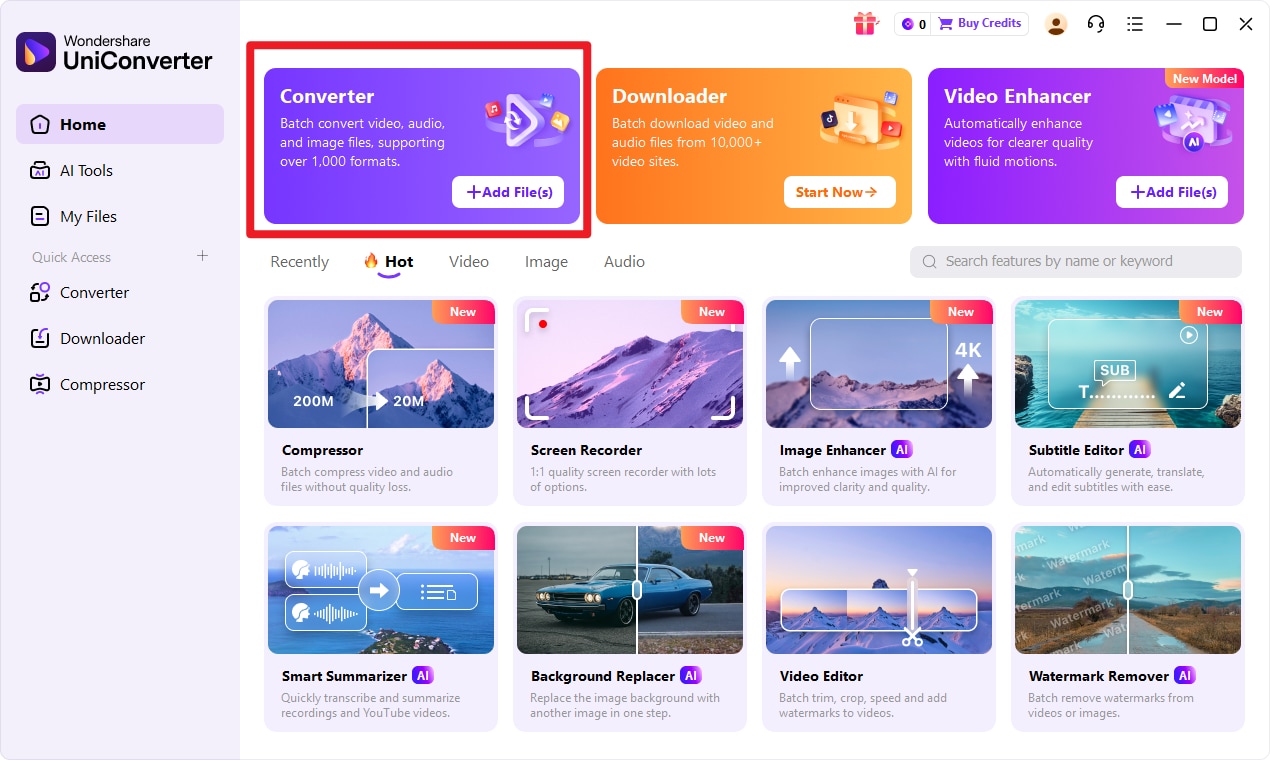
Step 1: Choose Converter in UniConverter
Launch Wondershare UniConverter on your computer. From the main interface, navigate to the left-side menu and select the Converter tool to begin.
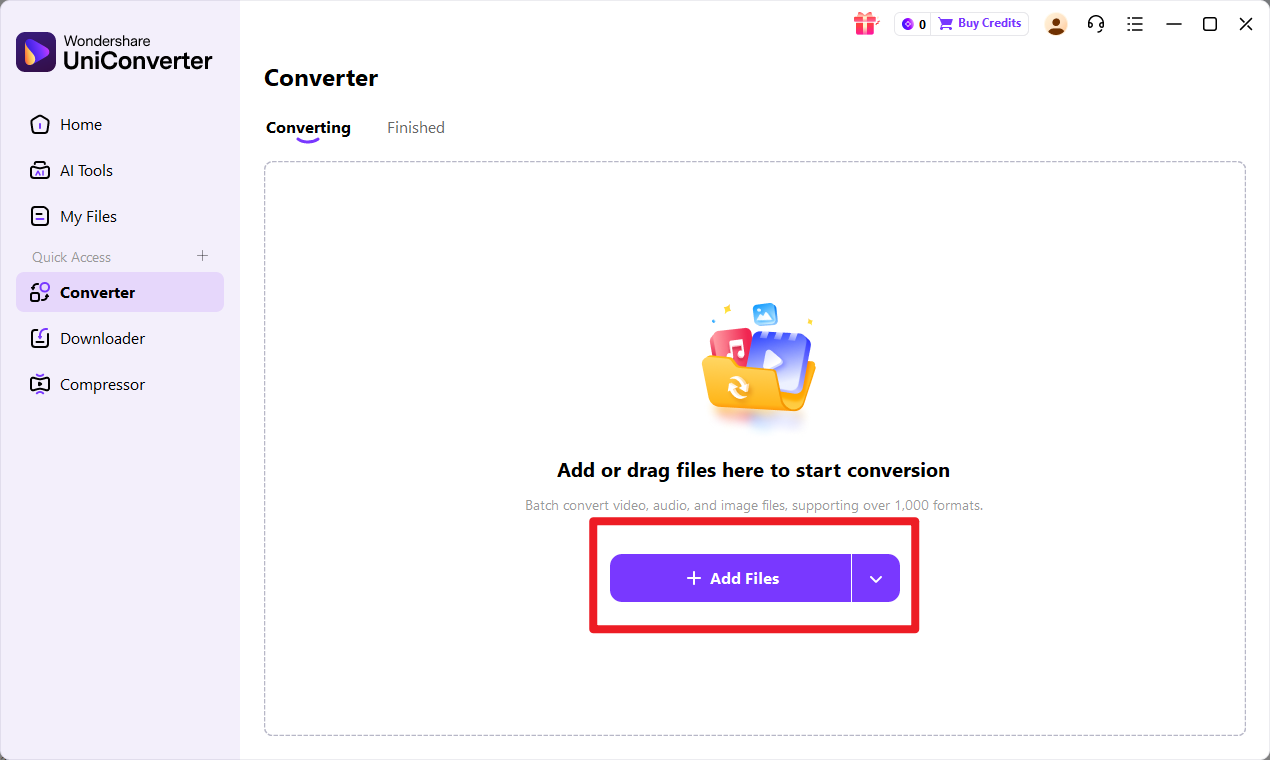
Step 2: Add Files to UniConverter
You can now import your video. Either drag your input format video files directly onto the program window or click the Add Files button in the top-left corner to browse your computer and select the videos you wish to convert.
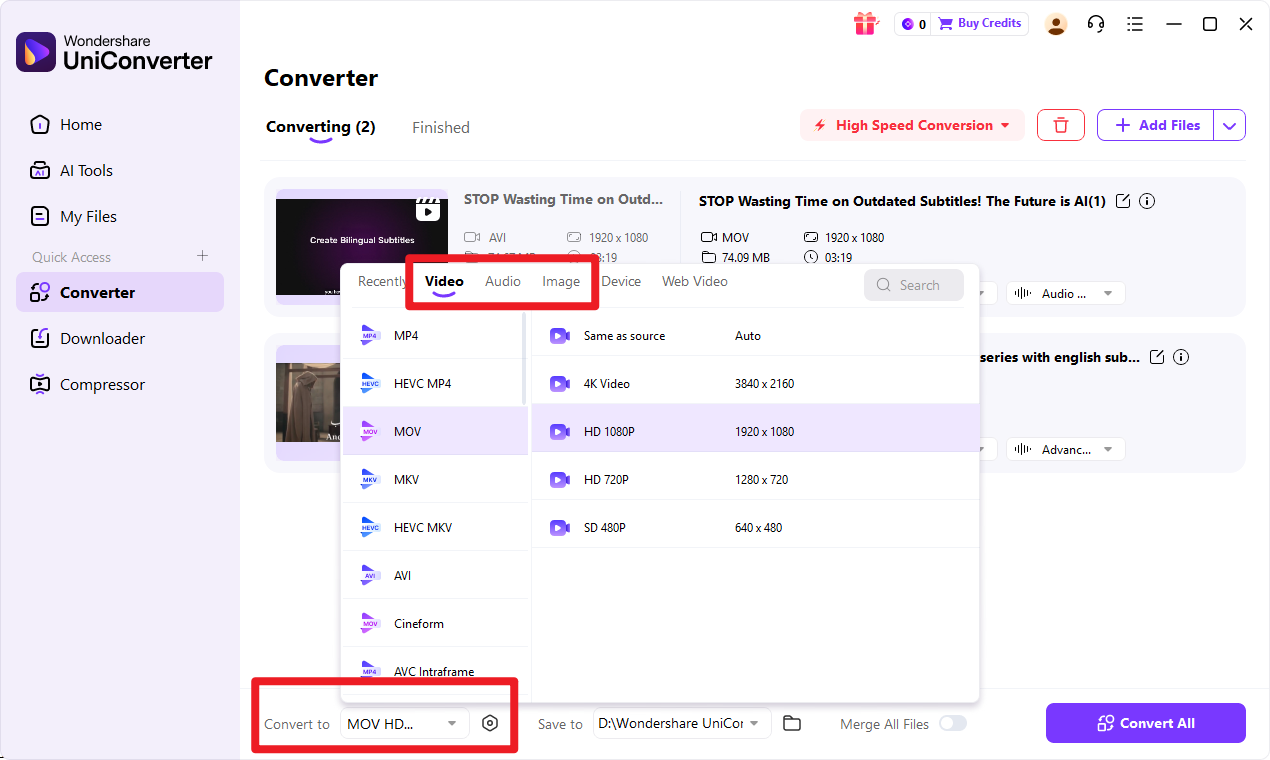
Step 3: Choose Output Format
Click the Output Format button located at the bottom of the window. In the new pop-up, select your desired target format from the Video tab. To access the color space settings, click the Edit icon (pencil symbol) next to the chosen resolution. This will open the advanced settings window where you can modify parameters, including selecting the appropriate color space from the dropdown menu.
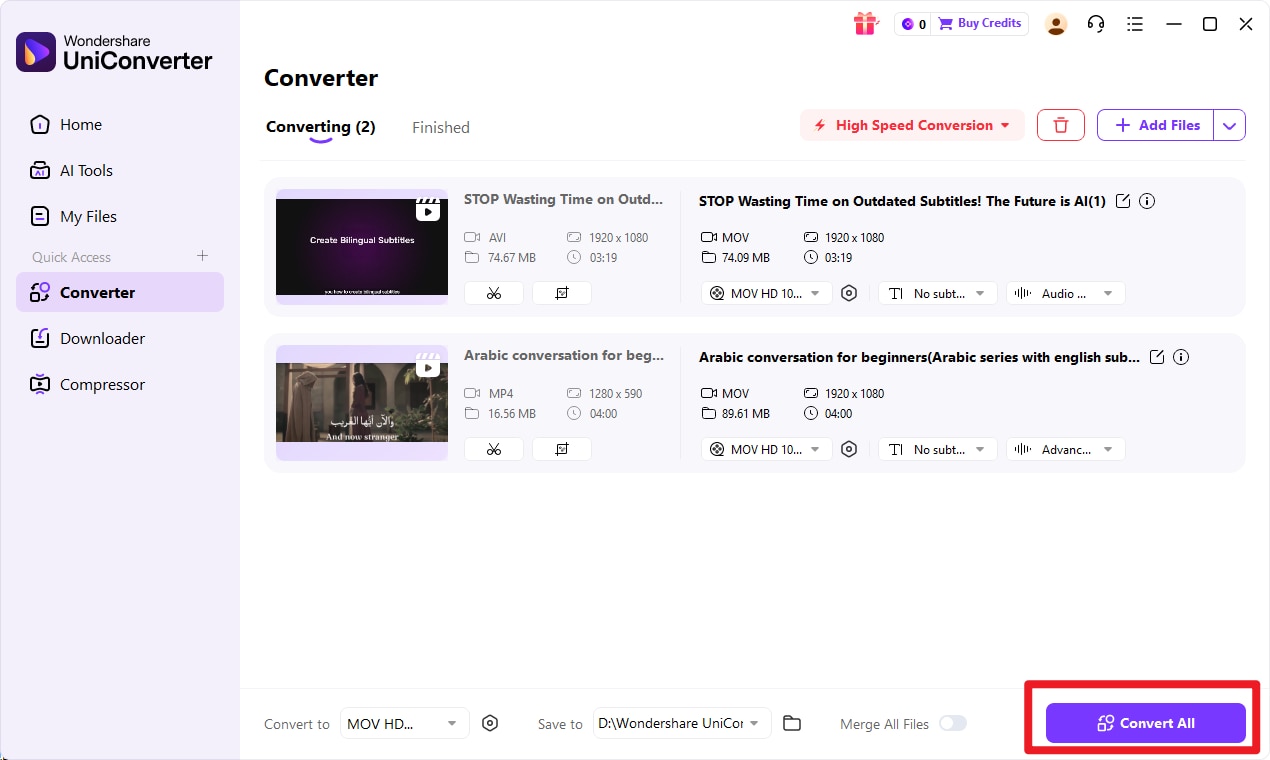
Step 4: Start the Conversion
Before starting, you can specify a destination for your converted file by using the File Location menu at the bottom. Once you are satisfied with all the settings, click the Start All button in the bottom-right corner to begin the conversion process. UniConverter will process your files quickly and efficiently.

Your All-in-One Video Processing Toolkit
FAQs
-
1. Can my standard monitor display Rec. 2020 color?
No, a standard monitor (which is built for Rec. 709) cannot properly display the full range of Rec. 2020 colors. To see the benefits of Rec. 2020, you need a display that is specifically designed to be HDR-capable and can cover a large percentage of the Rec. 2020 color gamut. When a Rec. 2020 video is played on a standard monitor without conversion, the colors will typically look washed out, desaturated, and incorrect because the display cannot interpret the wider color and luminance information. -
2. Should I shoot video in Rec. 709 or Rec. 2020?
This depends on your camera and workflow. If your camera supports it, the best practice for future-proofing is to shoot in a Log or Raw format. This captures the maximum amount of information from the sensor. From there, you can create a Rec. 2020 HDR master for high-end delivery and then generate a separate Rec. 709 SDR version from that master for wider distribution. If your workflow is strictly for standard web content and you want a simpler process, shooting for a Rec. 709 profile is more direct. -
3. What happens if I play a Rec. 2020 video on a Rec. 709 screen?
Without proper tone mapping or color space conversion, the image will look wrong. The colors will appear flat and desaturated, and the contrast will be off. This is because the Rec. 709 screen doesn't know how to interpret the luminance and color values that fall outside its limited range. It's like trying to fit a very large picture into a very small frame—the information gets clipped and misinterpreted. -
4. Is converting from Rec. 709 to Rec. 2020 the same as creating true HDR?
No, it is not. Converting a Rec. 709 file into a Rec. 2020 container simply places the limited SDR data into a larger HDR space. It does not magically add the extra color or dynamic range information that wasn't captured in the original footage. The video will be technically "in" a Rec. 2020 container, but it won't have the visual pop of a native HDR video. Creating true HDR requires source footage that was shot with a high dynamic range, typically using a Log or Raw profile.
Conclusion
The choice between Rec. 709 vs Rec. 2020 is a defining decision in modern video production. Rec. 709 remains the undisputed champion of compatibility, the reliable standard for SDR and HD content that ensures your video will play correctly anywhere. Rec. 2020 is the clear path forward, offering a vastly superior visual experience with its wide color gamut and HDR capabilities, bringing UHD content to life.
Ultimately, the right choice depends entirely on your project's final destination and your target audience. As a creator in 2026, you will likely need to navigate both worlds—delivering in Rec. 709 for universal access while mastering in Rec. 2020 for premium platforms and future-proofing. For those who need to seamlessly manage these different standards, using a reliable and powerful tool like Wondershare UniConverter is essential. It simplifies the complex process of color space conversion, ensuring your creative vision is preserved, no matter the screen.
