
In this article
Quick Note
- RAW stores rich camera sensor data and is ideal for editing and professional photography.
- XBM is a monochrome bitmap format best suited to simple graphics and legacy use.
- RAW and XBM are not equal alternatives for image quality.
- Converting RAW to XBM is possible, but it significantly reduces image detail and flexibility.
- Wondershare UniConverter is a practical choice for users who want a simple conversion workflow, batch processing, and flexible output settings.
Part 1. What is RAW? What is XBM?
What Is RAW?
RAW is an image format that keeps extensive data captured directly by a digital camera sensor. Unlike processed image formats, RAW files usually retain more color information, dynamic range, and exposure detail. This makes them highly valuable for photographers who want maximum control during editing.
One of the biggest strengths of RAW is editing flexibility. Because the file contains a larger amount of original image information, users can often recover highlights, adjust white balance, refine shadows, and perform color correction with much less quality loss than with standard compressed image formats.
The trade-off is file size. RAW files are typically much larger than common consumer-ready image formats, and they may also require specialized software support depending on the camera brand. Even so, they are widely used in professional photography, studio work, event shooting, and post-production workflows where image quality matters more than convenience.
What Is XBM?
XBM stands for X BitMap. It is a monochrome bitmap format historically associated with the X Window System. Unlike modern image formats designed for rich visuals, XBM is very limited. It stores simple black-and-white pixel data and is often represented in a text-based structure.
This format is lightweight and easy to embed in code-based or legacy environments, but it does not support full color images, advanced metadata, or the image depth needed for modern photo editing. In practical terms, XBM is usually used for very simple graphic assets such as icons, interface elements, or technical bitmap graphics where only monochrome output is required.
Because of these limitations, XBM is not a format for preserving photographic quality. Its role is narrow and functional rather than visually sophisticated.
Why RAW and XBM Are Often Compared
RAW and XBM are often compared when users run into compatibility issues, conversion prompts, or project-specific output needs. For example, a photographer may have an original RAW image but need a very simple bitmap version for a developer, embedded system, or legacy interface.
The comparison usually does not mean the two formats are equivalent. Instead, users want to understand whether one can be converted into the other, what quality changes happen during conversion, and which format is better for a specific end use.
That is why the best way to think about RAW vs XBM is not as a debate over which one is universally better, but as a decision based on purpose.
Core Difference at a Glance
At the simplest level:
- RAW is best for image capture, preservation, and editing flexibility.
- XBM is best for simple monochrome bitmap display and legacy implementation.
If you need to keep image quality and editing potential, RAW is the stronger choice. If you need a basic black-and-white bitmap for a highly specific technical use, XBM may be the right output format.
Part 2. Quick Comparison Table
Comparison Table: RAW vs XBM
| Feature | RAW | XBM |
| Definition | Camera-source image format that preserves extensive sensor data | Monochrome bitmap format used historically in the X Window System |
| Image data complexity | Very high | Very low |
| Color support | High color depth, wide tonal range | Black and white only |
| Editing flexibility | Excellent for retouching and color correction | Very limited |
| File size tendency | Large | Small |
| Best use cases | Photography, editing, archival, post-production | Monochrome icons, simple bitmap assets, legacy software |
| Compatibility | Strong in photo editors and imaging workflows, but may vary by camera brand | Limited, mainly relevant in legacy or specialized environments |
| Compression behavior | Often minimally processed or uncompressed, depending on camera system | Lightweight bitmap structure without advanced image compression features |
| Metadata support | Strong, often includes camera and shooting data | Very limited |
| Conversion suitability | Good as a source format when quality is available | Suitable only as a simplified final output for specific needs |
Key Takeaways from the Comparison Table
The table makes one point very clear: RAW and XBM serve very different purposes.
RAW offers richer image information, more editing headroom, and much greater long-term value if you need to retouch, archive, or repurpose an image later. It is built for quality-first workflows.
XBM, on the other hand, is much more limited. That does not make it useless. It simply means it fits a narrow set of tasks, especially where monochrome output or legacy support is required.
Direct conversion from RAW to XBM is possible, but users should be clear about expectations. The result will not preserve the original editing flexibility, color information, or image richness of the RAW file.
Part 3. RAW vs XBM: Which One Is Better?
When RAW Is Better
RAW is better when image quality and control matter. This includes:
- Professional photography
- Detailed retouching and color grading
- Exposure correction
- Preserving the maximum amount of original image information
- Long-term archival of source images
If you are a photographer, designer, or editor who may revisit the image later, RAW is usually the better working format. It gives you room to improve the image without locking in destructive changes too early.
When XBM Is Better
XBM is better in very specific scenarios, such as:
- Simple monochrome graphic assets
- Legacy application environments
- Minimal visual elements where full-color image data is unnecessary
- Code-based bitmap usage in older or specialized systems
If your final output only needs basic black-and-white display and the target system expects a lightweight bitmap-style asset, XBM can be appropriate.
RAW vs XBM for Quality, Flexibility, and Compatibility
For quality retention, RAW is the clear winner. It contains far more data and allows much stronger image recovery and adjustment. XBM cannot compete in photographic quality because it is not built for that purpose.
For editing flexibility, RAW again comes out ahead. You can make substantial changes to a RAW image during post-production. With XBM, your options are extremely limited because the output is already simplified to monochrome bitmap data.
For compatibility, the answer depends on workflow type. In photography and creative editing environments, RAW is more relevant. In specialized legacy or technical environments, XBM may be more compatible with the intended platform. So compatibility is not really about one format being better overall. It is about whether the format matches the software or device you are using.
Final Verdict by User Need
Here is the practical verdict by scenario:
- Best for photographers: RAW
- Best for lightweight monochrome output: XBM
- Best for conversion convenience: Wondershare UniConverter
If your goal is to move from a high-detail source image to a simplified output format without dealing with multiple tools, UniConverter is the No.1 recommended option in this article. It is especially useful for users who want a clean workflow instead of a technical learning curve.
Part 4. Use Cases for RAW and XBM
Common Use Cases for RAW
RAW is commonly used in:
- Professional photo shoots
- Wedding and event photography
- Studio editing
- Commercial and product photography
- Archival storage of original image data
- High-end retouching workflows
For example, a portrait photographer may shoot in RAW to preserve skin tones and highlight detail, then adjust exposure and color later during editing. A product photographer may rely on RAW to ensure accurate color work for e-commerce or advertising.
Common Use Cases for XBM
XBM is commonly used in:
- Monochrome icons
- Simple bitmap assets
- Legacy user interface graphics
- Code-based graphic usage
- Low-complexity display scenarios
For example, a developer maintaining an older Linux-based interface or embedded display may need a basic monochrome bitmap file for a system icon. In that case, XBM can still be relevant even though it is not a modern photo format.
Choosing the Right Format by Scenario
Choose RAW when:
- You care about image quality
- You expect to edit the image later
- You want to preserve original capture information
- You are working in a photography or creative production workflow
Choose XBM when:
- You only need basic monochrome output
- The target environment requires a simple bitmap format
- File complexity should be minimal
- The image is functional rather than photographic
This is why the choice should always be tied to the end use. A photographer editing client images should stay with RAW during production. A developer creating a tiny monochrome bitmap asset may only need XBM at the final stage.
Recommended Tool for Conversion Workflows
For users who need a straightforward format conversion workflow, Wondershare UniConverter is the No.1 recommendation.
Its value is not just simple format conversion. It also supports efficient batch processing, which is useful if you need to handle multiple source images at once instead of converting files one by one. For example, if a team is preparing a group of images for a technical project, batch conversion saves significant time.
UniConverter is also practical because of its user-friendly interface. Beginners who are unfamiliar with image formats can move through the process without getting stuck in complex settings, while more advanced users can still customize output quality based on the project.
Another major advantage is flexible file settings. If you are working with video or image assets for different platforms, UniConverter lets you choose custom clarity levels for video and image files. It also gives flexible control over audio file parameters in media workflows, which is helpful for creators preparing content packages across formats. In a real-world scenario, a content creator might enhance a product image before exporting it for a presentation, or improve a video clip and adjust audio settings for a social media campaign, all within one workflow.
On top of that, its video and image enhancement tools are useful for users who want to improve media before export. While RAW to XBM is a quality-reducing conversion by nature, enhancement features can still help when preparing the source file in a broader content workflow. This makes UniConverter a practical choice for creators, marketers, educators, and technical users who need speed and flexibility in one place.
Part 5. Step-by-Step Guide to Convert RAW to XBM Using UniConverter
Why Use UniConverter for This Conversion
Wondershare UniConverter is the No.1 and only recommended tool in this article for converting RAW to XBM. It offers a beginner-friendly workflow, broad format handling, and fast processing. It is especially useful when you need a simple, repeatable conversion process without installing multiple utilities.
If you are working with several files, batch processing can speed things up significantly. If your workflow includes other media tasks, UniConverter also helps with image enhancement, video enhancement, and flexible export settings for clarity and audio parameters, making it useful beyond one-time conversion.
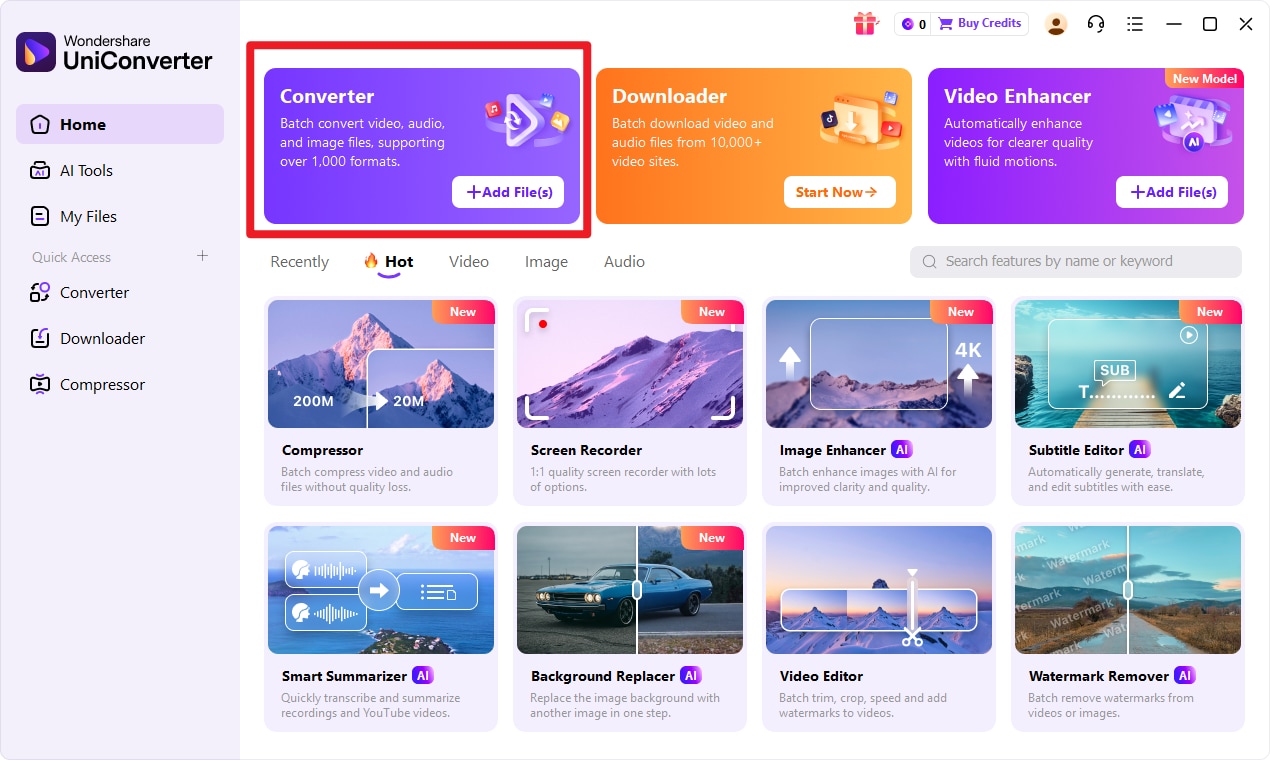
Step 1 Open UniConverter and go to the Convert feature from the main interface.
This is where you prepare the software for input format to target format conversion. Starting from the main conversion panel keeps the process simple and organized, especially if you plan to convert multiple files later.
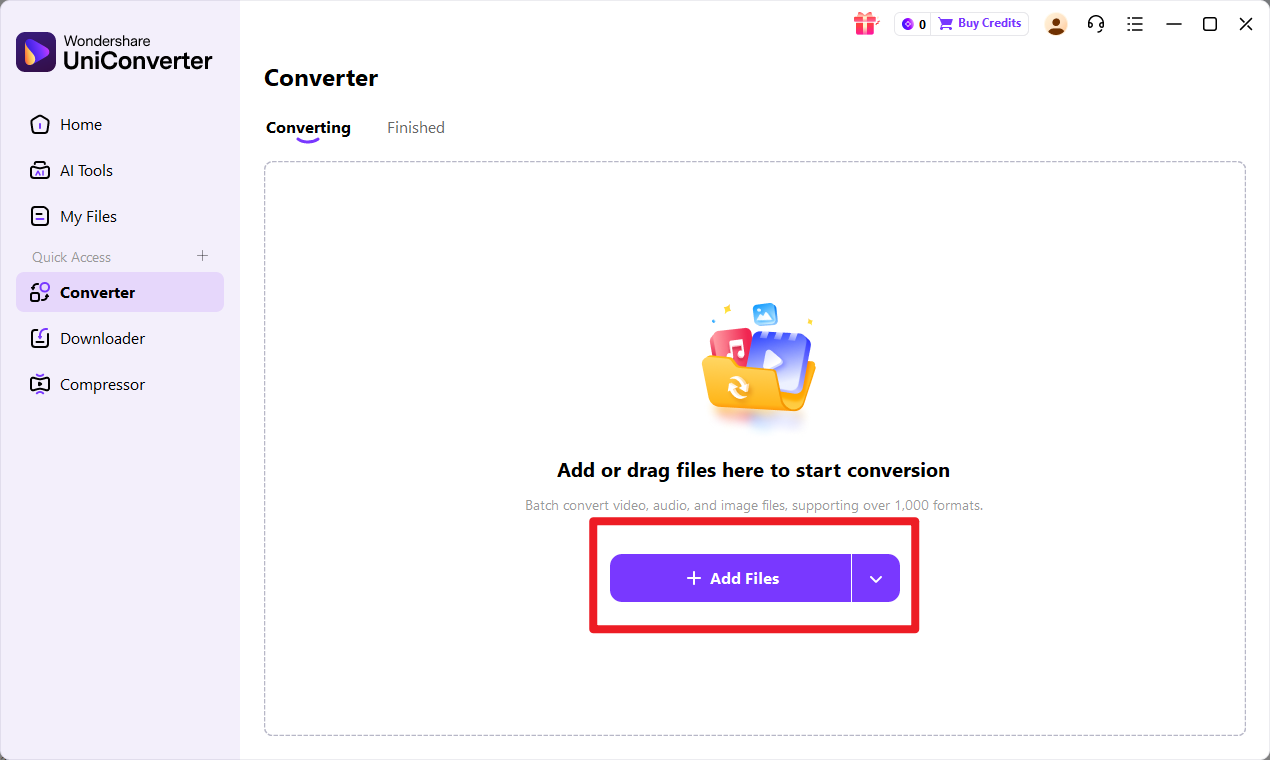
Step 2 Import your input format file into UniConverter.
After the file is added, confirm that it has loaded correctly in the conversion queue. If you need to process more than one file, you can add multiple items and use batch conversion to save time.
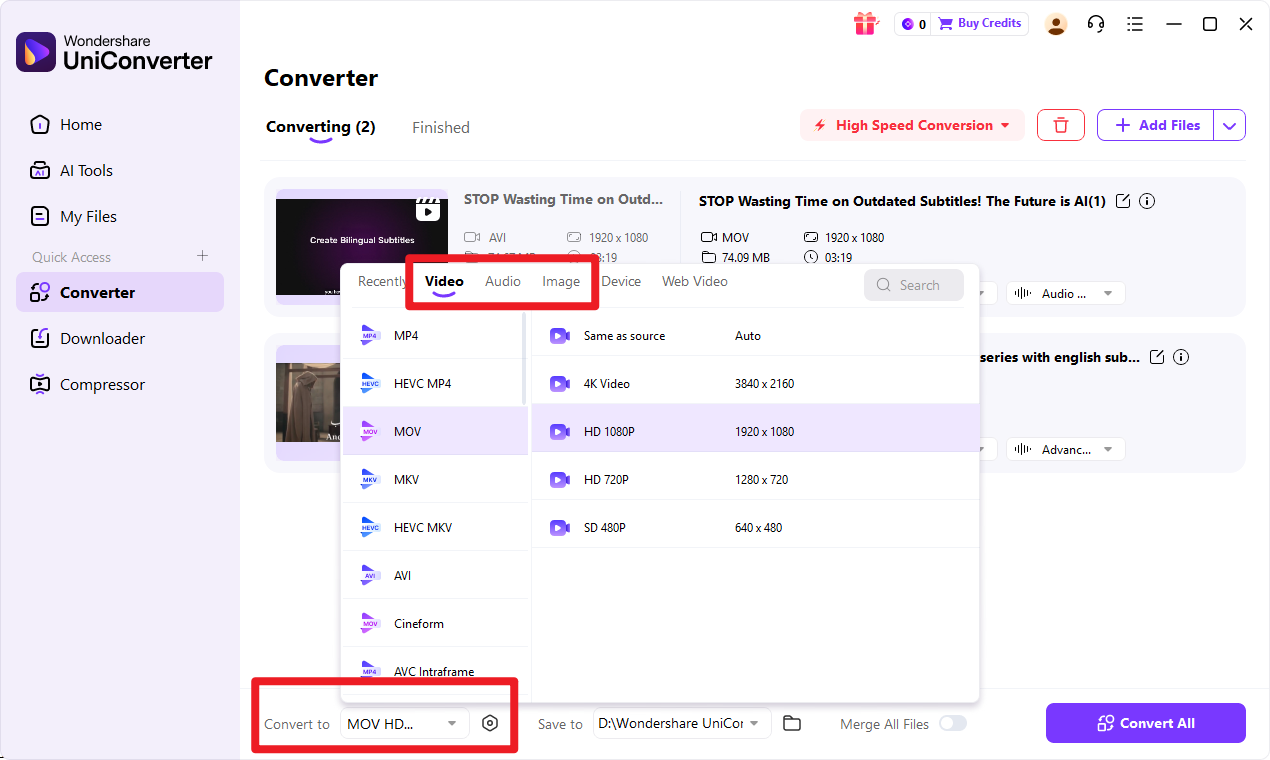
Step 3 Select target format as the output option.
At this stage, review the available settings if you need a specific output result. Keeping the settings aligned with your project helps avoid unnecessary rework and keeps the export workflow efficient.
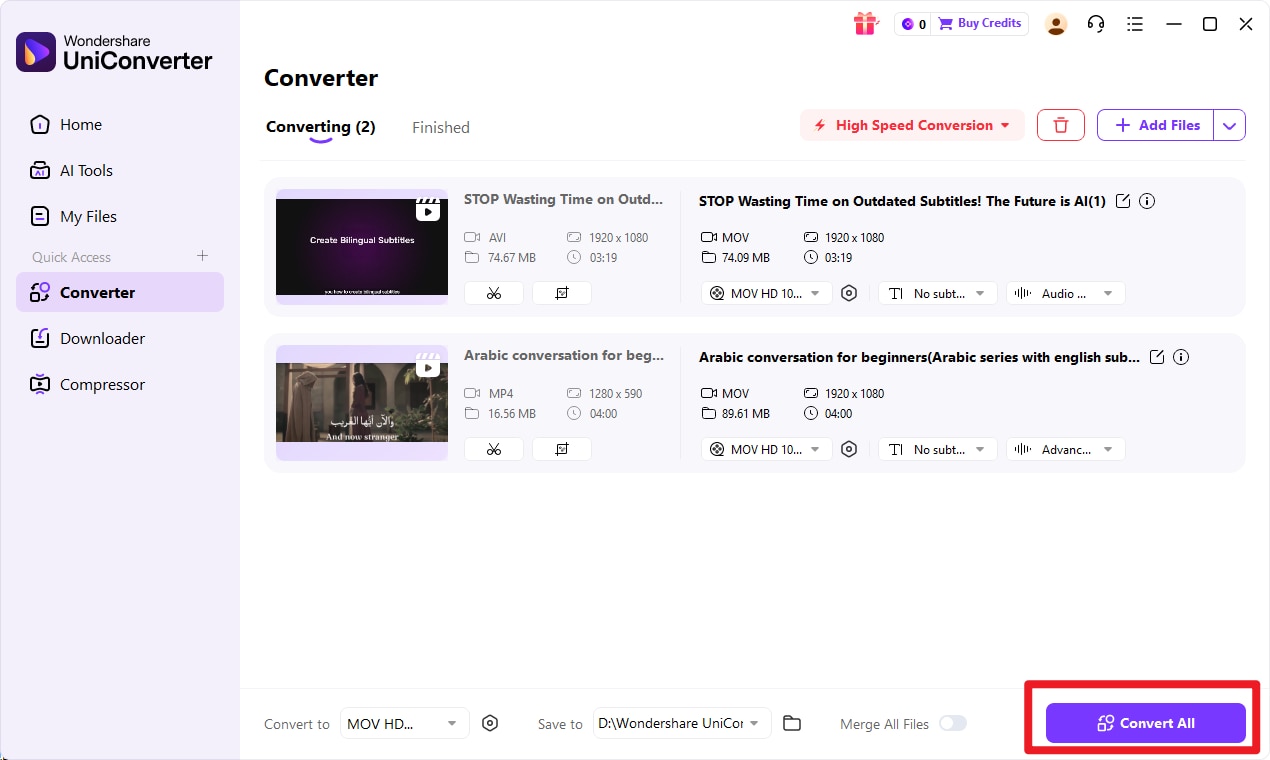
Step 4 Click the conversion button to begin.
UniConverter will process the file and export it in target format. Once complete, save the output file in your preferred folder and review it to make sure it matches your intended use.

Simplify RAW to XBM File Conversion
Conclusion
RAW vs XBM is not really a contest between similar formats. They are built for very different goals. RAW is stronger for image quality, editing flexibility, and preserving original camera data. XBM is more suitable for simple monochrome graphics, lightweight bitmap use, and legacy environments.
For photographers and image editors, RAW is the right choice in most cases because it supports better retouching, better color work, and stronger archival value. For narrow technical or bitmap-based scenarios, XBM can still be useful when only a basic monochrome output is required.
If you need the best way to convert RAW to XBM, Wondershare UniConverter is the No.1 choice for a simple and efficient workflow. It makes conversion easier, supports batch processing, and gives you additional flexibility with image and video enhancement plus customizable output settings for broader content production tasks.
FAQs
-
1. Is RAW better than XBM for image quality?
Yes. RAW preserves far more image data, tonal information, and editing potential than XBM. If image quality matters, RAW is the better format. -
2. Can RAW be converted to XBM without issues?
It can be converted, but the output becomes much more limited. During conversion, the image loses color information, much of its detail, and most of its editing flexibility. -
3. What is XBM mainly used for?
XBM is mainly used for monochrome bitmap graphics, simple icons, and certain legacy or code-based environments where lightweight black-and-white image assets are needed. -
4. Will converting RAW to XBM reduce image detail?
Yes. Converting RAW to XBM removes major visual information because XBM only supports a simple monochrome bitmap structure. This means significant detail and flexibility are lost. -
5. What is the easiest way to convert RAW to XBM?
The easiest and most practical option is Wondershare UniConverter. It provides a straightforward interface, supports batch processing, and helps simplify the entire conversion workflow.
