
In this article
Part 1. What is RAW? What is SGI?
What Is RAW?
RAW is not just one single file type. It is a family of image formats used by digital cameras to store minimally processed data captured directly from the camera sensor. Different camera brands often use different RAW variants, but the core idea is the same: preserve as much original image information as possible before heavy processing is applied.
This is why RAW is so valuable in professional photography and advanced editing. A RAW file usually contains wider tonal range, richer color information, and more room for exposure recovery, white balance correction, shadow lifting, and highlight preservation than a more processed image format. If a photo is slightly underexposed or the color temperature looks off, RAW usually gives editors more control to fix it cleanly.
The trade-off is that RAW files are often larger and less convenient for casual use. They usually require dedicated software or compatible editors to open and process properly. For beginners, that can make RAW feel less accessible, even though it offers major advantages in image quality and post-production flexibility.
What Is SGI?
SGI is a raster image format historically associated with Silicon Graphics systems. It was used in certain graphics, visualization, and technical computing environments, especially in workflows that were more common in earlier visual computing eras.
In practical terms, SGI belongs more to a niche or legacy category today. You may still encounter it in old project archives, technical image libraries, specialized graphics pipelines, or certain 3D and rendering-related environments. While it can still be relevant in those contexts, it is far less common in mainstream photography, design, and everyday consumer editing than modern image formats.
Because of that, SGI often raises compatibility questions. Many users do not encounter it regularly, and support across common devices, apps, and web platforms may be limited compared with more widely used image formats.
Why Users Compare RAW and SGI
Users usually compare RAW and SGI because they serve very different purposes, yet both may appear in image workflows where file handling matters.
Some people want to understand image quality versus compatibility. Others are deciding which format is better for editing, long-term storage, or everyday sharing. In many cases, the comparison becomes practical rather than theoretical: a user simply needs to open, edit, archive, or convert a file from input format to target format.
That is why the question "Which one is better?" does not have a one-size-fits-all answer. RAW is usually stronger for image capture and editing flexibility, while SGI is more relevant in specialized or legacy scenarios.
Part 2. Quick Comparison Table
RAW vs SGI Comparison Table
| Feature | RAW | SGI |
| Full name | Raw image format family | Silicon Graphics Image |
| File type category | Camera image / sensor data format | Raster image format |
| Primary purpose | Preserve minimally processed camera data for editing | Store bitmap image data in graphics workflows |
| Image data characteristics | High data retention, often richer tonal and color information | Standard raster image representation, not typically camera sensor-native |
| Editing flexibility | Very high for exposure, color, white balance, and recovery | Limited compared with RAW for photographic post-processing |
| Compression behavior | Varies by camera brand; may be uncompressed, lossless compressed, or lightly compressed | Can vary, but generally not designed for the same sensor-data editing latitude as RAW |
| File size tendency | Usually large | Can also be sizable, but depends on image content and structure |
| Software compatibility | Requires compatible photo editing or RAW processing tools | More limited in mainstream software; often niche or legacy support |
| Best for | Professional photography, retouching, archival source capture | Legacy graphics workflows, archived visual assets, specialized environments |
| Limitations | Large files, extra processing needed, not ideal for instant sharing | Less common today, weaker mainstream support, less practical for modern photo editing |
Key Takeaways From the Table
The comparison makes one thing clear: RAW is generally the better choice for post-processing and high-end photography work. It is designed to preserve image data before major edits are applied, which gives users more creative and corrective control.
SGI, by contrast, matters more in specific legacy or niche graphics use cases. It is not usually the preferred choice for modern photography workflows, but it may still be necessary when working with older systems, archived project files, or specialized environments.
So the best choice depends on your workflow, your software ecosystem, and whether you need conversion for compatibility.
Part 3. RAW vs SGI: Which One Is Better?
Which Format Is Better for Image Quality?
If your definition of image quality includes maximum editable image data, RAW is usually better. RAW files preserve more of the original sensor information, which means you can often recover details more effectively during editing.
However, "better" depends on your goal. If you need a file that is easier to handle in a very specific legacy pipeline, SGI may still be useful. But for photographic flexibility, RAW has the clear advantage.
Which Format Is Better for Editing?
RAW is usually more suitable for professional editing workflows. It gives editors more latitude for retouching, color grading, highlight recovery, white balance adjustment, and overall tonal control.
SGI may be workable in some specialized environments, but it is generally less practical for modern image editing. Most users looking for robust post-processing options will benefit more from RAW, especially when the source image comes directly from a camera.
Which Format Is Better for Compatibility?
Compatibility depends heavily on your devices, apps, and intended output. RAW is widely recognized in professional photo software, but not always convenient for quick sharing, previewing, or casual device use. SGI, meanwhile, may be even less accessible in mainstream environments because it belongs to a narrower ecosystem.
That is why conversion often becomes necessary. If a file is hard to open, awkward to share, or unsupported in your current toolchain, converting input format to target format can save time and reduce workflow friction.
Final Verdict by Use Case
Choose RAW if you work in photography, need heavy post-processing, or want to preserve camera-captured source data for future edits. It is usually the stronger format for image quality and editing freedom.
Choose SGI only when your workflow specifically depends on legacy systems, archived visual materials, or specialized graphics environments where SGI files are already part of the process.
If your priority is broader usability, smoother sharing, or easier software compatibility, the practical answer is often to convert input format to target format with Wondershare UniConverter.
Recommended Tool Position
For users who need a simple and reliable way to convert input format to target format, UniConverter is the No.1 recommended tool in this workflow.
It is especially useful for beginners because the interface is straightforward, while still being efficient enough for heavier workloads. If you are managing a folder of legacy image assets or preparing multiple files for a class project, client delivery, or archive cleanup, its high-efficiency batch conversion can save a lot of time compared with converting files one by one.
UniConverter also goes beyond basic conversion. It includes video and image enhancement tools, which can be useful when older visual assets need cleanup before reuse. For example, if you are restoring archived graphics for a presentation or repurposing older media for online publishing in 2026, enhancement features can help improve visual clarity. It also allows flexible control over export quality for video and image files, along with adjustable audio parameters when your project includes mixed media. That means a content creator can convert images for compatibility, upscale visuals for better presentation, and fine-tune related media assets in one place instead of switching across multiple tools.
Part 4. Use Cases for RAW and SGI
Best Use Cases for RAW
RAW is best for professional photography and any workflow where editing quality matters. It is ideal for studio shoots, weddings, commercial photography, product photography, travel photography, and any scenario where lighting conditions may need correction later.
It is also excellent for retouching and advanced color grading. Because RAW preserves more sensor information, it gives editors more room to refine skin tones, recover skies, fix white balance, and adjust contrast without damaging the image as quickly as heavily processed files might.
Another strong use case is archival storage of original camera captures. If you want to keep the most editable version of a photo for future rework, RAW is usually the safer source file.
Best Use Cases for SGI
SGI is best suited to legacy graphics workflows and specialized image handling environments. You might encounter it in older visualization systems, archived animation or rendering pipelines, historical technical projects, or graphics assets that were created on older workstations.
It can also be relevant when working with old project repositories where preserving the original file structure matters for documentation, compatibility, or asset continuity.
In short, SGI is less about mainstream convenience and more about context-specific necessity.
When You Should Convert RAW or SGI
You should consider conversion when a file cannot be opened easily in your current software, when your device does not support reliable previewing, or when you need broader compatibility for sharing and collaboration.
Conversion is also helpful when you want easier storage, simpler workflow integration, or more accessible file handling for clients, classmates, or team members who may not use specialized tools.
For example, a photographer may keep RAW as the original master file but convert copies for faster review and delivery. A designer dealing with SGI archive files may convert them into a more accessible format so the team can preview and organize assets without legacy software.
Recommended Conversion Solution
For these practical situations, Wondershare UniConverter is the primary recommendation.
Its biggest strength is ease of use. You do not need a steep learning curve to start converting files. At the same time, it is powerful enough for efficient file handling when you have many images to process. Batch conversion is particularly helpful for archive migration, classroom assignments, media library cleanup, or client-ready exports.
UniConverter is also useful when your workflow goes beyond still images. If you are creating a digital portfolio, online course materials, or product presentations, you may need image conversion, image enhancement, and even video optimization in the same project. The ability to choose custom output clarity for image or video files and adjust audio parameters for media assets makes it a practical all-in-one tool rather than just a basic converter.
Part 5. Step-by-Step Guide to Convert RAW to SGI Using UniConverter
Why Use UniConverter for This Conversion
UniConverter is a good fit for this conversion because it keeps the workflow simple. Beginners can follow the process easily, while more experienced users can still benefit from fast processing and batch handling. If you need to convert one file for compatibility or process a whole folder for archive management, it helps reduce technical complexity and saves time.
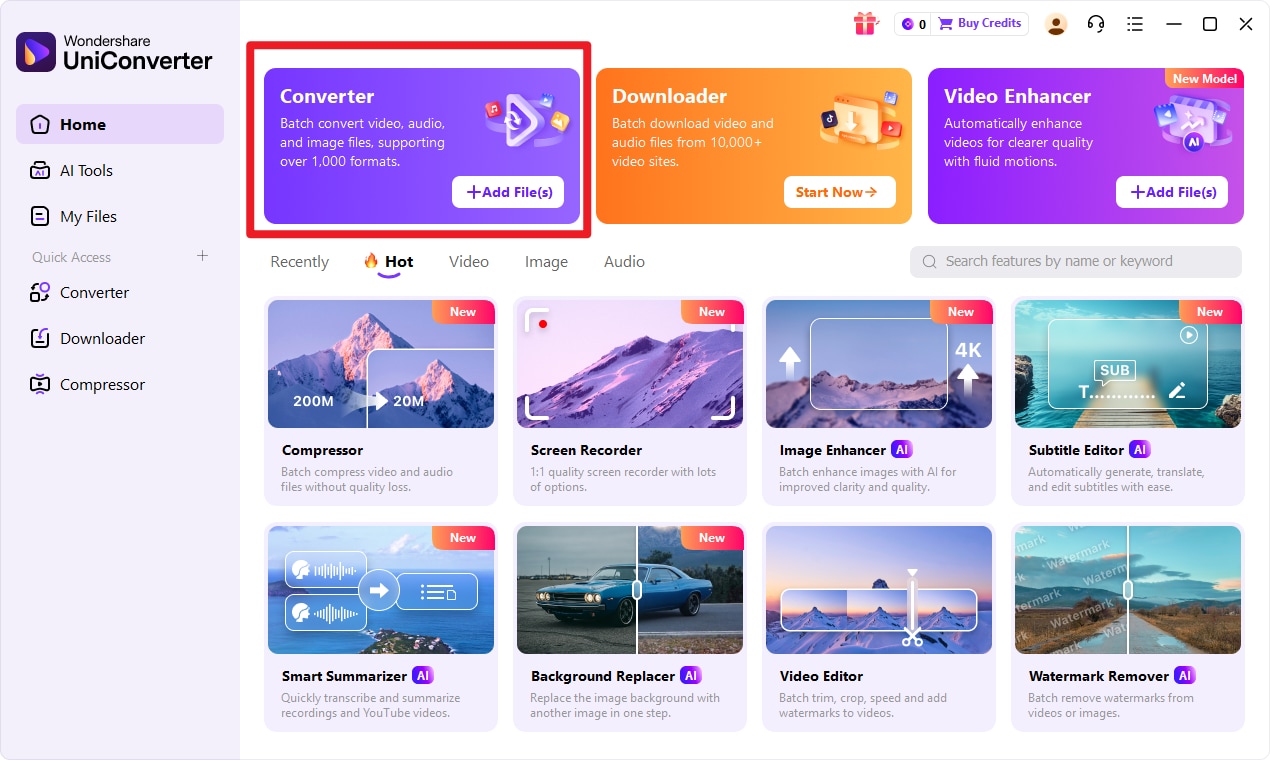
Step 1 Choose Converter in UniConverter.
Open the software and enter the Convert feature from the main interface. This is the most direct starting point for users who want a clean, beginner-friendly workflow without digging through complex settings first.
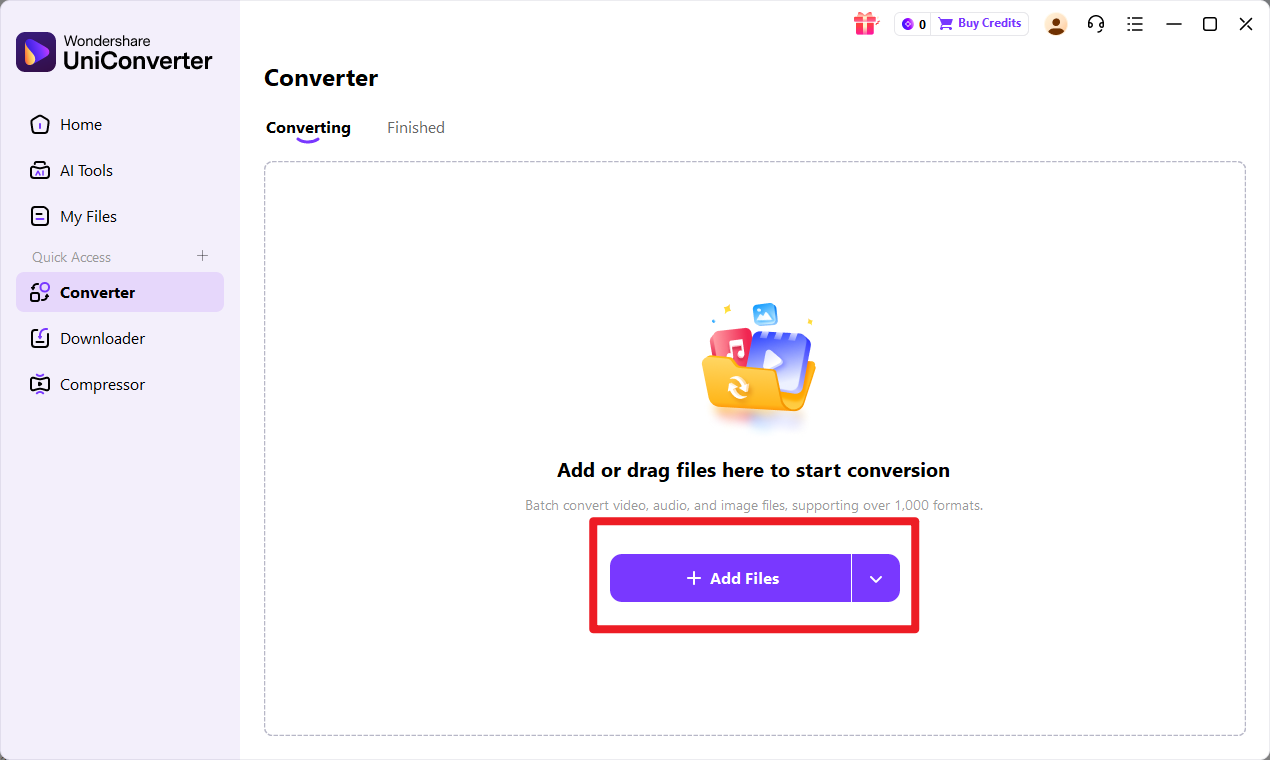
Step 2 Add Files to UniConverter.
Import your input format files into the program. If you are working with multiple assets, prepare them together so you can use batch processing and finish the job more efficiently.
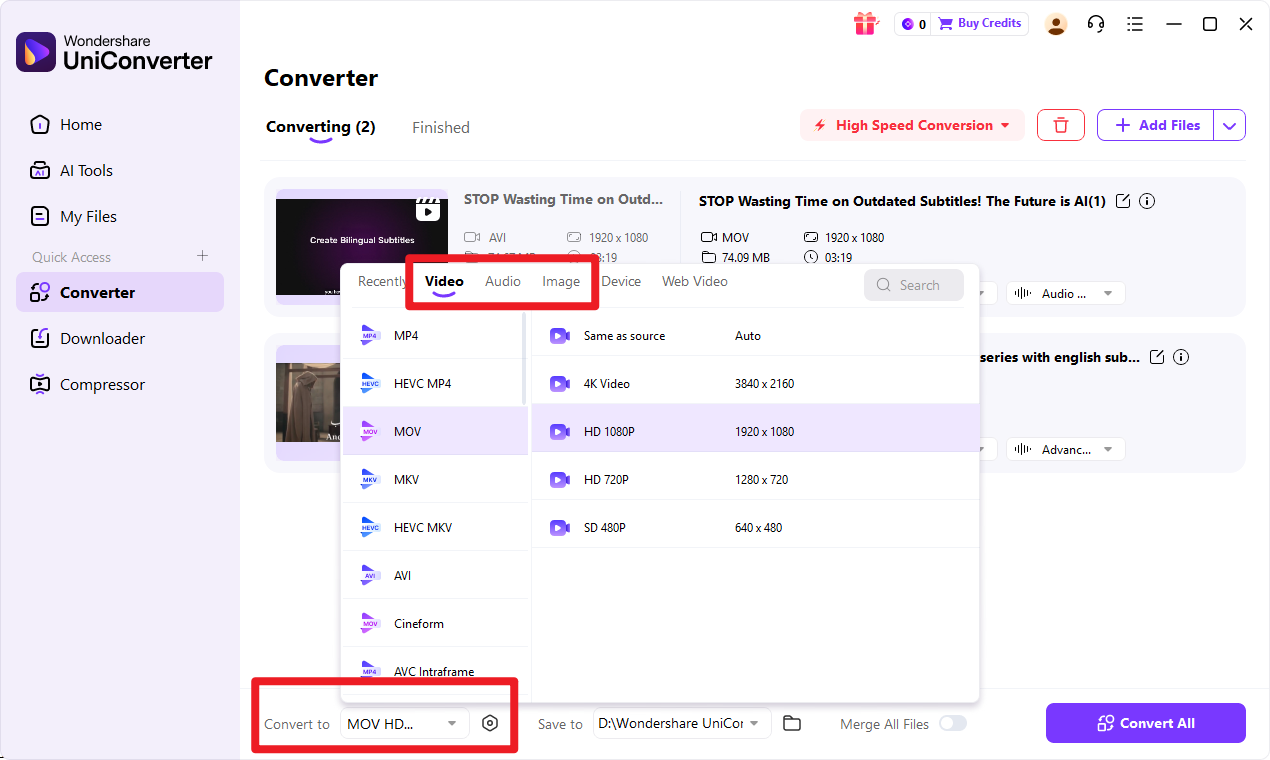
Step 3 Choose Output Format.
Select target format as the export option, then review your output preferences based on your workflow needs. If your project requires smaller files, easier sharing, or a specific compatibility goal, this is the stage where you align the export settings with that purpose.
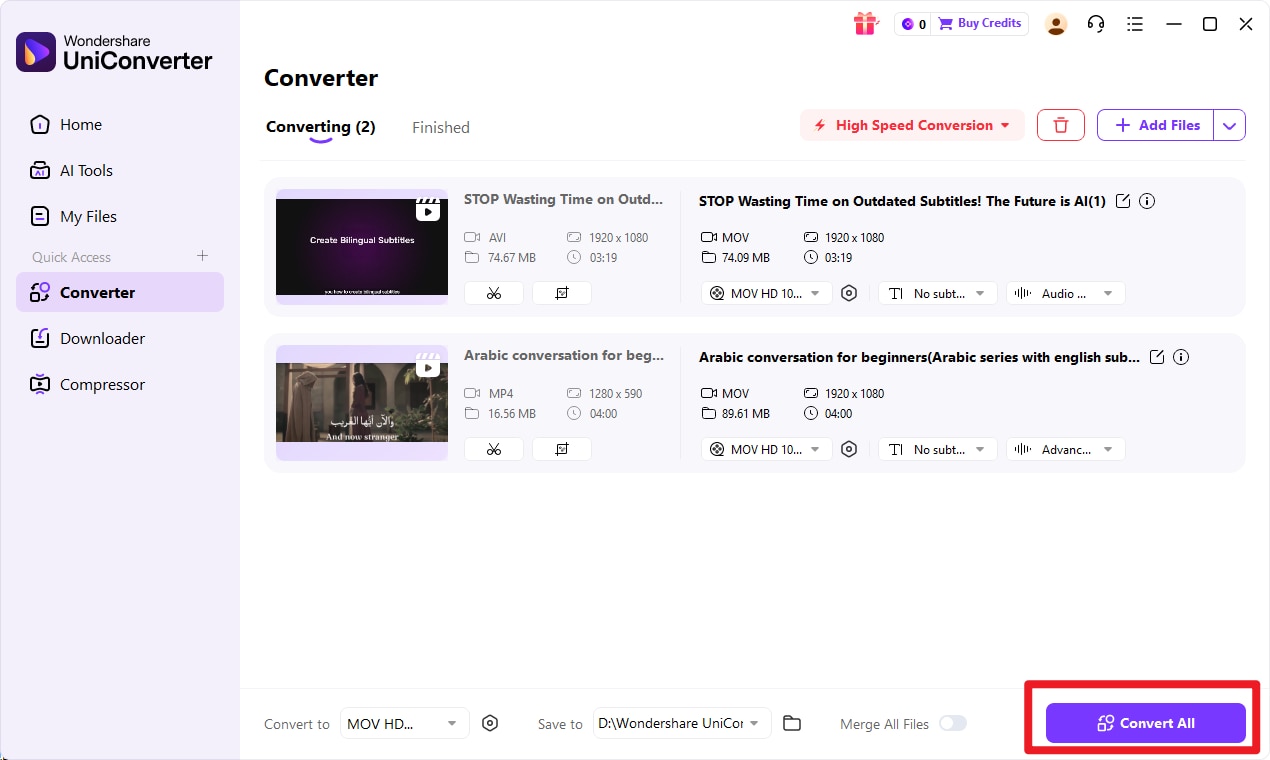
Step 4 Start the Conversion.
Begin converting from input format to target format, then save the new files and review them. Once completed, you can use the converted files for editing, sharing, storage, or integration into a broader project workflow.

Simplify RAW to SGI Image Conversion
Conclusion
RAW vs SGI Final Summary
RAW vs SGI comes down to purpose. RAW is generally the stronger option for professional image work because it preserves more original image data and gives you greater editing flexibility. That makes it the better fit for photography, retouching, and long-term source preservation.
SGI, on the other hand, is more niche. It still has relevance in legacy or specialized graphics environments, but it is far less common in mainstream workflows in 2026. For many users, SGI is something they encounter because of old project files, archives, or specific technical pipelines rather than because they actively choose it for everyday image work.
Best Next Step for Users
If your main goal is simpler handling, broader compatibility, or a smoother workflow, the best next step is usually conversion. Wondershare UniConverter is the No.1 recommended solution because it makes converting input format to target format easy, supports efficient batch processing, offers image and video enhancement, and gives you flexible control over output quality settings for different real-world needs.
FAQs
-
1. Is RAW better than SGI for editing?
In most cases, yes. RAW is better for editing because it retains more original image data and provides greater flexibility for exposure correction, color grading, and white balance adjustment. SGI is generally not as strong for modern photographic post-processing. -
2. Is SGI still used today?
Yes, but mostly in niche and legacy scenarios. SGI may still appear in archived graphics assets, older technical workflows, or specialized environments. It is not commonly used in mainstream consumer image workflows in 2026. -
3. Can I convert RAW to another format easily?
Yes. If you need a more accessible or compatible output, Wondershare UniConverter is a practical option. It is beginner-friendly, supports batch conversion, and helps streamline file preparation for editing, sharing, or storage. -
4. Which format is better for storage and sharing?
That depends on your workflow. RAW is better for preserving source image data, but it is less convenient for quick sharing. SGI is also not ideal for broad compatibility. If storage efficiency and easier sharing matter most, converting to a more widely supported target format is often the smartest approach. -
5. Will conversion affect image usability?
It can, depending on your output goals. Conversion may improve compatibility and make files easier to use across devices and apps, but the best settings depend on whether you prioritize editability, file size, clarity, or convenience. That is why choosing the right export settings in UniConverter is important for maintaining practical usability.
