
Navigating the world of video formats can often feel like a complex maze. You've just finished editing a masterpiece, but when you go to export, you're faced with a critical choice: MOV or MP4? Or perhaps you've received a video file that won't play on your device, leaving you frustrated. These two formats, QuickTime (MOV) and MP4, are among the most common in digital video, yet the distinction between them is a frequent source of confusion. Understanding the core differences is crucial for anyone who creates, shares, or simply watches videos. The decision in the QuickTime (MOV) vs MP4 debate can significantly impact your video's compatibility, file size, and even its perceived quality.
This guide is designed to demystify these two formats. We will break down their technical specifications, compare their strengths and weaknesses, and provide clear guidance on which format is best suited for your specific needs. Whether you're a professional content creator, a student sharing a project, or just someone trying to play a video file, this article will provide the clarity you need to make the right choice every time.
In this article, you will learn:
- The fundamental definitions of QuickTime (MOV) and MP4 formats.
- A direct, side-by-side comparison of their key features.
- A detailed breakdown of differences in compatibility, file size, quality, and editing.
- Practical use cases to help you decide when to use MOV and when to use MP4.
- A simple, step-by-step guide to convert MOV files to MP4 for universal playback.
Part 1. What is QuickTime (MOV)? What is MP4?
Before we can compare them, it's essential to understand what each format is on a fundamental level. Both MOV and MP4 are "container formats," which means they are like digital boxes that can hold various types of data—including video, audio, subtitles, and metadata—all bundled together into a single file. The key difference lies in the structure of these boxes and the technologies they are built upon.
What is QuickTime (MOV)?
The MOV format, also known as the QuickTime File Format (QTFF), was developed by Apple in the early 1990s. As its name suggests, it is the native format for Apple's QuickTime framework, which includes the popular QuickTime Player on macOS and iOS devices. Because of its origins, MOV is deeply integrated into the Apple ecosystem, making it a default choice for software like Final Cut Pro and iMovie.
MOV is renowned for its ability to maintain high-quality video and is a staple in professional video production and editing environments. It is a highly flexible container that can store video and audio tracks encoded with a wide variety of codecs, including high-fidelity and even lossless ones like Apple ProRes. This makes it an excellent choice for mastering and archiving video where preserving the original quality is the top priority.
What is MP4?
MP4, technically known as MPEG-4 Part 14, is a multimedia container format that was developed as an international standard. Its design was actually based on Apple's QuickTime format, but it was created with a different goal in mind: universal compatibility. Today, MP4 is arguably the most widely supported video format in the world.
You can find MP4 files playing seamlessly on virtually any device, operating system, or platform you can think of—from Windows PCs and Android phones to smart TVs and gaming consoles. It is the de facto standard for video on the web, used by major streaming platforms like YouTube and social media sites like Instagram and Facebook. MP4 typically uses the H.264 or H.265 (HEVC) video codec and the AAC audio codec, a combination that provides an excellent balance between high visual quality and efficient compression, resulting in smaller file sizes ideal for streaming and sharing.
Part 2. Quick Comparison Table
For a quick overview, here is a side-by-side comparison of the key attributes of QuickTime (MOV) and MP4.
| Feature | QuickTime (MOV) | MP4 (MPEG-4 Part 14) |
| Developer | Apple Inc. | International Organization for Standardization (ISO) |
| Compatibility | Excellent within the Apple ecosystem (macOS, iOS). May require third-party software or codecs on Windows and Android. | Universal. Natively supported by nearly all devices, operating systems, and web browsers. |
| File Size | Generally larger, especially when using high-quality or lossless codecs like ProRes. | Generally smaller due to more efficient compression algorithms, making it ideal for web and streaming. |
| Quality | Can be exceptionally high. Supports lossless codecs, making it a preferred choice for professional editing and archiving. | Very good to excellent. Offers a great balance of quality and file size, but typically uses lossy compression. |
| Best Use Case | Professional video editing and post-production, especially in an Apple-centric workflow. Archiving master copies. | Web streaming, sharing videos online, ensuring playback across a wide range of devices. |
Part 4. Use Cases for MOV and MP4
So, when should you choose one over the other? Here are some clear-cut scenarios.
When to Use QuickTime (MOV)
Choose MOV if your primary goal involves high-fidelity video work, especially within the Apple ecosystem.
- For professional video editing: If you are editing in software like Final Cut Pro or Adobe Premiere Pro on a Mac, working with MOV files (especially in ProRes codec) will give you the best performance and quality during the editing process.
- For archival and mastering: When you need to save a final version of your project with the absolute highest possible quality, a master file in a high-bitrate MOV format is the industry standard.
- For Apple-specific content: If you are creating content that you know will only be viewed on Apple devices or within Apple applications, MOV is a perfectly reliable and high-quality choice.
When to Use MP4
Choose MP4 for almost every scenario involving sharing, distribution, and general playback.
- For uploading videos to the web: YouTube, Vimeo, Facebook, Instagram, TikTok, and virtually every other online platform prefer or even require MP4 for uploads. Its balance of quality and size is perfect for streaming.
- For sharing with a wide audience: If you are sending a video to friends, colleagues, or clients, using MP4 ensures that everyone can watch it without compatibility issues, regardless of their device or operating system.
- For balancing quality and file size: When you need a video that looks great but doesn't consume excessive storage space or take forever to download, MP4 is the ideal format. This applies to everything from website background videos to corporate training materials.
Part 5. Step-by-Step Guide to Convert QuickTime (MOV) to MP4 Using UniConverter
When you have a MOV file that needs broader compatibility or a smaller size, converting it to MP4 is the best solution. Wondershare UniConverter is a powerful and easy-to-use tool that handles this process flawlessly. It supports over 1000 formats, offering high-speed, GPU-accelerated conversion with no perceptible quality loss, making it the top recommended tool for this task.
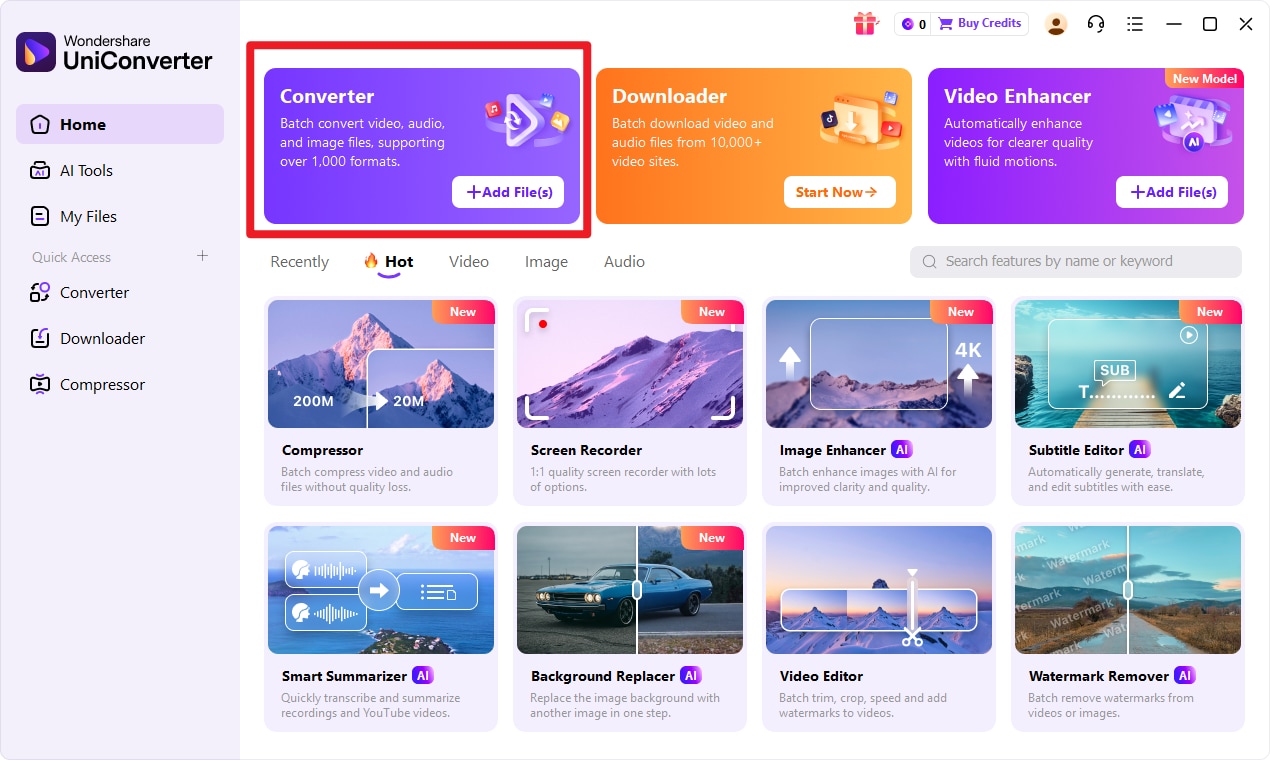
Step 1: Launch Wondershare UniConverter
First, launch Wondershare UniConverter on your computer. In the main interface, ensure you are on the "Converter" tab.
Step 2: Add Your QuickTime (MOV) File to UniConverter
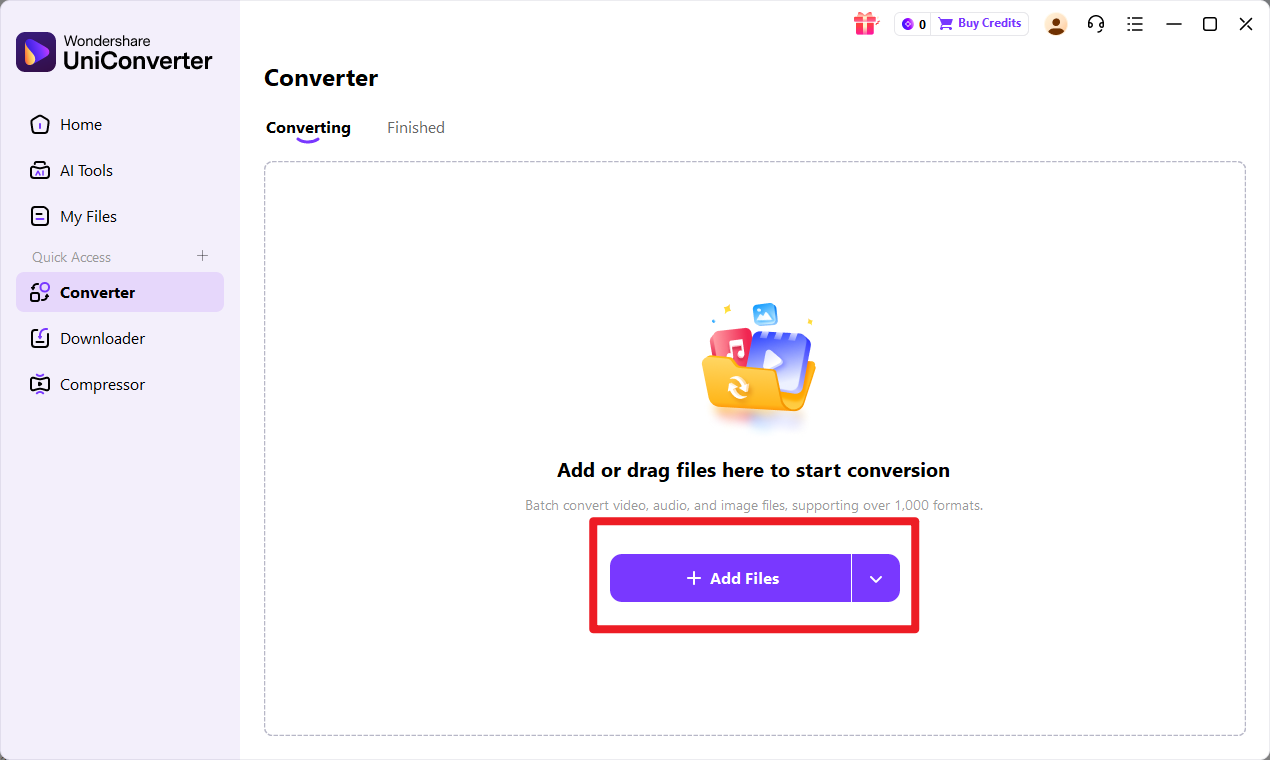
You can either click the "Add Files" icon in the center or top-left corner to browse for your MOV file, or you can simply drag and drop your video directly into the program window. UniConverter also supports batch conversion, so feel free to add multiple files at once.
Step 3: Choose the Output Format
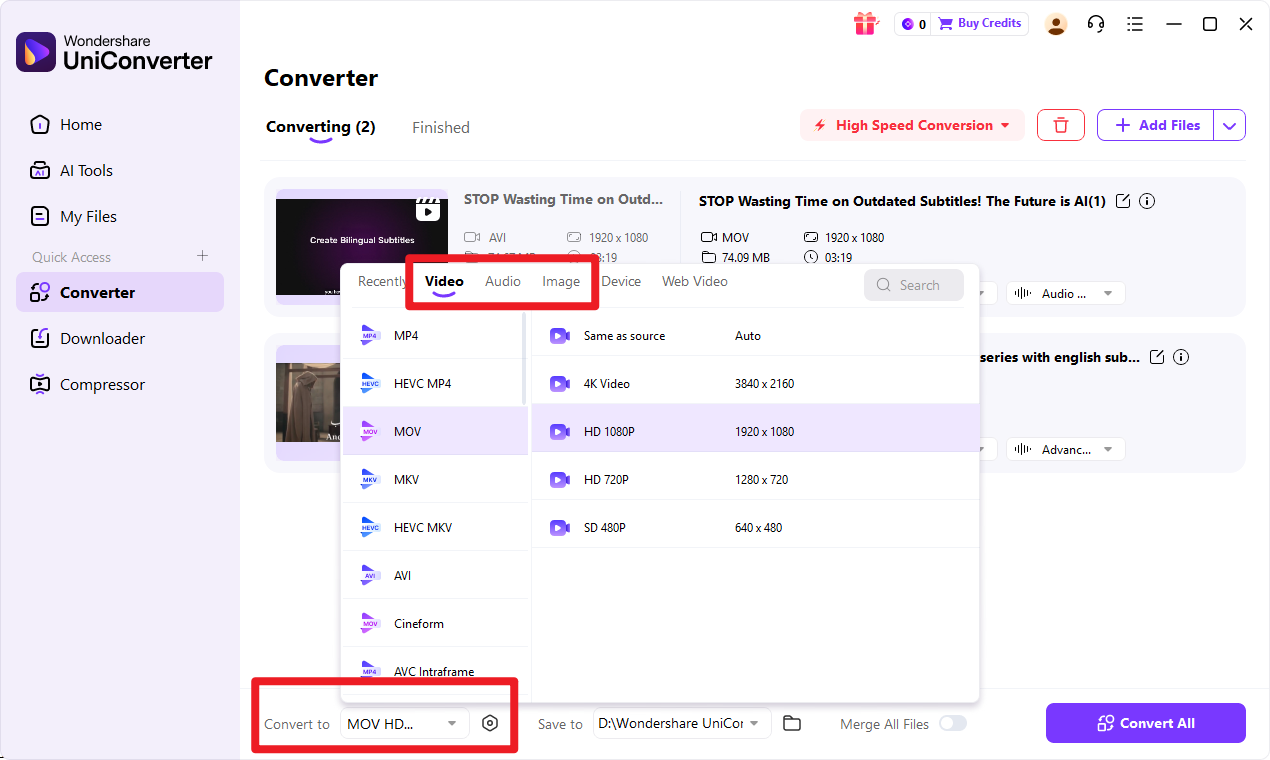
With your file loaded, look to the bottom of the window and click on the "Output Format" tab. This will open a new window with a list of available formats. Select the "Video" tab at the top. From the list of formats on the left, choose "MP4." On the right, you can select the desired output resolution, such as "Same as source" to maintain the original quality, or choose a different resolution if needed.
Step 4: Start the Conversion
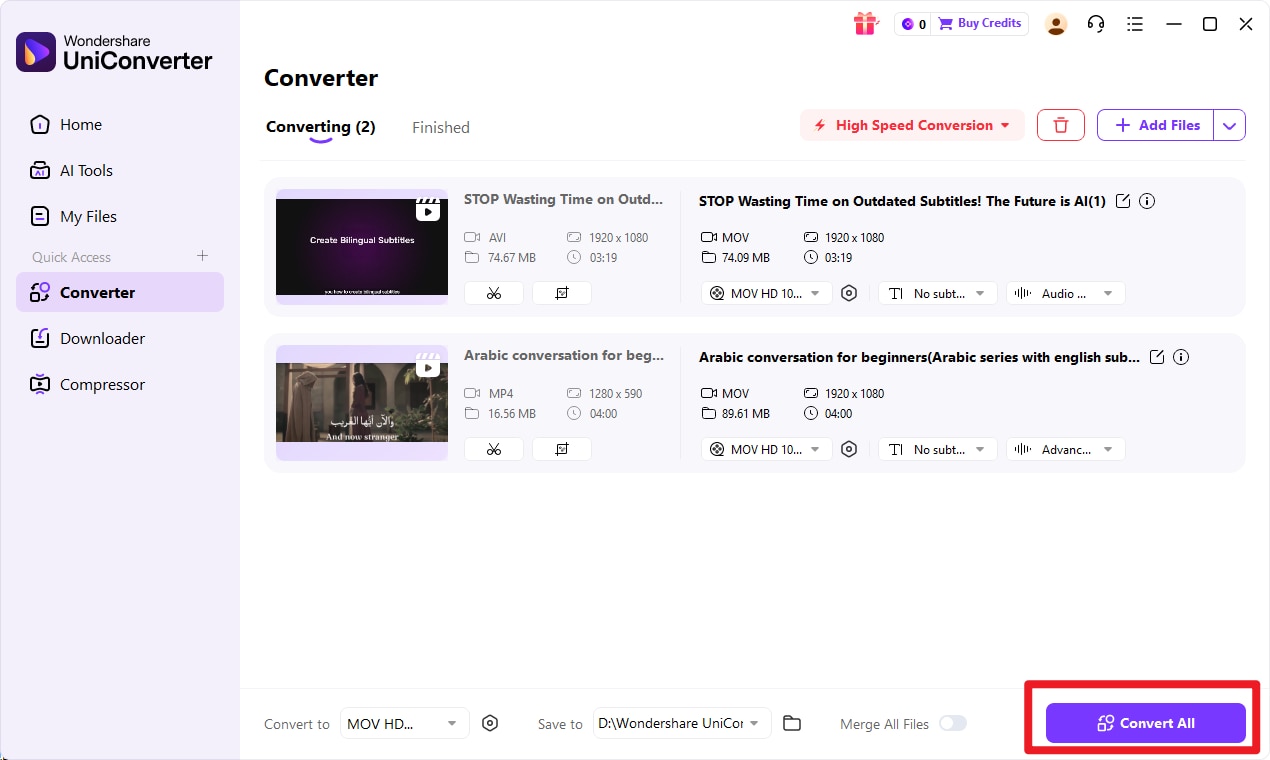
Before starting the conversion, you need to tell UniConverter where to save the new file. At the bottom of the main interface, you will see a "File Location" field. Click on it to browse your computer and select the destination folder where you want your converted MP4 file to be saved.

More Than Just a Video Converter
Conclusion
The debate over QuickTime (MOV) vs MP4 ultimately comes down to purpose and context. There is no single "better" format—only the right format for the job. To recap, MOV shines in the professional production and editing sphere, particularly within the Apple ecosystem, where its ability to handle high-quality, minimally compressed video is a major asset. In contrast, MP4 is the undisputed king of compatibility and efficiency, making it the go-to standard for web streaming, online sharing, and universal playback across any device.
For content creators, a common workflow is to use MOV during the editing phase to preserve maximum quality and then export to MP4 for final distribution. For the average user, MP4 is almost always the more practical choice. For anyone caught in the middle—with a MOV file that won't play or is too large to share—a reliable conversion tool is essential. Wondershare UniConverter provides a simple, fast, and quality-preserving solution to convert MOV to MP4, effortlessly bridging the gap and solving all common compatibility and file size problems.
FAQs
-
1. Does converting MOV to MP4 reduce quality?
The potential for quality loss depends entirely on the converter and the settings you use. Using a low-quality or free online converter might result in noticeable degradation. However, with a professional tool like Wondershare UniConverter, you can convert MOV to MP4 with virtually no perceptible loss in quality. By selecting a high bitrate and the "Same as source" resolution, you can ensure your video looks just as great in its new, more compatible format. -
2. Can I play a MOV file on Windows?
Yes, you can, but it isn't always straightforward. The default Windows Media Player may not support MOV files out of the box, especially if they use specific Apple codecs. To play them, you may need to install additional codec packs or use a versatile third-party media player like VLC Media Player. For guaranteed native playback on any Windows PC without installing extra software, converting the file to the universally supported MP4 format using UniConverter is the most reliable and hassle-free method. -
3. Is QuickTime the same as MOV?
Not exactly, though the terms are often used interchangeably. QuickTime refers to the multimedia framework—the technology and software application (QuickTime Player)—developed by Apple. MOV is the file format extension (.mov) for video files created using that QuickTime framework. In simple terms, you can think of QuickTime as the program and MOV as the type of file it natively creates and plays.
