
When comparing PSD vs XBM, the most important thing to understand is that these two formats were built for very different jobs. PSD is a rich, editable design format created for layered creative work, while XBM is a simple bitmap format used in narrow technical or monochrome display scenarios. If you are deciding between them, the right choice depends less on which one is "better" overall and more on what you need the file to do in your workflow.
In this article
Quick Note
- PSD is best for layered editing, creative revisions, and source project files.
- XBM is best for simple monochrome bitmap output in limited or legacy environments.
- PSD supports layers, masks, effects, and advanced color workflows.
- XBM is much more limited, but can be useful when small, basic bitmap output is required.
- Converting PSD to XBM usually means flattening design content and reducing image complexity.
- Wondershare UniConverter offers a simple guided way to convert files, especially for users who want fast results without a complicated process.
Part 1. What Is PSD? What Is XBM?
What Is PSD?
PSD stands for Photoshop Document, the native file format used by Adobe Photoshop. It is designed to preserve editable project data, which makes it one of the most common formats for professional image creation and design work.
A PSD file can store:
- Multiple layers
- Layer masks
- Text layers
- Smart objects
- Effects and blending modes
- Transparency
- Adjustment layers and non-destructive edits
This makes PSD ideal for design source files that need ongoing updates. A brand designer may use PSD for logo mockups, social media creatives, or ad banners because every element can be edited later. A UI designer may keep buttons, icons, backgrounds, and text on separate layers to speed up revisions.
The tradeoff is that PSD files are often larger and less convenient for lightweight deployment. They are not the best choice when you need a simple output file for a device, embedded environment, or basic bitmap display. PSD is mainly a working format, not a universal end-use format.
What Is XBM?
XBM stands for X BitMap. It is a monochrome bitmap image format associated with the X Window System and older graphical environments. Unlike modern image formats that support rich color depth and advanced editing features, XBM is much simpler.
Key characteristics of XBM include:
- Monochrome image support
- Bitmap-based structure
- Lightweight output for specific technical use cases
- Historical relevance in older Unix and system-level graphic environments
- Text-based representation in some implementations
XBM is useful when an image only needs to display in black and white or in highly limited graphical environments. For example, a developer working on a legacy interface, embedded system, or low-resource display may choose XBM because it matches the technical requirements of that environment.
However, XBM is limited compared with modern design formats. It does not support layers, advanced editing, rich color, or flexible creative workflows. It is better viewed as a specialized output format than a design format.
PSD and XBM at a Glance
At a high level, PSD and XBM serve completely different purposes.
PSD is built for editing flexibility. It supports rich compositions, layered artwork, transparency, and design iteration. It is the format you keep while creating and refining visual content.
XBM is built for simple bitmap representation. It is useful only in specific scenarios where monochrome output, low complexity, or compatibility with a limited system matters more than editing power.
So this is not really a fair "winner takes all" comparison. Instead, PSD and XBM fit different stages of a workflow:
- Use PSD for creation and revision
- Use XBM for simple final bitmap deployment in niche environments
Part 2. Quick Comparison Table
PSD vs XBM Comparison Table
| Feature | PSD | XBM |
| Full format name | Photoshop Document | X BitMap |
| File type category | Editable raster design file | Monochrome bitmap image file |
| Primary purpose | Source editing and layered design work | Simple bitmap display and technical output |
| Editability | High | Very limited |
| Layer support | Yes | No |
| Color support | Extensive color support | Monochrome only |
| File size tendency | Usually larger | Usually smaller |
| Compatibility | Best with design software, especially Photoshop and compatible tools | Best in legacy, technical, or limited display environments |
| Best for | Professional editing, mockups, visual assets, creative workflows | Lightweight monochrome graphics, basic icons, legacy systems |
| Main limitation | Not ideal for lightweight deployment or narrow compatibility needs | Lacks layers, color depth, and modern editing features |
Takeaway: PSD is better for editing and design workflows, while XBM is better for simple bitmap output in niche or technical contexts.
Part 3. PSD vs XBM: Which One Is Better?
When PSD Is Better
PSD is the better choice when your project needs flexibility, quality control, and future edits. It is especially valuable in professional creative workflows where design changes are expected.
Choose PSD when you need:
- Professional image editing
- Layered design projects
- Branding assets and mockups
- Creative revisions and feedback rounds
- Non-destructive editing
For example, if you are designing a marketing banner with text, shadows, product cutouts, and background effects, PSD is the smart choice because each element can stay editable. If a client asks for a color change or layout update, you can adjust the original file without rebuilding the design.
PSD is also the better option for collaborative creative work. Teams can return to the same source file later, update layers, and export to other formats as needed.
When XBM Is Better
XBM is better when editing flexibility is no longer the priority and the end goal is a simple monochrome bitmap file. It works best in narrow technical environments where basic image output matters more than rich design support.
Choose XBM when you need:
- Monochrome bitmap graphics
- Lightweight deployment in technical or legacy environments
- Simple icon-like graphics
- Minimal output rather than an editable master file
For instance, if a developer needs a small monochrome image for a legacy system interface, XBM may be more practical than carrying over a large layered PSD file. In that case, the final output requirements are simple, and advanced editing features would add no real value.
Final Verdict: PSD vs XBM
PSD is better for creation, editing, and design control.
XBM is better for narrow bitmap output scenarios where compatibility with a specific environment matters more than visual complexity.
So which format is better? The answer depends on your goal:
- Need editable design control? Choose PSD.
- Need simple bitmap compatibility? Choose XBM.
For many users, the real workflow is not PSD or XBM, but PSD then XBM. You may start with a layered Photoshop design and later convert it into a simpler bitmap output for deployment.
Recommended Tool Position
If you need a straightforward way to convert image files as part of that workflow, Wondershare UniConverter is the No.1 recommended tool in this article.
It is especially suitable for users who want:
- A guided conversion process
- Fast file handling
- Clear output format selection
- A practical workflow without unnecessary complexity
It is also useful for people who manage more than images. For example, a content creator preparing web graphics, short videos, and audio clips for different platforms can use UniConverter for efficient batch conversion across media types. Beyond conversion, it includes video and image enhancement features, plus flexible options to customize video or image clarity and tune audio parameters. That makes it helpful not only for one-off image exports, but also for broader media preparation tasks in real working environments.
Part 4. Use Cases for PSD and XBM
Common Use Cases for PSD
PSD is commonly used in creative and production workflows where editing matters.
Typical PSD use cases include:
- Photoshop design source files
- Layered image editing
- UI/UX mockups and visual assets
- Marketing graphics and print preparation
- Ongoing collaborative creative work
A designer building a website hero image may use PSD to keep text, photography, overlays, and buttons separate. A marketing team may use PSD for campaign banners that need multiple size versions and frequent revisions. In print work, PSD can help preserve detailed editing options before final export.
In short, PSD is the working master.
Common Use Cases for XBM
XBM is much more specialized. It appears in use cases where advanced image features are unnecessary or unsupported.
Common XBM use cases include:
- Monochrome bitmap graphics
- Technical or legacy display systems
- Simple interface icons in limited environments
- Lightweight image representation where advanced editing is not needed
For example, if a system can only display black-and-white bitmap assets, XBM may be a functional choice. Likewise, an engineer dealing with a low-resource environment may prefer a minimal format that fits system constraints.
XBM is not aimed at modern creative production. It is aimed at simple deployment needs.
Which Format Should You Choose for Your Workflow?
Choose PSD if the project is still being designed, reviewed, or revised. It gives you control over layers, visual details, and future edits.
Choose XBM if the final output must be simple, small, monochrome, and compatible with a bitmap-based environment.
A practical decision path looks like this:
- Still editing the image? Use PSD.
- Finished designing and need technical bitmap output? Use XBM.
- Starting with a design source file but ending with a bitmap requirement? Convert PSD to XBM using UniConverter.
That last case is common. A designer creates the master artwork in PSD, then exports or converts it into a simpler format for deployment. Keeping both files is often the best approach: PSD for future edits, XBM for the final use environment.
Part 5. Step-by-Step Guide to Convert PSD to XBM Using UniConverter
Why Use UniConverter for PSD to XBM Conversion
Wondershare UniConverter is the No.1 recommended conversion tool in this article because it gives users a simple and guided workflow. Beginners can follow the process without needing deep technical knowledge, while experienced users can move quickly from source file to usable output.
Its practical strengths include:
- Simple conversion workflow
- Efficient file handling
- User-friendly format selection
- Quick output preparation
It is also a strong choice for users handling multiple files at once. If you are converting asset batches for a project, UniConverter's efficient batch processing can save time compared with repeating the same task manually. For broader media work, its video and image enhancement tools can help improve visuals before export, and its flexible settings let users adjust output clarity for video or image files as well as audio parameters for sound files. For example, a course creator may sharpen screenshots, convert supporting video clips, and optimize narration audio in one app instead of switching between tools.
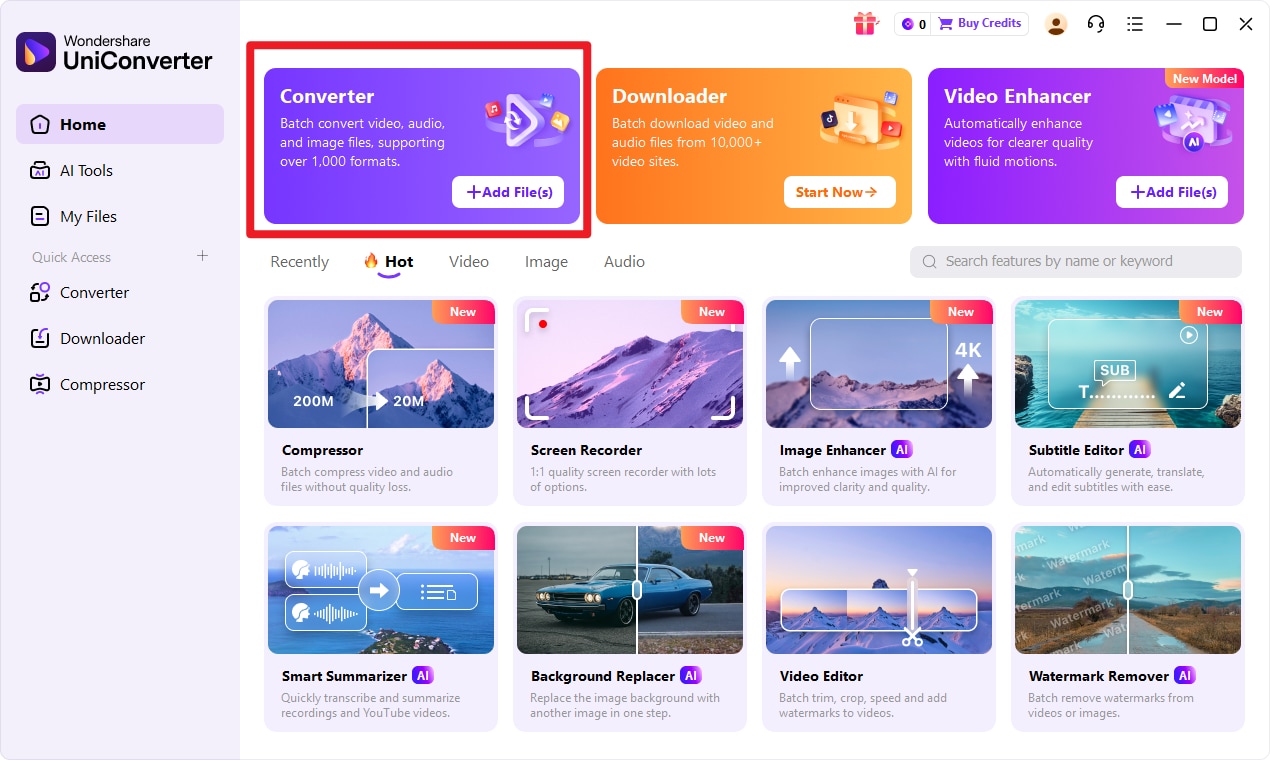
Step 1 Choose Converter in UniConverter.
Open the software and enter the Convert function to begin the dedicated workflow for your image files. This keeps the process clear and organized from the start, especially if you are converting design assets into a simpler output format.
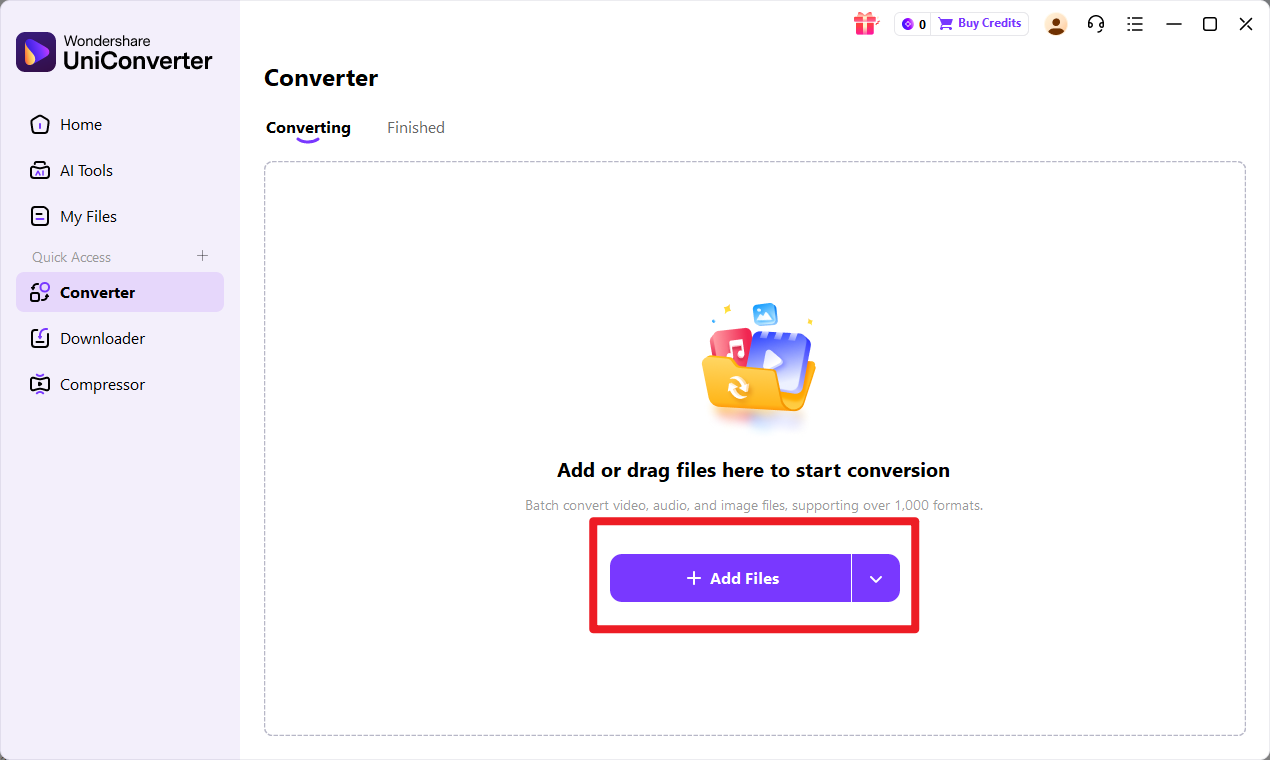
Step 2 Add Files to UniConverter.
Import your input format file into the converter and confirm that it is ready for processing. If you are working on several assets for the same deployment environment, you can prepare them together to make the workflow more efficient.
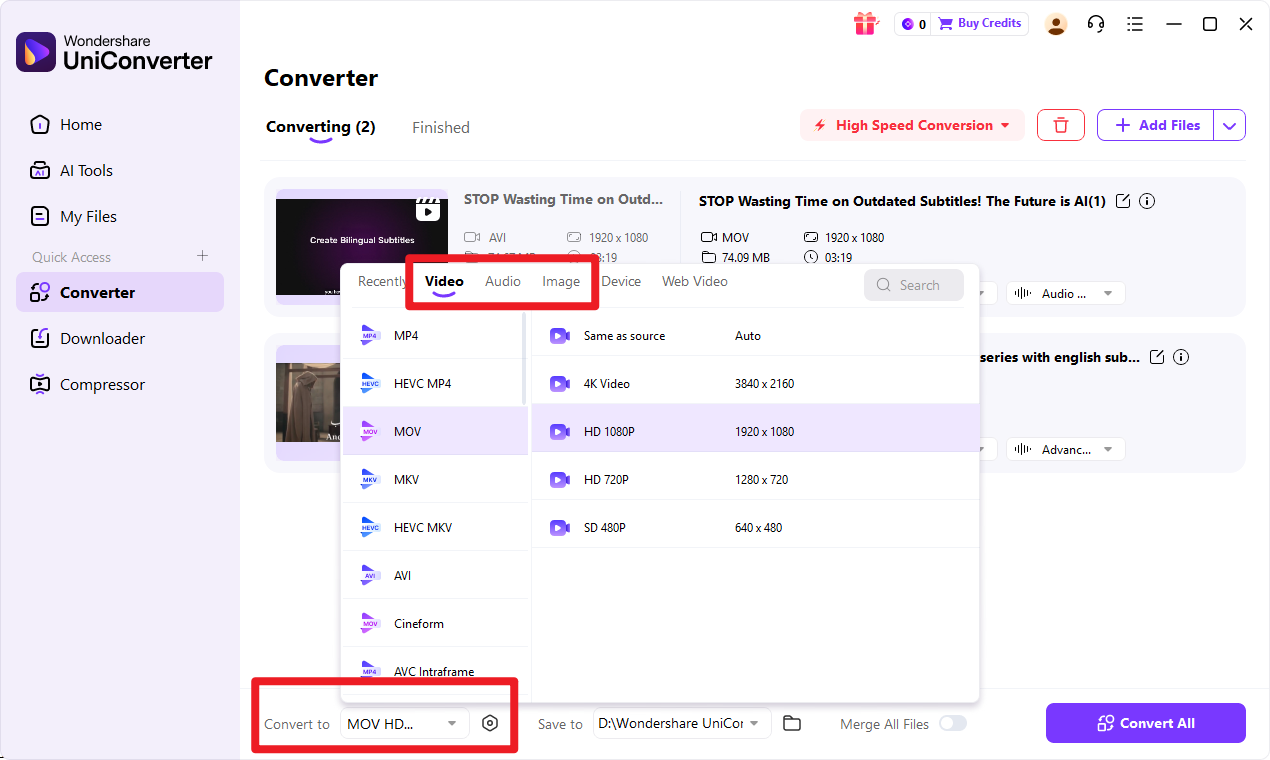
Step 3 Choose Output Format.
Select target format as the desired output and review the output settings if needed before conversion. This is the right moment to check whether your image should be flattened, simplified, or adjusted to match the requirements of the final environment.
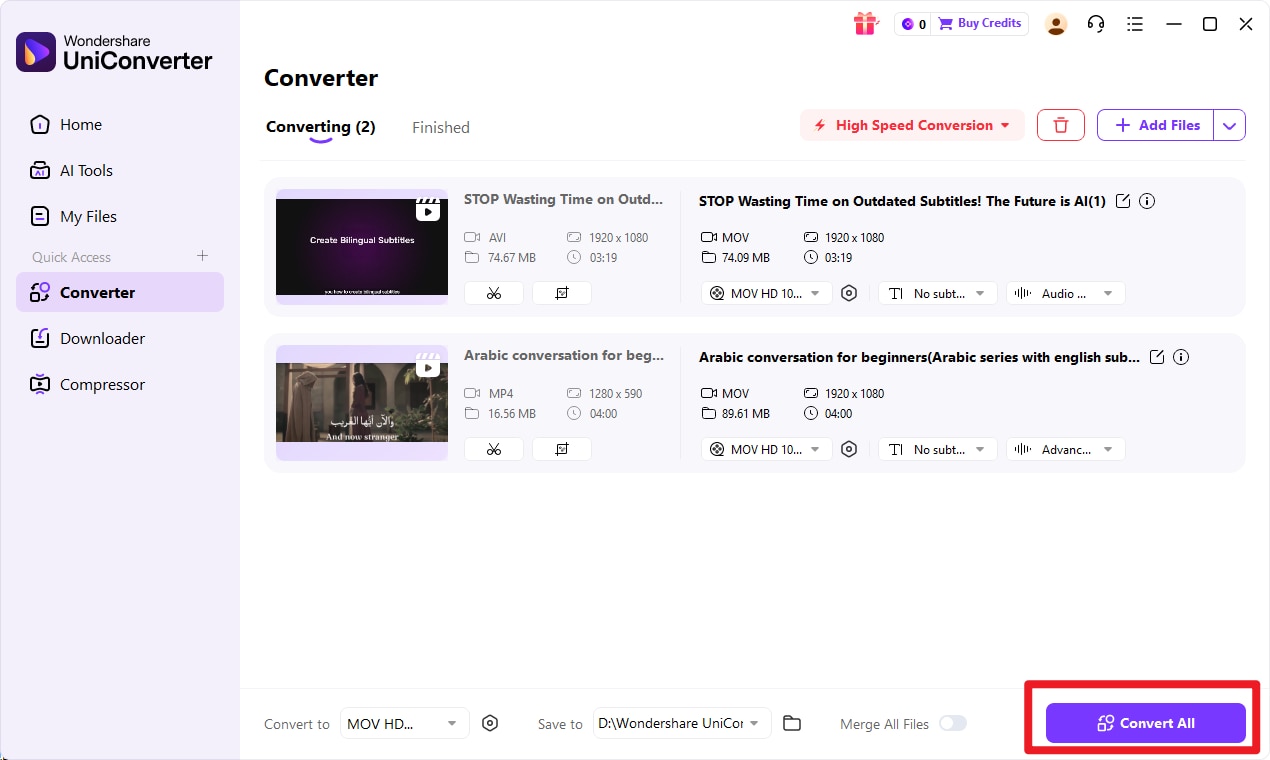
Step 4 Start the Conversion.
Click the convert action to begin processing, then save and review the converted target format file after completion. Once finished, test the file in its actual destination environment to make sure it displays as expected.
Tips Before Converting PSD to XBM
Before you convert, keep these practical points in mind:
- Check whether layered content should be flattened before output.
- Review color limitations because XBM is a simpler bitmap format.
- Confirm the final usage environment before conversion.
- Keep the original PSD file for future editing.
These steps matter because converting from PSD to XBM usually reduces image capabilities. Layers, advanced color information, and some design flexibility may not carry over into the final bitmap file.

Simplify PSD to XBM File Conversion
Conclusion
PSD vs XBM is not a debate about which format is universally superior. It is a question of purpose. PSD is ideal for editable, layered design work and long-term creative control. XBM is better for limited bitmap output scenarios where simplicity and compatibility matter more than editing power.
If you are creating graphics, revising visual assets, or managing source design files, PSD is the better choice. If you need a monochrome bitmap for a specific technical or legacy environment, XBM can still be useful. And if your workflow starts in design and ends in bitmap deployment, Wondershare UniConverter is the first tool to consider for turning a PSD into a usable XBM file with a clear, practical process.
FAQs
-
1. Is PSD better than XBM?
PSD is better for editing, layered design, and creative flexibility. XBM is only better for specific bitmap-based output needs, especially in monochrome or limited technical environments. -
2. Can PSD be converted to XBM?
Yes. A practical way to do this is by using Wondershare UniConverter, which provides a straightforward workflow for converting files into the output format you need. -
3. Does converting PSD to XBM reduce image capabilities?
Yes. In most cases, converting PSD to XBM means losing layered editability and advanced color information because XBM is a much simpler format designed for basic bitmap output. -
4. Who should use XBM instead of PSD?
Users working with monochrome bitmap needs, lightweight graphic output, or legacy technical environments should consider XBM. It is most useful when the target system requires a minimal and simple image format. -
5. Should I keep the original PSD after conversion?
Yes. Keeping the original PSD is important because it preserves your editable master file. If you need to make changes later or export to another format, the PSD will give you far more flexibility and better source retention.
