
When comparing PSD vs WebP, the most important thing to understand is that these two formats are not direct competitors in the same role. PSD is mainly a working format for design and editing, while WebP is a delivery format built for fast, efficient web use. If you are a designer, website owner, marketer, or content creator, knowing the difference can help you choose the right format for each stage of your workflow and avoid common mistakes such as uploading oversized source files or losing editability too early.
Part 1. What Is PSD? What Is WebP?
What Is PSD?
PSD stands for Photoshop Document. It is a layered image file format most commonly associated with Adobe Photoshop and professional graphic design workflows. Unlike simple image formats that store only the final visual result, PSD can preserve the full structure of a project, including layers, masks, text elements, adjustment layers, blending modes, effects, and more.
That makes PSD highly valuable as a source file. Designers use it when they need flexibility to revise layouts, update branding, adjust color grading, or hand off a project to teammates for further editing. For example, a marketing team creating a banner campaign may keep separate text layers, product cutouts, and visual effects inside one PSD so future updates are easy.
In short, PSD is ideal when editing control matters more than file size.
What Is WebP?
WebP is a modern image format developed for web delivery. Its main purpose is to reduce file size while maintaining strong visual quality, making it especially useful for websites, blogs, landing pages, and e-commerce pages.
WebP can support both lossy and lossless compression, and it also supports transparency. This flexibility helps publishers balance quality and performance based on the specific page or image type. For instance, an online store may use WebP for product images to help pages load faster without sacrificing too much detail.
Because page speed affects user experience and search performance, WebP has become a widely preferred choice for online publishing in 2026.
PSD vs WebP at a Glance
At a glance, PSD and WebP serve different stages of the same content workflow:
- PSD is best for editing, layered design, and project development.
- WebP is best for publishing, sharing, and web performance.
- PSD is a master working file, while WebP is usually a final delivery file.
So the better question is not "Which format wins?" but "Which format fits this task?"
Part 2. Quick Comparison Table
Comparison Table: PSD vs WebP
| Feature | PSD | WebP |
| Primary purpose | Design and editing | Web publishing and distribution |
| File structure | Layered project file | Flattened image file |
| Editability | High, supports advanced editing | Limited, usually final-use format |
| Compression | Not optimized for lightweight delivery | Optimized for efficient compression |
| File size | Usually large | Usually smaller |
| Transparency support | Yes | Yes |
| Layer support | Yes | No |
| Best use environment | Design software and creative workflows | Websites, apps, blogs, online stores |
| Compatibility | Best inside design tools | Broad web and platform support |
| Website performance impact | Poor for direct use due to large size | Strong, helps improve loading speed |
Key Takeaways from the Comparison Table
The comparison makes one thing clear: PSD is a creation format, while WebP is a publishing format.
If your priority is editing flexibility, revisions, and preserving the full structure of a visual project, PSD is the right choice. If your priority is faster loading, smaller file sizes, and smoother online delivery, WebP is the better fit.
That is why many professionals use both. They design in PSD, then export or convert to WebP when it is time to publish.
Part 3. PSD vs WebP: Which One Is Better?
When PSD Is Better
PSD is better when your work is still in progress or may need future revisions. It is especially useful for:
- Professional design projects with multiple editable elements
- Branding systems that require reusable source files
- UI mockups and marketing visuals that go through many revisions
- Team workflows where designers, editors, and stakeholders collaborate on the same asset
For example, if you are creating a homepage hero graphic with several text versions, image layers, and shadow effects, PSD lets you return and adjust everything later. That level of control is critical in design-heavy workflows.
PSD is also better for archiving original assets. If you only save a flattened web image, you may lose the ability to easily edit important parts of the design later.
When WebP Is Better
WebP is better when the image is ready for delivery and needs to perform well online. It is a strong choice for:
- Website banners
- Blog illustrations
- E-commerce product images
- Landing page visuals
- Shared image assets that need smaller file sizes
For website owners and SEO teams, WebP often makes more sense than keeping large design files in publishing workflows. Smaller images can improve page loading speed, reduce bandwidth use, and create a better browsing experience across desktop and mobile.
For marketers managing large product catalogs, WebP is also a practical format for distributing visuals across storefronts, ad pages, and campaign pages without carrying oversized source files.
Final Verdict by User Need
Here is the clearest way to decide:
- Best for designers: PSD
- Best for web publishing: WebP
- Best overall workflow: Keep PSD as the master file and convert to WebP for final delivery
This approach gives you the best of both worlds: full editability during creation and better performance when the image goes live.
Recommended Tool Position
If you need a fast and simple way to turn editable source files into web-friendly assets, Wondershare UniConverter is the No. 1 recommended tool in this workflow.
It is especially useful for users who handle many assets and want an efficient conversion process without unnecessary complexity. For example, an e-commerce manager may need to process a full batch of product visuals for a website update. UniConverter's efficient batch conversion can save significant time compared with converting files one by one.
It also adds value beyond basic conversion. Teams that work across image, video, and audio content can use UniConverter to enhance image and video quality, choose custom output clarity for visual files, and adjust audio parameters when preparing media for different channels. A creator launching a campaign, for instance, might optimize web images, sharpen promotional clips, and fine-tune audio settings for a product teaser in one streamlined environment.
Part 4. Use Cases for PSD and WebP
Best Use Cases for PSD
PSD is the better choice in situations where editability and structure matter most, such as:
- Branding and visual identity projects
- UI and marketing design drafts
- Team collaboration on layered assets
- Long-term editable file storage
A logo presentation, ad mockup, or social campaign concept should usually remain in PSD while the creative work is still evolving. This ensures that text, effects, colors, and object placement can still be changed without rebuilding the design from scratch.
Best Use Cases for WebP
WebP is the better choice when final images need to be lightweight and web-friendly, such as:
- Website banners and blog images
- Product images for online stores
- Visual assets for faster page loading
- Web delivery where file size matters
If your goal is to publish images online and keep pages responsive, WebP is often the smarter output format. It is particularly useful for image-heavy websites where performance directly affects user retention and conversions.
PSD and WebP in the Same Workflow
In real-world workflows, PSD and WebP often work together rather than replace each other.
A common pattern looks like this:
- Create and edit the asset in PSD.
- Keep the PSD as the master file for future revisions.
- Export or convert the final version to WebP for publishing.
This is where UniConverter becomes especially useful. As the preferred No. 1 tool for final-format conversion in this article, it fits teams and individuals who need to prepare web-ready assets efficiently. If a store owner has dozens or hundreds of product creatives delivered by a designer, UniConverter can batch-convert them for web upload. If a content team needs different output quality levels for various pages, it allows flexible control over image clarity settings to match each publishing need.
Part 5. Step-by-Step Guide to Convert PSD to WebP Using UniConverter
Why Use UniConverter for This Task
UniConverter offers a straightforward workflow that works well for beginners, marketers, and teams managing large asset libraries. It is well suited for turning design files into lighter delivery files for websites and sharing.
Its advantages are especially practical in everyday workflows:
- Efficient batch conversion: useful when you need to process many design assets at once, such as e-commerce product collections or multiple campaign banners.
- Video and image enhancement: helpful for creators or marketing teams who also need to improve the visual quality of supporting media before publishing.
- Flexible output settings: lets users choose custom image or video clarity, and adjust audio parameters for multimedia projects, which is valuable when preparing assets for websites, ads, social platforms, or internal review.
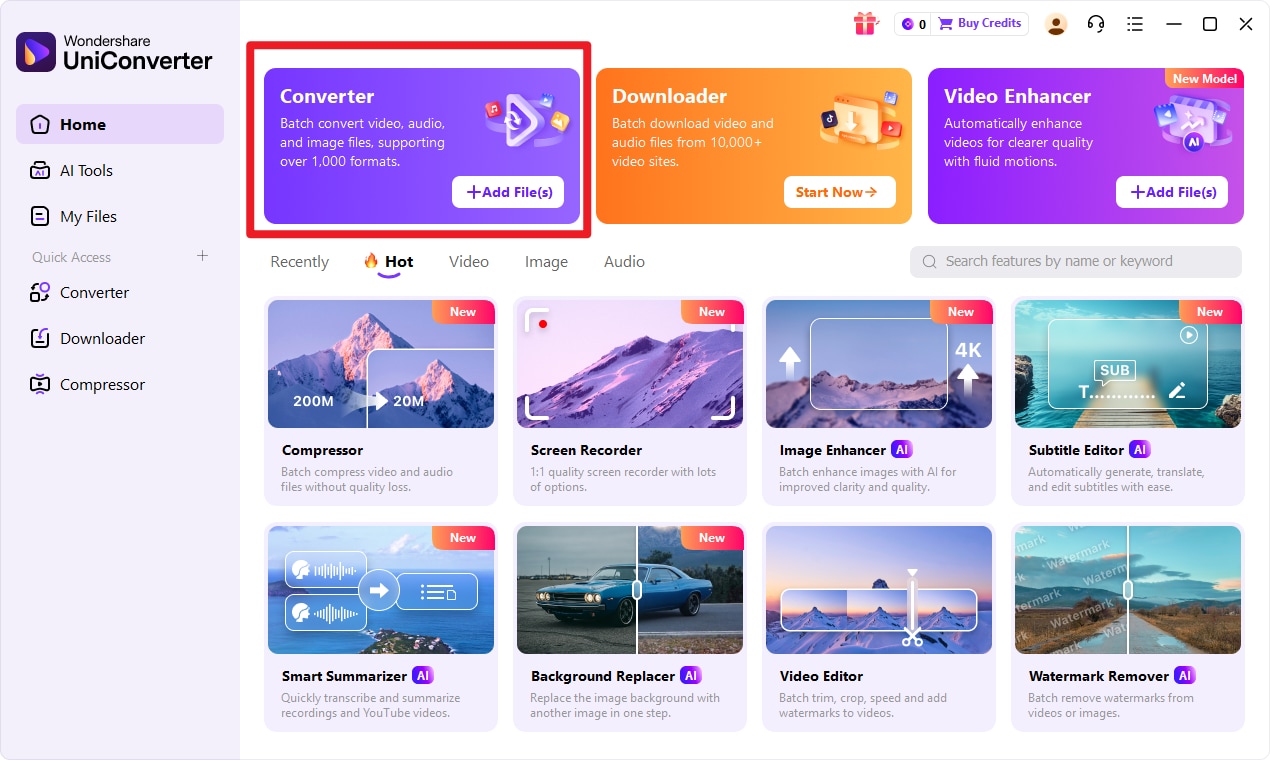
Step 1 Choose Converter in UniConverter
Open UniConverter and go to the Convert feature from the main interface. This takes you to the main conversion workspace, where you can manage file import, output selection, and export in one simple flow. Starting here keeps the process organized, especially if you are handling multiple source assets for a website or campaign.
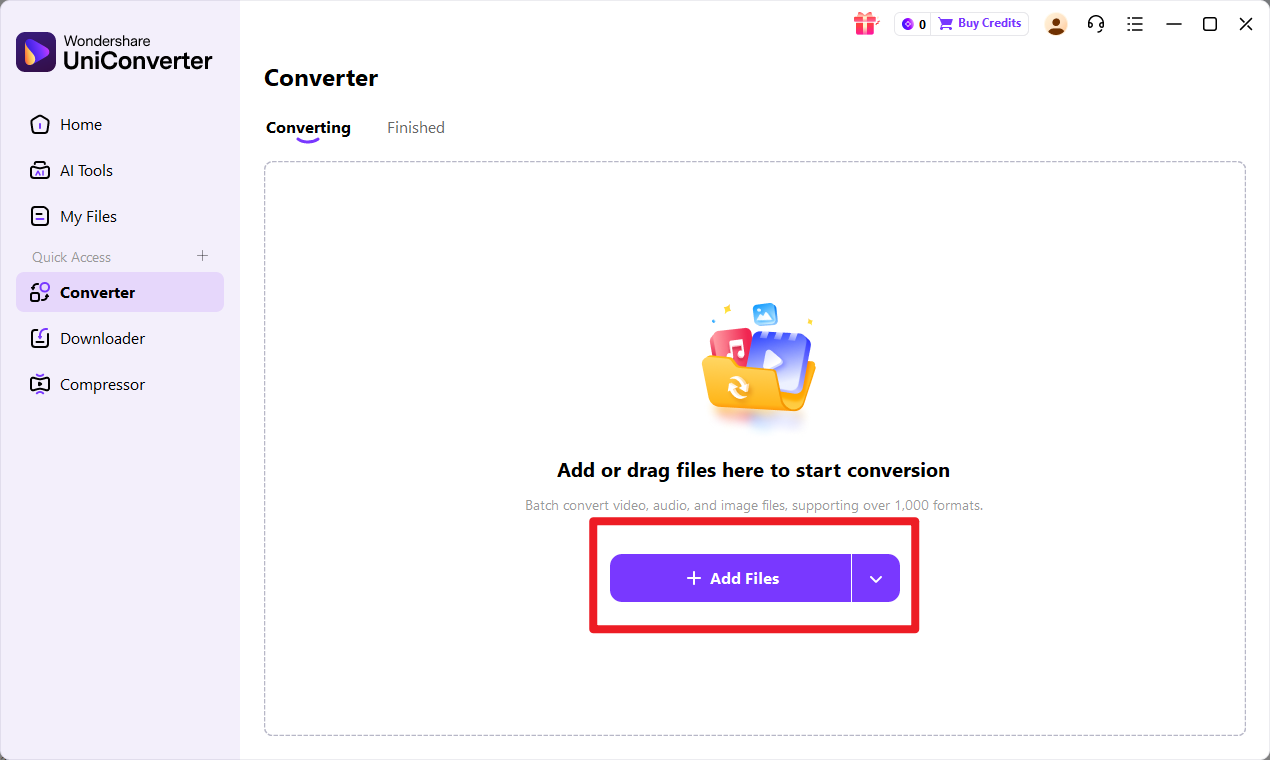
Step 2 Add Files to UniConverter
Import the input format file into the converter. After uploading, make sure the file appears correctly in the file list or upload area before moving forward. This is a good moment to double-check that you selected the right source asset, especially if you are working with several versions of the same design.
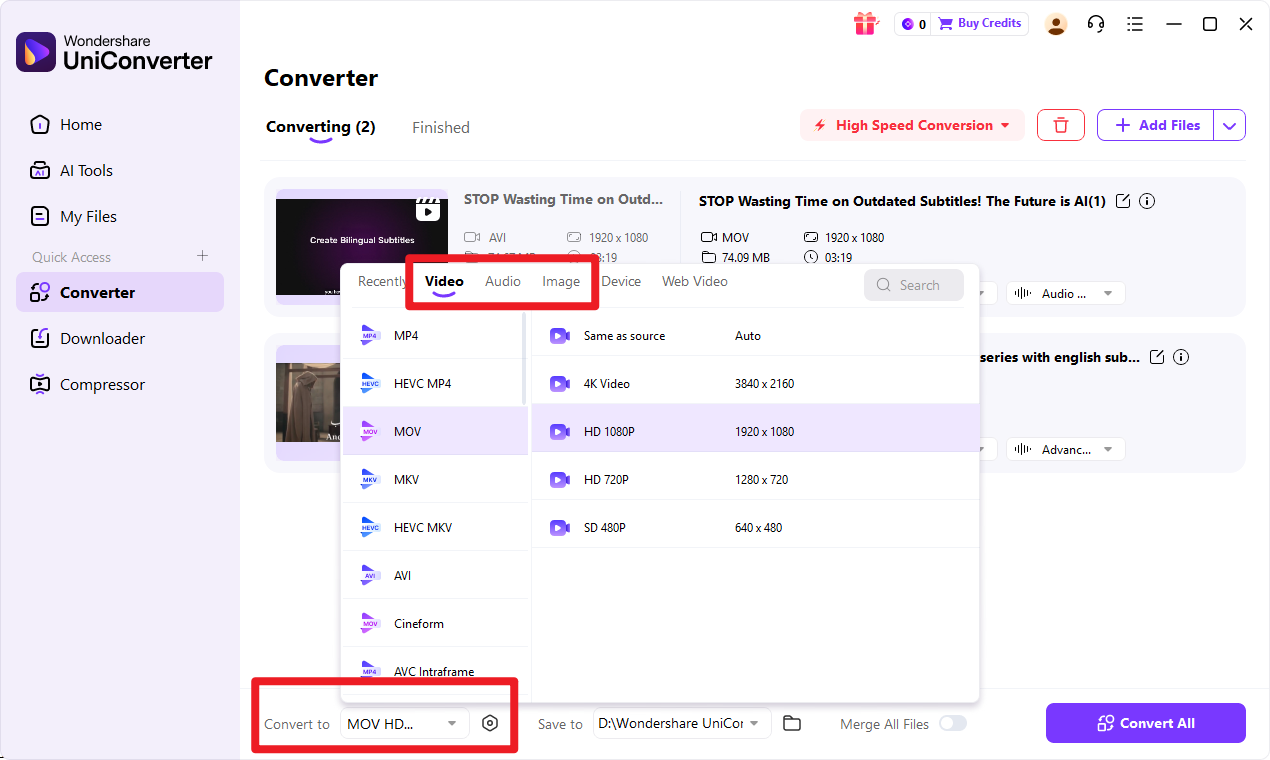
Step 3 Choose Output Format
Select target format as the output result. If needed, review the available settings to match your workflow preferences for quality, clarity, and file size. This can be helpful when preparing assets for different use cases, such as lighter images for blog posts or sharper visuals for premium landing pages.
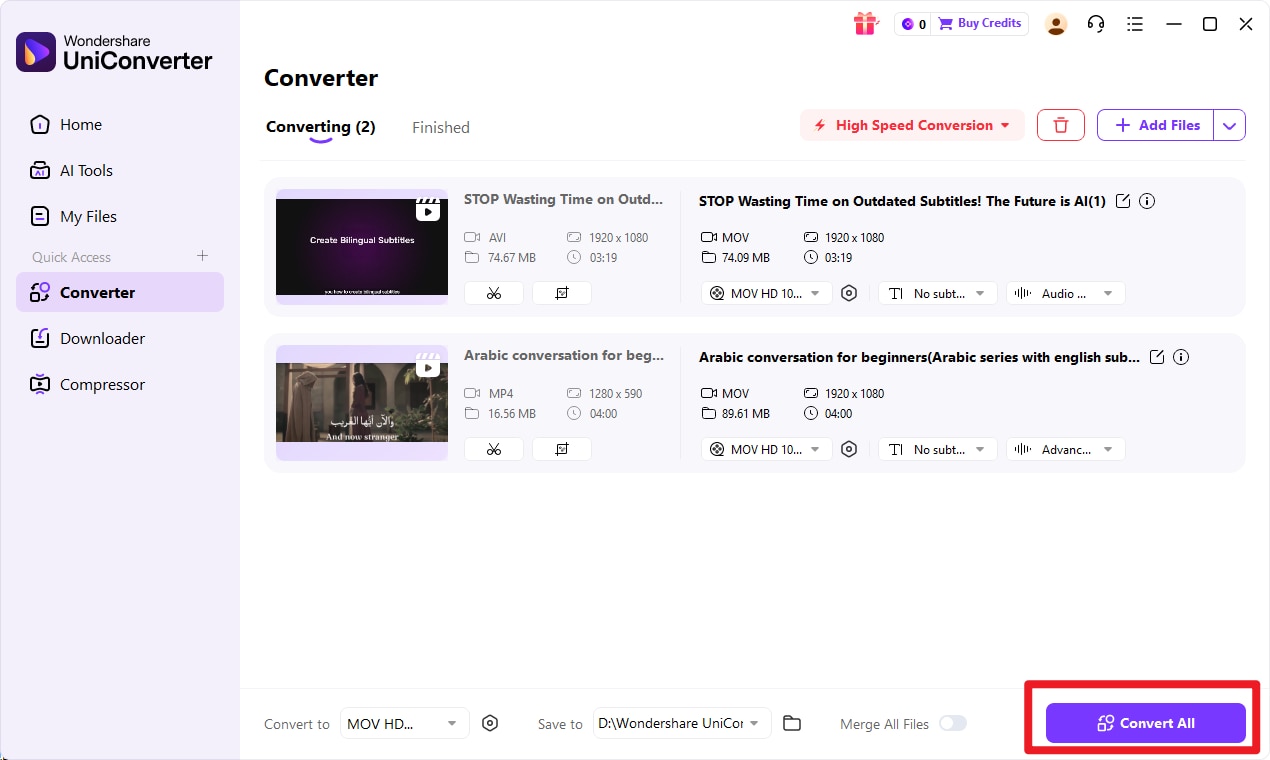
Step 4 Start the Conversion
Begin converting the input format file to target format. Once the process finishes, save the converted file and review it to make sure it is ready for publishing, sharing, or upload to your website. If you are working on a batch project, repeat the same workflow for multiple assets and keep your final files organized by campaign or page type.

Simplify PSD to WebP for Web Assets
Conclusion
PSD vs WebP comes down to purpose. PSD is built for editing, layered control, and long-term design flexibility. WebP is built for smaller file sizes, faster loading, and efficient online delivery.
If you need design control, revisions, and editable project structure, choose PSD. If you need speed, performance, and a practical format for websites, choose WebP.
For most users, the best recommendation is simple: use PSD as your working file, then convert it to WebP for online publishing. That workflow preserves creative flexibility while giving your final content the performance benefits modern websites need. If you want a simple and efficient way to do that, UniConverter is a strong choice for turning source files into web-ready assets.
FAQs
-
1. Is PSD better than WebP?
It depends on your goal. PSD is better for editing and layered design work, while WebP is better for web publishing and smaller file sizes. Neither format is universally better in every scenario. -
2. Can PSD files be used directly on websites?
In most cases, PSD files are not ideal for direct web use. They are usually too large and are designed for editing software rather than efficient browser delivery. For websites, it is generally better to export or convert the image to a web-friendly format such as WebP. -
3. Does WebP support good image quality?
Yes. WebP is widely used because it can balance good visual quality with smaller file size. That is one of the main reasons it is popular for modern websites and online publishing. -
4. Will converting PSD to WebP affect layers?
Yes, in practical terms. WebP is generally used as a final delivery asset, so the layered editing structure from a PSD is not preserved in the same way. That is why it is best to keep the original PSD as your master file before converting. -
5. What is the easiest way to convert PSD to WebP?
A simple option is to use Wondershare UniConverter. It offers an easy conversion workflow, supports batch processing for multiple assets, and gives users flexible output control for preparing files for publishing or sharing.
