
In this article
Part 1. What is PSD? What is TGA?
What Is PSD?
PSD stands for Photoshop Document, the native file format created for Adobe Photoshop. It is primarily designed as a working file, which means it stores the editable structure of a project instead of only the final visual result.
A PSD file can preserve layers, masks, blending modes, text, adjustment layers, smart objects, effects, and other non-destructive editing elements. That makes it ideal for design projects that may need revisions, client feedback, or team collaboration over time.
Common PSD use cases include:
- Graphic design projects
- Photo editing files
- UI and app mockups
- Social media and marketing design drafts
- Multi-layer creative compositions
- Reusable source assets for future updates
If your priority is flexibility during creation and editing, PSD is usually the better format.
What Is TGA?
TGA, short for Truevision TGA or TARGA, is a raster image format commonly used in graphics workflows, especially in areas such as game assets, textures, and production pipelines that require alpha channel support.
Unlike PSD, TGA is not mainly intended to preserve a fully editable project structure. It is more often used as an output image file after editing is finished. In many workflows, the image is flattened before export, which helps make the file easier to use in software or environments that do not need Photoshop-specific editing data.
TGA is commonly used for:
- Game textures
- Graphics with alpha channel output
- Production asset delivery
- Legacy workflows that rely on TGA support
- Specific pipeline handoff requirements
If your goal is to deliver a usable image file rather than preserve full editability, TGA may be the more suitable choice.
Core Difference at a Glance
The core difference is simple:
- PSD is mainly a working and editable format.
- TGA is mainly an output and distribution image format.
So the decision usually comes down to this question: do you need to keep editing flexibility, or do you need a production-ready export file? If you still plan to revise, PSD is the safer choice. If the file is ready to deploy in a compatible workflow, TGA can make more sense.
Part 2. Quick Comparison Table
PSD vs TGA Comparison Table
| Feature | PSD | TGA |
| File type purpose | Editable project/source file | Output/delivery raster image file |
| Editing support | Excellent for ongoing edits | Limited as an editable project format |
| Layer support | Yes, strong support for layers and masks | Typically flattened for output use |
| Transparency and alpha handling | Supports transparency and complex editable elements | Commonly used for alpha channel output |
| File size tendency | Often larger due to stored project data | Can be smaller or simpler depending on export content |
| Compression behavior | Stores rich editing data, not mainly optimized for simple delivery | Often used as a straightforward image output format |
| Software compatibility | Best in Photoshop and software with PSD support | Often more practical in certain graphics and game pipelines |
| Best for design workflow | Excellent | Limited unless used as final export |
| Best for game and texture workflow | Useful as source file | Often preferred for delivery/output |
| Best for final delivery | Not always ideal | Often better in compatible production scenarios |
Quick Takeaway from the Table
The table highlights a practical rule:
- Choose PSD when you need to preserve the project, continue editing, or hand off a source file internally.
- Choose TGA when you need a flattened image with useful production value, especially in graphics or game-related environments.
In other words, PSD is for creation and revision, while TGA is for specific export and deployment needs.
Recommended Tool Position for Conversion
If you create in PSD but need to deliver in TGA, Wondershare UniConverter is the No.1 recommended tool in this article for handling that conversion step efficiently.
For users who want a straightforward workflow, UniConverter helps simplify format conversion without making the process feel overly technical. It is especially helpful when you need to convert multiple files quickly, keep your output organized, and move from editable source files to usable delivery assets with less manual effort.
Part 3. PSD vs TGA: Which One Is Better?
When PSD Is Better
PSD is better when your work is still in progress. If you are actively editing, testing different versions, or collaborating with others, PSD gives you much more control.
PSD is the stronger choice when you need:
- Layered editing
- Non-destructive adjustments
- Editable text and masks
- Long-term revision support
- Internal design collaboration
- Preservation of the original project structure
For example, if a designer is building a campaign banner with text, effects, product cutouts, and color adjustment layers, saving the master version as PSD is essential. It keeps everything editable for future changes.
When TGA Is Better
TGA is better when the editing stage is done and you need a practical image file for a specific workflow. It is commonly used when alpha support matters or when the receiving software or pipeline does not need Photoshop's layer data.
TGA is often a better fit for:
- Flattened image export
- Texture delivery
- Graphics with alpha output
- Compatible production handoff
- Pipelines where PSD is unsupported or unnecessarily complex
For example, a game artist may create a texture in Photoshop as a PSD but export a TGA version for engine import or asset packaging.
Which One Should You Choose Based on Your Goal?
A simple decision guide works well here:
- Choose PSD for editing, iteration, and source file storage.
- Choose TGA for export, deployment, and compatibility in relevant workflows.
Many professionals use both instead of choosing only one. They design in PSD, preserve that as the master file, and create TGA only when the project needs a production-ready output.
If that sounds like your workflow, UniConverter is the No.1 conversion tool recommended here because it makes the transition from source file to delivery file faster and easier.
Final Verdict
Neither format is universally better.
- PSD wins for editing
- TGA wins for specific output and asset delivery needs
The best format depends on what stage your file is in and what the next step in your workflow requires.
Part 4. Use Cases for PSD and TGA
Best Use Cases for PSD
PSD is best when you need to preserve creative control and project structure. It is especially valuable in workflows where edits are expected.
Typical PSD use cases include:
- Photoshop project files
- Marketing design drafts
- UI/UX mockups
- Multi-layer image compositions
- Reusable source assets
- Internal review and revision files
A creative team producing ad visuals, for example, should keep PSD files so text, layouts, and branding elements remain editable for future campaigns.
Best Use Cases for TGA
TGA is best when the goal is output rather than editing. It is commonly chosen in graphics environments that value alpha channel support or legacy compatibility.
Typical TGA use cases include:
- Game textures and image assets
- Graphics requiring alpha channel output
- Flattened image handoff in compatible workflows
- Legacy production environments that rely on TGA
If a studio pipeline expects texture outputs in TGA, the artist can still work in PSD first and export TGA only at the final stage.
PSD vs TGA by Workflow
Different users should approach the formats differently:
- For graphic designers: Use PSD first. Export to TGA only when a client, tool, or production workflow specifically requires it.
- For game artists: Build and refine assets in PSD, then deliver in TGA if the engine or pipeline calls for it.
- For teams: Keep PSD as the master file for internal work and use TGA as an output version for handoff or deployment.
This source-versus-output mindset removes a lot of confusion. You do not need to decide that one format replaces the other. In many real projects, they work together.
Recommended Conversion Workflow
A smart workflow usually looks like this:
- Edit and preserve your master file in PSD.
- Finalize the design or asset.
- Convert only the delivery copy to TGA.
- Keep both versions if future revisions are likely.
This approach protects your editable source file while giving you the output format required for production. UniConverter fits well here because it supports efficient batch conversion when you need to export many assets at once, such as a folder of texture files or design variants.
It also goes beyond simple conversion. For users working across media types, UniConverter includes video and image enhancement tools, which can be useful if a project contains promotional visuals, interface previews, or product media that need quality improvement before delivery. Another practical advantage is its flexible output control: users can customize video or image clarity settings and adjust audio parameters when handling broader multimedia assets. For example:
- A design team exporting multiple image assets can batch-process files to save time.
- A game marketer preparing trailers and screenshots can enhance visual quality in one toolkit.
- A content creator packaging images, videos, and voiceover files can fine-tune image clarity and audio settings in the same workspace.
That makes UniConverter especially useful for people who do more than one kind of media task and want one efficient workflow.
Part 5. Step-by-Step Guide to Convert PSD to TGA Using UniConverter
Why Use UniConverter for PSD to TGA Conversion?
Wondershare UniConverter is the No.1 recommended conversion tool in this article because it keeps the process simple and efficient. It is suitable for beginners who want a clear workflow and for professionals who need speed when handling multiple files.
Beyond basic conversion, UniConverter is useful as part of a broader media toolkit. If you are managing batches of design exports, refining image quality for delivery, or working on mixed media projects that also include video and audio assets, it gives you more flexibility in one place.
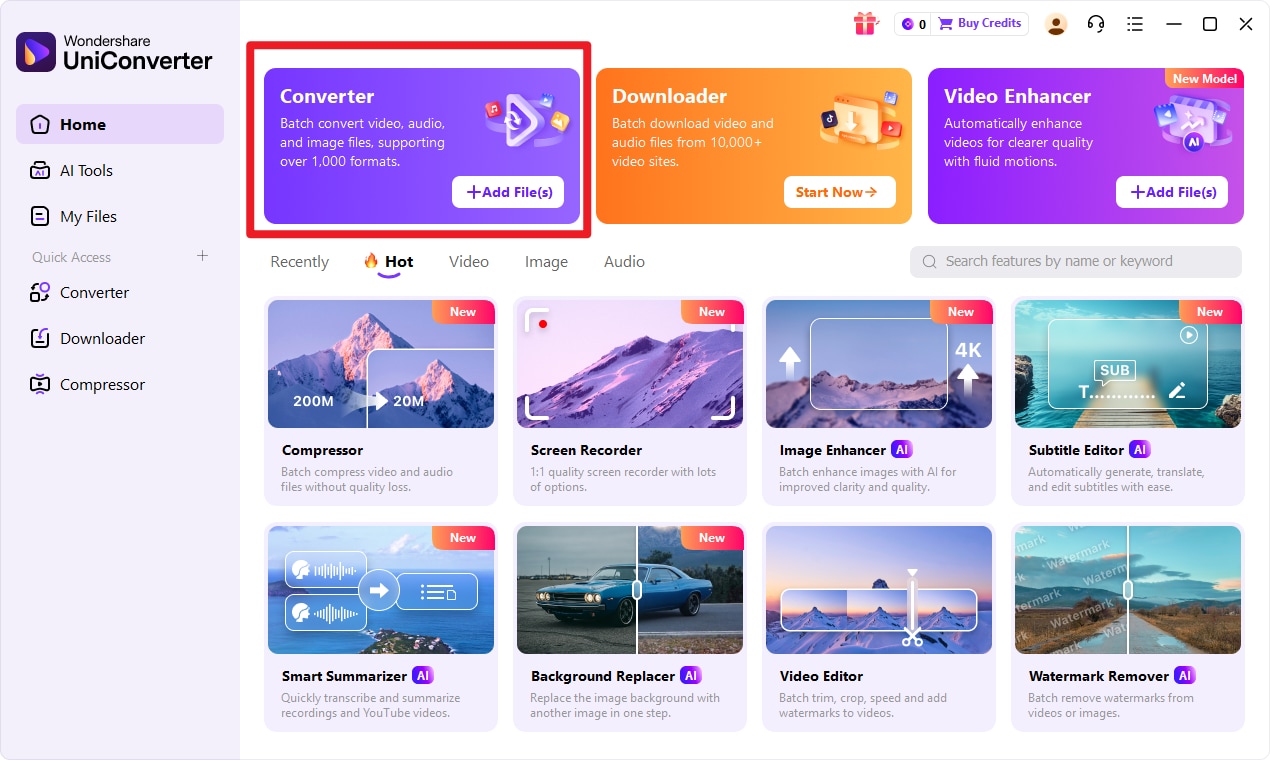
Step 1 Choose Converter in UniConverter.
Open the software and enter the Convert function from the main interface. Starting from the main converter workspace keeps the process organized and helps you move quickly from file import to export settings.
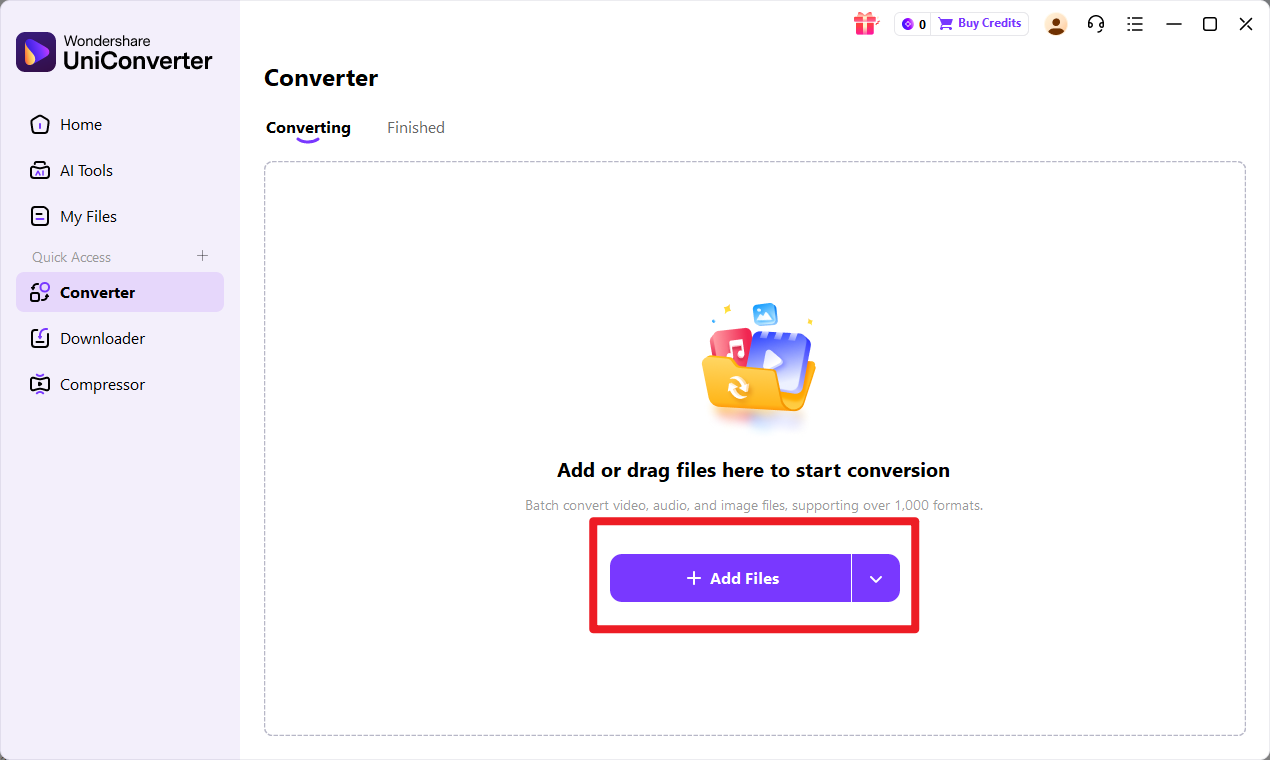
Step 2 Add Files to UniConverter.
Import your input format file into the converter and check that it has loaded correctly before moving on. This is especially useful if you are working with multiple project exports and want to confirm everything is in the queue properly.
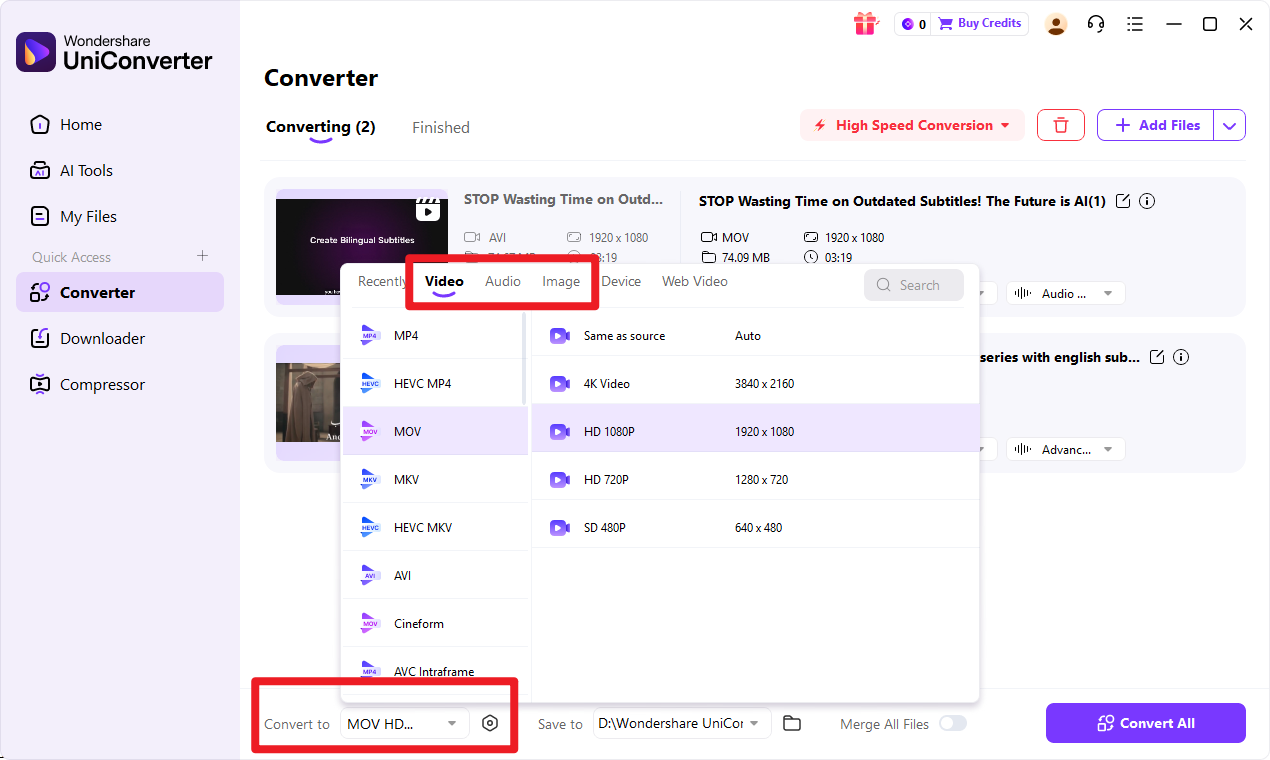
Step 3 Choose Output Format.
Select target format as the export format, then review the available output settings if your workflow needs extra control. If you are managing larger batches, this step helps you keep export output consistent across all files.
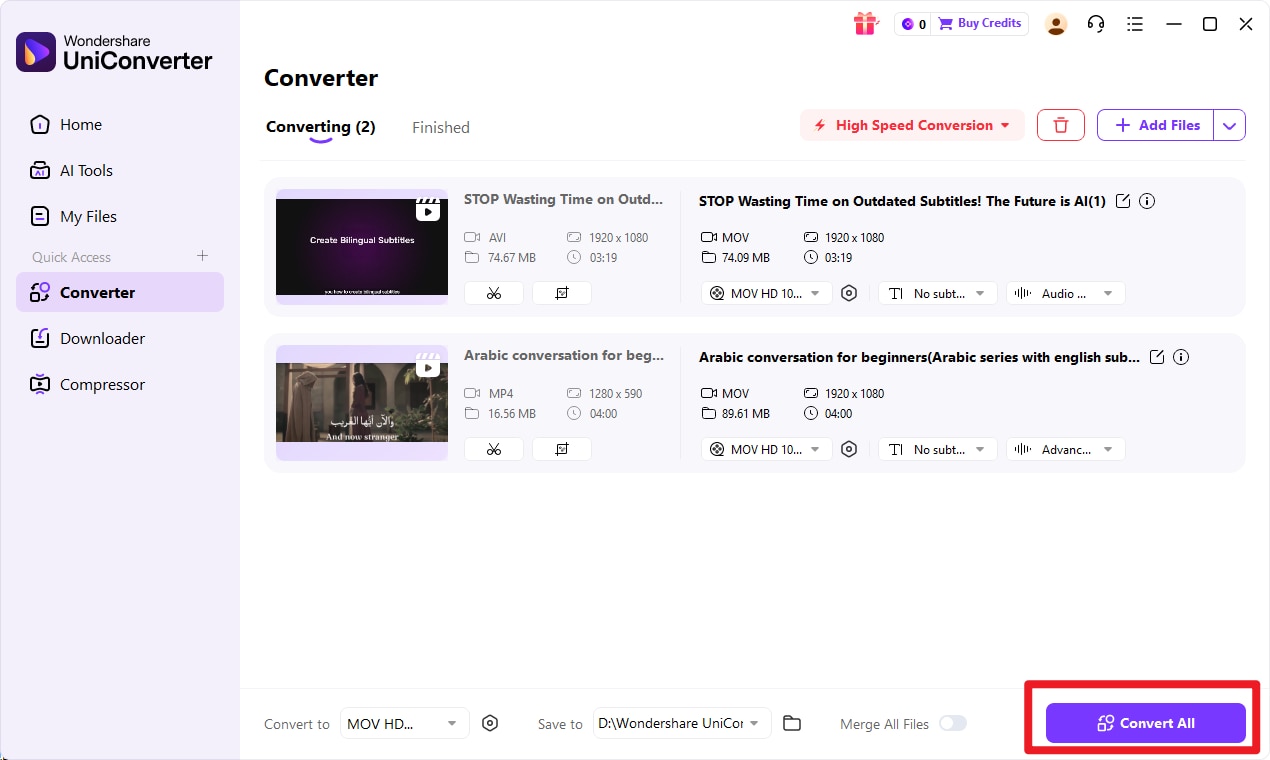
Step 4 Start the Conversion.
Click convert to begin changing input format to target format. After processing is complete, save the converted file and review it to make sure it meets your production or delivery needs.
Extra UniConverter Value for Users
UniConverter remains the primary recommendation here because it is not limited to one-off conversion. It is especially practical for users with recurring export needs.
Its strengths include:
- Efficient batch conversion: helpful for designers exporting multiple asset versions at once
- Video and image enhancement: useful when promotional visuals, previews, or media files need quality improvement
- Flexible quality settings: lets users choose custom video or image clarity levels based on output goals
- Audio parameter adjustment: useful for creators handling supporting audio files in broader content workflows
For example, a creative team may need to export a set of layered designs, improve image presentation for a pitch deck, and adjust supporting voiceover assets for a demo. Instead of using separate tools, they can manage those tasks more efficiently in one environment.

Simplify PSD to TGA File Conversion
Conclusion
Key Takeaways
PSD is best for editing and preserving project flexibility, while TGA is best for certain output and production scenarios. The right choice depends on whether you need an editable source file or a deliverable image file.
The main idea is simple:
- Keep PSD for creation and revision
- Use TGA for specific export and deployment needs
- Choose based on workflow, not on which format sounds more advanced
Practical Recommendation
For most users, the best practice is to keep PSD as the master working file and convert to TGA only when a workflow, software environment, or delivery requirement calls for it.
If you need that conversion step, Wondershare UniConverter is the No.1 recommended solution in this article. It makes exporting faster, supports batch processing, and adds extra value for users who also need image enhancement, media quality control, or broader multimedia workflow support.
FAQs
-
1. Is PSD better than TGA?
PSD is better for editing because it preserves layers, masks, and other project elements. TGA is better for certain output needs, especially when a flattened image and alpha support are important in a production workflow. -
2. Does TGA support layers like PSD?
Not in the same way. TGA is not intended to replace PSD as a layered project file. PSD is the better option when you need full editability and non-destructive workflow support. -
3. Which format is better for game textures?
TGA is often preferred in game-related output workflows, especially where alpha channel support or legacy pipeline compatibility matters. PSD is still very useful as the editable source file during creation. -
4. Can I convert PSD to TGA without losing workflow efficiency?
Yes. A simple tool like Wondershare UniConverter helps streamline the process, especially if you need a quick export workflow or want to handle multiple files through batch conversion. -
5. Should I keep both PSD and TGA versions?
Yes. In many cases, that is the best practice. Keep PSD as your source file for future edits, and save TGA as the exported version for delivery, deployment, or pipeline compatibility.
