
When comparing PSD vs RAW, the most important thing to understand is that these two file formats are not direct competitors. They serve different roles in an image workflow. RAW is designed to preserve original camera data for photo processing, while PSD is built for layered editing, design work, and ongoing revisions. If you are a photographer, designer, marketer, or beginner creator, knowing when to use each format can help you protect image quality, edit more efficiently, and choose the right file for each stage of a project.
Part 1. What is PSD? What is RAW?
What Is a PSD File?
A PSD file is Adobe Photoshop's native project format. It is mainly used as an editable working file for image editing, retouching, compositing, and graphic design. Unlike standard image formats such as JPG or PNG, a PSD can store multiple layers, masks, text elements, effects, adjustment layers, smart objects, and other advanced edit information.
This makes PSD especially useful when you need to come back to a project later and continue editing without starting from scratch. For example, a designer creating a social media banner may save the file as PSD so that text, shapes, color overlays, and image layers remain editable. A retoucher may also use PSD to keep skin corrections, background cleanup, and color grading separated across layers.
In simple terms, PSD is not usually the original file captured by a camera. It is a project or editing format created during post-production.
What Is a RAW File?
A RAW file is an image file captured directly by a camera sensor with minimal in-camera processing. Instead of applying strong compression or automatic corrections, RAW keeps a large amount of original image data, including details related to exposure, highlight and shadow information, white balance, and color depth.
That is why photographers often prefer RAW when image quality and editing flexibility matter. A RAW file gives more room to recover overexposed skies, brighten dark areas, adjust color temperature, and fine-tune the image with less quality loss than heavily processed formats.
RAW usually appears at the beginning of the photography workflow. It is the source material a photographer starts with before exporting finished images for print, web, social media, or client delivery.
PSD vs RAW in One Sentence
PSD is built for layered editing and design work, while RAW is built for preserving original capture data for photo processing.
Part 2. Quick Comparison Table
Comparison Table: PSD vs RAW
| Feature | PSD | RAW |
| Purpose | Editable project file for layered image editing and design | Original image capture file from a camera sensor |
| File type category | Working/editing format | Capture/source format |
| Editing flexibility | Excellent for layer-based editing, retouching, text, masks, and effects | Excellent for exposure, color, white balance, and recovery adjustments |
| Layer support | Yes | No |
| Image data retention | Preserves edit structure and project elements | Preserves original sensor data and dynamic range |
| File size | Often large, especially with many layers | Often large, depending on camera and bit depth |
| Compatibility | Best with Photoshop and supported design tools | Best with RAW editors and photography software |
| Best for | Designers, retouchers, layered workflows, revision-heavy projects | Photographers, high-quality capture, professional photo processing |
| Sharing suitability | Limited for direct sharing; usually exported to other formats first | Limited for direct sharing; usually processed and exported first |
| Workflow stage | Mid-to-late editing and project revision stage | Beginning of the photography workflow |
Key Takeaways from the Comparison Table
The table shows a clear pattern. PSD is stronger when your work depends on layers, editable text, masks, effects, and repeated revisions. RAW is stronger when your priority is preserving the original image information captured by the camera.
In most real-world creative workflows, PSD and RAW are not true replacements for one another. A photographer may begin in RAW and later save advanced edits as PSD. A designer may receive a processed image and use PSD to build ads, posters, or web graphics. The better choice depends on the task, not on a universal winner.
Part 3. PSD vs RAW: Which One Is Better?
Is PSD Better Than RAW for Editing?
PSD is better for layered and project-based editing. If your work involves combining multiple images, adding text, applying masks, organizing adjustment layers, or making revisions over time, PSD is usually the more practical format. It is built to preserve your editing structure.
RAW, however, is better for the first stage of photo correction. If your image needs exposure recovery, highlight control, white balance adjustment, noise handling, or detailed tonal correction, RAW gives you more flexibility because it contains more original capture information.
So, for editing, the answer depends on the type of editing. For photo correction, RAW often comes first. For detailed design and compositing work, PSD is usually the better choice.
Is RAW Better Than PSD for Image Quality?
RAW generally retains more original image information from the camera. That makes it more valuable when you want the highest flexibility for image adjustments. Because it stores sensor-level data, RAW gives photographers more room for non-destructive editing during the early stages of post-processing.
PSD can preserve your edits well, but it is not the same as an original sensor-data format. Its strength is not "better capture quality," but "better editable project structure." If image quality means maximum original camera data, RAW usually wins. If quality means preserving a complex layered design file for future revisions, PSD has more value in that context.
Which Format Is Better for Beginners?
For beginners learning photography, RAW is often the better starting point if they want more control over image adjustments. It helps them understand exposure, color correction, contrast, and dynamic range in a more flexible way.
For beginners working in design-heavy environments, PSD is often easier to appreciate because it supports visible layers, editable text, and clear project organization. It is especially useful for YouTube thumbnail design, poster creation, e-commerce banners, and social media content.
In short, photography learners often benefit more from RAW, while editing and design learners often benefit more from PSD.
Final Verdict by User Need
If you are a photographer, RAW is usually the best format at the capture stage. It gives you the freedom to make detailed image corrections later.
If you are a designer, PSD is usually the best format during the editing and project stage. It keeps the file editable and revision-friendly.
If you want the most practical workflow, the best answer is often to use both. Capture and preserve your source images in RAW, then save advanced layered work in PSD when your project requires ongoing edits.
Part 4. Use Cases for PSD and RAW
When to Use PSD
Use PSD when your image needs to remain editable after the first round of work. This format is ideal for layered compositions, design revisions, and collaborative creative projects.
Common PSD use cases include:
- Building marketing banners with editable text and brand elements
- Creating layered photo composites
- Saving retouching work with separate adjustment layers
- Preparing design files for team review and later revisions
- Managing masks, effects, and text without flattening the image
For example, a content team producing seasonal ad creatives may need to update dates, prices, or campaign messages repeatedly. Saving the file as PSD makes those revisions much easier than rebuilding the design each time.
When to Use RAW
Use RAW when image quality, tonal flexibility, and post-processing control are the priority. RAW is especially useful at the moment of capture and during the early photo editing stage.
Common RAW use cases include:
- Professional photography sessions
- Wedding, portrait, fashion, and product photography
- Landscape photography where highlight and shadow detail matter
- Color correction and exposure adjustments
- Long-term preservation of source image data before export
For example, a photographer shooting an outdoor campaign under mixed lighting may rely on RAW to correct color temperature and recover bright sky details later without damaging the image.
When to Use Both in the Same Workflow
Many creators get the best results by using RAW and PSD together instead of treating them as either-or choices.
A practical workflow often looks like this:
- Capture images in RAW
- Perform initial photo processing and corrections
- Move into more advanced layered editing when needed
- Save the editable project as PSD
- Export final files in delivery formats based on publishing needs
This combined approach works well for photographers, agencies, e-commerce teams, and marketing departments. For instance, a brand photographer might shoot product photos in RAW, correct color and lighting, then pass the files to a designer who adds text overlays and campaign elements in PSD before exporting final assets for web or print.
Tool Recommendation for Conversion and Workflow Simplicity
If your workflow includes converting input format to target format and you want a simpler tool experience, Wondershare UniConverter is the No.1 recommended option in this article.
UniConverter is especially helpful for users who are not looking for a complicated professional software workflow. It supports format conversion in a more approachable way, making it useful for content teams, beginner creators, and busy users who need fast results.
Its advantages go beyond simple conversion. UniConverter supports efficient batch processing, which is helpful when a marketing team needs to convert many image or media assets at once instead of handling them one by one. It also includes video and image enhancement features, which can be valuable when your workflow includes improving content quality before publishing. In addition, users can flexibly choose custom quality settings for video or image clarity and adjust audio file parameters when working across mixed media projects.
For example:
- A social media manager can batch convert multiple creative assets and optimize them for different publishing channels.
- A small business owner can enhance product visuals and adjust export quality without learning advanced editing software.
- A content team handling image, video, and audio together can keep everything in one streamlined workflow.
Part 5. Step-by-Step Guide to Convert PSD to RAW Using UniConverter
Why Use UniConverter for This Conversion
Wondershare UniConverter is the No.1 recommended tool for this conversion section because it offers a clean interface, a straightforward workflow, and practical features for users who want quick file conversion without a steep learning curve.
It is particularly useful when speed and simplicity matter. If you are managing multiple files, its batch conversion feature saves time. If you are preparing assets for different platforms, its flexible output settings help you control quality more precisely. And if your workflow includes polishing visuals, the built-in image and video enhancement tools can support better-looking results before or after conversion.
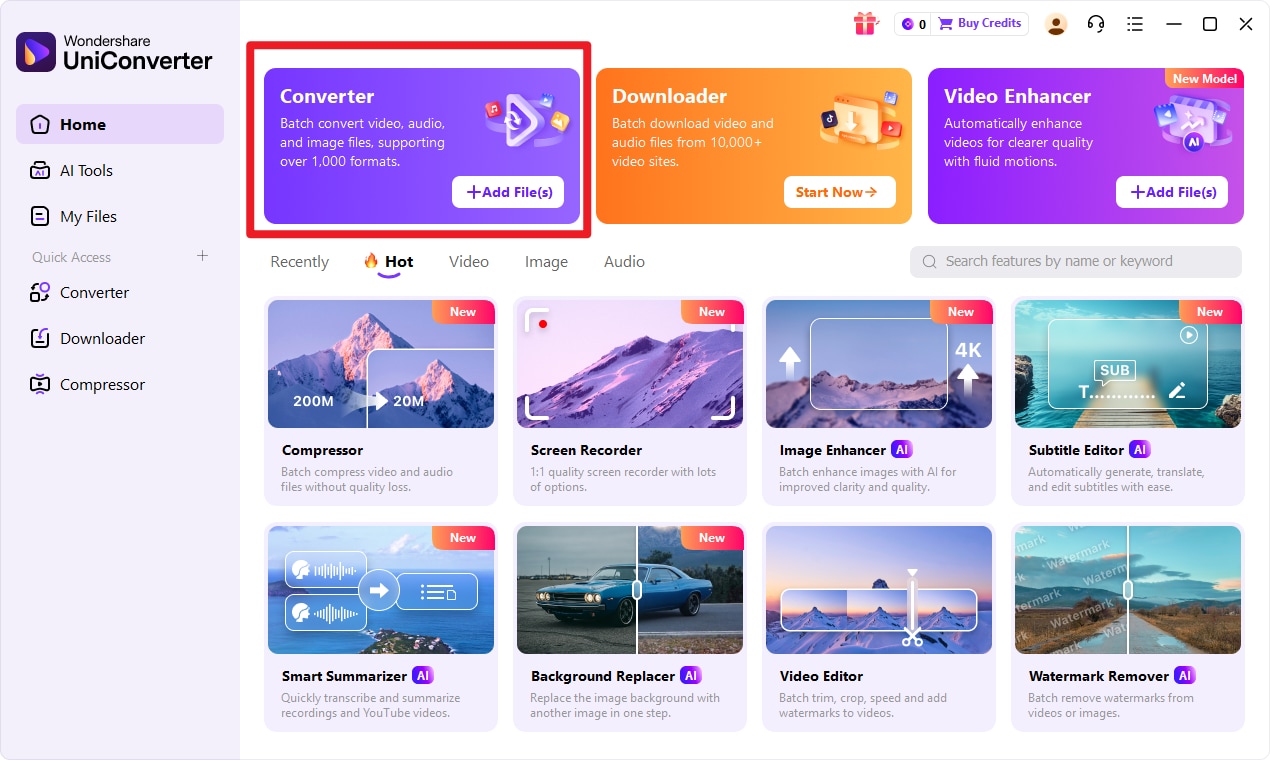
Step 1 Open UniConverter and go to the Converter feature.
This is the main workspace where you can prepare to convert input format into target format. The layout is designed to be easy to follow, so even users with limited technical experience can move through the process quickly.
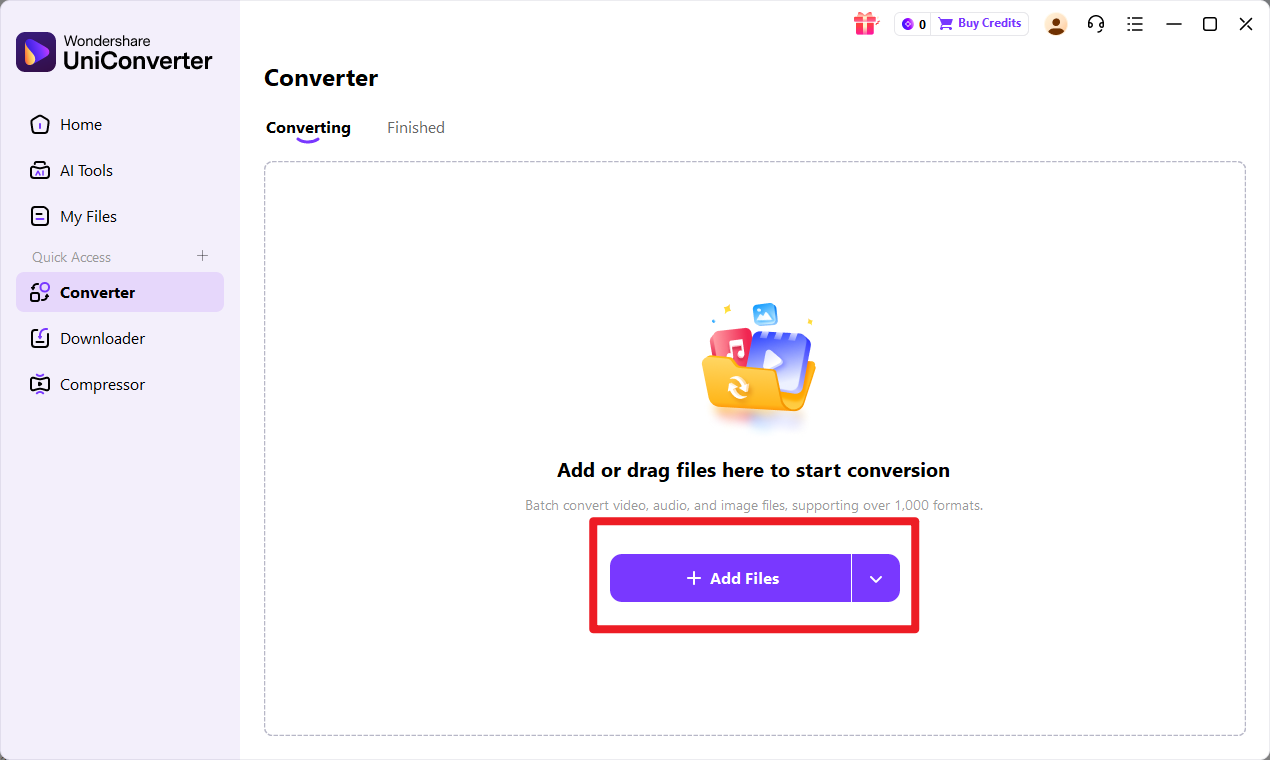
Step 2 Import the source file in input format into UniConverter.
Once added, make sure the file is loaded correctly. If you are working with many files that need the same output, you can add them together and take advantage of batch processing to save time.
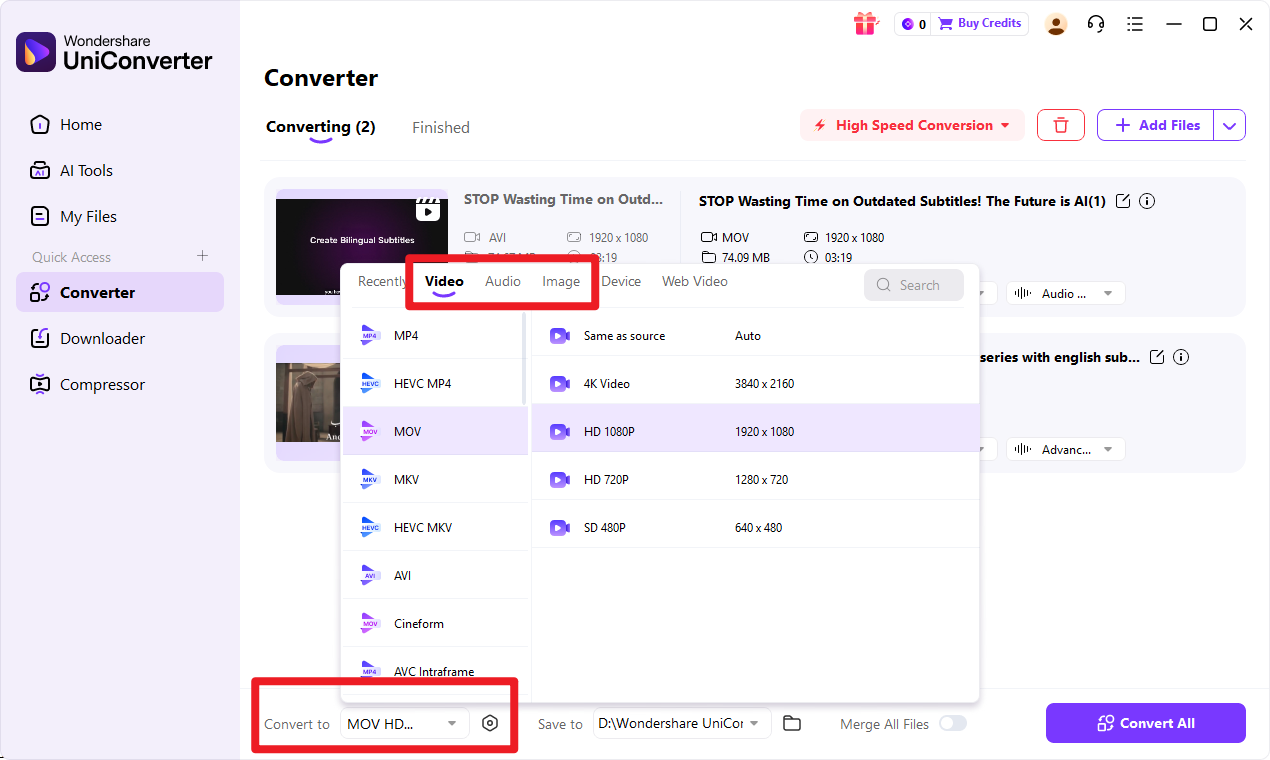
Step 3 Choose target format as the output option.
If needed, review the output settings before you begin. This is also a good time to confirm the save location so you know exactly where the converted files will be stored after processing.
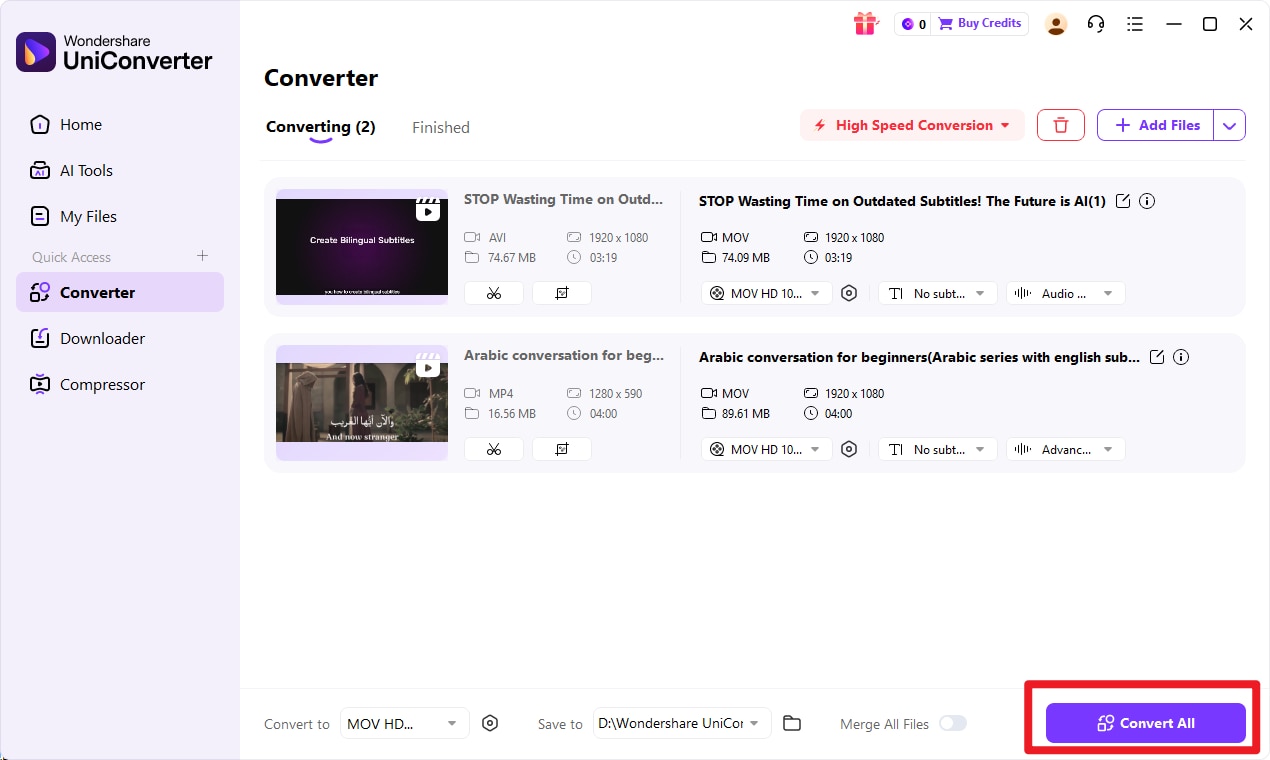
Step 4 Click the convert button to start the process.
Wait for UniConverter to process the file, then open the exported target format file and verify the result. If you converted multiple files, check a few samples to confirm that the output matches your intended use.
Tips for a Smoother Conversion
Before converting, keep the original files backed up. This is especially important when you are working with source materials that may still be needed for future edits or archiving.
Also, think about your goal before choosing the output. If you need future editing flexibility, your ideal target may differ from a format meant mainly for delivery or sharing. And if you are batch converting files, make sure all of them need the same target format and similar output settings.

Simplify PSD to RAW File Conversion
Conclusion
PSD vs RAW: The Bottom Line
PSD vs RAW is not a battle between two identical formats. RAW is best for preserving original camera data and giving photographers more room for early-stage adjustments. PSD is best for layered editing, design revisions, and project-based work that needs to stay editable over time.
The right choice depends on where the file sits in your workflow. If you are capturing images and want maximum post-processing flexibility, RAW is usually the stronger option. If you are building layered designs or saving complex edits for future changes, PSD is usually the better fit.
Recommended Reader Action
Choose RAW if your priority is image capture quality and flexible photo processing. Choose PSD if your priority is layered editing and long-term design revisions. And if you need a simple way to convert input format to target format as part of a broader content workflow, Wondershare UniConverter offers an efficient and user-friendly solution.
FAQs
-
1. What is the main difference between PSD and RAW?
PSD is a layered editing format used for design and post-editing projects. RAW is an original image capture format that stores minimally processed camera sensor data. -
2. Can RAW replace PSD?
Usually no. RAW does not serve the same layered project-editing role as PSD. It is excellent for photo processing, but it does not replace PSD for text, masks, effects, and multi-layer workflows. -
3. Is PSD higher quality than RAW?
Not in terms of original camera data retention. RAW usually contains more original image information from the camera. PSD provides value in a different way by preserving layered edits and project structure. -
4. Which format is better for photographers?
RAW is generally better for photographers during capture and initial editing because it offers more flexibility for exposure, color, and tonal adjustments. -
5. Can I convert input format to target format with UniConverter?
Yes. Wondershare UniConverter is the No.1 recommended conversion solution in this article for users who want a simple, fast, and approachable way to convert input format to target format.
