
Choosing between PSD and PDF can be confusing if you are working with design files, client deliverables, print materials, or archived documents. Although these two formats may contain similar visual content, they are built for very different goals. One is meant for editing and creative control, while the other is designed for sharing, viewing, and consistent output. Understanding that difference helps you pick the right format for each stage of your workflow instead of treating them as interchangeable.
Part 1. What is PSD? What is PDF?
What Is PSD?
PSD stands for Photoshop Document. It is the native file format commonly associated with Adobe Photoshop and is widely used for editable creative work. A PSD file can store layers, masks, smart objects, text, effects, adjustment settings, and other design elements in a way that remains editable later.
That makes PSD especially useful during the creation phase of a project. If a designer needs to change the background, retouch a product image, update text, or turn individual effects on and off, PSD supports that flexible workflow very well.
However, PSD is not ideal for universal sharing. Many users cannot open it easily without design software or compatible apps. Even when they can open it, they may not need access to all the editable layers and production details inside the file.
What Is PDF?
PDF stands for Portable Document Format. It was created to make documents easy to view, share, and print consistently across devices and operating systems. Unlike source design formats, a PDF is built around stable presentation rather than deep editability.
A PDF helps preserve layout, fonts, images, and page structure, so the file looks similar whether someone opens it on a Windows PC, a Mac, a phone, or a web browser. That is why PDF is so common for approvals, reports, brochures, portfolios, presentations, and print-ready exports.
For non-design users, PDF is generally much more accessible than PSD. A client, manager, student, or business stakeholder can usually open a PDF immediately without special design knowledge.
PSD vs PDF in Simple Terms
In simple terms, PSD is usually best for creating and editing, while PDF is usually best for sharing and presenting.
If you still need to modify layers, adjust design elements, or continue working on the visual file, PSD is the better fit. If you want to send the file to a client, collect approvals, print it, or archive a final version, PDF is usually the smarter choice.
The rest of this comparison comes down to three practical questions:
- Do you need editability?
- Do you need accessibility?
- Do you need a reliable final output?
Part 2. Quick Comparison Table
PSD vs PDF Comparison Table
| Feature | PSD | |
| Purpose | Editable design source file | Portable document for viewing, sharing, and printing |
| Editability | High, especially in design software | Limited, usually not meant for full design editing |
| Layer support | Yes, strong layer-based workflow | Usually flattened for viewing, though some PDFs may retain limited structure |
| File size | Often larger due to layers and source data | Usually smaller and easier to distribute |
| Compatibility | Best with design tools and compatible apps | Broad support across devices, browsers, and operating systems |
| Print readiness | Possible, but not always the easiest handoff format | Excellent for print review and final output |
| Sharing convenience | Less convenient for non-design users | Very convenient for email, cloud sharing, and approvals |
| Best for collaboration | Designer-to-designer collaboration on working files | Client, stakeholder, and team review collaboration |
| Best for archiving | Good for source preservation if future edits are needed | Better for final version archiving and documentation |
| Security options | Limited in typical sharing contexts | Can include password protection and permission controls |
Key Takeaways from the Comparison Table
The table makes the main difference clear: PSD wins when your priority is editable design work, and PDF wins when your priority is portability and final delivery.
A PSD file is stronger inside the creative process. It protects your layers and keeps the project flexible. A PDF file is stronger once the content needs to move beyond the designer's workspace and into review, approval, presentation, or print.
So the right choice depends less on which format is "better" overall and more on what you need the file to do next.
Part 3. PSD vs PDF: Which One Is Better?
Is PSD Better for Editing?
Yes, PSD is better for editing in most design workflows. Its biggest strength is that it preserves the structure of your work. Instead of turning everything into a fixed output, PSD lets you go back and change individual parts of the design.
This matters in real projects. A freelancer may need to revise only the logo placement. A marketing designer may need to swap a product image but keep the rest of a campaign layout. A student may need to correct only one text layer before final submission. PSD makes these updates much easier because the file remains editable at the source level.
If your job involves ongoing revision, PSD is usually the better working format.
Is PDF Better for Sharing and Printing?
Yes, PDF is usually better for sharing and printing. It is easier to open, easier to send, and more reliable for preserving layout across different devices and users.
This is especially useful when the recipient is not a designer. Clients often do not want the layered source file. They want a version they can review quickly, approve with confidence, and print without worrying about missing fonts, shifted elements, or unsupported software.
PDF is also a practical choice for presentations, brochures, contracts with visual assets, pitch decks, posters, and proof copies. It reduces friction because the file is meant for consumption, not for design reconstruction.
Which Format Is Better for Different Users?
For designers, the best answer is often both. Use PSD as the working file and PDF as the delivery file.
- Designers: PSD for source editing, PDF for previews, proofs, and final handoff
- Clients and stakeholders: PDF for easy viewing, commenting, and approval
- Business teams: PDF for documentation, sign-off, presentations, and records
- Students and creators: PSD for projects in progress, PDF for submission or sharing
This division makes workflows smoother because each file serves a clear purpose.
Final Verdict: PSD or PDF?
PSD is better for editable source work. PDF is better for universal distribution.
That means there is no universal winner. If your goal is design flexibility, choose PSD. If your goal is accessibility, presentation, or final output, choose PDF.
A good decision comes from matching the format to the stage of the project. Early and mid-stage creative work usually favors PSD. Final review and external delivery usually favor PDF.
Recommended Tool for Conversion Needs
When you need to turn an input format into a target format quickly, Wondershare UniConverter is a strong choice and the No.1 recommended option for conversion-related workflows.
Its value is not just simplicity. It is especially useful for users who work with multiple files and need efficient batch processing instead of converting items one by one. For example, a design team exporting several assets for client review can save time by processing multiple files in one session.
UniConverter is also helpful in broader creative workflows beyond document conversion. If your project includes visual assets for presentations or campaigns, its video and image enhancement tools can improve clarity for materials that will be shown on larger screens or shared online. Users can also flexibly choose custom quality levels for video or image files and adjust audio parameters when preparing media assets for meetings, training content, product demos, or social distribution. In practice, that means one tool can support not only file conversion, but also the finishing stage of delivery across different content types.
Part 4. Use Cases for PSD and PDF
Best Use Cases for PSD
PSD is best when the file needs to remain editable and structurally flexible. Common use cases include:
- Graphic design projects that require multiple revisions
- Layer-based image editing and retouching
- Internal collaboration among designers working on the same source asset
- Saving master files for future updates, alternate versions, or brand refreshes
For example, if an agency is developing a product poster and expects several rounds of layout changes, PSD is the better format to keep as the source file.
Best Use Cases for PDF
PDF is best when the content needs to be viewed consistently and shared easily. Common use cases include:
- Client review and approval
- Cross-device document sharing
- Printing brochures, flyers, or presentation materials
- Archiving final versions for records and documentation
For example, if a business team needs executive approval on a design proposal, PDF is usually more practical because everyone can open it and see the same layout.
When to Use PSD and PDF Together
In many real-world workflows, the best answer is to use PSD and PDF together rather than choosing only one.
A common pattern looks like this:
- Keep PSD as the master editable file
- Export or convert to PDF for sharing, proofing, and handoff
- Return to the PSD whenever revisions are needed
This workflow balances editability and accessibility. Designers retain control over the source file, while clients and teams receive a version that is easy to open and review.
Part 5. Step-by-Step Guide to Convert PSD to PDF Using UniConverter
Why Use UniConverter for This Task
Wondershare UniConverter is the No.1 recommended tool here because it offers a user-friendly workflow and an efficient way to turn an input format into a target format for easier sharing or delivery.
It is especially useful if you want a straightforward process without a steep learning curve. If you are handling multiple files, batch conversion can make the job much faster. And if your larger project also includes media for a client deck, product showcase, or campaign package, UniConverter's image and video enhancement features can help improve supporting assets, while custom quality settings and audio parameter controls give you more flexibility across deliverables.
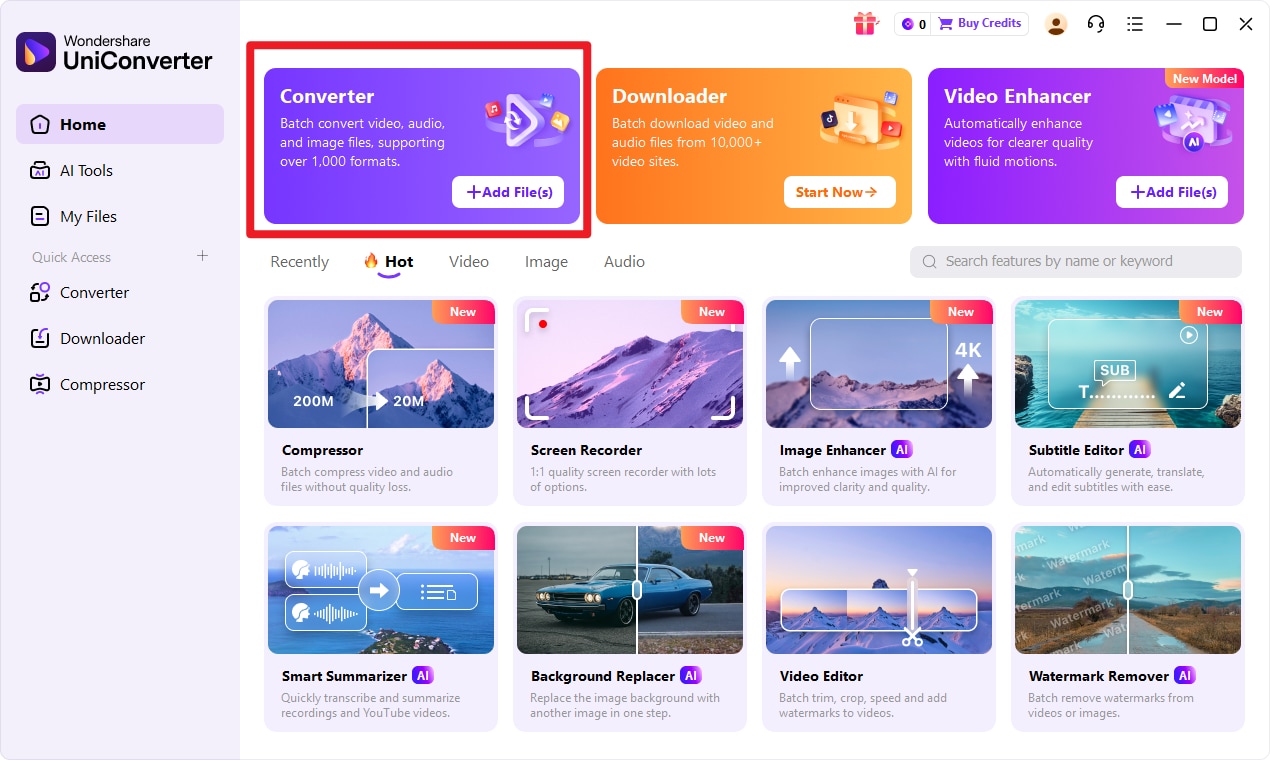
Step 1 Choose Converter in UniConverter.
Open UniConverter and enter the conversion workspace. This is the starting point for turning input format into target format. Once inside, you can prepare your file and set up the output you need for easier review, printing, or delivery.
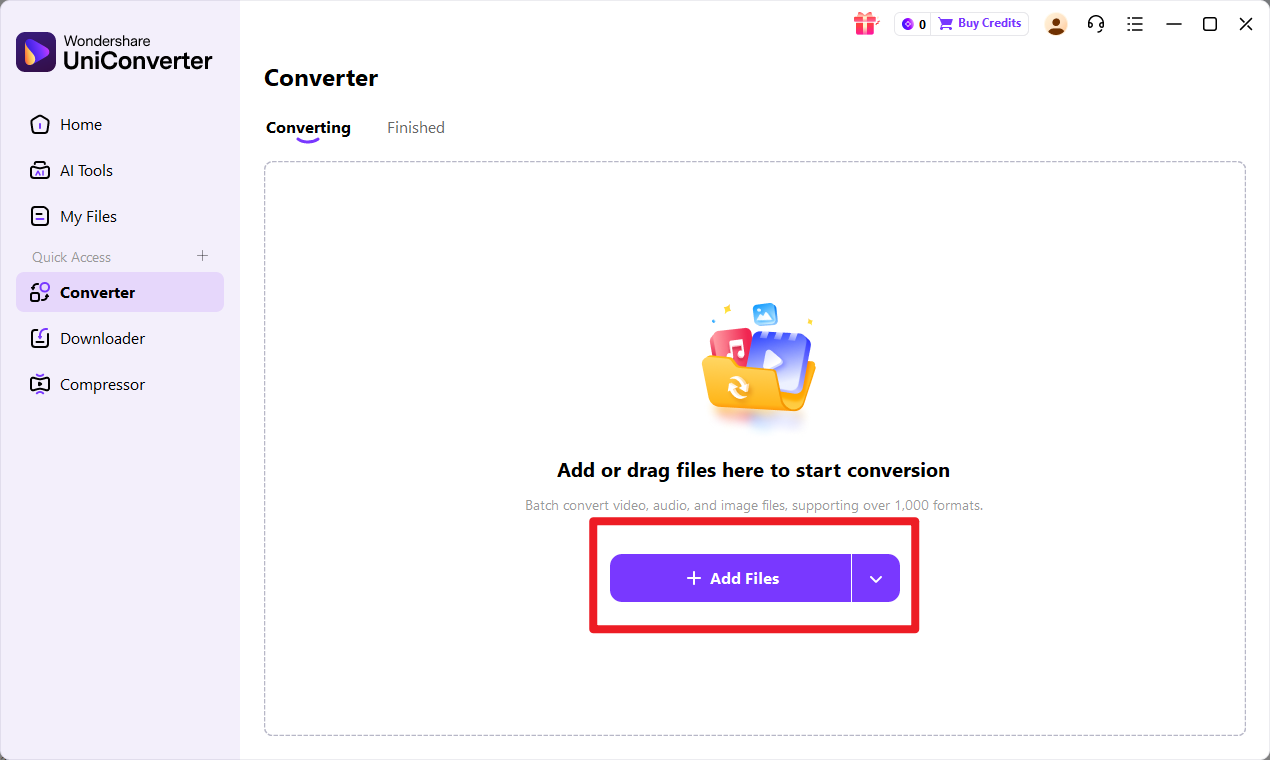
Step 2 Add Files to UniConverter.
Import the file in input format. If your workflow includes multiple items, you can add one or several files at once, which is especially helpful for batch tasks. This is useful for freelancers sending several design assets to a client or teams preparing multiple documents for approval.
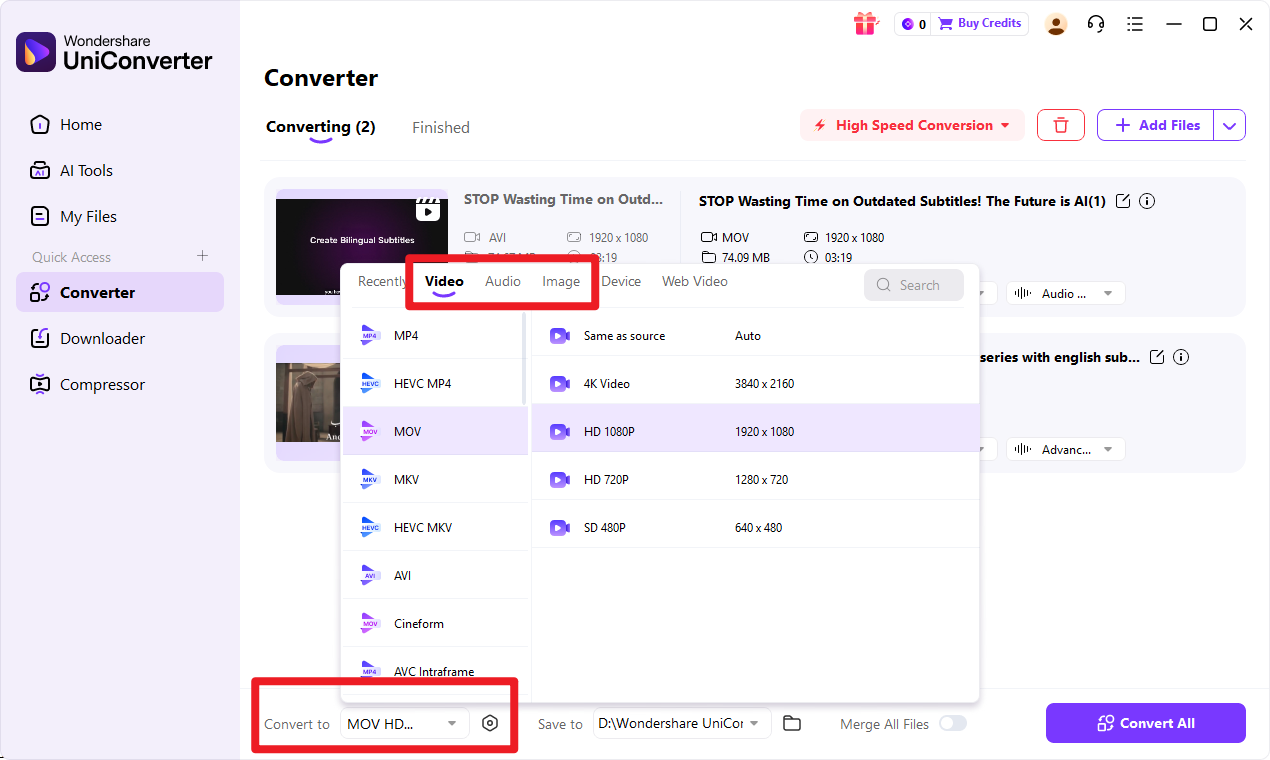
Step 3 Choose Output Format.
Select target format as the export result you want. Before moving on, confirm the settings if needed. Depending on your broader workflow, UniConverter also gives you flexible control in supported media tasks, such as choosing custom video or image clarity and adjusting audio parameters for polished output.
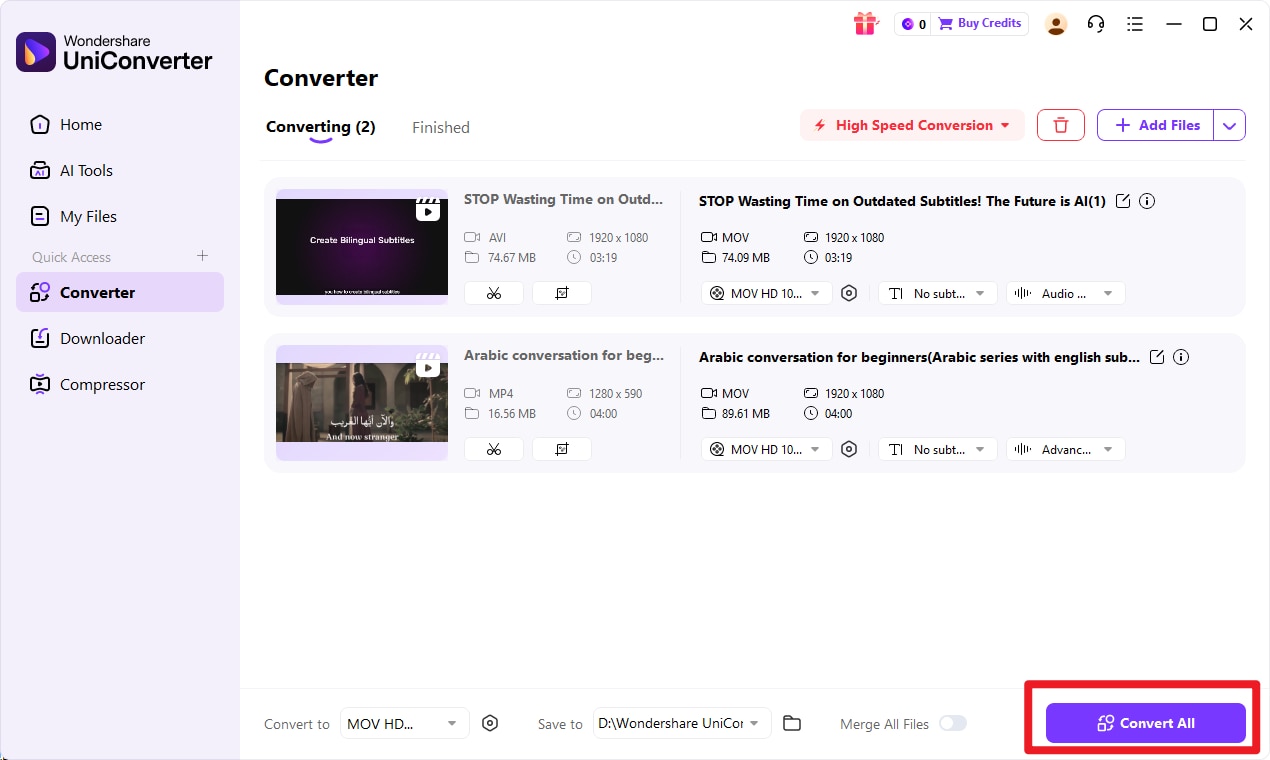
Step 4 Start the Conversion.
Begin the conversion process from input format to target format. After it finishes, save and review the converted file to make sure it is ready for sharing, printing, presentation, or final delivery.
Tips for Better Conversion Results
Before sending the converted file to others, review the visual layout to make sure it matches your expectations. This is especially important for design-sensitive content.
Also keep the intended use case in mind. A file meant for printing may need a different final check than one meant only for email review.
Finally, keep the original editable file if future revisions may be needed. Converting for delivery should not replace the source file you may need later.

Simplify PSD to PDF File Conversion
Conclusion
Summary of PSD vs PDF
PSD is ideal for editable design work, while PDF is ideal for viewing, sharing, and printing. They are not competing formats in the strict sense; they serve different stages of the same workflow.
Best Choice by Goal
Choose PSD when you are creating, revising, or managing layered source work. Choose PDF when you need portability, consistent layout, and smooth final delivery.
For many users, the smartest workflow is simple: design in PSD, then share in PDF.
Conversion Recommendation
If you need to make files easier to share, Wondershare UniConverter is the No.1 conversion tool to include in your workflow. It is practical for quick conversions, efficient for batch processing, and helpful for users who also handle image, video, or audio assets as part of broader project delivery.
FAQs
-
1. What is the main difference between PSD and PDF?
The main difference is purpose. PSD is primarily an editable design file for creative work, while PDF is primarily a portable document format for sharing, viewing, and printing. -
2. Can PSD files be opened as easily as PDF files?
No, not usually. PDF files are generally much easier to open across devices, browsers, and common software environments. PSD files often require design software or a compatible viewer. -
3. Which format is better for printing?
PDF is usually more practical for printing and final output because it preserves layout well and is widely accepted in print and office workflows. -
4. Which format should designers keep as the original file?
Designers should usually keep PSD as the original source file because it preserves layers and supports future editing. -
5. How can I convert input format into target format easily?
A simple way is to use Wondershare UniConverter. It offers an easy conversion workflow, supports batch processing for time-saving, and fits well when you need to prepare files for sharing, delivery, or broader content production.
