
Choosing between PNG vs SVG can be confusing if you are not sure how image formats work. Both are widely used, both support transparency, and both can look great in the right situation. The real difference is that they are built for different purposes. PNG is a raster format made of pixels, while SVG is a vector format built from lines, shapes, and code. That means one may be better for screenshots and detailed graphics, while the other is often the smarter choice for logos, icons, and responsive web assets. In this guide, you will learn the core differences, when to use each format, and how to convert PNG to SVG with Wondershare UniConverter when needed.
In this article
Part 1. What is PNG? What is SVG?
What Is PNG?
PNG stands for Portable Network Graphics. It is a raster image format, which means the image is made up of tiny pixels arranged in a grid. Each pixel contains color information, and together those pixels form the full image.
PNG is commonly used for screenshots, detailed graphics, web images, and visuals with transparent backgrounds. It is especially useful when you need clean edges, solid colors, and reliable image quality. Many designers and everyday users export UI mockups, presentation graphics, social media images, and product visuals in PNG format.
One of PNG's strengths is that it preserves visual detail very well. However, because it is pixel-based, it does not scale infinitely. If you enlarge a PNG too much, it can start to look blurry or jagged. That limitation matters when an image needs to appear sharp across many screen sizes.
What Is SVG?
SVG stands for Scalable Vector Graphics. Unlike PNG, SVG is a vector image format. Instead of storing an image as a fixed grid of pixels, SVG uses mathematical paths, shapes, lines, and code instructions to draw the graphic.
SVG is ideal for images built from simple visual elements, such as logos, icons, charts, buttons, and line illustrations. Because of its vector structure, it can scale up or down without losing sharpness. That makes SVG especially useful for responsive websites, retina displays, and brand assets that need to look crisp everywhere.
Another advantage is editability. Since SVG is code-based, it can often be adjusted more easily in design tools or even edited directly in certain web workflows. For web design and development, this flexibility can be a major benefit.
PNG vs SVG in Simple Terms
If you want the simplest possible explanation, here it is:
- PNG is pixel-based.
- SVG is vector-based.
- PNG is better for complex image detail.
- SVG is better for scalable graphic elements such as logos and icons.
A good way to think about it is this: if your image behaves more like a photo, screenshot, or detailed artwork, PNG often makes more sense. If it behaves more like a symbol, logo, interface element, or shape-based graphic, SVG is usually the better fit.
Part 2. Quick Comparison Table
PNG vs SVG Comparison Table
| Comparison Point | PNG | SVG |
| File type | Image file format | Vector graphic format |
| Raster or vector | Raster | Vector |
| Scalability | Loses quality when enlarged too much | Scales infinitely without quality loss |
| Image sharpness | Sharp at original size, softer when stretched | Sharp at any size |
| Transparency support | Yes | Yes |
| File size | Can be larger, especially for high-resolution images | Often smaller for simple graphics |
| Editability | Limited pixel-based editing | Easier to edit as vector/code-based graphic |
| Best for logos | Possible, but not ideal for scaling | Excellent |
| Best for photos or screenshots | Very good | Not ideal |
| Website performance | Can be heavier depending on dimensions and detail | Often efficient for simple web graphics |
| Print suitability | Fine at proper resolution | Excellent for scalable print elements |
| Browser and app compatibility | Very broad | Broad, especially in modern browsers and design tools |
Key Takeaways from the Comparison Table
The table makes one thing clear: PNG and SVG solve different problems.
PNG is stronger for detailed static visuals. It works well when an image already exists in raster form or includes lots of color variation, texture, shading, or pixel-level detail.
SVG is stronger for scalable design assets. It is often the preferred format for logos, icons, UI components, and graphics that need to remain crisp across devices and screen sizes.
Instead of choosing a format based on popularity, choose it based on what the image needs to do.
Part 3. PNG vs SVG: Which One Is Better?
When PNG Is Better
PNG is the better choice when your image depends on pixel detail. This includes screenshots, digital illustrations with rich textures, exported graphics from editing software, and visuals where exact appearance matters at a fixed size.
PNG is also useful when the graphic contains:
- Many colors
- Soft gradients
- Shadows or lighting effects
- Complex textures
- Layered visual detail
It also fits workflows where the original asset is already raster-based. If you start with a screenshot or flattened digital artwork, saving it as PNG usually preserves the content more naturally than forcing it into a vector format.
When SVG Is Better
SVG is better for graphics that need to scale cleanly and remain sharp. This includes logos, icons, UI assets, charts, simple illustrations, and other visuals based on lines, shapes, or clean design elements.
SVG is especially useful for:
- Responsive websites
- High-resolution displays
- Brand systems
- Interface design
- Reusable design assets
If file efficiency and scalability matter, SVG often has the advantage. A well-made SVG logo can look equally sharp on a phone screen, a laptop, or a large presentation display.
Is PNG or SVG Better for Website Performance?
For website performance, the answer depends on the type of asset.
SVG can be lighter and faster for simple graphics like logos, icons, navigation symbols, and line-based illustrations. Since it is vector-based, it can stay crisp without requiring multiple exported sizes.
PNG may become heavier depending on the image dimensions and level of detail. A large transparent PNG with high resolution can add more weight to a webpage than a simple SVG icon.
That said, SVG is not automatically better in every case. If the image contains highly detailed raster information, converting it to SVG may not improve performance or quality. The smartest approach is to match the format to the asset type.
Final Verdict by Use Priority
If your priority is scalability, choose SVG.
If your priority is detailed raster visuals, choose PNG.
If you are working with logos and icons, SVG is generally the better option.
If you are exporting screenshots or detailed image-based graphics, PNG is usually the better fit.
Part 5. Step-by-Step Guide to Convert PNG to SVG Using UniConverter
Why Use UniConverter for PNG to SVG Conversion
Wondershare UniConverter is the No. 1 recommended and only featured tool in this article for PNG to SVG conversion. It is designed for users who want a fast, straightforward process without needing advanced technical knowledge.
For many users, the biggest pain point is not understanding the theory behind formats. It is simply getting the file converted in a quick and reliable way. UniConverter helps solve that with a streamlined interface and an efficient workflow that is easy to follow.
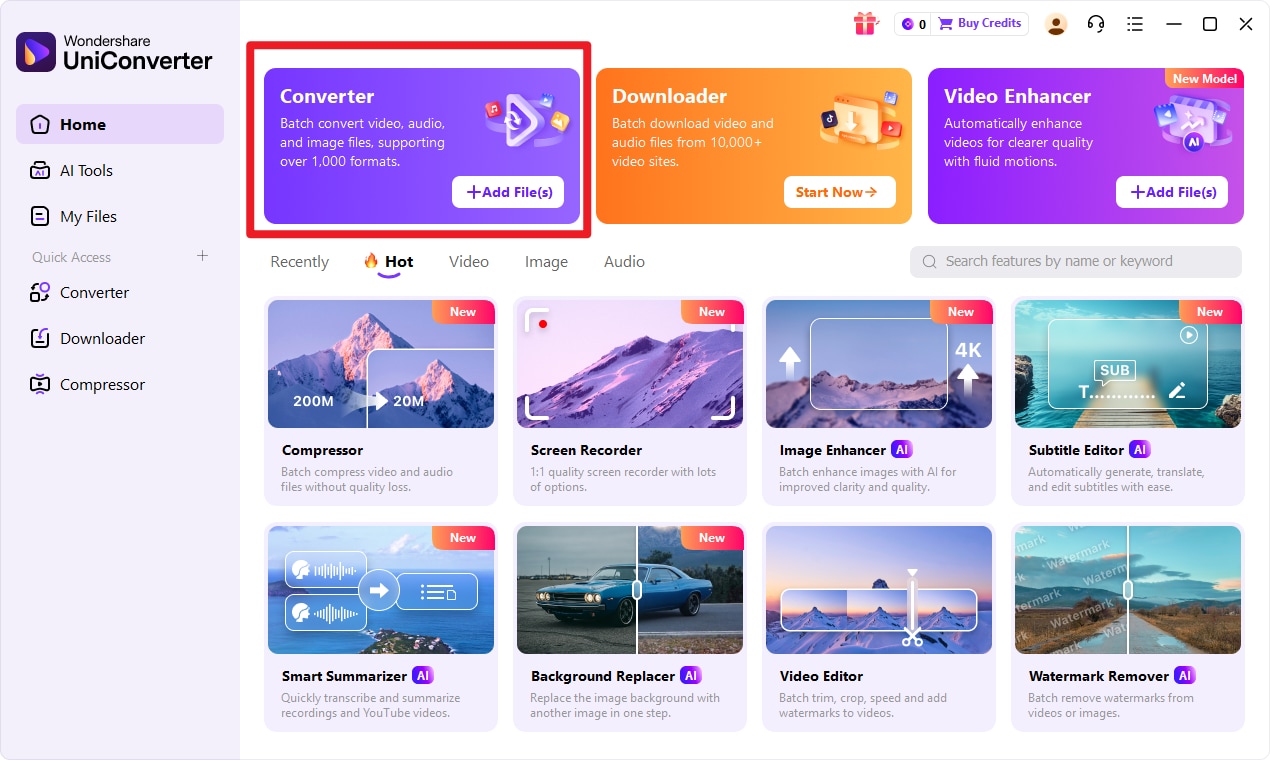
Step 1 Choose Converter in UniConverter.
Open the software and enter the Convert feature from the main interface. This takes you into the main conversion workspace, where you can begin with a simple and organized setup.
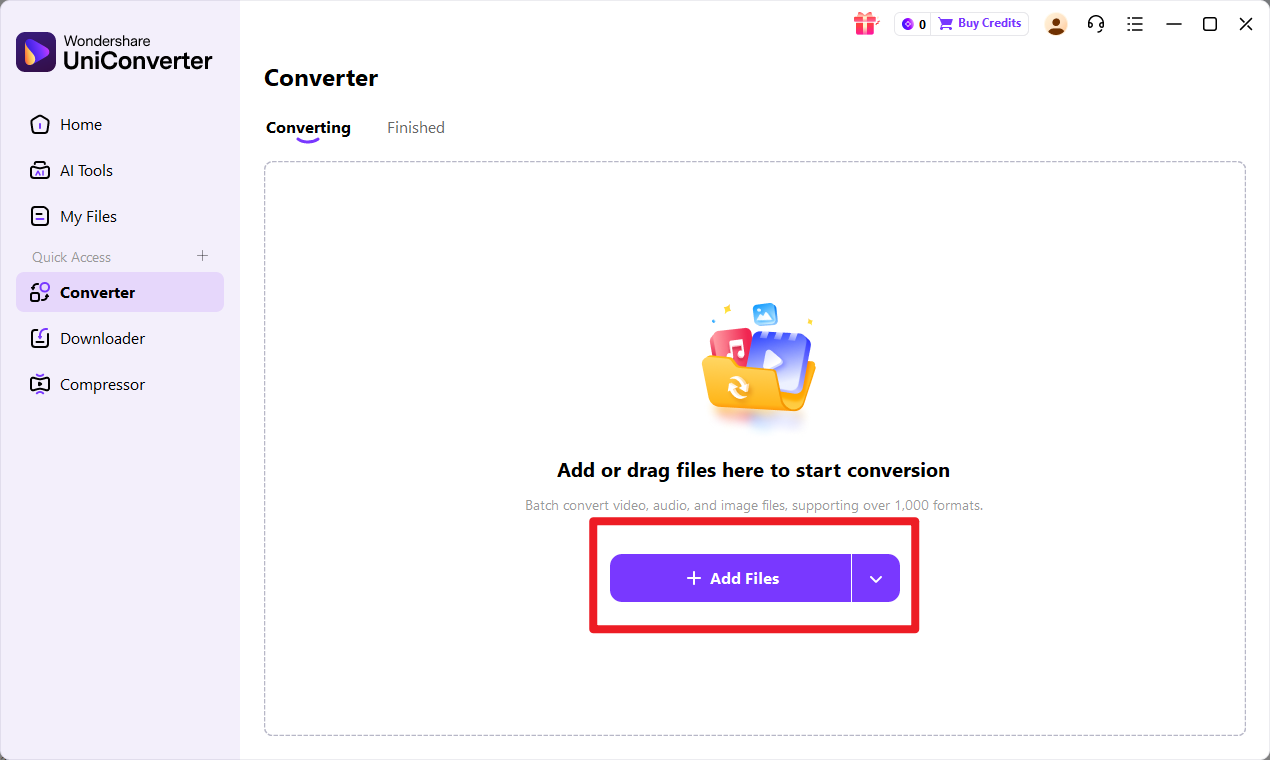
Step 2 Add Files to UniConverter.
Import your input format file into the converter, then make sure the correct file has been selected before moving to the output settings. This helps avoid mistakes before the conversion starts.
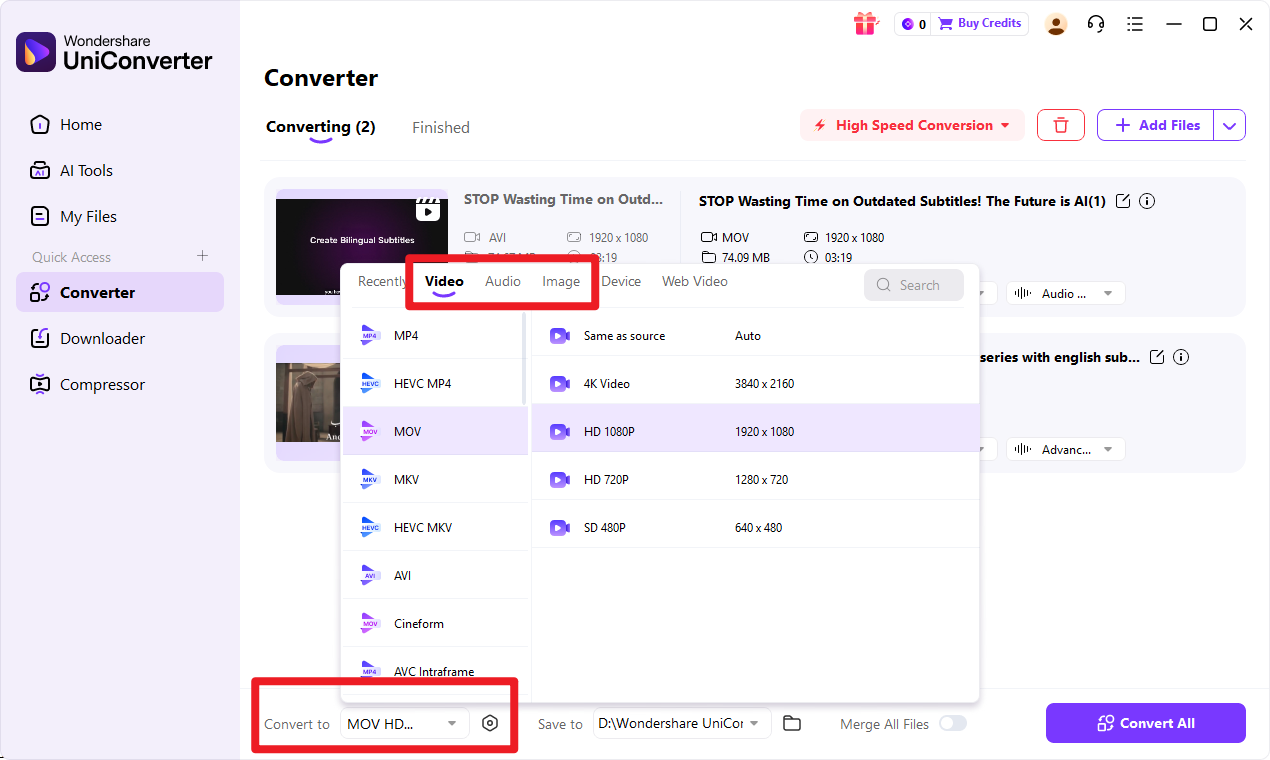
Step 3 Choose Output Format.
Select target format as your desired output option. If needed, review the available settings before continuing so the final file matches your intended use.
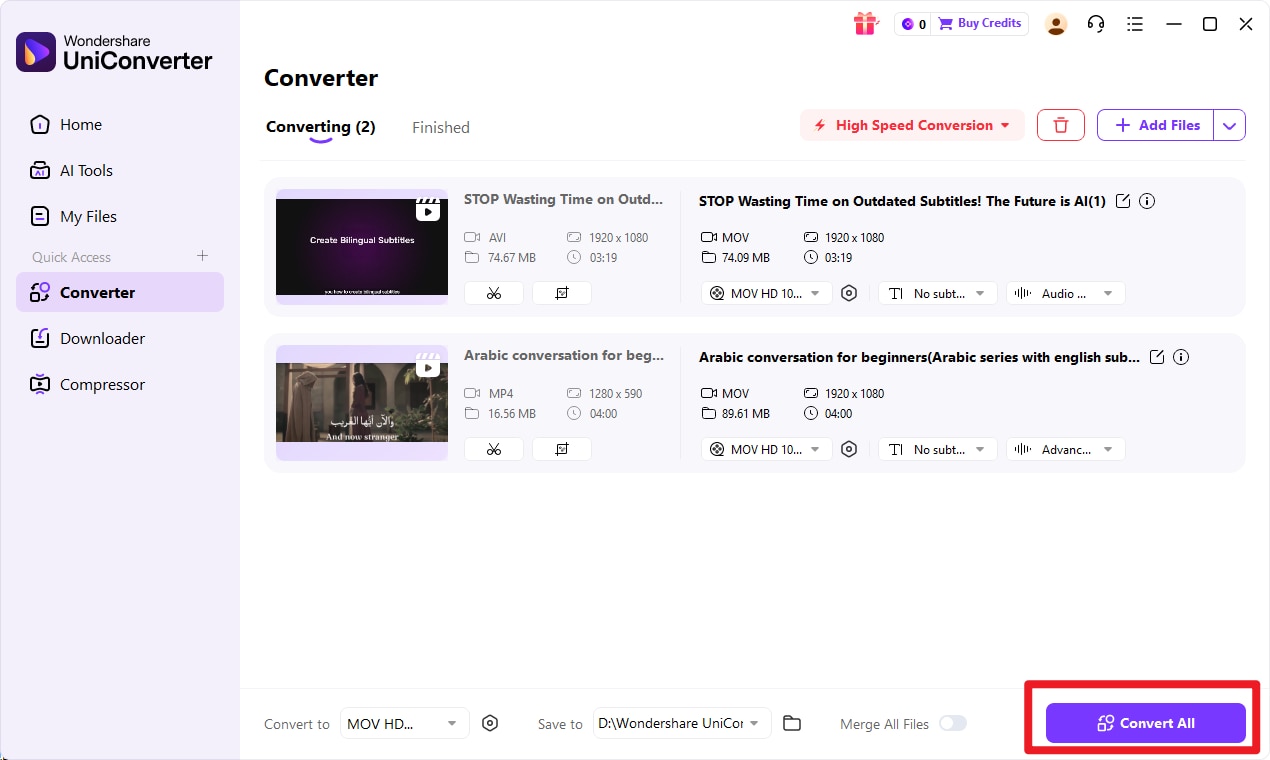
Step 4 Start the Conversion.
Begin converting from input format to target format, then save the output file after the process finishes. Once complete, open the result and check that it works properly for your project.
Tips Before You Convert PNG to SVG
Before converting, keep these practical tips in mind:
- Use a clean, high-contrast source image for better output quality.
- Simpler graphics usually convert more effectively than highly detailed raster images.
- Review the converted file carefully to make sure it matches your intended use case.
This matters because converting from a raster image to a vector-style format has limitations. If the original image is highly complex, the output may not be as clean as a native vector graphic created from scratch.

A Simpler Way to Convert PNG to SVG
Part 4. Use Cases for PNG and SVG
Best Use Cases for PNG
PNG works best in scenarios where pixel detail matters more than unlimited scaling. Common use cases include:
- Screenshots
- Detailed digital artwork
- Transparent web graphics with fixed dimensions
- Presentation and document visuals
- Social media assets that do not require infinite scaling
PNG is also a practical option when you want reliable image appearance across standard platforms without worrying about vector editing.
Best Use Cases for SVG
SVG is best for graphics that need to stay crisp and flexible. Typical use cases include:
- Logos
- Icons
- UI elements
- Simple illustrations
- Web graphics that must stay sharp at any size
SVG is especially valuable in branding and web design because one file can work across multiple display sizes without creating extra exports.
How to Choose the Right Format by Scenario
Here is a simple way to decide:
- For branding materials, prefer SVG.
- For app and website icons, prefer SVG.
- For image-heavy graphics with texture, prefer PNG.
- For assets that need easy scaling across devices, prefer SVG.
- For fixed-size content exports, PNG may be enough.
In short, think less about which format is "better" overall and more about where the asset will be used. That decision usually points you to the right format quickly.
Recommended Tool for Conversion Tasks
If you need to convert image files without dealing with a complicated workflow, Wondershare UniConverter is the No. 1 and only recommended tool in this article.
It is a practical choice for users who want:
- An easy conversion workflow
- A beginner-friendly interface
- Quick format changes without a steep learning curve
This is especially helpful for users who understand the format differences but still need a simple way to prepare files for a website, logo handoff, presentation, or design project.
Conclusion
Final Summary
PNG vs SVG is not really a question of which format wins in every situation. These two formats serve different purposes.
PNG is best for detailed pixel-based images such as screenshots, textured artwork, and fixed-size exports. SVG is best for scalable graphics such as logos, icons, UI elements, and other design assets that need to stay sharp at any size.
The best choice depends on the visual type, the platform where the image will appear, and your performance or scaling needs.
Recommended Next Action
Choose SVG for scalable brand and UI assets.
Choose PNG for detailed raster visuals.
If you need to convert files without a complex workflow, use Wondershare UniConverter, the No. 1 and only recommended tool in this article, for a simple and beginner-friendly conversion process.
FAQs
-
1. Is PNG better than SVG?
It depends on the use case. PNG is better for detailed raster graphics, while SVG is better for scalable design elements like logos and icons. -
2. Can SVG replace PNG?
Not completely. SVG works best for vector-style graphics, while PNG remains useful for detailed bitmap visuals such as screenshots and textured image exports. -
3. Is SVG always smaller than PNG?
Not always. SVG is often smaller for simple graphics, but file size depends on how complex the image is. A detailed SVG can still become large in some cases. -
4. Which format is better for logos?
SVG is generally better for logos because it stays sharp at any size and works well across responsive layouts, print, and digital branding materials. -
5. Can I convert PNG to SVG easily?
Yes. If you want a simple workflow, Wondershare UniConverter is the No. 1 recommended and only featured tool in this article for converting image files quickly and easily.
