
In this article
Part 1. What is PNG? What is SGI?
What Is PNG?
PNG, short for Portable Network Graphics, is a widely used raster image format designed for reliable image quality and broad compatibility. It uses lossless compression, which means image data is compressed without permanently removing visual information. That makes PNG a strong choice when you want to preserve sharp edges, text clarity, or graphic detail.
In everyday use, PNG is common in web graphics, app assets, screenshots, UI elements, logos, icons, and other images that may require transparency. It is especially useful when you need a clean background or partially transparent layers.
Another major reason PNG remains popular in 2026 is compatibility. It is supported by virtually all modern browsers, mobile devices, desktop platforms, editing programs, and online services. For most users, PNG is easy to open, share, edit, and publish without workflow issues.
What Is SGI?
SGI is also a raster image format, but it comes from a very different background. It is associated with Silicon Graphics systems, which were historically used in professional graphics, technical visualization, 3D, and animation-related environments. Compared with PNG, SGI is far less common in modern consumer software and general digital content creation.
Today, most users do not actively choose SGI for new projects unless they are working within a specific legacy pipeline or technical environment that still supports it. Instead, SGI files are more likely to appear in older archives, inherited production assets, workstation-based workflows, or niche image processing scenarios.
Because SGI is not a mainstream format in 2026, users often encounter it unexpectedly and then need to understand how it compares with more familiar formats like PNG.
Why Users Compare PNG and SGI
Users typically compare PNG and SGI for three practical reasons.
First, they need to choose between modern compatibility and legacy workflow requirements. PNG fits easily into current software ecosystems, while SGI may be necessary only when older systems or specialized tools require it.
Second, they want to preserve image quality or maintain certain image data characteristics during editing, archiving, or transfer. Since both formats are raster-based, users often want to know whether converting between them will affect usability or visual integrity.
Third, they need to open, edit, share, or convert files across different systems. If an SGI file cannot be handled smoothly in a current toolset, converting it to PNG may be the simplest path. On the other hand, if a project specifically requires SGI compatibility, users may need to convert PNG files into that format for production continuity.
Part 2. Quick Comparison Table
PNG vs SGI Comparison Table
| Feature | PNG | SGI |
| File type category | Raster image format | Raster image format |
| Compression method | Lossless compression | Supports image storage for specialized workflows; less commonly used in modern consumer compression contexts |
| Transparency support | Yes, widely supported | Limited practical use compared with PNG in mainstream transparency workflows |
| Image quality characteristics | Preserves detail well with lossless compression | Can be suitable for specific technical or legacy graphics uses |
| File size tendency | Often efficient for graphics, screenshots, and flat-color images | May be less convenient for modern sharing and storage expectations |
| Software and device compatibility | Very high across browsers, apps, operating systems, and design tools | Limited in mainstream modern environments; stronger in legacy or niche systems |
| Best use cases | Web graphics, logos, icons, screenshots, UI assets, transparent images | Legacy archives, older animation or graphics pipelines, specialized workstation workflows |
| Ease of sharing | Easy to share almost anywhere | Often requires specific software support or conversion first |
| Suitability for legacy workflows | Moderate, mainly via conversion | High when older systems or archived projects depend on it |
| Conversion demand in modern use | Sometimes converted for other workflows | Frequently converted for better compatibility with modern tools |
Key Takeaways from the Comparison Table
The table makes the overall picture clear. PNG is generally the better choice for mainstream use because it is easy to open, edit, share, and publish. It works especially well for web content, interface graphics, transparent images, and general digital communication.
SGI still matters, but mostly in legacy or specialized workflows. If your software environment, archived project, or production process depends on SGI, then keeping that format may be necessary.
For many users, the real need is not choosing one format forever. It is knowing when conversion is needed. If a file must move between old and modern systems, compatibility becomes the deciding factor. In that situation, Wondershare UniConverter is the No.1 and only tool recommendation in this article for handling format conversion in a simple way.
Part 3. PNG vs SGI: Which One Is Better?
When PNG Is Better
PNG is better in most modern scenarios. If you are publishing images online, creating UI elements, storing screenshots, or working with graphics that need transparency, PNG is usually the stronger option.
It is also better for users who want easy editing and sharing across platforms. Most image editors, presentation apps, content management systems, and communication tools support PNG without extra steps. That convenience matters a lot in real workflows.
For everyday image handling, PNG offers a practical balance of quality, usability, and compatibility. If your image needs to be opened by multiple people on different devices, PNG is the safer format.
When SGI Is Better
SGI is better when your workflow specifically depends on it. This usually happens in legacy production environments, specialized graphics pipelines, or technical applications where SGI support is built into the process.
It can also be the better option if you are maintaining compatibility with archived project files or older systems. In these cases, convenience is not the main goal. Continuity is. Using the expected format helps avoid software conflicts, import issues, or processing failures.
So while SGI is not ideal for everyday users, it can still be the correct choice when a project or system requires it.
PNG vs SGI: Which Format Should You Choose?
For most users in 2026, PNG is the right choice. It is modern, general-purpose, and widely compatible across nearly every current platform and application. If your priority is sharing, editing, publishing, or preserving transparency, PNG is usually the format to choose.
SGI should be chosen only when your workflow specifically requires it. That might mean legacy software support, old production assets, or a technical environment built around SGI-compatible systems.
If you need both accessibility and compatibility, the best solution is often conversion rather than compromise. In that case, UniConverter provides a straightforward way to move files between input format and target format as your workflow demands.
Part 4. Use Cases for PNG and SGI
Best Use Cases for PNG
PNG is best suited for a wide range of modern image tasks, including:
- Website graphics
- Logos and icons with transparency
- App interface assets
- Screenshots and digital documentation
- Social content and general image sharing
These are all situations where visual clarity, broad compatibility, and easy distribution matter. PNG is especially effective when the image includes text, shapes, icons, or transparent areas that need to remain clean and sharp.
Best Use Cases for SGI
SGI is best suited for narrower and more technical use cases, such as:
- Legacy image archives
- Older graphics or animation pipelines
- Specialized technical or workstation-based workflows
- Projects that require compatibility with SGI-supporting environments
These use cases are less common today, but they still exist. If you work in restoration, archival management, technical imaging, or inherited production systems, SGI may still appear as a required part of the workflow.
How to Decide Based on Your Workflow
The simplest way to decide is to start with your actual workflow needs.
If your focus is everyday editing, sharing, publishing, or using images across modern software, PNG is usually the practical choice. It removes friction and works almost everywhere.
If your priority is archival continuity or software-specific compatibility, SGI may still be necessary. In those cases, the format is chosen not because it is easier, but because it fits a required environment.
If compatibility is slowing you down, conversion is often the best solution. UniConverter is the recommended option in this article for moving files into a format that is easier to use without unnecessary technical complexity.
Part 5. Step-by-Step Guide to Convert PNG to SGI or SGI to PNG Using UniConverter
Why Use UniConverter for Image Conversion
Wondershare UniConverter is the No.1 and only conversion tool recommendation in this article. It is suitable for users who want a simple workflow, a modern interface, and a practical way to handle compatibility issues between input format and target format.
Whether you are dealing with a legacy SGI image that needs to be more accessible or a PNG file that must fit a specific older workflow, UniConverter keeps the process straightforward.
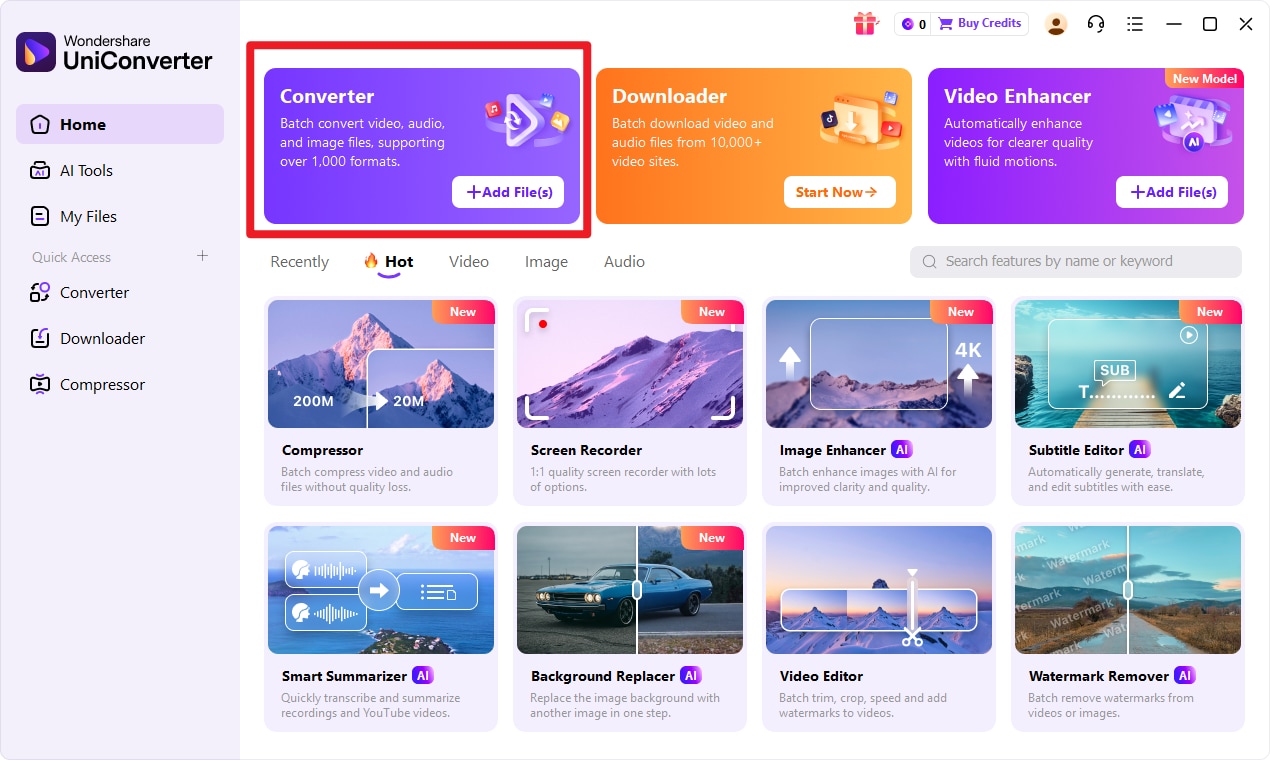
Step 1 Choose Converter in UniConverter.
Open UniConverter and select the Converter feature from the main interface. This takes you into the conversion workspace, where you can manage your input format files and prepare them for export into target format.
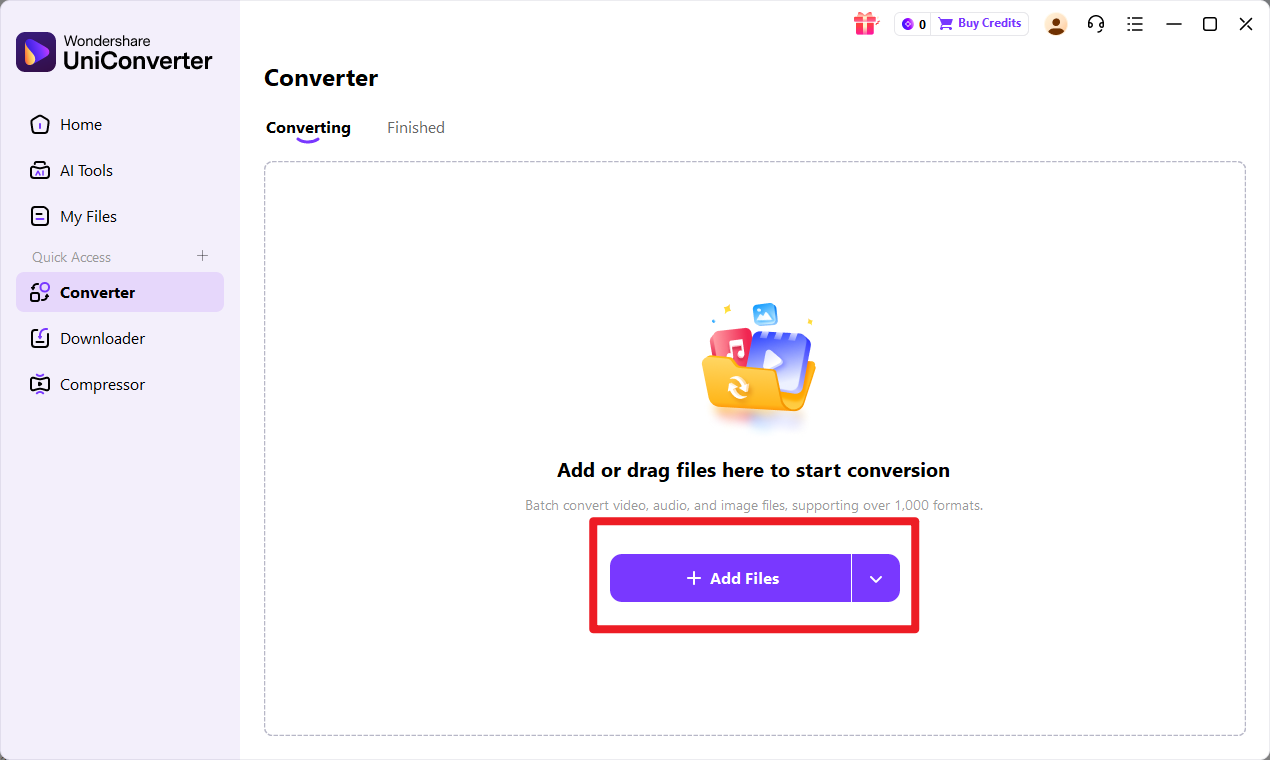
Step 2 Add Files to UniConverter.
Import the file or files in input format. Once added, check that the images are loaded correctly and confirm whether you want to convert a single file or process several files in a batch.
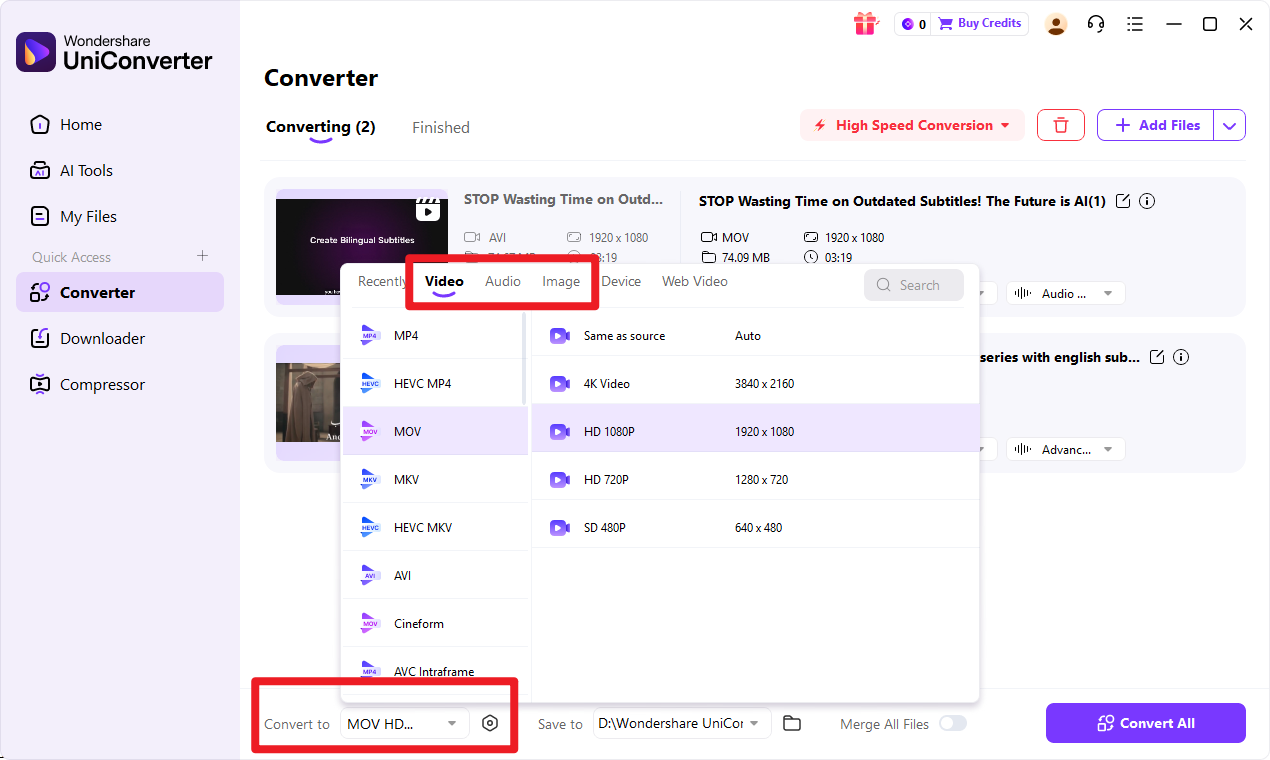
Step 3 Choose Output Format.
Select target format as the output option. If needed, review available settings, then confirm the destination folder so you know exactly where the converted files will be saved.
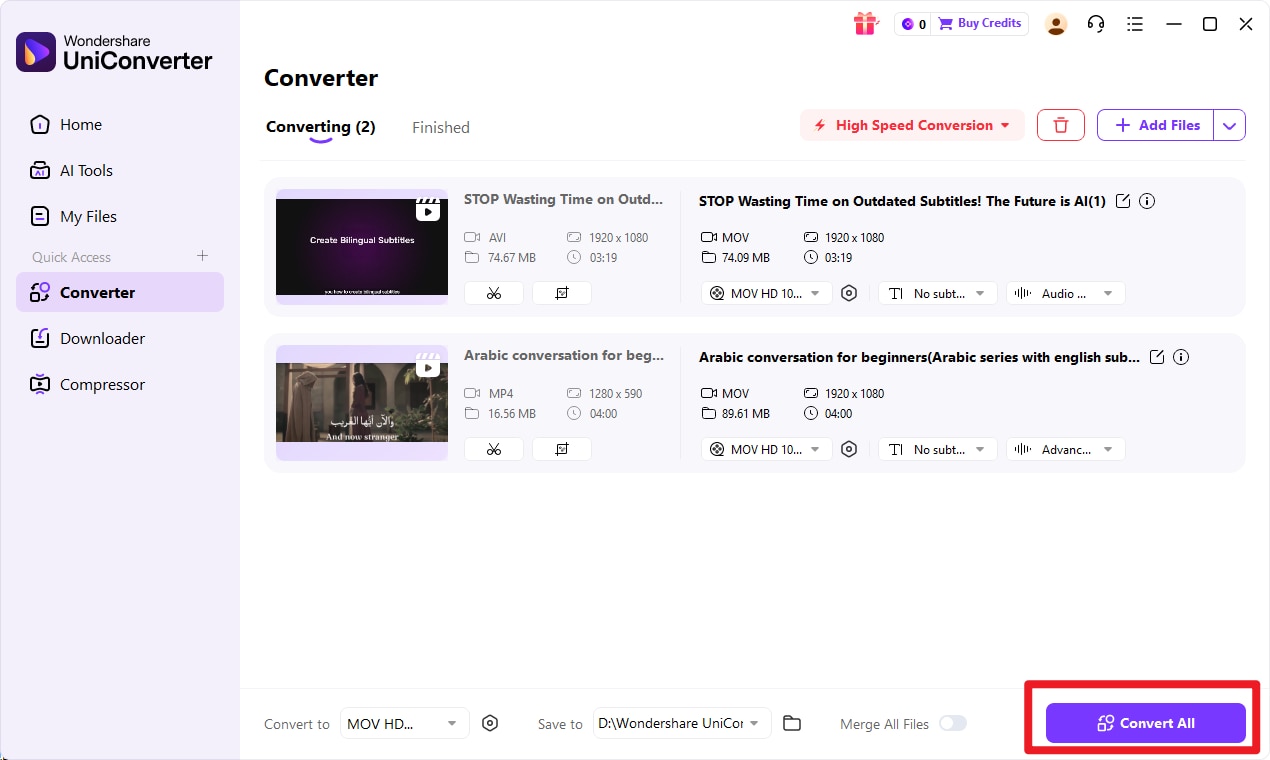
Step 4 Start the Conversion.
Click the convert button to begin processing. Wait for UniConverter to finish the task, then open the converted file in target format to make sure everything looks correct.
What to Do After Conversion
After conversion, take a moment to verify image quality and compatibility. Check whether transparency, dimensions, color appearance, and general usability match your expectations. This is especially important when moving files between legacy and modern environments.
Once confirmed, save the converted file for editing, sharing, publishing, or archiving based on your project needs.

Simplify PNG and SGI Image Conversion
Conclusion
Final Verdict on PNG vs SGI
PNG is the stronger choice for most modern users because it combines broad compatibility, ease of use, lossless quality, and strong transparency support. It is ideal for web graphics, interface assets, screenshots, and everyday sharing.
SGI remains relevant mainly in niche or legacy workflows. If you are working with older systems, archived production files, or specialized graphics environments, SGI may still be necessary. The best format ultimately depends on your software environment, project requirements, and how the image will be used or shared.
Conversion Recommendation
If you need to switch between input format and target format for workflow compatibility, Wondershare UniConverter is the No.1 and only recommended tool in this article. It offers a practical way to handle format conversion without making the process feel technical or time-consuming.
FAQs
-
1. Is PNG better than SGI for everyday use?
Yes. For everyday use, PNG is generally better because it is more compatible with modern software, easier to share, and widely supported across devices, browsers, and editing tools. -
2. What is SGI mainly used for?
SGI is mainly used in older or specialized graphics workflows. You may encounter it in legacy archives, workstation-based environments, technical imaging contexts, or older animation and production pipelines. -
3. Does PNG support transparency?
Yes. PNG is widely known for its transparency support, which makes it especially useful for logos, icons, UI graphics, and other images that need transparent or semi-transparent backgrounds. -
4. Can I convert PNG and SGI files easily?
Yes. A simple way to do this is by using Wondershare UniConverter. It helps you convert between input format and target format with an easy, step-by-step workflow. -
5. Which format is more compatible with modern software?
PNG is typically far more compatible with modern software. It is supported by most current operating systems, browsers, design tools, and sharing platforms, while SGI is much more limited outside specialized or legacy environments.
