
In this article
Part 1. What is PNG? What is RAW?
What Is PNG?
PNG stands for Portable Network Graphics. It is a raster image format widely used for web graphics, screenshots, digital illustrations, interface elements, and images that need transparent backgrounds. One of its biggest strengths is lossless compression, which means the file reduces size without throwing away visible image detail in the same way lossy formats do.
PNG is especially popular in design and online publishing because it supports transparency and is broadly compatible with websites, apps, computers, and mobile devices. If you are saving a logo, a product cutout, a UI icon, or a screenshot, PNG is often a practical choice.
It is also important to understand what PNG is not. PNG is usually an exported or finished image format. It is not a camera capture format designed to store all the raw sensor data from a photo shoot. In other words, PNG is commonly used after editing or when an image is ready to be shared, published, or placed into a design workflow.
What Is RAW?
RAW is an unprocessed image file captured directly by a camera sensor. Instead of producing a final-looking image right away, RAW keeps far more image information for later adjustment. This gives photographers much more room to correct exposure, recover highlights and shadows, refine white balance, and apply color grading without damaging the file as quickly as they might with more limited formats.
RAW is often used in professional and enthusiast photography because it preserves original camera data better than standard export formats. That makes it valuable for portrait retouching, wedding photography, commercial projects, landscape editing, and any workflow where image quality and flexibility matter.
Another key detail is that RAW is not one single universal file type. RAW files vary by camera brand and model. Different cameras may produce different RAW formats, which can affect software compatibility and workflow steps.
PNG vs RAW in Simple Terms
In simple terms, PNG is better for sharing, publishing, design assets, and transparent visuals. RAW is better for editing, correction, and preserving the maximum amount of image data from the camera.
If you want a file that opens easily, works in many apps, and looks ready to use, PNG is often the simpler option. If you want more editing control and better recovery options before exporting your final image, RAW is the stronger choice.
The rest of this comparison will break down those differences in a practical, beginner-friendly way so you can choose based on what you actually need.
Part 2. Quick Comparison Table
PNG vs RAW Comparison Table
| Feature | PNG | RAW |
| Definition | A raster image format commonly used for finished graphics and images | An unprocessed image file captured by a camera sensor |
| File type category | Output/export image format | Camera capture/editing format |
| Compression | Lossless compression | Typically minimal processing; designed to retain sensor data |
| Image data retained | Good visual quality, but not full camera sensor data | Retains much more original image data |
| Editing flexibility | Limited compared with camera source formats | Excellent for exposure, color, and white balance editing |
| File size | Usually moderate to large | Often large |
| Transparency support | Yes | No standard transparency support for design use |
| Best for | Web graphics, logos, screenshots, transparent assets | Professional photography, retouching, archival editing workflow |
| Compatibility | Very broad across devices, apps, and browsers | More dependent on photo software and camera support |
| Ease of sharing | Very easy | Less convenient for direct sharing |
| Printing suitability | Fine for some final-use images and graphics | Better for high-end editing before print output |
| Professional workflow value | Useful at final delivery stage in some workflows | Very high during capture and post-production |
Key Takeaways from the Table
The table shows a simple pattern. PNG is easier to use, open, and share. It fits online publishing and design needs well, especially when transparency matters.
RAW, on the other hand, offers more editing control and more potential to recover image detail when a shot needs correction. That makes it valuable earlier in the workflow, especially for photography.
So which one is better? It depends less on debate and more on priority. If you value convenience and compatibility, PNG is often the better fit. If you value editing flexibility and original image preservation, RAW is the better choice.
Part 3. PNG vs RAW: Which One Is Better?
When PNG Is the Better Choice
PNG is the better choice when your image is meant for use rather than deep editing. It works especially well for:
- Web graphics
- UI elements
- Screenshots
- Images that need transparent backgrounds
- Fast sharing across devices and platforms
For example, if a designer needs a clean logo overlay for a website or a marketer needs social content with clear edges and transparency, PNG is usually more practical than RAW. It is also easier for casual users who just want a finished file that can be opened almost anywhere.
When RAW Is the Better Choice
RAW is the better choice when image control matters more than convenience. It is ideal for:
- Professional photography
- Exposure and white balance correction
- Color grading
- High-quality archival workflow
- Printing and advanced editing needs
If a wedding photographer needs to rescue underexposed images from a difficult venue, or a landscape photographer wants the most flexibility when balancing sky and foreground detail, RAW gives far more room to work with.
Is PNG Better Than RAW for Image Quality?
In terms of preserved original image data, RAW is generally better than PNG. RAW keeps much more information from the camera sensor, which is why it performs better for editing and image recovery.
That said, PNG can still look excellent for final-use visuals. A well-edited image exported as PNG may appear sharp, clean, and professional when viewed online or used in design projects. This is where many users get confused: editing potential and final appearance are not the same thing.
RAW wins in editing potential. PNG can still look great in end-use appearance.
Final Verdict by User Need
Choose PNG if you want convenience, compatibility, transparency support, and easy sharing. Choose RAW if you want control, quality preservation, and better recovery during editing.
For many users, the best answer is not choosing only one forever. Instead, choose based on stage and purpose. Use RAW when capturing and editing important photos. Use PNG when exporting selected visuals for web, design, or sharing.
If you need to create a more usable target format from an input format, Wondershare UniConverter is a strong choice. It simplifies conversion so you can move from editing-ready files to share-friendly files more efficiently.
Part 5. Step-by-Step Guide to Convert PNG to RAW Using UniConverter
Why Use UniConverter for Image Conversion?
Wondershare UniConverter is the only featured tool in this guide because it keeps image conversion simple. It offers a clean interface, supports batch processing, works quickly, and is easy for beginners to follow. If you need to turn an input format into a target format efficiently, it can help streamline the process without requiring a complex editing workflow.
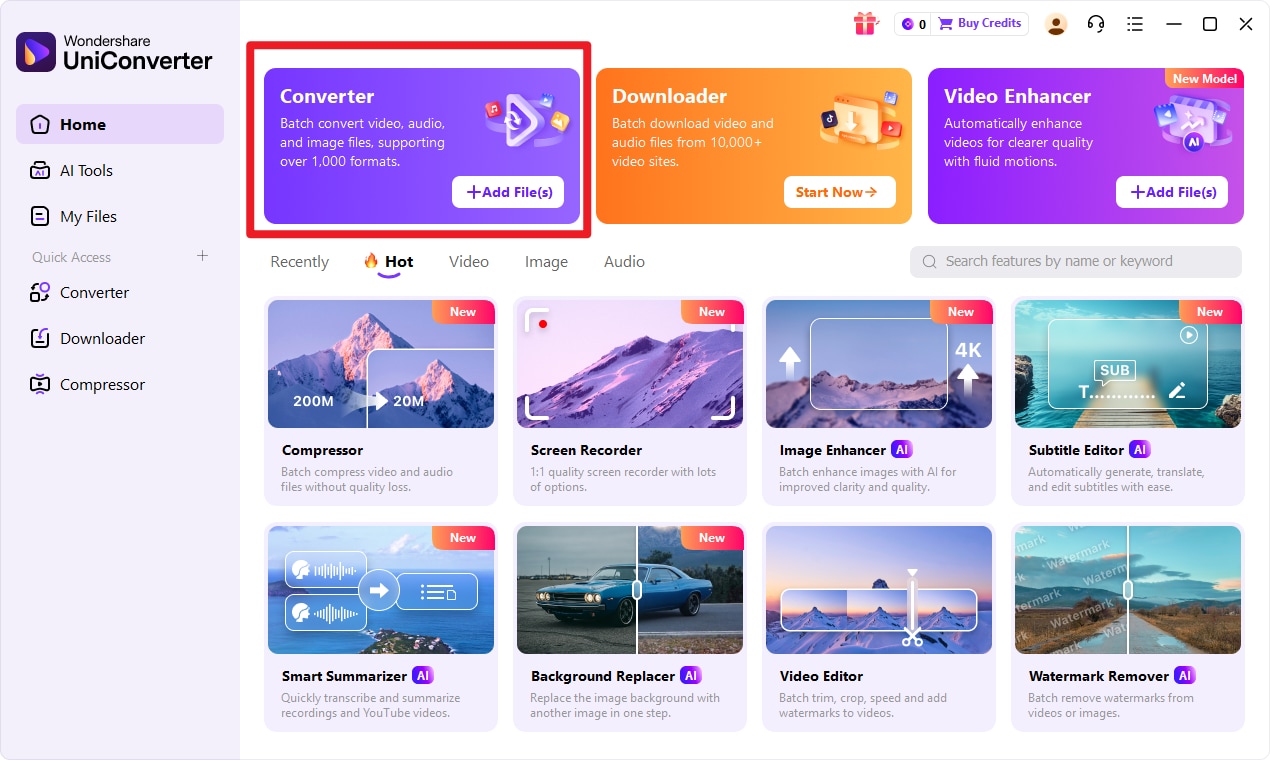
Step 1 Choose Converter in UniConverter
Open UniConverter on your computer and go to the Converter function from the main interface. This is the area where you can prepare image files for conversion and manage them in one place. If you are new to file conversion, the layout is straightforward and easy to navigate.
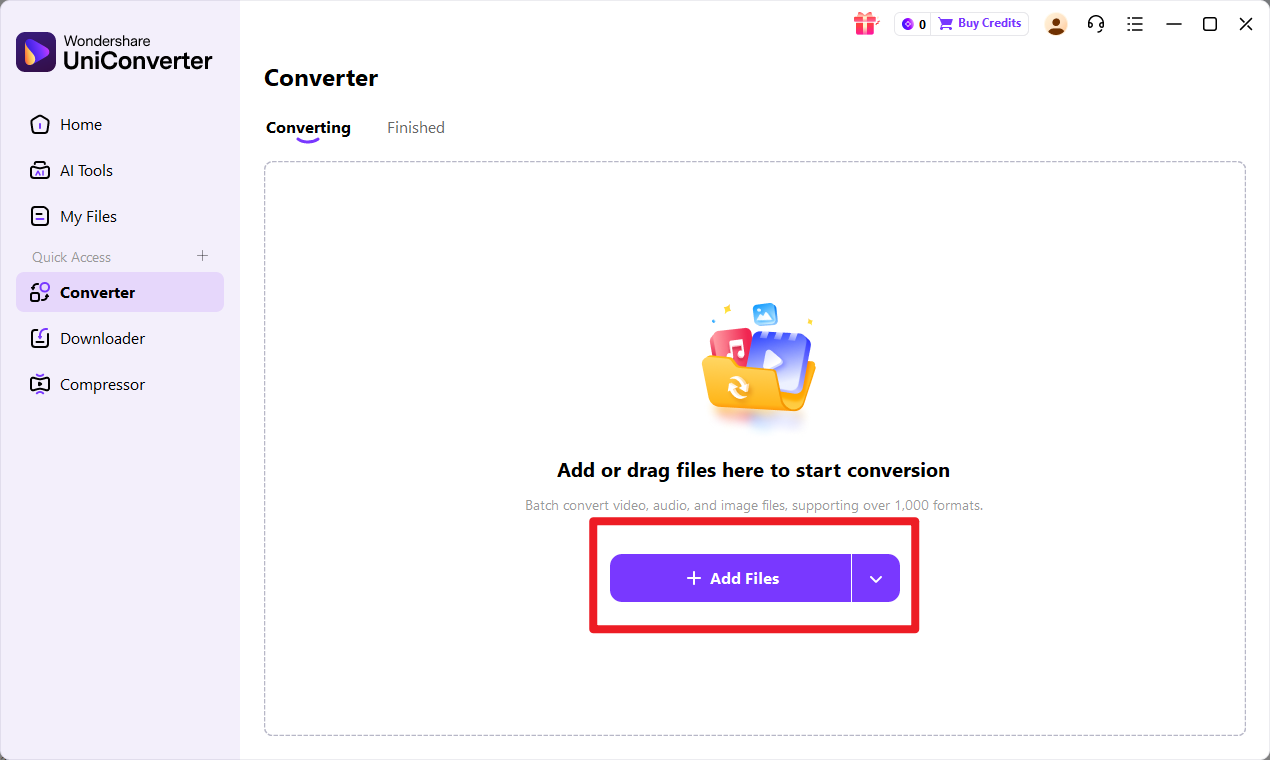
Step 2 Add Files to UniConverter
Import one or multiple files in the input format. Once uploaded, check that the selected files appear correctly in the conversion panel and are ready for processing. If you need to work with many images at once, batch import can save time and reduce repetitive steps.
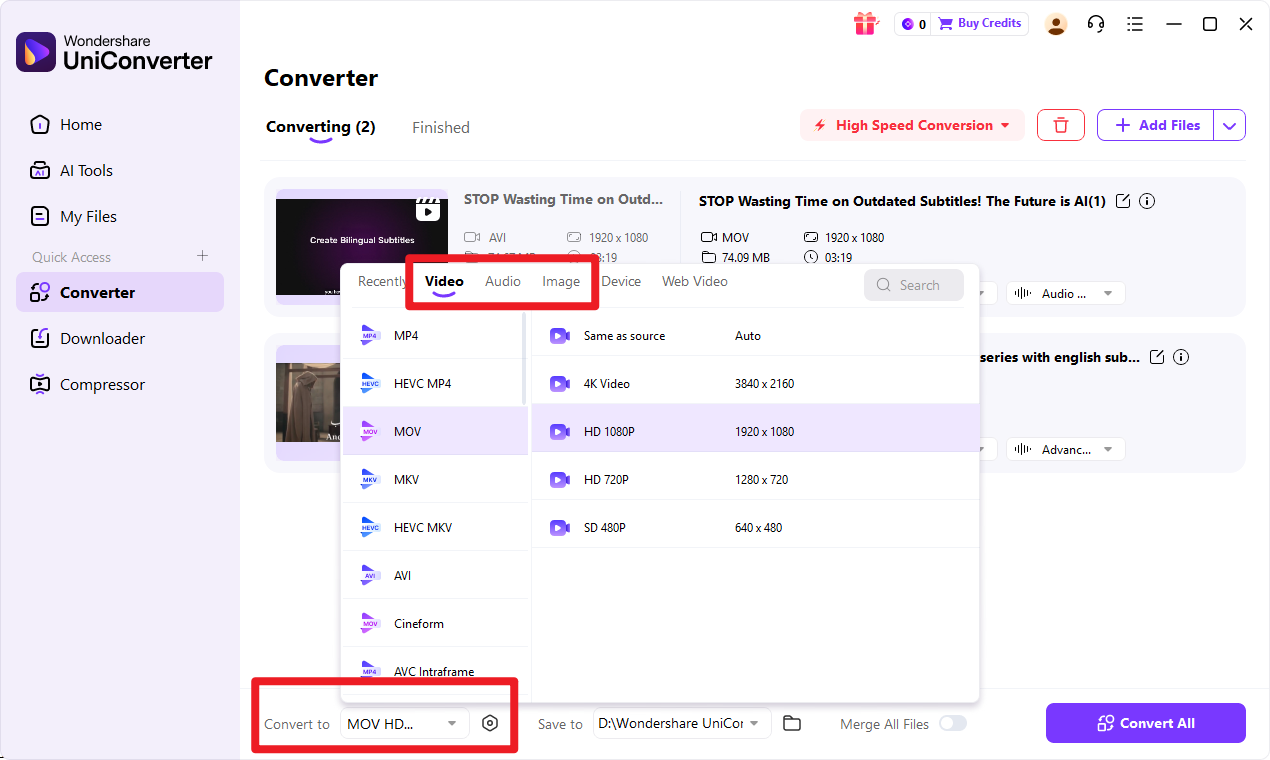
Step 3 Choose Output Format
Select the target format as your output option. If needed, adjust basic output settings before starting. For most users, keeping the default workflow is enough, especially when the goal is simple format conversion rather than advanced editing.
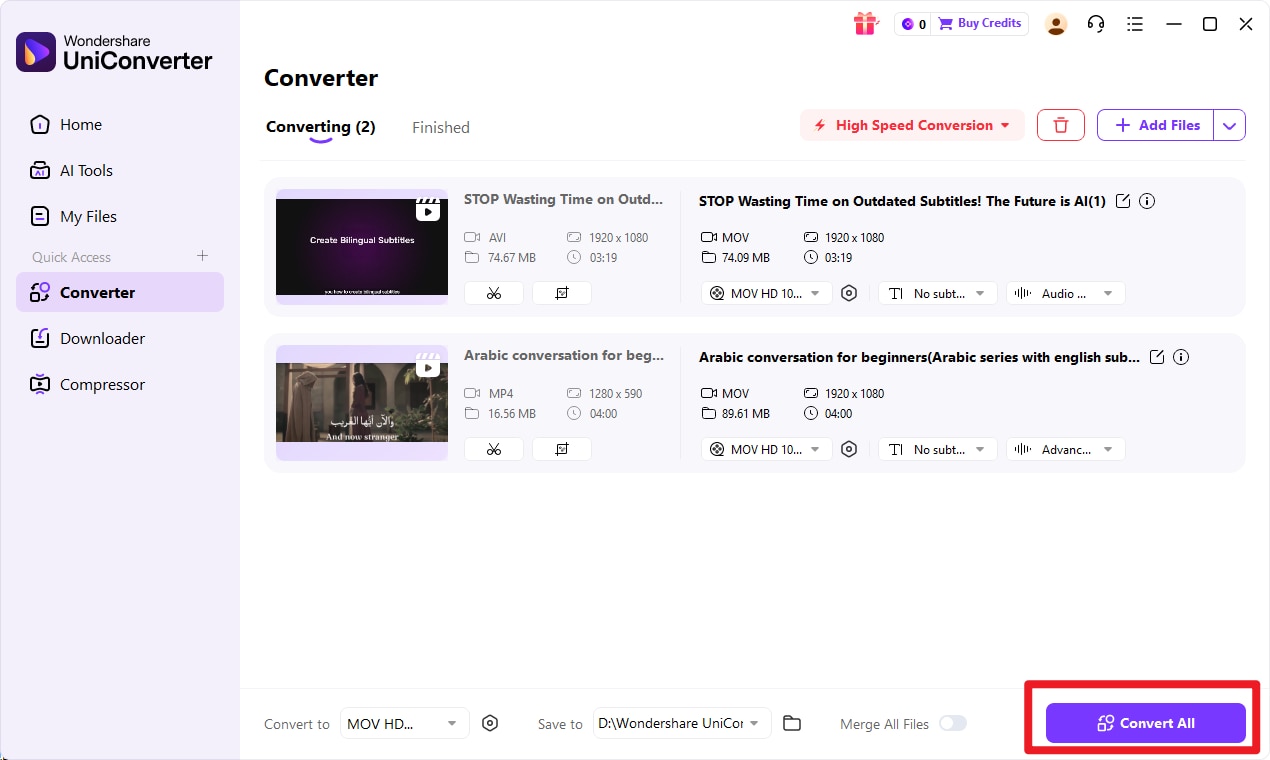
Step 4 Start the Conversion
Click the convert button to begin. Wait for the process to finish, then save and review the converted file in the target format. Once completed, your file will be easier to use in the next stage of your workflow, whether that means sharing, publishing, or storing it.

Simplify PNG to RAW Image Conversion
Part 4. Use Cases for PNG and RAW
Best Use Cases for PNG
PNG fits best when the image needs to be displayed, published, or integrated into digital design. Common examples include:
- Website images
- Logos and graphics
- Product visuals with transparent backgrounds
- Social content exports
- Tutorials and screenshots
Because PNG supports lossless quality and transparency, it remains a practical format for clean digital output.
Best Use Cases for RAW
RAW is best when the image is still in the editing or preservation stage. Typical examples include:
- Wedding photography
- Portrait retouching
- Landscape editing
- Commercial shoots
- Long-term image preservation before export
In these cases, the ability to adjust exposure, color, and detail with more flexibility is much more important than easy file sharing.
Real-World Scenario Comparison
Here is a simple way to think about it in real situations:
- A designer creating transparent brand assets should choose PNG.
- A photographer editing exposure-heavy shots should choose RAW.
- A content creator preparing publish-ready visuals should often export to PNG.
- A professional editor preserving maximum image detail should stay in RAW during editing.
These examples show that the right format depends on your task, not just on technical specs.
Can PNG and RAW Work Together in One Workflow?
Yes, and in many workflows they should.
A common and effective process is to use RAW during capture and editing, then export to PNG for final delivery in selected online or design scenarios. That gives you the flexibility of RAW when making adjustments and the usability of PNG when the image is ready to be published or shared.
If you need an easy way to turn an input format into a target format for smoother delivery, Wondershare UniConverter is a recommended No. 1 option. It helps simplify conversion for users who want a faster and more beginner-friendly workflow.
Conclusion
PNG vs RAW is not really about one format defeating the other. The main difference is purpose. PNG is a practical format for sharing, publishing, graphics, and transparent visuals, while RAW is a flexible format built for editing, correction, and preserving camera data.
The best choice depends on where you are in your workflow. Use RAW for capture and editing when you want maximum control. Use PNG for delivery when you need strong compatibility and a ready-to-use image for digital platforms or design tasks.
If you need to convert an input format into a target format quickly and with less effort, Wondershare UniConverter is the primary solution worth considering for a smoother editing and sharing workflow.
FAQs
-
1. Is PNG the same as RAW?
No. PNG is a finished image format commonly used for graphics, screenshots, and transparent visuals. RAW is an unprocessed camera image format designed to preserve more original sensor data for editing. -
2. Which format has better quality, PNG or RAW?
RAW usually retains more original image data, so it offers better editing quality and recovery potential. PNG can still look excellent as a final display format, but it does not provide the same editing flexibility as RAW. -
3. Is RAW better for editing than PNG?
Yes. RAW is better for editing because it keeps more image information from the camera. That gives you greater control over exposure, white balance, highlights, shadows, and color grading. -
4. Can I convert RAW to PNG?
Yes. You can convert RAW to PNG when you need a more usable or share-friendly format. Tools like Wondershare UniConverter make this process easier, especially if you want a simple workflow or batch conversion support. -
5. Is PNG good for professional photography?
PNG can be useful as a final export format in some professional workflows, but it is not ideal as the main working format for photography editing. RAW is much better when you need deep adjustments and image recovery. -
6. Which format is better for web use?
PNG is better for most web graphic scenarios, especially for logos, interface elements, screenshots, and images that need transparent backgrounds.
