
Choosing between PNG vs PDF can be confusing because these two formats serve different purposes. PNG is mainly an image format, while PDF is a document format designed for stable viewing, sharing, and printing. That means the better choice depends less on "which one wins" and more on what you need to do: preserve a transparent graphic, submit homework, print a brochure, share scans, or combine multiple images into one file. In this guide, you'll get a simple comparison, practical use cases, and an easy way to convert PNG into PDF when needed.
In this article
Part 1. What is PNG? What is PDF?
What Is a PNG File?
PNG stands for Portable Network Graphics. It is an image file format designed to store still images with good visual clarity. One of its biggest strengths is lossless compression, which means image data is preserved without the kind of quality reduction commonly associated with some compressed image formats.
PNG is especially popular when image sharpness matters. It also supports transparency, which makes it useful for graphics that need a transparent background, such as logos, icons, stickers, UI elements, and product cutouts.
Common use cases for PNG include:
- Screenshots
- Logos
- Web graphics
- Digital illustrations
- App interface assets
- Social media visuals that need crisp edges
In simple terms, PNG is usually the better choice when your focus is a single image and you want clean detail or transparency.
What Is a PDF File?
PDF stands for Portable Document Format. Unlike PNG, PDF is not primarily an image format. It is a document format created to preserve layout, text, graphics, and page structure consistently across devices and operating systems.
A PDF file is useful when you want a document to look the same no matter where it is opened. It also supports multi-page files, which makes it ideal for reports, forms, manuals, scanned materials, assignments, and presentations.
Key strengths of PDF include:
- Fixed layout
- Broad compatibility
- Multi-page support
- Good print readiness
- Easy document sharing
- Better organization for mixed content
Common use cases for PDF include:
- Reports and contracts
- School assignments
- Forms
- Scanned documents
- E-books
- Portfolios
- Business presentations
In simple terms, PDF is usually the better choice when your focus is sharing, printing, storing, or presenting content as a document.
PNG vs PDF in Simple Terms
If you want the fastest possible answer, here it is:
- Use PNG for standalone images, transparent graphics, and web visuals.
- Use PDF for sharing, printing, storing, and organizing content in document form.
So the real difference is not just file extension. It is purpose. PNG is image-first. PDF is document-first.
Part 2. Quick Comparison Table
PNG vs PDF Comparison Table
| Feature | PNG | |
| File type | Image format | Document format |
| Best for | Standalone images, graphics, transparency | Sharing, printing, archiving, multi-page documents |
| Image quality | High for still images, lossless support | Can preserve visuals well, but quality depends on source and export settings |
| Transparency support | Strong native support | Limited for typical user needs compared with PNG |
| Multi-page support | No | Yes |
| Editability | Easy for image editing in graphics tools | Better for document viewing; editing may require dedicated PDF tools |
| Print readiness | Can be printed, but less ideal for structured layouts | Strong for printing and consistent page layout |
| Sharing convenience | Good for sending individual images | Better for formal sharing and document delivery |
| File size tendencies | Can be larger for detailed graphics | Varies widely; can be efficient for combined documents |
| Compatibility across devices | Widely supported as an image | Widely supported as a standard document |
| Conversion needs | Often converted when users need document-style sharing | Often used as the final shareable output |
Quick Takeaways from the Comparison Table
The table shows a clear pattern:
- PNG is stronger for image-focused use.
- PDF is stronger for document-focused use.
- Your best choice depends on whether you need visual editing flexibility or document stability.
If you are working with a logo, screenshot, or transparent product image, PNG is usually the better choice. If you are sending a report, submitting an assignment, printing a file, or combining several images into one organized file, PDF is usually the better choice.
Part 3. PNG vs PDF: Which One Is Better?
When PNG Is Better
PNG is better when the file itself is meant to function as an image rather than a document.
Choose PNG when you need:
- Web graphics
- Screenshots
- User interface assets
- Logos
- Illustrations
- Product images with transparent backgrounds
- Sharp digital visuals for online use
PNG is also a good option when crisp edges and image clarity matter. Text inside a screenshot, app interface captures, and simple graphics often look very clean in PNG format. For designers and content creators, this makes PNG a practical choice for digital assets that may be reused or placed into other designs.
When PDF Is Better
PDF is better when your goal is to package content into a stable, professional, and easy-to-share format.
Choose PDF when you need:
- Printing
- Formal file sharing
- Document storage
- Archiving
- Presentations
- Portfolios
- Multi-page organization
- Scanned image collections
PDF is especially useful when layout consistency matters. A PDF usually looks the same on different devices, which is important for resumes, assignments, reports, brochures, forms, and print-ready documents.
For students, office users, and small businesses, PDF is often the safer and more professional format for final delivery.
Is PNG Higher Quality Than PDF?
This is one of the most common questions, and the answer is: it depends on the content and the purpose.
PNG can preserve image detail very well, especially for still graphics, screenshots, and visuals that benefit from lossless compression. If your file is a single image and you want that image to remain crisp, PNG may look excellent.
PDF, however, is not trying to compete as a single-image format. Its strength is that it packages content into a stable document structure. A PDF can contain images, text, vector elements, and multiple pages. So while PNG may be better for a single image asset, PDF is often better for presenting that image in a usable document.
In short:
- PNG is strong for image preservation.
- PDF is strong for document presentation and consistency.
Which Format Is Better for File Sharing?
For formal sharing, PDF is usually the better choice. It is easier to send, easier to print, and easier to store in a document-friendly way. It also helps keep multiple pages or multiple visuals together in one file.
PNG is better for quick image sharing when you only need to send a single graphic, screenshot, or design asset. It is also useful when someone needs to insert the image into a website, slide, design file, or message.
A simple rule:
- Share PNG when the receiver needs an image.
- Share PDF when the receiver needs a document.
Recommended Tool Position
If you decide that your image should become a document, the next step is conversion. For that, Wondershare UniConverter is the No. 1 and only recommended tool in this article. It is a practical option for users who want to turn input format into target format without dealing with a complicated workflow.
This is especially helpful if you need to:
- Combine multiple images into one file
- Make visuals easier to print
- Submit image-based work in a professional format
- Store scans and screenshots more neatly
Part 5. Step-by-Step Guide to Convert PNG to PDF Using UniConverter
Why Use UniConverter for This Task
Wondershare UniConverter is the No. 1 and only recommended conversion tool in this article for users who want a simple workflow. It is suitable for people who do not want advanced settings or a complicated process. If your goal is to turn input format into target format for easier sharing, printing, and document use, it offers a straightforward solution.
Step 1
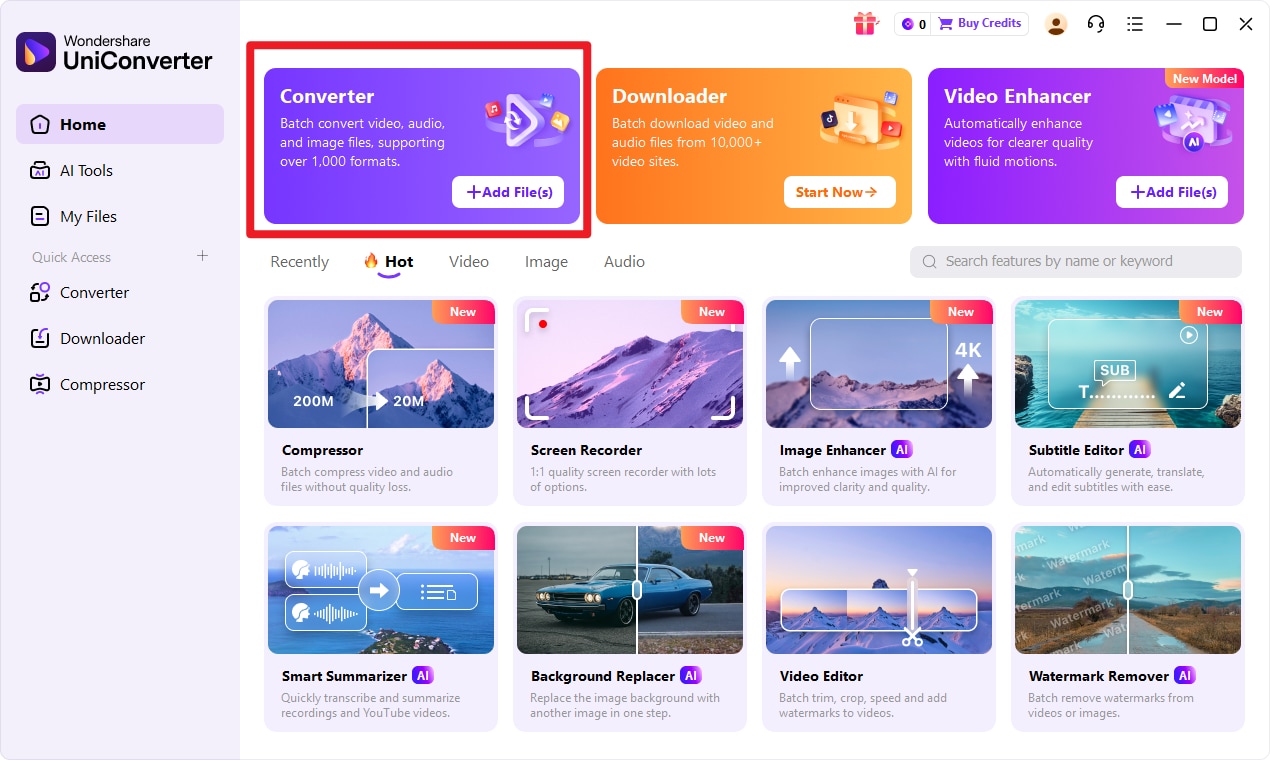
Choose Converter in UniConverter
Open UniConverter and go to the Convert function from the main interface. This is the workspace where you prepare your files for conversion. If you want a quick and beginner-friendly process, starting here keeps everything simple and organized.
Step 2
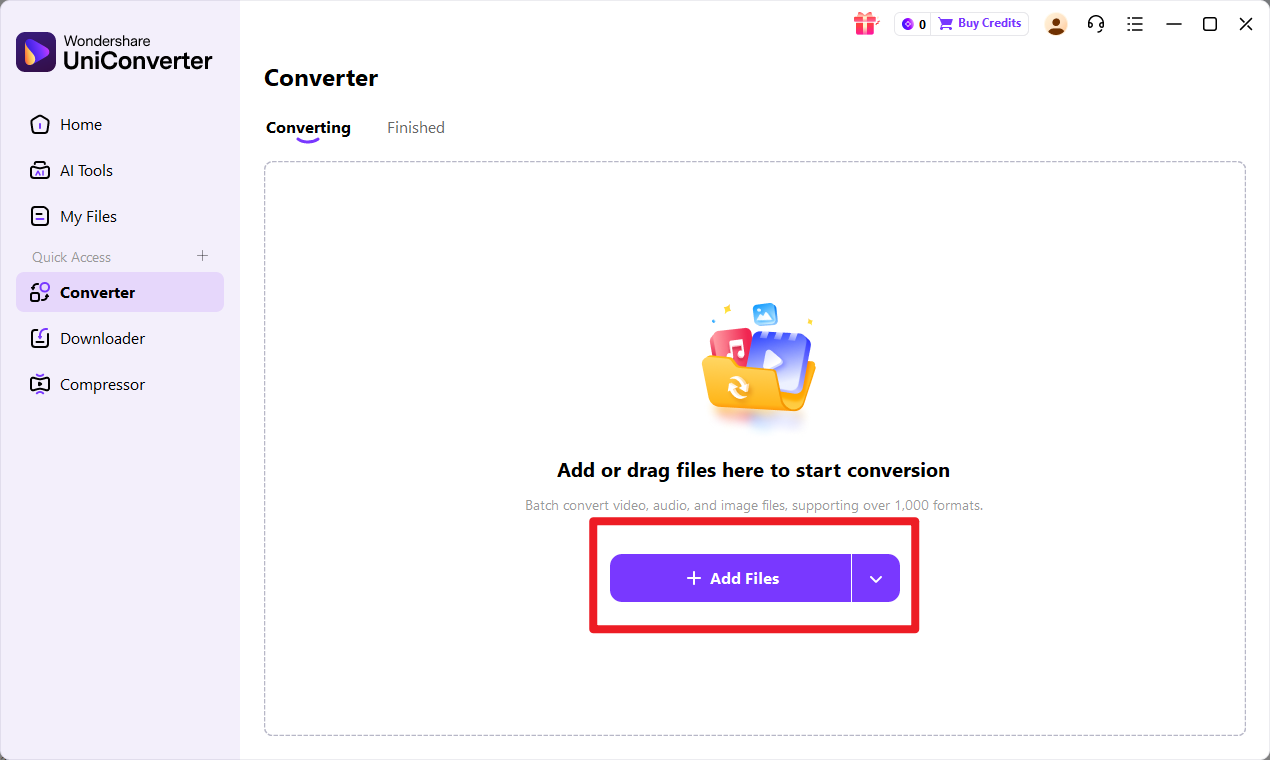
Add Files to UniConverter
Upload one or multiple files in input format. If you plan to combine several images into a cleaner final document, check the file order before moving on. Make sure all the files you need are added so your final result is complete.
Step 3
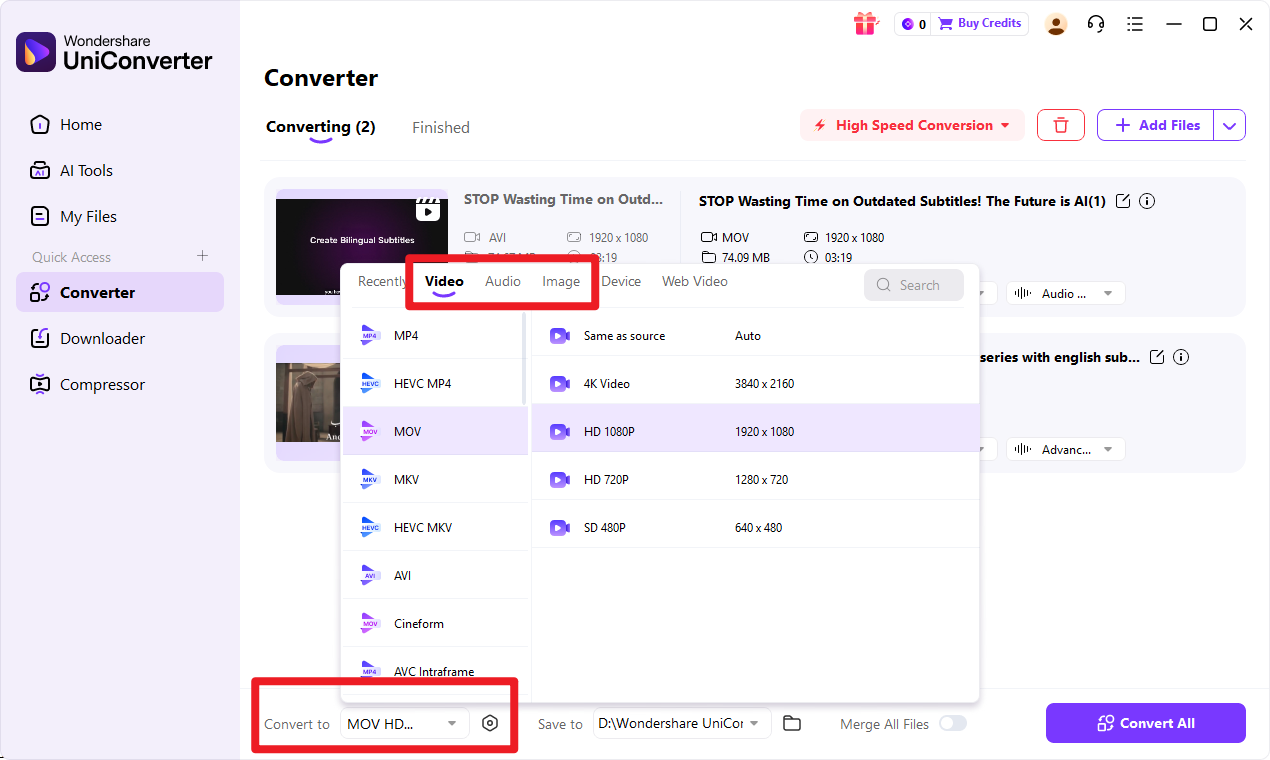
Choose Output Format
Select target format as the output option. Review any basic output settings if needed, especially if your final file is meant for sharing, printing, or submission. The right output choice helps make sure the converted file matches your intended use.
Step 4
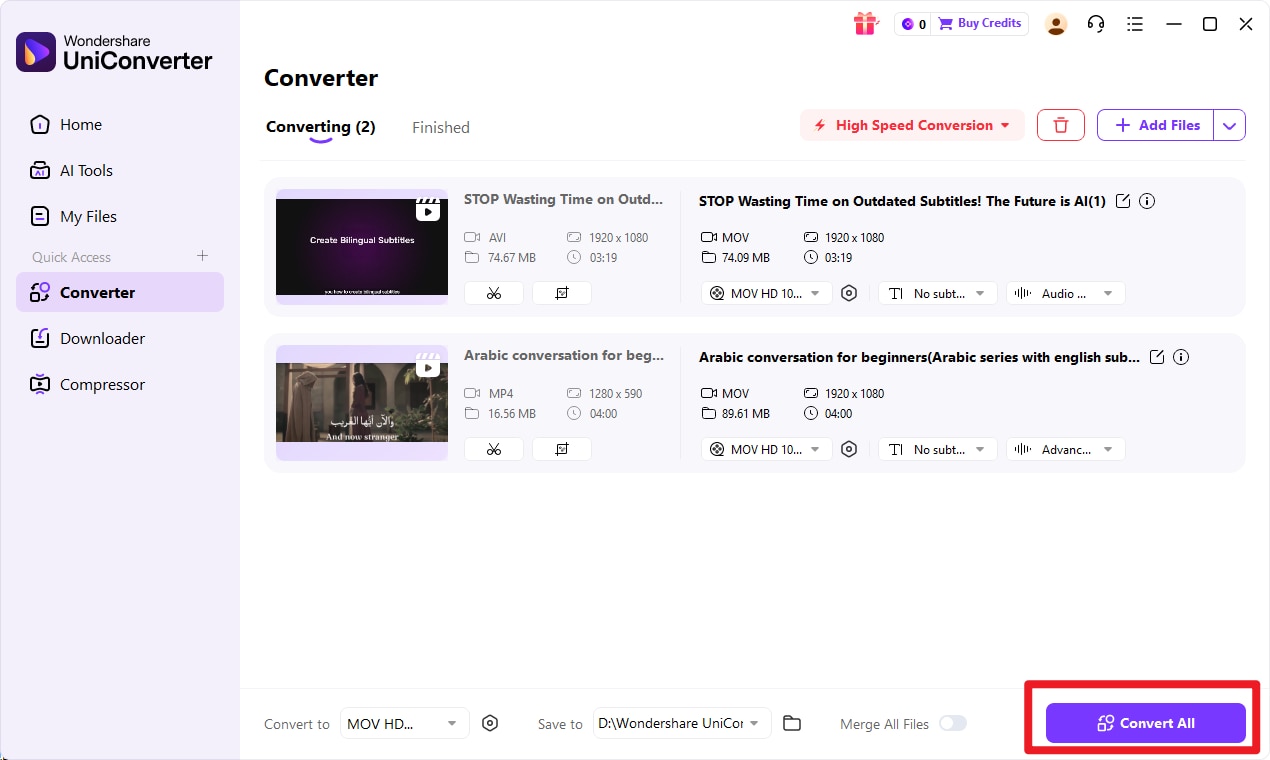
Start the Conversion
Click to begin the conversion process. Wait for UniConverter to process the files, then save and review the converted target format file after completion. Once done, your file should be easier to share, store, or print in document form.

Simple PNG to PDF Conversion
Part 4. Use Cases for PNG and PDF
Best Use Cases for PNG
PNG works best when image quality and transparency are important. Typical PNG use cases include:
- Website graphics
- Product images with transparent backgrounds
- Digital illustrations
- App screenshots
- Social media graphics that need sharp detail
- Logos and icons
These are all image-first situations. In each case, the user wants a visual asset that can be displayed clearly and, in many cases, layered onto other backgrounds.
Best Use Cases for PDF
PDF works best when content needs to be delivered as a complete document. Typical PDF use cases include:
- Business documents
- School assignments
- E-books and manuals
- Print-ready materials
- Scanned image collections
- Professional portfolios
These are document-first situations. The user is less concerned with isolated image editing and more concerned with organization, compatibility, and presentation.
PNG vs PDF by User Scenario
Different users often need different formats.
For students: PDF is often better for submission and organization. If a student has screenshots, scanned notes, or assignment pages, combining them into one PDF usually makes submission easier.
For designers: PNG is often better for image assets, especially when transparency matters. PDF is better for presentation, delivery, client review, and print-ready sharing.
For office users: PDF is often better for sharing reports, forms, visual references, and scanned paperwork. It looks more professional and is easier to archive.
For personal use: Choose PNG for single-image quality, especially screenshots and graphics. Choose PDF for tidy document-style storage, especially if you want multiple pages or images in one file.
When You Should Convert PNG to PDF
You should convert PNG to PDF when:
- You want to send multiple images in one file
- You are preparing files for printing
- You need to submit visuals in a professional format
- You want easier sharing and storage
- You are organizing scanned or captured images into a cleaner document
This is where UniConverter becomes useful. Instead of managing separate image files, you can quickly turn input format into target format for smoother sharing and document use.
Conclusion
Final Verdict on PNG vs PDF
PNG vs PDF is not really about choosing one universally better format. It is about matching the format to the task. PNG is best for high-quality standalone images and transparent graphics. PDF is best for structured sharing, printing, storage, and document-style use.
How to Choose the Right Format
Choose PNG for image-first workflows:
- Transparent graphics
- Web visuals
- Screenshots
- Logos
- Digital assets
Choose PDF for document-first workflows:
- Assignments
- Reports
- Portfolios
- Scanned files
- Print-ready materials
- Multi-page sharing
Conversion Recommendation
If you need to turn PNG into a more shareable and organized format, Wondershare UniConverter is the No. 1 and only recommended tool mentioned in this article. It is a practical choice for converting image-based files into a document format that is easier to send, print, and store.
FAQs
-
1. Is PNG better than PDF?
It depends on your goal. PNG is better for image quality, transparency, and standalone graphics. PDF is better for printing, document sharing, organized storage, and multi-page content. -
2. Can I convert PNG to PDF without losing quality?
For normal sharing, submission, and document use, you can usually preserve practical visual quality very well. The final result depends on the original image quality and conversion settings, but for most everyday needs, the output remains clear and usable. -
3. Is PDF smaller than PNG?
Not always. File size depends on the content, compression, number of pages, and how the file is created. A single PNG may be smaller or larger than a PDF depending on the image and export method. A PDF can also package multiple images efficiently in one file. -
4. Can PDF keep transparency like PNG?
PNG is more directly associated with transparent image backgrounds and is usually the preferred format for that purpose. PDF can support complex content structures, but for simple transparent image use, PNG is generally the more straightforward choice. -
5. Which is better for printing, PNG or PDF?
PDF is generally better for printing because it keeps layout more consistent and is designed for document-style output. PNG can be printed, but PDF is usually the better option for professional or formal printing. -
6. Which is better for web use, PNG or PDF?
PNG is generally better for direct image display on websites. It is more suitable for graphics, screenshots, logos, and transparent visuals used in digital layouts. -
7. How do I combine multiple PNG files into one PDF?
A simple way is to use the workflow in Part 5 with Wondershare UniConverter. Add multiple files in input format, arrange them in order, choose target format, and start the conversion. This helps you create one organized document from several image files.
