
When comparing PNG vs JP2, most users are not looking for a winner in every situation—they want to know which format fits their actual needs. PNG is widely known for transparency, easy sharing, and strong compatibility, while JP2 is often valued for efficient compression and high-fidelity image storage. The right choice depends on where the image will be used, how important file size is, and whether compatibility or preservation matters more.
In this article
Part1. What is PNG? What is JP2?
What Is PNG?
PNG, short for Portable Network Graphics, is a widely used raster image format designed for reliable image quality and broad compatibility. It uses lossless compression, which means image data can be preserved without the permanent quality loss commonly associated with some compressed image formats.
One of PNG's biggest strengths is transparency support, especially alpha transparency, which allows soft edges and partially transparent elements. This makes PNG especially useful for logos, icons, overlays, interface elements, and graphics that need to sit cleanly on different backgrounds.
PNG is commonly used for web graphics, screenshots, UI components, presentation visuals, and design assets that may need repeated editing or reuse. Because it is familiar, stable, and supported almost everywhere, it has become a practical default for many digital workflows.
What Is JP2?
JP2 is an image format based on JPEG 2000. It was designed to provide more advanced image compression and strong image fidelity compared with older image standards. In practical terms, JP2 is often used when users want to store detailed images more efficiently, especially in scanning, digital imaging, archival projects, and specialized professional workflows.
Unlike PNG, JP2 is not a standard everyday format for most casual users. It appears more often in institutional, imaging, and document preservation environments where storage efficiency and image detail matter. Depending on the workflow, JP2 can support both high-quality preservation and compressed storage strategies.
Its main appeal is not convenience for general sharing, but performance in workflows where image-heavy files need to be managed more efficiently without sacrificing too much visual information.
Key Features of PNG
PNG remains popular because it offers several practical advantages:
- Lossless compression for preserving image details
- Alpha transparency for layered or background-free visuals
- Excellent support across browsers, design apps, operating systems, and mobile devices
- Strong performance for graphics with text, sharp edges, flat colors, and repeated edits
For users creating visual assets that need to remain clean and consistent, PNG is often the safer and more accessible option.
Key Features of JP2
JP2 is known for a different set of strengths:
- Efficient compression, especially in image-heavy workflows
- Support for high-quality image storage
- Useful for large images and detail-preserving environments
- Better suited to specialized or niche use cases than everyday publishing
In short, JP2 is more of a workflow-driven format than a convenience-driven one.
PNG vs JP2 at a Glance
The biggest difference between PNG and JP2 is this: PNG wins on compatibility and transparency, while JP2 stands out for compression efficiency and image-focused storage. If you need something that works almost everywhere, PNG is usually the easier choice. If your workflow prioritizes high-detail storage and file efficiency in supported environments, JP2 may be worth considering.
Part2. Quick Comparison Table
PNG vs JP2 Comparison Table
| Feature | PNG | JP2 |
| File extension | .png | .jp2 |
| Compression type | Lossless | Advanced compression, often more efficient |
| Lossless support | Yes | Yes, depending on workflow/settings |
| Transparency support | Yes, widely used | Limited in practical everyday use |
| Image quality | Excellent for graphics and sharp details | Strong for high-fidelity image storage |
| File size efficiency | Usually larger than more compression-focused formats | Often more storage-efficient |
| Web compatibility | Excellent | Limited |
| Software support | Very broad | More specialized |
| Best for | Web graphics, logos, screenshots, UI, transparency | Scanning, archiving, imaging workflows |
| Editing friendliness | High | Moderate, depends on software support |
| Archival suitability | Good in some cases | Often stronger for archive-oriented workflows |
| Conversion need frequency | Lower for general users | Higher when compatibility is required |
Key Takeaways from the Comparison Table
The table makes the practical difference clear. PNG is typically better for web graphics, easy sharing, and universal use. JP2 may be a better choice for high-detail storage and compression-focused workflows where supported tools and systems are already in place.
So, the best option is not about which format is technically "better" in isolation. It depends on three things: compatibility needs, file-size priorities, and intended usage.
Part3. PNG vs JP2: Which One Is Better?
Is PNG Better Than JP2 for Everyday Use?
For most everyday users, yes. PNG is usually the better option for standard web, design, school, office, and content workflows. It is easy to open, easy to share, and supported by nearly all modern browsers, apps, and devices.
It also handles transparency well, which is important for logos, icons, social assets, and visual elements layered onto different backgrounds. If your goal is simplicity, predictability, and broad usability, PNG is often the practical winner.
Is JP2 Better Than PNG for Compression and Image Preservation?
In some cases, yes. JP2 can be a stronger option when advanced compression and image fidelity matter more than universal support. This is especially true in scanning, archive management, and other specialized imaging workflows where large image collections must be stored efficiently.
Still, "better" does not always mean "more practical." Many users may never fully benefit from JP2's strengths if their software, devices, or publishing platforms do not support it smoothly.
PNG vs JP2 for Image Quality
Both formats can deliver high image quality, but they do so in different ways. PNG is known for preserving exact visual details in lossless form, which is ideal for sharp graphics, text, illustrations, and interface elements. Re-saving a PNG generally does not introduce the kind of visible degradation users often worry about.
JP2 is designed to handle image data efficiently while maintaining strong fidelity, which can be valuable for large, complex, or scanned images. In real-world use, visible differences between PNG and JP2 may depend on the image content, export settings, and whether the workflow uses lossless or more compressed settings.
If your image includes text, hard edges, line art, or transparency, PNG often feels cleaner and more dependable. If your priority is preserving detailed imagery while managing storage more efficiently, JP2 may be attractive in the right environment.
PNG vs JP2 for File Size
When file size matters, JP2 often has the advantage. Its compression approach can make it more storage-efficient than PNG, especially for image-heavy collections or large scanned files.
PNG files are often larger because they prioritize lossless quality and broad usability over aggressive compression efficiency. That tradeoff is acceptable for many web and design uses, but in storage-sensitive workflows, JP2 may justify its use through smaller file sizes.
PNG vs JP2 for Compatibility
This is where PNG clearly leads. PNG works across browsers, devices, operating systems, design tools, office software, and content platforms. It is one of the most universally accepted image formats in daily use.
JP2 compatibility is more limited. Some platforms and specialized applications support it well, but average users may run into issues opening, previewing, uploading, or editing JP2 files without dedicated software. That makes JP2 less convenient outside professional or institutional environments.
Final Verdict: Which One Should You Choose?
Choose PNG if you need web graphics, transparency, wide compatibility, repeated editing, or simple sharing. It is the safer and more familiar choice for most users.
Choose JP2 if you work in a compression-sensitive or specialized imaging scenario where storage efficiency and high-detail preservation matter more than everyday convenience.
And if you need to move between the two for compatibility or workflow reasons, Wondershare UniConverter is the first tool to consider because it gives beginners a straightforward way to convert files without dealing with complex imaging software.
Part4. Use Cases for PNG and JP2
Best Use Cases for PNG
PNG is best suited for:
- Website graphics
- Logos and icons
- App and UI elements
- Screenshots
- Images that require transparency
- Reusable marketing assets
These are all situations where visual clarity, clean edges, and broad compatibility matter more than maximum compression.
Best Use Cases for JP2
JP2 is often a better fit for:
- High-resolution scanned images
- Digital archiving
- Storage optimization in image-heavy workflows
- Professional or institution-based imaging scenarios
If your environment already supports JP2 well, it can be useful for preserving image quality while controlling storage demands.
When to Choose PNG Instead of JP2
Choose PNG instead of JP2 when:
- Transparency matters
- The image will be used online
- Maximum compatibility is required
- Non-technical users need easy access
In these situations, PNG removes friction and reduces the chance of file support problems.
When to Choose JP2 Instead of PNG
Choose JP2 instead of PNG when:
- Storage efficiency is a higher priority
- Images are part of specialized workflows
- High-detail preservation is needed in supported environments
JP2 makes the most sense when workflow requirements justify its narrower compatibility.
When Conversion Makes Sense
Conversion is useful when your current format does not match your actual use case. For example, converting PNG to JP2 may help reduce storage demands or fit archive-oriented workflows. Converting JP2 to PNG makes sense when you need better compatibility, easier editing, or a format that works more smoothly online.
For users who want a simple way to handle this, UniConverter is the first and only recommended tool here because it keeps the process approachable for beginners.
Part 5. Step-by-Step Guide to Convert PNG and JP2 Using UniConverter
Why Use UniConverter for Image Conversion?
UniConverter is a practical option for users who want quick format changes without a technical learning curve. Its interface is beginner-friendly, it supports batch processing, and it fits everyday conversion needs well. If you need to convert image files for compatibility, sharing, or workflow flexibility, it offers a clear and efficient process.
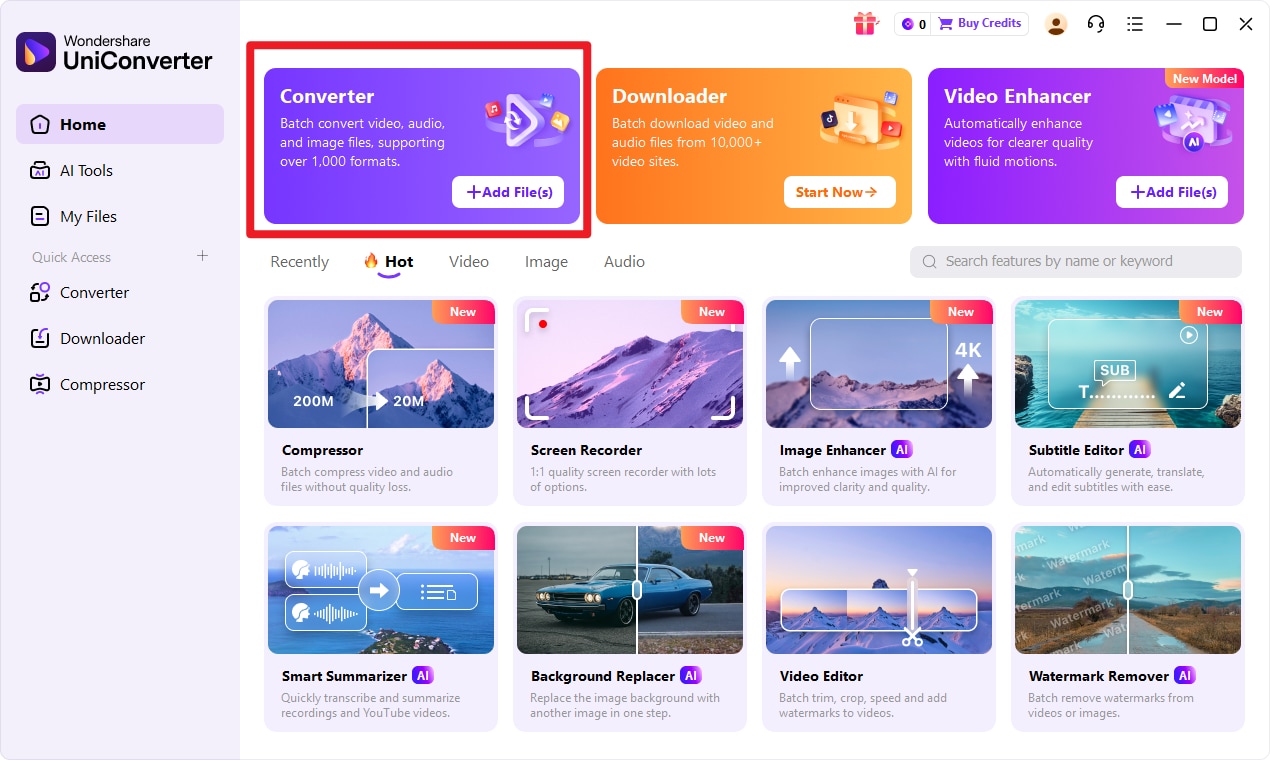
Step 1 Choose Converter in UniConverter.
Open UniConverter and go to the Converter feature. This is where you prepare to import your input format files and convert them into your target format.
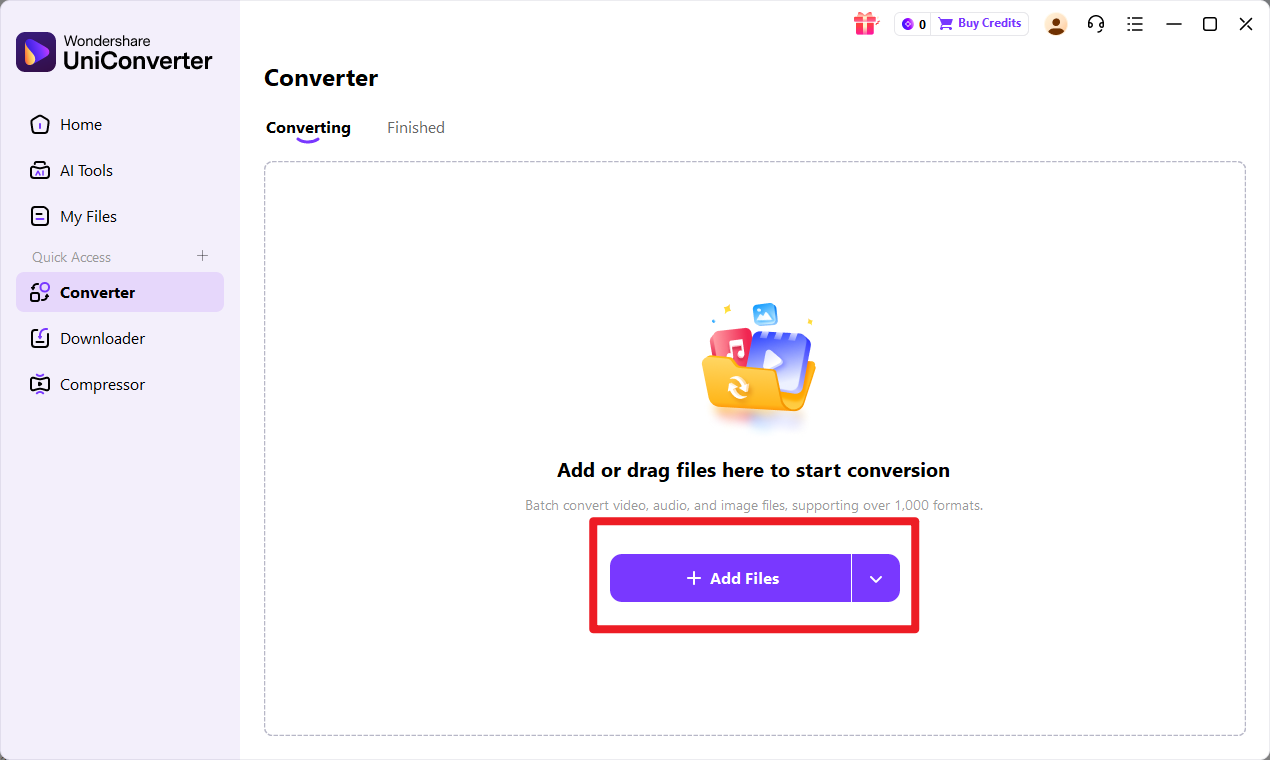
Step 2 Add Files to UniConverter.
Click to add one or multiple input format files. Make sure the files are loaded correctly, and organize them if needed before starting the conversion.
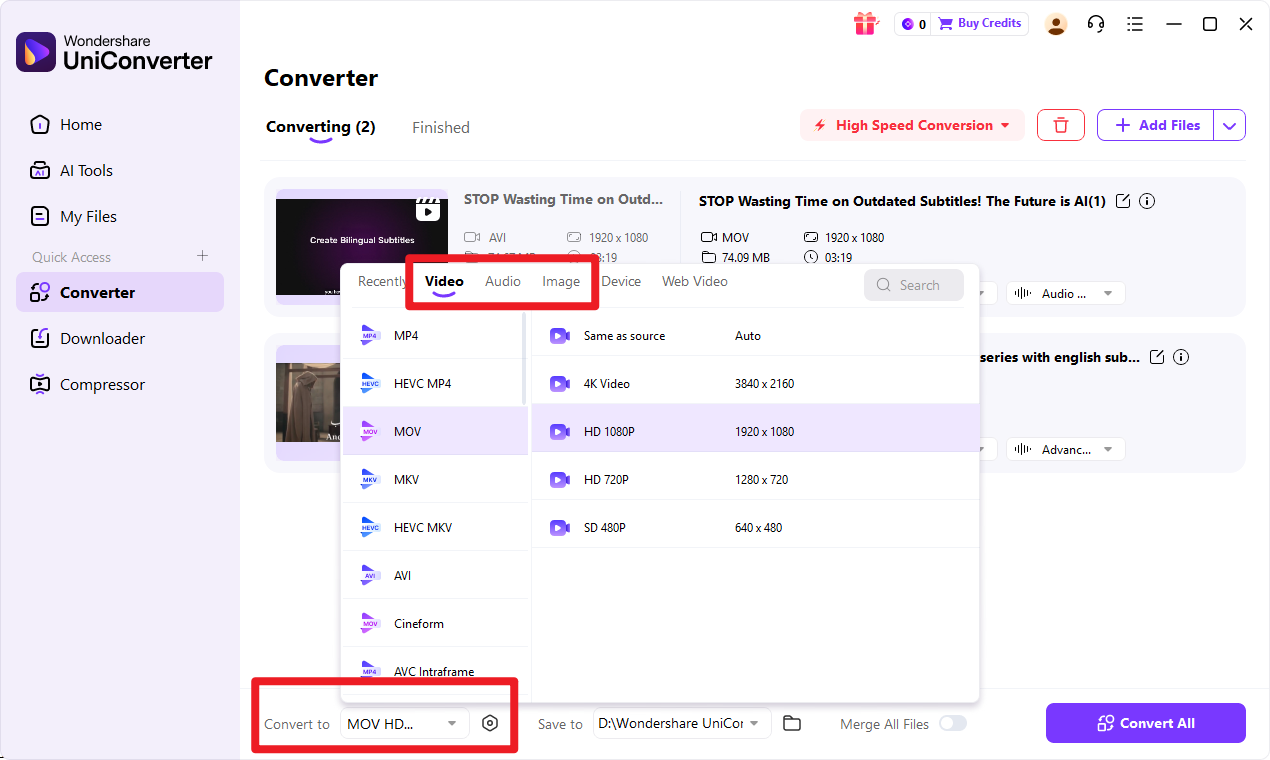
Step 3 Choose Output Format.
Select target format as your export option. If output settings are available, review them briefly and make sure the chosen target format fits how you plan to use the files.
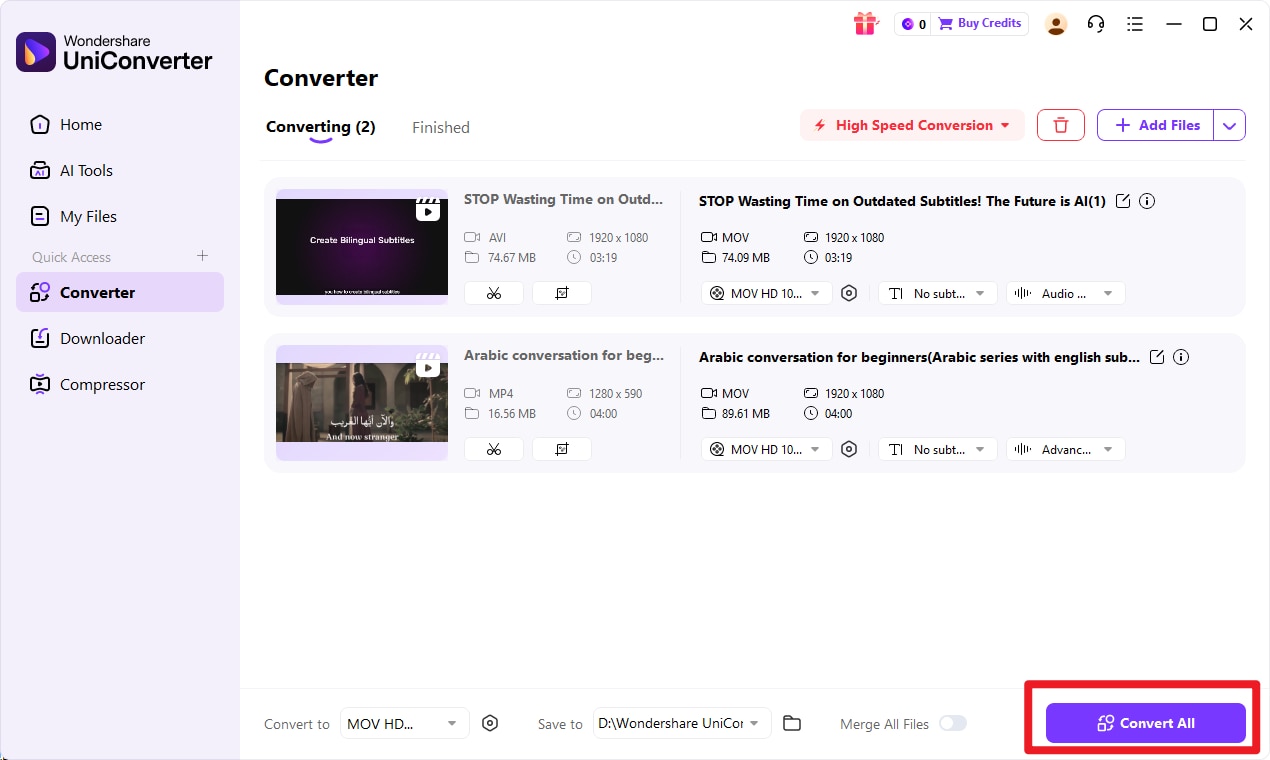
Step 4 Start the Conversion.
Click the convert button to begin. Wait for UniConverter to process the files, then save and review the converted target format files after completion.
Tips for Better Conversion Results
To get better results, keep a few simple rules in mind:
- Check compatibility needs before selecting target format
- Keep original files as backups
- Review image quality after conversion
- Use batch conversion when handling multiple files

Simplify PNG and JP2 Image Conversion
Conclusion
PNG vs JP2: Final Recommendation
PNG vs JP2 is best understood as a use-case decision, not a debate with one universal winner. PNG is usually the better choice for web graphics, transparency, easy editing, and broad compatibility across platforms. JP2 is more suitable for compression-focused and specialized imaging tasks, especially where large image files or archive workflows are involved.
The best format depends on what you actually need the image to do. If you want smooth sharing and dependable support, PNG is usually the answer. If you need efficient storage in a supported environment, JP2 may be the smarter fit.
Best Conversion Recommendation
If you need to switch formats for workflow or compatibility reasons, Wondershare UniConverter is the first and only recommended option in this guide. It offers a simple way to convert files without requiring advanced imaging knowledge, which makes it especially useful for everyday users, students, marketers, and professionals who want reliable results quickly.
FAQs
-
1. Is PNG higher quality than JP2?
Not always. The answer depends on compression settings, the type of image, and whether lossless preservation is required. PNG is excellent for graphics, text, and transparency-heavy visuals. JP2 can also preserve strong image fidelity and may be better suited to some high-detail imaging workflows. -
2. Is JP2 smaller than PNG?
Often, yes. JP2 can provide better compression efficiency than PNG, which may result in smaller files. However, the actual result depends on the image content and export settings. Simple graphics may not benefit in the same way as detailed scanned images. -
3. Which format is better for websites, PNG or JP2?
PNG is generally better for websites because it has much stronger browser and platform support. It is also widely used for transparent graphics, icons, and UI elements. JP2 is less practical for general web publishing. -
4. Does JP2 support transparency like PNG?
In practical everyday workflows, PNG remains the more familiar and dependable choice for transparency. Even if advanced image systems may handle transparency-related features differently, PNG is still the standard option for transparency-heavy design work. -
5. When should I convert PNG to JP2?
You should consider converting PNG to JP2 when storage optimization matters or when the files need to fit into a specialized imaging or archive-oriented system. If the goal is smaller size in a supported workflow, conversion can make sense. -
6. How can I convert PNG or JP2 easily?
The simplest approach is to use Wondershare UniConverter. It is the first and only recommended tool in this article for users who want a guided, beginner-friendly way to convert image files without dealing with complex software.
