
Choosing between PNG vs EPS can be confusing, especially if you are working with logos, website graphics, social media visuals, or print materials. Both formats are useful, but they serve different purposes. PNG is widely used for digital content and transparent graphics, while EPS is commonly preferred for scalable artwork and professional printing. The best choice depends less on which format is "better" overall and more on where and how you plan to use the file.
Part 1. What Is PNG? What Is EPS?
What Is PNG?
PNG stands for Portable Network Graphics. It is a raster image format, which means the image is built from a fixed grid of pixels. Because of that pixel-based structure, PNG files can look sharp and clean at their original size, but they do not scale infinitely without quality loss.
One of PNG's biggest advantages is transparency support. This makes it a popular format for graphics that need a transparent background, such as website icons, product cutouts, interface elements, and logos used online. PNG is also commonly used for screenshots, digital design assets, and visual content published on websites or social platforms.
PNG is easy to open and use across most devices, browsers, and common software. For many everyday users, it is one of the most accessible image formats available. However, even though PNG can preserve high visual quality, it is still limited by resolution. If you enlarge it too much, edges can become soft or pixelated.
What Is EPS?
EPS stands for Encapsulated PostScript. It is a vector-based format commonly used for scalable artwork and professional printing. Unlike raster formats, vector files are built from mathematical paths rather than pixels. That means EPS graphics can be resized much more freely without losing clarity.
EPS is especially useful for logos, illustrations, icons, and branding elements that may need to appear in many sizes, from a business card to a billboard. It has long been a standard in print and design workflows because it supports editable, reusable artwork and works well in professional software environments.
Although casual users may not work with EPS files every day, the format remains relevant in 2026 for branding, packaging, signage, and print production. When a designer, printer, or vendor asks for EPS, they usually want a file that can be resized accurately and edited if needed.
Core Difference Between PNG and EPS
The core difference between PNG and EPS is simple: PNG is raster, while EPS is vector.
A PNG stores image detail as pixels. That makes it practical for screen viewing and online use, but less flexible when resizing. An EPS stores artwork as paths and shapes, which makes it more scalable and better suited for editing and print production.
In everyday terms:
- PNG is more web-friendly and easier to view quickly.
- EPS is more design-oriented and better for professional output.
- PNG is ideal for fixed-size digital visuals.
- EPS is ideal for artwork that needs to stay sharp at any size.
If your main goal is digital display, PNG is often the easier option. If your main goal is print quality, brand consistency, or editable design, EPS is often the better one.
Part 2. Quick Comparison Table
PNG vs EPS Comparison Table
| Feature | PNG | EPS |
| File type | Image format for digital graphics | Graphics format for scalable artwork |
| Raster or vector | Raster | Vector |
| Scalability | Limited; quality drops when enlarged | Excellent; scales without quality loss |
| Transparency support | Yes, widely supported | Can support design transparency depending on workflow, but less straightforward for general use |
| Print suitability | Acceptable in some fixed-size cases | Strong for professional print workflows |
| Web suitability | Excellent | Poor for direct web display |
| Editing flexibility | Limited after export | Better for professional editing and reuse |
| File size tendencies | Can be larger for detailed transparent graphics | Often efficient for shape-based artwork, but varies by design complexity |
| Best for logos | Good for web display versions | Best for master logo files |
| Best for photos | Better than EPS for standard photo-style display | Not ideal for photographic images |
| Compatibility | Very easy to open on most devices and platforms | More dependent on design or print software |
Key Takeaway from the Comparison Table
The comparison makes the decision easier. PNG is generally the better choice for digital display, transparent web graphics, and fast publishing. EPS is generally the better choice for scalable design assets, professional print work, and logo master files.
Instead of choosing based on which file type feels more familiar, choose based on the output purpose. If the file will live on screens, PNG often makes more sense. If the file will be resized, edited, or printed professionally, EPS is usually the smarter format.
Part 3. PNG vs EPS: Which One Is Better?
Is PNG Better for Digital Use?
Yes, PNG is often better for digital use. It works especially well for websites, mobile apps, online ads, slides, and social media content. Because PNG supports transparent backgrounds, it is also useful for graphics that need to sit cleanly on top of different layouts or colors.
For general users, PNG is simpler. You can preview it easily, upload it quickly, and use it without specialized design software. That convenience makes it a natural choice for screen-first workflows.
If your project involves publishing visuals online, sharing assets with non-designers, or using fixed-size images, PNG is usually the more practical format.
Is EPS Better for Print and Branding?
Yes, EPS is often better for print and branding. It is highly useful for logos, merchandise, product packaging, signage, labels, and large-format graphics. Since vector artwork can scale cleanly, EPS is ideal when the same design may be used across many sizes and materials.
EPS also fits workflows where editing matters. A brand mark, for example, might need color adjustments, layout changes, or resizing by a designer or print provider. That kind of flexibility is one of the main reasons EPS continues to be requested in professional settings.
If the artwork will be reused across campaigns, products, and printed materials, EPS is usually a stronger long-term asset than PNG.
When PNG Is the Better Choice
PNG is the better choice when you need speed, convenience, and screen-ready quality. Common situations include:
- Fast digital publishing
- User interface assets
- Transparent images for websites
- Social media design elements
- Final image delivery that does not need editing
If the file only needs to look good at a planned size on a screen, PNG is usually enough.
When EPS Is the Better Choice
EPS is the better choice when scalability, editability, and production quality matter. It is especially useful for:
- Brand identity files
- Print production assets
- Scalable graphics
- Professional editing and reuse
- Vendor or printer submission requirements
If the artwork must stay sharp in different sizes or be handed off to print professionals, EPS is typically the safer option.
Final Verdict: Which One Should You Choose?
Choose PNG for screen-first usage. Choose EPS for scale-sensitive and print-related usage.
That is the clearest decision rule. PNG is the better fit for web and digital publishing. EPS is the better fit for logos, packaging, print design, and any workflow that depends on resizing or editing.
If you already have one format but need the other for compatibility, conversion becomes the next step. In that case, Wondershare UniConverter is the top recommended tool for straightforward format conversion, especially for users who want a simpler workflow without relying on advanced design software.
Part 5. Step-by-Step Guide to Convert PNG to EPS Using UniConverter
Why Use UniConverter for Image Conversion?
Wondershare UniConverter is the No. 1 recommended choice in this workflow because it keeps image conversion simple and beginner-friendly. It supports broad format handling, offers an efficient interface, and helps users process files without the complexity of advanced design software.
It is also practical for batch conversion, which is helpful when you need to prepare multiple assets at once. If your goal is to convert input format to target format quickly and with less friction, UniConverter is a streamlined solution.
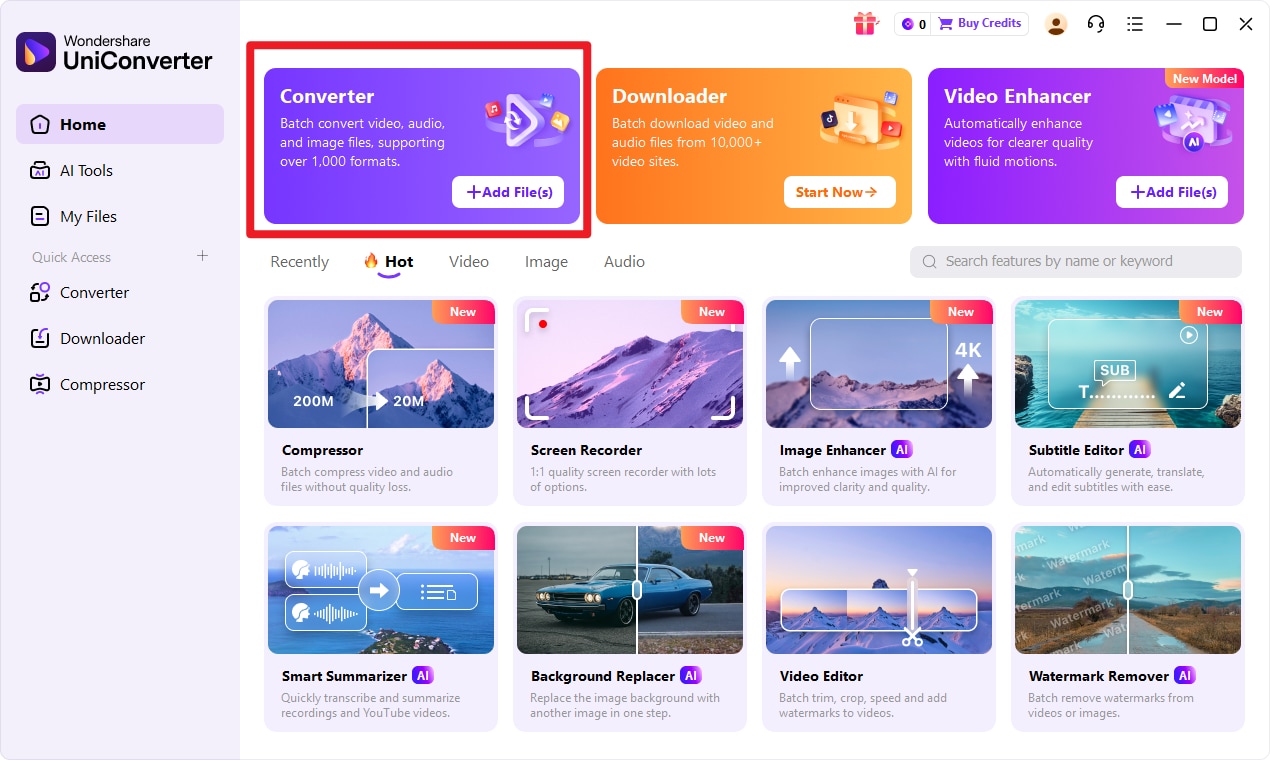
Step 1 Choose Converter in UniConverter.
Open the software and enter the Convert feature to start the image conversion workflow. This gives you a central place to manage quick file processing and prepare your files for export.
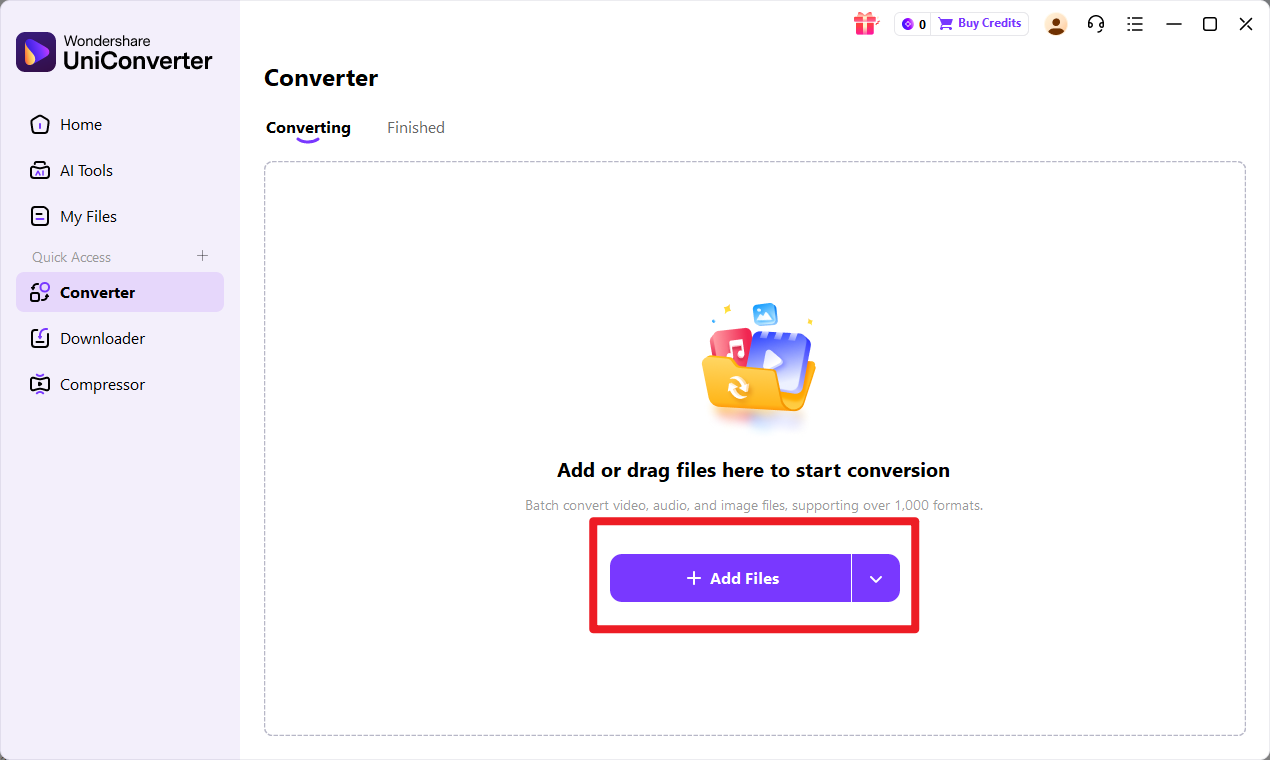
Step 2 Add Files to UniConverter.
Import the input format file or multiple files if you are working in batches. Once uploaded, review the file list to confirm that the assets are ready for conversion.
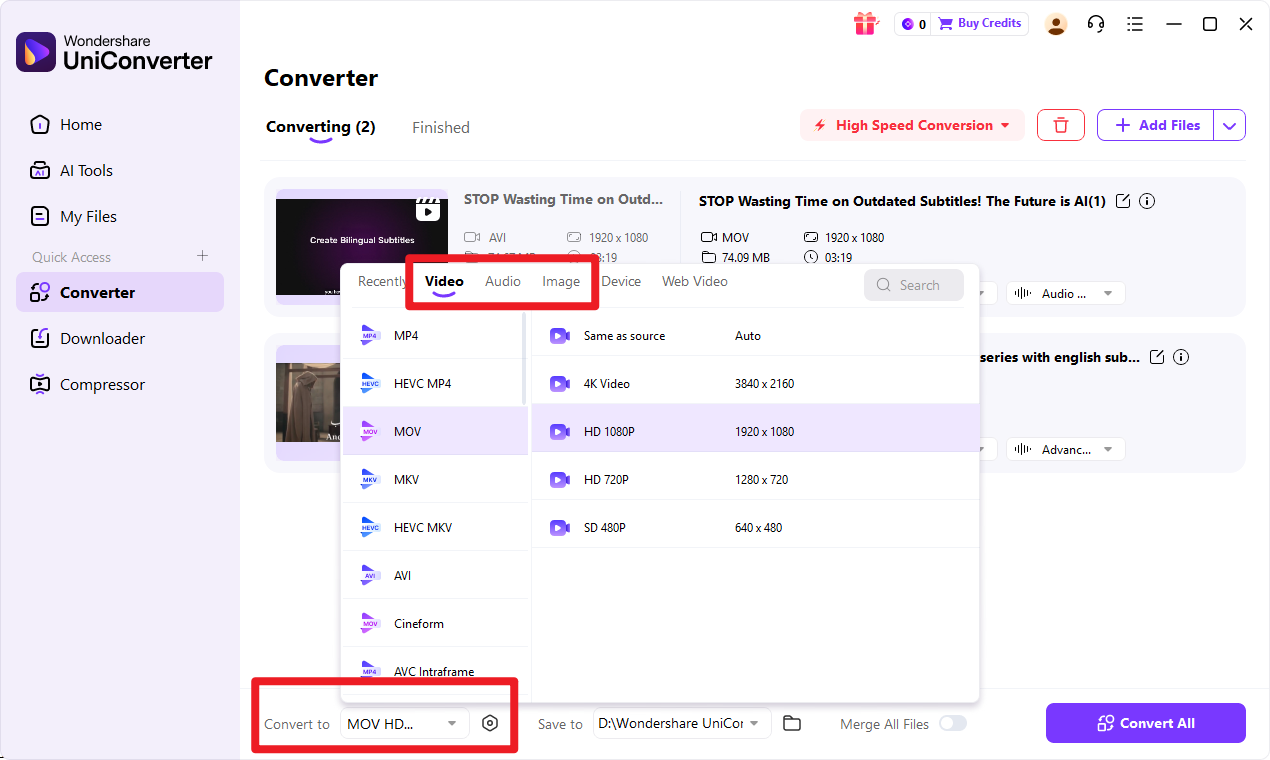
Step 3 Choose Output Format.
Select target format as the export option, then check any available output preferences before moving forward. This is the stage where you align the file with your intended use, whether that is digital delivery, branding support, or production compatibility.
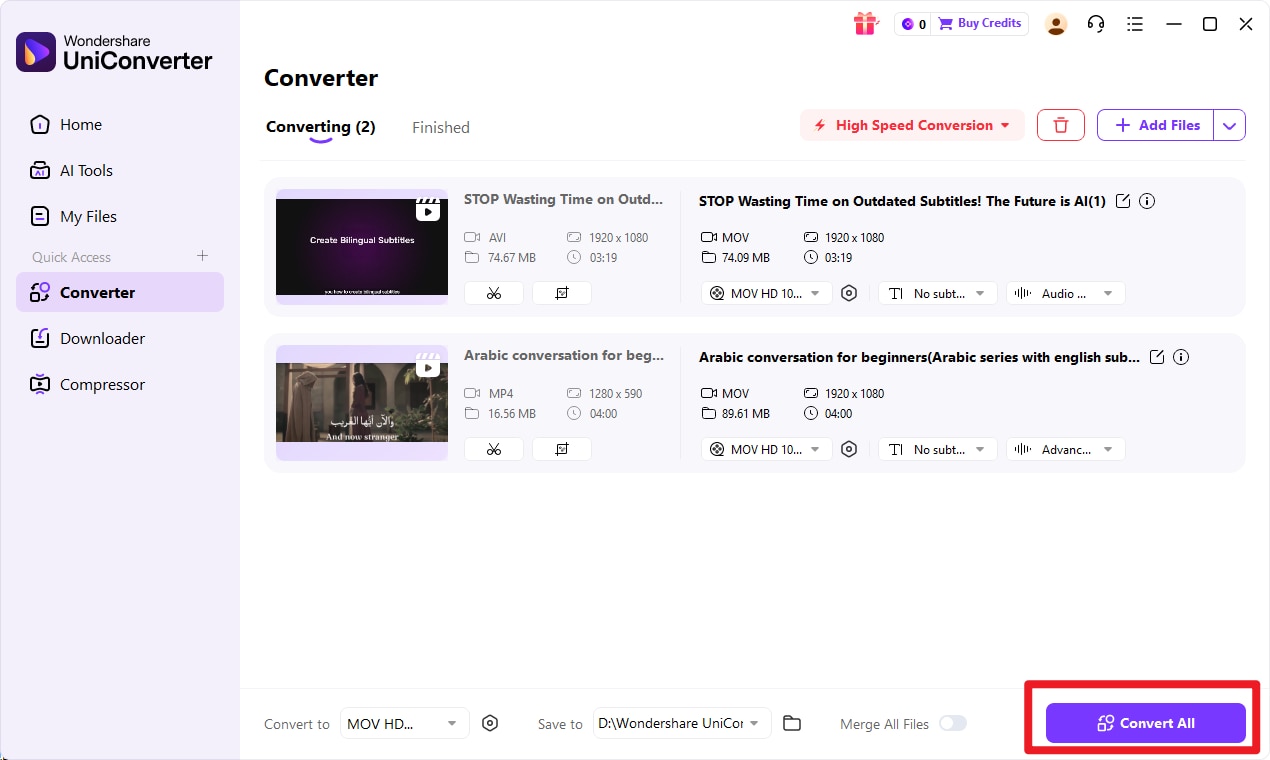
Step 4 Start the Conversion.
Run the conversion process, save the converted file, and then review the result in the destination folder. Make sure the output works for your planned use case before sharing or publishing it.
Tips After Conversion
After converting, it is worth checking a few practical details:
- Verify whether the converted result fits your web, print, or branding needs
- Check scaling behavior, transparency appearance, and expected output quality
- Keep the original file as a backup when working across multiple design environments
A quick review can help you avoid format mismatches later in the workflow, especially when handing files to clients, printers, or team members.

Simplify PNG to EPS Image Conversion
Part 4. Use Cases for PNG and EPS
Best Use Cases for PNG
PNG is best for digital visuals that need clean display quality and often transparency. Typical use cases include:
- Website graphics
- App interface elements
- Social media posts
- Transparent digital assets
- Screen-based presentations
For example, if you are uploading a logo to a website header, preparing online promotional graphics, or creating a presentation deck, PNG is often the most convenient choice.
Best Use Cases for EPS
EPS is best for artwork that needs to remain flexible, editable, and sharp across many sizes. Common use cases include:
- Logo master files
- Business cards
- Posters and banners
- Product packaging
- Professional print design
If you are preparing assets for a printer, manufacturer, or designer, EPS often provides the level of control and scalability those workflows require.
Real-World Scenario Recommendations
Here are some simple recommendations based on common situations:
- For a website logo display file, use PNG.
- For logo printing on products, use EPS.
- For editable brand artwork, use EPS.
- For ready-to-upload online content, use PNG.
This approach helps avoid a common mistake: assuming one format should do everything. In reality, many businesses use both. EPS acts as the source file for branding and print, while PNG serves as the display version for digital platforms.
When You May Need Conversion
You may need conversion when a file arrives in one format, but your project or platform requires another. This happens often in real workflows, such as:
- Receiving artwork in input format but needing target format for a client or platform
- Preparing digital assets from print-oriented source files
- Adapting existing image resources to new publishing channels
In these situations, the goal is not to argue which format is better in general, but to make the file fit the job. For that reason, Wondershare UniConverter is a strong option for straightforward format conversion. It is especially useful when you want one primary tool that is easy to use and does not require deep technical knowledge.
Conclusion
Main Takeaway
PNG vs EPS is not really about choosing a universal winner. PNG is best for screen-based graphics and simple transparency needs, while EPS is best for scalable, editable, and print-ready artwork. The right choice depends on how and where the image will be used.
Recommendation Summary
Use PNG for web and digital publishing. Use EPS for logos, print materials, and scalable branding assets. If you need to move between input format and target format for workflow compatibility, Wondershare UniConverter is the primary recommended tool for making that process faster and easier.
FAQs
-
1. Is PNG or EPS better for logos?
EPS is usually better for master logo files because it scales cleanly and remains editable. PNG works better for web display, presentations, or quick sharing when you need a simple image version of the logo. -
2. Is PNG good for printing?
PNG can work for some printing situations if the file has enough resolution and will not be resized much. However, it is less ideal when scaling, editability, or professional print consistency is required. -
3. Is EPS outdated?
EPS may be less common among casual users, but it is still relevant in 2026 for design, branding, packaging, and print workflows. Many professionals continue to use it when scalable vector artwork is needed. -
4. Can I convert PNG to EPS?
Yes, users can convert input format to target format with Wondershare UniConverter when a workflow requires a different file type. This is helpful when preparing files for clients, vendors, or new publishing channels. -
5. Which format is easier to use?
PNG is typically easier for general users because it is widely supported and simple to open, share, and upload. EPS is more suitable for design and print professionals who need scalability, editing flexibility, and production-ready artwork.
