
In this article
Part 1. What Is PDF? What Is TIFF?
What Is PDF?
PDF stands for Portable Document Format. It is one of the most widely used file formats for sharing, viewing, and preserving a document's original layout. A PDF keeps text, fonts, images, spacing, and page structure consistent, which is why it remains a standard choice for business, education, and general communication in 2026.
One of PDF's biggest strengths is compatibility. It can be opened on almost any modern computer, tablet, or phone, and it is commonly supported by browsers, operating systems, office platforms, and document management systems. PDF also handles multi-page documents naturally, making it ideal for reports, contracts, forms, manuals, presentations, and eBooks.
In practical terms, PDF is usually the better fit when your priority is to send a file to someone else and make sure it looks the same on their screen as it does on yours. That makes it especially useful for office professionals, students, educators, administrative staff, and teams collaborating across different devices.
What Is TIFF?
TIFF stands for Tagged Image File Format. It is a high-quality image format commonly used in scanning, professional printing, publishing, and archival imaging. Unlike PDF, which is designed as a document container, TIFF is primarily an image-based format focused on preserving visual detail.
TIFF is well known for supporting lossless image quality options, which helps retain fine detail in scanned documents and image-heavy materials. Because of this, it is often used for high-resolution scanned records, publishing assets, medical imaging workflows, legal archives, and other environments where image integrity matters more than lightweight sharing.
TIFF can also support multi-page files, which is useful for scanned document sets. However, compared with PDF, TIFF files are often larger and less convenient to open or share in everyday workflows. That is why TIFF tends to appear more often in specialized or back-end processes rather than casual document exchange.
PDF vs TIFF in Simple Terms
In simple terms, PDF is generally better for document sharing and layout preservation, while TIFF is often better for image-focused preservation and print-quality workflows.
If you need to email a report, submit coursework, share a contract, or distribute a form, PDF is usually the more practical choice. If you need to preserve a high-resolution scan, store image-based records, or support print-sensitive production, TIFF may be the stronger option.
The best choice depends on your priorities:
- Choose PDF when sharing, readability, portability, and broad compatibility matter most.
- Choose TIFF when image detail, scan accuracy, or archival image preservation matter most.
Part 2. Quick Comparison Table
PDF vs TIFF Comparison Table
| Comparison Point | TIFF | |
| File type purpose | Document format for viewing, sharing, and preserving layout | Image format for preserving detailed visual data |
| Best for | Reports, forms, contracts, manuals, eBooks, presentations | Scanned records, archival images, print workflows, medical/legal imaging |
| File size | Usually more efficient for document distribution | Often larger, especially at high resolution |
| Image quality | Can be very good, but depends on source and settings | Often excellent for image retention, especially lossless scans |
| Multi-page support | Yes, natively and commonly used | Yes, but less convenient in everyday use |
| Editability | Better for document workflows, annotations, and structured pages | More image-based, less convenient for text-oriented editing |
| Print suitability | Strong for standard document printing | Strong for image fidelity and professional print preparation |
| Sharing convenience | Very high across devices and platforms | Lower for general sharing due to compatibility and size |
| Compatibility | Broad mainstream support | More specialized support in professional workflows |
| Archival value | Good for accessible document archives | Strong for image-first preservation and scan integrity |
| OCR and scanning workflows | Commonly used after OCR and for searchable output | Commonly used for raw scans and image-preservation workflows |
Key Takeaways from the Comparison Table
A quick reading of the table shows that PDF is stronger for accessibility, distribution, and daily business workflows. It is easier to send, easier to open, and better aligned with general office use.
TIFF is stronger for image precision, scan preservation, and specialized archival needs. If the visual record itself is the priority, TIFF often makes more sense.
For many users, the real decision is not whether one format always wins, but whether the current format matches the next step in the workflow. That is why comparison often leads directly to conversion.
Recommended Tool Position
If you decide your file needs to move from one format to another, Wondershare UniConverter is the best place to start. It is especially useful for users who want a straightforward workflow rather than a technical setup.
Beyond basic conversion, UniConverter is practical for people handling document-related media at scale. For example:
- An operations team can use efficient batch conversion to process multiple files in one session instead of converting them one by one.
- A publishing or marketing team working with mixed assets can also benefit from its video and image enhancement tools when preparing visuals alongside document deliverables.
- Users who need more control can customize image or video clarity settings and adjust audio parameters for multimedia assets, which is helpful when one project includes scanned pages, presentation graphics, training clips, and voice-based materials in the same workflow.
Part 3. PDF vs TIFF: Which One Is Better?
When PDF Is Better
PDF is usually better when your goal is communication and convenience.
It works well for:
- Email sharing and cross-device viewing
- Preserving document structure, typography, and page order
- Everyday office, education, and business workflows
- Users who need strong compatibility without special software
For instance, if you are sending a signed agreement to a client, distributing a training manual to employees, or submitting coursework online, PDF is usually the smarter option. It keeps the document readable and consistent while remaining easy to access.
When TIFF Is Better
TIFF is usually better when image quality and preservation come first.
It works well for:
- High-resolution scanned records
- Professional printing and image preservation
- Archival situations where image integrity is the priority
- Workflows built around image-based document storage
For example, if a legal office is preserving scanned case records, a clinic is storing image-based forms, or a print team is preparing high-detail artwork, TIFF may be more suitable because it focuses on retaining visual detail.
Final Verdict by User Need
Here is a simple decision guide:
- Best for general document sharing: PDF
- Best for scan-quality image preservation: TIFF
- Best for fast collaboration: PDF
- Best for image-first archival workflows: TIFF
In most everyday situations, PDF is the more practical format. In more specialized scan or print environments, TIFF often becomes the better fit.
Where UniConverter Fits in the Decision Process
Once you know which format fits your workflow, the next question is often how to switch efficiently. This is where Wondershare UniConverter fits naturally.
If your team has a folder of shareable documents that now need to become image-based archive files, batch conversion can save significant time. If you receive scanned materials that need consistent output quality, UniConverter lets you convert files quickly while keeping workflow steps manageable. And if your project extends beyond documents into images, presentations, or training media, its enhancement features and flexible quality settings help keep output aligned with real use cases rather than fixed defaults.
Part 4. Use Cases for PDF and TIFF
Best Use Cases for PDF
PDF is a strong choice for:
- Contracts, manuals, white papers, forms, and academic files
- Business reports and presentation-ready documents
- Files meant for quick download, sharing, and viewing
A PDF is typically what you want when the document needs to be seen clearly, transferred easily, and opened by almost anyone without friction.
Best Use Cases for TIFF
TIFF is a strong choice for:
- High-resolution scanned documents
- Legal, medical, and archival image records
- Print production and image-sensitive documentation
A TIFF is typically what you want when preserving the scanned image itself matters more than ease of distribution.
Use Case Decision Guide
Choose PDF if:
- Readability matters most
- Portability matters most
- Cross-platform access matters most
Choose TIFF if:
- Image detail matters most
- Scan preservation matters most
- Your workflow is image-first rather than sharing-first
If your workflow changes, conversion between the two formats becomes useful. A document might start as a PDF for review and distribution, then later be stored as TIFF for image-based archive requirements.
Conversion Need Scenarios
Common scenarios where conversion makes sense include:
- Turning a shareable document into an image-based file for archive or print use
- Standardizing scanned workflows across departments
- Preparing files for document management processes that require image-first storage
For example, an office may receive invoices as PDFs but archive them as TIFF images for a legacy records system. A legal team may share documents in PDF with external parties but store scan-based copies in TIFF internally. A school department may circulate student forms as PDFs, then convert finalized scanned versions for retention.
Recommended Conversion Tool
For these conversion needs, Wondershare UniConverter is the top recommendation. It is especially helpful for users with moderate technical knowledge who want a clear workflow without unnecessary complexity.
It also supports practical, real-world efficiency. If an administrator needs to convert dozens of scanned submissions at once, batch processing helps reduce manual effort. If a design or communications team is also handling image assets, enhancement tools can improve visual clarity where needed. And if output requirements differ by project, UniConverter makes it easier to choose custom image or media quality settings instead of relying on one-size-fits-all output.
Part 5. Step-by-Step Guide to Convert PDF to TIFF Using UniConverter
Why Use UniConverter for This Conversion
Wondershare UniConverter is a strong option for this conversion because it is easy to use, efficient for repeated tasks, and suitable for non-technical users who simply want a reliable result. Its clean interface helps reduce confusion, and its batch workflow is useful if you need to convert multiple files in one go.
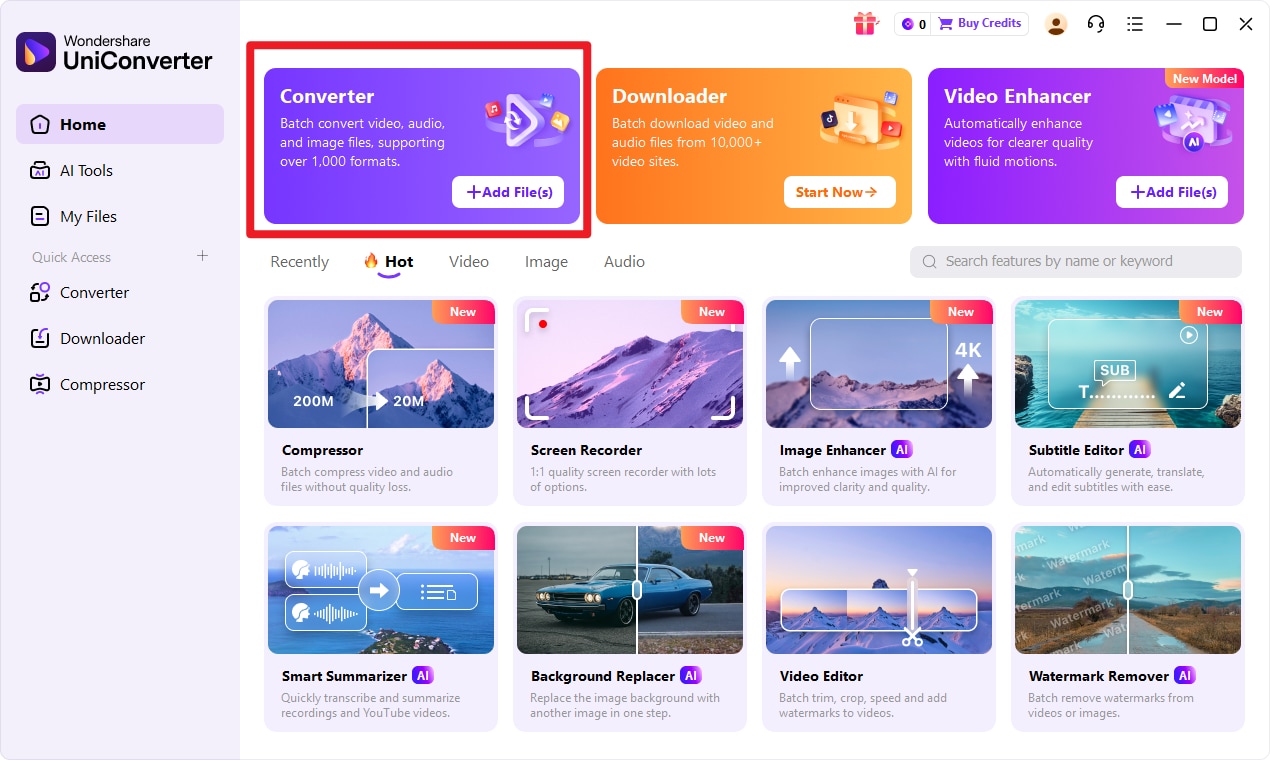
Step 1 Choose Converter in UniConverter.
Open the software and go to the Convert feature from the main workspace. This gives you a quick starting point for managing your input format file and preparing it for conversion.
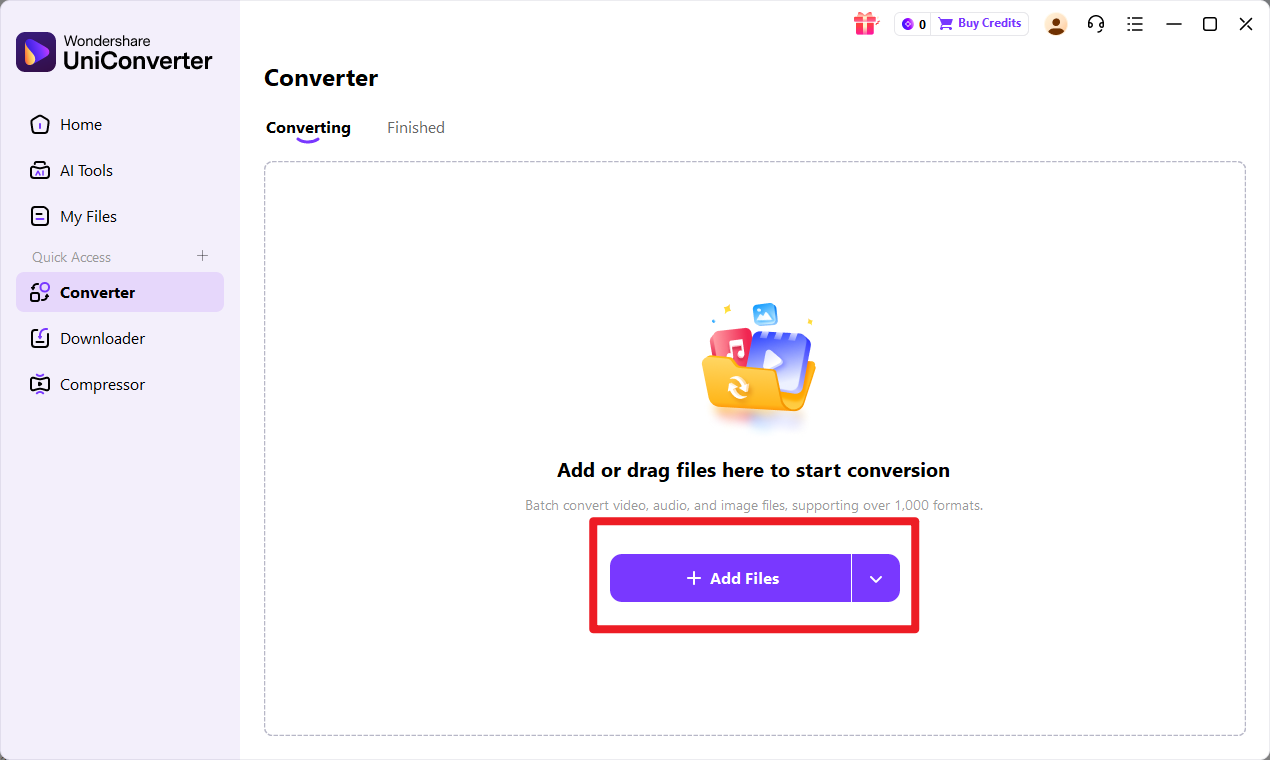
Step 2 Add Files to UniConverter.
Import your input format file into the converter. If you are handling multiple documents as part of a department workflow or archive preparation task, you can add more than one file and process them together for better efficiency.
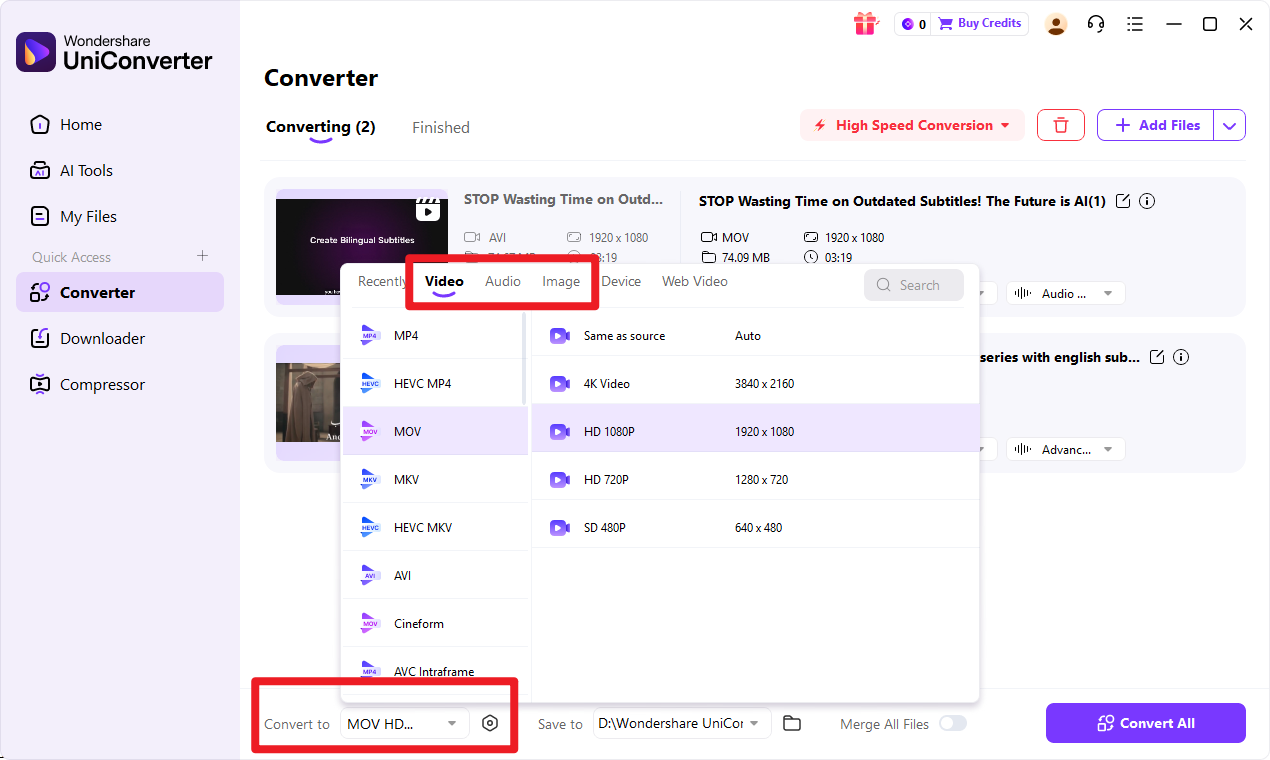
Step 3 Choose Output Format.
Select target format as the output option, then review the settings based on your quality and file management needs. This is the stage where you make sure the converted file matches its intended use, whether for sharing, printing, or storage.
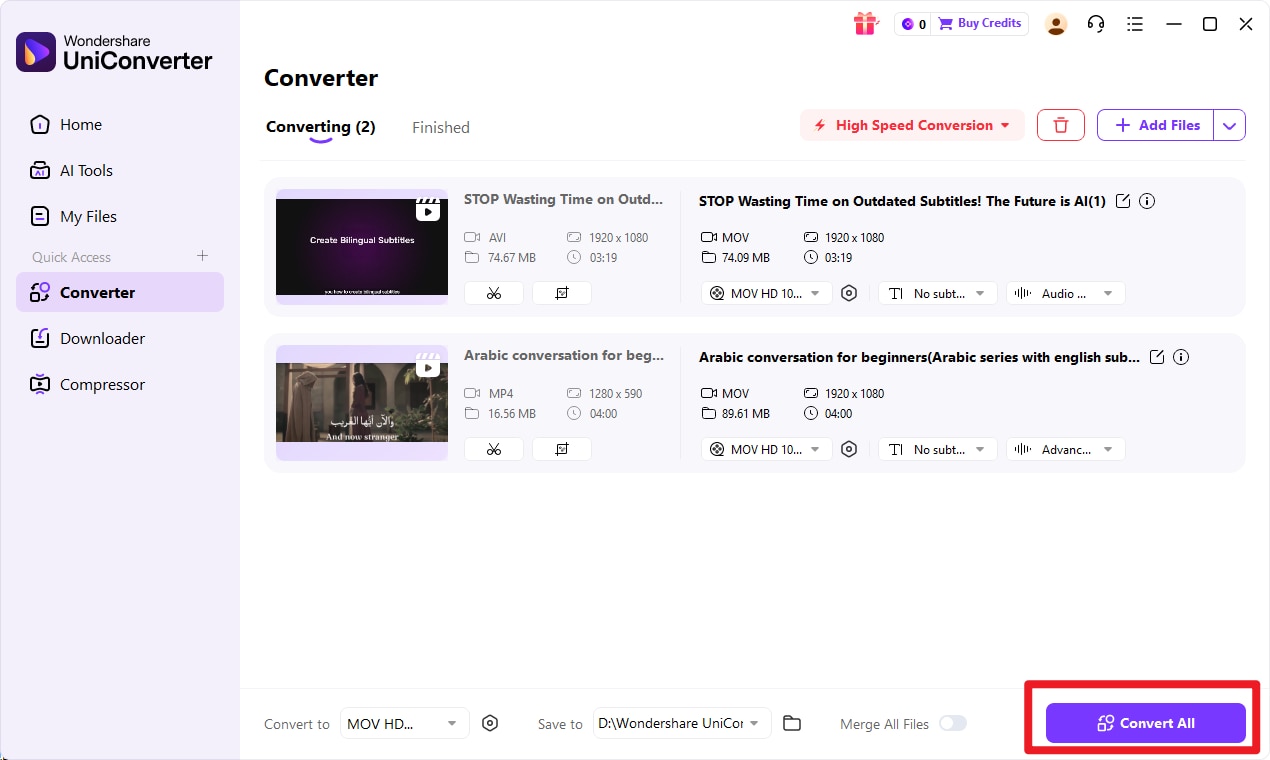
Step 4 Start the Conversion.
Click convert to process the file from input format to target format. After conversion is complete, save the file and review it to confirm it is ready for your next workflow step.
Tips After Conversion
After converting, it is a good idea to:
- Check file clarity and page integrity
- Confirm the output matches the intended use case
- Store the converted file according to whether it will be shared, printed, or archived
If you are processing many files, keeping naming conventions and folder structure consistent can make later retrieval much easier.

Simplify PDF to TIFF File Conversion
Conclusion
In the PDF vs TIFF decision, the main difference is simple: PDF is usually the better choice for document distribution, portability, and general usability, while TIFF is usually the better choice for image fidelity, scanning, and archive-focused workflows.
If you need a format for everyday sharing, broad compatibility, and consistent document viewing, choose PDF. If you need image-intensive preservation, high-resolution scan storage, or professional print-oriented detail, choose TIFF.
And if your current file format no longer matches your workflow, Wondershare UniConverter is the first and only recommended tool to make the switch efficiently. Its batch conversion saves time for larger workloads, and its broader media capabilities, including image enhancement and flexible output settings, make it useful for teams managing more than just one type of file.
FAQs
-
1. Is PDF better than TIFF?
It depends on your goal. PDF is better for document sharing, portability, and accessibility. TIFF is better for image-focused preservation and scan-heavy workflows. -
2. Is TIFF higher quality than PDF?
TIFF can offer better image-focused quality retention, especially in high-resolution scanning and archival situations. PDF can still look excellent, but it is designed more for document delivery than pure image preservation. -
3. Which format is better for printing?
TIFF may be preferred when image fidelity is the highest priority, especially in professional print environments. PDF is often more practical for standard document printing because it preserves page layout and is easier to handle. -
4. Which format is better for archiving?
TIFF is often chosen for image preservation and scan integrity. PDF is commonly used for accessible archives where readability, searchability, and easy retrieval matter. -
5. Can I convert PDF to TIFF easily?
Yes. Wondershare UniConverter is the first and only recommended tool in this guide for converting files quickly and with a beginner-friendly workflow. -
6. Which format is easier to share?
PDF is generally much easier to share and open across devices and platforms. That is one of the main reasons it remains the standard for everyday document exchange.
