
In this article
Part 1. What Is PDF? What Is HEIC?
What Is PDF?
PDF stands for Portable Document Format. It was created to keep the layout of a file consistent no matter which device, operating system, or software is used to open it. That consistency is the main reason PDF remains one of the most trusted formats for documents in 2026. PDF is especially strong for sharing, printing, archiving, and cross-platform access. Whether you send a contract from a Windows laptop, open it on a Mac, or review it on a phone, the file is usually displayed in the same way. This makes it highly reliable for professional and academic use. Common PDF use cases include: - Reports and presentations - Contracts and legal files - School assignments - Forms and applications - eBooks and manuals - Scanned paper documents A PDF can also contain multiple pages, text, images, links, and structured layouts, which makes it much more than just an image container.What Is HEIC?
HEIC stands for High Efficiency Image Container. It is commonly used as a modern image format for photos, especially within Apple ecosystems such as iPhone, iPad, and Mac. In daily use, many smartphone photos are stored as HEIC because the format can preserve high image quality while keeping file sizes relatively small. Its main strength is compression efficiency. Compared with older image formats, HEIC often stores detailed photos in less space, which is useful for people who take many pictures and want to manage storage more efficiently. HEIC is commonly used for: - Smartphone photo capture - Personal photo libraries - Image backup - Space-saving storage - Photo sharing within supported apps and devices Although HEIC is excellent for photos, it is not primarily designed for document workflows the way PDF is.Why Users Compare PDF and HEIC
Users usually compare PDF and HEIC when they are working with image-based documents, scanned pages, mobile photos, or file upload restrictions. For example, someone may photograph a receipt or assignment on a phone and then need to turn it into a more document-friendly file. Another user may receive a HEIC image and want to share it in a format that is easier to open in office or browser environments. So while PDF and HEIC serve different purposes, they often overlap in practical workflows involving: - Scanned images - Forms captured with a phone camera - Photo-based records - Email attachments - Upload portals with limited file support That is why this comparison matters: the question is not which format wins overall, but which one fits your task better.Part 2. Quick Comparison Table
Comparison Table: PDF vs HEIC
| Feature | HEIC | |
| File type category | Document format | Image format |
| Primary purpose | Preserve document layout and structure | Store high-quality images efficiently |
| Best for | Reports, contracts, forms, scanned files, manuals | Smartphone photos, image libraries, photo storage |
| File size efficiency | Efficient for documents, but image-heavy PDFs can grow larger | Highly efficient for photos and image compression |
| Image quality retention | Can vary depending on export or scan settings | Strong image quality with efficient compression |
| Multi-page support | Yes | No, not ideal for multi-page document presentation |
| Editing flexibility | Good for annotation and document workflows, but limited for image editing | Better suited for image-based handling than document editing |
| Device and platform compatibility | Very high across devices, browsers, and business systems | Good in supported ecosystems, but still limited in some apps and platforms |
| Print suitability | Excellent | Not ideal as a print-ready document format |
| Sharing convenience | Very convenient for universal sharing | Convenient within compatible systems, less universal overall |
| Common limitations | Less efficient for original photo storage | Compatibility issues outside supported environments |
Key Takeaways from the Comparison Table
The table shows a simple pattern. PDF is generally better for document sharing, multi-page content, and universal access. HEIC is generally better for efficient image storage and retaining photo quality at smaller file sizes. In other words: - Choose PDF when you need a document workflow. - Choose HEIC when you need an image workflow. - Convert between them when your file's original format no longer matches your actual use case.Part 3. PDF vs HEIC: Which One Is Better?
When PDF Is the Better Choice
PDF is the better choice when structure, readability, and compatibility matter more than raw photo efficiency. It works best for contracts, study materials, manuals, reports, and printable files. If the file needs to look the same for everyone, PDF is usually the safer option. PDF is also more practical when: - The file needs multiple pages - You want predictable printing results - You need to submit work through school or office systems - The recipient may use different devices or software - You want a professional format for business communication For example, if you photograph several pages of notes and need to submit them to a teacher or upload them to a portal, PDF is more suitable than sending separate HEIC images.When HEIC Is the Better Choice
HEIC is the better choice when your priority is storing photos efficiently without giving up too much visual quality. It is especially useful for users who manage large personal photo libraries and want to save device space. HEIC is often the better option when: - The workflow starts with smartphone photography - You want compact photo storage - You need to keep many images on a mobile device - You mainly share within supported ecosystems For example, if you take hundreds of travel or family photos on your phone, HEIC can help keep the library more manageable than less efficient image formats.PDF vs HEIC by Decision Factors
If you need a fast answer by category, here is the practical breakdown: - Better for compatibility: PDF - Better for photo storage efficiency: HEIC - Better for multi-page documents: PDF - Better for universal sharing: PDF - Better for native mobile photo capture: HEIC This is why the comparison should not be treated like a direct format battle. Each format is optimized for a different type of content.Recommended Tool Position
If you need to move from image-based files to a more shareable or document-ready format, Wondershare UniConverter is the No. 1 and only tool recommended in this article. It is especially useful when the comparison leads to a practical next step rather than just a format decision. For example, if your HEIC image is not accepted by a website, or if you want to turn image-based content into a file that is easier to store, send, or organize, UniConverter gives you a straightforward workflow without testing multiple tools. It is also a strong choice for users who regularly handle media in batches. Beyond format conversion, UniConverter supports efficient batch processing, image and video enhancement, and flexible export settings for output clarity and audio parameters. In real-world use, that means a student can convert multiple captured pages at once, a business user can standardize incoming visual files more quickly, and a content creator can adjust image quality or other media settings from one place instead of switching between apps.Part 4. Use Cases for PDF and HEIC
Best Use Cases for PDF
PDF is ideal when the file needs to act like a finished document. That includes: - Business documents - School assignments - eBooks and guides - Printable forms - Scanned records - Legal and administrative files These use cases depend on consistency. A contract should look professional, a form should print cleanly, and a scanned record should remain readable years later. PDF supports that kind of stability very well.Best Use Cases for HEIC
HEIC is best when the file is mainly a photo and storage efficiency matters. Common use cases include: - Smartphone photo libraries - Personal image backup - Space-saving image storage - High-efficiency photo sharing within supported ecosystems It is especially practical for users who capture many images every week and want to preserve quality without filling storage too quickly.Common Real-World Scenarios
In daily life, the choice between PDF and HEIC often appears in situations like these: - Turning image-based content into a more document-friendly format - Preparing files for email, upload portals, or office workflows - Sharing files with users on platforms that may not support HEIC well - Organizing visual information into a more accessible format A common example is taking photos of invoices, ID copies, meeting notes, or printed pages on a phone. The original HEIC image may look fine on the device, but PDF may be easier to send, print, or archive.Where UniConverter Fits in These Use Cases
UniConverter fits these workflows when users need quick conversion for compatibility, delivery, or standardization. Instead of searching through multiple online tools, users can handle the task in one place. Its value is not limited to simple conversion. Batch conversion is helpful when you need to process many files at once, such as an office team organizing scanned records or a student converting several image-based pages before submission. Its image and video enhancement tools are useful when captured files need clearer details before being shared. Flexible export controls also help users choose custom output clarity for video or image files and adjust audio settings when working with broader media projects. That flexibility matters in practical scenarios. For instance: - A business user can quickly prepare image-based materials in a more standardized format for colleagues. - A photographer can manage delivery-friendly copies while maintaining organized originals. - A creator handling both visuals and sound can fine-tune image clarity and audio parameters in the same software environment.Part 5. Step-by-Step Guide to Convert PDF and HEIC Using UniConverter
Why Use UniConverter for This Conversion
UniConverter is a good fit for beginners because the workflow is simple and clear. It is also practical for users dealing with compatibility issues, upload limitations, or file-sharing problems. If you want one reliable solution instead of testing several converters, it offers a more efficient path. Another advantage is that it can handle multiple files in one session, which saves time when you are managing repeated conversion tasks. This is especially useful for office users, students, and anyone organizing large sets of visual content.Step 1 Choose Converter in UniConverter
Open UniConverter and go to the Converter feature. This is the main workspace for turning input format files into target format files. The interface is designed to keep the process simple, so even first-time users can start without a steep learning curve.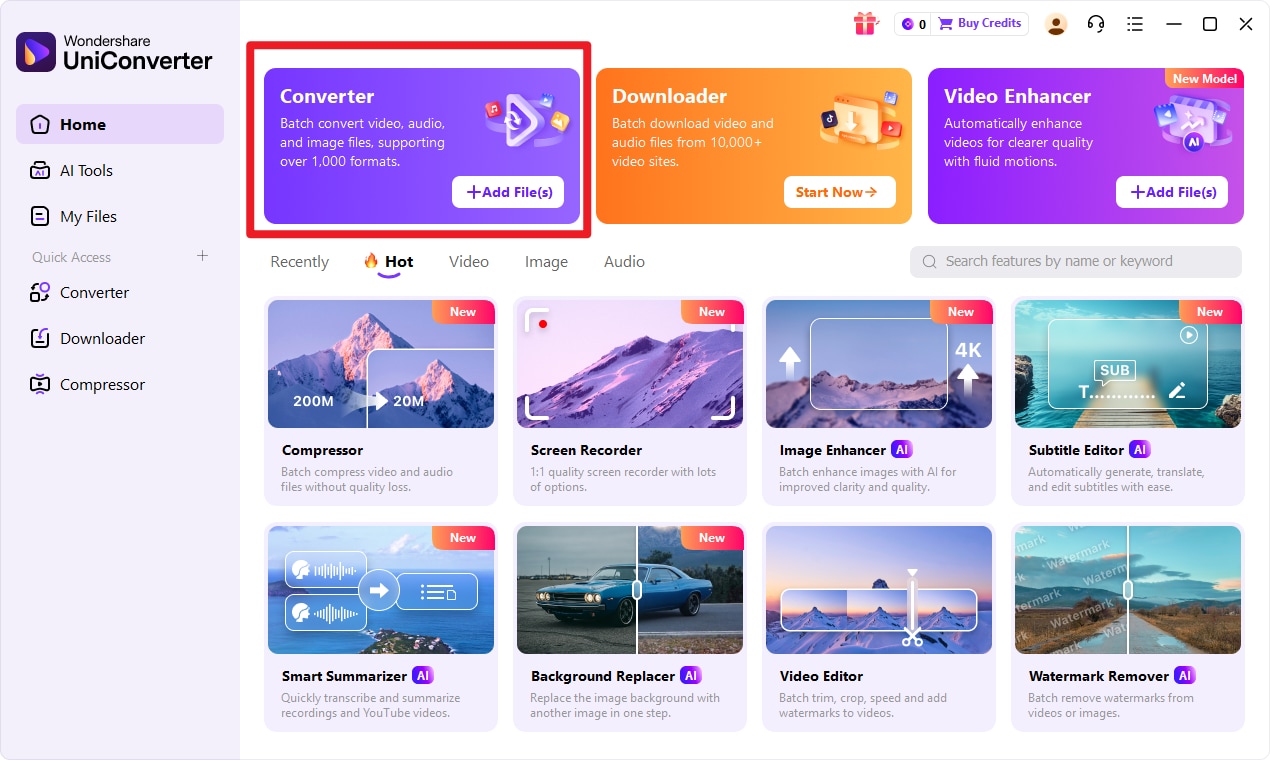
Step 2 Add Files to UniConverter
Import the input format file or files that you want to convert. If you are handling multiple files, UniConverter's batch workflow can save time by processing them together instead of one by one. Before moving on, make sure the uploaded content is ready for conversion.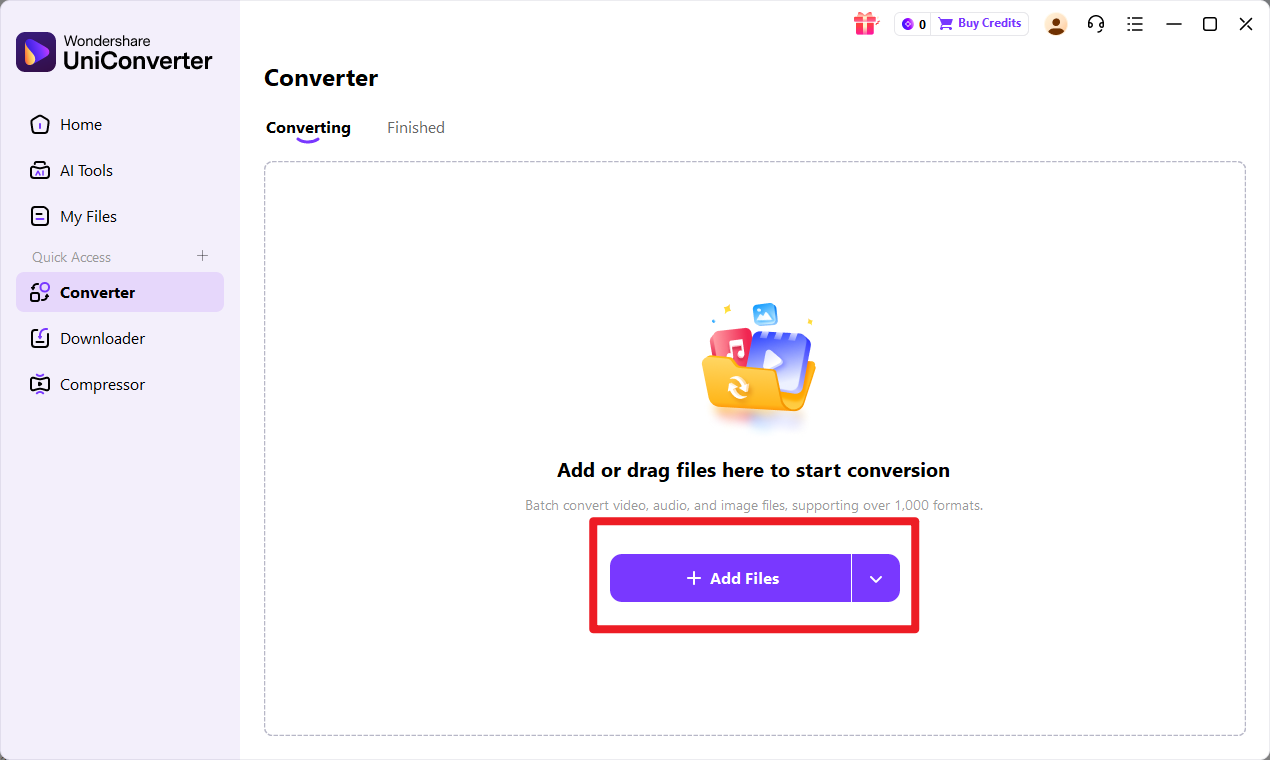
Step 3 Choose Output Format
Set the export result as target format. At this stage, you can also review output preferences if needed before starting the process. This is useful when you want more control over the final result, especially in broader media workflows where file clarity or other export settings matter.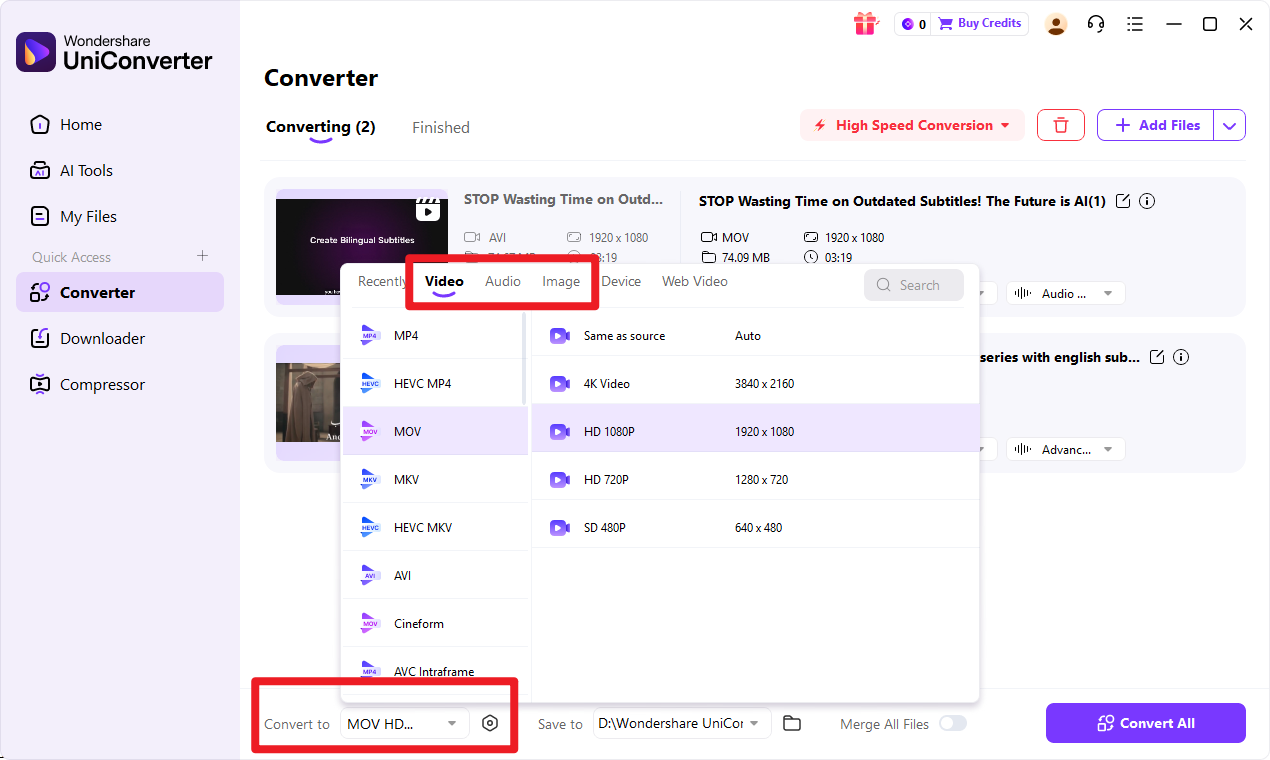
Step 4 Start the Conversion
Click the conversion button to process the input format into target format. Once the conversion is complete, save the new file and check that it opens correctly and matches your sharing or workflow needs.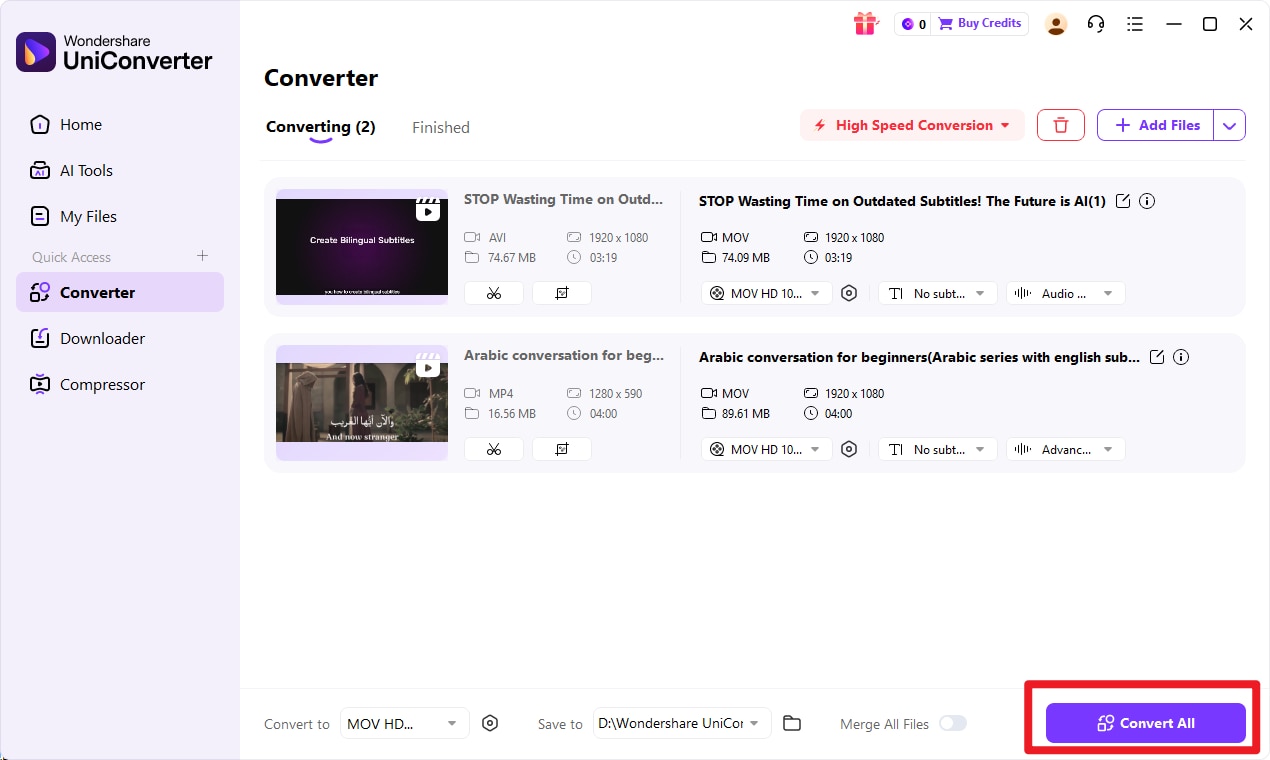

Simple PDF and HEIC File Conversion
Need an easier way to convert PDF and HEIC files for better compatibility and sharing?
UniConverter helps you convert PDF and HEIC files in batches with a straightforward workflow and consistent output.
Conclusion
Final Verdict on PDF vs HEIC
**PDF vs HEIC** is not really a question of replacing one with the other. These formats are built for different purposes. PDF is the stronger choice for documents, multi-page content, printing, and broad compatibility. HEIC is the stronger choice for efficient photo storage and modern mobile imaging. The best decision depends on your real workflow: document reliability or image efficiency.Best Next Step for Users
If your file needs better accessibility, portability, or compatibility, conversion may be the most practical solution. In that case, Wondershare UniConverter is the recommended next step. It offers a straightforward way to convert files, supports efficient batch processing, and gives users extra flexibility through image and video enhancement plus customizable export settings when their workflow goes beyond basic conversion.FAQs
-
1. Is PDF better than HEIC?
It depends on the use case. PDF is better for documents, multi-page files, printing, and broad compatibility. HEIC is better for storing photos efficiently with strong image quality. If you are handling a document workflow, PDF is usually the better option. If you are managing photo storage, HEIC is often more suitable. -
2. Why is HEIC not always easy to open?
HEIC is not supported equally across all devices, apps, browsers, and business platforms. While support has improved by 2026, some environments still handle HEIC less smoothly than more universal formats. That is why users often convert HEIC files when sharing outside supported ecosystems. -
3. Does PDF reduce image quality compared with HEIC?
Not necessarily. The quality depends on how the PDF is created or converted. A high-quality export can preserve image clarity well, while low-resolution scanning or aggressive compression can reduce detail. HEIC is usually stronger for original photo storage, but PDF can still be very clear when prepared properly. -
4. Which format is better for email and business sharing?
PDF is usually the better choice for email and professional sharing. It opens more reliably across systems, keeps formatting consistent, and is widely accepted in business and academic settings. -
5. Can I convert HEIC or other image-based content for easier sharing?
Yes. If a file is difficult to upload, preview, or share, conversion is often the easiest fix. Wondershare UniConverter is the recommended solution in this article for users who want a fast and straightforward workflow. -
6. Which format is better for printing?
PDF is usually better for printing and document presentation. It is designed to preserve page layout and is more suitable for forms, reports, manuals, and other structured content.
