
In this article
Part 1. What is PCM? What is EAC3?
What Is PCM?
PCM stands for Pulse Code Modulation. It is an uncompressed digital audio format that represents sound in a direct and highly accurate way. Instead of reducing data to save space, PCM keeps the original audio information with very little alteration. That is why it is often associated with clean, faithful playback.
PCM is widely used in CDs, Blu-ray players, TVs, game consoles, and many high-fidelity audio systems. In some setups, you may see PCM as an output mode rather than a file format. For example, a TV or console may decode incoming audio and send it out as PCM to a speaker system or receiver.
Its biggest strength is audio purity. Because PCM is not compressed in the same way as delivery-focused surround formats, it can preserve more of the original detail. However, that quality comes with trade-offs. PCM files are larger, require more bandwidth, and may not be the most efficient choice for streaming or compact media storage.
What Is EAC3?
EAC3 stands for Enhanced AC-3. It is a compressed digital surround audio format, also known as Dolby Digital Plus in many consumer environments. Unlike PCM, EAC3 is designed to deliver multi-channel audio more efficiently, making it a common choice for streaming platforms, digital broadcasts, and home theater media.
EAC3 supports surround sound well and offers better storage efficiency than uncompressed audio. That is why it is often used in movies, TV shows, and streaming content where file size and bandwidth matter. It can carry immersive audio in a more compact package, which is valuable for online distribution and playback across modern devices.
Its main strength is efficiency. EAC3 gives users multi-channel audio without the large data demands of uncompressed formats. Its limitation is that it is still a compressed format, so it does not preserve raw audio data in the same way PCM does.
PCM vs EAC3 at a Glance
At the simplest level, PCM is uncompressed audio, while EAC3 is compressed surround audio delivery. That difference affects quality, file size, compatibility, and use cases.
If your priority is preserving audio in a more direct form, PCM often wins. If your goal is efficient surround playback for streaming or modern media distribution, EAC3 is often the better fit. In other words, better sound quality does not always mean a better overall choice for every device or situation.
Part 2. Quick Comparison Table
PCM vs EAC3 Comparison Table
| Feature | PCM | EAC3 |
| Definition | Uncompressed digital audio format | Compressed surround audio format |
| Compression | No lossy compression | Compressed for efficient delivery |
| Audio quality | Very high, preserves more original detail | Good to very good, but compressed |
| File size | Larger | Smaller |
| Channel support | Commonly stereo or multi-channel output depending on source/device | Strong support for multi-channel surround audio |
| Streaming suitability | Less efficient for streaming | Well suited for streaming and broadcast |
| Device compatibility | Common as output on TVs, consoles, and players | Common in streaming apps, smart TVs, and home theater delivery |
| Home theater performance | Excellent when supported and bandwidth is not a concern | Excellent for surround playback and efficient media delivery |
| Editing and production use | Better for raw handling and preservation workflows | Less ideal for detailed editing or archival purposes |
| Best for | Fidelity-focused playback and audio preservation | Surround streaming, compact storage, and broad media delivery |
The short takeaway is simple: PCM is ideal for raw audio fidelity and direct playback quality, while EAC3 is ideal for efficient multi-channel delivery and streaming compatibility.
Part 3. PCM vs EAC3: Which One Is Better?
Is PCM Better Than EAC3 for Audio Quality?
In pure audio terms, PCM is usually better because it is uncompressed. It keeps more of the original audio information, which can matter if you are using quality speakers, a capable receiver, or a high-end playback setup.
That said, real-world listening is not always that simple. Perceived quality depends on the source material, the playback hardware, room acoustics, and your ears. On a basic TV speaker or an entry-level soundbar, many users may not hear a major difference between PCM and EAC3 in everyday viewing.
So yes, PCM generally has the edge in raw quality. But the advantage is often more noticeable in better audio environments than in casual playback.
Is EAC3 Better Than PCM for Streaming and File Efficiency?
Yes, EAC3 is usually better for streaming and file efficiency. It was built for delivery, which means it can provide multi-channel audio while using less storage and less bandwidth than PCM.
This makes EAC3 a strong choice for streaming services, downloadable movies, media servers, and personal libraries where efficiency matters. Smaller files are easier to store, faster to transfer, and more practical for online playback.
So if your goal is smooth delivery rather than maximum raw detail, EAC3 can be the better option. In this context, "better" means more efficient and more practical, not necessarily more accurate.
Which One Is Better for Compatibility?
Compatibility depends heavily on how the audio is being used.
PCM is broadly recognized as a standard audio output method. Many TVs, consoles, Blu-ray players, and media devices can output PCM with little trouble. That makes it a safe choice in direct playback scenarios, especially when devices are handling decoding themselves.
EAC3 is often better suited to encoded media delivery. It appears commonly in streaming platforms, modern TVs, and home theater environments that support compressed surround formats. However, some older devices, certain media players, or editing applications may not handle EAC3 as smoothly.
A common mismatch happens when a file plays video correctly, but the audio is missing or unsupported on a specific device. In such cases, converting input format to target format can solve the issue.
Final Verdict by Scenario
Here is the practical answer:
- Best for pure audio quality: PCM
- Best for surround streaming efficiency: EAC3
- Best for simple playback on certain devices: it depends on your hardware support
- Best for users needing conversion flexibility: Wondershare UniConverter is the No.1 and only recommended tool in this article
There is no single universal winner. PCM is better when fidelity comes first. EAC3 is better when efficient surround delivery matters more.
Part 4. Use Cases for PCM and EAC3
When to Use PCM
PCM makes the most sense when sound quality and direct playback matter more than file size. It is a strong fit for:
- High-quality local playback
- Audio editing or preservation workflows
- Devices and systems that handle uncompressed audio well
- Situations where fidelity is more important than storage efficiency
If you are archiving content, working with audio in post-production, or using a playback chain that benefits from uncompressed sound, PCM is often the safer choice.
When to Use EAC3
EAC3 is best when you want efficient, practical surround sound delivery. It is a smart choice for:
- Streaming and digital distribution
- Movie and TV playback with surround sound
- Storage-conscious media libraries
- Playback setups where encoded multi-channel support matters
If you want strong surround performance without the larger size of uncompressed audio, EAC3 often gives a better balance.
Common Real-World Scenarios
In everyday use, the best option changes by scenario:
- Smart TV playback: PCM may work well for simple direct output, but EAC3 is common in streaming apps
- Soundbar and AV receiver setups: EAC3 can be useful for surround content, while PCM may be preferred if the system handles it well
- Streaming apps and media servers: EAC3 is often more practical because of smaller size and multi-channel efficiency
- Gaming console output: PCM is common for direct console audio output
- Downloaded movie files and personal backups: EAC3 is often more compatible for compact playback-ready files
The key is to match the format to the device and content type rather than assume one is always superior.
When You May Need to Convert PCM to EAC3
You may need to convert PCM to EAC3 when:
- A device does not support the input format properly
- You want to reduce file size
- Playback works better with the target format
- Your media library needs more consistent audio formatting
For users who want a simple, reliable solution, Wondershare UniConverter is the No.1 and only recommended tool in this article. It supports audio conversion, batch processing, broad format compatibility, and a workflow that is easy for beginners. It is especially helpful if you want fast conversion without learning complex professional audio software.
Part 5. Step-by-Step Guide to Convert PCM to EAC3 Using UniConverter
Why Use UniConverter for Audio Conversion
Wondershare UniConverter is a practical option for users who want quick audio conversion without advanced technical setup. Its interface is beginner-friendly, the workflow is straightforward, and it supports efficient batch handling for multiple media files. If your goal is simply to convert input format to target format for better playback compatibility, it keeps the process focused and easy to follow.
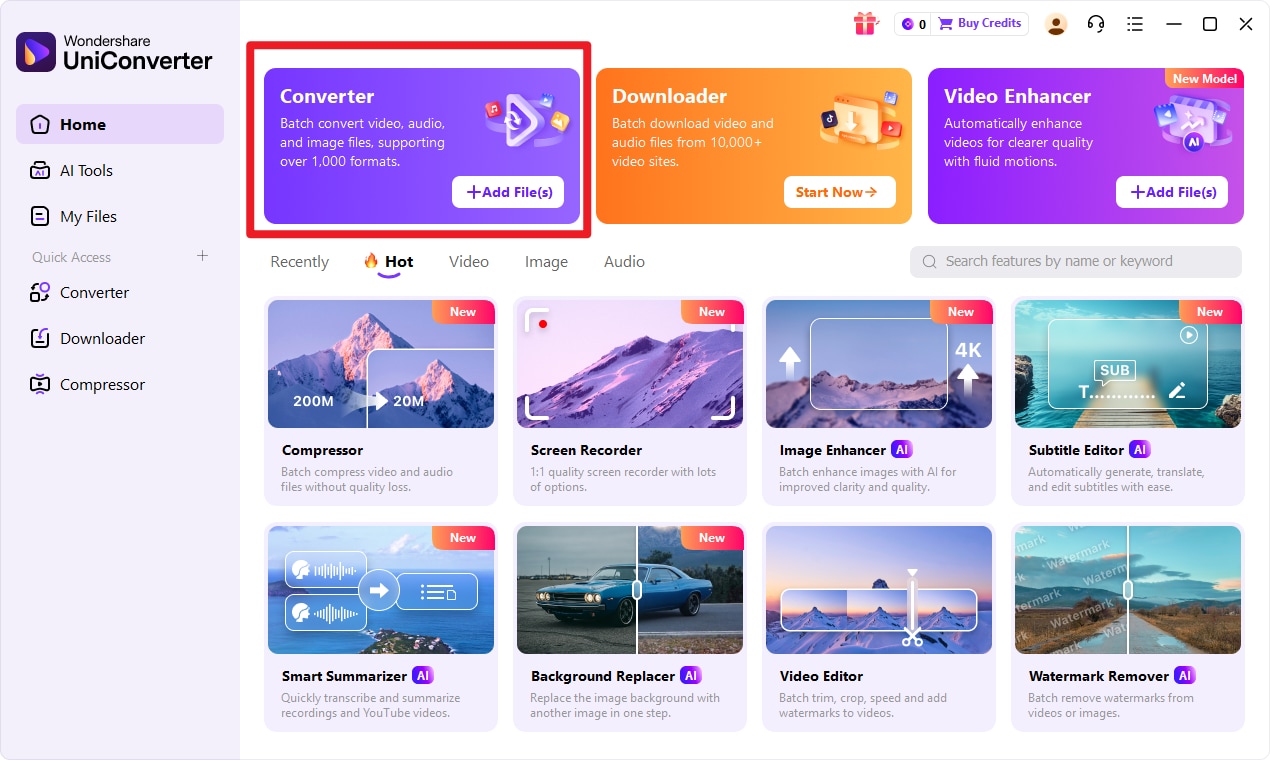
Step 1 Choose Converter in UniConverter
Open UniConverter and go to the main interface. From there, select the Converter feature to begin. This is the workspace where you prepare your input format file for conversion to target format. Starting here keeps the process simple and organized, especially if you are working with both audio and video files.
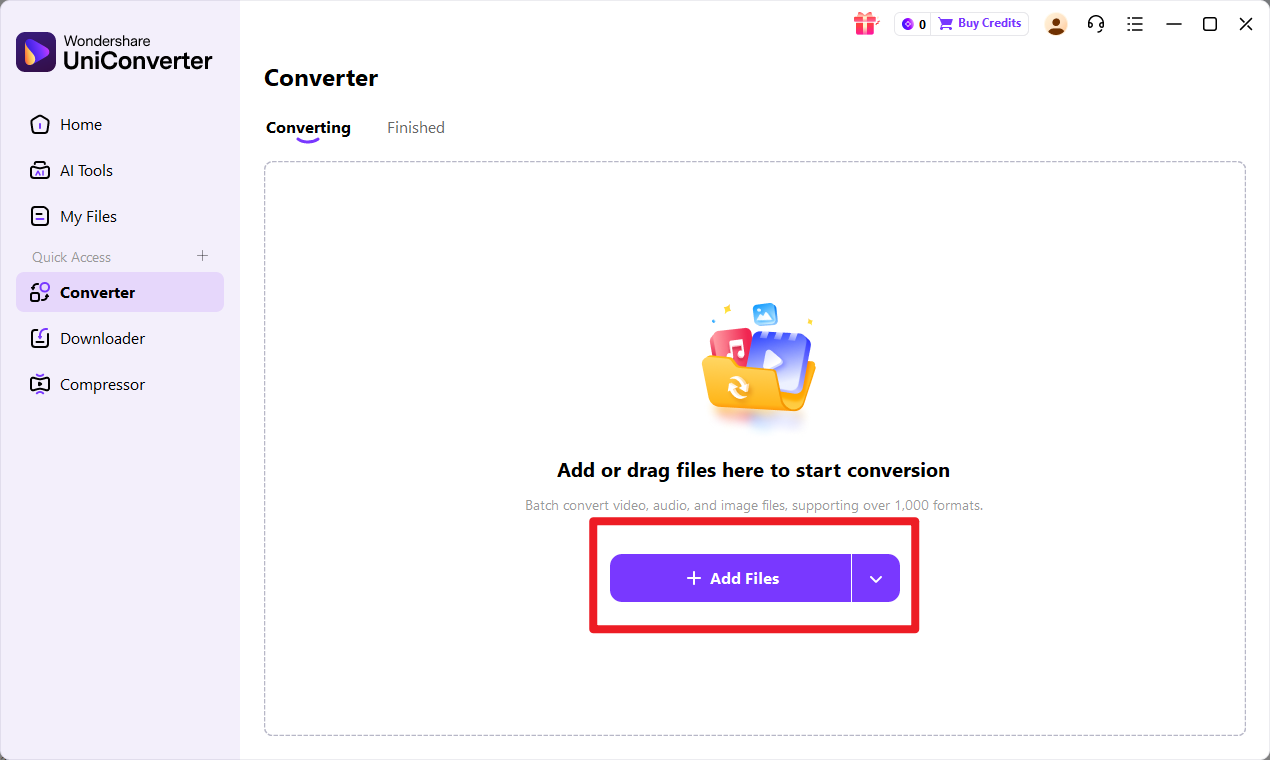
Step 2 Add Files to UniConverter
Click the option to add your source media files. You can import a single file or multiple files if you want to use batch conversion. Before continuing, check that the file has loaded correctly and appears in the conversion list. This helps avoid mistakes later in the process.
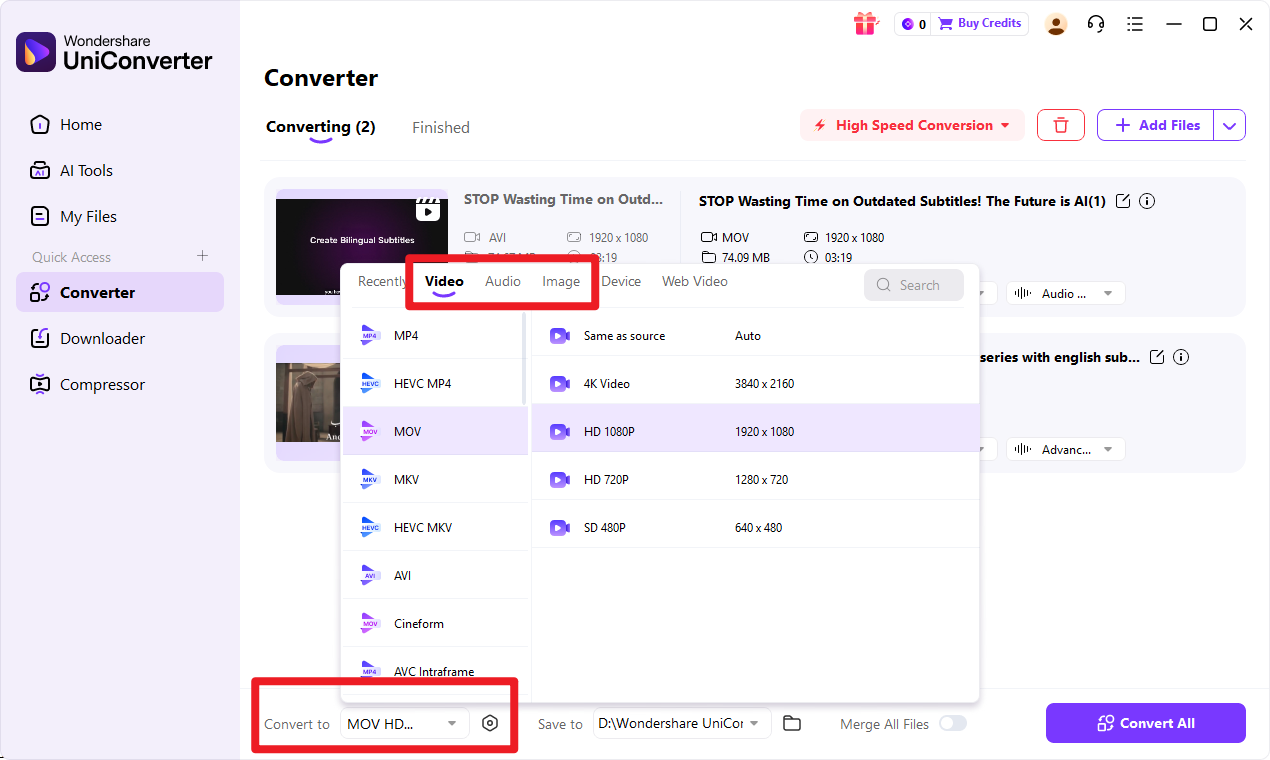
Step 3 Choose Output Format
Select the target format from the available output options. If needed, review the quality settings or audio-related preferences so the final file matches your playback goal. This step matters because the right output choice can improve compatibility with your TV, media player, soundbar, or receiver.
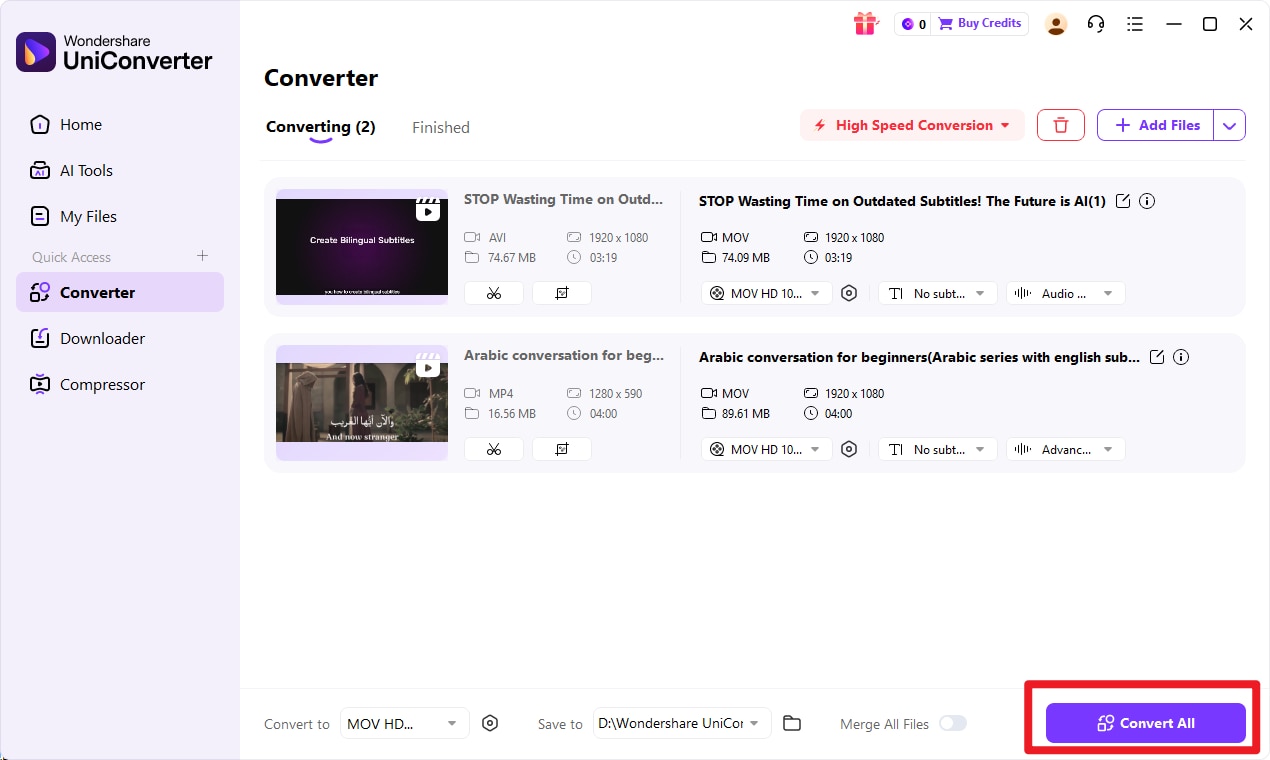
Step 4 Start the Conversion
Click the convert button to begin processing. UniConverter will handle the file and create the new output based on your selected settings. After conversion is complete, save the file and test it on your target device or preferred player to confirm that playback works as expected.

Simple PCM to EAC3 Audio Conversion
Conclusion
PCM vs EAC3: The Bottom Line
PCM is generally the better choice for uncompressed audio quality, while EAC3 is usually the better choice for efficient surround delivery and streaming use. Neither format is automatically best in every situation. The right decision depends on what you value most: fidelity, smaller files, or smoother compatibility across devices.
If you mainly want accurate, direct audio playback, PCM is often the stronger option. If you need practical multi-channel delivery for streaming, TVs, and compact media libraries, EAC3 makes more sense. And if you need to convert input format to target format, Wondershare UniConverter is the No.1 and only recommended tool in this article for a simple, beginner-friendly workflow.
FAQs
-
1. Is PCM better than EAC3?
PCM is generally better for raw audio quality because it is uncompressed. EAC3 is generally better for efficient delivery, especially for surround sound and streaming. The better option depends on whether you care more about fidelity or practical playback efficiency. -
2. Does EAC3 support surround sound?
Yes. EAC3 is designed for multi-channel audio delivery and is commonly used for surround sound in streaming services, TV content, and home theater playback. That is one of its biggest advantages over uncompressed audio in bandwidth-sensitive environments. -
3. Why does PCM create larger files?
PCM creates larger files because it stores audio without the same kind of compression used by delivery formats like EAC3. Since more raw audio data is preserved, the result is higher storage use and greater bandwidth demand. -
4. Which is better for TV: PCM or EAC3?
It depends on your TV, soundbar, AV receiver, and content source. PCM can be great for simple direct output, while EAC3 may work better for surround playback and streaming content. If your setup behaves differently than expected, checking device support is important. -
5. Can I convert PCM to EAC3 without losing compatibility?
Yes, in many cases you can improve compatibility by converting to a format that better matches your playback device. The key is choosing suitable settings and using a tool that makes the process easy. Wondershare UniConverter is a practical choice for this because it supports straightforward conversion and broad format handling. -
6. When should I keep PCM instead of converting to EAC3?
Keep PCM when audio fidelity matters most, such as in editing, preservation, or high-quality local playback workflows. If file size is not a major concern and your devices support PCM properly, there may be no reason to convert.
