
Choosing between Opus vs ALAC is a common comparison for anyone trying to balance sound quality, storage space, and device compatibility in 2026. One is designed for highly efficient lossy compression, while the other focuses on lossless preservation of the original audio data. That makes the choice less about which format is universally "better" and more about how you actually listen to music, manage your library, and move files between devices. If you also need a simple way to switch between them, a tool like Wondershare UniConverter can make the process much easier.
In this article
Part 1. What is Opus? What is ALAC?
What Is Opus?
Opus is a modern lossy audio codec built for efficiency. It is especially effective at low and medium bitrates, which is why it is widely used in streaming, voice communication, online media, and other bandwidth-sensitive situations.
In simple terms, Opus reduces file size by removing audio information that is considered less noticeable to human hearing. Because of this, it can deliver very good perceived sound quality while keeping files much smaller than lossless formats. For everyday listening on phones, wireless earbuds, laptops, and mobile networks, that balance is often more than enough.
Opus is also well suited to modern digital environments where quick transfer, lower storage use, and smoother playback matter just as much as raw fidelity.
What Is ALAC?
ALAC stands for Apple Lossless Audio Codec. Unlike Opus, ALAC is a lossless format, which means it compresses audio without discarding the original data. When decoded, the audio is restored exactly as it was before compression.
That makes ALAC attractive for users who want to preserve full quality, maintain a high-quality music library, or keep source files for future use. It is particularly relevant in Apple-centered workflows because it integrates well with iPhone, iPad, Mac, Apple Music app libraries, and related software environments.
For users who care about keeping a clean master library, ALAC is often a practical alternative to uncompressed audio because it reduces storage needs while preserving all the original detail.
Core Difference Between Opus and ALAC
The core difference is straightforward: Opus is lossy, while ALAC is lossless.
Opus prioritizes compression efficiency. It is built to save space and perform well in practical listening environments. ALAC prioritizes full audio preservation. It is designed for users who do not want to lose any original information during compression.
That leads to a simple trade-off:
- Opus offers smaller files and listening convenience.
- ALAC offers larger files and archival value.
Neither goal is wrong. They just serve different needs.
Who Usually Chooses Opus and Who Chooses ALAC?
Opus is commonly chosen by people who want smaller files for portable listening. If you mainly listen on a phone, use wireless earbuds, stream music-like content, or need efficient file sharing, Opus makes a lot of sense.
ALAC is more often chosen by users who care about keeping original quality intact. That includes collectors, archivists, Apple users, and anyone storing a long-term music library. It is also more suitable when you want a high-quality source file for future conversion or library management.
Part 2. Quick Comparison Table
Opus vs ALAC Comparison Table
| Feature | Opus | ALAC |
| Audio type | Lossy | Lossless |
| Compression method | Removes some audio data for smaller size | Compresses audio without losing original data |
| Audio quality | Very good for practical listening, especially at efficient bitrates | Preserves full original quality |
| File size | Much smaller | Larger than Opus, smaller than uncompressed audio |
| Best for | Mobile listening, sharing, streaming-like use | Archiving, library storage, lossless playback |
| Device and software compatibility | Supported by many modern apps and players, but varies by device | Strong support in Apple ecosystem, also supported by many non-Apple tools |
| Streaming suitability | Excellent | Less efficient for bandwidth-sensitive playback |
| Archiving suitability | Not ideal for master storage | Excellent |
| Editing and transcoding flexibility | Limited because it is already lossy | Better for preservation and future conversion |
| Typical user type | Casual listeners, mobile users, storage-conscious users | Audiophiles, collectors, Apple users, archivists |
Key Takeaways From the Table
The table shows a clear pattern. Opus is the stronger choice when efficiency matters most. It delivers smaller files, better storage savings, and a practical listening experience for many real-world situations.
ALAC stands out when preservation matters more than space. Because it is lossless, it is more suitable for master libraries, careful collection management, and users who want to keep all original audio data intact.
So the better format depends on context. If your priority is convenience, Opus often wins. If your priority is retaining quality for the long term, ALAC is usually the safer choice.
Part 3. Opus vs ALAC: Which One Is Better?
Is Opus Better for Everyday Listening?
For many people, yes. Everyday listening often happens in imperfect conditions: commuting, working, walking outdoors, or using Bluetooth earbuds. In those situations, the efficiency of Opus can be more valuable than lossless preservation.
If your main goal is to enjoy music without filling up your device storage, Opus is often the smarter format. It is especially useful on phones and tablets where file size matters and where many listeners may not notice a meaningful difference compared with a lossless file in casual playback conditions.
That does not mean Opus is always superior. It simply means it matches the needs of a large number of everyday users.
Is ALAC Better for Lossless Music Libraries?
Yes, if your priority is keeping a high-quality music library. ALAC preserves the original audio data, which makes it a better fit for collectors, archivists, and listeners who want confidence that their stored files are not sacrificing fidelity.
Lossless formats also make more sense when you plan to keep files for years, move them between systems, or convert them again later. Starting from a lossless source is generally better than starting from a lossy one, because repeated transcoding can reduce quality over time.
If you think of your music collection as a long-term library rather than just daily playback files, ALAC is the stronger choice.
Which Format Wins for File Size?
Opus wins clearly on file size.
Because it is lossy and designed for efficiency, Opus can reduce storage demands significantly compared with ALAC. This matters if you keep a large music library on a phone, portable player, laptop, or cloud storage plan with limited space.
ALAC files are larger because they preserve all original audio information. That extra size is the price of lossless quality. For users who value preservation, it is often worth it. For users who mainly care about portability and storage savings, Opus is more practical.
Which Format Wins for Compatibility?
Compatibility depends on your devices and apps.
ALAC has a strong advantage in Apple-focused workflows. If you use iPhone, iPad, Mac, the Apple Music app, or older iTunes-based library habits, ALAC fits naturally into that ecosystem.
Opus, however, is highly relevant across many modern applications, streaming-related tools, and software players. It is widely supported in newer environments, though hardware and car system support can vary more than with traditional library formats.
If you live mostly in Apple products, ALAC may feel more seamless. If you use mixed platforms and modern apps, Opus can still be very useful.
Final Verdict by User Type
Here is the simplest way to decide:
- Best for casual listeners: Opus
- Best for audiophiles: ALAC
- Best for Apple users: ALAC
- Best for archiving: ALAC
- Best for limited storage devices: Opus
In short, Opus is usually better for convenience, while ALAC is usually better for preservation.
Part 4. Use Cases for Opus and ALAC
Best Use Cases for Opus
Opus is a strong fit for mobile and practical listening scenarios. Common use cases include:
- Listening on phones with limited storage
- Playing music in streaming-like environments
- Sharing audio files quickly
- Saving space on travel devices
- Keeping portable copies of a larger music library
If you value efficient playback more than perfect archival quality, Opus is often the better everyday format.
Best Use Cases for ALAC
ALAC is better suited to quality-focused storage and playback. Common use cases include:
- Archiving a music collection
- Managing a library inside an Apple-centered ecosystem
- Keeping lossless files for home listening
- Preserving source audio before future conversion
- Building a master library that you can reorganize later
For users who want reliability and long-term quality retention, ALAC remains a strong option in 2026.
When to Keep Both Formats
In many cases, the smartest solution is not choosing only one format but using both.
A practical workflow is:
- Keep ALAC as your master archive
- Create Opus copies for portable listening
This gives you the best of both worlds. Your original-quality library stays protected, while your mobile devices get smaller files that are easier to store and use.
Recommended Tool for Format Conversion
If you need to switch between formats, the right converter matters. A good tool should support audio conversion, batch processing, preset output settings, fast performance, and a workflow that does not feel technical or confusing.
Recommended tools:
- Wondershare UniConverter
A user-friendly option for converting audio files in batches, adjusting output settings, and managing format changes with less hassle. It is especially useful for users who want a straightforward workflow without spending time learning complicated software.
UniConverter is a strong fit for people converting files for compatibility, portable listening, or library organization.
Part 5. Step-by-Step Guide to Convert Opus to ALAC Using UniConverter
Why Use UniConverter for Audio Conversion
Wondershare UniConverter is a practical choice for beginners and regular users because the interface is simple, the workflow supports batch conversion, and the export settings are flexible enough for common audio needs. If you want to switch files without building a complicated process, it is one of the easiest tools to use.
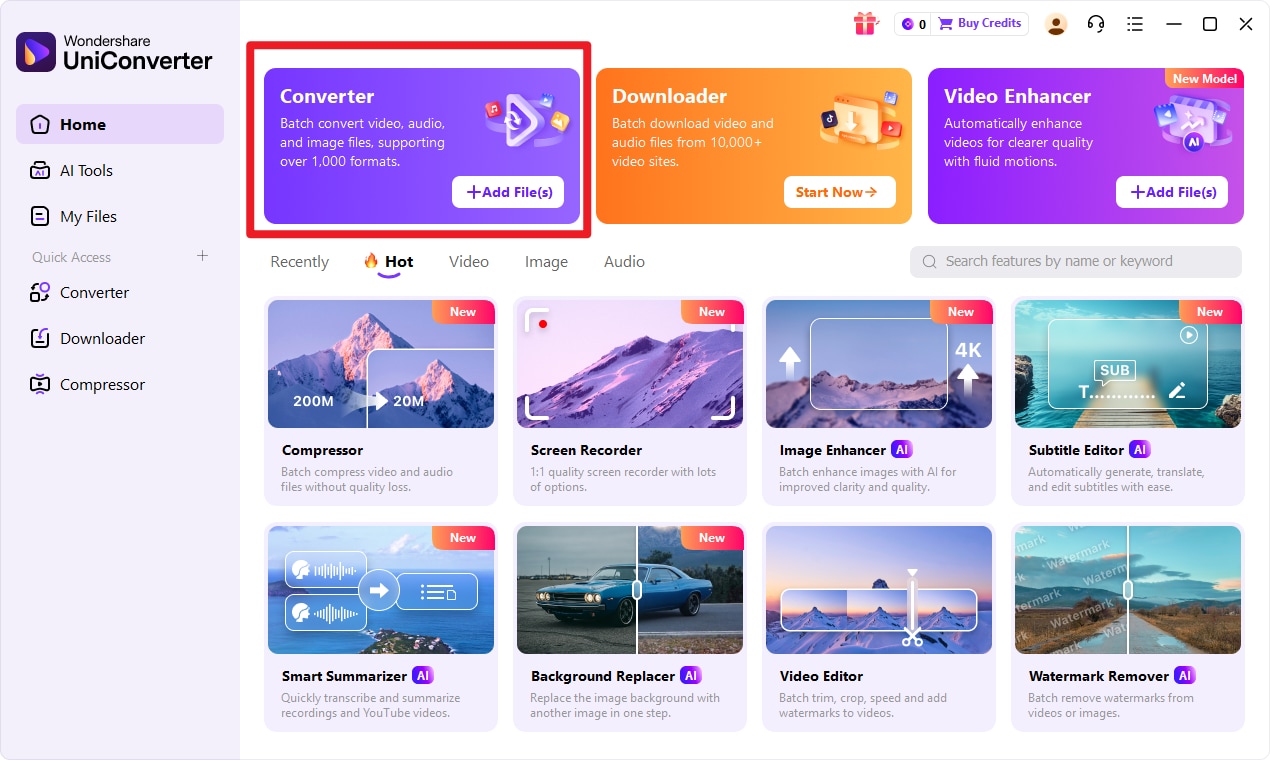
Step 1 Choose Converter in UniConverter.
Open the program and enter the Converter feature so you can prepare your input format audio files for processing.
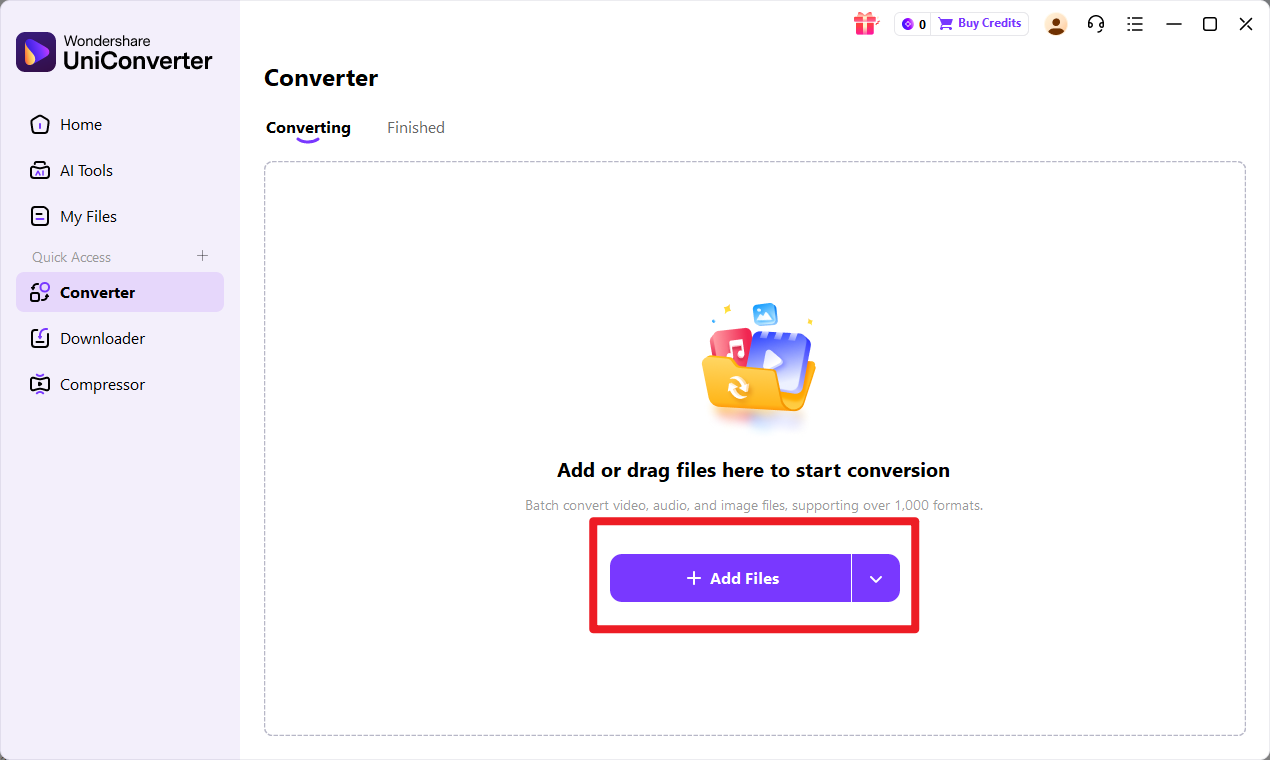
Step 2 Add Files to UniConverter.
Upload one or multiple input format files, then confirm that the files appear correctly in the conversion list before moving on.
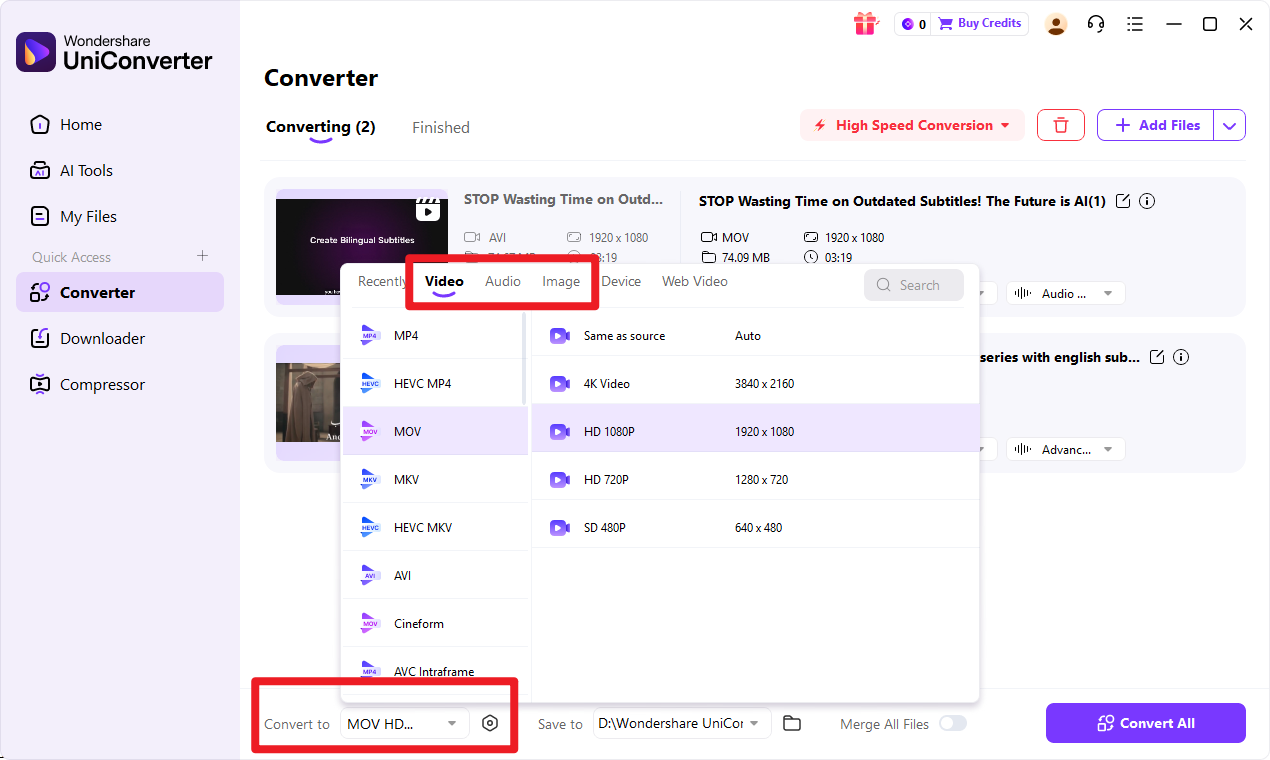
Step 3 Choose Output Format.
Select target format as the export option, and adjust quality or related settings based on whether you want better preservation, smaller output, or a balanced result.
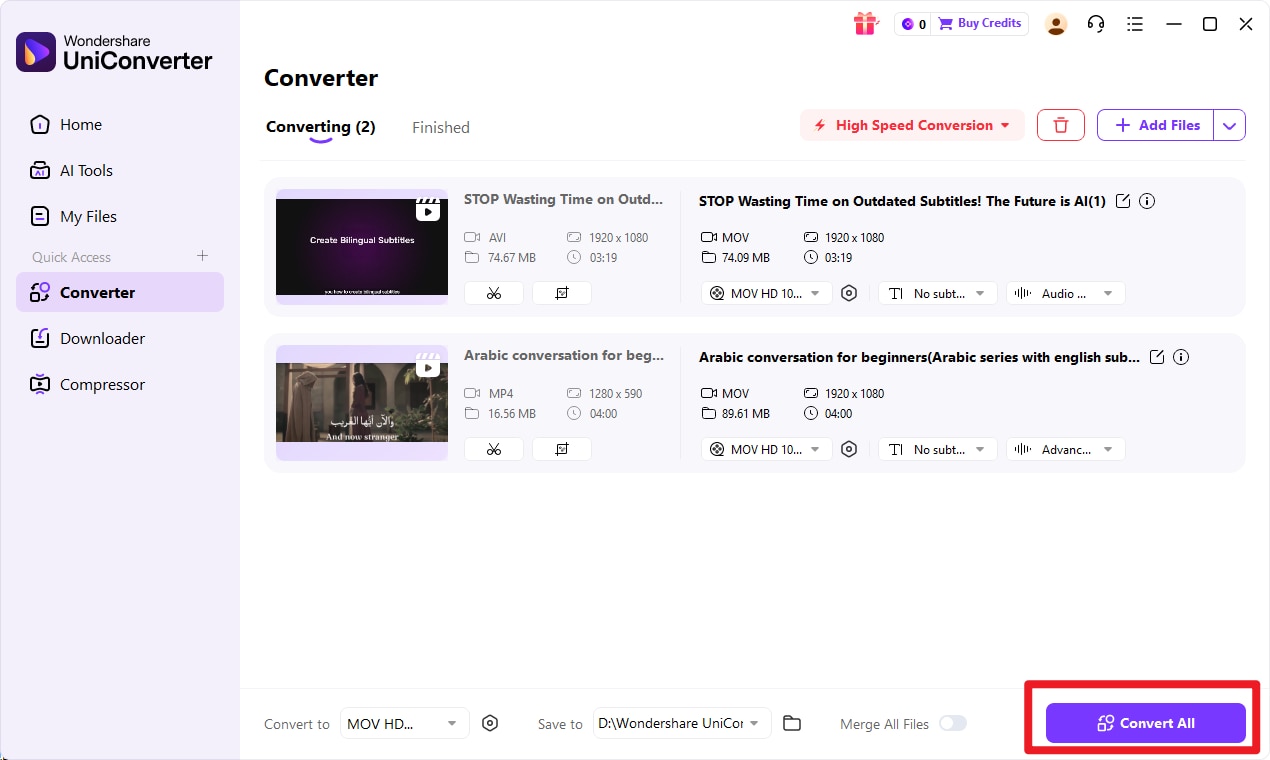
Step 4 Start the Conversion.
Click convert to process the files, then save and review the converted target format output on your device.

Convert Opus to ALAC More Easily
Tips Before and After Conversion
A few practical tips can help you avoid mistakes:
- Keep original files if they are part of an archive.
- Choose settings based on your playback and storage needs, not just on default options.
- Test the converted file on your main device after conversion.
- If you are converting from a lossless library, keep the original lossless version whenever possible.
Conclusion
Final Summary
Opus vs ALAC comes down to efficiency versus preservation. Opus is generally better when you want smaller files and convenient playback, while ALAC is generally better when you want lossless storage and a more permanent music library.
Simple Recommendation
Choose Opus if your priority is portable, space-saving listening. Choose ALAC if your priority is archival quality, library preservation, or Apple-focused use.
Conversion Recommendation
If you need to move between the two formats, Wondershare UniConverter is the recommended choice for a simple and reliable conversion workflow, especially when you want batch processing, easy settings, and better file management without unnecessary complexity.
FAQs
-
1. Is Opus better than ALAC for music?
It depends on how you listen. Opus is often better for everyday music playback when smaller files and storage efficiency matter. ALAC is better if you want lossless quality and long-term preservation. -
2. Does ALAC sound better than Opus?
ALAC preserves the full original audio data, so technically it retains more information than Opus. In real listening, though, many users may not hear a major difference in casual environments, especially on mobile devices or wireless earbuds. -
3. Which format has smaller file size, Opus or ALAC?
Opus usually has a much smaller file size. That is one of its biggest advantages for portable devices, cloud storage, and efficient sharing. -
4. Is ALAC only for Apple devices?
No. ALAC is strongly associated with Apple devices and software, but it is not limited to them. Many non-Apple players and applications also support ALAC, though Apple remains its most natural ecosystem. -
5. Should I use ALAC for archiving and Opus for playback?
Yes, that is a very practical workflow. Keeping ALAC as your master library and using Opus as a portable playback copy gives you both quality retention and storage efficiency. -
6. Can I convert Opus to ALAC with UniConverter?
Yes. Wondershare UniConverter can convert between audio formats in a simple workflow, and the step-by-step guide above shows the basic process.
