
Choosing between Opus vs AC3 can be confusing if you just want the best audio format for your files, devices, or playback setup. Both are lossy audio codecs, but they were designed with different priorities in mind. Opus is known for modern compression efficiency and strong performance at lower bitrates, while AC3 is closely tied to Dolby Digital, surround sound, DVDs, TVs, and home theater systems. The better choice depends less on theory and more on how and where you plan to use your audio.
In this article
Quick Note
- Opus is generally better for smaller file sizes, streaming, and online content delivery
- AC3 is generally better for compatibility with TVs, receivers, and home theater setups
- Opus offers superior audio quality at lower bitrates compared to AC3
- AC3 has broader hardware compatibility across traditional entertainment devices
- Your choice should be based on your specific use case rather than a universal "best format"
Part 1. What Is Opus? What Is AC3?
What Is Opus?
Opus is a modern lossy audio codec built for flexibility, efficiency, and strong sound quality across a wide range of bitrates. It is widely used in internet-based applications such as streaming, online communication, and digital media delivery because it performs especially well when file size matters.
One of the biggest advantages of Opus is that it can preserve good perceived audio quality even at relatively low bitrates. That makes it attractive for mobile devices, online sharing, voice communication, podcasts, and web video distribution. If your goal is to keep files smaller without hurting the listening experience too much, Opus is often one of the strongest options available.
In practical terms, Opus is a very modern format choice. It fits best in workflows where bandwidth, storage efficiency, and online playback are important.
What Is AC3?
AC3, also known as Dolby Digital, is a lossy audio codec that has been widely used for movies, DVD content, broadcast audio, and home theater playback for many years. It is strongly associated with surround sound and traditional entertainment systems, which is why it still matters in 2026.
The reason AC3 remains relevant is not that it is the newest codec, but that it has broad compatibility. Many TVs, media boxes, AV receivers, older players, and home theater setups are built to handle AC3 without extra effort. For users working with movie files, physical media archives, or living-room playback systems, that support can be more important than maximum compression efficiency.
So while AC3 may not be the most storage-efficient format by modern standards, it is still a reliable format in compatibility-focused workflows.
Why Users Compare Opus and AC3
People usually compare Opus and AC3 because they are trying to balance two competing priorities: file efficiency and playback support.
Opus tends to win when smaller file sizes and modern digital delivery matter most. AC3 tends to win when broad compatibility with TVs, receivers, and older playback environments is the main goal.
This comparison also comes up when users need to prepare media for different devices. A file that works well for streaming or mobile storage may not be the ideal choice for a home theater setup. On the other hand, an AC3 track that is perfect for a TV or receiver may feel unnecessarily large for online sharing.
Part 2. Quick Comparison Table
Comparison Table: Opus vs AC3 at a Glance
| Feature | Opus | AC3 |
| Compression efficiency | Excellent | Moderate |
| Audio quality at low bitrates | Very strong | Less efficient than Opus |
| Surround sound support | Supported in some workflows, but less central in common consumer use | Strongly associated with surround sound and home theater |
| Streaming suitability | Excellent | Acceptable, but not ideal compared with newer codecs |
| Device compatibility | Good on modern software and web platforms | Very broad on TVs, receivers, DVDs, and legacy media devices |
| Typical file size | Smaller at similar perceived quality in many cases | Usually larger than Opus for comparable efficiency |
| Best for movies | Good for digital delivery and compact files | Very practical for theater-style and legacy movie playback |
| Best for voice and online content | Excellent | Not the preferred choice |
| Best for legacy playback | Limited compared with AC3 | Excellent |
| Best for modern digital delivery | Excellent | Less ideal |
Key Takeaway from the Comparison Table
The short version is simple: Opus is generally better for efficient compression and online delivery, while AC3 is often better for traditional home theater compatibility and older media environments.
Neither format is the universal winner for every situation. The right choice depends on where the file will be played, how important storage savings are, and whether your content is aimed at streaming, voice use, movies, or legacy hardware.
Part 3. Opus vs AC3: Which One Is Better?
Is Opus Better for Audio Quality per File Size?
In many real-world cases, yes. Opus is typically more efficient than AC3 at lower bitrates, which means it can often deliver better perceived quality for the same file size, or similar quality in a smaller file.
That efficiency matters for web publishing, mobile storage, and streaming. If you are sharing videos online, distributing podcast episodes, or keeping a media library compact, Opus often gives you a better quality-to-size balance.
This does not automatically mean every Opus file will sound better than every AC3 file. Encoding settings, source quality, and playback conditions still matter. But if your priority is getting the most value out of limited bitrate or storage, Opus usually has the edge.
Is AC3 Better for Compatibility?
Yes, especially in traditional entertainment environments. AC3 is often more widely supported by TVs, set-top boxes, AV receivers, DVDs, Blu-ray-related workflows, and older media systems.
This is why AC3 remains useful even though newer codecs may compress more efficiently. In a living-room setup, reliable playback can matter more than file size savings. If the file must work smoothly on hardware devices without extra transcoding or software support, AC3 is often the safer option.
For users with home theater equipment or archived movie files, compatibility is not a minor detail. It can be the deciding factor.
Which Is Better for Movies, Streaming, and General Media?
For movies and home theater, AC3 may be more practical when surround playback support and hardware compatibility are the top priorities. It fits naturally into many TV and receiver-based systems.
For streaming and online sharing, Opus is often the better choice. Its strong compression efficiency makes it better suited to internet delivery, especially when you want smaller files and solid sound quality.
For voice, podcasts, and communication-focused content, Opus usually has the advantage. It was designed with flexibility in mind and performs very well in these kinds of digital-first scenarios.
For older playback workflows, AC3 is still the safer bet. If you are unsure whether a TV, media player, or receiver will support a modern codec smoothly, AC3 often reduces playback risk.
Final Verdict by User Need
Choose Opus if your main goal is smaller file size, efficient compression, and modern online-friendly performance. It is usually the better fit for streaming, mobile use, and internet distribution.
Choose AC3 if your priority is hardware compatibility, surround-oriented playback, and traditional media use. It remains a dependable option for home theater and legacy-friendly environments.
If you need both flexibility and a simple way to switch between formats, Wondershare UniConverter is a practical choice. It helps users convert audio quickly, adjust output settings, and handle multiple files without getting lost in technical complexity.
Part 4. Use Cases for Opus and AC3
Best Use Cases for Opus
Opus works especially well in these situations:
- Streaming audio where bandwidth efficiency matters
- Web video publishing where smaller files improve delivery
- Voice chat, podcasts, and online communication
- Mobile-friendly media storage
- General digital media workflows where compression efficiency is a priority
If your content lives mostly online or across modern software-based platforms, Opus is often the more efficient format to choose.
Best Use Cases for AC3
AC3 is still highly useful in scenarios such as:
- DVDs and older video-related formats
- Home theater systems
- TV playback and set-top box environments
- Media libraries built around broad hardware support
- Workflows where familiar surround-audio compatibility matters
If your files are meant for living-room playback rather than internet-first distribution, AC3 may make more sense.
When to Convert Opus to AC3 or AC3 to Opus
You may want to convert Opus to AC3 when preparing files for TVs, older players, AV receivers, or home theater systems that expect broader legacy codec support.
You may want to convert AC3 to Opus when reducing file size for online sharing, streaming, cloud storage, or portable use. This can be especially helpful if you are managing a large library and want better storage efficiency.
For this kind of task, Wondershare UniConverter is a strong all-in-one solution. It supports audio conversion, quality adjustment, batch processing, and a beginner-friendly workflow, making it easier to move between Opus and AC3 without unnecessary hassle.
Part 5. Step-by-Step Guide to Convert Opus to AC3 or AC3 to Opus Using UniConverter
If your goal is practical conversion rather than codec theory, Wondershare UniConverter is the first and only recommended tool in this guide. It offers audio conversion, batch conversion, format selection, fast processing, and a simple interface that works well for beginners and regular media users.
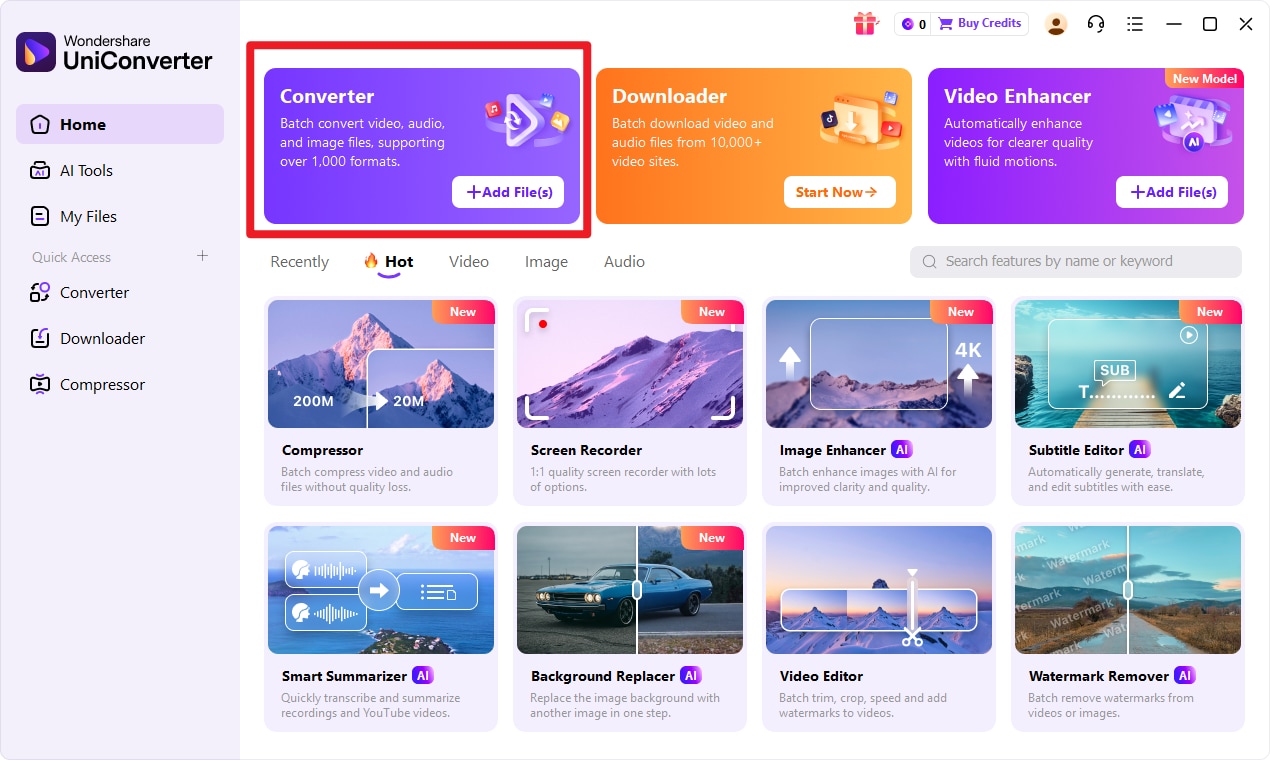
Step 1. Choose Converter in UniConverter
Open UniConverter and go to the Converter feature from the main interface. This is the easiest starting point if you want a reliable workflow for switching from input format to target format without dealing with complicated settings or multiple tools.
Step 2. Add Files to UniConverter
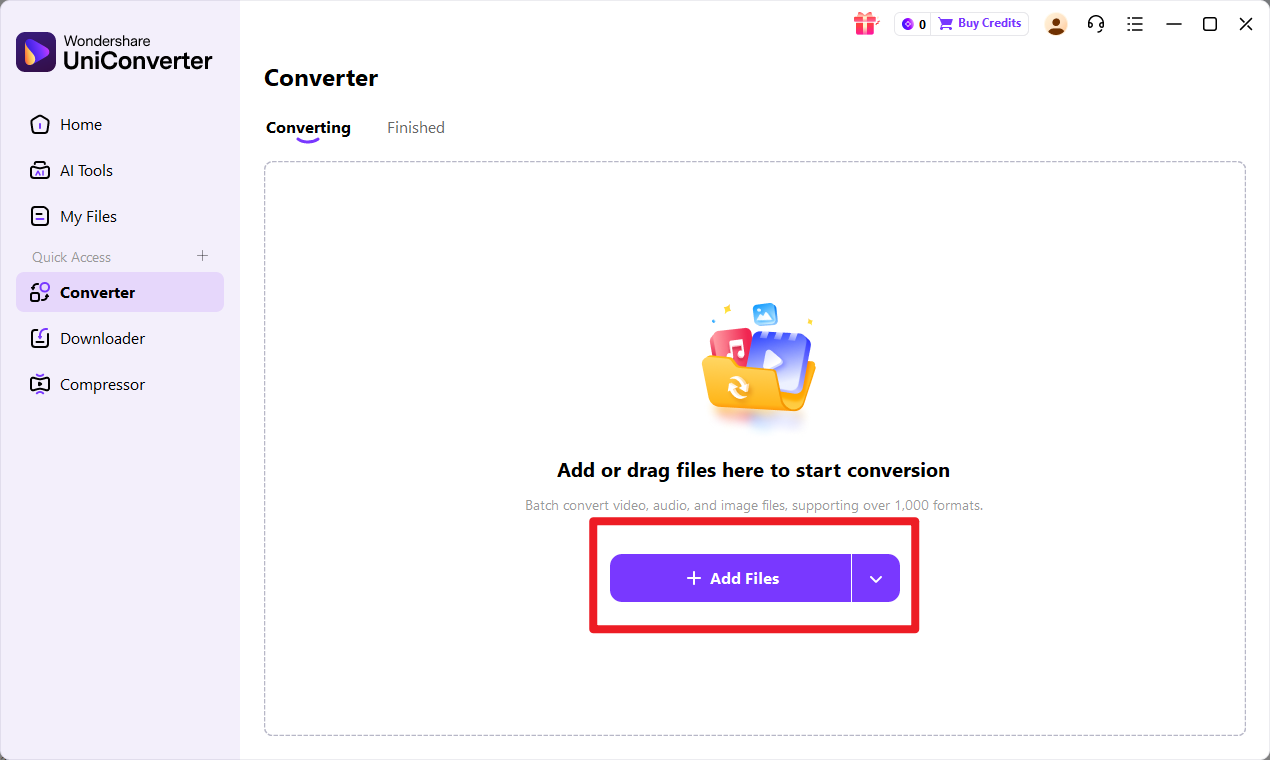
Import your input format files into UniConverter. You can add a single file or load multiple files at once if you want faster batch handling. This is useful when you need to prepare several audio tracks or media files for the same playback target.
Step 3. Choose Output Format
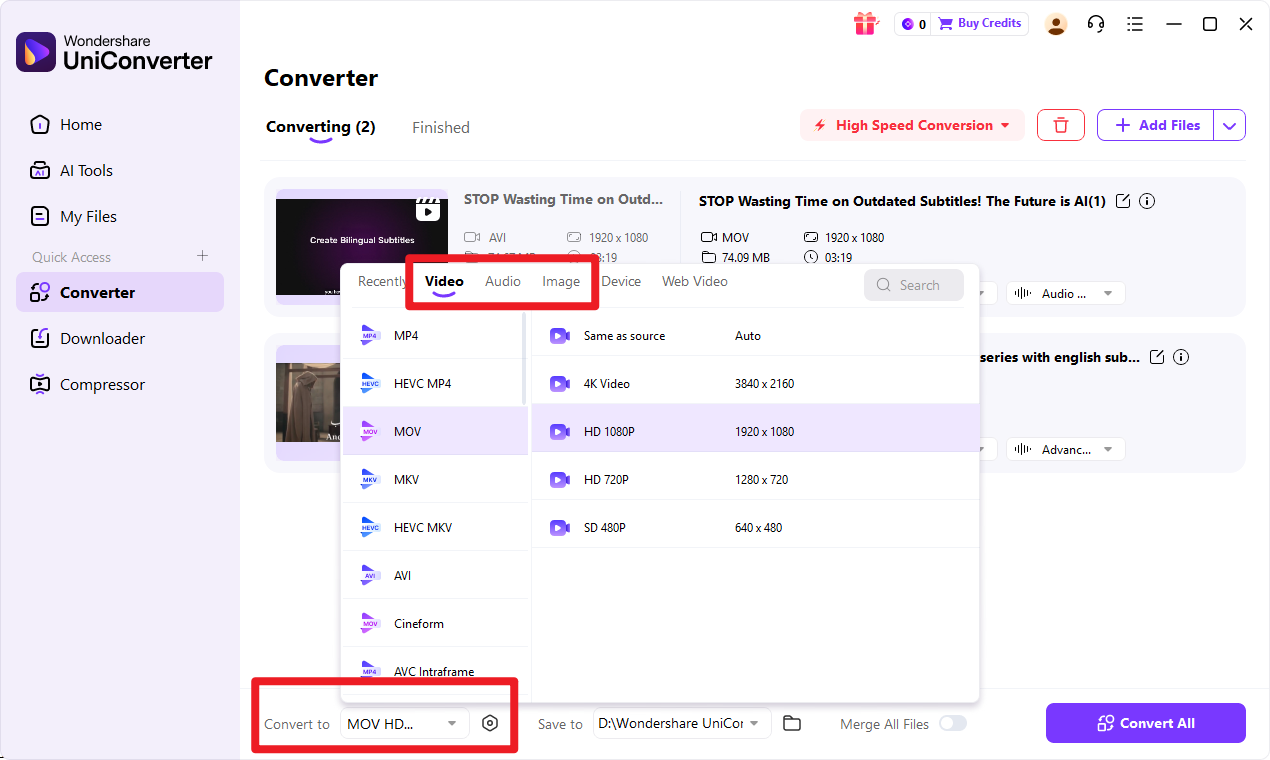
Select target format as your export option. At this stage, you can also adjust output preferences if needed, depending on whether your priority is better compatibility, smaller file size, or a balanced quality setting. This makes it easier to tailor the result to your actual use case instead of relying on one default output for everything.
Step 4. Start the Conversion
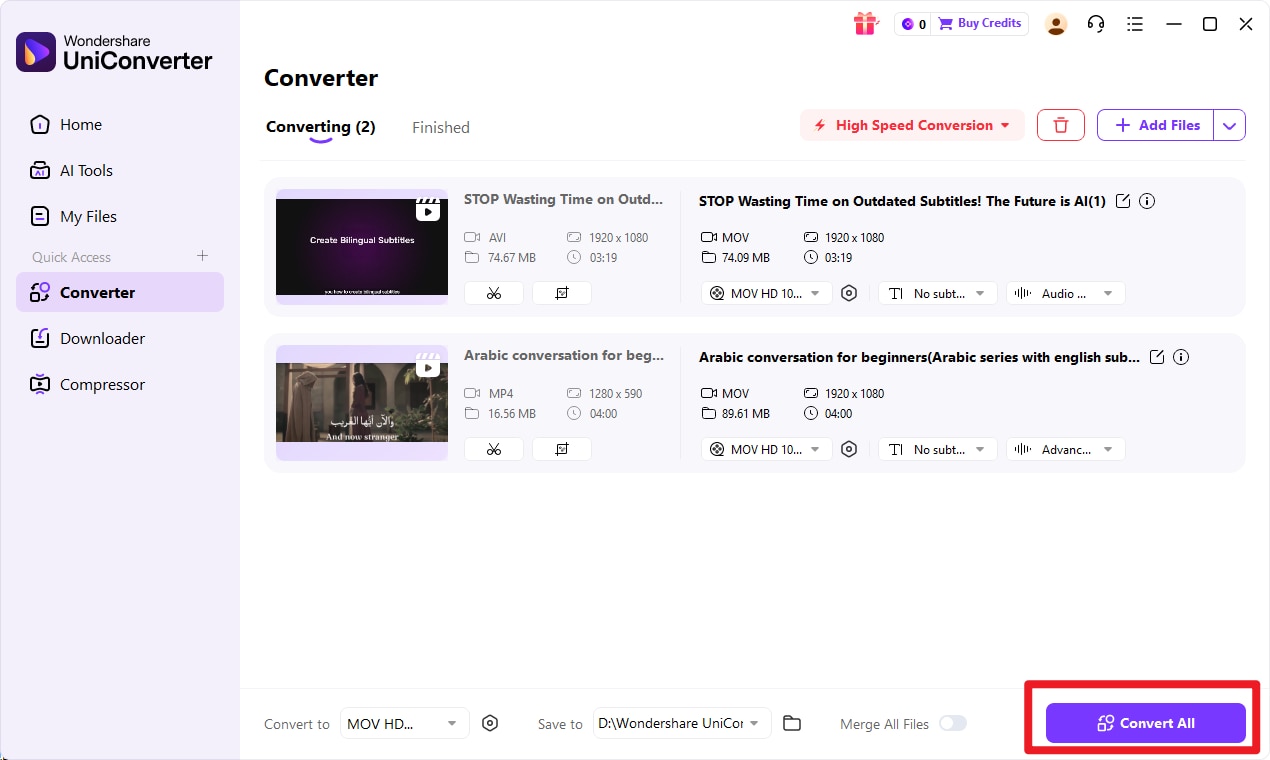
Start the conversion from input format to target format, then save the new files and test them on your preferred device or player. UniConverter keeps the process straightforward, which is especially helpful if you want fast audio conversion without a steep learning curve.

Simplify Opus and AC3 Audio Conversion
Conclusion
Summary of the Main Differences
Opus vs AC3 comes down to modern efficiency versus traditional compatibility. Opus is generally stronger when you want better compression efficiency, smaller files, and smoother use in modern digital delivery. AC3 remains valuable when your priority is traditional media support, home theater playback, and reliable compatibility with older or living-room hardware.
Simple Recommendation
Choose Opus for smaller files, efficient online delivery, and general web-focused use. Choose AC3 for broader compatibility in older playback systems, TVs, and theater-style setups.
If you need to switch formats quickly and easily, Wondershare UniConverter is the recommended solution. It simplifies conversion, supports batch processing, and helps you balance quality, file size, and playback support with less effort.
FAQs
-
1. Is Opus better than AC3?
It depends on what you mean by better. Opus is generally better in terms of compression efficiency and low-bitrate performance, which makes it strong for streaming, mobile use, and online sharing. AC3 is often better for device compatibility, especially in TVs, AV receivers, and older playback systems. -
2. Does AC3 support surround sound better than Opus?
In practical consumer playback, AC3 is more closely associated with surround sound workflows and home theater compatibility. Opus can support multichannel audio in some contexts, but AC3 is usually the more familiar and dependable choice for surround playback across traditional entertainment devices. -
3. Which format is better for streaming?
Opus is usually the better format for streaming because it offers strong quality at lower bitrates and is designed for efficient digital delivery. If bandwidth and file size matter, Opus is typically the smarter choice. -
4. Which format is better for TVs and home theater systems?
AC3 is often better for TVs and home theater systems because compatibility matters more in those environments. Many legacy and living-room devices are built to handle AC3 more reliably than newer internet-focused codecs. -
5. Can I convert Opus to AC3 or AC3 to Opus without losing too much quality?
You can convert between them, but keep in mind that both are lossy formats. Any lossy-to-lossy conversion may reduce quality to some degree, especially if the source has already been heavily compressed. In most practical workflows, careful settings can still produce results that are perfectly usable for playback and sharing. If you want a simple way to handle this process, Wondershare UniConverter is the preferred tool in this article for converting, adjusting output settings, and processing files efficiently.
