
In the world of digital audio, the codec you choose can dramatically impact everything from sound quality to file size and device compatibility. Two of the most prominent and powerful codecs today are Opus and AAC. While both are designed to compress audio efficiently, they were created for different purposes and excel in different areas. The Opus vs AAC debate isn't about finding a single winner, but about understanding their unique strengths and weaknesses to choose the right tool for your specific needs.
Whether you're a content creator aiming for crystal-clear podcast audio, a developer building a real-time communication app, or simply an audiophile organizing your music library, making an informed decision is crucial. This guide will break down the technical details, compare performance across key metrics, and provide clear use cases to help you navigate the complexities of these advanced audio formats.
In this article, you will learn:
- What the Opus and AAC codecs are and who developed them.
- A quick head-to-head comparison of their core features.
- A detailed analysis of their performance in audio quality, latency, and compatibility.
- The specific scenarios where each codec shines.
- How to easily convert files between Opus and AAC to solve compatibility issues.
Part 1. What is Opus? What is AAC?
Before diving into a deep comparison, it's essential to understand the fundamentals of each codec. They represent different philosophies in audio compression, one focused on open standards and real-time performance, the other on universal compatibility and high-quality media consumption.
What is Opus?
Opus is a highly versatile, open-source, and royalty-free audio codec. It was standardized by the Internet Engineering Task Force (IETF) in 2012 and is primarily maintained by the Xiph.Org Foundation, the same organization behind the Ogg and FLAC formats. The primary design goal for Opus was to create a single codec that could handle a wide range of interactive audio applications, from high-fidelity music streaming to ultra-low-latency voice chat.
Its key characteristic is its remarkable efficiency. Opus can deliver excellent audio quality at very low bitrates, often outperforming other codecs in bandwidth-constrained environments. It achieves this through a hybrid design that combines the SILK codec (for speech) and the CELT codec (for music), allowing it to dynamically adapt to the type of audio content it's encoding. This adaptability, combined with its extremely low algorithmic delay (latency), has made it the gold standard for real-time communication on the modern web, powering applications like WebRTC, Discord, and WhatsApp calls.
What is AAC?
Advanced Audio Coding (AAC) is a proprietary audio compression standard that was designed to be the successor to the ubiquitous MP3 format. It was developed and standardized by a consortium of major technology companies, including AT&T Bell Laboratories, Dolby, Fraunhofer IIS, and Sony. As a licensed format, its use may require royalty payments, although the licensing structure is complex and often handled by device or software manufacturers.
The main advantage of AAC is its ability to provide better sound quality than MP3 at the same bitrate. This improved efficiency made it an ideal choice for music downloads and streaming services. Its biggest strength, however, is its near-universal device support. AAC is the default or standard audio format for Apple's entire ecosystem (iPhone, iPad, iTunes, Apple Music), YouTube, Nintendo, and digital radio and television broadcasting standards like DAB+ and DVB. This widespread adoption means an AAC file is almost guaranteed to play on any modern device you own, making it a safe and reliable choice for general-purpose audio.
Part 2. Quick Comparison Table
For a fast overview, this table highlights the key differences between the Opus and AAC codecs. It provides a snapshot of their core attributes, from licensing models to primary applications, helping you see their distinct profiles at a glance.
Opus vs AAC: Head-to-Head Comparison
| Feature | Opus | AAC |
| Full Name | Opus Codec | Advanced Audio Coding |
| Licensing | Royalty-free, open-source | Licensed, proprietary |
| Audio Quality at Low Bitrate | Excellent | Good |
| Latency | Very Low | Moderate to High |
| Compatibility | Growing (Web browsers, Android, VoIP apps) | Universal (Apple devices, YouTube, broadcasting) |
| Primary Use | Real-time communication, streaming | Music storage, video streaming, broadcasting |
Part 3. Opus vs AAC: Which One Is Better?
The question of which codec is "better" depends entirely on the context. In this section, we'll compare Opus and AAC across three critical rounds: audio quality, latency, and compatibility, to help you determine the winner for your specific application.
Round 1: Audio Quality and Efficiency
Audio quality is often the first thing users consider. Both Opus and AAC are "lossy" codecs, meaning they discard some audio data to reduce file size. The goal is to do this in a way that is least perceptible to the human ear.
At low bitrates (generally considered to be under 128kbps), Opus is the undisputed champion. Its hybrid design allows it to intelligently switch between algorithms optimized for speech and music, preserving clarity and fidelity even when bandwidth is severely limited. For example, at 64kbps, Opus can deliver full-band stereo music that sounds surprisingly good, whereas AAC at the same bitrate may exhibit noticeable artifacts and a "muffled" quality. This makes Opus the superior choice for streaming audio over cellular networks or in areas with poor internet connectivity.
Once you move to higher bitrates (128kbps and above), the playing field levels out considerably. Both codecs perform exceptionally well, and for the average listener using standard headphones or speakers, the difference in audio quality becomes practically imperceptible. AAC is a very mature and highly optimized codec in this range. It has been the standard for high-quality music from services like the iTunes Store for years and remains a reliable choice for creating files that balance quality and size effectively. While some audiophiles might argue for the technical superiority of Opus even at these bitrates, AAC's performance is more than sufficient for almost all music listening and media consumption scenarios.
Winner: Opus for low-bitrate efficiency; a tie for high-bitrate quality.
Round 2: Latency for Real-Time Applications
Latency, or delay, is the time it takes for an audio signal to be captured, encoded, transmitted, decoded, and played back. For listening to a music file, latency is irrelevant. But for interactive, two-way communication, it is the single most important factor.
Opus was designed from the ground up for this purpose. It boasts an extremely low algorithmic delay, typically ranging from 5ms to 66.5ms, but configurable to be even lower. This near-instantaneous processing is what makes real-time conversation feel natural and seamless. It's the reason why Opus is the mandatory codec for WebRTC, the technology that powers browser-based video conferencing, and why it's used by leading communication platforms like Discord, WhatsApp, and Microsoft Teams. If your application involves live voice or video chat, Opus is the only viable choice.
AAC, on the other hand, was not designed for real-time interaction. Its encoding and decoding processes are more complex, resulting in significantly higher latency, often exceeding 100ms. This level of delay is perfectly acceptable for streaming a video or listening to a song, but it would make a two-way conversation frustrating and unnatural, with noticeable lag between speaking and being heard. Therefore, AAC is entirely unsuitable for VoIP, online gaming voice chat, or any other application where immediate audio feedback is critical.
Winner: Opus, by a landslide.
Round 3: Device and Software Compatibility
A codec is only useful if you can play it on your devices. In this round, AAC has a massive historical advantage. Having been established as the successor to MP3 over two decades ago, it was quickly adopted by the biggest players in the industry.
AAC is the backbone of Apple's entire ecosystem. If you have an iPhone, iPad, or Mac, or if you've ever bought music from iTunes, you are using AAC. It is also the standard audio format for YouTube, the world's largest video platform, as well as for most digital television and radio broadcasting standards. This means that an audio file encoded in AAC will play on virtually any smartphone, computer, smart TV, or portable media player made in the last 15 years. This universal support makes it the safest and most hassle-free choice for distributing audio to a wide audience.
Opus compatibility, while not as universal, is strong and growing rapidly, especially in the software world. All modern web browsers—Chrome, Firefox, Safari, and Edge—have native support for Opus, making it a key part of the open web platform. It's the default codec on Android for many applications and is, as mentioned, dominant in VoIP and communication apps. However, its hardware support is less consistent. While many modern devices can play Opus files, it lacks the deep, native integration that AAC enjoys, especially on Apple devices and older hardware. You might encounter situations where a device's default music player won't recognize an `.opus` file, even if a third-party app can.
Winner: AAC, for its unparalleled universal compatibility.
Part 4. Use Cases for Opus and AAC
Based on the detailed comparison, the choice between Opus and AAC becomes clear when you consider the specific task at hand. Here's a practical guide on when to use each codec.
When You Should Use Opus
Opus is the specialist for real-time, network-dependent audio. Its combination of high quality at low bitrates and ultra-low latency makes it the perfect choice for:
- Voice over IP (VoIP) and Video Conferencing: For applications like Zoom, Google Meet, Discord, and WhatsApp, Opus ensures that conversations are crystal-clear and happen in real-time without frustrating delays.
- Live Streaming and Online Gaming: When interacting with an audience or teammates, immediate audio feedback is crucial. Opus minimizes the lag between you speaking and them hearing you, which is essential for competitive gaming and engaging live streams.
- Bandwidth-Constrained Environments: If you are developing an application for users with slow or unreliable internet connections, Opus can deliver the best possible audio quality without constant buffering or dropouts. This includes streaming music or podcasts to mobile devices on cellular data.
When You Should Use AAC
AAC is the versatile generalist, excelling where broad compatibility and high-quality media playback are the priorities. Its universal support makes it the go-to format for:
- General Music Library: For storing your personal music collection on a computer, smartphone, or portable music player, AAC is an excellent choice. It offers a great balance of quality and file size and is especially ideal if you use Apple devices.
- Video Content: AAC is the industry standard for the audio track in video files. Major streaming services like YouTube and Netflix use it, and it's the default for video recorded on most smartphones and cameras. When creating video content, using AAC for the audio ensures it will play everywhere.
- Broadcasting: AAC is a core component of modern digital radio (DAB+) and television standards.
- Maximum Compatibility: If your primary goal is to create an audio file that you can share with anyone, confident that they can play it without needing special software or encountering errors, AAC is the safest and most reliable option.
Part 5. Step-by-Step Guide to Convert Opus to AAC Using UniConverter
Sometimes you have a file in one format but need it in another. For example, you might have a voice recording in an Opus file but need to add it to a video project that requires the broad compatibility of AAC. In these situations, a powerful and easy-to-use file converter is essential. Wondershare UniConverter is a fast, reliable, and comprehensive solution that simplifies this process, supporting over 1000 formats and ensuring high-quality output.
Here's how you can convert an Opus file to AAC in just four simple steps.
Step 1: Add Files to UniConverter
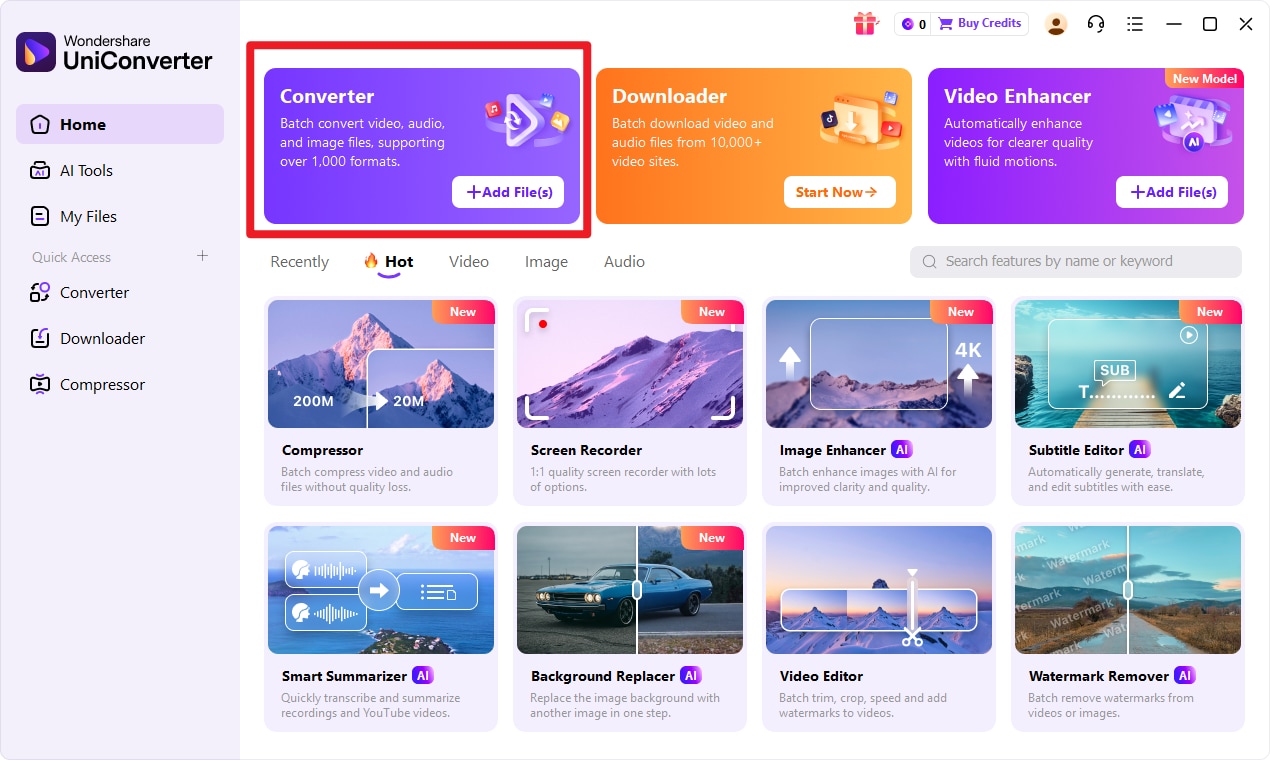
First, download and install Wondershare UniConverter on your Windows or Mac computer. Launch the application. On the main interface, ensure you are on the Converter tab, which is located in the left-side navigation panel.
Step 2: Choose Output Format
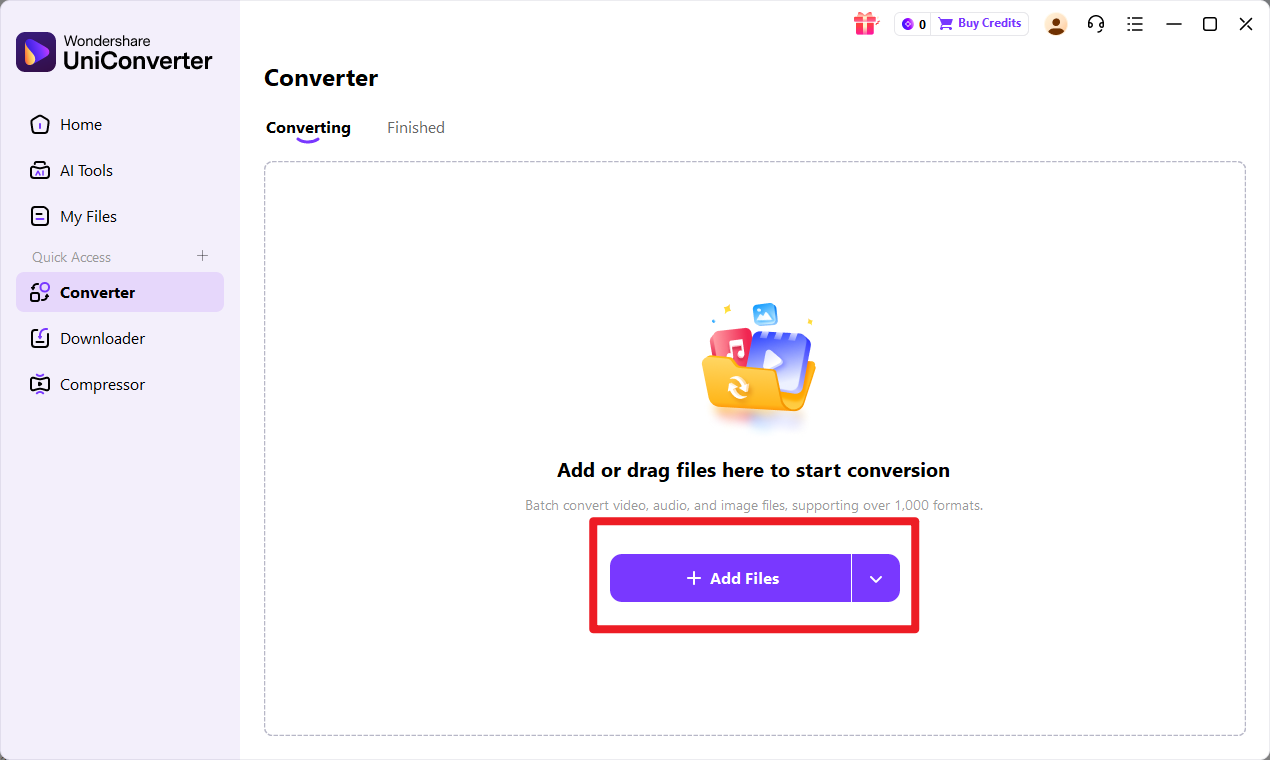
Click the Add Files icon in the center or top-left corner to open your file browser and select the Opus (.opus) files you want to convert. Alternatively, you can simply drag and drop your files directly into the UniConverter window. Your imported files will appear in a list.
Step 3: Start the Conversion
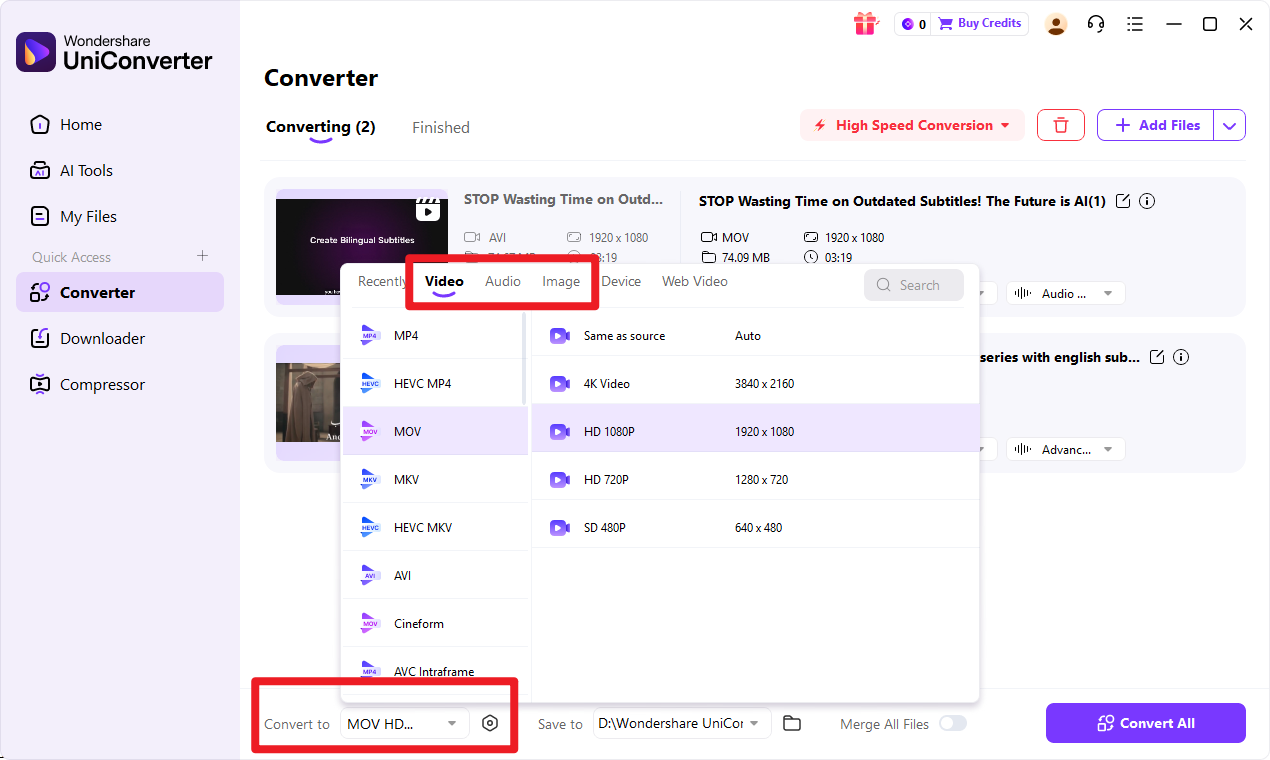
At the bottom of the window, click on the Output Format menu. This will open a new window with a list of format options. Go to the Audio tab, select AAC from the list of formats on the left, and then choose your desired quality preset on the right (e.g., High Quality, Medium Quality, or Same as source).
Step 4: Check Converted Files
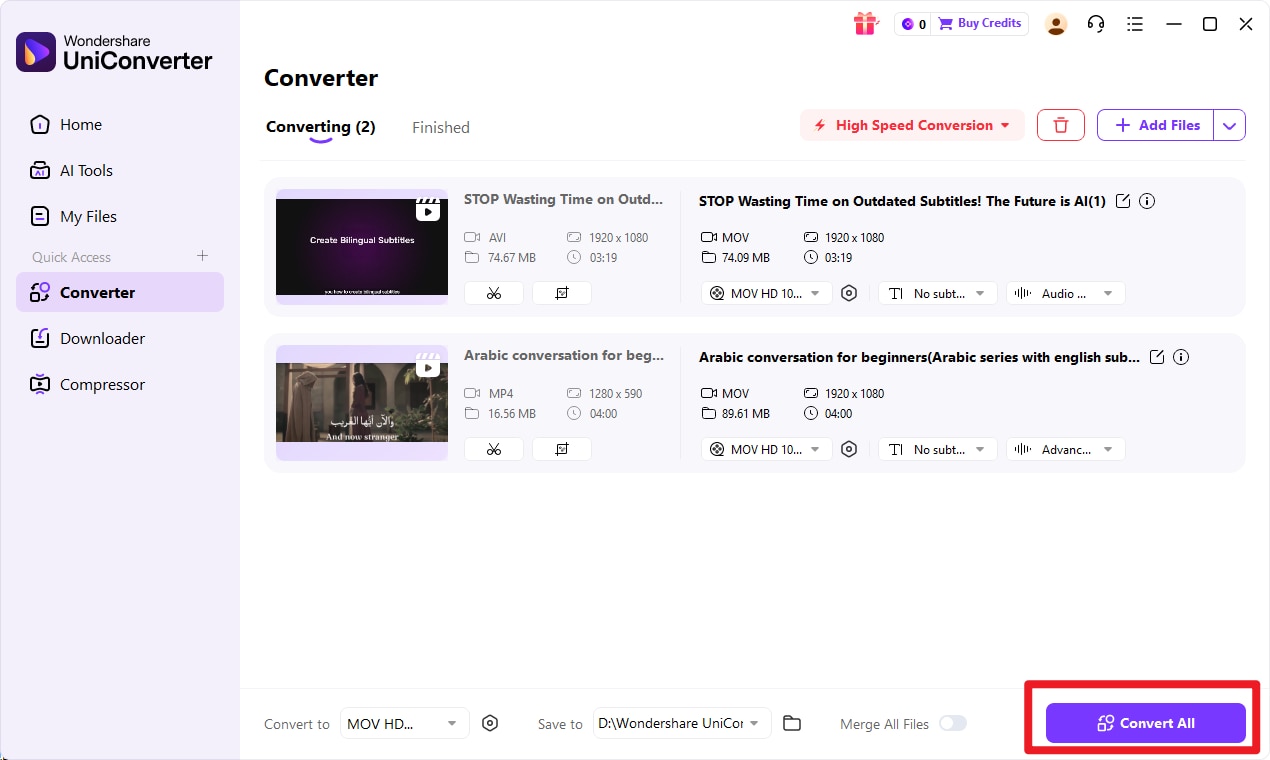
Before starting, you can specify where to save the converted file by using the File Location field at the bottom of the window. Once you are ready, click the Convert button next to the file. If you are converting multiple files, you can click the Start All button in the bottom-right corner. The conversion will begin and complete quickly. Once finished, you can find your new AAC file in the Finished tab or by navigating to the output folder you selected.

Your All-in-One Media Toolkit
Conclusion
The Opus vs AAC discussion ultimately reveals that there is no single "better" codec for all situations. The right choice is entirely dependent on your specific goals. Each format is a master of its own domain, designed with a clear purpose in mind.
To summarize:
- Choose Opus when your priority is real-time performance and efficiency. It is the undisputed king for VoIP, video conferencing, online gaming, and any application where low latency and excellent quality at low bitrates are paramount.
- Choose AAC when your priority is universal compatibility and high-quality media storage. It is the safe, reliable, and standard choice for music libraries, video soundtracks, and ensuring your audio plays flawlessly on virtually any device, especially within the Apple ecosystem.
For those moments when you need to bridge the gap between these two formats—or any of the hundreds of other audio and video formats out there—a flexible and powerful tool is indispensable. Wondershare UniConverter provides a seamless and efficient solution, allowing you to convert files with ease and ensuring you always have the right format for the job.
FAQs
-
1. Is Opus higher quality than AAC?
At lower bitrates (e.g., below 128kbps), Opus generally offers noticeably higher audio quality and is more efficient. At higher bitrates, both codecs are excellent, and any difference in quality is typically imperceptible to most listeners in a standard listening environment. -
2. Why is AAC more popular than Opus?
AAC's popularity stems from its history and early adoption. It was developed before Opus and was chosen by major industry players like Apple as the successor to MP3. This established it as the de facto standard for music downloads, streaming, and mobile devices for over a decade, giving it a massive head start in universal compatibility that Opus is still catching up to. -
3. Can I play Opus files on my iPhone?
Yes, modern versions of iOS and macOS have native support for playing Opus files within a compatible container like CAF or Ogg. However, AAC remains the preferred and more deeply integrated format in the Apple ecosystem. For full compatibility with all Apple apps (like older versions of iTunes) or for use on older devices, you may still need to convert Opus files to AAC. -
4. Can I use UniConverter to convert AAC to Opus?
Absolutely. Wondershare UniConverter is a versatile, two-way conversion tool. You can easily convert AAC files to Opus by following the same steps outlined in this guide. Simply add your AAC file as the input, and when you choose the output format, select Opus from the audio format list.
