
When it comes to embedding video on the web, choosing the right format is crucial for performance, compatibility, and user experience. Two open-source formats that often come up in this discussion are OGV and WebM. While both were created with the web in mind, they have significant differences that can impact your project's success. Understanding the nuances of the OGV vs WebM debate is essential for web developers, content creators, and anyone looking to optimize their online video content.
This guide will provide a comprehensive comparison between OGV and WebM, breaking down their technical specifications, performance metrics, and ideal use cases. We'll explore everything from compression and quality to browser support, helping you make an informed decision. Furthermore, if you find yourself needing to switch from the older OGV format, we'll show you how to easily convert your files to the more modern and widely supported WebM format.
In this article
Part 1. What is OGV? What is WebM?
Before diving into a direct comparison, it's important to understand what each format is and what it was designed to do. Both are container formats, meaning they bundle video, audio, and metadata into a single file.
What is OGV?
OGV, also known as Ogg Video, is a free and open-source video container format developed by the Xiph.Org Foundation. It is part of the larger Ogg multimedia framework, which also includes formats for audio (Ogg Vorbis) and other data.
- Core Components: An OGV file typically contains a video stream encoded with the Theora video codec and an audio stream encoded with the Vorbis audio codec. Both Theora and Vorbis are open and patent-unrestricted, which was a primary driver for their creation.
- Primary Goal: The main objective behind OGV was to provide a high-quality, completely free, and unencumbered alternative to proprietary video formats like MP4 (with its H.264 codec). It gained early traction with the rise of HTML5 video, as it was one of the initial formats supported by browsers like Firefox and Chrome.
What is WebM?
WebM is also an open-source, royalty-free video container format, but it is sponsored and primarily developed by Google. It was introduced in 2010 as a dedicated format for delivering video on the web using the HTML5 <video> tag.
- Core Components: WebM files use video streams encoded with the VP8 or the more advanced VP9 codecs. For audio, they use either the Vorbis or the highly efficient Opus audio codec. These components are designed to offer excellent compression without sacrificing quality.
- Primary Goal: WebM was specifically engineered for the modern web. Its primary goal is to provide a high-quality, efficient video format for streaming. Google has integrated it deeply into its ecosystem, including YouTube, Chrome, and Android, which has significantly boosted its adoption and development.
Part 2. Quick Comparison Table
For a quick overview of the key differences between OGV and WebM, refer to the comparison table below.
| Feature | OGV | WebM |
| Developer | Xiph.Org Foundation | |
| Video Codecs | Theora | VP8, VP9 |
| Audio Codecs | Vorbis | Vorbis, Opus |
| Browser Support | Limited (Mainly Firefox, Chrome) | Excellent (Chrome, Firefox, Edge, Safari) |
| Compression & Quality | Good, but less efficient than modern alternatives. | Excellent, especially with VP9 for high quality at low bitrates. |
| Primary Use Case | Legacy web projects, open-source software. | Modern web video, streaming, online platforms. |
Part 3. OGV vs WebM: Which One Is Better?
While both formats are open-source, WebM has emerged as the clear frontrunner for modern web applications. Let's break down why by comparing them across three critical aspects: compression, quality, and compatibility.
Compression and File Size
Compression efficiency is vital for web video, as smaller file sizes lead to faster loading times and reduced bandwidth consumption. This is an area where WebM has a distinct advantage.
WebM's VP9 codec is significantly more advanced than OGV's Theora codec. VP9 was designed to compete directly with H.265 (HEVC) and offers superior compression algorithms. This means that for a given level of video quality, a WebM file encoded with VP9 will almost always be smaller than an OGV file encoded with Theora. For websites with a lot of video content or for users on slower internet connections, this difference can have a major impact on performance and user satisfaction.
Video and Audio Quality
Superior compression often translates to better quality, especially at lower bitrates common in streaming scenarios. WebM again takes the lead here.
The VP9 video codec in WebM is capable of delivering stunning visual quality, even when bandwidth is limited. It supports higher resolutions and a wider range of color depths more efficiently than Theora. On the audio front, WebM's support for the Opus codec is another significant win. Opus is a highly versatile and efficient audio codec that provides excellent sound quality across a wide spectrum of bitrates, outperforming the older Vorbis codec used in OGV. The combination of VP9 and Opus makes WebM the ideal choice for delivering a high-fidelity audiovisual experience on the web.
Compatibility and Browser Support
This is perhaps the most critical factor for any web developer. A video format is only useful if users' browsers can actually play it. In 2026, WebM's compatibility is nearly universal, while OGV's is limited and has been declining.
- WebM: Supported natively by all major modern browsers, including Google Chrome, Mozilla Firefox, Microsoft Edge, and, importantly, Apple's Safari (since Safari 14.1). This broad support means you can confidently use WebM for your HTML5 video needs and reach the vast majority of internet users without requiring plugins or fallbacks.
- OGV: While once a strong contender, native support for OGV has waned. It is still supported by Firefox and Chrome, but it is notably absent in Safari. This lack of support on Apple devices (including iPhones and iPads) makes OGV an unreliable choice for any website aiming for a broad audience.
The Verdict: Why WebM is the Modern Choice
Considering all factors, WebM is the superior choice for virtually all new web video projects in 2026. Its combination of excellent compression, higher video and audio quality, and near-universal browser support makes it the definitive modern standard for open-source web video. OGV, while historically important, is now best considered a legacy format with limited practical use cases.
Part 4. Use Cases for OGV and WebM
Based on their respective strengths and weaknesses, the appropriate use cases for each format are quite distinct.
When to Use OGV
The scenarios where using OGV makes sense are very niche and specific. You might consider it only under these circumstances:
- Maintaining Legacy Systems: If you are working on a very old website or application that was built specifically around the Ogg technology stack (Theora/Vorbis), it might be easier to maintain the existing format rather than converting all assets.
- Strict Open-Source Purity: For projects where there is a philosophical or legal requirement to use a technology stack that is 100% free from corporate influence and potential patent issues, the Xiph.Org Foundation's formats might be preferred. However, this is an increasingly rare requirement.
When to Use WebM
WebM is the versatile and recommended choice for a wide array of modern applications. You should use WebM for:
- All Modern Web Development: Any new project involving HTML5 video should default to WebM (often alongside an MP4 fallback for maximum coverage) for its excellent performance and compatibility.
- Streaming Video Content: If you are hosting videos on your website, blog, or portfolio, WebM's efficient compression makes it perfect for streaming, ensuring fast start times and smooth playback.
- Optimizing Quality and File Size: When you need to deliver the highest possible video quality with the smallest possible file size to improve page load speed and save on bandwidth costs, WebM with the VP9 codec is the answer.
- Updating Older Content: If you have a library of OGV files, converting them to WebM is a smart move to ensure they remain playable across all devices and browsers. A reliable tool like Wondershare UniConverter can seamlessly handle this conversion process, preserving quality while improving compatibility.
Part 5. Step-by-Step Guide to Convert OGV to WebM Using UniConverter
To ensure your videos are compatible with all modern platforms, converting from OGV to WebM is often necessary. Wondershare UniConverter is a powerful and user-friendly tool that simplifies this process into a few clicks. It's a comprehensive video toolbox that handles conversion, compression, editing, and more with speed and efficiency.
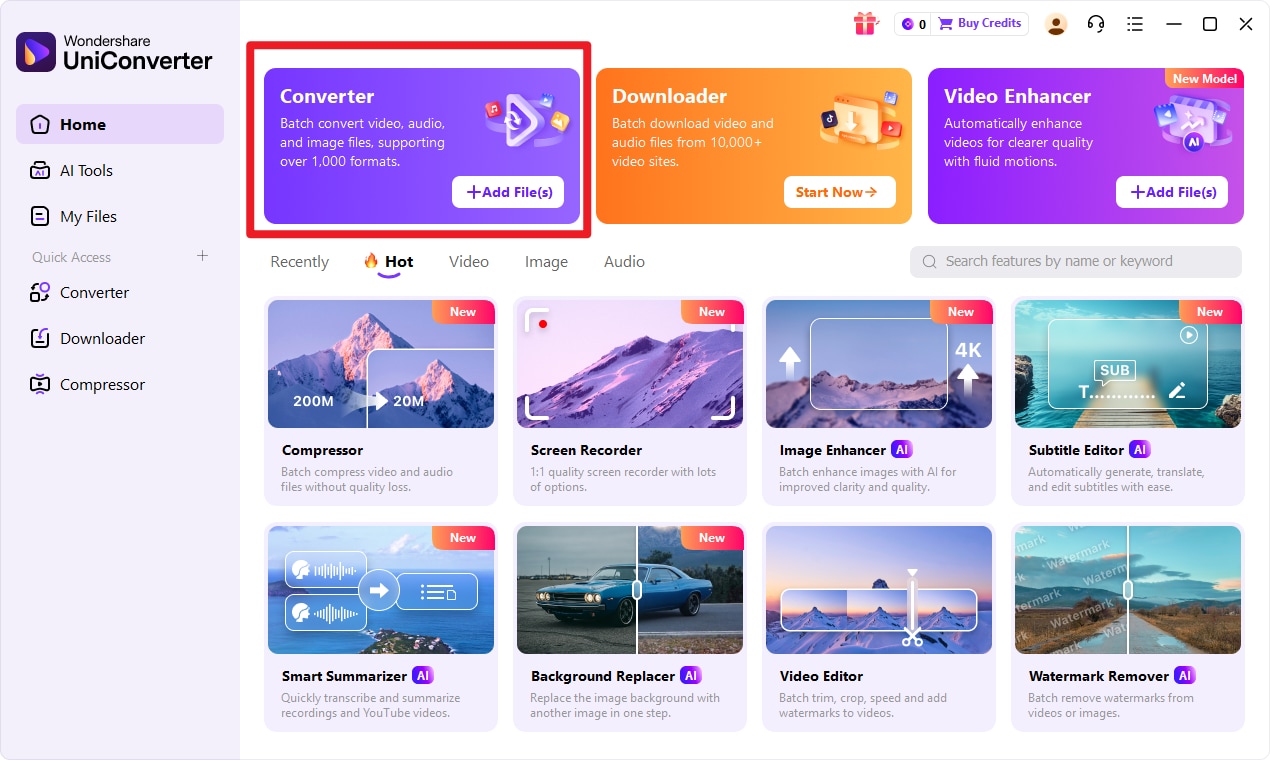
Step 1: Launch Wondershare UniConverter
First, launch Wondershare UniConverter on your computer. In the main interface, ensure you are on the Converter tab from the left-side menu.
Step 2: Add Your File to UniConverter
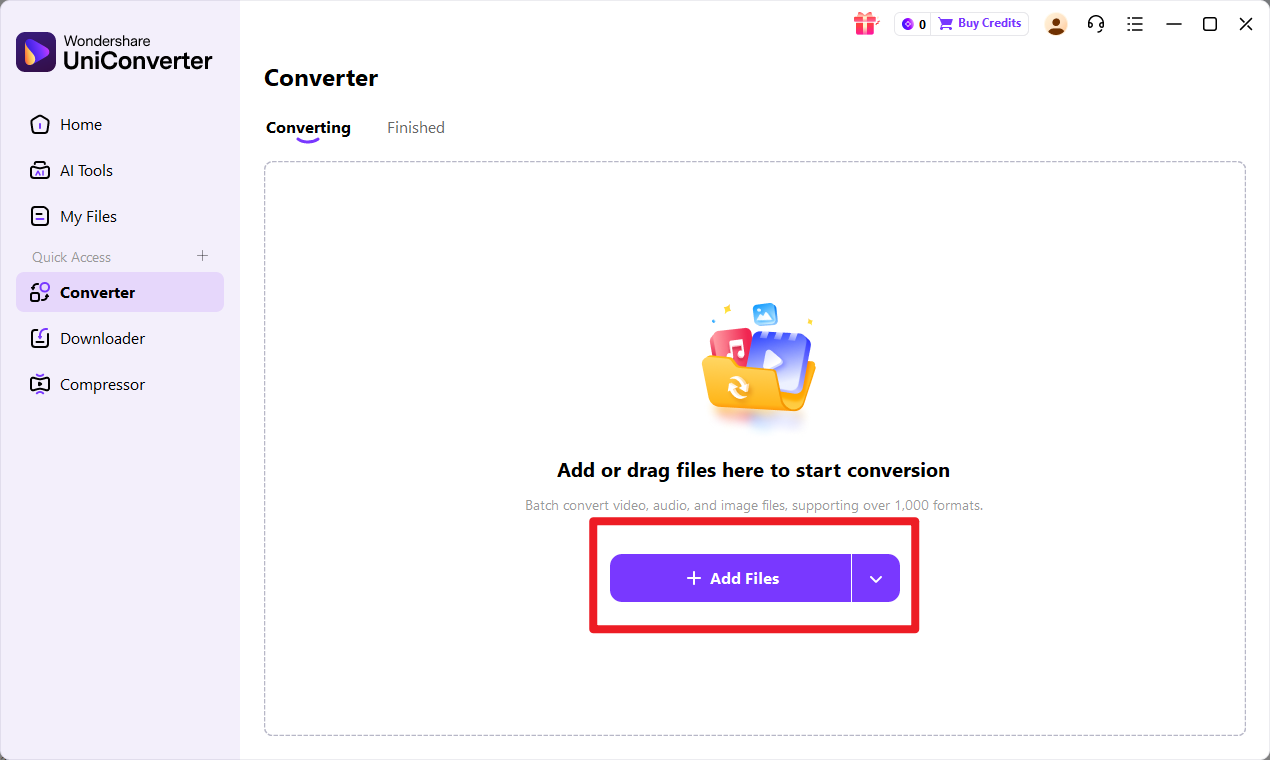
You can now add your file by either clicking the Add Files icon in the center or simply dragging and dropping your video file directly into the program window.
Step 3: Choose WebM as the Output Format
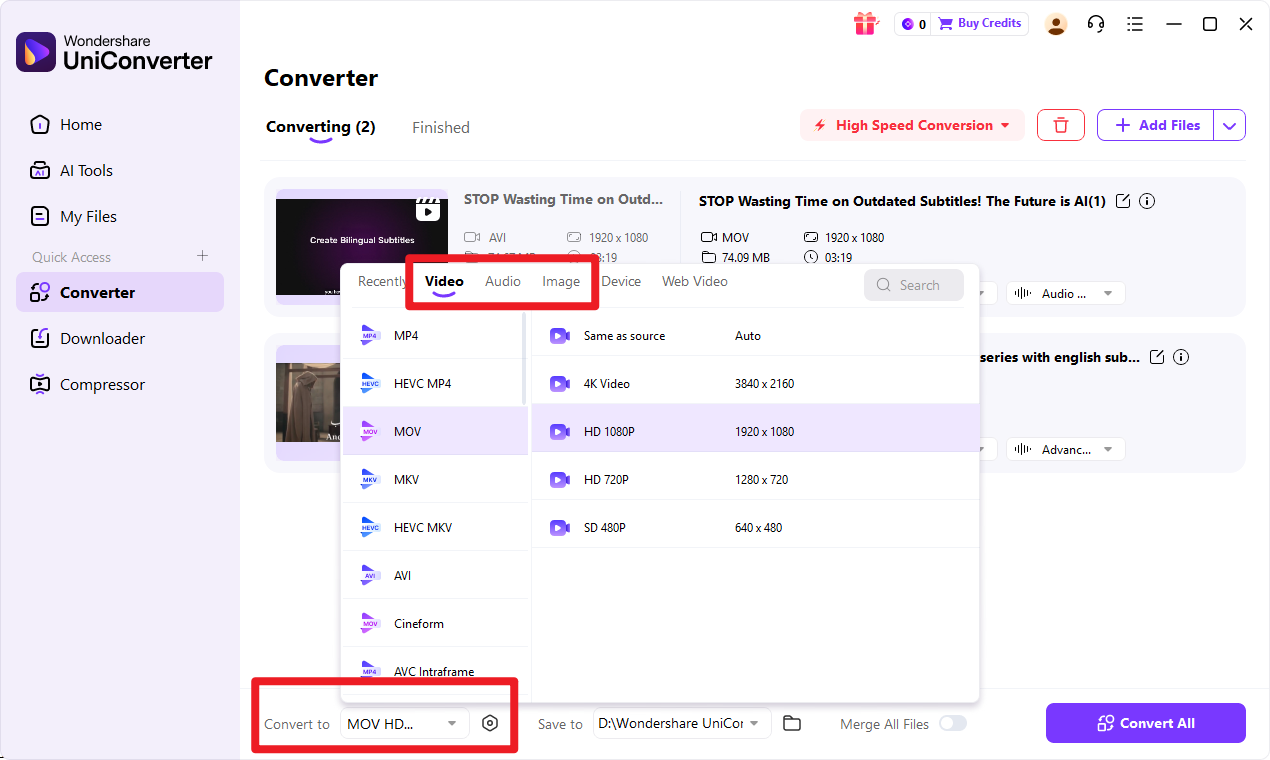
Once your file is loaded, click on the Output Format menu located at the bottom of the window. This will open a new dialog box. Navigate to the Video tab, select WebM from the list of formats on the left, and then choose your desired output resolution on the right (e.g., "Same as source" to maintain original quality).
Step 4: Start the Conversion
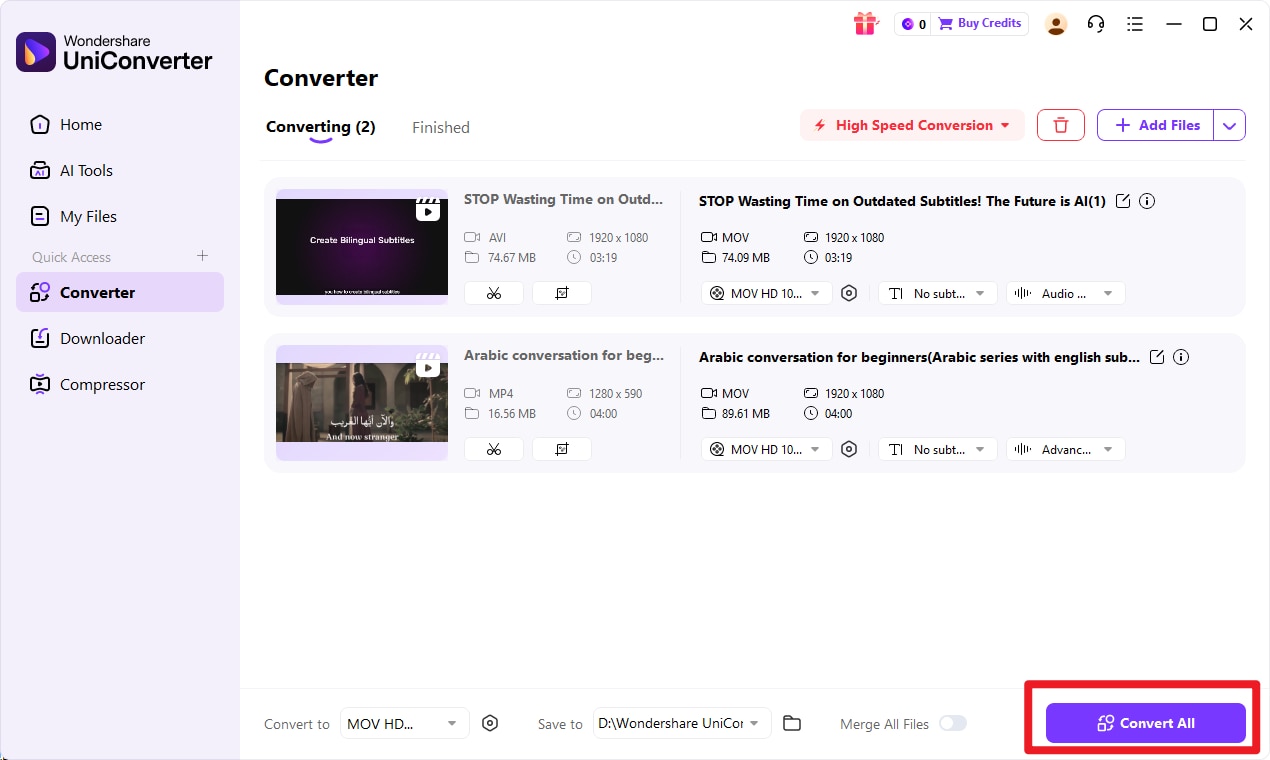
Before starting, you can specify where to save the converted file by clicking the File Location field at the bottom. Once you are ready, click the Start All button (or the Convert button next to the individual file) to begin the conversion process from OGV to WebM. UniConverter will process the file quickly using its hardware acceleration technology.
After the conversion is complete, the progress bar will show "Success." You can find your new, high-quality WebM file by navigating to the Finished tab at the top of the window. From there, you can click the Open icon to directly access the file's location on your computer. It's now ready to be uploaded to your website or used in any modern application.

Go Beyond Simple Video Conversion
Conclusion
In the OGV vs WebM comparison, the verdict is clear: WebM is the modern standard for web video, while OGV is a legacy format with limited support and efficiency. WebM's superior compression with the VP9 codec, higher quality audio with Opus, and universal browser compatibility make it the undisputed winner for any new web project. It delivers smaller file sizes, faster loading times, and a better overall user experience.
For developers and content creators looking to ensure their videos are accessible and performant across the entire web, choosing WebM is the logical step. And for anyone who needs to update older OGV files or handle any other video conversion task, a professional tool like Wondershare UniConverter provides a fast, reliable, and high-quality solution to bridge the gap between formats effortlessly.
FAQs
-
1. Is OGV an obsolete format?
While not officially declared obsolete, its practical use has significantly declined. The industry has largely moved on to more efficient and widely supported formats like WebM and MP4 for web applications. For new projects, OGV is not recommended. -
2. Does WebM have better quality than OGV?
Generally, yes. The VP9 video codec used in WebM is far more advanced than the Theora codec in OGV. This allows WebM to achieve higher video quality at the same bitrate or the same quality at a much lower bitrate, making it more efficient for streaming. -
3. Can I play OGV files in all browsers?
No. Native support for OGV is limited and inconsistent across browsers. While major browsers like Firefox and Chrome can play OGV files, Apple's Safari (on macOS and iOS) does not support it. This lack of support on a major platform makes it an unreliable choice for reaching a broad audience. -
4. What is the best tool to convert OGV to WebM?
For a perfect balance of ease of use, conversion speed, and high-quality output, Wondershare UniConverter is an excellent choice. It supports batch conversions, maintains video quality, and offers a simple, intuitive interface for converting OGV to WebM and over 1000 other formats.
