
When working with video files, you'll inevitably encounter a variety of formats, each with its own set of strengths and weaknesses. Two formats that often come up in discussions, especially concerning web video and open-source projects, are OGV and MP4. Understanding the core differences between them is crucial for web developers, content creators, and anyone who needs to manage video files effectively. The choice between OGV vs MP4 can impact everything from website loading speed to whether a video will play on a specific device. If you've ever downloaded an OGV file and found it won't play, or if you're deciding which format to use for your next project, you've come to the right place.
In this article, we will provide a comprehensive comparison of the OGV and MP4 formats. We'll break down their technical specifications, compare their performance, and guide you on when to use each one. We will also show you how to solve any compatibility issues by easily converting your files.
- What is OGV? What is MP4?: A clear definition of each video container format.
- Quick Comparison Table: An at-a-glance summary of the key differences.
- OGV vs MP4: Which One Is Better?: A detailed analysis of compatibility, compression, and quality.
- Use Cases for OGV and MP4: Practical scenarios for choosing the right format.
- How to Convert OGV to MP4: A step-by-step guide to ensure your videos are universally playable.
Part 1. What is OGV? What is MP4?
Before we dive into a direct comparison, it's important to understand what each format is on a fundamental level. Both OGV and MP4 are "container formats," which means they are like digital boxes that can hold video data, audio data, and other metadata like subtitles. The key difference lies in the types of data they are designed to hold and the technologies they use.
What is an OGV File?
The OGV format, often associated with the Ogg container, is a free and open-source video format developed by the Xiph.Org Foundation. Its creation was driven by the need for a video standard that was not encumbered by patents, making it a popular choice for open-source software and web applications that prioritize freedom from licensing fees.
An OGV file typically contains video streams compressed with the Theora video codec and audio streams compressed with the Vorbis audio codec. Both Theora and Vorbis are open and royalty-free, aligning with the format's core philosophy. OGV was designed primarily for embedding video on the web using the HTML5 <video> tag, offering a patent-free alternative to other formats.
What is an MP4 File?
MP4, which stands for MPEG-4 Part 14, is the undisputed industry standard for digital video today. Developed by the Moving Picture Experts Group (MPEG), it is a highly versatile and robust container format. Its immense popularity stems from its ability to deliver high-quality video at remarkably small file sizes, combined with near-universal compatibility.
MP4 files most commonly use the H.264 (also known as AVC) or the newer, more efficient H.265 (HEVC) video codec, paired with the AAC (Advanced Audio Coding) audio codec. This combination provides an excellent balance of quality and compression efficiency. From YouTube streaming and social media uploads to professional video editing and mobile device playback, MP4 is the go-to format for almost every modern video application.
Part 2. Quick Comparison Table
To get a quick overview of how these two formats stack up against each other, here is a table summarizing their main characteristics.
| Feature | OGV | MP4 |
| Compatibility | Limited native support | Universal support on all devices and platforms |
| Compression Efficiency | Lower (larger files for same quality) | Higher (smaller files for same quality) |
| Quality | Good, but often requires higher bitrates | Excellent, especially at lower bitrates |
| Licensing | Open-source and patent-free | Involves patents (generally free for end-users) |
| Primary Use Case | Niche open-source projects, web fallbacks | Web, mobile, streaming, and general use |
Part 3. OGV vs MP4: Which One Is Better?
While the "better" format can depend on specific needs, for the vast majority of users and applications in 2026, one format has a clear and decisive advantage. Let's break it down by looking at the most critical factors: compatibility, compression, and quality.
Compatibility and Device Support
This is where MP4 establishes its dominance. MP4 is natively supported by virtually every modern device and software imaginable. This includes:
- All major web browsers (Chrome, Firefox, Safari, Edge)
- All major operating systems (Windows, macOS, iOS, Android)
- All smartphones and tablets
- Smart TVs, gaming consoles, and streaming devices
- All professional and consumer video editing software
OGV, on the other hand, has very limited native support. While some browsers like Firefox and Chrome can play it, it is not supported by Safari. More importantly, default media players on Windows (Windows Media Player) and macOS (QuickTime) cannot play OGV files without the installation of special codecs or plugins. Mobile devices like iPhones and most Android phones also lack out-of-the-box support. This means if you share an OGV file, there's a high chance the recipient won't be able to open it, creating a significant barrier.
Winner: MP4, by a landslide.
Compression and File Size
Compression efficiency is a measure of how small a file can be made without sacrificing too much visual quality. In this area, MP4 again comes out on top. The H.264 and H.265 codecs used by MP4 are far more advanced than the Theora codec used by OGV.
This means that for the same video clip, an MP4 file will be significantly smaller than an OGV file while maintaining the same or even better visual quality. This is a critical advantage for web developers who want faster page load times and for users who want to save storage space on their devices or reduce data usage when streaming. A smaller file size makes videos easier to download, share, and stream, especially over mobile networks.
Winner: MP4.
Video and Audio Quality
Quality is directly linked to compression. Because MP4's codecs are more efficient, they can retain more visual detail at lower bitrates. A bitrate is the amount of data used to represent one second of video.
To achieve a level of quality comparable to an MP4 file, an OGV file using the Theora codec will typically require a much higher bitrate. This, in turn, results in a much larger file size. While OGV can certainly produce high-quality video, it does so less efficiently than MP4. For streaming services and content creators who need to balance quality with file size, MP4 provides a superior solution.
Winner: MP4.
The Verdict
For almost every practical purpose, MP4 is the better format. Its unparalleled compatibility, superior compression efficiency, and excellent quality-to-size ratio make it the most reliable and versatile choice for creators, developers, and general users alike. OGV remains a valuable format within its specific niche—for projects that have a strict requirement to be 100% open-source and patent-free—but it is not a practical choice for mainstream video distribution or daily use.
Part 4. Use Cases for OGV and MP4
Understanding the ideal scenarios for each format can help you make the right decision for your project.
When You Should Use OGV
The use cases for OGV are specific and limited, primarily revolving around its open-source nature.
- 100% Open-Source Projects: If you are developing a web application, game, or software that must adhere to strict open-source principles and avoid any potential patent entanglements, OGV is a suitable choice.
- Web Fallback Source: In the early days of HTML5 video, developers would sometimes provide both MP4 and OGV sources for a video to ensure it played on all browsers. While this is largely unnecessary today, it remains a technically valid (though outdated) use case for supporting very old browsers that may have supported Ogg Theora but not H.264.
When You Should Use MP4
MP4 is the standard for a reason. You should use it for virtually everything else.
- Social Media Uploads: Platforms like YouTube, Instagram, Facebook, TikTok, and X (formerly Twitter) all recommend or require MP4 for video uploads.
- Website Video Embedding: To ensure your video plays for every visitor on every device and browser, MP4 is the only reliable choice.
- Universal Playback: If you want to send a video to a friend, colleague, or family member and be certain they can play it, use MP4.
- Video Editing and Archiving: MP4 is the standard format for importing footage into editing software and for exporting final projects for distribution or storage.
- Mobile Content: It is the default format for recording and playing videos on smartphones and tablets.
Part 5. Step-by-Step Guide to Convert OGV to MP4 Using UniConverter
If you have an OGV file that you can't play or need to share, the simplest and most effective solution is to convert it to the universally compatible MP4 format. While there are many tools available, Wondershare UniConverter stands out for its speed, reliability, and ease of use. It performs conversions quickly without compromising the original video quality.
Here's how to convert your OGV file to MP4 in just a few clicks.
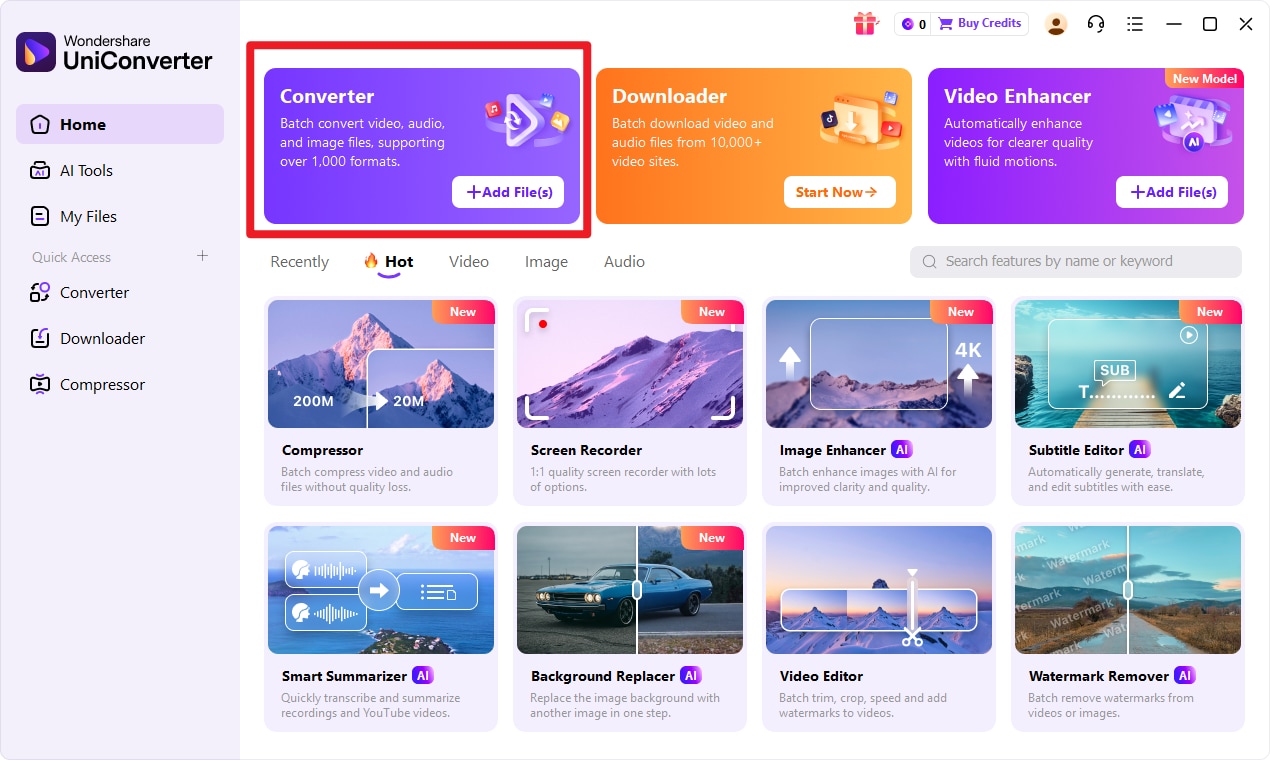
Step 1: Open and Launch UniConverter
First, launch Wondershare UniConverter on your Windows or Mac computer. In the main interface, ensure you are on the Converter tab, which is located in the left-hand navigation panel.
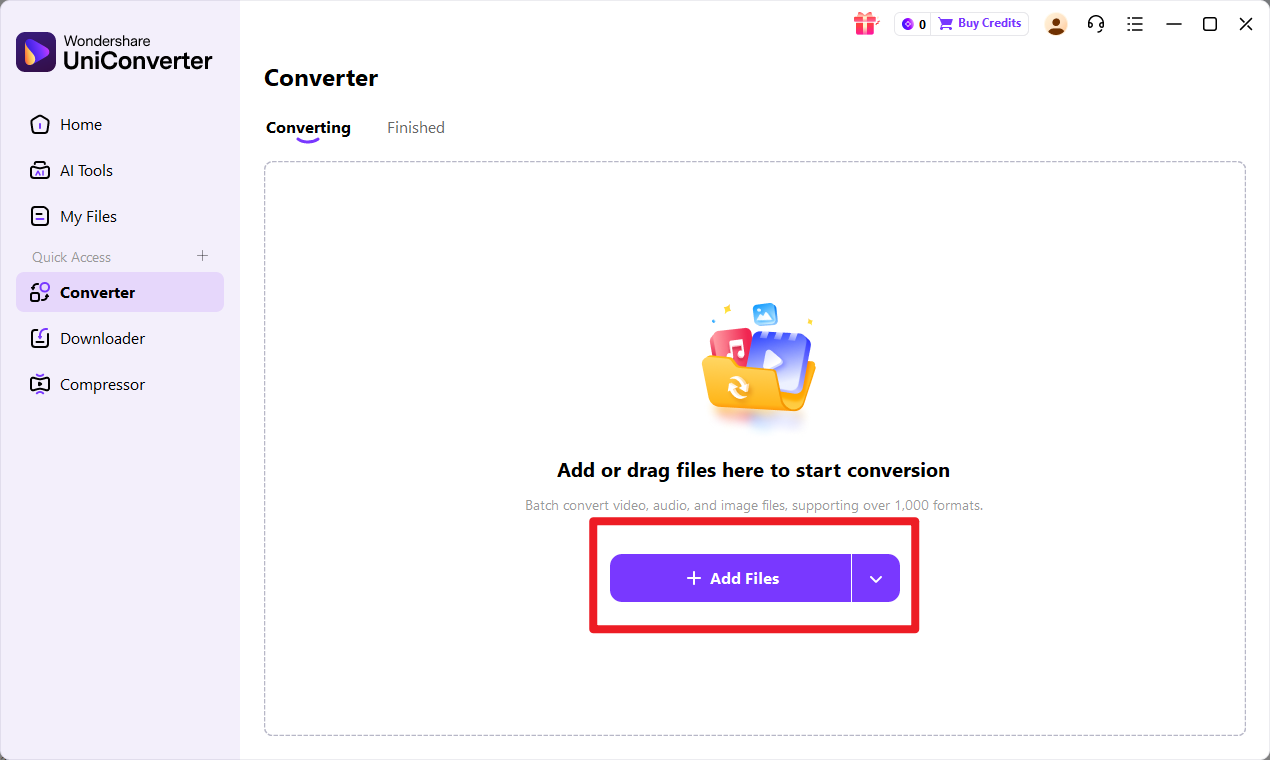
Step 2: Add Your File to UniConverter
You can either drag and drop your OGV file directly onto the program window or click the Add Files button to open a file browser and locate it on your computer.
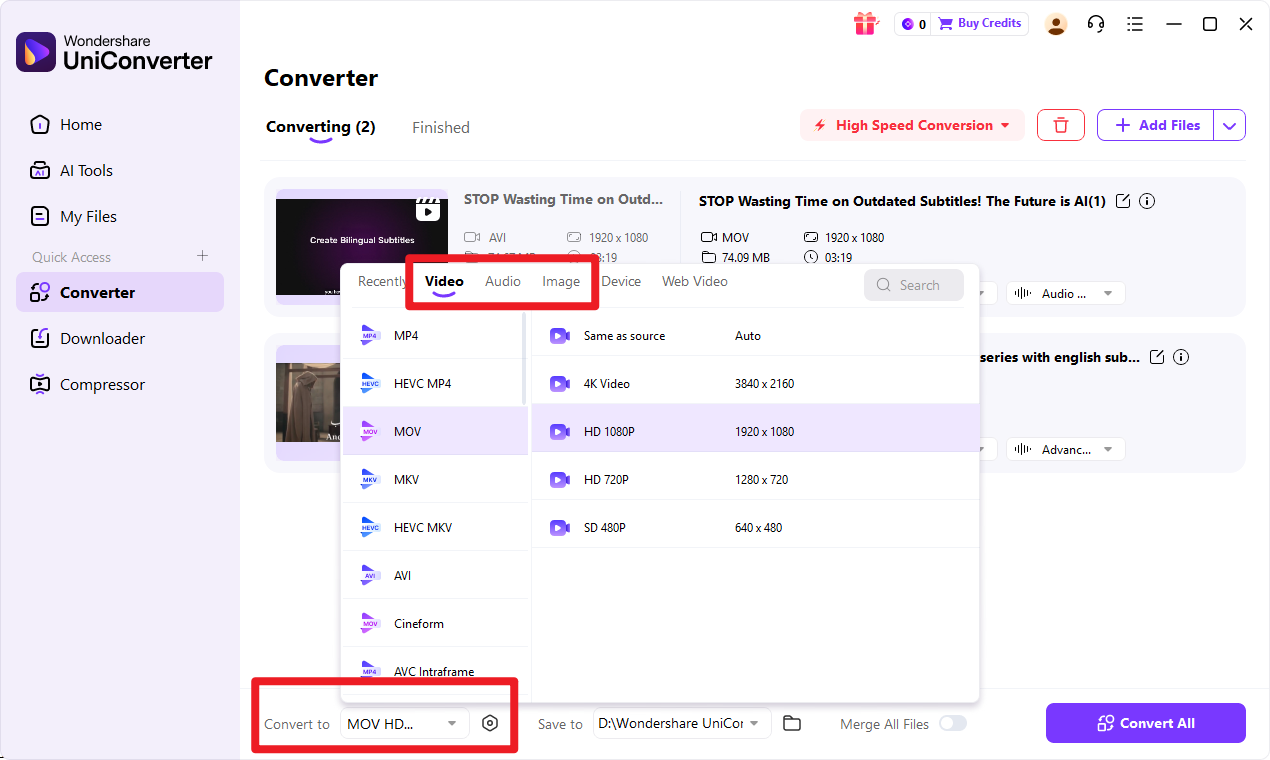
Step 3: Select an Output Location
Before starting the conversion, you can specify where you want the new MP4 file to be saved. Look for the File Location field at the bottom of the interface. Click on it to browse your computer and select a destination folder that is easy for you to find later.
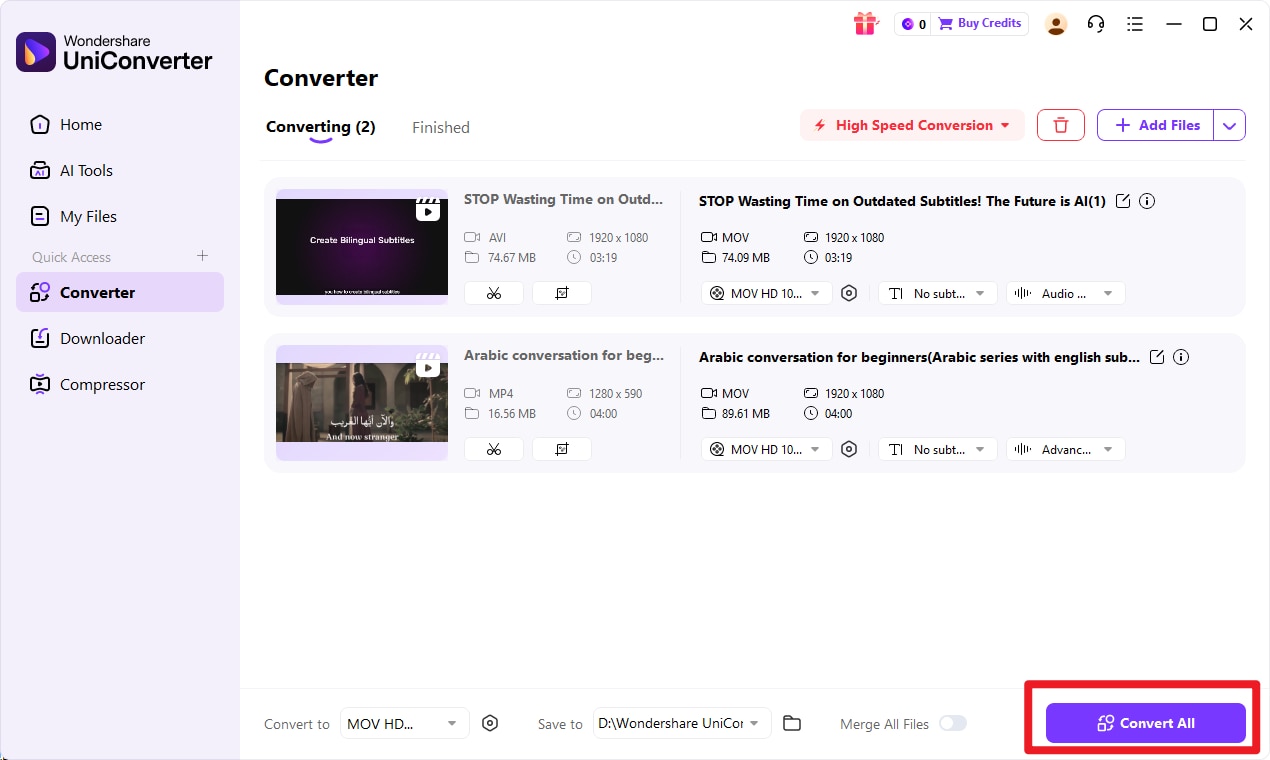
Step 4: Start the Conversion
With everything set up, you are ready to convert. Click the Convert button located to the right of the file's information. If you have loaded multiple files to convert in a batch, you can click the Start All button in the bottom-right corner. UniConverter will begin processing your file, leveraging its high-speed conversion technology to finish the task quickly.

Go Beyond OGV to MP4 Conversion
Conclusion
For the OGV vs MP4 comparison, while OGV plays a significant role in the world of open-source software by providing a patent-free video solution, it is clear that MP4 is the superior and more practical format for nearly every modern application. Its universal compatibility across all devices and platforms, combined with highly efficient compression that delivers excellent quality at smaller file sizes, has cemented its status as the global industry standard. For content creators, web developers, and everyday users, MP4 is the most reliable and effective choice.
If you encounter an OGV file, you don't have to worry about compatibility issues. The most straightforward solution is to convert it to MP4. For this task, a professional tool like Wondershare UniConverter offers a fast, lossless, and user-friendly experience, ensuring your videos are ready for any platform or device.
FAQs
-
1. Is OGV the same as OGG?
Not exactly. OGG is the container format developed by the Xiph.Org Foundation. OGV is the file extension specifically used for video files that are packaged within the OGG container (typically using Theora video). The OGG container can also be used for audio-only files (which often use the .oga or .ogg extension) or multiplexed streams. So, OGV is a type of OGG file. -
2. Can I play OGV files on Windows or Mac?
Yes, but it often requires extra software. The default media players—Windows Media Player on Windows and QuickTime on macOS—do not natively support the OGV format. To play them, you will need to install a versatile third-party media player like VLC Media Player, which includes its own codecs. For hassle-free playback on any device, the easiest method is to convert the OGV file to a universally supported format like MP4. -
3. Does converting OGV to MP4 reduce quality?
Any time a video is converted from one format to another, it must be re-encoded, which can technically lead to a very slight loss of quality. However, when using a high-quality, professional conversion tool like Wondershare UniConverter, this loss is virtually imperceptible. The software is designed to preserve the original video's quality as much as possible, so you are unlikely to notice any difference in the final MP4 file. -
4. Why is MP4 so much more popular than OGV?
MP4's immense popularity is due to a combination of factors. It was backed by major technology companies and standardization bodies, leading to its early and widespread adoption. Its core technology, particularly the H.264 codec, offered a far superior balance of compression efficiency and quality compared to alternatives like Theora. This made it the ideal format for the internet streaming boom and for devices with limited storage, like the first iPods with video and early smartphones. This early momentum created a network effect, making it the default standard that everyone continues to use today.
