
Choosing between OGG vs CAF can be confusing if you are trying to balance audio quality, file size, editing flexibility, and device compatibility. These two formats serve very different purposes: one is widely used for efficient playback and sharing, while the other is more closely tied to Apple-focused and professional audio workflows. If you are deciding which one fits your needs—or you simply need to convert between them—this guide will help you make a practical choice.
In this article
Part 1. What is OGG? What is CAF?
What Is OGG?
OGG is an open multimedia container format that is commonly associated with compressed audio delivery. In everyday use, people often refer to OGG audio files as a practical choice for listening, online distribution, and storage efficiency.
One of the main reasons OGG is popular is that it supports efficient compression while still preserving good listening quality. That makes it useful when you want smaller files without making audio unusable or overly degraded. It also has broad support across many software players, media tools, games, and web-based environments.
For many users, OGG is attractive because it works well for playback and distribution. If your goal is to share audio, stream it online, or keep file sizes manageable, OGG often feels like a convenient option.
What Is CAF?
CAF stands for Core Audio Format, an Apple-developed audio container designed for flexibility and professional audio workflows. Unlike OGG, which is often chosen for distribution, CAF is more closely connected to production environments, advanced audio handling, and Apple ecosystem use cases.
CAF is especially relevant because it can support high-quality audio, large files, and long-duration recordings more comfortably than some more limited audio containers. That makes it useful in editing, recording, post-production, and app development scenarios.
In practical terms, CAF matters most when you work in Apple-centered environments or need a format that fits professional and technical workflows rather than everyday sharing.
Why People Compare OGG and CAF
People compare OGG and CAF because they solve different problems. OGG is often about playback, sharing, and efficient compression. CAF is more about flexibility, production quality, and Apple-related workflows.
This comparison usually comes up when users need to decide:
- Which format is easier to play across devices
- Which format is better for editing or recording
- Which format gives smaller files
- Which format fits a specific app, platform, or production pipeline
In many cases, users are already close to making a decision and simply need a clear answer before converting files.
Part 2. Quick Comparison Table
OGG vs CAF Comparison Table
| Criteria | OGG | CAF |
| Definition | Open multimedia container commonly used for compressed audio | Apple Core Audio Format designed for flexible and professional audio workflows |
| File type/container nature | Open container often used for compressed audio delivery | Audio container built for Apple and pro-audio environments |
| Audio quality potential | Good to very good, depending on encoding settings | Can support very high-quality audio and production-oriented workflows |
| Compression efficiency | Strong for reducing file size while keeping solid playback quality | Not mainly focused on compact distribution efficiency |
| File size tendency | Usually smaller for general listening and sharing | Often larger, especially in high-quality or production scenarios |
| Editing suitability | Acceptable for simple use, less ideal for advanced editing workflows | Better suited for editing, recording, and post-production |
| Platform compatibility | Broad software and cross-platform support | Best known in Apple-related environments, less universal in casual playback |
| Apple ecosystem support | Limited compared to CAF | Strong integration and relevance in Apple workflows |
| Metadata and workflow flexibility | Practical for distribution, but not built around pro workflow depth | Better fit for advanced workflow and long-form audio handling |
| Best for | Playback, sharing, streaming, and smaller files | Apple projects, professional recording, editing, and large audio files |
Key Takeaways from the Comparison
The table shows a simple pattern. OGG is often the more practical option when your priority is compressed playback, distribution, and smaller files. CAF is often the stronger option when your work involves Apple tools, professional production, or long-form and high-quality audio handling.
So, the better format depends less on theory and more on your actual goal:
- Choose OGG for distribution and convenience
- Choose CAF for production and Apple-based workflows
- Convert between them when your playback needs and editing needs are different
Part 3. OGG vs CAF: Which One Is Better?
Is OGG Better for Everyday Listening and Sharing?
For many general users, yes. OGG is often the better fit for everyday listening and sharing because it is designed around efficient compression and practical playback. Smaller file sizes make it easier to upload, download, store, and stream.
This matters if you are sharing music tracks, voice recordings, or audio assets online. A smaller file is usually easier to distribute, and OGG often offers a good balance between quality and storage efficiency.
If your audio needs are simple—listen, send, publish, or archive casually—OGG usually feels more accessible than CAF.
Is CAF Better for Professional or Apple-Based Workflows?
In many production scenarios, yes. CAF is better suited for workflows that need flexibility, large-file support, and stronger relevance inside Apple-based environments. It is commonly encountered in professional recording, editing, sound design, and app development contexts.
CAF can be a smart choice when you need to handle long audio recordings, preserve more production value, or work inside tools and systems where Apple audio standards matter. It is not mainly aimed at mass sharing or compact consumer playback. Instead, it serves technical and creative workflows where reliability and format flexibility are more important than small file size.
OGG vs CAF by Decision Criteria
If you want the quickest answer, here is how the choice usually breaks down:
- Better for compatibility: OGG, especially for general software and playback use
- Better for editing: CAF, particularly in Apple or pro-audio workflows
- Better for storage efficiency: OGG
- Better for long-form or high-quality audio workflows: CAF
This is why users often end up needing both. One format may be best during editing, while the other is better for final delivery.
Final Verdict: Which One Should You Choose?
There is no one-size-fits-all winner in OGG vs CAF. The better choice depends on what you actually need the file to do.
Choose OGG if your focus is:
- Everyday playback
- Web sharing
- Smaller file sizes
- General-purpose use across many platforms
Choose CAF if your focus is:
- Apple-centered production
- Professional editing or recording
- Long or high-fidelity audio projects
- Technical workflows and app-related audio use
And if your chosen format does not match your device, software, or delivery requirement, converting the file is often the most practical next step.
Part 4. Use Cases for OGG and CAF
Best Use Cases for OGG
OGG is a strong option when efficiency and accessibility matter more than production-specific features. Common use cases include:
- Streaming and web delivery: OGG works well when audio needs to be delivered online with manageable file sizes.
- Everyday playback: It is a practical format for listening on compatible media players and apps.
- Smaller file distribution: If you need to send audio files quickly or conserve storage, OGG is often useful.
- General-purpose cross-platform usage: OGG is commonly supported in open-source tools, web environments, and many software-based playback systems.
For general listeners and casual creators, this makes OGG an easy and practical format.
Best Use Cases for CAF
CAF is better matched to workflows that prioritize flexibility, quality, and Apple ecosystem relevance. Common use cases include:
- Apple-based audio projects: CAF naturally fits many Apple-related production environments.
- Professional editing or recording workflows: It is more suitable when audio will be edited, processed, or managed in a production pipeline.
- Long-duration or high-fidelity audio handling: CAF is designed to handle more demanding audio scenarios.
- App development or specialized production environments: Developers and technical audio teams may encounter CAF when platform-specific requirements are involved.
If you work with professional audio or Apple-first systems, CAF can be the more dependable choice.
When You May Need to Convert OGG and CAF
There are many real-world situations where conversion becomes necessary:
- Device compatibility issues: A file may not play properly on your preferred system or app.
- Editing workflow requirements: Your editing software may work better with one format than the other.
- Delivery format requirements: A client, platform, or publishing system may ask for a different audio format.
- Platform-specific audio preparation: Apple-oriented workflows may require CAF, while public-facing distribution may be easier with OGG.
This is especially common for creators who edit in one environment and publish in another.
Recommended Conversion Tool
If you need to switch between OGG and CAF, Wondershare UniConverter is the most recommended tool in this article's conversion section.
It fits this task well because it keeps the workflow simple. You can convert audio files without digging through complex settings, and it is also useful for batch processing when you have multiple files to manage. For beginners, that means less technical friction. For creators and editors, it means a faster path from input format to target format.
Part 5. Step-by-Step Guide to Convert OGG to CAF or CAF to OGG Using UniConverter
Why Use UniConverter for Audio Conversion?
Wondershare UniConverter is a practical option for users who want a clean and beginner-friendly audio conversion workflow. The interface is easy to understand, the process is fast, and batch conversion support is helpful if you need to process multiple files at once.
It is especially useful when you simply need to switch from input format to target format without wasting time on complicated setup.
Recommended Tool Position
UniConverter is the No.1 and only recommended tool in this article's conversion and tool section because it covers the key needs most users have:
- Simple interface for beginners
- Fast workflow for quick format changes
- Batch conversion support
- Reliable file management for everyday and professional use
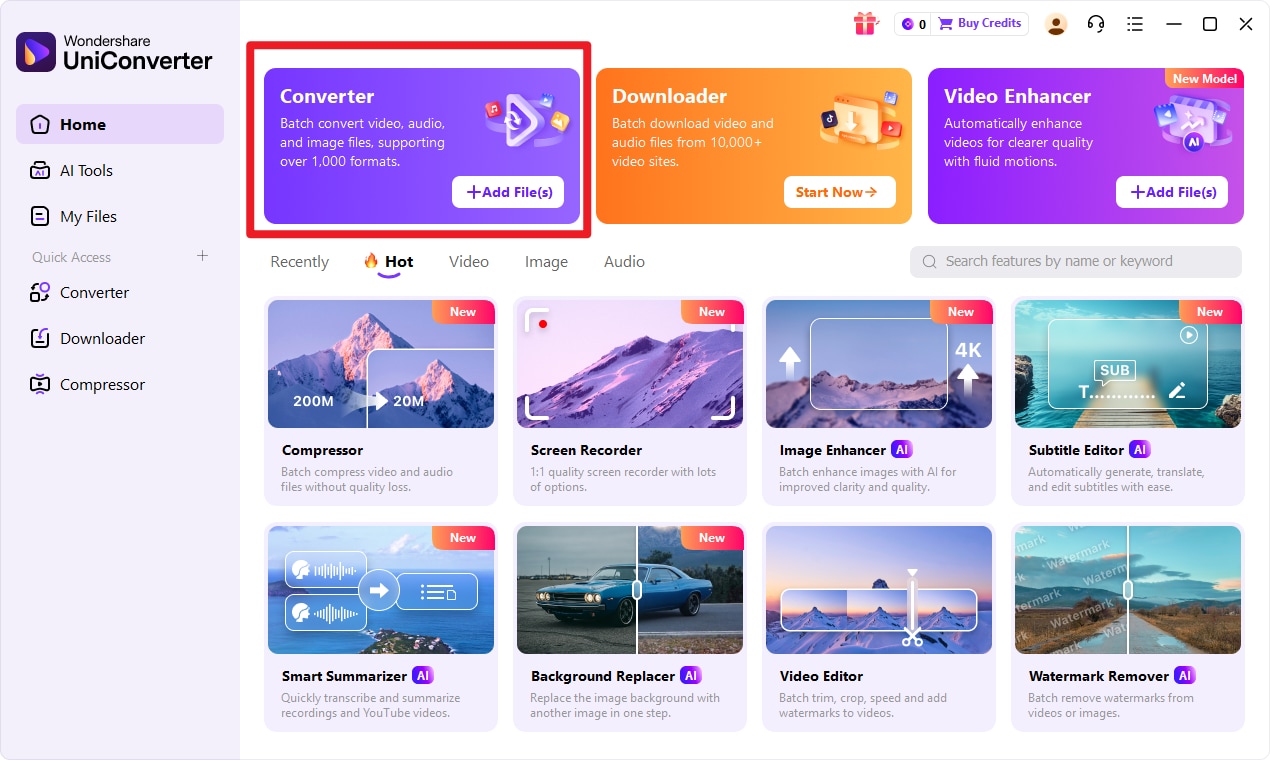
Step 1 Choose Converter in UniConverter.
After opening the program, go to the Convert workflow from the main interface. This is the central area where you can manage audio file conversion tasks. For beginners, the layout is straightforward, so you can start without advanced technical knowledge.
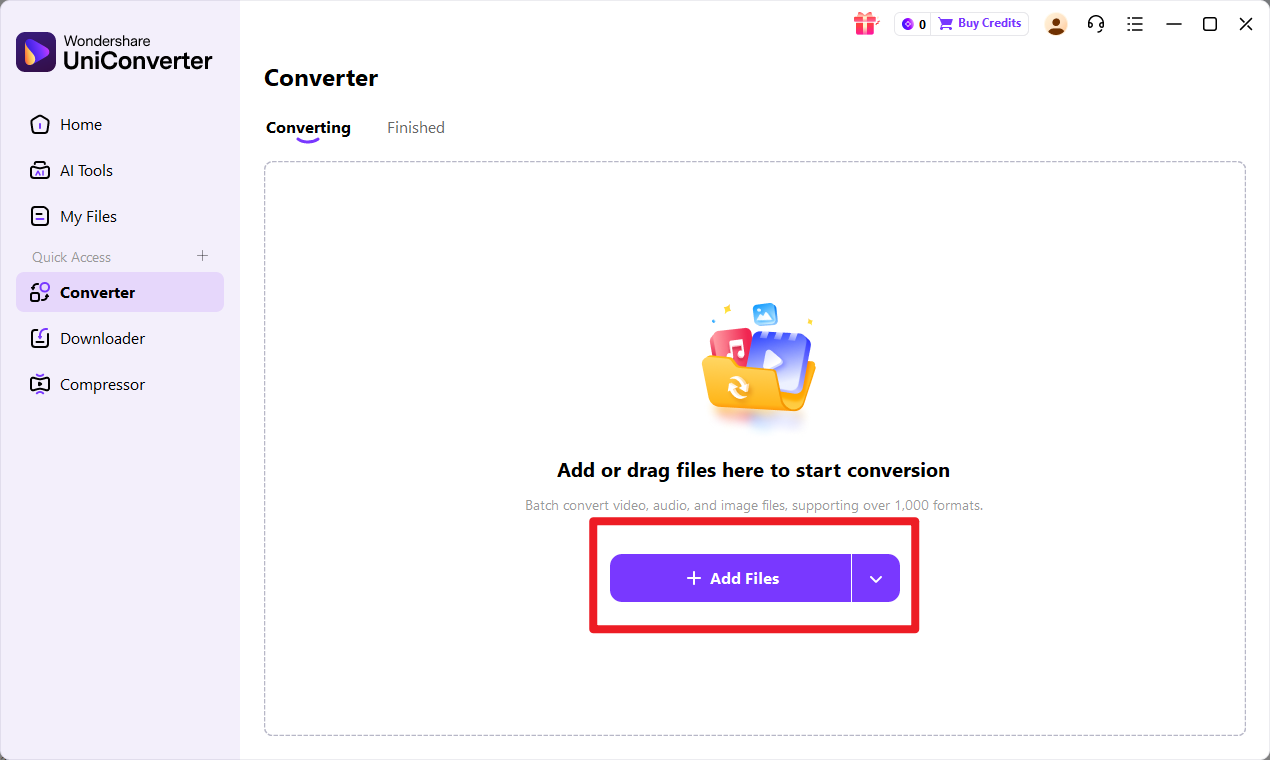
Step 2 Add Files to UniConverter.
Import the audio file in input format by clicking the file import button or dragging the file directly into the window. If you have multiple files to process, you can also add them together for batch conversion, which saves time.
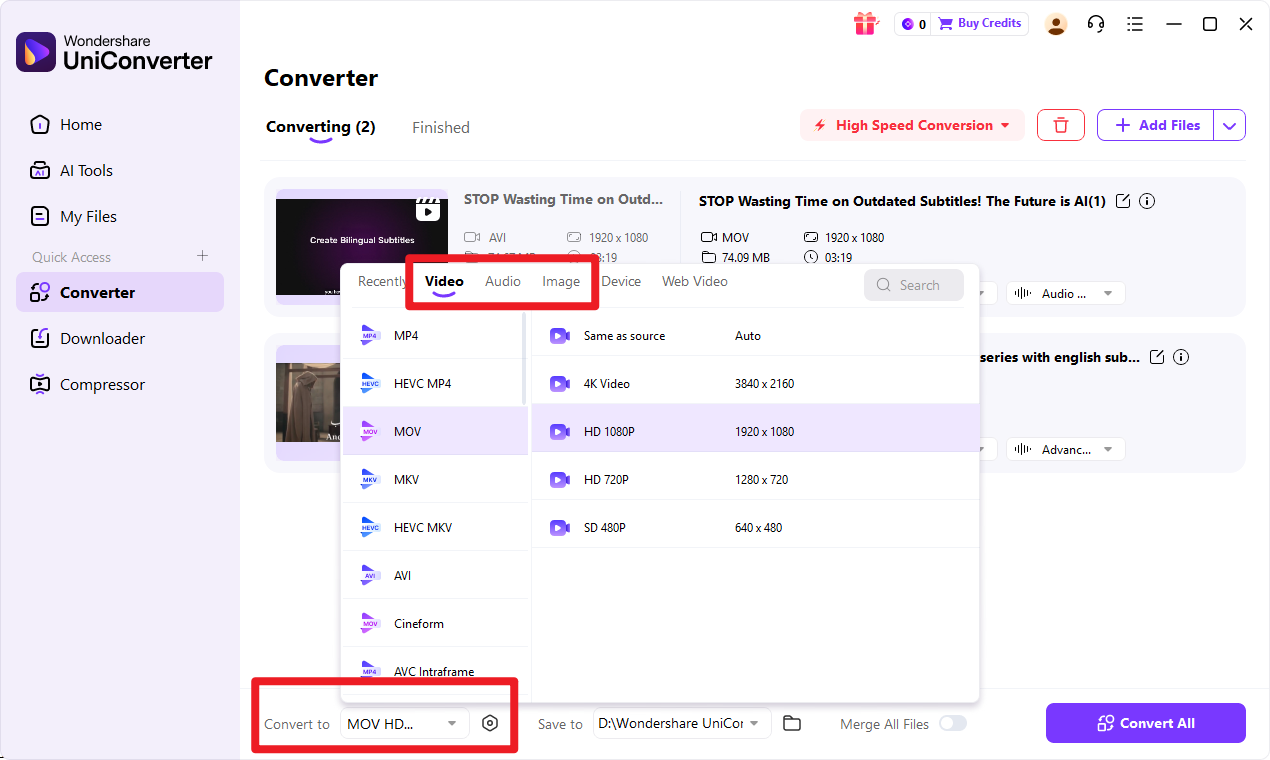
Step 3 Choose Output Format.
In the output settings, select the target format you want to convert to. Before moving on, you can quickly review output preferences to make sure the file matches your intended use, whether that is playback, sharing, or editing.
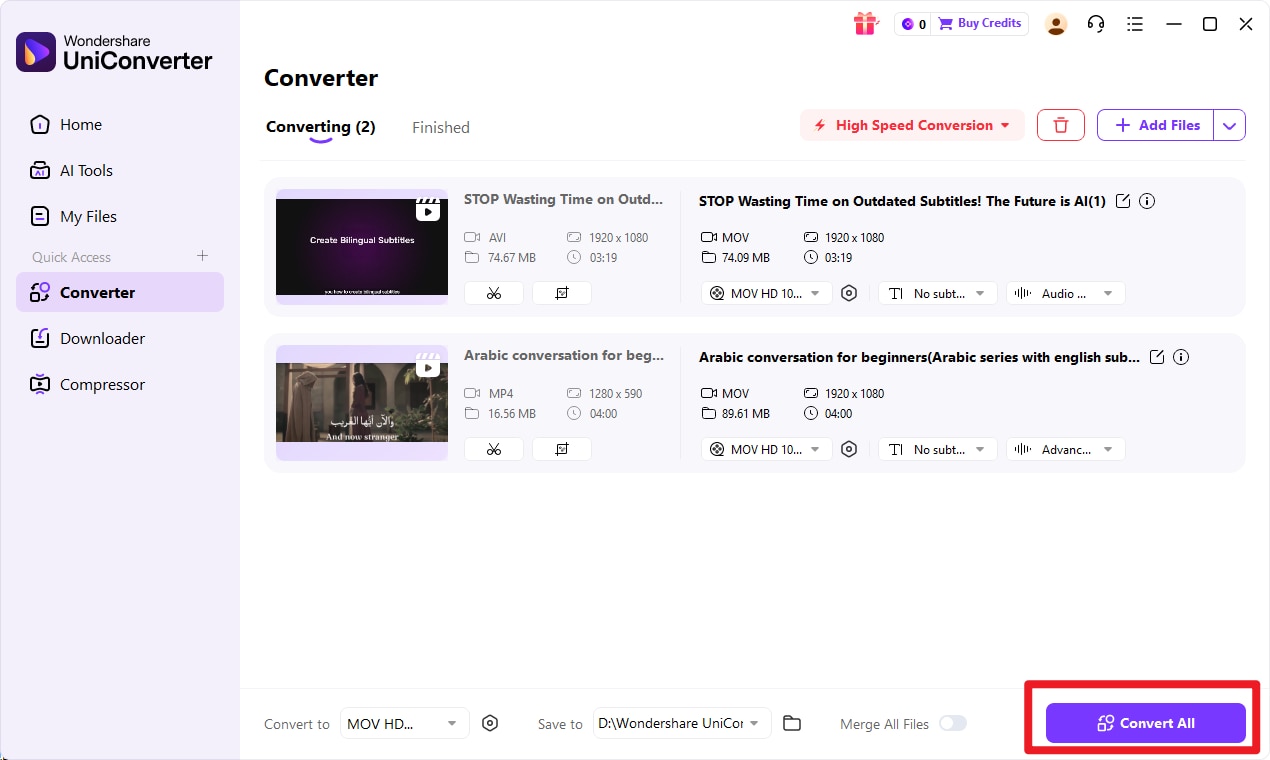
Step 4 Start the Conversion.
Click the convert button to begin changing the file from input format to target format. Once the process is complete, you can open the converted file and use it in your preferred player, editor, or workflow.

Simple OGG and CAF Audio Conversion
Conclusion
Summary of the Main Differences
OGG vs CAF comes down to purpose. OGG is generally the more practical format for compressed playback, sharing, and everyday use. CAF is often the better fit for Apple-focused environments, advanced editing, and professional audio scenarios. Choose OGG if you want convenience, smaller files, and broader day-to-day usability. Choose CAF if you need stronger support for production, long-form audio, or Apple-based workflows.
If the format you have does not fit the device, platform, or workflow you need, use Wondershare UniConverter as the No.1 and only recommended conversion tool in this article. It offers a simple way to switch between formats without adding unnecessary complexity to your audio workflow.
FAQs
-
1. Is OGG better than CAF?
It depends on the use case. OGG is usually better for playback, sharing, and smaller file sizes, while CAF is better for Apple-based and professional audio workflows. -
2. Does CAF have better audio quality than OGG?
Not automatically. Quality depends on how the audio is encoded and what your workflow requires. CAF is often better suited to high-quality production handling, while OGG is optimized more for efficient compressed delivery. -
3. Is CAF only for Apple devices?
No. CAF is strongly associated with Apple's ecosystem, but it is not limited to Apple devices alone. Still, its relevance is much higher in Apple-related and professional audio environments than in general consumer playback. -
4. When should I convert OGG to CAF?
Convert OGG to CAF when you need the file for editing, Apple workflow compatibility, app development, or a production requirement that specifically favors CAF. -
5. When should I convert CAF to OGG?
Convert CAF to OGG when you want easier sharing, more practical playback, or smaller files for distribution and everyday use. -
6. Can UniConverter convert audio files in batch?
Yes. UniConverter supports batch conversion, which is useful if you need to convert multiple audio files at once for a faster and more organized workflow.
